Ozempic for Weight Loss: Results, Risks and What Happens After
- Ozempic is FDA-approved for type 2 diabetes; using it only for weight loss is off-label, while Wegovy is the semaglutide brand approved for weight.
- On Ozempic 0.5 to 2 mg, average weight loss in diabetes trials was about 3.8 to 6.4 kg over 30 to 56 weeks.
- After stopping semaglutide 2.4 mg in the STEP 1 extension, people regained about two-thirds of the lost weight within a year.
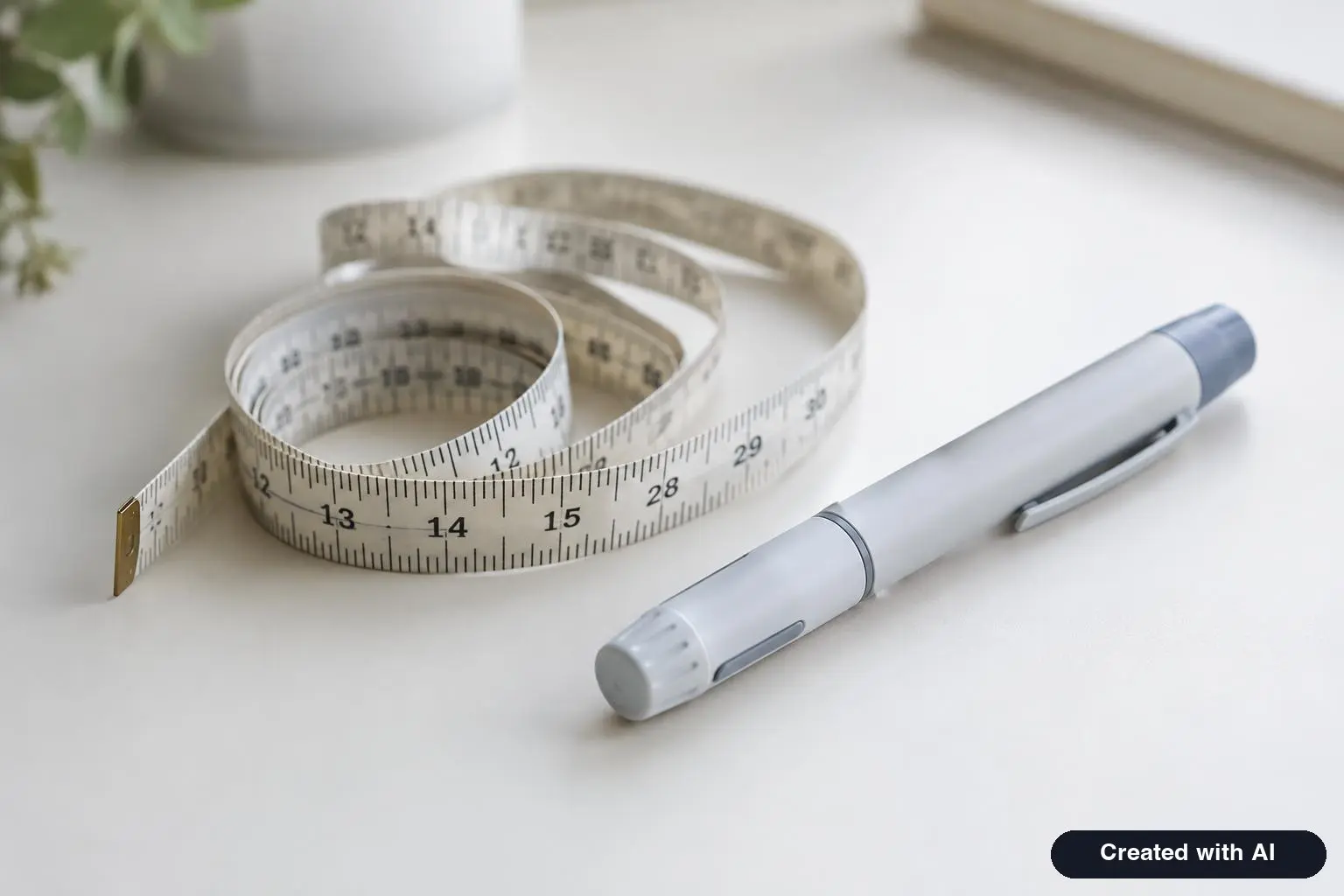
- Ozempic is a type 2 diabetes medicine
- How semaglutide leads to weight loss
- How much weight do people lose on Ozempic? What the trials show
- How Ozempic became a weight-loss trend
- What users ran into: side effects in real life
- "Ozempic face"
- What happens when you stop Ozempic
- Making it last: medicine plus habits
- Who might be prescribed semaglutide for weight
- Ozempic for weight loss: the cost in 2026
- Eating disorders and other cautions
- Before you consider Ozempic for weight loss: key points
Ozempic is not FDA-approved for weight loss. It is approved for adults with type 2 diabetes, and using it only to lose weight is off-label. Semaglutide, its active ingredient, does reduce appetite and slow digestion, so people lose weight: in the diabetes trials on the FDA label, average losses were about 4 to 6 kg (roughly 8 to 14 pounds) over 30 to 56 weeks at 0.5 to 1 mg, and 6.4 kg (about 14 pounds) at 2 mg over 40 weeks. The semaglutide brand approved for weight management is Wegovy, dosed higher, at 2.4 mg, which produced an average 14.9% loss in adults without diabetes. When semaglutide is stopped, most people regain much of the weight: in one trial, two-thirds came back within a year.
This page explains how Ozempic became a weight-loss phenomenon, what the trials actually show, what the people who tried it ran into, what happens after stopping, and how to think about it if you are considering semaglutide for weight in 2026. We first covered the Ozempic trend in 2023; this version has been rewritten with current FDA labels, trial data and October 2026 prices.
Ozempic is a type 2 diabetes medicine
Ozempic (semaglutide) injection, made by Novo Nordisk, was approved by the FDA in December 2017. Its label lists three uses, all in adults with type 2 diabetes: improving blood sugar control alongside diet and exercise, lowering the risk of heart attack, stroke and cardiovascular death in those with established cardiovascular disease, and lowering the risk of kidney decline and cardiovascular death in those with chronic kidney disease. Weight loss is not among them.
Wegovy, also semaglutide from Novo Nordisk, was approved in 2021 for chronic weight management in adults with obesity, or with overweight plus a weight-related condition, and in adolescents 12 and older with obesity. It is also approved to lower cardiovascular risk in people with heart disease and obesity or overweight, and for the liver disease MASH. Same molecule, different trials, different doses, different labels. The full comparison is in Ozempic vs Wegovy.
Doctors may legally prescribe a drug off-label, and many have prescribed Ozempic for weight. Novo Nordisk itself has said it does not promote off-label use.
How semaglutide leads to weight loss
Semaglutide mimics GLP-1, a hormone the gut releases after eating. It acts in three places:
- Pancreas: releases more insulin and less glucagon when blood sugar is high, which lowers glucose.
- Stomach: slows emptying, so fullness lasts longer and smaller portions feel like enough.
- Brain: acts on appetite centers, reducing hunger and the pull of food.
The weight comes off mainly because people eat less. Semaglutide's half-life is about one week, which is why it is a weekly shot and why it stays in the body for about five weeks after the last dose. Ozempic starts at 0.25 mg for four weeks, then 0.5 mg, with possible steps to 1 mg and 2 mg; see Ozempic dosage.
How much weight do people lose on Ozempic? What the trials show
In Ozempic's approval trials, weight was a secondary measurement; blood sugar was the main one. All participants had type 2 diabetes, and people with diabetes tend to lose less weight on these drugs than people without it.
| Trial (from the Ozempic and Wegovy labels) | Who | Dose | Length | Average weight change |
|---|---|---|---|---|
| Monotherapy vs placebo | Type 2 diabetes, starting weight about 89 to 97 kg | Ozempic 0.5 mg / 1 mg / placebo | 30 weeks | -3.8 kg / -4.7 kg / -1.2 kg |
| Add-on vs sitagliptin | Type 2 diabetes on metformin | Ozempic 0.5 mg / 1 mg / sitagliptin | 56 weeks | -4.2 kg / -5.5 kg / -1.7 kg |
| Add-on to basal insulin | Type 2 diabetes on insulin | Ozempic 0.5 mg / 1 mg / placebo | 30 weeks | -3.5 kg / -6.0 kg / -1.2 kg |
| SUSTAIN FORTE | Type 2 diabetes | Ozempic 1 mg / 2 mg | 40 weeks | -5.6 kg / -6.4 kg |
| STEP 1 (Wegovy) | Overweight or obesity, no diabetes | Semaglutide 2.4 mg | 68 weeks | -14.9% |
| STEP UP (Wegovy) | Obesity, no diabetes | Semaglutide 7.2 mg | 72 weeks | -18.7% |
Three takeaways. First, on Ozempic doses in people with diabetes, the average loss is a few kilograms more than placebo, not a transformation. Second, the 50- and 100-pound before-and-after stories online are outliers, or involve higher doses, years of use and major lifestyle changes. Third, the large losses come from Wegovy's higher-dose trials in people without diabetes. In STEP 1, 83.5% of people on semaglutide 2.4 mg lost at least 5% of their body weight and 47.9% lost at least 15%.
Ozempic's main benefit for its approved users is elsewhere: in the label's trials, A1C fell 1.4 to 1.6 points on monotherapy, and in SUSTAIN-6 heart attack, stroke or cardiovascular death occurred in 6.6% of people on Ozempic versus 8.9% on placebo. More in Ozempic for type 2 diabetes; what users report month by month is in Ozempic reviews.
How Ozempic became a weight-loss trend
By late 2022 and early 2023, Ozempic had become shorthand for fast weight loss. Videos tagged with the drug's name drew enormous view counts on TikTok, celebrity weight loss was routinely attributed to it, and searches for the brand climbed. Some rumors were never confirmed; when a celebrity said she lost weight through diet and exercise, the speculation continued anyway.
At the January 2023 Critics' Choice Awards, comedian Chelsea Handler joked from the stage that everyone in Hollywood seemed to be on Ozempic, a moment widely seen as confirming how mainstream the drug had become. Online groups formed where members swapped before-and-after photos and tips, including folk advice about injecting in the arm or leg to avoid nausea. The label says Ozempic can be injected in the abdomen, thigh or upper arm; there is no evidence that site choice reduces nausea.
The boom had a cost for others. List prices were around $1,000 a month at the time, yet demand outran supply, and both Ozempic and Wegovy were in shortage in the United States. People with diabetes reported calling pharmacy after pharmacy. The FDA declared the semaglutide shortage resolved on February 21, 2025. The trend also fed a gray market of counterfeit pens and "Ozempic" capsules and patches that contain no semaglutide; see how to get Ozempic safely and the Ozempic patch.
What users ran into: side effects in real life
Not everyone who tried Ozempic had an easy time. In 2023, U.S. media interviewed people who described weeks of constant nausea and vomiting after starting the drug, sometimes made worse by asking for faster dose increases to see results sooner, and who eventually stopped. One woman with diabetes described feeling sick for most of each week and deciding that being heavier was better than feeling ill all the time. Another, a diabetes blogger, said her smartwatch kept flagging a high heart rate within a week of starting and that palpitations woke her at night; she stopped after a few months.
Those accounts line up with the label. Nausea and vomiting are the most common side effects and cluster during dose escalation, which is why the dose rises no faster than every four weeks. Heart rate rose by an average of 2 to 3 beats per minute in the trials. Individual stories cannot tell you how likely a reaction is, but they show why a slow start and a prescriber who listens matter. The complete list is in Ozempic side effects.
"Ozempic face"
In early 2023 a New York dermatologist popularized the term "Ozempic face" for the hollow, older look some people develop after rapid weight loss. Plastic surgeons quoted at the time pointed out that any fast, large weight loss can thin the face; the drug is simply making that happen to more people, more quickly. Whether you see it depends on age, how much weight is lost and how fast. Dermatologists' advice on skin, hair and treatments is in Ozempic face.
What happens when you stop Ozempic
Semaglutide's effects wear off as the drug leaves the body over about five weeks. Appetite returns, and so, for most people, does weight. The clearest data come from the STEP 1 extension: adults without diabetes who took semaglutide 2.4 mg for 68 weeks with lifestyle support had lost an average 17.3% of their weight. After treatment stopped, they regained 11.6 percentage points by week 120, ending with a net loss of 5.6%, or about two-thirds of the loss regained in a year. Improvements in blood pressure, blood sugar and cholesterol drifted back toward baseline too. That trial used Wegovy's dose, but the same molecule is involved, so a similar pattern is expected with Ozempic.
For people with diabetes, stopping has another consequence: blood sugar rises again, and symptoms such as thirst, frequent urination, fatigue and blurred vision can return. Clinicians usually replace or adjust treatment rather than simply stopping, and finding the right new regimen can take time. Do not stop Ozempic for diabetes without a plan from your prescriber.
| Time after the last dose | What to expect |
|---|---|
| Week 1 to 2 | Appetite and stomach comfort begin to return as levels fall |
| About 5 weeks | Semaglutide essentially cleared from the body |
| Months 2 to 12 | Gradual weight regain for most people; in STEP 1, about two-thirds of the loss returned within a year |
| Diabetes | Blood sugar rises unless another treatment takes over |
Making it last: medicine plus habits
Clinicians who prescribe these drugs say they work best as part of a longer plan: eating patterns that hold up when appetite returns, strength training to protect muscle, and realistic expectations about how long treatment may last. A 2025 joint advisory from four U.S. obesity and nutrition societies recommends pairing GLP-1 treatment with strength training at least three times a week and at least 150 minutes of moderate aerobic activity, adequate protein, and attention to nutrients that can fall short when people eat much less. It also notes that in STEP 1, about 38% of the weight lost was lean mass, which is why muscle-preserving habits matter. Practical advice is in Ozempic, alcohol, diet and exercise.
Obesity is treated by major medical organizations as a chronic disease, and for many people medication is one tool among several, not a short course. Critics argue that the country is reaching for an expensive lifelong injection instead of fixing its food environment; supporters respond that diet and exercise alone rarely produce lasting results for people with obesity. Both points can be true at once, and neither changes the trial data.

Who might be prescribed semaglutide for weight
- You have type 2 diabetes and overweight: Ozempic may be prescribed for your diabetes, and weight loss is a welcome side benefit. See Ozempic for type 2 diabetes.
- You do not have diabetes but have obesity (BMI 30 or more) or overweight (BMI 27 or more) with a weight-related condition: the approved options are Wegovy, Zepbound and the GLP-1 pills. Ozempic would be off-label and rarely covered.
- You want to drop a few pounds before summer: none of these drugs are meant for that, and the side effects and cost are hard to justify.
If you are on Medicare, the Medicare GLP-1 Bridge (July 1, 2026 to December 31, 2027) offers Wegovy, Zepbound KwikPen or Foundayo for a $50 monthly copay to people who meet its BMI and health criteria; Ozempic is not included.
Ozempic for weight loss: the cost in 2026
As of October 14, 2026, NovoCare Pharmacy charges cash payers $199 a month for the first two starter fills of Ozempic or Wegovy (new patients, through December 31, 2026), then $349 a month for Ozempic 0.25 to 1 mg, $499 for Ozempic 2 mg, and $349 for Wegovy 0.25 to 2.4 mg. Wegovy tablets start at $149. In other words, Wegovy at its full weight-management dose now costs a cash payer less than Ozempic at its top dose. Insurers rarely cover Ozempic without a diabetes diagnosis. Details: Ozempic cost and GLP-1 cost without insurance.
| Option for weight | FDA-approved for weight? | Cash price, October 2026 |
|---|---|---|
| Ozempic pen (off-label) | No | $349 a month (up to 1 mg), $499 (2 mg) |
| Wegovy pen | Yes | $349 a month (up to 2.4 mg), $399 (7.2 mg) |
| Wegovy tablets | Yes | $149 to $299 a month by dose |
| Zepbound (tirzepatide) | Yes | $299 to $699 a month by dose and refill timing |
For how these compare on results, see the best GLP-1 for weight loss, Wegovy vs Zepbound and Zepbound vs Ozempic.
Eating disorders and other cautions
Eating-disorder specialists have warned that easy online access to appetite-suppressing injections is risky for people with a history of restrictive eating. The 2025 nutrition advisory recommends screening for disordered eating before starting a GLP-1. If you have had an eating disorder, tell your prescriber; and if you notice yourself skipping meals for days, that is a reason to call. Other reasons Ozempic may not be appropriate include a personal or family history of medullary thyroid carcinoma or MEN 2, past pancreatitis, pregnancy plans and severe gastroparesis.
Before you consider Ozempic for weight loss: key points
- Ozempic is a prescription type 2 diabetes drug; using it only for weight is off-label.
- On Ozempic doses in people with diabetes, average losses were about 4 to 6.4 kg, not 20 to 50.
- Nausea, vomiting and diarrhea are common; pancreatitis and gallbladder problems are rare but serious.
- Stopping usually means regaining much of the weight unless habits have changed, and often even then.
- Buying "Ozempic" without a prescription, online or as capsules or patches is illegal and risky.
- Whether any weight medicine is right for you depends on BMI, other conditions and risks, so start the conversation with your clinician.

For the rest of the guide, see Ozempic. This article is general information, not medical advice.
Frequently asked questions
Is Ozempic approved for weight loss?
No. Ozempic is FDA-approved for adults with type 2 diabetes. Using it only for weight loss is off-label. Wegovy, a higher-dose semaglutide from the same company, is the version approved for chronic weight management.
How much weight can you lose on Ozempic?
In the diabetes trials on the FDA label, average losses were about 3.8 to 6 kg (roughly 8 to 13 pounds) over 30 to 56 weeks at 0.5 to 1 mg, and 6.4 kg at 2 mg over 40 weeks. Larger losses seen online are exceptions or involve higher Wegovy doses.
How does Ozempic cause weight loss?
Semaglutide mimics the gut hormone GLP-1. It slows stomach emptying, so you stay full longer, and acts on appetite centers in the brain, so you feel less hungry and eat less. It also boosts insulin release when blood sugar is high.
Do you gain weight back after stopping Ozempic?
Most people regain much of it. In the STEP 1 extension, adults who stopped semaglutide 2.4 mg regained about two-thirds of their lost weight within a year. People with diabetes who stop also see blood sugar rise, so stopping should be planned with a prescriber.
How much does Ozempic cost for weight loss?
Insurance rarely covers it without type 2 diabetes. As of October 14, 2026, NovoCare Pharmacy charges $199 for each of the first two starter fills for new patients, then $349 a month for up to 1 mg and $499 for 2 mg. Wegovy costs $349 a month for up to 2.4 mg.
Is Wegovy better than Ozempic for weight loss?
For weight management, Wegovy is the approved product and is dosed higher (2.4 mg, or 7.2 mg for some adults). In STEP 1 it produced an average 14.9% loss in adults without diabetes. Ozempic tops out at 2 mg and was tested in people with diabetes.
What BMI do you need for a weight-loss GLP-1?
Wegovy and Zepbound are approved for adults with a BMI of 30 or more, or 27 or more with a weight-related condition such as high blood pressure. Insurance and Medicare's GLP-1 Bridge may set their own criteria.
Can I trust Ozempic weight loss reviews online?
They show individual experiences, from large losses to people who quit because of nausea, vomiting or a racing heart. Trial averages are a better guide to what is typical, and a clinician can judge whether the drug suits you.
Sources
- Ozempic (semaglutide) injection prescribing information, revised October 2025 – DailyMed
- Wegovy (semaglutide) injection and tablets prescribing information – DailyMed
- Wilding JPH et al. Once-Weekly Semaglutide in Adults with Overweight or Obesity (STEP 1). N Engl J Med 2021
- Wilding JPH et al. Weight regain and cardiometabolic effects after withdrawal of semaglutide: the STEP 1 trial extension. Diabetes Obes Metab 2022
- Frías JP et al. Once-weekly semaglutide 2.0 mg versus 1.0 mg in type 2 diabetes (SUSTAIN FORTE). Lancet Diabetes Endocrinol 2021
- Marso SP et al. Semaglutide and Cardiovascular Outcomes in Patients with Type 2 Diabetes (SUSTAIN-6). N Engl J Med 2016
- FDA: higher-dose (7.2 mg) Wegovy approved, March 19, 2026
- Mozaffarian D et al. Nutritional priorities to support GLP-1 therapy for obesity: a joint advisory (ACLM, ASN, OMA, TOS). Obesity Pillars 2025
- NovoCare Pharmacy – self-pay prices for Ozempic and Wegovy
- Medicare.gov – Weight loss drugs (Medicare GLP-1 Bridge)
- FDA clarifies policies for compounders as national GLP-1 supply begins to stabilize
Log in to comment
No comments yet. Be the first.