Ozempic Pill: Ozempic Tablets, Rybelsus and Fake Ozempic Soft
- Ozempic tablets reached U.S. pharmacies on May 4, 2026, with self-pay prices announced at $149 to $299 a month.
- They are taken each morning on an empty stomach with up to 4 ounces of water and a 30-minute wait.
- Pfizer ended its oral GLP-1 drug danuglipron on April 14, 2025, after a possible liver injury in one participant.
- Real and fake: what is what
- Ozempic tablets: what changed in 2026
- How to take Ozempic tablets
- How well the tablets work, and side effects
- What the tablets cost
- Can you take the Ozempic pill for weight loss?
- Why semaglutide is so hard to put in a pill
- The Pfizer pill that was supposed to rival Ozempic
- "Ozempic soft," capsules, drops and patches
- How to recognize real Ozempic
- Is there an Ozempic alternative without a prescription?
- How GLP-1 drugs work, pill or shot
Yes, there is an Ozempic pill. Ozempic tablets, a daily form of semaglutide, became available in U.S. pharmacies on May 4, 2026, in 1.5 mg, 4 mg and 9 mg strengths. They are approved for adults with type 2 diabetes, to improve blood sugar control and to reduce the risk of heart attack, stroke and cardiovascular death in those at high risk, the same uses as Rybelsus, the original semaglutide tablet, of which they are a reformulation. They are not approved for weight loss; the semaglutide pill for weight management is the 25 mg Wegovy pill. Ozempic tablets must be taken every morning on an empty stomach with no more than 4 ounces of plain water, followed by a 30-minute wait before eating, drinking or taking other pills. Self-pay prices were announced at $149 to $299 a month.
What does not exist: "Ozempic soft" capsules, Ozempic drops, gummies or patches. These are supplements or scams trading on the brand name, and they contain no approved semaglutide. And the Pfizer pill once billed as a rival to Ozempic, danuglipron, never reached the market; Pfizer ended its development in April 2025.
Real and fake: what is what
| Name | What it is | Approved in the U.S.? | Contains semaglutide? |
|---|---|---|---|
| Ozempic (pen) | Weekly injection for type 2 diabetes | Yes, prescription | Yes |
| Ozempic tablets | Daily tablet for type 2 diabetes, 1.5, 4 and 9 mg; in pharmacies since May 4, 2026 | Yes, prescription | Yes |
| Rybelsus | The original daily semaglutide tablet for type 2 diabetes, 3, 7 and 14 mg (approved 2019) | Yes, prescription | Yes |
| Wegovy pill | Daily semaglutide 25 mg for weight management and cardiovascular risk (approved December 22, 2025) | Yes, prescription | Yes |
| Foundayo | Daily orforglipron tablet for weight management (approved April 1, 2026), made by Eli Lilly | Yes, prescription | No, a different molecule |
| Danuglipron (Pfizer) | Experimental oral GLP-1 drug | No; development ended April 2025 | No, a different molecule |
| "Ozempic soft," capsules, drops, gummies, patches, "turbo Ozempic" | Supplements or scams using the brand name | No | No, or unknown and illegal |
Ozempic tablets: what changed in 2026
For years, the only semaglutide pill was Rybelsus, approved in 2019 for type 2 diabetes. In early 2026 the FDA approved a new formulation under the Ozempic name; the current combined label for Rybelsus and Ozempic tablets is dated January 2026. Novo Nordisk announced that the tablets would be available in U.S. pharmacies starting May 4, 2026.
The new tablets are smaller and lower in milligrams but deliver the same exposure as the older ones. The label states that the strengths are not substitutable milligram for milligram: Rybelsus 7 mg corresponds to Ozempic tablets 4 mg, and Rybelsus 14 mg to Ozempic tablets 9 mg. The reason is absorption. According to the label, only about 0.4% to 1% of a Rybelsus dose reaches the bloodstream, compared with 1% to 2% for the Ozempic tablets, so less drug is needed for the same effect.
Because of the brand name, offers to "buy Ozempic pills" without a prescription have multiplied online. The real tablets are prescription-only and sold through licensed pharmacies. Anything offered without a prescription is either a different product or illegal.
How to take Ozempic tablets
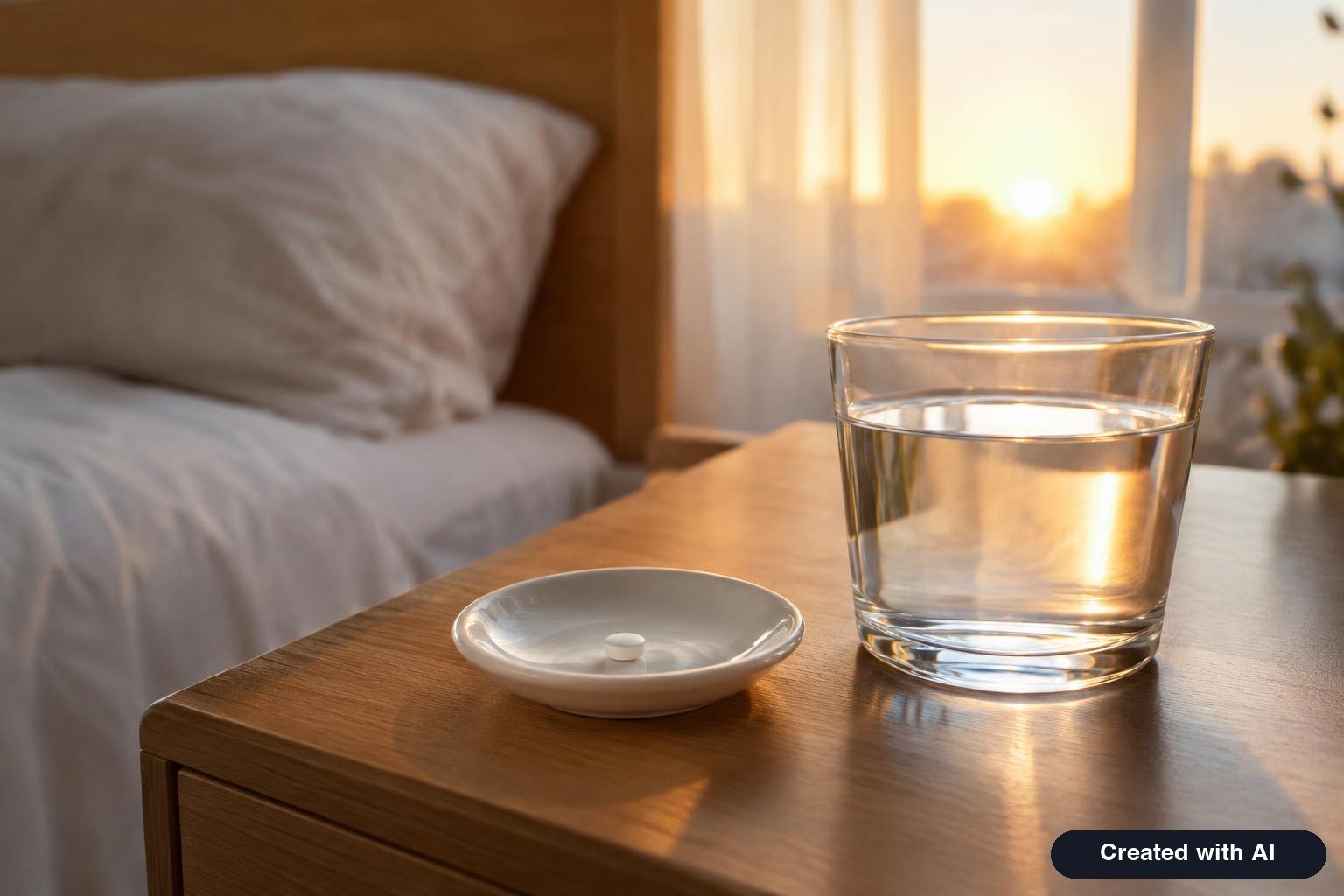
- Take one tablet each morning on an empty stomach, before any food or drink.
- Swallow it whole with up to 4 ounces (about half a cup) of plain water. No coffee, juice or other liquid.
- Do not split, crush, chew or dissolve it.
- Wait at least 30 minutes before eating, drinking anything else or taking other oral medicines.
- Take no more than one tablet a day. If you miss a dose, skip it and take the next one the following day.
- Keep tablets in the original bottle, which protects them from moisture, at room temperature (68°F to 77°F). No refrigerator needed.
Dosing schedule
| Days | Ozempic tablets | Rybelsus (for comparison) |
|---|---|---|
| 1 to 30 | 1.5 mg daily (starting dose, not effective for blood sugar) | 3 mg |
| 31 to 60 | 4 mg daily | 7 mg |
| 61 onward | Stay at 4 mg, or 9 mg if more control is needed | 7 mg or 14 mg |
Switching between forms
- Rybelsus to Ozempic tablets (or back): allowed after the first 30 days; start the new tablet the day after the last old one (7 mg to 4 mg, 14 mg to 9 mg).
- Ozempic injection to tablets: people on Ozempic 0.5 mg injections can start 4 mg or 9 mg tablets one week after their last injection.
How well the tablets work, and side effects
The label's efficacy data come from trials of the earlier Rybelsus strengths, which match the Ozempic tablet strengths in exposure. In a 26-week trial of the tablet alone, A1C fell 1.2 points on 7 mg and 1.4 points on 14 mg, compared with 0.3 on placebo, and 69% and 77% reached an A1C below 7%.
| Side effect | Placebo | 7 mg (= Ozempic tablets 4 mg) | 14 mg (= Ozempic tablets 9 mg) |
|---|---|---|---|
| Nausea | 6% | 11% | 20% |
| Abdominal pain | 4% | 10% | 11% |
| Diarrhea | 4% | 9% | 10% |
| Decreased appetite | 1% | 6% | 9% |
| Vomiting | 3% | 6% | 8% |
| Constipation | 2% | 6% | 5% |
The tablets carry the same boxed warning about thyroid C-cell tumors as the injection and must not be used by people with a personal or family history of medullary thyroid carcinoma or with MEN 2. The other warnings are the same as well: pancreatitis, gallbladder disease, low blood sugar with insulin or sulfonylureas, kidney injury from dehydration, worsening diabetic retinopathy and serious allergic reactions. Breastfeeding is not recommended, because the absorption enhancer in the tablet, salcaprozate sodium (SNAC), passes into breast milk. Full details in Ozempic side effects.
What the tablets cost
Novo Nordisk announced self-pay prices of $149 a month for 1.5 mg, $199 for 4 mg and $299 for 9 mg at launch; NovoCare describes them as starting at $149, as of October 14, 2026. The list price is $1,027.51, the same as an Ozempic pen. With commercial coverage, the same kinds of savings offers apply, and Medicare Part D plans may cover them for type 2 diabetes. A year at 4 mg costs about $2,338 at self-pay prices (one month at $149, then 11 at $199), less than a year of the injection. The full comparison is in Ozempic cost.
Can you take the Ozempic pill for weight loss?
Not on label. The Ozempic and Rybelsus tablets are approved only for type 2 diabetes. People with diabetes often lose some weight on them, but the dose is far below what was used in weight-management trials. For weight loss, the FDA has approved two daily pills: the Wegovy pill (semaglutide 25 mg), which produced 13.6% average weight loss over 64 weeks in its main trial, and Foundayo (orforglipron), which produced 11.1% at its top dose over 72 weeks. They are compared in detail in Foundayo vs Wegovy pill. For whether injections or pills are better for weight, see the best GLP-1 for weight loss.
Why semaglutide is so hard to put in a pill
Semaglutide is a peptide, a small protein. Swallowed on its own, it is broken down by stomach acid and digestive enzymes and barely absorbed. Novo Nordisk's tablets work by pairing it with SNAC, which protects it and helps it cross the stomach lining, but only under narrow conditions: an empty stomach, a little plain water and a half-hour head start. Even then, only 1% to 2% of the dose gets into the blood.
That is why an ordinary capsule of semaglutide, even if a seller put real drug in it, would do almost nothing, and why a patch cannot work: the molecule is far too large to pass through intact skin. Experimental microneedle patches are in early trials; see Ozempic patch. It is also why drug companies have chased small-molecule GLP-1 pills that survive digestion, which brings us to Pfizer.
The Pfizer pill that was supposed to rival Ozempic
In 2023, headlines announced that Pfizer had an oral GLP-1 drug, danuglipron, that could match Ozempic. The basis was a phase 2 trial published in JAMA Network Open in May 2023. It enrolled 411 adults with type 2 diabetes, who took danuglipron or placebo twice a day for 16 weeks. All doses lowered A1C and fasting glucose compared with placebo, with A1C down as much as 1.16 points more than placebo on the highest dose. Body weight fell significantly only at the two highest doses: 4.17 kg (about 9 pounds) more than placebo on 120 mg twice daily and 2.04 kg on 80 mg. The most common side effects were nausea, diarrhea and vomiting.
Some early coverage overstated the weight loss. The correct figure from the published trial is about 4 kg compared with placebo over 16 weeks, in people with diabetes, not the much larger numbers that circulated.
What happened next
- June 2023: Pfizer stopped developing a second oral GLP-1 candidate, lotiglipron, after trial participants showed elevated liver enzymes, and said it would focus on danuglipron.
- Late 2023: Pfizer dropped the twice-daily version of danuglipron after most participants in a mid-stage obesity trial stopped taking it, largely because of nausea and vomiting, and turned to a once-daily version.
- April 14, 2025: Pfizer ended danuglipron development altogether. In a dose-finding study, one participant without symptoms had a possible drug-induced liver injury that resolved after the drug was stopped. Pfizer said that across more than 1,400 participants, liver enzyme elevations were in line with approved drugs in the class, but that after reviewing all the data and recent input from regulators it would discontinue the molecule.
- November 2025: Pfizer completed its acquisition of Metsera, an obesity drug developer. The deal brought MET-097i, a weekly and monthly injectable GLP-1 drug about to start phase 3, and MET-233i, a monthly amylin analog in phase 1.
As of October 2026, Pfizer has no oral GLP-1 drug on the market. The oral GLP-1 options in U.S. pharmacies are Novo Nordisk's semaglutide tablets (Ozempic tablets, Rybelsus, the Wegovy pill) and Eli Lilly's Foundayo.
"Ozempic soft," capsules, drops and patches
These are not Novo Nordisk products and not approved drugs. The names are used in online stores, social media ads and marketplace listings to borrow the brand's fame. Typical offers include "Ozempic soft capsules," "Ozempic tablets without prescription," drops, gummies, "GLP-1 patches" and "turbo" versions, sold as a "natural Ozempic alternative."
Why they do not contain working semaglutide:
- A plain capsule of semaglutide would be digested and barely absorbed; only the SNAC tablets are designed to get around that.
- Semaglutide cannot get through skin from a patch in useful amounts; no semaglutide patch is approved.
- If a product did contain semaglutide, it would be an unapproved prescription drug of unknown dose and purity, illegal to sell this way.
- If it contains no semaglutide but promises "Ozempic results," the claim is false advertising. Pharmacists who examined 24 patches and a gel sold with "GLP-1" in their marketing found that none listed any approved GLP-1 drug; most listed plant ingredients such as berberine.
Red flags
- "Ozempic" offered as capsules, drops, gummies, sprays or patches;
- no prescription required, or sold through social media, marketplaces or a site that is not a licensed pharmacy;
- promises such as "lose 20 pounds in a month," "no side effects" or "100% natural";
- countdown timers, "last few bottles" and big "discounts";
- reviews that look copied, and celebrity or doctor endorsements that may be faked;
- payment only by gift card, crypto, wire or payment app to an individual;
- products labeled "for research purposes" or "not for human consumption."
The risk is not only to your wallet. The World Health Organization's June 2024 alert listed three falsified Ozempic batches found in the regular supply chain in Brazil and the United Kingdom (October 2023) and the United States (December 2023), warning that fakes may contain the wrong dose, harmful contaminants or other ingredients. The FDA has also warned that counterfeit Ozempic has been found in the U.S.
How to recognize real Ozempic
- Form: a weekly prefilled pen (or single-dose prefilled syringe) for injection, or a daily tablet in a bottle of 30. Ozempic tablets are white to light yellow and round, with the strength on one side and "novo" on the other. Nothing else is Ozempic.
- Source: dispensed by a state-licensed pharmacy with a valid prescription. The FDA's BeSafeRx resources explain how to check an online pharmacy.
- Price: NovoCare's self-pay price is $149 to $499 a month depending on form and dose. A brand-name product far below that is a warning sign.
- Packaging: watch for spelling errors, poor print or label quality, missing instructions or a product that looks different from what you received before.
If you bought something suspicious or had a reaction, stop using it, talk to your prescriber and report it to the FDA through MedWatch. False advertising can be reported to the Federal Trade Commission at ReportFraud.ftc.gov.
Is there an Ozempic alternative without a prescription?
No. Every drug that works like Ozempic, a GLP-1 receptor agonist, is prescription-only in the United States: semaglutide (Ozempic, Rybelsus, Wegovy), tirzepatide (Mounjaro, Zepbound, which also acts on the GIP receptor), liraglutide, dulaglutide and orforglipron (Foundayo). Over-the-counter supplements marketed as "nature's Ozempic," berberine among them, do not work the same way and have nothing like the same evidence. Which prescription option fits depends on your diagnosis, coverage and preferences; see Ozempic vs Mounjaro and semaglutide vs tirzepatide.
How GLP-1 drugs work, pill or shot
GLP-1 is a hormone released by cells in the small and large intestine after a meal. It helps the pancreas release insulin when blood sugar is high, reduces glucagon, slows stomach emptying and acts on appetite centers in the brain, especially the hypothalamus. GLP-1 drugs mimic it but last far longer. Weight loss on these drugs comes mostly from eating less; earlier claims that they substantially raise calorie burning are not well supported.
- Type 2 diabetes: better blood sugar control. On their own they rarely cause low blood sugar, but with insulin or a sulfonylurea it becomes common.
- Heart: injectable semaglutide reduced heart attack, stroke and cardiovascular death in the SUSTAIN-6 trial (6.6% versus 8.9% on placebo).
- Liver: Wegovy has accelerated approval for the liver disease MASH with moderate to advanced fibrosis. Other uses under study are covered in Ozempic new uses.
Pills make treatment easier for people who dislike injections, but they come with their own rules: daily dosing, fasting, and for the semaglutide tablets, a strict morning routine. As the Pfizer story shows, a pill also has to be effective, safe for the liver and tolerable enough that people keep taking it. Any GLP-1 drug, pill or shot, is one tool a clinician may prescribe alongside diet and activity. It is not a substitute for prevention, and it is certainly not a capsule from a social media ad. For the full overview, see the Ozempic guide.
Frequently asked questions
Is there an Ozempic pill?
Yes. Ozempic tablets (1.5, 4 and 9 mg, taken daily) have been available in U.S. pharmacies since May 4, 2026, for adults with type 2 diabetes. They are a reformulation of Rybelsus.
Is the Ozempic pill approved for weight loss?
No. Ozempic tablets are approved only for type 2 diabetes. The pills approved for weight management are the Wegovy pill (semaglutide 25 mg) and Foundayo (orforglipron).
How much do Ozempic tablets cost?
Novo Nordisk announced self-pay prices of $149 a month for 1.5 mg, $199 for 4 mg and $299 for 9 mg. The list price is $1,027.51. Insurance and Medicare coverage for type 2 diabetes vary by plan.
How do you take Ozempic tablets?
One tablet each morning on an empty stomach with up to 4 ounces of plain water, swallowed whole. Wait at least 30 minutes before eating, drinking or taking other oral medicines.
Is the Ozempic pill the same as Rybelsus?
Same drug, new formulation. The milligram strengths differ and are not interchangeable mg for mg: Rybelsus 7 mg corresponds to Ozempic tablets 4 mg, and 14 mg to 9 mg.
What is Ozempic soft?
Not a real medicine. "Ozempic soft" capsules and similar products are supplements or scams using the brand name. They are not made by Novo Nordisk and contain no approved semaglutide.
What happened to Pfizer's weight loss pill?
Pfizer stopped lotiglipron in June 2023 and ended danuglipron development on April 14, 2025, after a possible drug-induced liver injury in one trial participant. It later bought Metsera, whose candidates are still in trials.
Is there an over-the-counter Ozempic alternative?
No. All GLP-1 drugs are prescription-only. Supplements marketed as natural alternatives do not work the same way.
Sources
- Rybelsus and Ozempic (semaglutide) tablets prescribing information – DailyMed
- Ozempic (semaglutide) injection prescribing information – DailyMed
- Wegovy (semaglutide) injection and tablets prescribing information – DailyMed
- Novo Nordisk news release: Ozempic pill available in the US starting May 4, 2026
- NovoCare Pharmacy – self-pay prices for Ozempic and Wegovy
- NovoCare – Ozempic list price and coverage
- Wharton S et al. Oral semaglutide 25 mg in adults with overweight or obesity (OASIS 4). N Engl J Med 2025;393:1077-1087
- Marso SP et al. Semaglutide and cardiovascular outcomes in type 2 diabetes (SUSTAIN-6). N Engl J Med 2016;375:1834-1844
- WHO Medical Product Alert N°2/2024: falsified Ozempic (semaglutide), June 19, 2024
- FDA's concerns with unapproved GLP-1 drugs used for weight loss
- FDA – BeSafeRx: your source for online pharmacy information
- FDA MedWatch safety information and adverse event reporting program
- Saxena AR et al. Oral danuglipron for glycemic control in type 2 diabetes: a randomized clinical trial. JAMA Netw Open 2023;6:e2314493
- BioSpace: Pfizer drops lead obesity asset after liver safety concerns (April 14, 2025)
- Business Wire: Pfizer completes acquisition of Metsera (November 13, 2025)
- BioPharma Dive: Pfizer discontinues obesity drug lotiglipron (June 2023)
- Foundayo (orforglipron) approval – Eli Lilly, April 1, 2026
- Wegovy pill approval – Novo Nordisk, December 22, 2025
Log in to comment
No comments yet. Be the first.