Hair Types: The Full Chart From 1A to 4C and How to Find Yours
- The chart has 12 subtypes, from 1A straight to 4C coily.
- Find your type on clean, air-dried hair without products.
- Porosity often predicts product needs better than curl type.
- Hair type chart
- How to find your hair type
- Type 1: straight hair
- Type 2: wavy hair
- Type 3: curly hair
- Type 4: coily hair
- Beyond curl pattern: porosity, thickness and density
- Hair care basics for every type
- Choosing products by hair type
- Routines by hair type at a glance
- Haircuts that work with your hair type
- Hair types for men and for kids
- Common myths about hair types
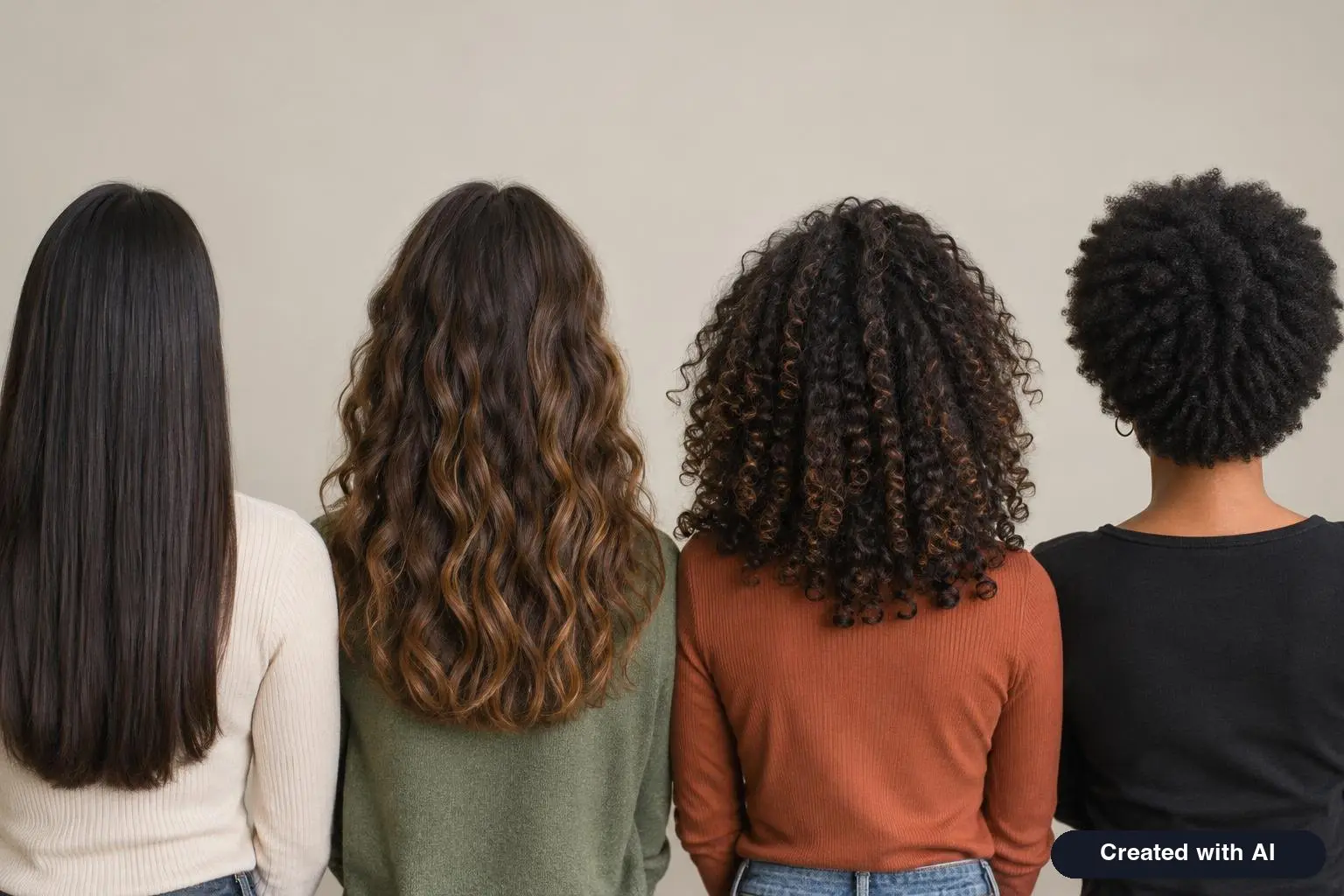
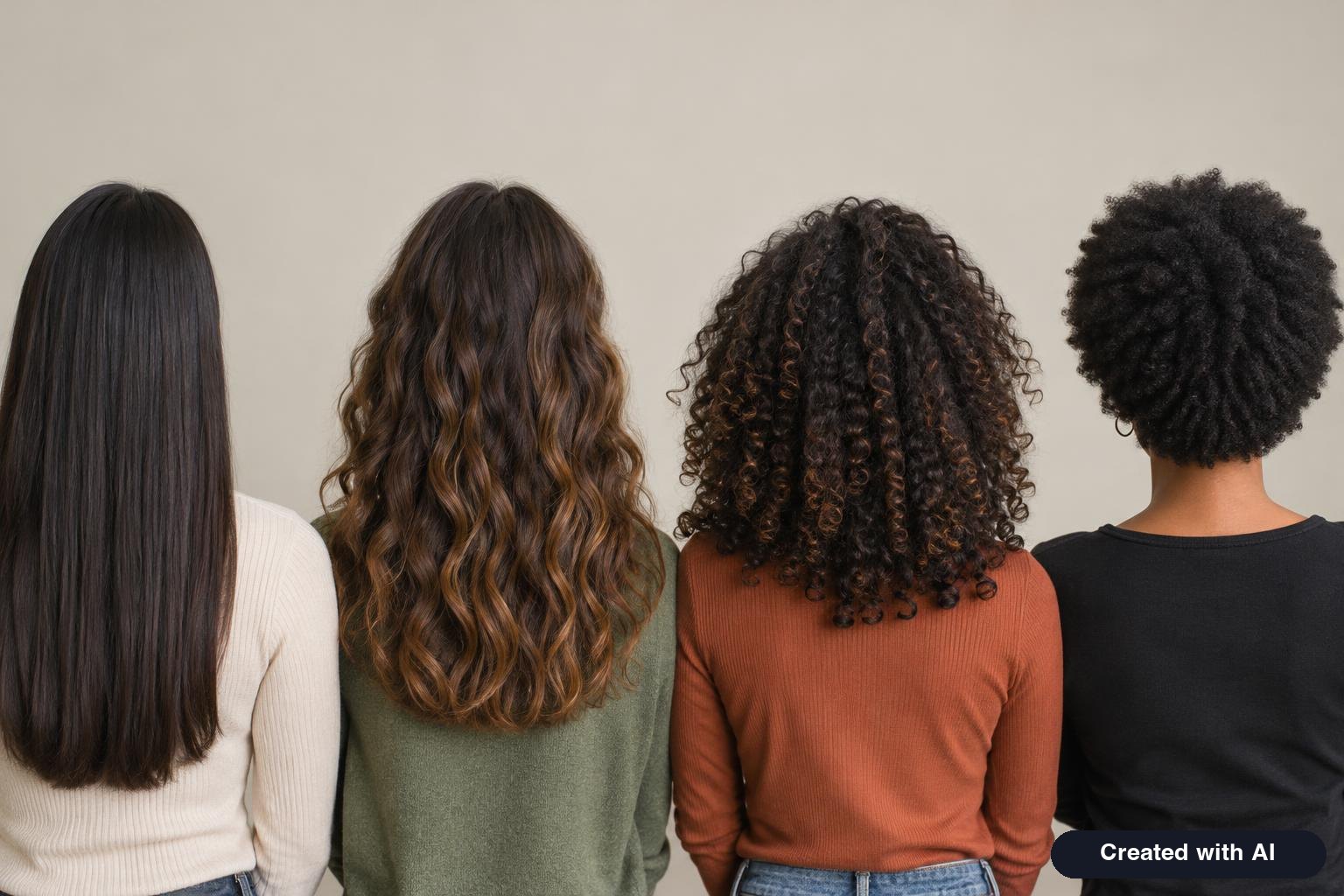
Hair types are most often described with a chart that sorts natural texture into four groups: Type 1 straight, Type 2 wavy, Type 3 curly and Type 4 coily, each split into A, B and C from looser to tighter. The system was popularized in the 1990s by celebrity stylist Andre Walker and is now the common language of curl products, salons and online tutorials. It describes the shape of the strand, not its health, and many people have two or three types on one head.
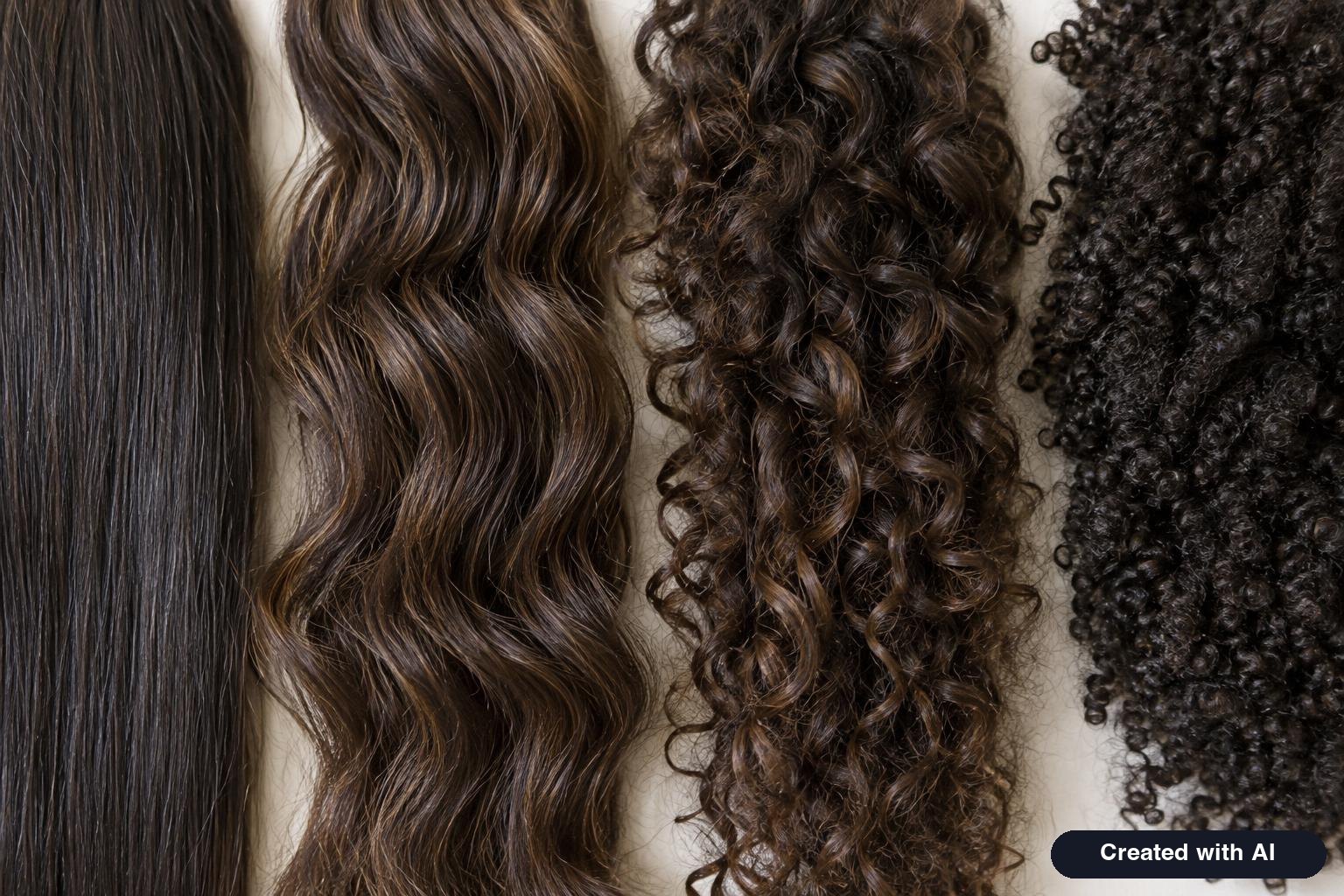
Curl pattern is only part of the picture. How your hair behaves also depends on porosity (how easily it absorbs and holds water), strand thickness (fine, medium or coarse) and density (how many strands grow on your scalp). Knowing all four tells you far more about which products, cuts and routines will work than the curl number alone. This guide gives the full hair type chart, shows how to find your type, and explains porosity, thickness and density, with links to detailed guides for each type.
Hair type chart
| Type | Group | What it looks like |
|---|---|---|
| 1A | Straight | Very fine, soft, pin-straight; hard to hold a curl |
| 1B | Straight | Straight with some body and volume |
| 1C | Straight | Straight but coarser, may have a slight bend at the ends |
| 2A | Wavy | Loose, stretched "S" waves; fine and easily weighed down |
| 2B | Wavy | Defined "S" waves from mid-length; some frizz at the crown |
| 2C | Wavy | Deep, well-defined waves starting near the root; thicker, frizz-prone |
| 3A | Curly | Large, loose spiral curls about the width of a sidewalk chalk |
| 3B | Curly | Springy ringlets about the width of a marker |
| 3C | Curly | Tight corkscrews about the width of a pencil or straw; dense |
| 4A | Coily | Tight, defined coils about the width of a crochet needle |
| 4B | Coily | Z-shaped, sharply angled bends; less defined coil pattern |
| 4C | Coily | Very tight zigzag pattern, little visible definition; most shrinkage |
Each subtype is a point on a spectrum, not a strict box. Detailed guides: Type 2 wavy hair (2A, 2B, 2C), Type 3 curly hair (3A, 3B, 3C), Type 4 coily hair (4A, 4B, 4C) and hair porosity.
How to find your hair type
- Start with clean hair. Wash with a gentle shampoo and a light conditioner, and skip styling products, oils and heat.
- Let it air-dry. Do not brush, scrunch or twist it while it dries; blow-drying and brushing stretch the natural pattern.
- Look at a section from the side and the back. Check the middle lengths and ends, which show the pattern better than the crown and the hairline.
- Match the shape. Straight from root to tip is Type 1; an "S" bend is Type 2; a loop or spiral is Type 3; tight coils or zigzags are Type 4.
- Pick the letter. Looser and wider is A; tighter and smaller is C.
- Expect more than one. It is common to have 3A at the crown and 3C underneath, or waves at the back and straighter hair in front. Care for the dominant type and treat the rest as variations.
Things that change how your type looks
- Length: long hair is heavier, which can pull waves and loose curls straighter.
- Heat damage and chemical treatments: straightening, relaxers, perms and bleach can loosen or change the pattern until the treated hair grows out.
- Humidity: curly and coily hair often tightens or frizzes in humid weather.
- Hormones and age: many people notice texture changes during puberty, pregnancy, after childbirth or around menopause.
- Products and routine: heavy products can flatten waves; rough towel-drying and brushing dry curls create frizz that hides the pattern.
Type 1: straight hair
Type 1 hair has no natural curl. Because the scalp's natural oil travels easily down a straight strand, it tends to look shiny but can get oily faster than curlier types. 1A is very fine and flat, 1B has more body, and 1C is coarser and may bend at the ends.
- Common concerns: limp roots, oiliness, difficulty holding curls or volume.
- What helps: lightweight shampoo and conditioner applied mainly to the lengths, volumizing products at the roots, avoiding heavy oils near the scalp.
Type 2: wavy hair
Type 2 hair forms an "S" pattern. 2A waves are loose and easily weighed down, 2B waves are more defined from the mid-lengths, and 2C waves start close to the root and can include a few loose ringlets. Wavy hair is often mistaken for frizzy straight hair and brushed out, which hides the pattern. See Type 2 hair for routines and products by subtype.
Type 3: curly hair
Type 3 hair forms loops and spirals, from loose 3A curls to tight 3C corkscrews. Curly hair is usually drier than straight hair because scalp oil does not travel easily along the bends, so moisture, gentle detangling and leave-in products matter more. See Type 3 hair.
Type 4: coily hair
Type 4 hair forms tight coils and zigzags, from defined 4A coils to the very tight, less defined 4C pattern. It is the most fragile type: each bend is a potential weak point, and it can shrink to a fraction of its stretched length. Protective styles, moisture and low-manipulation routines are the core of care. See Type 4 hair.
Beyond curl pattern: porosity, thickness and density
Porosity
Porosity describes how easily water and products get into the hair and how long they stay. Low-porosity hair resists water and products tend to sit on top; high-porosity hair absorbs water quickly and loses it just as fast, often because of damage from heat, bleach or chemical treatments. Porosity often predicts product choices better than curl type. Full guide: hair porosity.
Strand thickness
Take a single strand and roll it between your fingers. If you can barely feel it, it is fine; if you feel it clearly, it is medium; if it feels thick and wiry, it is coarse. Fine hair is easily weighed down by rich products; coarse hair usually handles heavier creams and butters.
Density
Density is how many hairs grow per area of scalp. Part your dry hair in the middle: if you see a lot of scalp, density is low; if you barely see the part, density is high. High-density hair needs more product and more time to dry; low-density hair looks fuller with lighter products and layered cuts.
| Trait | Low / fine | High / coarse |
|---|---|---|
| Porosity | Water beads up, slow to dry; use lighter products, warmth helps absorption | Absorbs fast, dries fast, frizzes; use leave-ins and sealing oils or creams |
| Thickness | Easily weighed down; use light lotions, mousses, gels | Handles richer creams and butters |
| Density | Less product, volume-focused cuts | More product, sectioning when styling |
Hair care basics for every type
The American Academy of Dermatology gives these tips, adjusted by hair type:
- Wash to suit your scalp. If you have straight hair and an oily scalp, you may want to shampoo every day; dry, textured, curly or thick hair can be shampooed as needed, "at least once every 2 to 3 weeks."
- Shampoo the scalp rather than the full length of the hair.
- Condition after every wash. Fine or straight hair: conditioner on the ends. Dry or curly hair: conditioner along the entire length.
- Detangle gently. Use a wide-tooth comb on wet hair; with thick, curly hair, comb in the shower before rinsing out conditioner; let straight hair dry a little before combing.
- Dry by blotting. Wrap hair in a towel or a T-shirt to absorb water instead of rubbing.
- Limit heat. Use blow-dryers, flat irons and curling irons less often, on low or medium heat, with a heat protectant.
Styles that pull hard at the scalp, such as very tight ponytails, braids or extensions worn for long periods, can damage the hair at the hairline, so alternate styles and keep tension low.
If you notice sudden shedding, patches of hair loss, a scaly or painful scalp, or breakage you cannot explain, see a board-certified dermatologist; these are medical issues, not hair-type issues.
Choosing products by hair type
| Hair type | Look for | Go easy on |
|---|---|---|
| 1 (straight) | Lightweight, volumizing shampoos and conditioners; dry shampoo | Heavy oils and butters at the roots |
| 2 (wavy) | Light leave-in, mousse or light gel; curl-friendly shampoos | Rich creams that flatten waves; brushing dry |
| 3 (curly) | Moisturizing conditioner, leave-in, curl cream and gel; wide-tooth comb | Harsh, drying shampoos; rough towels |
| 4 (coily) | Rich conditioners, leave-ins, creams, butters and oils; satin or silk at night | Frequent heat, tight styles, daily manipulation |
When you try a new product, change one thing at a time and give it two or three washes before judging it; hair often needs a few days to adjust, and changing several products at once makes it impossible to tell what helped.
Labels such as "curly girl approved" or "for 4C hair" are marketing terms, not standards. Your porosity, thickness and density are a better guide than the type number printed on the bottle.
Routines by hair type at a glance
| Type 1 | Type 2 | Type 3 | Type 4 | |
|---|---|---|---|---|
| Shampoo | Often, if the scalp gets oily | Every 2–4 days for many people | Less often; gentle or sulfate-free shampoo or co-wash between | As needed, often weekly or less |
| Conditioner | Ends only | Mid-lengths and ends | Full length; detangle in the shower | Full length; deep condition regularly |
| Styling | Volumizing mousse or spray at the roots | Light mousse or gel, scrunched in | Leave-in plus curl cream and/or gel | Leave-in, cream or butter, sealed with oil |
| Drying | Blow-dry or air-dry | Diffuse or air-dry, avoid brushing dry | Diffuse or air-dry, plop in a T-shirt | Air-dry or stretch with twists or braids |
| Night | Loose braid or nothing | Loose "pineapple" ponytail on top | Pineapple and a satin pillowcase | Satin or silk bonnet or scarf, protective style |
Haircuts that work with your hair type
- Type 1: blunt cuts make fine straight hair look thicker; long layers add movement to thick straight hair.
- Type 2: long layers and face-framing pieces let waves form instead of falling flat; very heavy one-length cuts can weigh waves down.
- Type 3: curls shrink when dry, so many stylists cut them dry, curl by curl; ask for layers that avoid a triangle shape.
- Type 4: shape is usually cut on stretched or styled hair; tapered cuts and rounded shapes work with shrinkage.
If you are growing out heat damage, relaxed ends or a perm, regular small trims let your natural pattern take over gradually without a drastic cut.
Whatever your type, a stylist experienced with your texture makes the biggest difference. Ask to see photos of their work on hair like yours.
Hair types for men and for kids
The chart works the same for everyone. Men with short hair often do not see their full pattern; growing the top out an inch or two and letting it air-dry usually shows whether it is wavy, curly or coily, which changes which products and cuts work. Short curly cuts, for example, often look better with a curl cream than with a stiff gel.
Children's hair often changes as they grow. Many babies start with fine, straight or loosely wavy hair that becomes curlier or coarser during childhood or puberty, so a child's type at two may not be their type at twelve. Gentle detangling, a wide-tooth comb and conditioner are the basics at any age.
Common myths about hair types
- "Your hair type never changes." The basic shape is genetic, but texture can change with hormones, age, damage and some medications.
- "4C hair can't grow long." Coily hair grows from the scalp like any other type; shrinkage and breakage, not slow growth, make it look shorter.
- "Curly hair should never be brushed." Many curly and coily routines detangle with a wide-tooth comb or brush on wet, conditioned hair; brushing dry curls is what causes frizz.
- "Wavy hair is just frizzy straight hair." Type 2 is its own pattern and usually needs lighter curl-defining products, not straighteners.
Frequently asked questions
What are the 4 hair types?
Type 1 straight, Type 2 wavy, Type 3 curly and Type 4 coily. Each is divided into A, B and C from looser to tighter, giving 12 subtypes from 1A to 4C.
How do I know my hair type?
Wash your hair, skip styling products and let it air-dry without brushing. Look at the mid-lengths and ends: straight is Type 1, an S-wave is Type 2, loops or spirals are Type 3 and tight coils or zigzags are Type 4.
Can you have more than one hair type?
Yes. Many people have tighter curls underneath and looser ones on top, or different textures at the front and back. Care for the dominant type.
Who created the hair type chart?
The 1 to 4 system with A to C subtypes was popularized by stylist Andre Walker in the 1990s and later expanded by curl communities.
What is the most common hair type?
There is no reliable official count by type. Texture varies widely within every population, and most people have a mix of patterns.
Can your hair type change?
The underlying pattern is largely genetic, but hormones, age, damage, chemical treatments and some medications can change how curly or straight hair grows or looks.
Is hair porosity more important than hair type?
For choosing products it often is. Porosity, strand thickness and density decide how hair absorbs moisture and how much product it can handle, while type describes the curl shape.
What hair type is 4C?
4C is the tightest coily pattern, with a zigzag shape, little visible curl definition and the most shrinkage. It needs moisture and gentle, low-manipulation care.
All parts of the guide
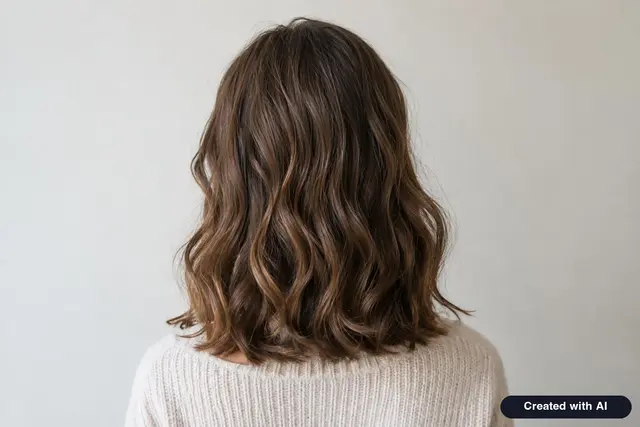 Type 2 (wavy)Type 2 hair is wavy: 2A is loose and fine, 2B has defined S-waves, 2C has deep waves from the root. Light moisture and light hold work best.
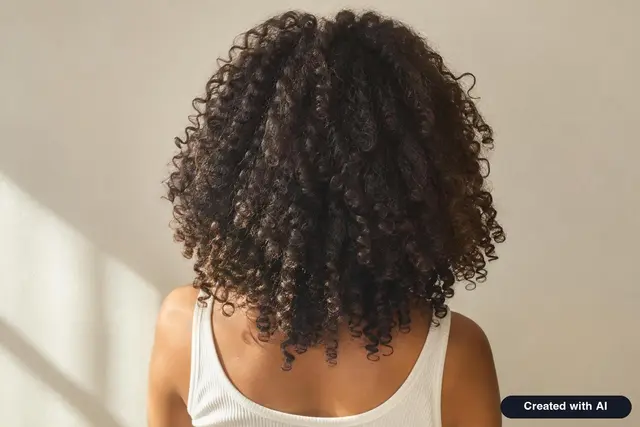 Type 3 (curly)Type 3 hair is curly: 3A loose spirals, 3B springy ringlets, 3C tight corkscrews. Moisture, gentle detangling and hold are the keys.
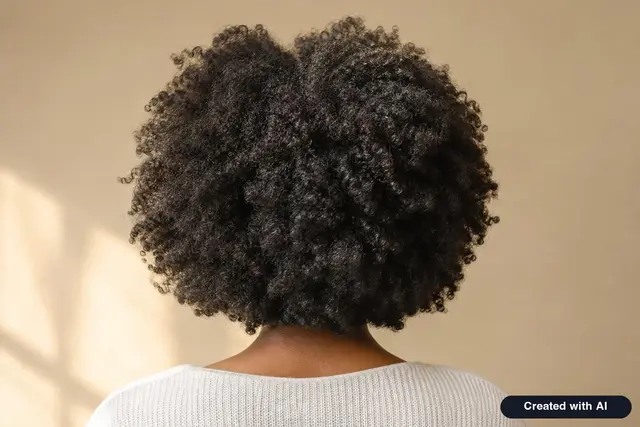 Type 4 (coily)Type 4 hair is coily: 4A defined coils, 4B Z-shaped bends, 4C tight zigzags with the most shrinkage. Moisture and low manipulation are key.
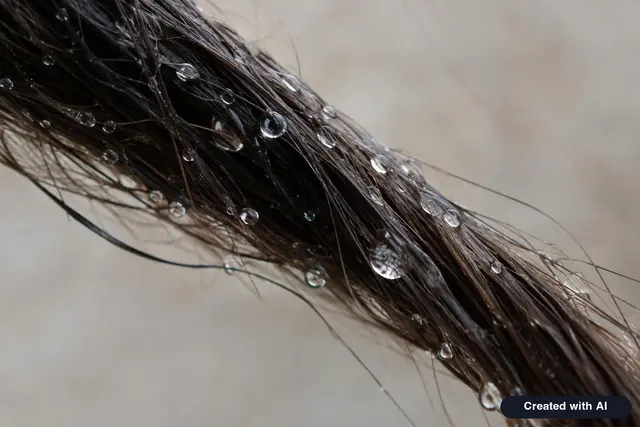 Hair porosityHair porosity is how well hair absorbs and holds moisture. Low porosity resists water and builds up product; high porosity absorbs and loses it fast.
Log in to comment
No comments yet. Be the first.