Roasted Pumpkin Soup: Creamy, Sweet, and Made on One Sheet Pan
- One sheet pan and 15 minutes of active prep – the oven does the rest
- No potatoes needed: the pumpkin loses water as it roasts and thickens the soup itself
- Roasting time chart for cubes, wedges, halves, and frozen pumpkin
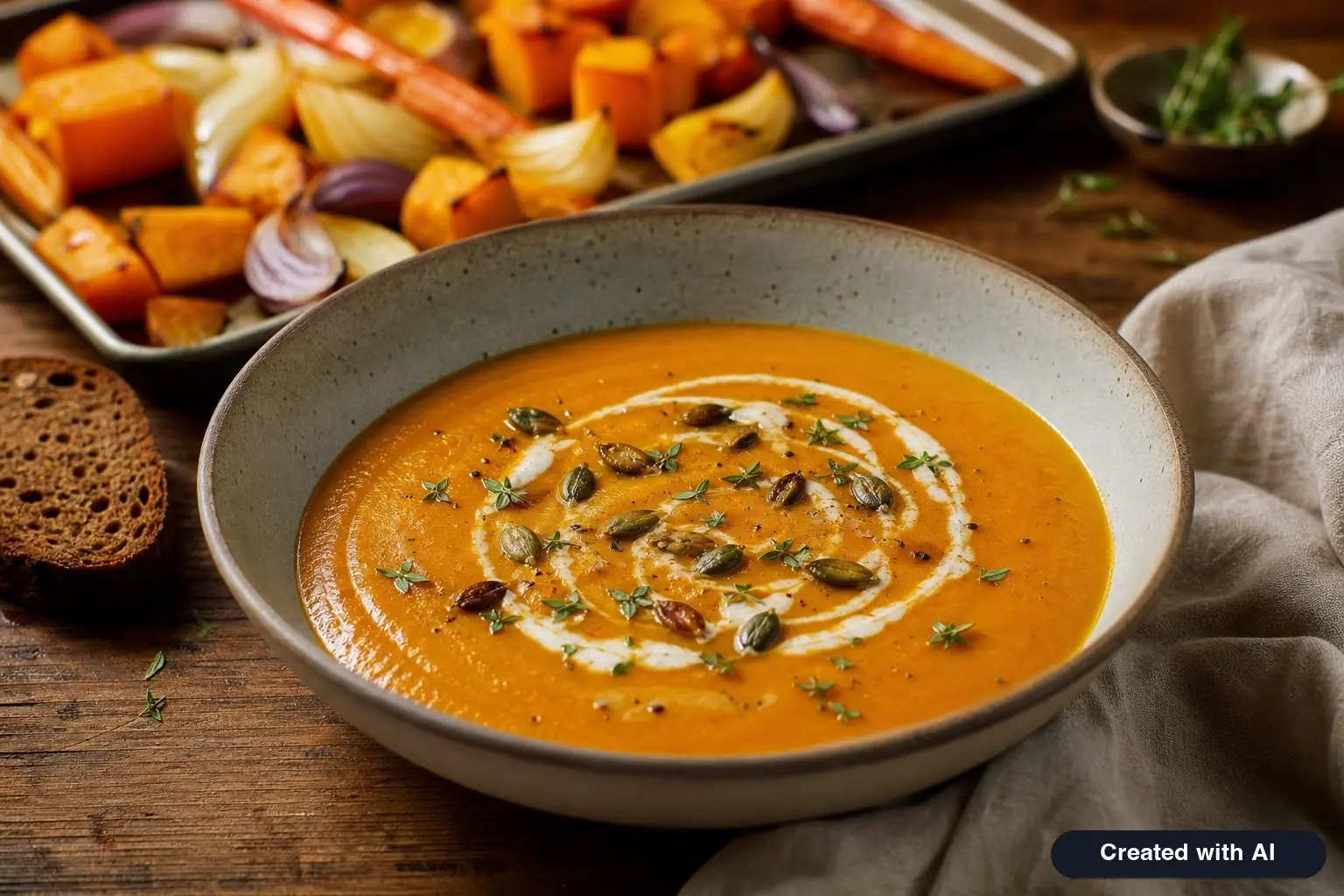
Roasted pumpkin soup differs from the usual version in one key way: instead of simmering in a pot, the vegetables are roasted in the oven first. In 35–40 minutes of high heat, some of the pumpkin's water evaporates, its edges brown, and its natural sugars caramelize. That's why roasted pumpkin soup is sweeter, thicker, and fuller-flavored than a simmered one—even though the ingredients are nearly the same.
This recipe is oven-roasted pumpkin soup in its simplest form: pumpkin, carrots, onion, and unpeeled garlic roast on a single sheet pan, and you need a pot only at the end, when the roasted vegetables are covered with hot broth and blended. There are no potatoes—the body comes from the pumpkin itself, which loses water as it roasts. If you want the classic one-pot version with potatoes, see our blended pumpkin soup recipe.
The soup works for an everyday lunch and for company alike: about 15 minutes of hands-on prep, and the oven does the rest. The recipe makes 4 hearty servings of about 2 cups (450 ml) each. It keeps well in the fridge and freezer, so it's worth roasting a full sheet pan at once.
The full recipe card is below: you can scale the amounts to a different number of servings, check off ingredients as you go, and print it. Under the card, each step is explained in more detail.
Roasted Pumpkin Soup
No ratings yet – be the firstIngredients
For roasting
For the soup
For serving
Directions
- Preheat the oven. Preheat the oven to 400°F (200°C) (365–375°F / 185–190°C convection), and line a large sheet pan with parchment paper.
- Prep the vegetables. Peel the pumpkin, scoop out the seeds, and cut into 1 1/2-inch (3–4 cm) cubes. Cut the carrots into 1/2-inch (1–1.5 cm) slices, and the onion into 6–8 wedges. Do not peel the garlic cloves.
- Oil and season. Drizzle the vegetables on the sheet pan with oil, sprinkle with half a teaspoon of salt, pepper, and thyme. Toss well and spread in a single layer.
- Roast. Roast for 35–40 minutes, flipping halfway through. The pumpkin should be soft, and its edges clearly browned.
- Simmer. Transfer the vegetables to a pot, squeeze the garlic out of its skins, and deglaze the pan with a splash of broth. Pour in 3 cups (700 ml) of hot broth and simmer for 5–8 minutes.
- Blend. Remove from the heat and blend with an immersion blender for 1–2 minutes until the soup is completely smooth.
- Add the cream. Pour in the heavy cream, grate in the nutmeg, and heat through without boiling. Taste for salt, and thin with hot broth if the soup is too thick.
- Serve. Toast the pumpkin seeds in a dry skillet for 2–3 minutes and sprinkle over the soup in bowls.
- Calories
- 285 kcal
- Protein
- 5.8 g
- Fat
- 19.4 g
- of which saturated
- 7.4 g
- Carbohydrates
- 27 g
- of which sugars
- 11.7 g
- Fiber
- 3.7 g
Calculated with the Firmus Medicus calorie database (USDA, Fineli).
Ingredients and how to choose them
Pumpkin. You need 2 lb (1 kg) of peeled, seeded flesh—that's a pumpkin weighing about 2.8–3 lb (1.3–1.4 kg), or a piece of a larger one. Which pumpkin roasts best for soup? One with dense, bright orange flesh: Red Kuri, Musquée de Provence, or butternut squash. They hold less water and more sugar, so they brown nicely in the oven. Big yellow field pumpkins are more watery—the soup still works, just roast them 5–10 minutes longer and use less broth. Red Kuri doesn't even need peeling: its skin softens in the oven and blends in without a trace. We write more about the differences between varieties in our article on types of pumpkins.
Carrots and onion are what make this a roasted vegetable soup rather than plain pumpkin purée. Carrots add sweetness and color; the onion adds depth. Cut the carrots smaller than the pumpkin, since they're firmer and take longer to roast.
Garlic roasts in its skin. Peeled cloves scorch and turn bitter in half an hour at 400°F (200°C), but in their skins they steam into a soft, sweet paste you simply squeeze into the pot later.
Oil. Two tablespoons of olive oil are enough for the whole pan. It's there not for flavor but so the vegetables roast instead of drying out. Canola oil works too.
Broth. Vegetable or chicken broth—or, if you have none, plain hot water. The roasted vegetables bring plenty of flavor, so water won't make the soup bland; just taste carefully for salt. Calories were calculated with water.
Heavy cream. Half a cup (100 ml) of heavy cream (about 36% fat) rounds out the flavor and gives a creamy texture. You can use a lighter cream or leave it out—the lighter-version section shows how that changes the calories.
Spices. Salt, black pepper, a few sprigs of fresh thyme or half a teaspoon of dried, and a pinch of nutmeg. Nothing else is needed: roasting builds the flavor that a simmered soup has to get from spices.
How to make roasted pumpkin soup step by step
1. Oven and sheet pan. Preheat the oven to 400°F (200°C) (365–375°F / 185–190°C convection). Line a large sheet pan with parchment paper. The pan needs a fully hot oven from the first minute, so wait until it's preheated: in a cool oven the vegetables release their juices first and start to steam.
2. Prep the vegetables. Cut the pumpkin in half, scoop out the seeds with a spoon, peel, and cut into 1 1/2-inch (3–4 cm) cubes. Cut the carrots into 1/2-inch (1–1.5 cm) thick slices, and the onion into 6–8 wedges. Do not peel the garlic cloves. Even sizes matter: small pieces burn while big ones are still hard.
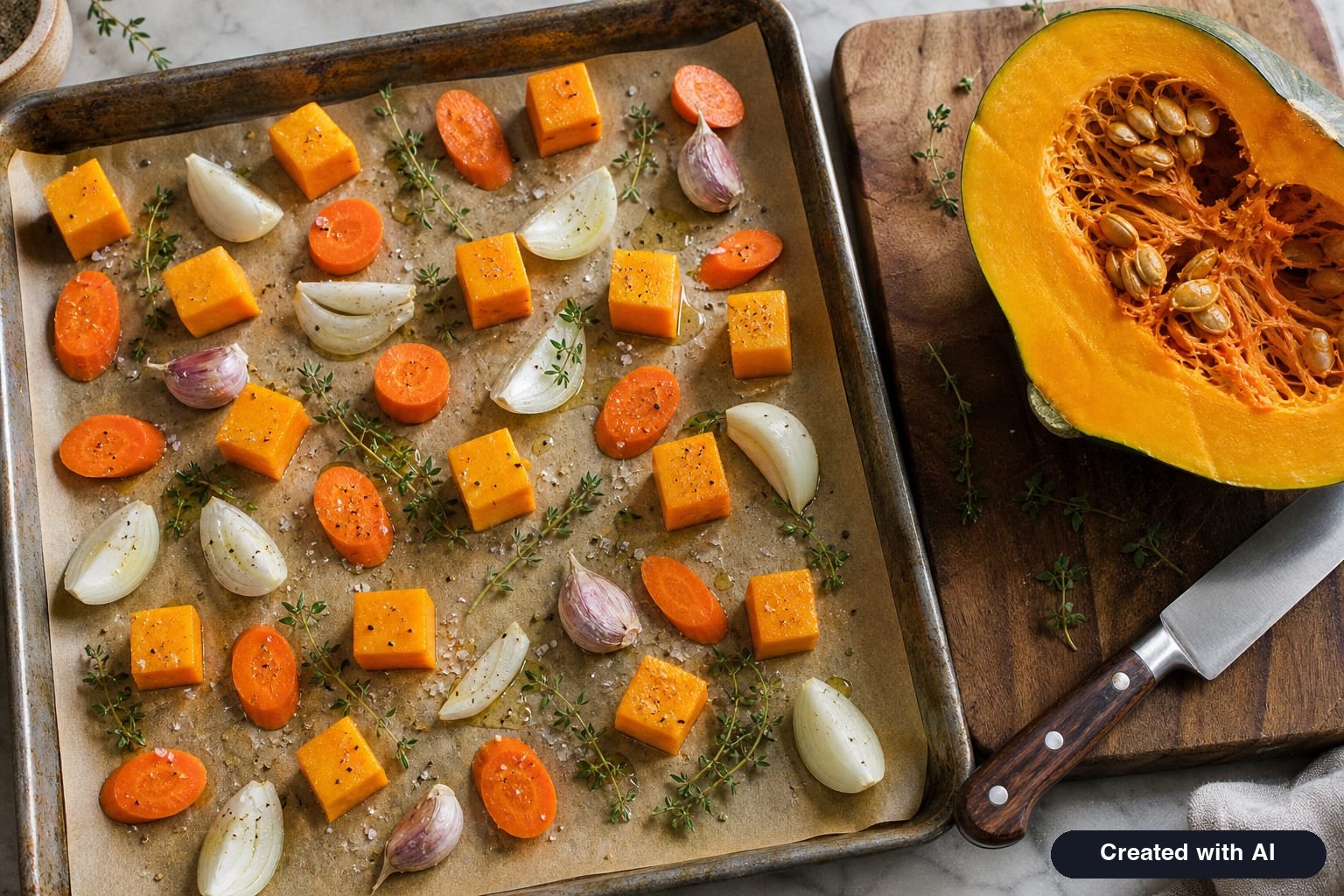
3. Oil and spices. Put the vegetables on the sheet pan, drizzle with the oil, sprinkle with half a teaspoon of salt, the pepper, and the thyme, and toss with your hands so every piece is coated. Spread them in a single layer. This is the most important part of the recipe: piled on top of each other, the vegetables steam instead of roast, and the soup loses that roasted flavor. If they don't fit on one pan, use two.
4. Roasting. Roast on the middle rack for 35–40 minutes, flipping the vegetables with a spatula halfway through. The pumpkin is done when a fork slides in without resistance and the edges are clearly browned. Pieces that are soft but still pale aren't ready—give them 5–10 minutes more, because the browned edges are where the flavor is.
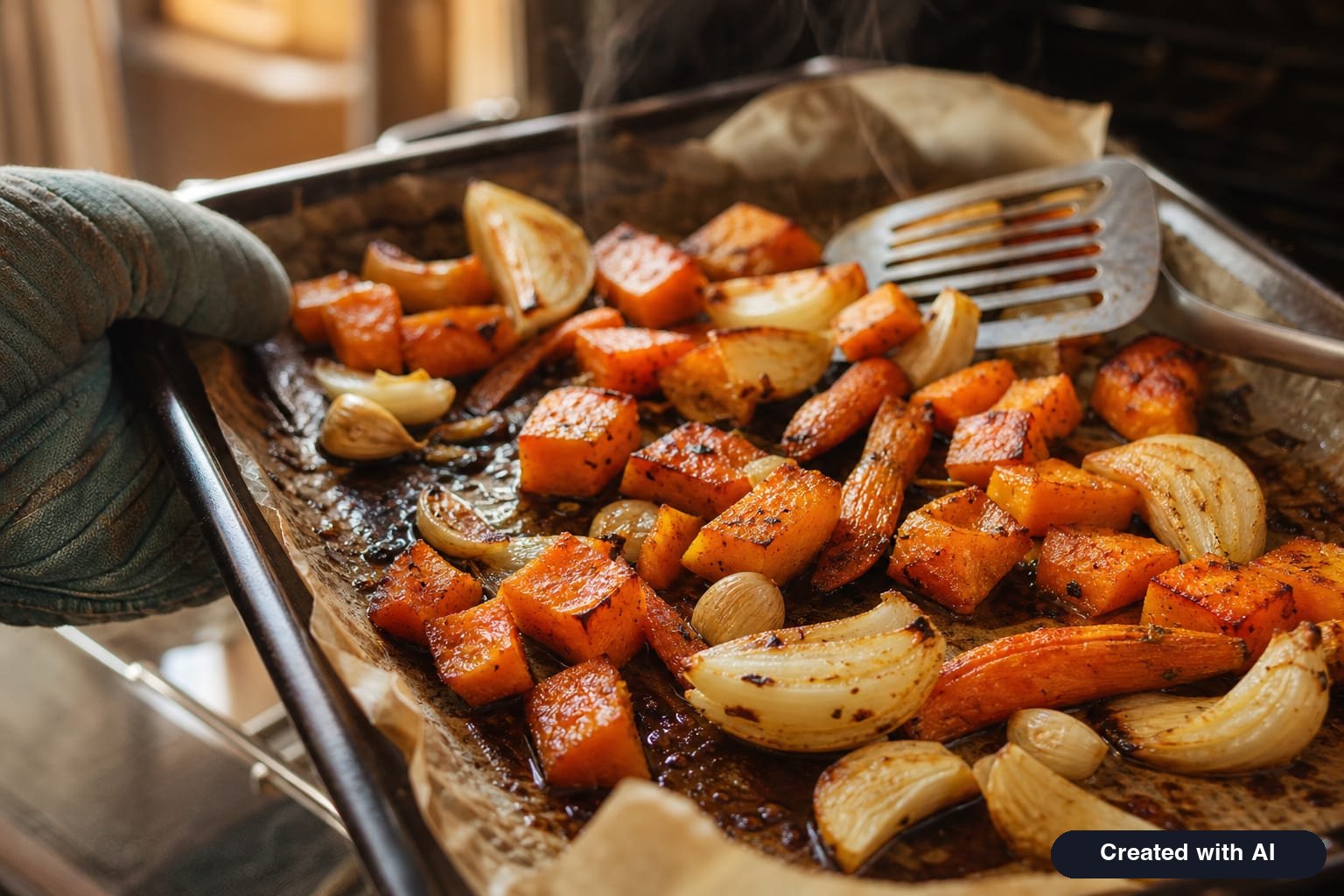
5. Into the pot. Transfer the roasted vegetables to a pot. Squeeze the garlic cloves out of their skins. Deglaze the pan with a splash of hot broth, scraping up the browned bits, and pour that into the pot too—there's a lot of flavor there. Add 3 cups (700 ml) of hot broth and simmer over medium heat for 5–8 minutes. No need to go longer: the vegetables are already cooked, and this is just so the flavors come together and the carrots soften completely.
6. Blending. Take the pot off the heat and blend with an immersion blender until completely smooth—that takes 1–2 minutes, not a few seconds. In a countertop blender, fill the jar only halfway and cover the lid with a towel: the steam can blow it off. For an extra-silky texture, push the soup through a fine-mesh strainer.
7. Cream and thickness. Pour in the heavy cream, grate in the nutmeg, stir, and heat through without letting it boil again. Taste for salt—it usually needs another half teaspoon. If the soup is too thick, thin it with hot broth 1/4 cup (50 ml) at a time; if it's too thin, simmer it uncovered for a few minutes.
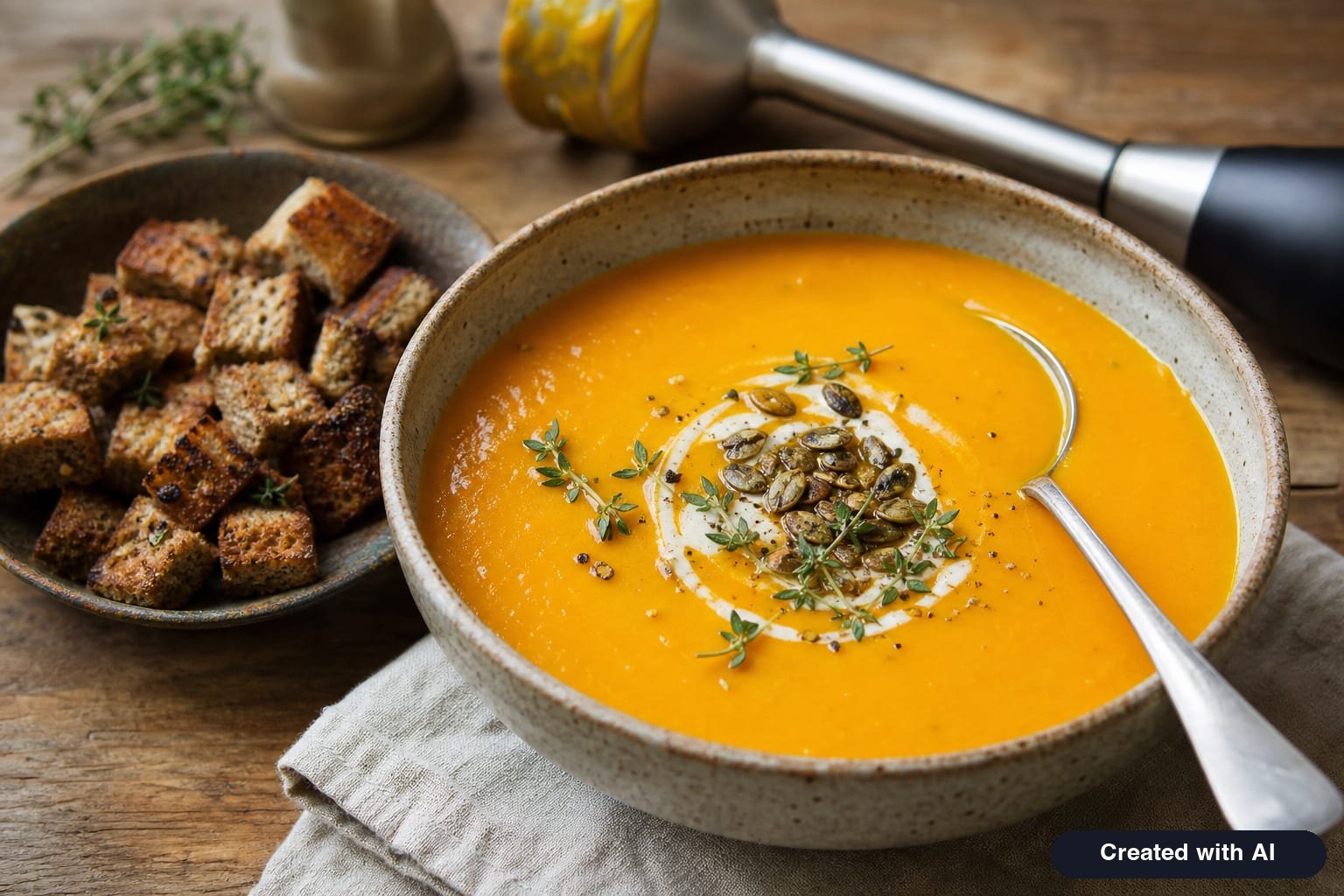
8. Serving. Toast the pumpkin seeds in a dry skillet for 2–3 minutes until they start to pop. Ladle the soup into bowls and sprinkle with the seeds.
How long to roast pumpkin for soup
Roasting time depends mostly on the size of the pieces, not the weight of the pumpkin. The table shows approximate times at 400°F (200°C).
| How the pumpkin is prepared | Time at 400°F (200°C) | Notes |
|---|---|---|
| 3/4-inch (2 cm) cubes | 25–30 min. | Fastest, but easy to overcook – flip after 12 min. |
| 1 1/2-inch (3–4 cm) cubes | 35–40 min. | The method in this recipe: edges brown, inside stays moist |
| Wedges with skin, 1 1/2 to 2-inch (4–5 cm) thick | 45–55 min. | Scoop out the flesh after roasting; no peeling raw pumpkin |
| Halved, cut side down | 50–70 min. | Least amount of work; browns less, milder flavor |
| Frozen cubes | 40–45 min. | Don't thaw; roast without oil for the first 15 min. so the water cooks off |
If the skin is very hard and tough to peel raw, roast the pumpkin in wedges or halves instead: once cooked, the flesh comes away from the skin easily with a spoon. More on roasting methods, temperatures, and seasonings is in our recipe for oven-roasted pumpkin.
Common mistakes
The vegetables stewed in their own juices. The pan was crowded or the oven wasn't preheated. Spread them in a single layer and roast at no lower than 400°F (200°C).
The soup is bitter. Peeled garlic or small bits of onion burned. Roast the garlic in its skin, cut the onion into large wedges, and remove any blackened pieces before blending.
The soup is watery. All the broth went in at once even though the pumpkin was watery. Start with 2 cups (500 ml), blend, and only then thin it to the consistency you like.
The flavor is flat and too sweet. Roasting concentrates the pumpkin's sweetness, so it needs balance: more salt, pepper, and a teaspoon of lemon juice at the end.
The texture is grainy. It wasn't blended long enough, or the carrots were still firm. Simmer for another 5 minutes and blend longer.
Variations: with other roasted vegetables and toppings
Pumpkin soup with roasted vegetables. You can add a red bell pepper (1, cut into wide strips), 2 tomatoes cut in half, or 7 oz (200 g) of sweet potato to the same pan. The pepper adds smokiness and sweetness, the tomatoes a little tang, and the sweet potato body. Keep the total amount of vegetables about the same, or they won't fit in a single layer.
With a roasted apple. One tart apple, cut into wedges and roasted alongside for the last 20 minutes, adds freshness and stands in for the lemon juice.
With potatoes. If you want a more filling soup, add 7 oz (200 g) of potatoes, cut into 3/4-inch (2 cm) cubes, to the pan. The soup will be thicker, so you'll need about 1/2 cup (100 ml) more broth.
With ginger and coconut milk. Grate 1/2 to 1 inch (1–2 cm) of fresh ginger into the pot, and replace the heavy cream with 2/3 cup (150 ml) of coconut milk. That takes the soup in a different direction—the full recipe with curry and chile is in our pumpkin coconut soup.
With crispy bacon or chicken. Top the finished soup with crisp pan-fried bacon or shredded cooked chicken. Heartier versions with meat are in our chicken pumpkin soup.
Vegan. Omit the heavy cream or replace it with coconut milk, and use vegetable broth.
Chunky. If you like pieces in your soup, blend only two-thirds of the roasted vegetables, and add the rest to the bowls whole.
For kids. Roast without pepper and salt only the adults' bowls. Roasted soup is sweeter than simmered, so kids usually eat it more happily.
Lighter version
Pumpkin itself is very low in calories—2 lb (1 kg) of flesh has only about 260. Most of the soup's calories come from the cream, oil, and seeds, so those are the ingredients worth swapping. Here are the actual differences for one of the 4 servings:
| Change | How | kcal / serving | Difference |
|---|---|---|---|
| Main recipe | as written above | 285 | – |
| Without heavy cream | omit the heavy cream; also suitable for a vegan version | 200 | −85 |
| With Greek yogurt | 3.5 oz (100 g) Greek yogurt instead of heavy cream, stirred in off the heat | 225 | −60 |
| Lighter cream | 1/2 cup (100 ml) half-and-half instead of heavy cream | 233 | −52 |
| Less oil | 1 tbsp oil instead of 2, toss the vegetables well | 252 | −33 |
| Without seeds | serve without pumpkin seeds, garnish with herbs | 257 | −28 |
| With coconut milk | 2/3 cup (150 ml) coconut milk instead of heavy cream (does not reduce calories) | 287 | +2 |
Calculated with the Firmus Medicus calorie database, with the recipe divided into 4 servings.
Omitting the heavy cream makes the biggest difference: a serving drops from 285 calories to about 200 calories, and the saturated fat is reduced almost fivefold. A roasted vegetable soup handles that better than a simmered one, because the flavor comes from roasting, not fat. Greek yogurt (about 225 calories) and half-and-half (about 233 calories) are middle-ground options that keep the creamy texture; stir the yogurt in off the heat so it doesn't curdle. Halving the oil saves about 33 calories, and skipping the seeds saves about 28 calories. Coconut milk doesn't cut calories (about 287)—it changes the flavor, not the energy. The potato version, on the other hand, brings the soup up to about 324 calories, but it also keeps you full longer.
How many calories are in roasted pumpkin soup
One serving of this recipe has about 285 calories, 5.8 g of protein, 19 g of fat, and 27 g of carbohydrates, of which 3.7 g are fiber. That's calculated from the weight of all the raw ingredients—about 1.2 lb (555 g) per serving; some water evaporates in the oven, so you end up with about 2 cups (450 ml) of thicker soup in the bowl, but the calories per serving stay the same. With butternut squash, which has more carbohydrates, a serving would be about 333 calories. Below is how much each ingredient contributes.
| Ingredient | Amount | kcal, whole recipe | Share |
|---|---|---|---|
| Heavy cream | 100 g | 340 | 30 % |
| Olive oil | 30 g | 265 | 23 % |
| Pumpkin, raw | 1000 g | 260 | 23 % |
| Pumpkin seeds | 20 g | 112 | 10 % |
| Carrot | 200 g | 82 | 7 % |
| Onion | 150 g | 60 | 5 % |
| Garlic, raw | 15 g | 22 | 2 % |
| Table salt | 6 g | 0 | 0 % |
| Water | 700 g | 0 | 0 % |
| Total | 2221 g | 1141 | 285 kcal / serving |
Ingredient values – Firmus Medicus calorie database.
What to serve with, how to store and freeze
Anything crunchy goes with roasted pumpkin soup: toasted pumpkin seeds, garlicky rye croutons, or oven-crisped baguette cubes. A spoonful of sour cream or plain yogurt adds tang, and crumbled feta or goat cheese adds saltiness. If the soup is the whole lunch, serve it with a grilled cheese sandwich or a warm baguette.
The soup keeps in an airtight container in the fridge for 3–4 days. Reheat it over low heat, stirring, without letting it boil; if it has thickened, thin it with a splash of water. It keeps in the freezer for up to 3 months—freeze it in portions, and if you plan to freeze it, add the cream only after thawing, because frozen cream can separate. Thaw overnight in the fridge or directly in a pot over low heat.
You can also split up the work: roast the vegetables the night before, refrigerate them, and the next day the soup is ready in 15 minutes. If there's more pumpkin on the pan than you need, purée some without liquid—what to do with it next is covered in pumpkin porridge and purée. For other fall dinners, try pumpkin stew, and you'll find every idea in one place in our guide to pumpkin recipes.
Frequently asked questions
How do you make roasted pumpkin soup in the oven?
Drizzle pumpkin, carrots, onion, and unpeeled garlic with oil and bake at 400°F (200°C) for 35–40 minutes. Transfer to a pot, add 3 cups (700 ml) of hot broth, simmer for 5–8 minutes, blend, and stir in 1/2 cup (100 ml) of heavy cream.
What's the difference between roasted and simmered pumpkin soup?
Roasting evaporates some of the pumpkin's water and caramelizes its sugars, making the soup sweeter, thicker, and richer. Simmered soup is milder and made in one pot.
How long do you roast pumpkin for soup?
At 400°F (200°C), 1 1/2-inch (3–4 cm) cubes roast for 35–40 minutes, 3/4-inch (2 cm) cubes for 25–30 minutes, wedges with skin for 45–55 minutes, and halved pumpkins for 50–70 minutes.
What is the best pumpkin for roasted pumpkin soup?
Varieties with dense, bright orange flesh like Red Kuri, Musquée de Provence, or butternut squash. They hold less water and brown nicely; Red Kuri doesn't even need peeling.
Do you need to peel pumpkin before roasting?
Yes, if you're roasting cubes—except Red Kuri, whose skin softens and blends easily. If the skin is very hard, roast wedges or halves and scoop out the flesh with a spoon afterward.
Can you roast other vegetables for pumpkin soup?
Yes. Red bell pepper, tomatoes, sweet potatoes, regular potatoes, or a tart apple work well on the same sheet pan. Keep the vegetables in a single layer, or they'll steam instead of roast.
How many calories are in roasted pumpkin soup?
One of the 4 servings in this recipe has about 285 calories. Without heavy cream, it's about 200 calories, and with Greek yogurt instead of cream, it's about 225 calories.
Can you freeze blended roasted pumpkin soup?
Yes, it keeps for up to 3 months in the freezer and 3–4 days in the fridge. If you plan to freeze it, add the heavy cream only after the soup is thawed and reheated.
Log in to comment
No comments yet. Be the first.