Pumpkin Recipes: What to Make with a Pumpkin – Dishes and Ideas
- Soups, hearty dishes, baked goods, breakfasts, and winter preserves – with essential quantities and links to recipes
- Tables: how much you get from 2 lb (1 kg) of pumpkin flesh and how long each dish takes
- How to peel and cut a pumpkin, and how much flesh remains depending on the variety
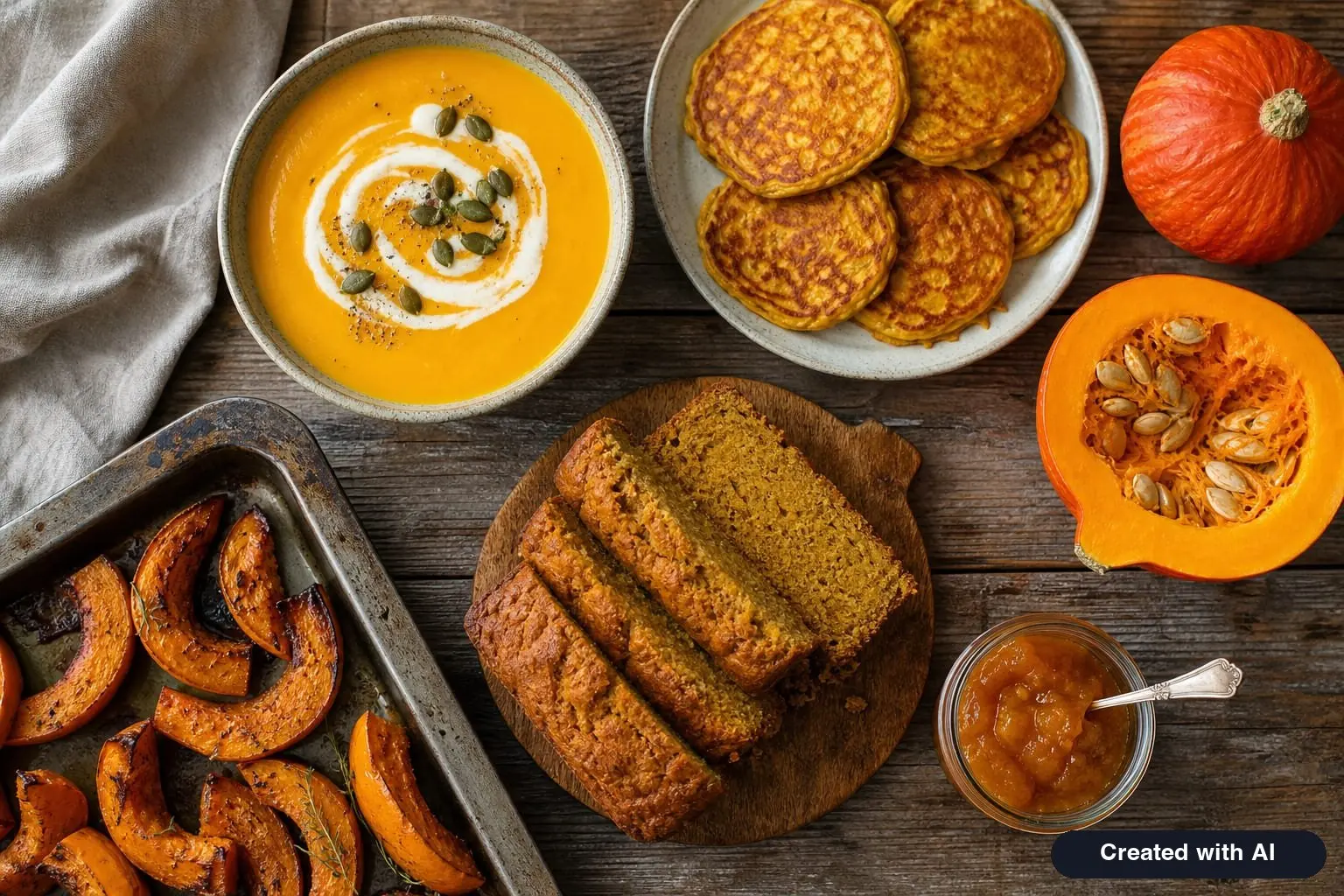
- How to prepare a pumpkin: peeling, cutting, and how much flesh remains
- How much you get from 2 lb (1 kg) of pumpkin
- 7 pumpkin dishes to start with
- Pumpkin soups
- Hearty pumpkin dishes: with meat, vegetables, and cheese
- Baked goods and desserts
- Breakfasts: pancakes and porridge
- Recipes with pumpkin purée
- Winter preserves
- How long each dish takes
- Seeds, pumpkin flour, and other pumpkin foods
- Which pumpkin to choose and what to do with a Halloween pumpkin
Pumpkin is one of the most rewarding fall vegetables: the same squash can yield soup for lunch, a cake for tea time, and a jar of jam for the winter. Its flavor is mild and slightly sweet, so pumpkin pairs equally well with garlic, feta, or chicken, as it does with cinnamon, oranges, or farmer cheese. It is low in calories – 3.5 oz (100 g) of raw flesh has about 26 kcal, while butternut squash has about 45 kcal, so the dish's heartiness depends on what you serve it with.
The most common problem isn't a lack of recipes, but the sheer volume. A single average pumpkin weighs 6–11 lb (3–5 kg), and once cut, it needs to be used within a few days. That's why this guide is organized to make it clear what to make with a pumpkin today, what to make tomorrow, and what to prep for winter: every dish includes essential quantities, prep times, and a link to a detailed recipe with photos.
Start with the prep and the "yields per 2 lb (1 kg)" table – it will help you plan what your pumpkin is enough for. After that, the dishes are grouped into five categories: soups, hearty dishes, baked goods and desserts, breakfasts, and winter preserves.
How to prepare a pumpkin: peeling, cutting, and how much flesh remains
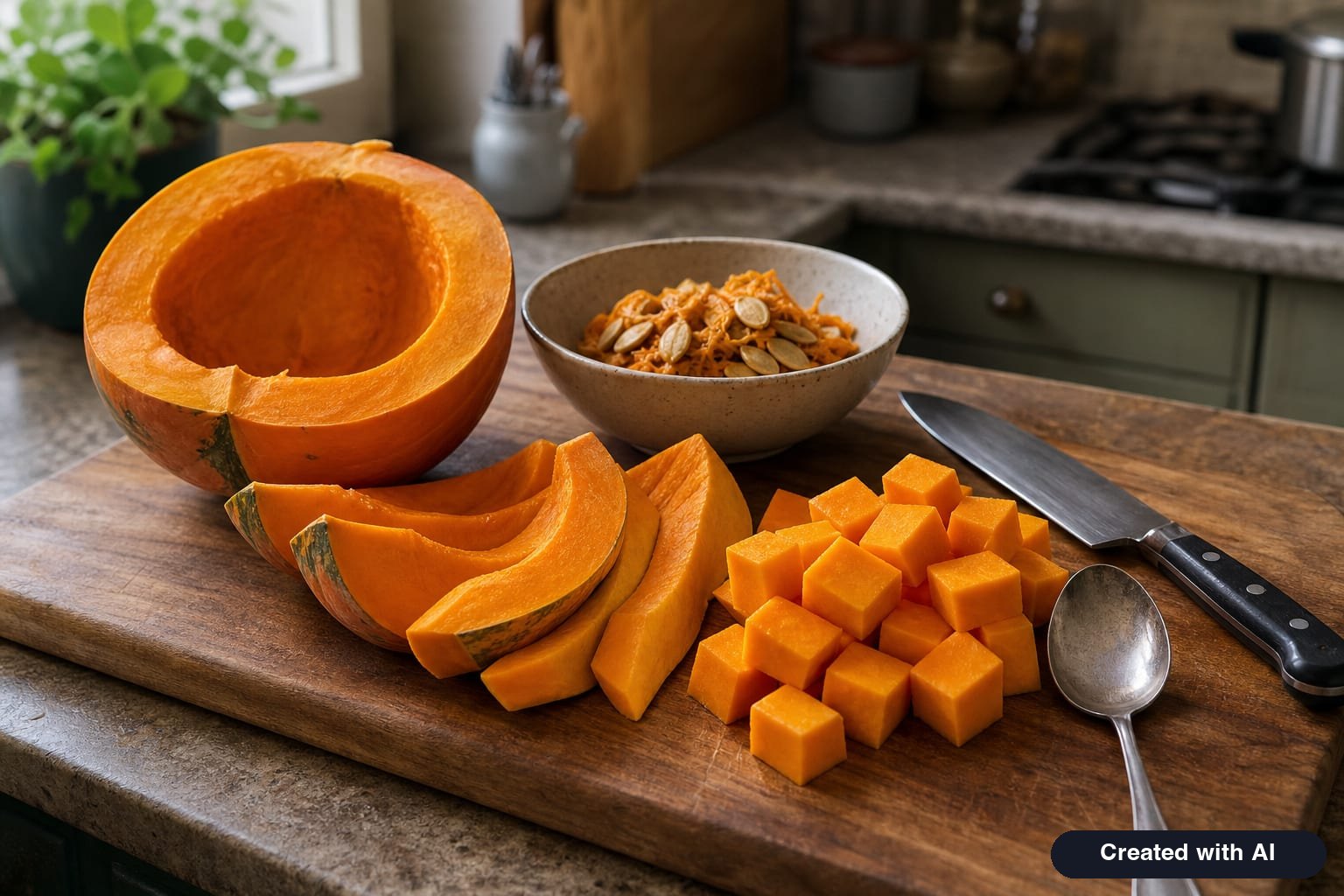
First, wash and dry a large pumpkin – a wet rind is slippery. Cut off the stem and the bottom so the pumpkin stands stably, then cut it in half from top to bottom. If the knife gets stuck, don't force it: insert the tip, press down, and rotate the pumpkin, not the knife. Scoop out the seeds and stringy bits with a spoon, cut the halves into 1 to 1.5-inch (3–4 cm) wide wedges, and only then peel them – it's much easier and safer to cut the rind off a wedge lying on its side than from a round squash.
A very hard rind can be softened: place the halved pumpkin in a 350°F (180°C) oven for 10–15 minutes, or microwave the wedges for 2–3 minutes. The rind will loosen, while the flesh remains raw and suitable for any recipe. If you're going to roast the pumpkin for purée or soup anyway, don't peel it at all – simply scoop out the cooked flesh with a spoon.
How much flesh remains depends on the variety. Recipes almost always specify quantities for already peeled pumpkin, so buy a little extra to account for the waste.
| Pumpkin | Peel it? | Waste (rind, seeds) | Flesh left from 2 lb (1 kg) |
|---|---|---|---|
| Large orange pumpkin | Yes, the rind is thick | 30–35% | about 1.4–1.5 lb (650–700 g) |
| Muscat | Yes | 20–25% | about 1.6–1.7 lb (750–800 g) |
| Butternut | Yes, the rind is thin – a peeler works | 15–20% | about 1.7–1.8 lb (800–850 g) |
| Hokkaido (Red Kuri) | No, the rind bakes and boils soft | 10–15% (seeds only) | about 1.8–2 lb (850–900 g) |
The size of the cuts determines the cooking time: 3/4-inch (2 cm) cubes boil in soup in 15–20 minutes, 1 to 1.5-inch (3–4 cm) wedges roast in the oven in 30–40 minutes, and coarsely grated pumpkin softens in pancakes or cakes in just a few minutes. A cut pumpkin will keep in the fridge, covered with plastic wrap, for 4–5 days, and cubed pumpkin for 2–3 days. For more on which variety suits which dish, see the article on types of pumpkins and their benefits.
How much you get from 2 lb (1 kg) of pumpkin
The table is calculated based on 2 lb (1 kg) of already peeled flesh. If you have a large 8 lb (4 kg) pumpkin, you'll get about 5.5–6 lb (2.6–2.8 kg) of flesh – enough for a pot of soup, a cake, and a few jars of jam.
| Dish | Yield from 2 lb (1 kg) of flesh | Main additional ingredients |
|---|---|---|
| Puréed soup | about 2 quarts (2 l), 6 servings | potatoes, carrots, 1 quart (1 l) broth, heavy cream |
| Roasted pumpkin (side dish) | about 1.4–1.5 lb (650–700 g), 4 servings | 2–3 tbsp oil, garlic |
| Purée (from roasted pumpkin) | about 1.5–1.6 lb (700–750 g) | none |
| Stew | 6 servings | 1 lb (500 g) meat or 14 oz (400 g) chickpeas |
| Pancakes (grated pumpkin) | about 30–35 pancakes | eggs, all-purpose flour |
| Cake | 2 cakes, 12 slices each (14 oz/400 g per cake) | all-purpose flour, sugar, oil, eggs |
| Muffins | about 48 muffins (9 oz/250 g per dozen) | all-purpose flour, sugar, kefir or buttermilk |
| Porridge with rice | 8 servings | 1 1/2 cups (300 g) rice, 1 quart (1 l) milk |
| Jam | about 2 1/2 pints (1.2–1.3 l) | 2 1/2–3 cups (500–600 g) sugar, oranges or lemons |
| Pickled pumpkin | 3–4 pint (0.5 l) jars | marinade: water, vinegar, sugar |
| Frozen cubes | 2 lb (1 kg) (two 1 lb/500 g bags) | none |
As the table shows, baked goods don't require much pumpkin – 14 oz (400 g) is enough for one cake. Therefore, the most convenient way to divide a large pumpkin is: about 2 lb (1 kg) for soup or stew, 14–18 oz (400–500 g) for baking, and the rest can be roasted and puréed, or cubed and frozen.
7 pumpkin dishes to start with
If you're cooking pumpkin for the first time and don't know where to start, these seven pumpkin dishes turn out perfectly almost every time and showcase just how versatile this vegetable is.
- Puréed pumpkin soup – a classic with potatoes, carrots, and heavy cream; about 45 minutes.
- Oven-roasted pumpkin – wedges with oil and garlic, 30–40 minutes at 400°F (200°C).
- Pumpkin stew – a one-pot dinner with chicken or chickpeas.
- Pumpkin pancakes – made with grated pumpkin, sweet or savory with cheese; on the table in half an hour.
- Pumpkin cake – moist, spiced with cinnamon, mixed with a spoon in one bowl.
- Pumpkin porridge – with rice or millet, great for kids too.
- Pumpkin jam with oranges – a great way to use up 2–4 lb (1–2 kg) at once.
Pumpkin soups
Classic puréed soup. 1.7–2 lb (800 g–1 kg) of pumpkin, a couple of potatoes, a carrot, and an onion are sautéed, covered with about a quart (1 liter) of broth, and boiled for 20 minutes until the vegetables fall apart when pressed with a fork. Then everything is blended and enriched with heavy cream. The potatoes add thickness, making the soup creamy without needing a lot of fat. The full recipe, along with variations without potatoes, without cream, and kid-friendly versions, is in the pumpkin soup article.
With coconut milk. 1.7 lb (800 g) of butternut squash, a 13.5-oz (400 ml) can of coconut milk, ginger, and a teaspoon of curry powder – yields 5 servings of rich, slightly spicy soup without dairy. You can add red lentils to the same pot or serve it with shrimp. See pumpkin soup with coconut milk.
With chicken or bacon. When the soup needs to serve as a full meal, add 10–14 oz (300–400 g) of chicken breast or top it with crispy bacon. The soup can be puréed or left chunky – both methods are described in the chicken pumpkin soup recipe.
Roasted pumpkin soup. Pumpkin, carrots, onion, and unpeeled garlic are roasted in a 400°F (200°C) oven for 35–40 minutes, then blended with hot broth. Roasting evaporates some of the water and caramelizes the sugars, giving it a deeper flavor than boiled soup. The recipe: roasted pumpkin soup.
Hearty pumpkin dishes: with meat, vegetables, and cheese
Stew. This is the main answer for those looking for pumpkin and meat dishes. Brown 1 lb (500 g) of chicken thigh meat or pork, add 1.5–1.7 lb (700–800 g) of pumpkin cut into large cubes, an onion, a bell pepper, and a cup of broth; simmer for 30–40 minutes. Don't add the pumpkin right away, but halfway through – otherwise, it will turn to mush. Variations with ground meat, chickpeas, as well as casseroles, lasagna, and pumpkin salads are in the pumpkin stew article.
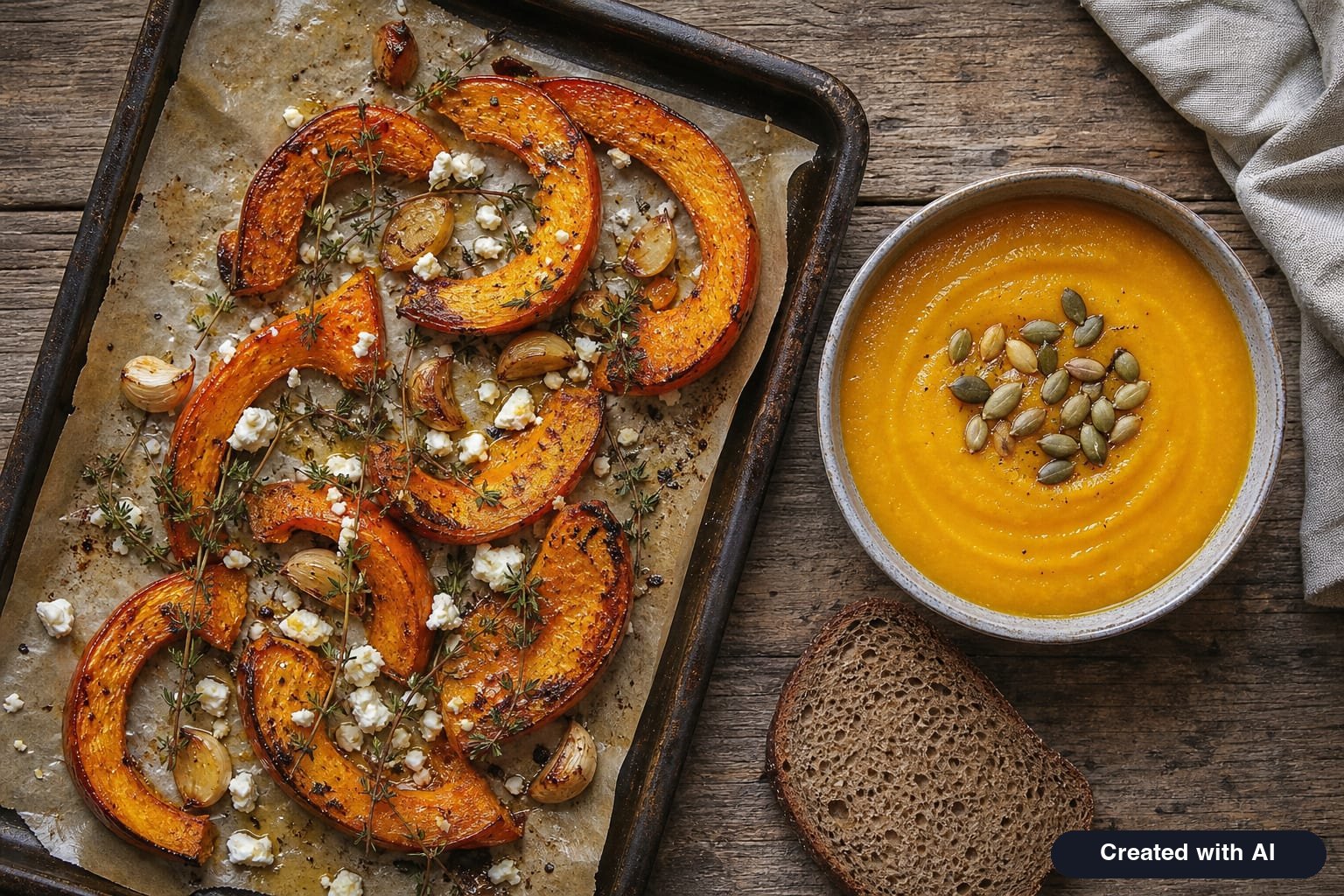
Roasted pumpkin. The simplest side dish: 2 lb (1 kg) of wedges, 2–3 tablespoons of oil, salt, garlic, thyme; 400°F (200°C), 30–40 minutes, flipping once. Arrange the wedges in a single layer with space between them – if crowded, they will steam in their own juices and won't brown. Pumpkin with feta is made the same way: crumble 5 oz (150 g) of cheese over the hot pumpkin 5 minutes before it's done baking, or right after taking it out of the oven. Pan-frying, air-frying, and pumpkin stuffed with ground meat are covered in roasted pumpkin.
Pumpkin and zucchini. These two vegetables are close relatives and pair well in the same pan or pot, but zucchini cooks twice as fast. When roasting them together, cut the pumpkin into 3/4-inch (2 cm) cubes and the zucchini into 1 to 1.5-inch (3–4 cm) pieces, or add the zucchini after 15 minutes. The same applies to stews and vegetable pancakes: salt and squeeze the grated zucchini, as it is more watery than pumpkin.
Baked goods and desserts
Cake. 14 oz (400 g) of finely grated pumpkin or purée, 2 1/2 cups (300 g) of all-purpose flour, 3 eggs, sugar, oil, and cinnamon – yields 12 slices. The pumpkin in the batter does the same job as carrots in a carrot cake: it adds moisture and color, while its own flavor remains mild, so don't skimp on the spices. Variations with farmer cheese, chocolate, apples, and an American pie with a purée filling are in the pumpkin cake article.
Muffins, loaf cake, and cookies. For twelve muffins, you need 9 oz (250 g) of pumpkin and 2 cups (250 g) of all-purpose flour; bake for 20–25 minutes at 350°F (180°C). Mix the batter briefly, just until no dry flour remains – overmixing makes it rubbery. The same batter works for a loaf cake in a rectangular pan, it just bakes longer. Recipes, plus cookies and a pumpkin spice latte, are in pumpkin muffins.
Pumpkin and farmer cheese. A combination worth remembering for its color and texture: the farmer cheese (or dry curd cottage cheese) provides heartiness, while the pumpkin adds moisture and sweetness. A cheese layer can be added to a cake, 5–7 oz (150–200 g) of farmer cheese can be mixed into pancake batter, and for a casserole, the pumpkin is grated and folded into the cheese mixture.
Pumpkin with apples. A tart apple balances the sweetness of the pumpkin, making this combination work almost anywhere: grate 1–2 apples into a cake or pancakes, use equal parts with pumpkin for jam, and add diced apples to porridge 5 minutes before it finishes cooking. If you have a lot of apples and only a little pumpkin, see the easy apple cake recipe – you can mix 5 oz (150 g) of grated pumpkin into its batter.
Breakfasts: pancakes and porridge
Pancakes. 1 lb (500 g) of coarsely grated pumpkin, 2 eggs, 4–5 tablespoons of all-purpose flour, and a pinch of salt – makes about 16 pancakes, 4 servings. Fry over medium heat for 3–4 minutes per side: on a pan that's too hot, the surface will brown before the pumpkin inside has time to soften. Fluffy pancakes with buttermilk, with farmer cheese, savory ones with cheese, and oven-baked versions are in the pumpkin pancakes article.
Porridge. Boil 1 lb (500 g) of pumpkin cubes in a small amount of water for 10 minutes, then add 3/4 cup (150 g) of rice and 2 cups (500 ml) of milk, and simmer for another 20–25 minutes over low heat. Yields 4 servings. With millet, the porridge is yellower and fluffier; with semolina, it's faster. All the variations are in pumpkin porridge.
Recipes with pumpkin purée
Purée is the most convenient prep ingredient when you have a lot of pumpkin. Roast a halved pumpkin cut-side down in a 400°F (200°C) oven for 40–50 minutes, scoop out the flesh, and blend it. Roasted purée is thicker and sweeter than boiled because some water evaporates during baking; if it's still runny, let it sit in a fine-mesh strainer for 15 minutes. Purée keeps in the fridge for 4–5 days, and in the freezer for up to 8 months, ideally portioned into 1-cup (250 g) containers. Step-by-step instructions, plus purée for babies, are in the porridge and purée article.
Where to use prepared purée:
- 1 cup (250 g) – for twelve muffins or pancake batter instead of grated pumpkin (you'll need an extra tablespoon of flour);
- 1 3/4 cups (400 g) – for a cake or American pie filling;
- 2 cups (500 g) and 2 cups (500 ml) of broth – for a quick soup for two in 10 minutes;
- 2–3 tablespoons – into oatmeal, yogurt, or pasta sauce with heavy cream and hard cheese;
- 2 tablespoons of purée, milk, espresso, and cinnamon – for a homemade pumpkin spice latte.
Winter preserves
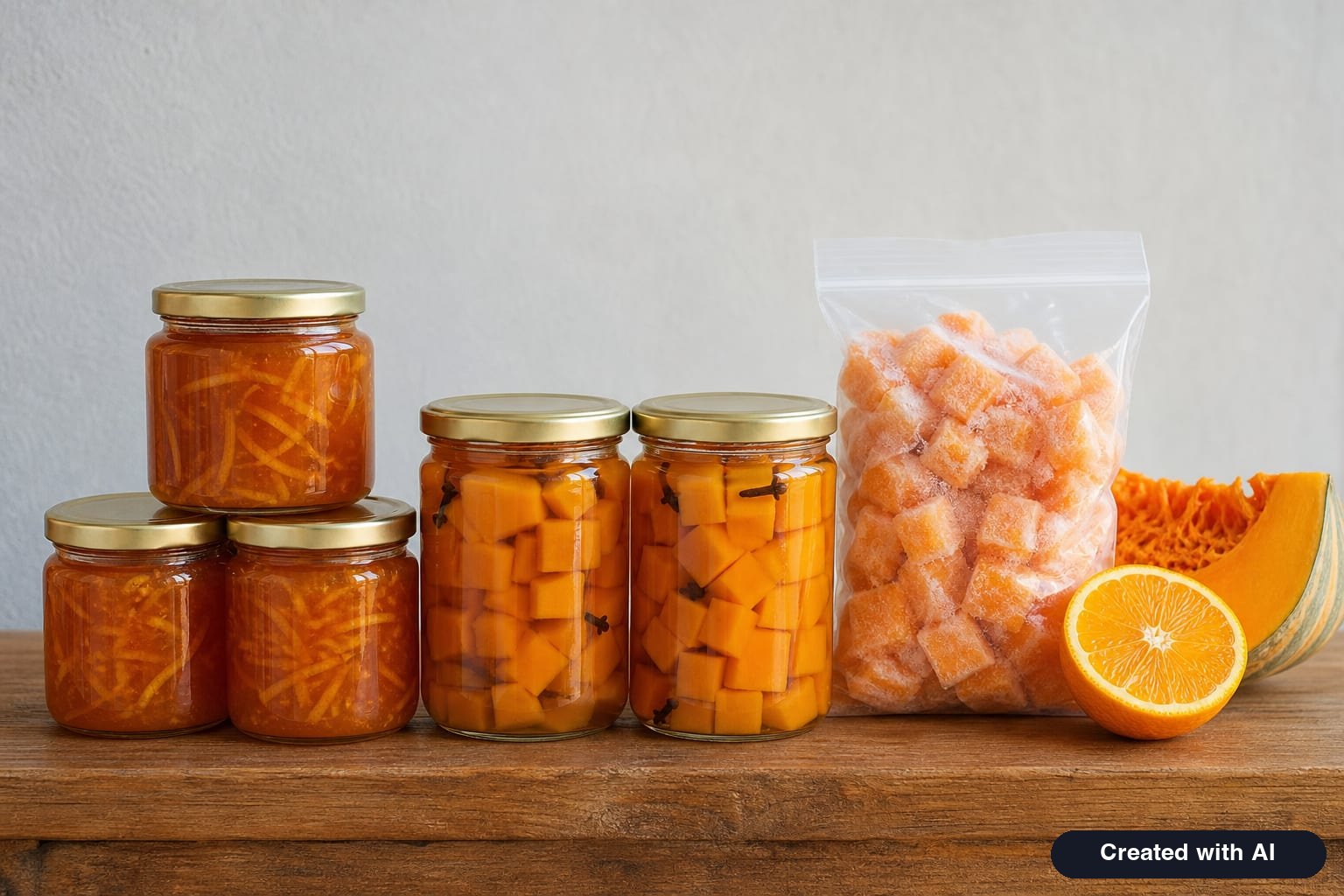
Jam. Pumpkin with oranges is the most popular combination because pumpkin itself lacks acidity, and without it, the jam tastes flat. 2 lb (1 kg) of pumpkin cubes, 2 1/2–3 cups (500–600 g) of sugar, 2 oranges (one with grated zest), and a lemon; the pumpkin is sprinkled with sugar and left for 3–4 hours to release its juices, then boiled for 40–50 minutes. Variations with lemon, apples, cranberries, and ginger are in pumpkin jam.
Pickled pumpkin, relish, and juice. Pickled pumpkin cubes in a sweet and sour marinade taste reminiscent of canned pineapple and pair well with meat; a spicier pumpkin relish with garlic goes well with potatoes. For juice, the pumpkin is boiled with oranges or apples and blended, making it thick and pulpy. Exact marinade quantities, pasteurization times, and a candied pumpkin recipe are in the pickled pumpkin article.
Freezing. The fastest way to preserve pumpkin without sugar or vinegar: spread raw 3/4-inch (2 cm) cubes in a single layer on a tray, freeze for 2–3 hours, and only then transfer them to bags – this prevents them from clumping into a solid block. Frozen cubes are great for soups, stews, and porridges; add them without thawing. They are not suitable for roasting as wedges, because they become mushy once thawed.
How long each dish takes
Time is calculated from already peeled and cut pumpkin; add 10–15 minutes for peeling and cutting.
| Dish | Active time | Total time | When to choose |
|---|---|---|---|
| Pancakes | 30 min | 30 min | for breakfast, a quick dinner |
| Puréed soup | 15 min | 40–45 min | for an everyday lunch |
| Soup with coconut milk | 15 min | 35–40 min | when you want something spicier, dairy-free |
| Porridge with rice | 10 min | 35–40 min | for breakfast, for kids |
| Roasted pumpkin | 10 min | 40–50 min | for a side dish, salads |
| Muffins | 15 min | 40 min | for a snack, school lunch |
| Stew | 20 min | 50–60 min | for a hearty dinner |
| Roasted pumpkin soup | 15 min | 55–60 min | on the weekend, for guests |
| Cake | 20 min | 1 hr 10 min | for dessert, meal prep for the week |
| Purée | 10 min | 1 hr | when you have a lot of pumpkin |
| Jam | 30 min | 1 1/2 hrs plus 3–4 hrs resting | for preserves |
| Stuffed pumpkin | 30 min | 1 1/2 hrs | for a festive table |
If you're short on time, choose dishes where the pumpkin is grated or finely chopped. Oven dishes take longer, but require the least active work – while the pumpkin bakes, you can prepare something else.
Seeds, pumpkin flour, and other pumpkin foods
Seeds. Don't throw them away: wash them, dry them with a towel, toss with a teaspoon of oil and some salt, and roast in a 325°F (160°C) oven for 15–20 minutes, stirring once. A 6–8 lb (3–4 kg) pumpkin yields about a handful or two of seeds – enough to sprinkle over soup and salads. They are calorie-dense, with 3.5 oz (100 g) containing about 560 kcal, so a tablespoon is plenty for a serving.
Pumpkin flour. This is ground dried pumpkin flesh or seeds. You don't need separate recipes for it – use it as an add-in: replace 10–20% of the all-purpose flour with pumpkin flour in pancake, muffin, or bread batter (for example, 1/4–1/3 cup or 30–50 g out of 2 cups or 250 g), and you can stir 1–2 tablespoons into porridge or soup to thicken it. It contains no gluten, so it won't hold the batter together on its own and the baked goods won't rise.
Pumpkin, zucchini, and pattypan squash – the same family. For those looking for a deeper botanical classification: pumpkins belong to the gourd family and the genus Cucurbita, and the three species you'll meet most often in the kitchen are giant pumpkin (C. maxima), muscat pumpkin (C. moschata, which also includes butternut), and common pumpkin (C. pepo). Zucchini, pattypan squash, and spaghetti squash are all varieties of common pumpkin. Practically, this means they can substitute for each other in many savory recipes, differing only in water content and cooking time. Read more in the types of pumpkins overview.
Which pumpkin to choose and what to do with a Halloween pumpkin
For soups, purées, and baking, sweet, dense-fleshed pumpkins are best – butternut, muscat, Hokkaido (Red Kuri). The large orange carving pumpkin is more watery and less sweet: it's perfect for jam, pickling, porridge, and pancakes, while for soup, its flavor is best enhanced by roasting or using spices.
A Halloween pumpkin is usually grown for its size and shape, not for its flavor – its flesh is stringy and bland. The scooped-out flesh is still fine for soup or purée with plenty of spices, and the seeds can be roasted. A jack-o'-lantern that has been sitting outside or with a candle for a few days is no longer safe to eat.
If you're unsure where to start, make pumpkin soup – any pumpkin works for it and it's very forgiving. Roast the remaining flesh using the roasted pumpkin recipe, try baking a pumpkin cake on the weekend, and turn whatever doesn't fit in the fridge into preserves following the pickled pumpkin article.
Frequently asked questions
What can I make with a pumpkin?
The fastest pumpkin dishes are puréed soup (about 45 min), roasted pumpkin in the oven (30–40 min at 400°F/200°C), and grated pumpkin pancakes (30 min). Leftovers are great for baking a cake or muffins, making porridge, and any excess can be turned into jam, pickled pumpkin, or frozen in cubes.
How much flesh do you get from 2 lb (1 kg) of pumpkin?
From 2 lb (1 kg) of a large orange pumpkin, you get about 1.4–1.5 lb (650–700 g) of flesh; from a Muscat pumpkin, 1.6–1.7 lb (750–800 g); from a butternut squash, 1.7–1.8 lb (800–850 g). Hokkaido (Red Kuri) squash doesn't need peeling, so you only lose the seeds, leaving about 1.8–2 lb (850–900 g).
How much soup does 2 lb (1 kg) of pumpkin make?
From 2 lb (1 kg) of peeled pumpkin, along with potatoes, carrots, and about a quart (1 liter) of broth, you get about 2 quarts (2 liters) of puréed soup – enough for 6 servings.
What are the best pumpkin recipes with meat?
Pumpkin stew with chicken or pork (1 lb/500 g of meat and 1.5–1.7 lb/700–800 g of pumpkin, simmered for 30–40 minutes), pumpkin soup with chicken or bacon, and oven-roasted pumpkin stuffed with ground meat. Add the pumpkin halfway through cooking a stew so it doesn't fall apart.
What can I make with pumpkin purée?
1 cup (250 g) of purée is enough for twelve muffins or pancake batter, 1 3/4 cups (400 g) for a cake, and 2 cups (500 g) with 2 cups (500 ml) of broth makes a quick soup for two. A few tablespoons can be stirred into oatmeal, yogurt, pasta sauce, or a pumpkin spice latte.
How do you cook pumpkin with oranges?
Usually, it's a jam: 2 lb (1 kg) of pumpkin cubes, 2 1/2–3 cups (500–600 g) of sugar, 2 oranges, and a lemon, boiled for 40–50 minutes. Oranges provide the acidity that pumpkin lacks; the same combination is used for winter pumpkin juice.
Can you eat a Halloween pumpkin?
The scooped-out flesh of a fresh Halloween carving pumpkin is edible, but it is stringy and bland, so it's best suited for soup or purée with plenty of spices. A jack-o'-lantern that has been sitting outside or with a candle for a few days is no longer safe to eat.
How do you use pumpkin flour in recipes?
Replace 10–20% of the all-purpose flour with pumpkin flour in pancake, muffin, or bread batter (for example, 1/4–1/3 cup or 30–50 g out of 2 cups or 250 g). It cannot be used on its own because it lacks gluten and the baked goods won't rise; 1–2 tablespoons can also be used to thicken porridge or soup.
All parts of the guide
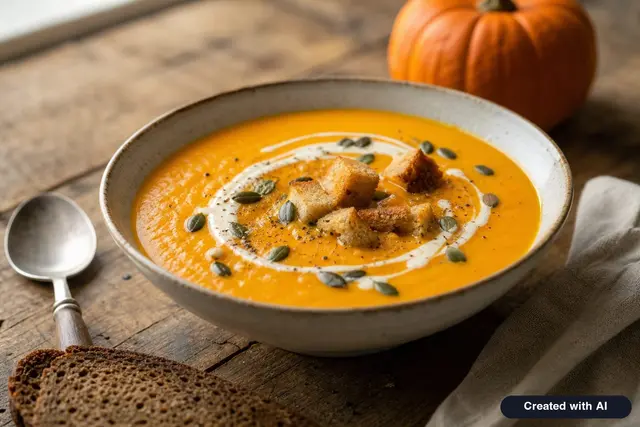 Pumpkin Soup: Creamy Blended Recipe with Potatoes and CarrotsA classic blended pumpkin soup with potatoes, carrots, and heavy cream. This thick, creamy, and comforting dish is ready in just 45 minutes.206 kcal · 45 min
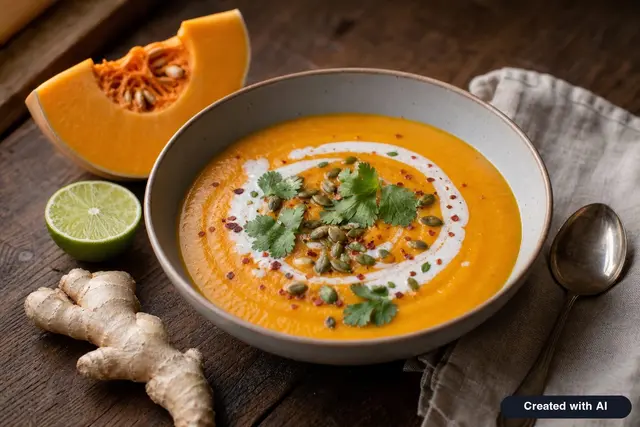 With Coconut MilkCreamy blended soup with no heavy cream: butternut squash, coconut milk, ginger, and curry.333 kcal · 45 min
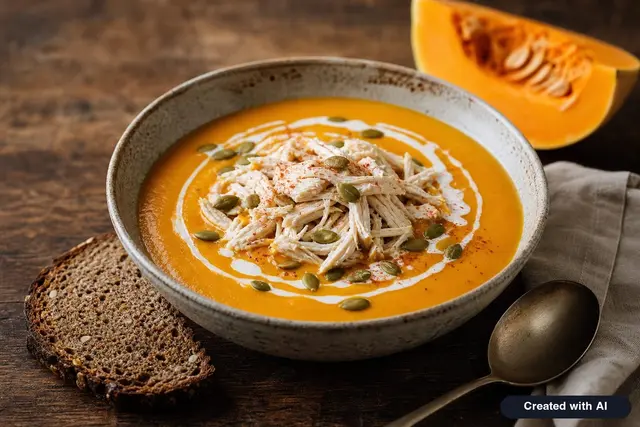 With ChickenCreamy puréed pumpkin soup with chicken cooked in the same pot and shredded back in.328 kcal · 55 min
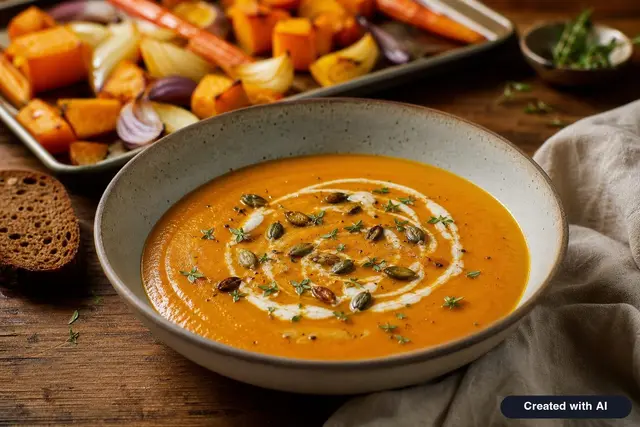 Roasted Pumpkin SoupPumpkin and vegetables roasted first for a sweeter, thicker, fuller-flavored blended soup.285 kcal · 1 hr 5 min
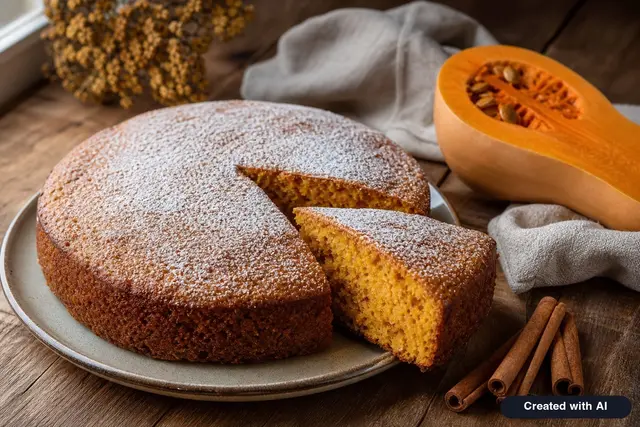 CakeA moist, fluffy pumpkin cake made with grated pumpkin and cinnamon. It comes together in just one bowl in 20 minutes.258 kcal · 1 hr 35 min
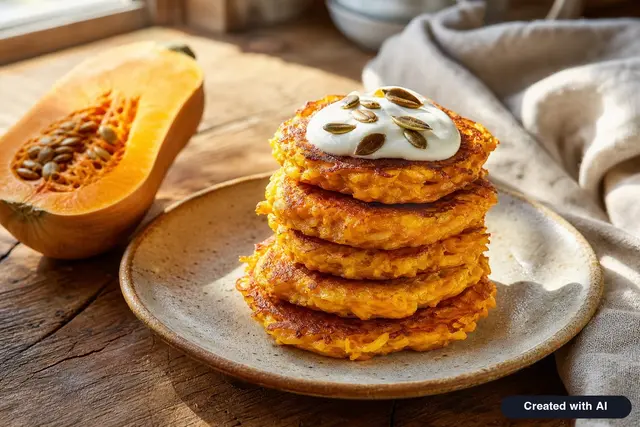 PancakesFluffy grated pumpkin pancakes with kefir—no need to boil or purée the pumpkin.83 kcal · 45 min
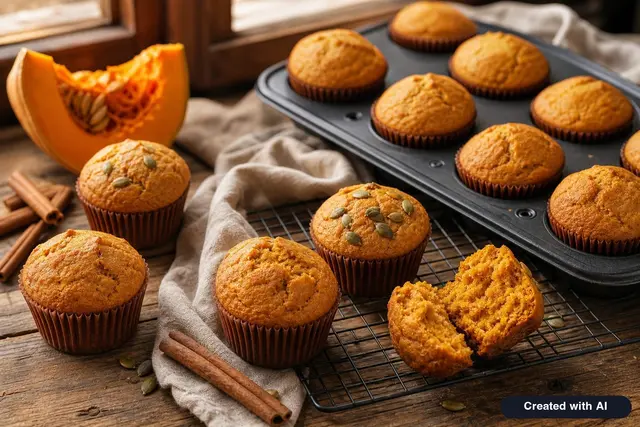 Muffins and CookiesFluffy, moist pumpkin muffins made with pumpkin purée and kefir. This versatile batter also makes a moist loaf of pumpkin bread.203 kcal · 50 min
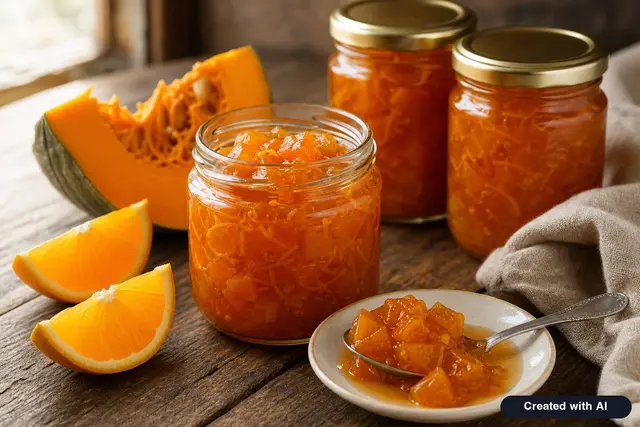 JamAmber pumpkin cubes in a thick orange and lemon syrup, a jam you can make well into winter.54 kcal · 4 hr 20 min
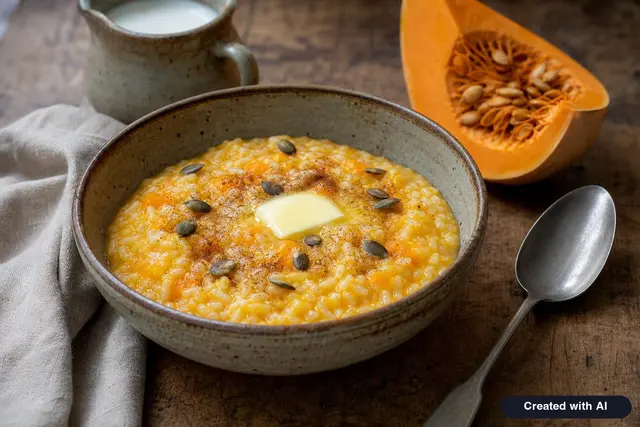 Porridge & PuréeCreamy pumpkin porridge with rice ready in 30 minutes, plus an easy guide to making and freezing homemade pumpkin purée for the whole winter.332 kcal · 55 min
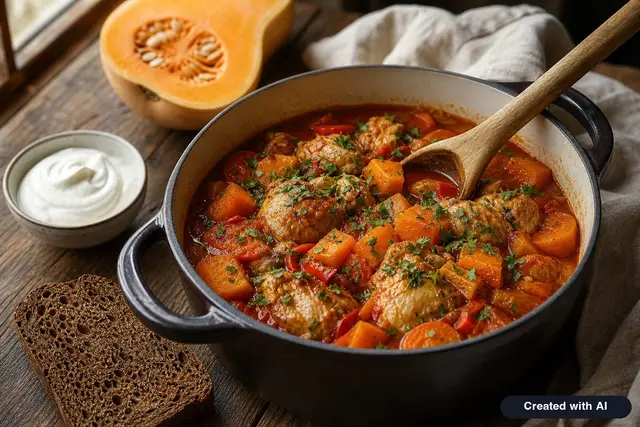 Stew and Hearty DishesOne-pot chicken pumpkin stew with the pumpkin added late so it stays in chunks, plus four hearty dishes.407 kcal · 1 hr 10 min
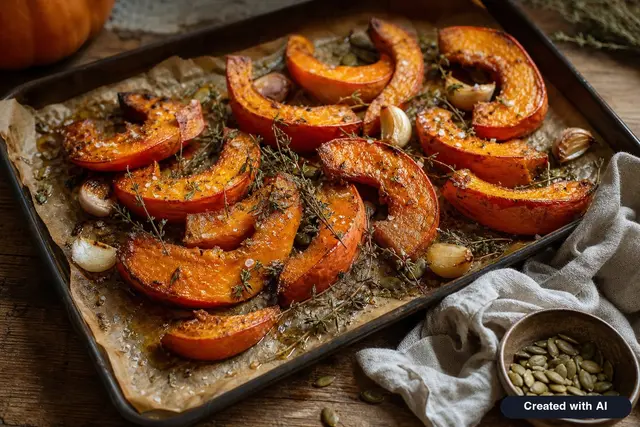 Roasted PumpkinOven-roasted pumpkin with garlic and thyme: browned edges and a soft center in about 35 minutes.135 kcal · 50 min
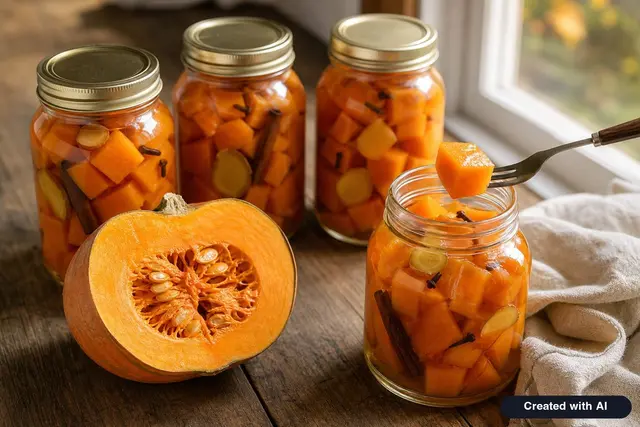 For WinterSweet and sour pickled pumpkin plus six more ways to preserve the harvest, from freezer salad to candied pumpkin.105 kcal · 55 min
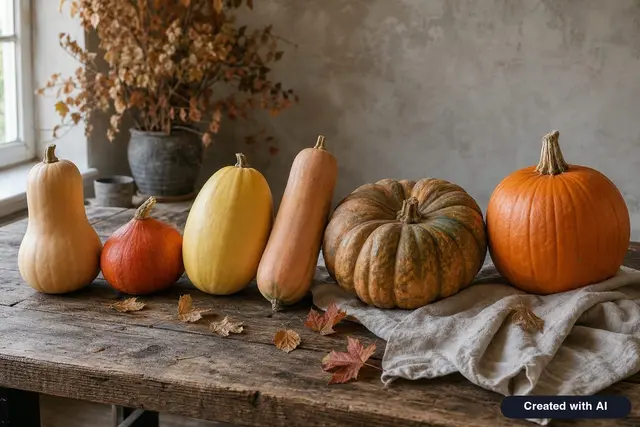 Types and benefitsDiscover the differences between butternut, Hokkaido, muscat, spaghetti, banana, and giant pumpkins, and learn which type is best for your favorite recipes.
Log in to comment
No comments yet. Be the first.