Cloudberries: Northern Bog Berries, Where to Find and Use Them
- The cloudberry (Rubus chamaemorus) is a 3–12 inch (8–30 cm) dioecious herbaceous plant in the blackberry genus.
- It thrives in raised bogs and wet peatlands across cool northern and Arctic climates.
- It blooms with white flowers in late spring to early summer, and the berries ripen in mid to late summer.
- The berries contain up to 200 mg of vitamin C per 3.5 oz (100 g), earning the plant the nickname "orange of the North."
- Cloudberries are rarely grown commercially and are primarily foraged in the wild.
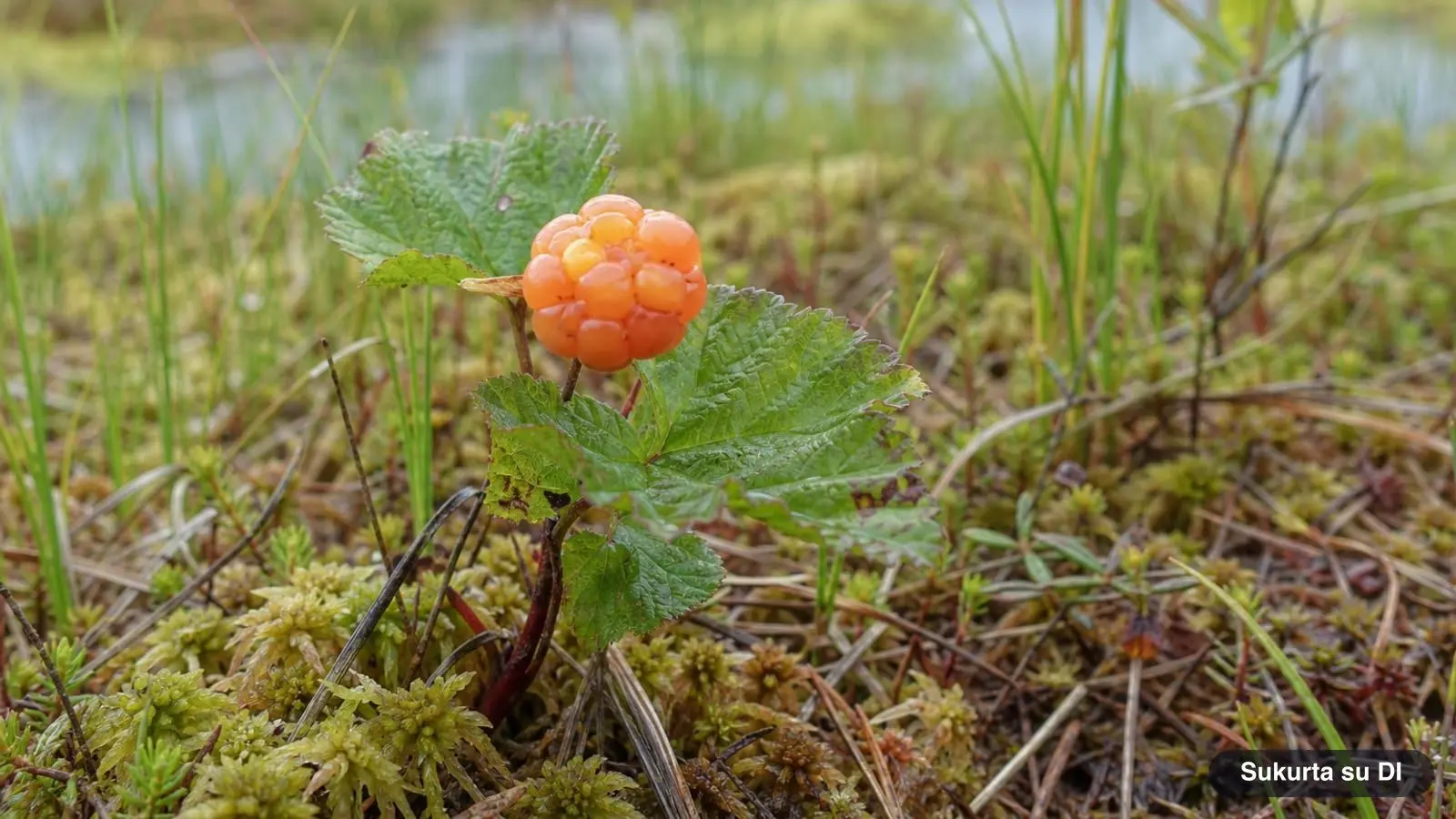
- The cloudberry is a herbaceous blackberry relative with a single berry per stem
- Cloudberries are dioecious, so large patches often remain fruitless
- Cloudberries thrive in raised bogs in cool northern climates
- Cloudberry populations face threats from bog drainage and changing moisture levels
- Cloudberries ripen in mid to late summer and pack up to 200 mg of vitamin C
- In Scandinavia, cloudberries are enjoyed with cheese, cream, ice cream, and waffles
- Wild bog berries: cloudberry, cranberry, bog bilberry, and lingonberry
This article is part of the 77.today berries guide, prepared by the 77.today editors from the sources listed at the end.
Cloudberries are perhaps one of the most mysterious wild berries. They grow in raised bogs on sphagnum moss, do not fruit every year, and a single small plant produces only one amber-colored berry. In Scandinavia, cloudberries are highly prized as a delicacy, and due to their high vitamin C content, they are often called the orange of the North. In this part of our guide to berries, we explore how to identify the cloudberry, where it grows, why it often yields little fruit, when it ripens, and how it is consumed.
| Latin name | Rubus chamaemorus |
|---|---|
| Family | Rose family (Rosaceae), blackberry genus |
| Plant | Perennial, dioecious, herbaceous, 3–12 inches (8–30 cm), with rhizomes |
| Where it grows | Raised bogs, wet forests; cool northern climates |
| Blooms | Late spring to early summer, with white flowers |
| Berries ripen | Mid to late summer |
| Berries | Up to 0.6 inches (1.5 cm), orange-yellow, sweet-tart, aromatic |
| Vitamin C | Up to 200 mg / 3.5 oz (100 g) |
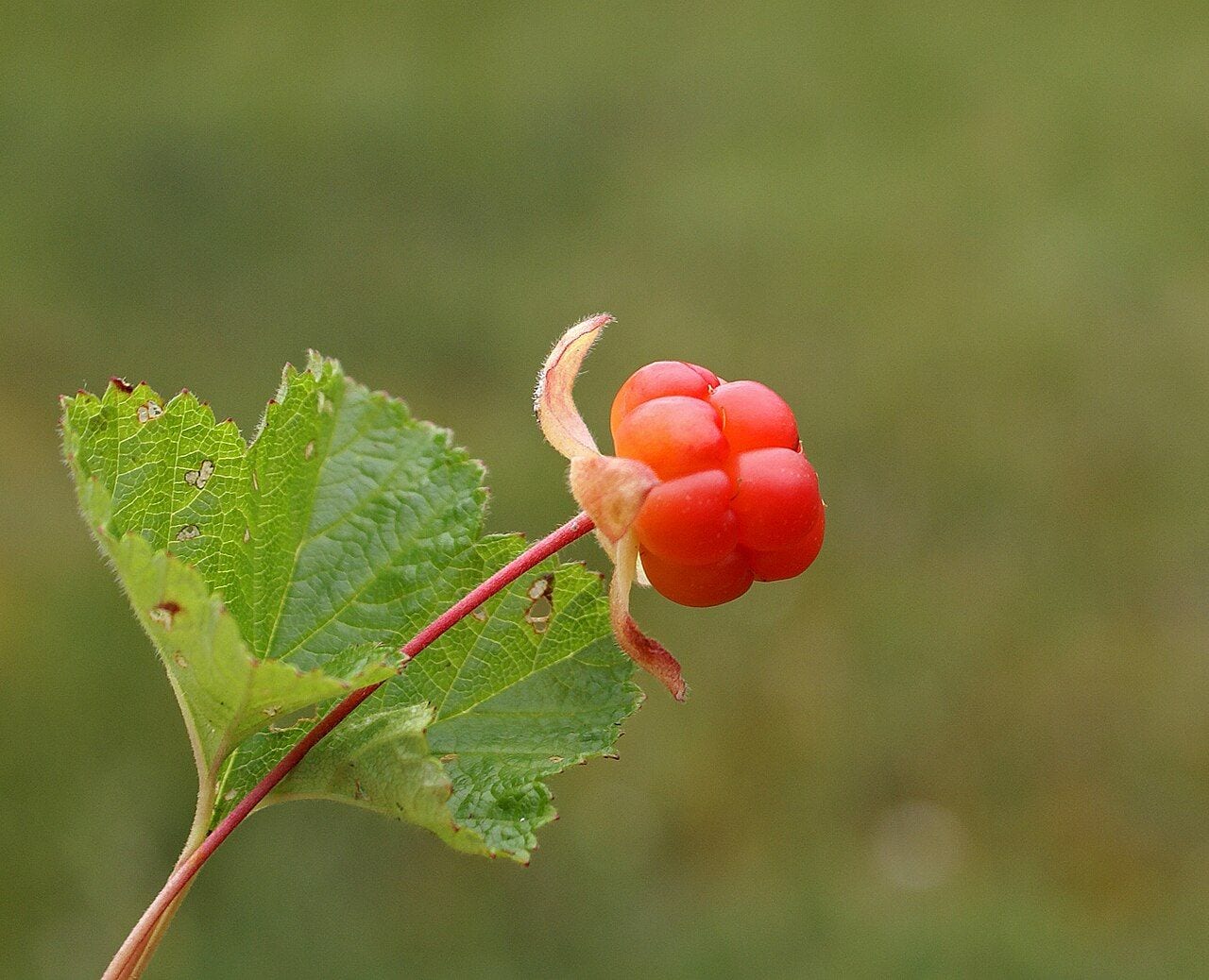
The cloudberry is a herbaceous blackberry relative with a single berry per stem
The cloudberry is a perennial, 3–12 inch (8–30 cm) tall herbaceous plant belonging to the same genus as raspberries and blackberries. The short, unbranched stems have one to three leaves with five to seven palmate lobes. In late spring to early summer, a single white flower, sometimes with pinkish tips, blooms at the top of the stem. After pollination, an aggregate fruit forms, similar in size to a raspberry, consisting of 5 to 25 drupelets. As it ripens, the berry changes from pale red to amber or orange-yellow, becoming soft and juicy.
An interesting feature of the cloudberry is that while the berry is maturing, the sepals enclose it, opening up again once the fruit is fully ripe. The plant spreads through underground rhizomes that can grow up to 33 feet (10 m) long at a depth of 4–6 inches (10–15 cm), allowing it to form dense clonal patches.
Cloudberries are dioecious, so large patches often remain fruitless
Unlike most plants in the blackberry genus, the cloudberry is dioecious: male and female flowers grow on separate plants, and only the female plants produce berries after being pollinated by the males. Because cloudberries spread extensively via rhizomes, a large area of a bog might be covered by a single-sex clone. When this happens, there are few or no berries in that patch. This is a primary reason why cloudberry yields can be notoriously low and unpredictable in the wild, making commercial cultivation highly challenging.
Cloudberries thrive in raised bogs in cool northern climates
The cloudberry is a northern plant, native to cool temperate, alpine, and Arctic regions of the Northern Hemisphere. It is widespread across Scandinavia, northern Russia, Canada, and Alaska, but becomes increasingly rare near the southern edges of its range. It thrives in raised bogs, wet peatlands, and sometimes in damp coniferous forests, often forming extensive patches in ideal conditions.
This plant is extremely cold-hardy (surviving in USDA zones 2–5) and requires plenty of sunlight. It demands highly acidic soil with a pH of 3.5–5.0 and constant moisture, typically growing directly in sphagnum moss. While the International Union for Conservation of Nature (IUCN) assesses the cloudberry globally as a species of least concern, foraging should always be done sustainably. The berries are scarce, and bog ecosystems are highly fragile and easily damaged by heavy foot traffic.
Cloudberry populations face threats from bog drainage and changing moisture levels
In many regions near the southern limits of its habitat, the cloudberry is becoming increasingly rare. Conservation authorities note that drained peatlands and altered hydrological regimes cause the cloudberry to retreat from its natural habitats. It serves as an important indicator species for healthy bog and wet forest ecosystems, many of which are protected under international conservation networks. The cloudberry has a short blooming period and only sets fruit under the right environmental conditions, making its harvest highly variable from year to year. In regions where it thrives, particularly in Nordic countries, this prized berry is often referred to as "Arctic gold."
Cloudberries ripen in mid to late summer and pack up to 200 mg of vitamin C
Cloudberry fruits typically ripen in mid to late summer (July to August in the Northern Hemisphere). When fully ripe, they are golden-yellow, soft, juicy, sweet-tart, and highly aromatic. Nutritional analyses show that the berries contain up to 200 mg of ascorbic acid (vitamin C) per 3.5 oz (100 g)—hence the nickname "orange of the North"—along with 3.8–4.9% sugars, 0.9–1.4% organic acids, pectins, tannins, and natural pigments. They are also rich in citric and malic acids, vitamin E, anthocyanins, and beta-carotene, though the exact amounts depend heavily on sunlight, rainfall, and temperature during the growing season.
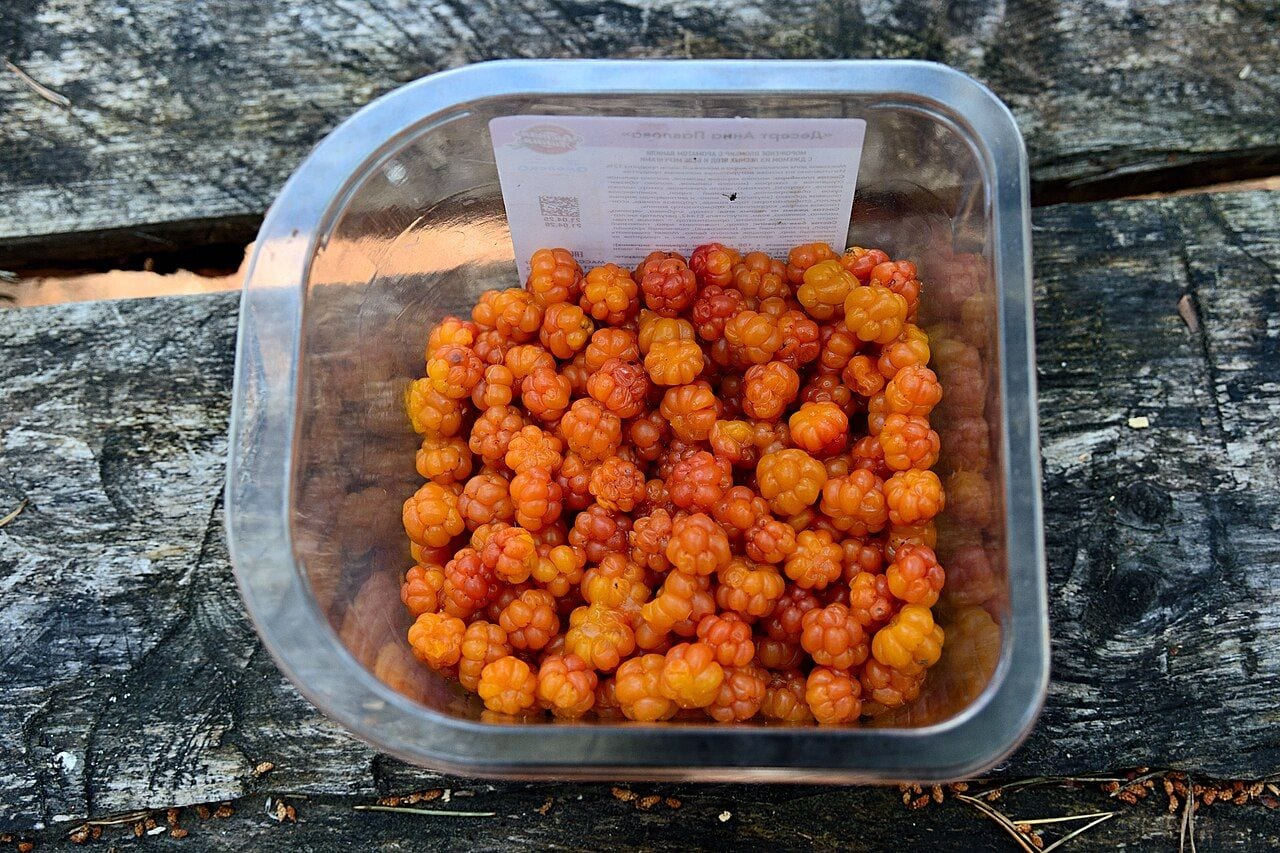
In Scandinavia, cloudberries are enjoyed with cheese, cream, ice cream, and waffles
Cloudberries are rarely grown commercially; they are almost exclusively foraged in the wild. Fresh cloudberries have a distinct, slightly tart flavor, but they are most commonly cooked into jams, juices, tarts, and liqueurs. In Finland, they are traditionally eaten with heated squeaky cheese (leipäjuusto), cream, and sugar. In Sweden, cloudberry jam is a classic topping for ice cream, pancakes, and waffles. In Norway, they are folded into whipped cream and sugar to create the traditional dessert moltekrem.
Wild bog berries: cloudberry, cranberry, bog bilberry, and lingonberry
Raised bogs and their margins are home to several edible wild berries. Among them, the cloudberry is often the rarest and the earliest to ripen.
| Berry | Where it grows | Ripens | Berries | Key feature |
|---|---|---|---|---|
| Cloudberry | Raised bogs, cool northern climates | Mid to late summer | Amber, single berry per stem | Dioecious herbaceous plant |
| Cranberry | Raised bogs, on sphagnum moss | Late summer to fall, until spring | Dark red | Creeping evergreen shrub |
| Bog Bilberry | Sphagnum bogs, wet forests | Midsummer to fall | Blue-grey, white flesh | Deciduous shrub |
| Lingonberry | Bog margins, dry pine forests | Late summer to early fall | Red, in small clusters | Evergreen dwarf shrub |
All of these berries thrive in acidic, nutrient-poor peat soils, which makes them very difficult to cultivate in a standard garden. When foraging in bogs, it is important to prioritize safety: step carefully on solid hummocks, avoid foraging alone, and do not wander off marked or familiar paths.
Cloudberries share their bog habitat with other acid-loving berries like cranberries and bog bilberries, and they are botanically related to other members of the blackberry genus, such as raspberries and blackberries.
Frequently asked questions
Where do cloudberries grow?
Cloudberries grow in raised bogs and wet peatlands, sometimes forming large patches. They are native to cool temperate, alpine, and Arctic regions of the Northern Hemisphere, including Scandinavia, North America, and northern Eurasia.
When do cloudberries ripen?
Cloudberries bloom in late spring to early summer, and the berries ripen in mid to late summer (typically July to August in the Northern Hemisphere). As they ripen, they turn from pale red to an amber or orange-yellow color, becoming soft and juicy.
Why are cloudberries called the orange of the North?
They earn this nickname due to their high vitamin C content, which can reach up to 200 mg per 3.5 oz (100 g). They also contain carotenoids, organic acids, and pectins.
Why do cloudberry plants often produce little fruit?
The cloudberry is dioecious, meaning it has separate male and female plants. Only female plants produce berries, and they must be pollinated by male plants. Because they spread via rhizomes, large patches are often just a single-sex clone, resulting in few or no berries.
Can cloudberries be grown in a home garden?
Cloudberries are rarely grown commercially or in standard home gardens. They require very specific conditions: highly acidic (pH 3.5–5.0), constantly wet peat soil, and a cool northern climate (USDA zones 2–5), making them difficult to cultivate outside their natural habitat.
How are cloudberries eaten?
Fresh cloudberries have a distinct, slightly tart flavor. In Scandinavia, they are made into jams, juices, tarts, and liqueurs. In Finland, they are eaten with heated squeaky cheese (leipäjuusto); in Sweden, cloudberry jam tops ice cream and waffles; and in Norway, they are mixed with whipped cream to make the dessert moltekrem.


Log in to comment
No comments yet. Be the first.