How to Grow Honeyberries: Varieties, Planting, and Harvest
- Edible honeysuckle (Lonicera caerulea), or honeyberry, is a 5–6.5 ft (1.5–2 m) shrub native to cool regions of the Northern Hemisphere.
- The elongated, blue berries measure about 0.4 inches (1 cm), weigh 0.04–0.08 oz (1.3–2.2 g), and ripen very early, often in early summer.
- The shrub can survive extreme cold down to −53°F (−47°C), and its early blooms easily withstand spring frosts.
- To produce fruit, you must plant at least two compatible varieties for cross-pollination.
- While honeyberries are edible, many common ornamental honeysuckles produce red berries that are mildly poisonous.
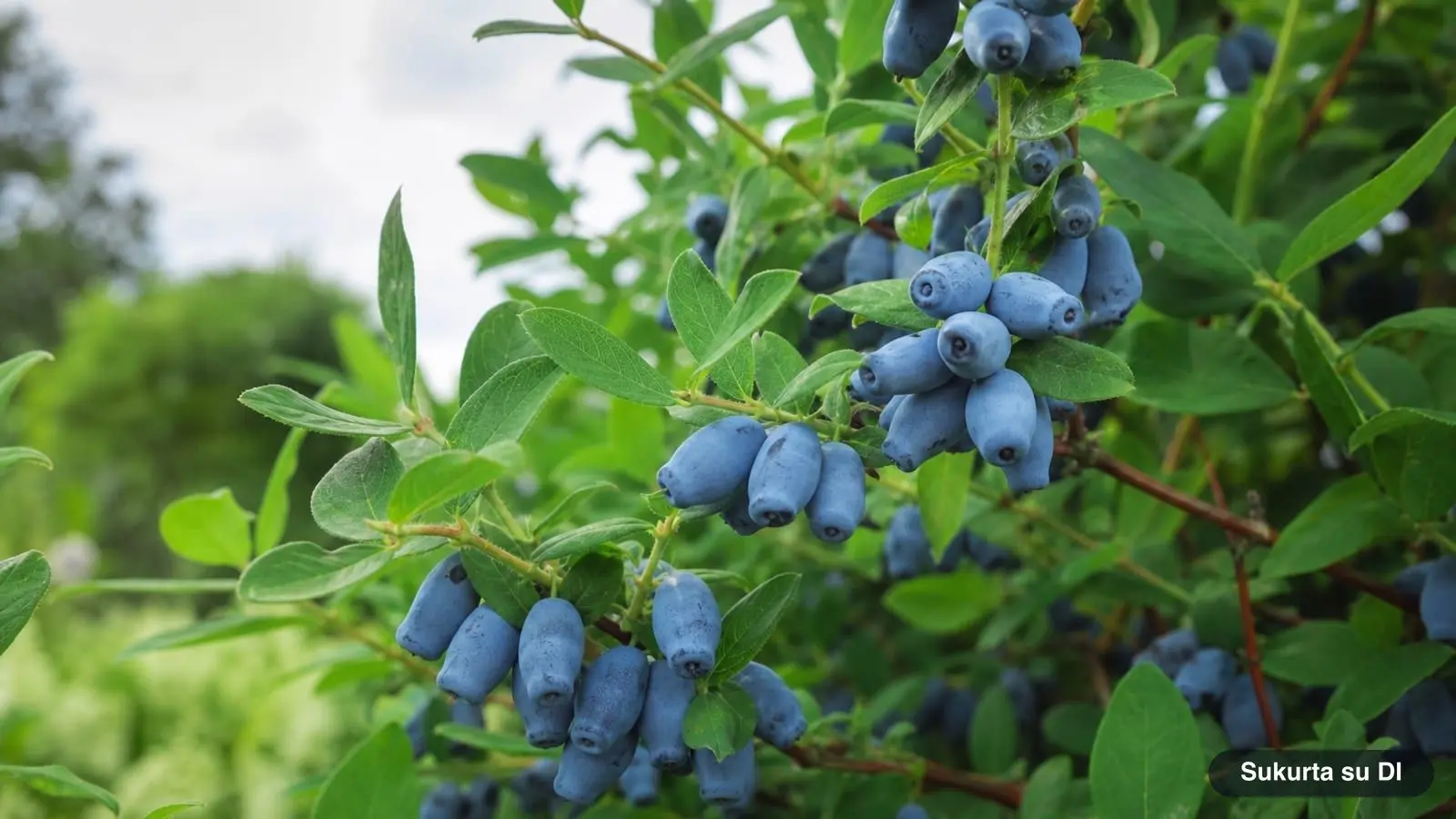
- Identify honeyberries by their elongated blue fruit and grayish-green leaves
- Not all honeysuckles are edible: common honeysuckle berries are mildly poisonous
- Honeyberries require at least two compatible varieties—they are not self-pollinating
- Honeyberries survive down to −53°F (−47°C) and tolerate various soil pH levels
- Harvest honeyberries only when they are dark purple inside
- Honeyberries, ornamental honeysuckles, blueberries, and bilberries: how to tell them apart
This article is part of the 77.today berries guide, prepared by the 77.today editors from the sources listed at the end.
Edible honeysuckle, often called honeyberry or haskap, is a lesser-known but increasingly popular garden berry bush. Its elongated, dusty blue berries ripen in early summer, often before almost any other garden fruit is ready, and the shrub can withstand the harshest winter freezes. However, it is important to know that not all honeysuckle berries are edible. In this part of the berry guide, we cover how to identify edible honeysuckle, which varieties to choose, why you need two different cultivars, how to plant and care for them, and when to harvest the berries.
| Botanical name | Lonicera caerulea (incl. L. caerulea var. edulis) |
|---|---|
| Family | Honeysuckle family (Caprifoliaceae) |
| Other names | Honeyberry, haskap, blue honeysuckle |
| Plant type | Deciduous shrub, 5–6.5 ft (1.5–2 m) |
| Blooms | Early spring, with yellowish-white flowers in pairs |
| Berries ripen | Early summer |
| Fruit | Elongated, blue, about 0.4 inches (1 cm), 0.04–0.08 oz (1.3–2.2 g) |
| Cold hardiness | Down to −53°F (−47°C), USDA zones 2–7; flowers tolerate spring frosts |
| Yield | About 6.5 lbs (3 kg) per bush |
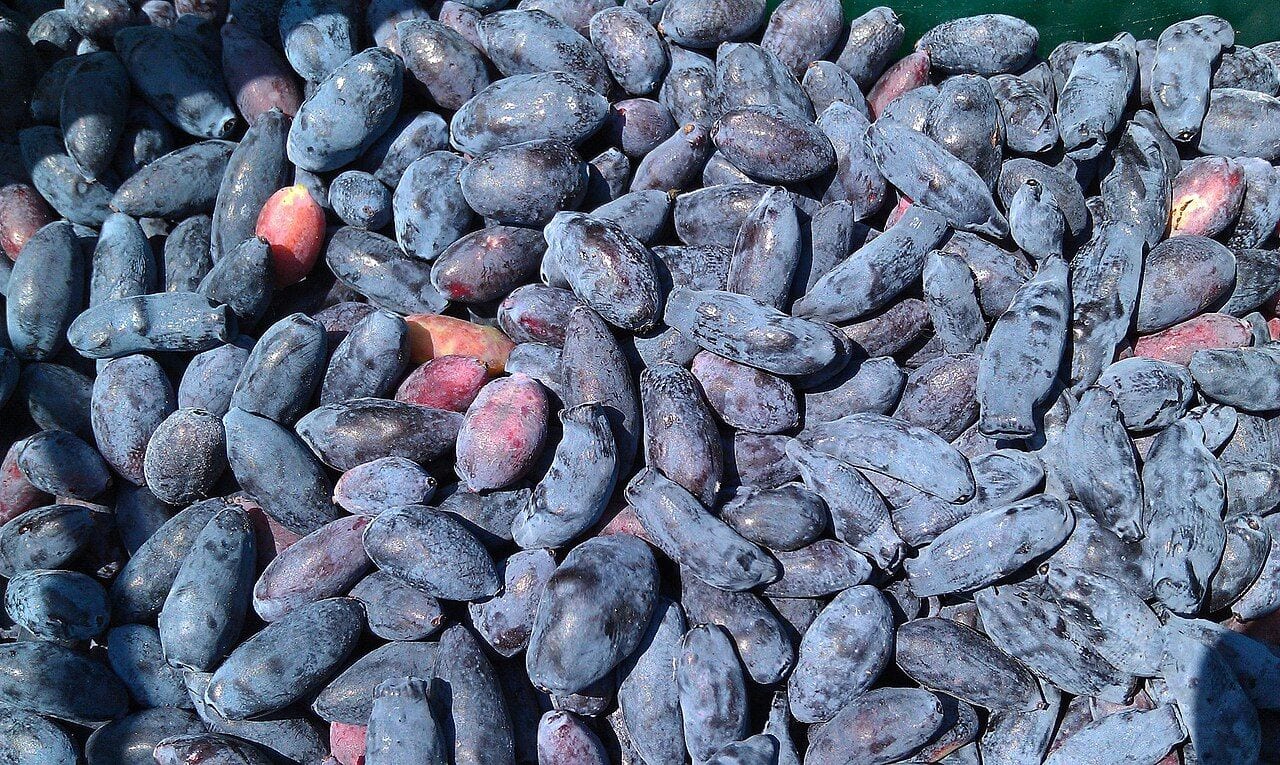
Identify honeyberries by their elongated blue fruit and grayish-green leaves
Edible honeysuckle is a non-climbing shrub that grows 5–6.5 ft (1.5–2 m) tall. The opposite leaves are oval, 1.2–3.1 inches (3–8 cm) long and 0.4–1.2 inches (1–3 cm) wide, with a grayish-green, slightly waxy appearance. In early spring, it produces pairs of yellowish-white flowers, 0.5–0.6 inches (12–16 mm) long with five equal lobes. These blossoms develop into edible, blue, somewhat cylindrical berries about 0.4 inches (1 cm) in diameter, weighing 0.04–0.08 oz (1.3–2.2 g). The berries are notably rich in vitamin C.
This species has a circumpolar distribution, growing naturally in cool regions of North America, Europe, and Asia. It is most commonly found in and around wetlands, in the peaty soils of boreal forests, as well as in mountainous and coastal areas. The Ainu people of Japan call this plant haskap, and many modern garden cultivars have been developed from forms native to the Russian Far East, Japan, and China. Commercial cultivation began relatively recently, with research intensifying on the Japanese island of Hokkaido in the 1970s.
Not all honeysuckles are edible: common honeysuckle berries are mildly poisonous
The honeysuckle genus includes about 180 species, most of which are ornamental shrubs or vines with inedible fruit. For example, the fly honeysuckle (Lonicera xylosteum), native to parts of Europe and Asia, produces glossy red or sometimes yellow berries that are mildly poisonous to humans. If children consume a large amount—around 30 berries—they may experience stomach pain and vomiting. Other ornamental honeysuckles, such as Tatarian, climbing, and Japanese honeysuckles, are also widely planted in gardens and parks but are not meant for consumption. Only the blue, elongated berries of the edible honeysuckle are grown for eating, so it is crucial to buy plants from reputable nurseries and verify that you are purchasing an edible variety.
Honeyberries require at least two compatible varieties—they are not self-pollinating
The most important rule for growing honeyberries is that cross-pollination between two compatible varieties is essential for fruit set. A single bush, no matter how healthy, will produce very few berries, if any. Therefore, you must plant at least two different cultivars close to each other. There are many improved varieties available, such as 'Aurora', 'Wojtek', 'Nimfa', 'Altai', 'Tundra', 'Borealis', 'Polar Jewel', 'Honeybee', 'Berry Blue', 'Indigo Gem', 'Indigo Treat', 'Indigo Yum', and 'Boreal Beauty'. Research from the University of Saskatchewan in Canada shows that these cultivars vary significantly in berry size, flavor, and overall bush dimensions.
Honeyberries survive down to −53°F (−47°C) and tolerate various soil pH levels
Edible honeysuckle is one of the most cold-hardy berry bushes available. It can survive temperatures dropping below −53°F (−47°C), and its early flowers easily tolerate spring frosts, ensuring a reliable harvest even in harsh northern climates (USDA zones 2–7). The shrub adapts to a very broad range of soil acidity, from pH 3.9 to 7.7, though it performs best at a pH of 5.5–6.5. It requires well-draining soil rich in organic matter and plenty of sunlight. Compared to many other fruiting plants, honeyberries are more tolerant of moist conditions.
Plant the bushes in a sunny location in groups of several different varieties. A more abundant harvest typically begins three to four years after planting. A healthy, mature shrub yields an average of 6.5 lbs (3 kg) of berries and can remain productive for up to 30 years. It is beneficial to prune the bushes periodically by removing old, thickened branches to maintain good airflow and fruit production.
Harvest honeyberries only when they are dark purple inside
The berries ripen very early—often in early summer (June in the Northern Hemisphere)—when most other garden fruits are not yet available. However, appearances can be deceiving: a berry may look dark blue and ripe on the outside while its interior is still green and sour. You should only pick them when the inside of the berry turns dark purple or blue. This is easy to check by cutting a few berries open before you start harvesting.
Honeyberries, ornamental honeysuckles, blueberries, and bilberries: how to tell them apart
The blue fruits of the edible honeysuckle are sometimes compared to blueberries or bilberries, though their shape, ripening time, and the plants themselves are quite different. This table helps clarify the distinctions.
| Plant | Berries | Ripening season | Edible? |
|---|---|---|---|
| Honeyberry (Haskap) | elongated, cylindrical, blue, about 0.4 in (1 cm) | Early summer | yes |
| Highbush Blueberry | round, up to 0.6 in (1.5 cm), in clusters | Mid to late summer | yes |
| Bilberry | round, 0.3–0.5 in (8–12 mm), single, dark flesh | Mid to late summer | yes |
The most important differences are the shape and the ripening time. Honeyberries are elongated and ripen in early summer, significantly earlier than blueberries and bilberries. Blueberries and bilberries typically ripen later in the summer, so if you see elongated blue berries in a garden or market early in the season, they are almost certainly honeyberries.
Honeyberries are delicious eaten fresh, and when processed, they are excellent for baking, jams, juices, ice cream, yogurts, sauces, candies, and wine—which has a color and flavor reminiscent of red grape or cherry wine. The berries are packed with anthocyanins and other polyphenols. For winter storage, they are easy to freeze or mash with sugar. Other early summer berries include serviceberries and wild strawberries, while the blue berry season continues later with blueberries and bilberries.
Frequently asked questions
When do honeyberries ripen?
Honeyberries are among the earliest garden fruits to ripen, often ready in early summer (June in the Northern Hemisphere). Pick them only when the flesh inside turns dark purple or blue; berries that are blue on the outside may still be green and sour inside.
Are honeyberries self-pollinating?
No. To set fruit, you need at least two compatible varieties that bloom at the same time to cross-pollinate each other. Always purchase multiple different varieties when planting.
What are some popular honeyberry varieties?
Improved cultivars include 'Aurora', 'Wojtek', 'Nimfa', 'Altai', 'Tundra', 'Borealis', 'Indigo Gem', 'Honeybee', and 'Berry Blue'. They differ in berry size, flavor profile, and overall shrub dimensions.
Are all honeysuckle berries edible?
No. Only the blue berries of the edible honeysuckle (haskap) and a few closely related forms are safe to eat. Many common wild and ornamental honeysuckles produce glossy red berries that are mildly poisonous, causing stomach pain and vomiting if consumed in large quantities.
How much fruit does a honeyberry bush produce?
A mature, healthy shrub yields an average of 6.5 lbs (3 kg) of berries and can remain productive for up to 30 years. You can expect a more abundant harvest starting three to four years after planting.
What type of soil do honeyberries need?
They adapt to a wide range of soil acidity (pH 3.9–7.7) but thrive best in a pH of 5.5–6.5. The ideal soil is rich in organic matter and well-draining, located in a spot that receives plenty of sunlight.
Log in to comment
No comments yet. Be the first.