Strawberries: Varieties, Planting, Growing, and Nutrition
- The garden strawberry (Fragaria × ananassa) is a hybrid of two American wild strawberry species, first bred in 18th-century France.
- Botanically, the strawberry is not a true berry but an aggregate accessory fruit; the true fruits are the tiny "seeds" on the outside.
- A 3.5 oz (100 g) serving of fresh strawberries contains about 33 calories and 58.8 mg of vitamin C.
- Popular varieties grown by commercial farmers and home gardeners include 'Asia', 'Sonata', 'Malvina', 'Allegro', and 'Flair'.
- Everbearing and day-neutral strawberries produce multiple harvests in waves throughout the summer and into autumn.
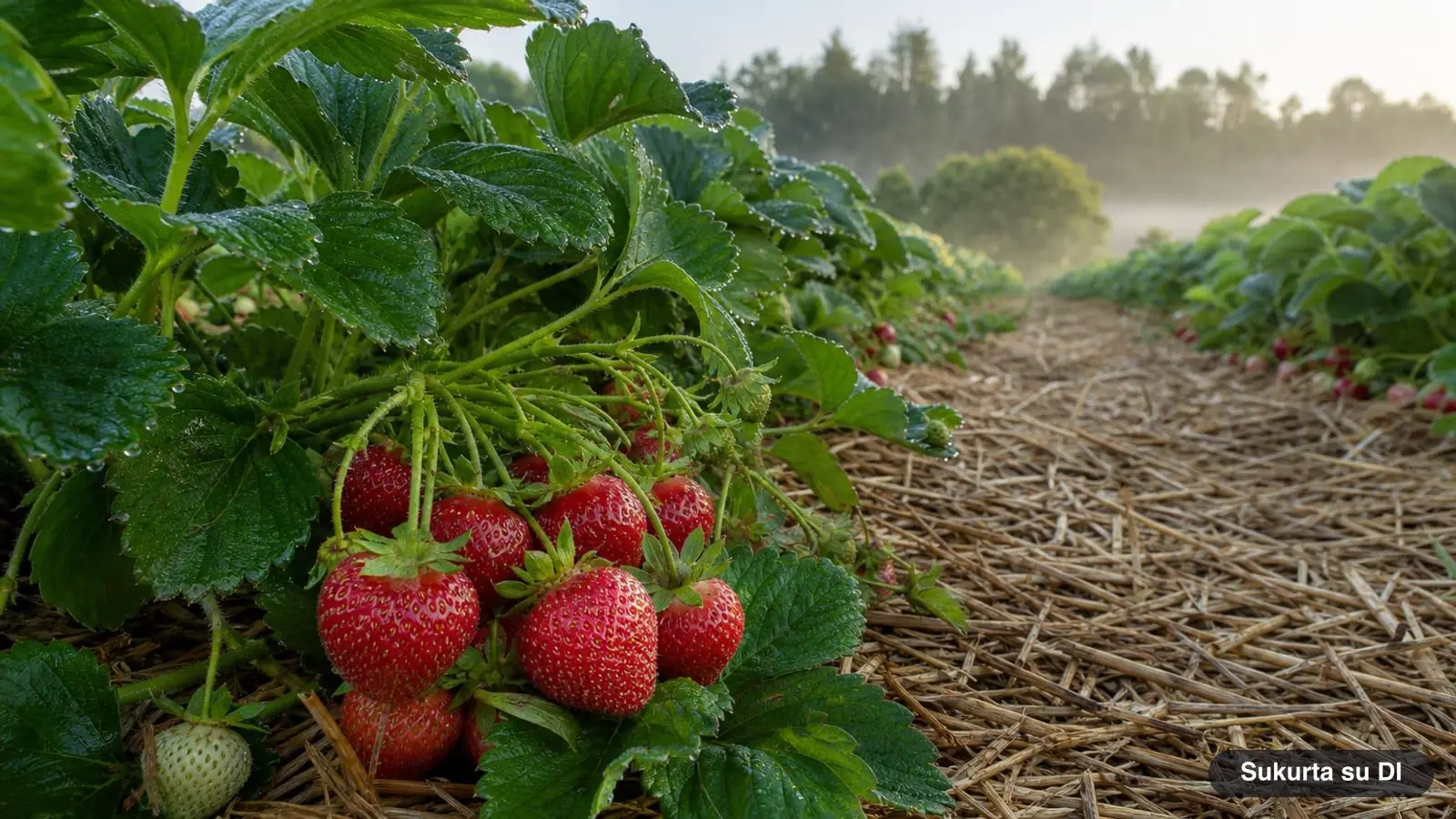
- The strawberry is an 18th-century French hybrid of two American wild species
- Strawberry varieties: 'Asia', 'Sonata', and 'Malvina' are among growers' favorites
- Planting strawberries: A sunny spot, loose soil, and late summer planting
- Landscape fabric and drip irrigation reduce berry rot
- 3.5 oz (100 g) of strawberries contains 33 calories and 58.8 mg of vitamin C
- Strawberries are best eaten fresh, but can be frozen, cooked, or freeze-dried for winter
This article is part of the 77.today berries guide, prepared by the 77.today editors from the sources listed at the end.
Strawberries are the first and most anticipated berries of summer: by early summer, farmers' markets, roadside stands, and nearly every garden are full of them. Although we call them berries in everyday language, the garden strawberry is a relatively young cultivated plant, originating only in the 18th century. In this part of the berry guide, you will find the origins of strawberries, how they differ from wild strawberries, popular varieties, planting and care basics, nutritional value, and tips on how to store and freeze the fruit.
| Latin name | Fragaria × ananassa |
|---|---|
| Family | Rose family (Rosaceae), strawberry genus |
| Origin | A hybrid bred in Brittany, France, in the mid-18th century |
| Plant | Perennial herbaceous plant, 4–12 inches (10–30 cm) tall, spreads by runners |
| Blooms | Mid to late spring (everbearing varieties bloom until autumn) |
| Berries ripen | Early to mid-summer, everbearing varieties until autumn frosts |
| Energy value | About 33 kcal per 3.5 oz (100 g) |
| Vitamin C | 58.8 mg per 3.5 oz (100 g) |
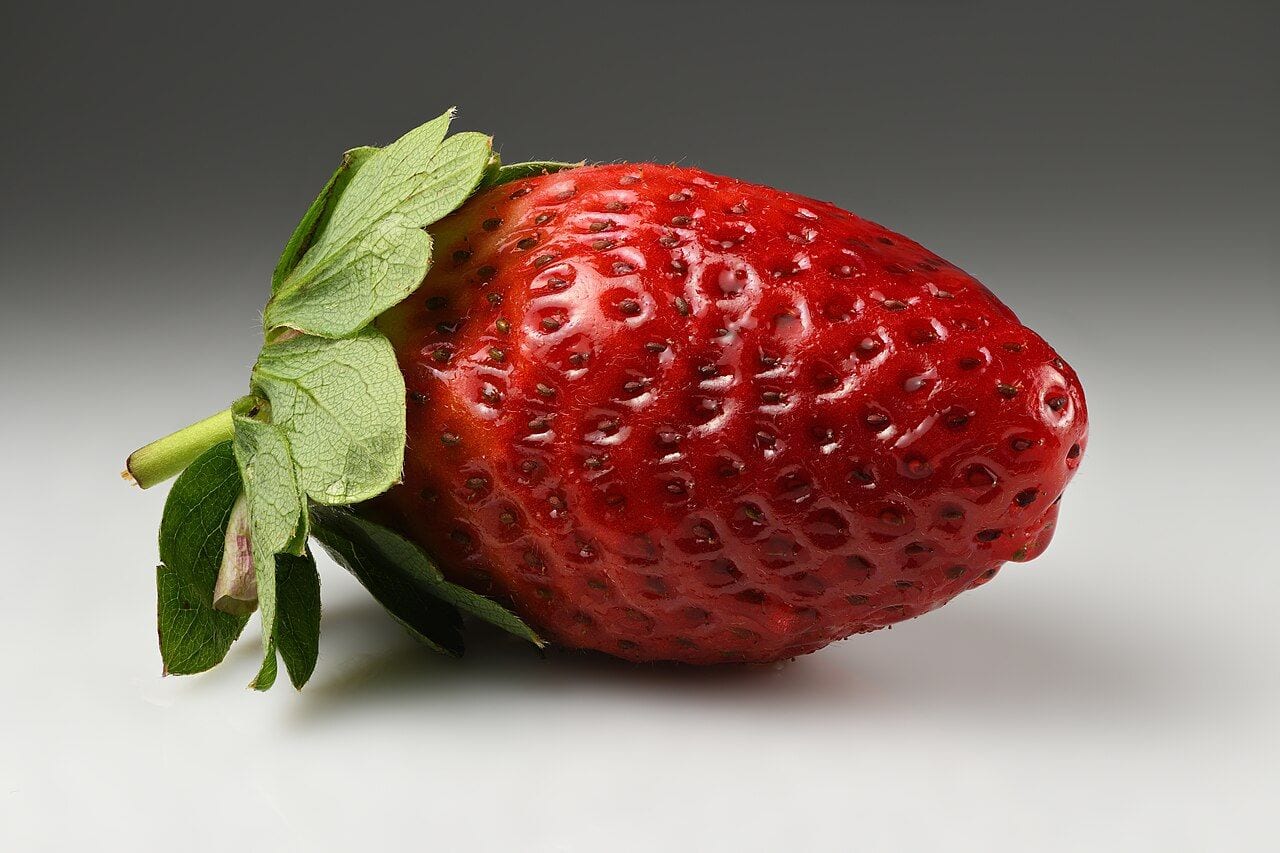
The strawberry is an 18th-century French hybrid of two American wild species
Until the 17th century, only wild strawberries transplanted from the forest were grown in Europe. The Virginia strawberry (Fragaria virginiana) was brought to Europe from North America, and in 1714, a French engineer named Amédée-François Frézier brought back the large-fruited Chilean strawberry (Fragaria chiloensis) from Chile. The Chilean strawberries grew vigorously but did not bear fruit because they only had female flowers. In the 1750s, gardeners in Brittany noticed that when planted next to other strawberry varieties, the Chilean plants began to fruit abundantly. The crossing of the Virginia and Chilean strawberries resulted in a new species—the garden strawberry. The Latin name ananassa means "pineapple-like," as the flavor of the berries reminded Europeans of pineapples.
Botanically, a strawberry is not a berry. It is an aggregate accessory fruit: the fleshy, juicy part grows from the enlarged receptacle of the flower, and each tiny "seed" on the surface is actually a separate fruit—an achene containing a seed inside. Because of this, botanists classify strawberries differently from true berries, but in the kitchen and at the market, they will always be treated as berries.
Strawberry varieties: 'Asia', 'Sonata', and 'Malvina' are among growers' favorites
There are hundreds of strawberry varieties, each differing in harvest time, berry size, firmness, and flavor. While older heritage varieties are still grown in many regions, commercial growers and home gardeners alike often favor modern, high-yielding cultivars. Popular choices include 'Allegro', 'Flair', 'Asia', 'Sonata', 'Faith', and 'Malvina'. 'Asia' is highly valued for its large berry size and excellent flavor, maintaining its appeal even at the peak of the season. 'Sonata' is known for being very sweet and producing a reliable crop, while late-season varieties like 'Malvina' are considered some of the best for freezing.
Based on their fruiting time, strawberries are classified into early, mid-season, and late varieties. A separate group is everbearing (or day-neutral) strawberries, which bloom and bear fruit more than once a season, producing in waves from early summer until the first autumn frosts. Their berries are often slightly smaller, but they are perfect for those who want fresh fruit beyond the traditional early summer window. When choosing a variety, it is worth considering what the berries will be used for: the sweetest and most aromatic are best for fresh eating, while firmer, less watery varieties are ideal for jams and freezing.
Planting strawberries: A sunny spot, loose soil, and late summer planting
Strawberries prefer a sunny location protected from harsh winds and loose, fertile, slightly acidic soil that drains well. Often, bare-root plants or plugs are planted in late summer or early autumn: this gives them time to establish roots before winter, ensuring a full harvest the following summer. If planted in the spring, the first harvest is usually smaller. Seedlings must be planted so that the crown (the growing point) remains exactly at the soil surface: a plant set too deeply will rot, while one planted too high will dry out.
A strawberry bed is typically highly productive for three to four years, after which the berries start to get smaller, making it worthwhile to renew the plants and establish a new bed in a different location. The plants propagate via runners: a rosette grows on the runner, takes root, and becomes a new plant. If runners are not needed for propagation, it is best to pinch them off so the plant directs its energy into producing berries.
Landscape fabric and drip irrigation reduce berry rot
The biggest enemy of strawberries during a rainy summer is gray mold (Botrytis), which causes the berries to rot as they lie on damp soil. For this reason, strawberries are often grown on mulch: straw, plastic sheeting, or woven landscape fabric. Many growers note that berries rot less on black landscape fabric than on solid plastic, as water does not pool after rain, and the rows are easier to maintain. In modern setups, strawberries are watered via drip irrigation tape; often, two drip lines are used per row to ensure both sides of the root zone receive even moisture.
During the blooming period, strawberries must be protected from late spring frosts. Early varieties often bloom when nights are still cold, so they should be covered with horticultural fleece if temperatures drop. After the harvest is complete, old and diseased leaves are often mowed or cut back, and the bed is weeded and fertilized so the plants can build up strength for the following year.
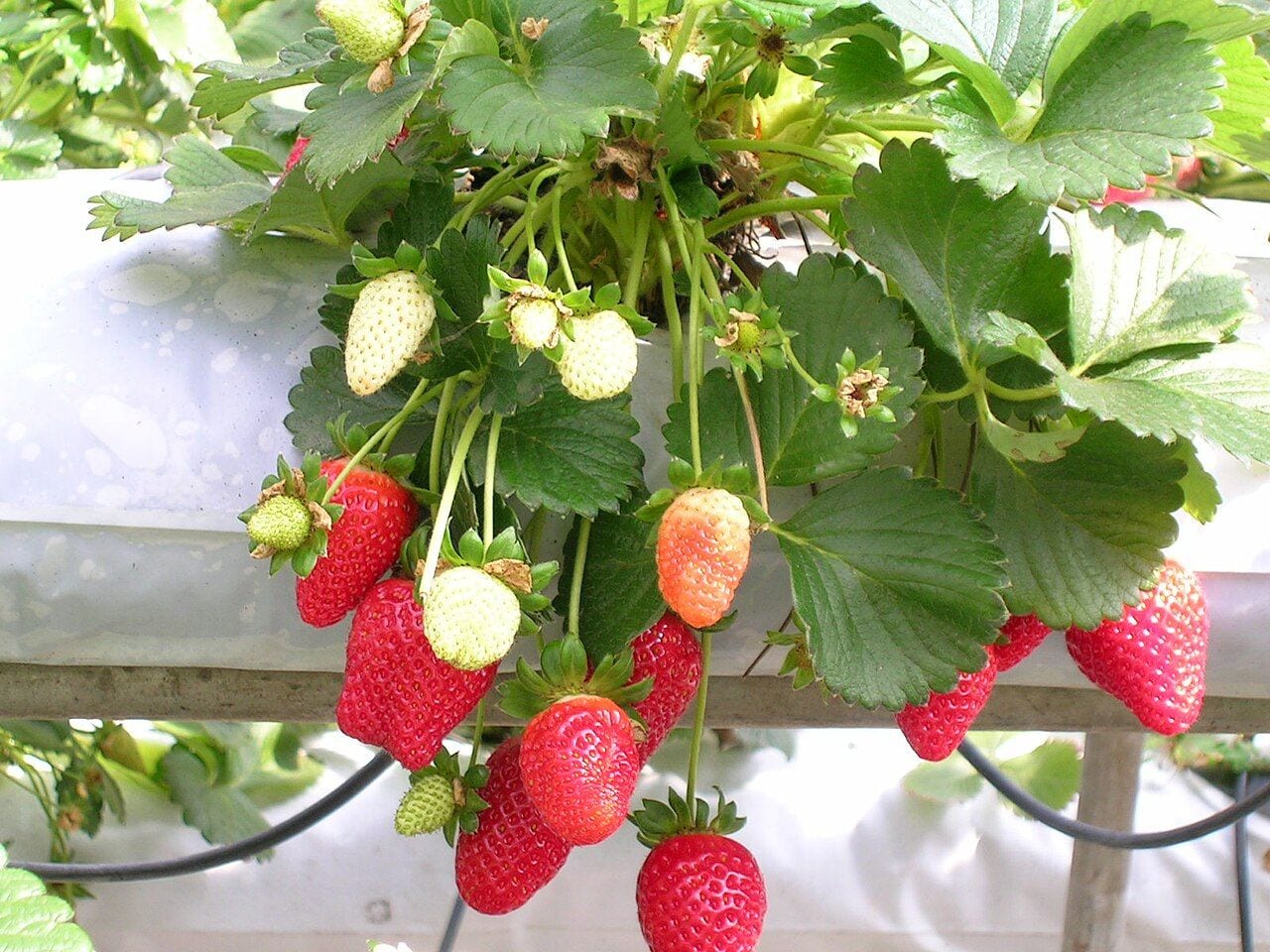
3.5 oz (100 g) of strawberries contains 33 calories and 58.8 mg of vitamin C
Fresh strawberries are about 91% water, 8% carbohydrates, and 1% protein, with almost no fat. A 3.5 oz (100 g) serving has about 33 calories, making strawberries one of the lowest-calorie fruits available. The same portion provides 58.8 mg of vitamin C—about 65% of the recommended daily allowance for an adult—and a good amount of manganese. The berries contain 5.5–9.2% sugars (glucose, sucrose, fructose) and 0.5–1.3% organic acids, primarily citric acid.
Strawberries can cause allergic reactions, especially in young children, so it is wise to introduce them into a child's diet gradually. When buying early, out-of-season imported strawberries, always wash them thoroughly before eating.
Strawberries are best eaten fresh, but can be frozen, cooked, or freeze-dried for winter
Picked strawberries spoil quickly, so they are best eaten within a day or two. In the refrigerator, the berries should be stored unwashed, dry, and in a single layer; they should only be washed right before eating, as damp strawberries mold rapidly. For winter storage, strawberries can be frozen: arrange washed and thoroughly dried berries on a tray, freeze them solid, and then transfer them to freezer bags—this prevents them from clumping together.
Strawberries are used to make jams, jellies, and compotes, as well as desserts, ice cream, smoothies, wine, and liqueurs. Freeze-dried strawberries are also becoming increasingly popular. These are berries that have been dehydrated in a vacuum freezer. They retain their color and aroma, become light and crispy, and are perfect for cereals, desserts, or snacking. Because almost all the water is removed, freeze-dried strawberries are much higher in calories than fresh ones by weight.
The closest relatives to garden strawberries are wild strawberries, and the garden berry season continues with raspberries and blueberries.
Frequently asked questions
When should I plant strawberries?
Strawberry bare-root plants or plugs are often planted in late summer or early autumn so they can establish roots before winter and produce a full crop the following year. They can also be planted in early spring, though the first harvest will typically be smaller.
What species is the garden strawberry bred from?
The garden strawberry was created in 18th-century France by crossing the Virginia strawberry (Fragaria virginiana) from North America with the Chilean strawberry (Fragaria chiloensis). For more on wild varieties, see our guide to <a href="/wild-strawberries">wild strawberries</a>.
How many calories are in strawberries?
A 3.5 oz (100 g) serving of fresh strawberries has about 33 calories. They are composed of roughly 91% water and 8% carbohydrates.
What are everbearing strawberries?
These are strawberry varieties that bloom and fruit more than once a season, producing crops in waves or almost continuously from early summer until autumn frosts. The berries are often slightly smaller, but the harvest period is much longer.
Which strawberry varieties are best for freezing?
Firmer, less watery varieties are best for freezing. Many commercial growers highly recommend late-season varieties like 'Malvina' for retaining their shape and flavor when frozen.
Is a strawberry actually a berry?
In culinary terms, yes, but botanically, a strawberry is an aggregate accessory fruit. The fleshy part develops from the receptacle of the flower, while the true botanical fruits are the tiny seed-like achenes on its surface.
Log in to comment
No comments yet. Be the first.