Cranberries: Foraging, Health Benefits, and Recipes
- The common cranberry (Vaccinium oxycoccos) is an evergreen, creeping shrub that grows on sphagnum moss in bogs.
- The berries ripen in late summer and can remain on the plants throughout the winter until spring.
- Fresh cranberries are hard, tart, and slightly bitter, which is why about 95% of the global harvest is processed.
- A 3.5 oz (100 g) serving of fresh cultivated cranberries has about 46 calories, but dried versions are usually heavily sweetened.
- Evidence regarding cranberries for urinary tract infections is mixed: some studies show moderate benefits, while other health authorities have not confirmed a direct link.
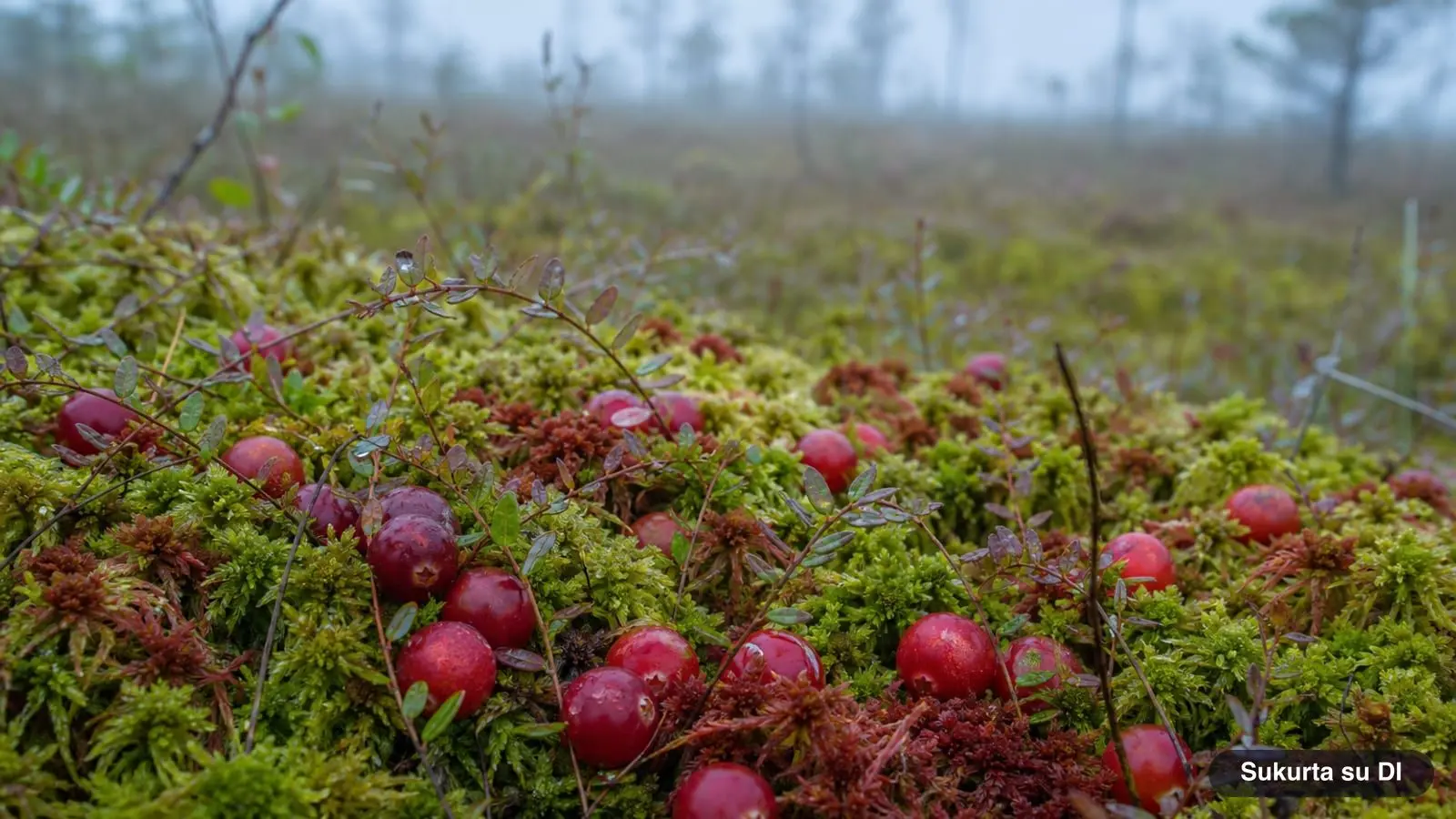
- The cranberry is a creeping bog shrub with small evergreen leaves
- Cranberries grow on sphagnum moss in raised bogs and peatlands
- Cranberries can be foraged in autumn and spring—the berries last all winter
- It is safest to walk on hummocks and never forage alone in a bog
- The cultivated large-fruited cranberry is more common in stores than the wild variety
- A 3.5 oz (100 g) serving of cranberries has about 46 calories, but dried ones are usually heavily sweetened
- Cranberries with honey, garlic, and ginger are a popular autumn and winter treat
This article is part of the 77.today berries guide, prepared by the 77.today editors from the sources listed at the end.
Cranberries are tart bog berries that many foragers eagerly seek out in autumn. They are hard, acidic, and slightly bitter, so they are rarely eaten fresh, but they store exceptionally well and are perfect for juices, kissel, sauces, and popular traditional remedies mixed with honey and garlic. In this part of the berry guide, we cover how to identify the cranberry, when and where to forage it, what research says about its health benefits, and how to prepare the berries for winter.
| Latin name | Vaccinium oxycoccos (syn. Oxycoccus palustris) |
|---|---|
| Family | Heath family (Ericaceae), blueberry genus |
| Plant | Evergreen with creeping branched stems, trailing over sphagnum moss |
| Habitat | Raised bogs, transitional mires, peatlands |
| Flowering | From late spring, with pink flowers |
| Berries ripen | Late summer, lasting until spring |
| Berries | Up to 0.5 inches (1.2 cm), initially yellowish, later dark red |
| Energy value | About 46 kcal per 3.5 oz (100 g) (cultivated) |
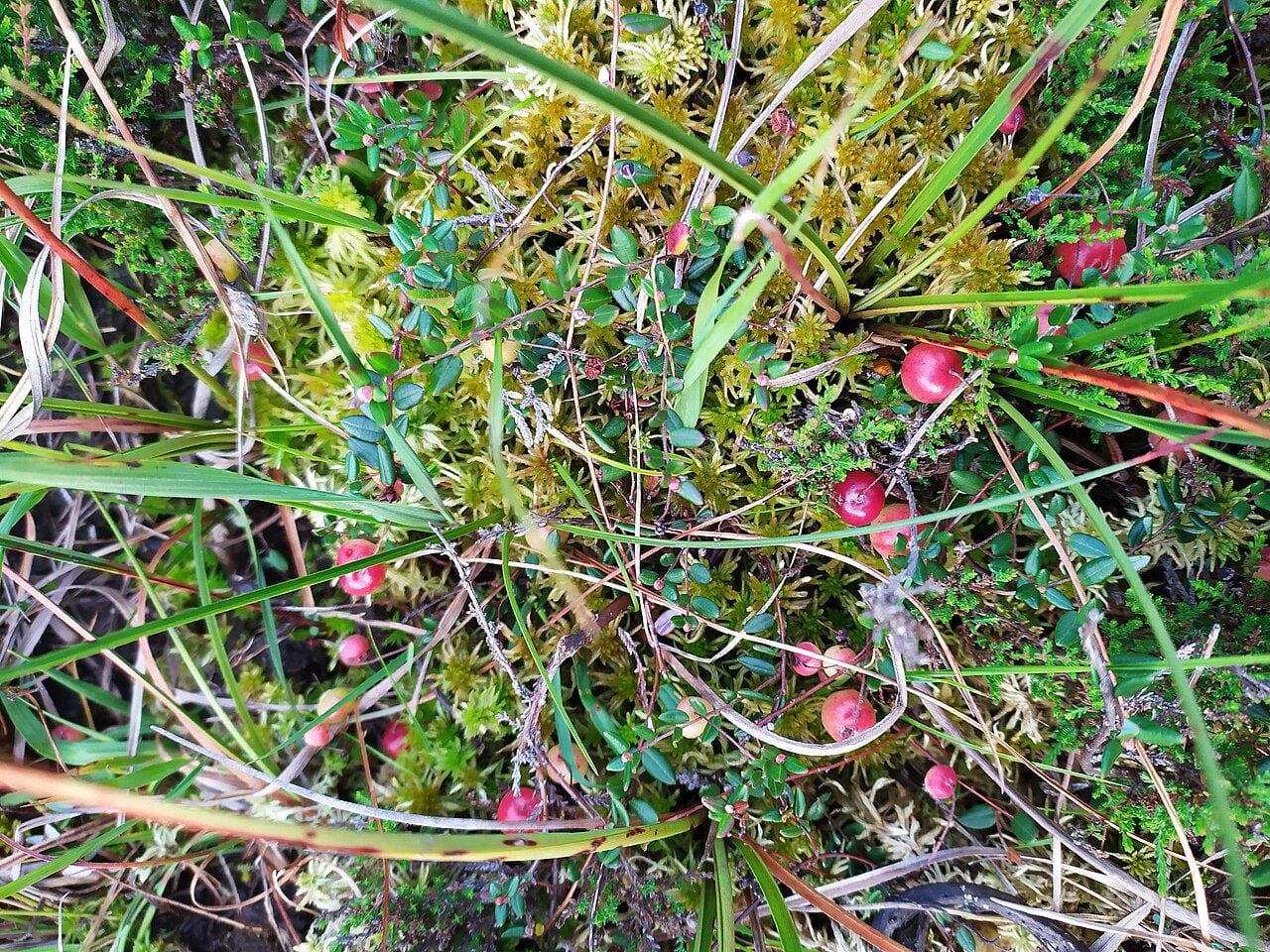
The cranberry is a creeping bog shrub with small evergreen leaves
The common cranberry is a small evergreen plant with thin, prostrate, branched stems that trail over sphagnum moss and root at the nodes. The leaves are tiny, up to 0.5 inches (1.2 cm) long, leathery, oval, and short-stalked. Starting in late spring, drooping pink flowers with four backward-reflexed petals bloom on long, slender stalks—they resemble miniature cyclamens. The cranberry reproduces mostly vegetatively, creating extensive networks that weave through the moss hummocks.
The berries are spherical, up to 0.5 inches (1.2 cm) in diameter, initially yellowish with speckles, and later turning dark red. Inside, there are several seeds. A unique feature of cranberries is that the berries remain on the plants for an average of about 200 days, meaning they can be found both in autumn and in spring after the snow has melted.
Cranberries grow on sphagnum moss in raised bogs and peatlands
The cranberry is a plant of wet, acidic, nitrogen-poor peat soils. It thrives in raised bogs, transitional mires, and peatlands, most often growing on sphagnum moss hummocks. It is widely distributed throughout the cooler temperate zones of the Northern Hemisphere—across Northern Europe, Northern Asia, and North America (hardy to USDA zones 2–7). The cranberry quickly establishes itself in burned bogs because it can survive fires through its underground rhizomes.
Other berries often grow alongside cranberries in the bog, such as bog bilberries, and in northern raised bogs, cloudberries. Along the edges of bogs and in drier areas, you will find lingonberries, which cranberries are often confused with. However, lingonberry stems are upright, their leaves are larger, and their berries grow in tight clusters.
Cranberries can be foraged in autumn and spring—the berries last all winter
Most cranberries are harvested in early to mid-autumn when the berries have turned completely red. After the first frosts, they become slightly less bitter. In spring, once the snow melts, you can find overwintered berries resting on the moss—these are sweeter but softer and spoil more quickly, so they need to be used promptly. When foraging for cranberries, as with other wild edibles, general rules apply: harvest only what you can use and avoid breaking or uprooting the plants. Always check local regulations, as some regions prohibit the use of berry combs or other mechanical harvesting tools, and foraging may be restricted or banned in nature reserves and protected areas.
It is safest to walk on hummocks and never forage alone in a bog
A bog is not a typical forest: in some places, water or a viscous mass of peat lies hidden beneath the sphagnum moss. It is safest to walk on drier hummocks and familiar paths, wear tall rubber boots, carry a fully charged phone, and tell family or friends where you are going. It is easy to get lost in a bog during fog or after dark, so it is best to forage during daylight hours.
The cultivated large-fruited cranberry is more common in stores than the wild variety
In grocery stores, especially in dried or juice form, you will mostly find the large-fruited (American) cranberry. It is grown commercially on large plantations, primarily in North America, and produces larger berries than the wild bog cranberry. Because fresh cranberries are hard, acidic, and tart, about 95% of the commercial harvest is processed into juices and sauces or dried. In North America, cranberry sauce is a traditional accompaniment to turkey on Thanksgiving. Seedlings of large-fruited cranberries are widely available at nurseries, but to grow them in a home garden, they require acidic peat and consistently moist soil.
A 3.5 oz (100 g) serving of cranberries has about 46 calories, but dried ones are usually heavily sweetened
Fresh cultivated cranberries are about 87% water and 12% carbohydrates, with almost no protein or fat. A 3.5 oz (100 g) serving of berries contains about 46 calories, along with moderate amounts of vitamin C, dietary fiber, and manganese. Dried cranberries are usually sweetened—sugar is added, sometimes resulting in several times more sugar than occurs naturally, and the drying process destroys much of the vitamin C. Sweetened cranberry juice can contain more sugar than carbonated sodas, so it is worth reading the label.
Cranberries are frequently mentioned as a remedy for urinary tract infections (UTIs), but the evidence is mixed. A 2023 Cochrane review, which included 50 studies, found moderate-certainty evidence that cranberry products may reduce the risk of recurrent infections in women, children, and people undergoing certain medical procedures. However, the European Food Safety Authority (EFSA), after evaluating evidence for a specific cranberry extract, did not confirm a causal relationship, and many international urological guidelines consider the evidence to be conflicting or weak. Therefore, while cranberries can be part of a healthy diet, infections should always be treated by a doctor.
Cranberries with honey, garlic, and ginger are a popular autumn and winter treat
In many Eastern European traditions, crushed cranberries with honey are an incredibly popular preparation. Typically, the cranberries are mashed and mixed with honey, and finely grated garlic, ginger, lemon, or walnuts are added to taste. The mixture is stored in a closed jar in the refrigerator and eaten by the teaspoon or added to tea. This is a delicious traditional folk combination, but it is not a medicine and should not be considered a substitute for medical treatment.
Fresh cranberries can be frozen—they will keep in the freezer for up to nine months and can be used without thawing. Cranberries are used to make kissel (a thickened fruit soup), jams, juices, and mors (a traditional fruit drink), and they are added to meat sauces, baked goods, and sauerkraut. If drying cranberries at home, it is best to do so at a low temperature after briefly blanching the berries first.
Frequently asked questions
When is the best time to pick cranberries?
Cranberries typically ripen from late summer into early autumn, but they remain on the plants all winter. Many foragers pick them in autumn when fully red, while those gathered in spring after the snow melts are sweeter but softer.
Where do wild cranberries grow?
They thrive in raised bogs, transitional mires, and peatlands on sphagnum moss hummocks. Cranberries prefer wet, acidic, and nutrient-poor peat soils in cool northern climates.
How do you make cranberries with honey and garlic?
Crushed cranberries are often mixed with honey and finely grated garlic (sometimes adding ginger or walnuts), stored in a closed jar in the refrigerator, and eaten by the teaspoon. This is a traditional folk treat, not a proven medicine.
Do cranberries help with urinary tract infections (UTIs)?
The evidence is mixed. A 2023 Cochrane review found moderate-certainty evidence that cranberry products may reduce the risk of recurrent infections in some groups, but other health authorities consider the evidence weak. Always consult a doctor for treating infections.
How many calories are in cranberries?
A 3.5 oz (100 g) serving of fresh cultivated cranberries contains about 46 calories. Dried cranberries are usually sweetened and are significantly higher in calories.
What is the difference between wild and cultivated cranberries?
Wild common cranberries have smaller berries and grow naturally in northern bogs. Grocery stores usually sell the large-fruited (American) cranberry, which is grown commercially on large plantations in North America and Europe.
Log in to comment
No comments yet. Be the first.