Bilberries: Where to Find Them, Benefits, and How to Store Them
- The bilberry (Vaccinium myrtillus) is a deciduous subshrub growing 6–16 inches (15–40 cm) tall, common in cool northern climates.
- Bilberry plants thrive in acidic, nutrient-rich soils, often forming extensive carpets in pine and spruce forests across the Northern Hemisphere.
- The berries typically ripen in mid-summer and can remain on the bushes until early autumn, depending on the local climate.
- Unlike cultivated blueberries which have pale insides, bilberries feature dark, intensely pigmented flesh that stains easily.
- When foraging, it is highly recommended to hand-pick rather than use mechanical rakes, which can damage the plants and reduce future harvests.
- Identify bilberries by their sharply angled green stems and solitary berries
- Distinguishing bilberries from blueberries and bog bilberries
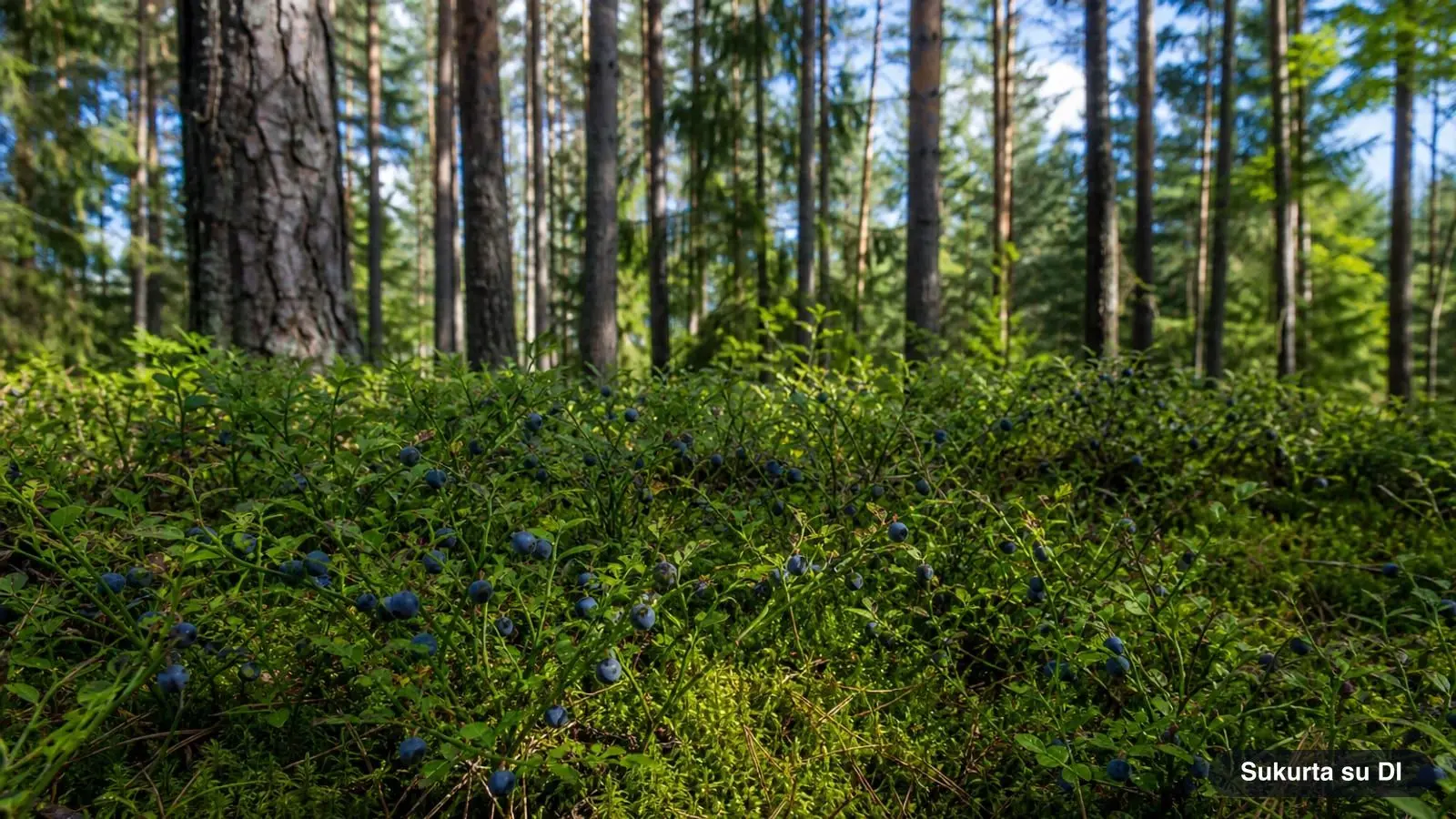
- Bilberries form extensive carpets in coniferous forests across the Northern Hemisphere
- Berries ripen in mid-summer and can last until early autumn
- Foraging guidelines: why mechanical rakes are often discouraged
- Bilberries contain 3.5–7% sugars, organic acids, pectins, and anthocyanins
- Preserving bilberries for winter: freezing, drying, and making jams
This article is part of the 77.today berries guide, prepared by the 77.today editors from the sources listed at the end.
Bilberries are perhaps one of the most beloved wild forest berries. In mid-summer, entire families head into the pine forests to forage, jars of freshly picked berries appear at local farm stands, and kitchens fill with the aroma of bilberry pies and jams. Bilberries are so abundant in cool northern climates that they often form the dominant undergrowth in coniferous forests. In this part of the berry growing guide, we will cover how to identify the bilberry, when and where to look for them, sustainable foraging practices, the nutritional value of the berries, and how to preserve them for winter.
| Latin name | Vaccinium myrtillus |
|---|---|
| Family | Heath family (Ericaceae), blueberry genus |
| Plant | Deciduous subshrub, 6–16 inches (15–40 cm), rarely up to 20 inches (50 cm) |
| Habitat | Pine and spruce forests, occasionally birch woods and bog margins |
| Blooms | Late spring to early summer |
| Berries ripen | Early to mid-summer, lasting until early autumn |
| Berries | 0.3–0.5 inches (8–12 mm), dark blue with a waxy bloom, dark flesh |
| Other names | European blueberry, whortleberry, wimberry, blaeberry |
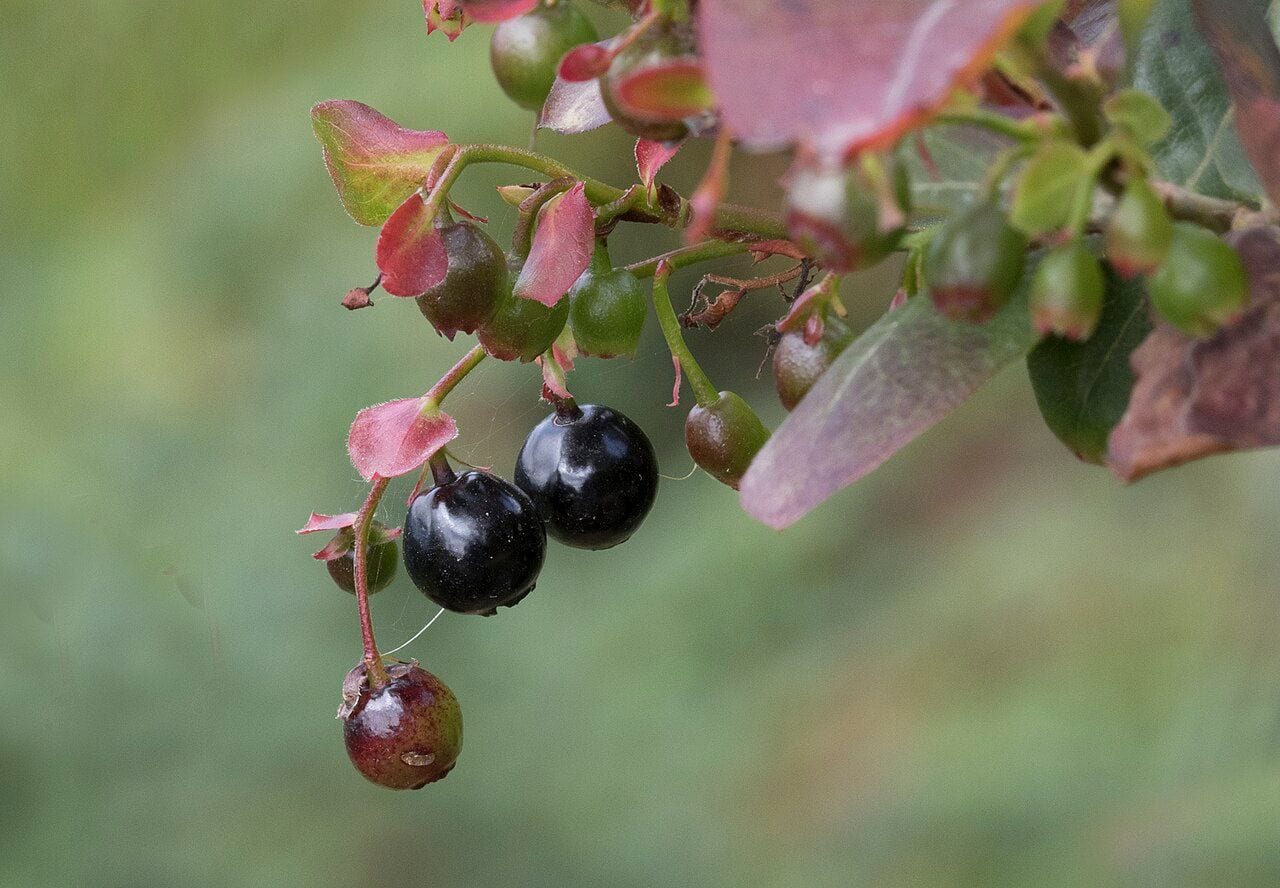
Identify bilberries by their sharply angled green stems and solitary berries
The bilberry is a low-growing, highly branched subshrub with a long, creeping rhizome, allowing it to form continuous carpets across the forest floor. The stems are green and sharply angled, with the lower part of the stem becoming woody over time. The leaves are oval-shaped with pointed tips, 0.4–1.2 inches (1–3 cm) long, and have finely toothed margins; in autumn, they turn a striking red before dropping. In late spring, the bilberry produces small, pinkish, urn-shaped flowers that hang singly in the leaf axils. A single plant can live up to 30 years, and its roots can reach a depth of 3.3 feet (1 m).
The berries are spherical, 0.3–0.5 inches (8–12 mm) in diameter, and dark blue with a powdery waxy bloom, often showing the remnants of the calyx at the top. The most defining characteristic of the bilberry is its dark purple flesh: the anthocyanins that provide the color are present not just in the skin, but throughout the entire berry, which is why bilberries easily stain hands, lips, and teeth. Occasionally, unusual natural variations can be found in the wild, producing glossy black, yellowish-white, or purplish-pink berries.
Distinguishing bilberries from blueberries and bog bilberries
Bilberries are most commonly confused with two closely related species. The cultivated blueberry is a tall shrub of North American origin; its berries are large, grow in clusters, and have pale, translucent flesh. The bog bilberry, which grows in wetland areas, has bluish-green, blunt-tipped leaves with smooth edges, brown woody stems, and berries with white, sweet flesh. In contrast, true bilberry leaves are bright green and finely toothed, and the stems are green and sharply angled.
Bilberries form extensive carpets in coniferous forests across the Northern Hemisphere
Bilberries are incredibly common throughout cool, temperate regions. They prefer acidic, humus-rich soils and dappled shade, thriving in moderately moist to damp pine and spruce forests, and occasionally in birch woodlands or the higher, drier edges of bogs. Bilberry-dominated pine and spruce forests make up a significant percentage of total woodland areas in many northern regions. These vast wild patches can be incredibly productive; depending on the conditions, average yields can reach around 625 lbs per acre (700 kg per hectare), and up to 1,070 lbs per acre (1,200 kg per hectare) in exceptionally good years.
Globally, the bilberry is native to almost all of Europe, northern and central Asia, Japan, Greenland, and parts of western North America. In mountainous regions, it can grow at elevations up to 7,700 feet (2,350 m). Bilberry thickets are also vital for forest wildlife: they provide shelter and food for numerous bird species, and support around two hundred different species of insects.
Berries ripen in mid-summer and can last until early autumn
The first ripe bilberries usually appear in early to mid-summer, with the peak harvest typically occurring in late July or early August in cool northern climates. Solitary berries can often be found lingering on the bushes into September. The size of the harvest depends heavily on spring weather conditions: if the bilberries bloom during late spring frosts, the berry count will be low, but after a warm, adequately moist spring, the forest floor will be brimming with fruit.
Foraging guidelines: why mechanical rakes are often discouraged
Foraging for wild mushrooms, berries, and herbs is a cherished tradition in many northern regions. Where foraging is permitted in public forests, it is important to harvest sustainably. It is strongly advised to avoid the use of special berry "rakes" or other mechanical harvesting tools. These devices, including homemade ones, can severely damage the foliage, strip the stems, deplete the plants' energy, and significantly reduce future harvests. The bushes should never be broken or uprooted, and the forest must be left clean. Always respect local regulations, nature reserves, and temporarily closed areas.
When driving to a foraging spot, vehicles should be parked only in designated areas or safely on the side of the road, taking care not to drive over moss, lichen, or berry bushes. Be aware that certain forest areas may be temporarily closed due to high fire danger or active forestry operations—always respect local signage and barriers.
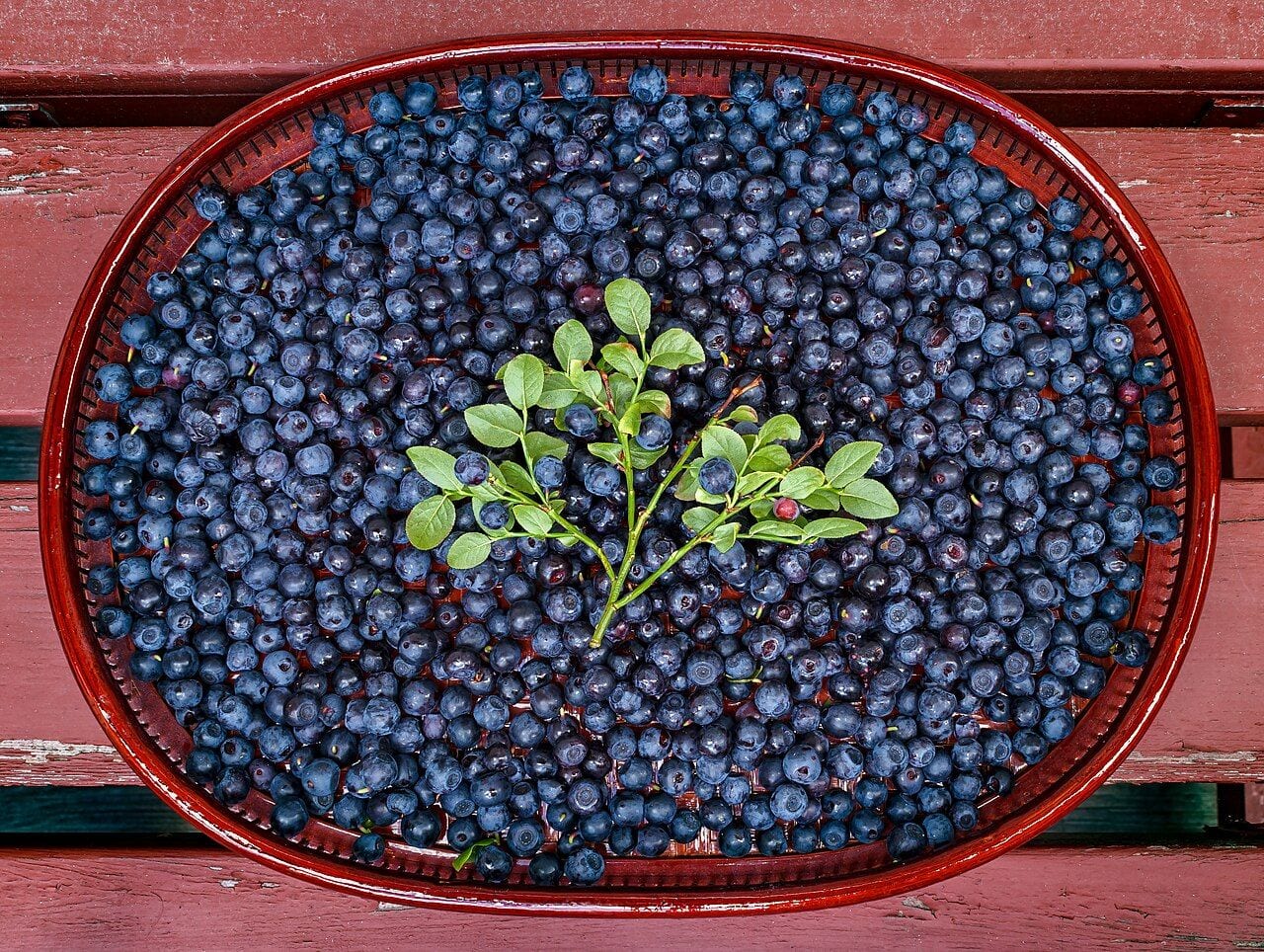
Bilberries contain 3.5–7% sugars, organic acids, pectins, and anthocyanins
Bilberries are highly valued for their culinary uses, as a nectar source for bees, and historically as a natural dye. The berries contain 3.5–7% sugar, about 1% free organic acids (such as citric, malic, and succinic acids), pectins, and small amounts of protein and vitamins. Their dark color is due to anthocyanins, which are more concentrated in wild bilberries than in cultivated blueberries because the pigments are present throughout the flesh. Bilberry dietary supplements are widely sold as a remedy for vision and general health; however, there is no conclusive clinical evidence proving they treat any diseases or improve eyesight. Bilberry leaves have also been used in traditional medicine, though consuming them may be unsafe and is generally not recommended.
Preserving bilberries for winter: freezing, drying, and making jams
Fresh bilberries have a short shelf life, so they must be sorted as soon as possible after picking to remove leaves, twigs, and crushed berries. The simplest way to preserve bilberries for the winter is to freeze them: spread the dry berries in a single layer on a baking sheet, freeze until solid, and then transfer them to airtight bags or containers. Frozen bilberries are perfect for stirring into oatmeal, blending into smoothies, or baking into pies and jams.
Bilberries can also be dried—either in a food dehydrator or an oven at a low temperature until the berries are hard and no longer sticky. Dried bilberries can be added to teas, cereals, and baked goods. Fresh berries are wonderful for making jams, jellies, compotes, and fruit soups. They can be mashed with sugar, baked into classic bilberry pies, or used to flavor pancakes and ice cream. Historically, the intense juice of the bilberry was even used to dye food and fabrics.
Other popular wild berries include lingonberries, wild strawberries, raspberries, and cranberries. Before tasting any unfamiliar wild fruit, always consult a poisonous berries list to ensure it is safe.
Frequently asked questions
When do bilberries ripen?
In cool northern climates, bilberries typically begin to ripen in early to mid-summer, with peak harvests often occurring in late July or early August. You can sometimes find solitary berries lingering into early autumn.
How do bilberries differ from blueberries?
The bilberry is a low-growing wild subshrub producing single berries with dark purple, staining flesh. The cultivated blueberry is a taller North American shrub (up to 13 feet or 4 m) that produces larger berries in clusters with pale flesh.
Can you use berry rakes to harvest bilberries?
It is highly recommended to hand-pick them. Using mechanical rakes or combs can severely damage the foliage and stems, weakening the plant and reducing future yields. Foraging guidelines generally advise against these tools to protect the bushes and ensure future harvests.
Where do bilberries grow best?
Bilberries are abundant in cool, temperate regions of the Northern Hemisphere. They thrive in moderately moist, acidic soils with partial shade, most commonly forming dense understories in coniferous pine and spruce forests.
How do you freeze bilberries?
Sort through the berries to remove leaves, twigs, and damaged fruit. Spread the unwashed (or washed and thoroughly dried) berries in a single layer on a baking sheet, freeze them until solid, and then transfer them to airtight bags or containers.
Do bilberry supplements improve eyesight?
While bilberry supplements are widely sold in many countries, there is no conclusive clinical evidence proving they treat eye conditions or improve vision. However, the fresh berries remain a highly nutritious food.
Log in to comment
No comments yet. Be the first.