Guelder Rose Berries: When to Pick, Edibility & Uses
- The guelder rose (Viburnum opulus) is a 6.5–13 ft (2–4 m) shrub that thrives in moist forest edges and along water banks.
- It blooms in late spring to early summer with flat white flower clusters featuring large, sterile outer flowers.
- The berries are bright red, bitter, 0.3–0.4 inch (7–10 mm) single-seeded drupes that can remain on the bush for up to 200 days.
- Frost reduces their bitterness; they are eaten in small quantities as raw berries are mildly toxic.
- The popular ornamental 'Roseum' (snowball tree) produces only spherical, sterile flowers and yields no berries.
- Identify the guelder rose by its maple-like, three-lobed leaves and dual-type flowers
- Thriving in moist forest edges and along banks, it is also a popular garden shrub
- Frost helps guelder rose berries lose some of their bitterness
- Mildly toxic raw—consume only in small quantities
- Preparing jam, jelly, juice, and honey mixtures
- Identifying red autumn berries: guelder rose, rowan, rose hips, barberry, and toxic yew
This article is part of the 77.today berries guide, prepared by the 77.today editors from the sources listed at the end.
Guelder rose berries provide some of the most striking autumn colors. Their bright red, translucent clusters hang on shrubs along riverbanks and forest edges right into winter, and the plant holds a prominent place in Eastern European folklore. However, these berries are quite bitter and should only be eaten in moderation. In this section of the berry guide, we cover how to identify the guelder rose (Viburnum opulus), when to pick the berries, whether they are toxic, their uses, and how to prepare them.
| Latin name | Viburnum opulus |
|---|---|
| Family | Honeysuckle family (Caprifoliaceae); in newer classifications, moschatel family (Adoxaceae) |
| Plant | Deciduous shrub, 6.5–13 ft (2–4 m), occasionally up to 16 ft (5 m) |
| Habitat | Moist forest edges, thickets, water banks, gardens |
| Blooms | Late spring to early summer, white flowers in flat clusters |
| Berries ripen | Autumn, remaining on the bush into winter |
| Berries | Spherical, 0.3–0.4 inch (7–10 mm), bright red single-seeded drupes |
| Edibility | Edible in small amounts, bitter, mildly toxic when raw |
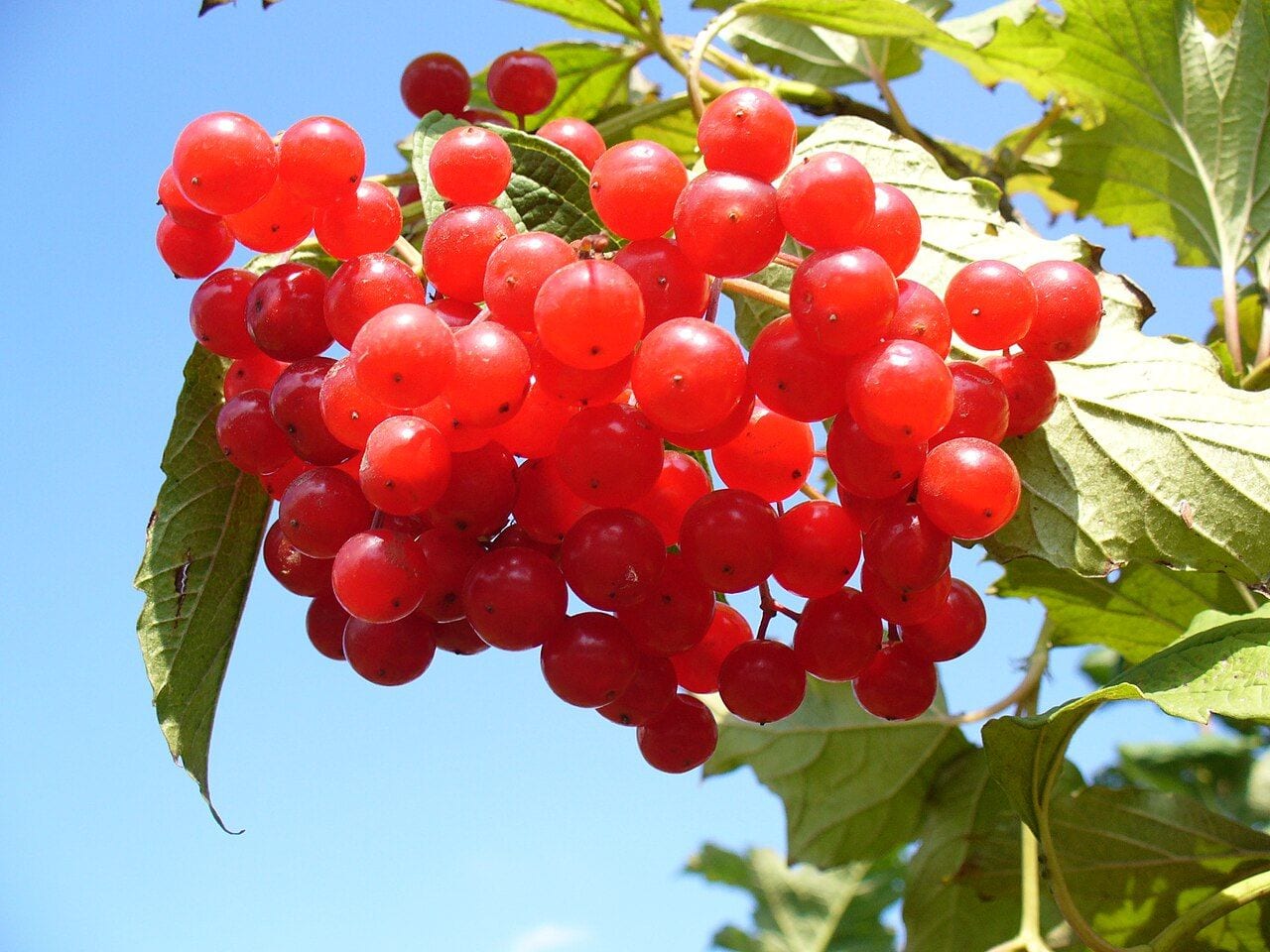
Identify the guelder rose by its maple-like, three-lobed leaves and dual-type flowers
The guelder rose is a shrub typically reaching 6.5–13 ft (2–4 m) in height, though it can occasionally grow up to 16 ft (5 m). Its leaves are opposite, three-lobed, 2–4 inches (5–10 cm) long and wide, with coarsely toothed margins—superficially resembling the leaves of some maple trees. It is easy to distinguish from a maple by its wrinkled leaf surface with depressed veins, and by the fact that it grows as a multi-stemmed shrub rather than a tree.
In late spring to early summer, the guelder rose blooms with white, fragrant, flat flower heads measuring 1.5–4.3 inches (4–11 cm) across. Each cluster is ringed by large, 0.6–0.8 inch (1.5–2 cm) sterile outer flowers with showy petals, while the center is packed with tiny, 0.2 inch (5 mm) fertile flowers. In autumn, these central flowers develop into spherical, 0.3–0.4 inch (7–10 mm) bright red drupes, each containing a single seed. The berries can remain on the bush for an average of 200 days, providing ornamental interest throughout the winter.
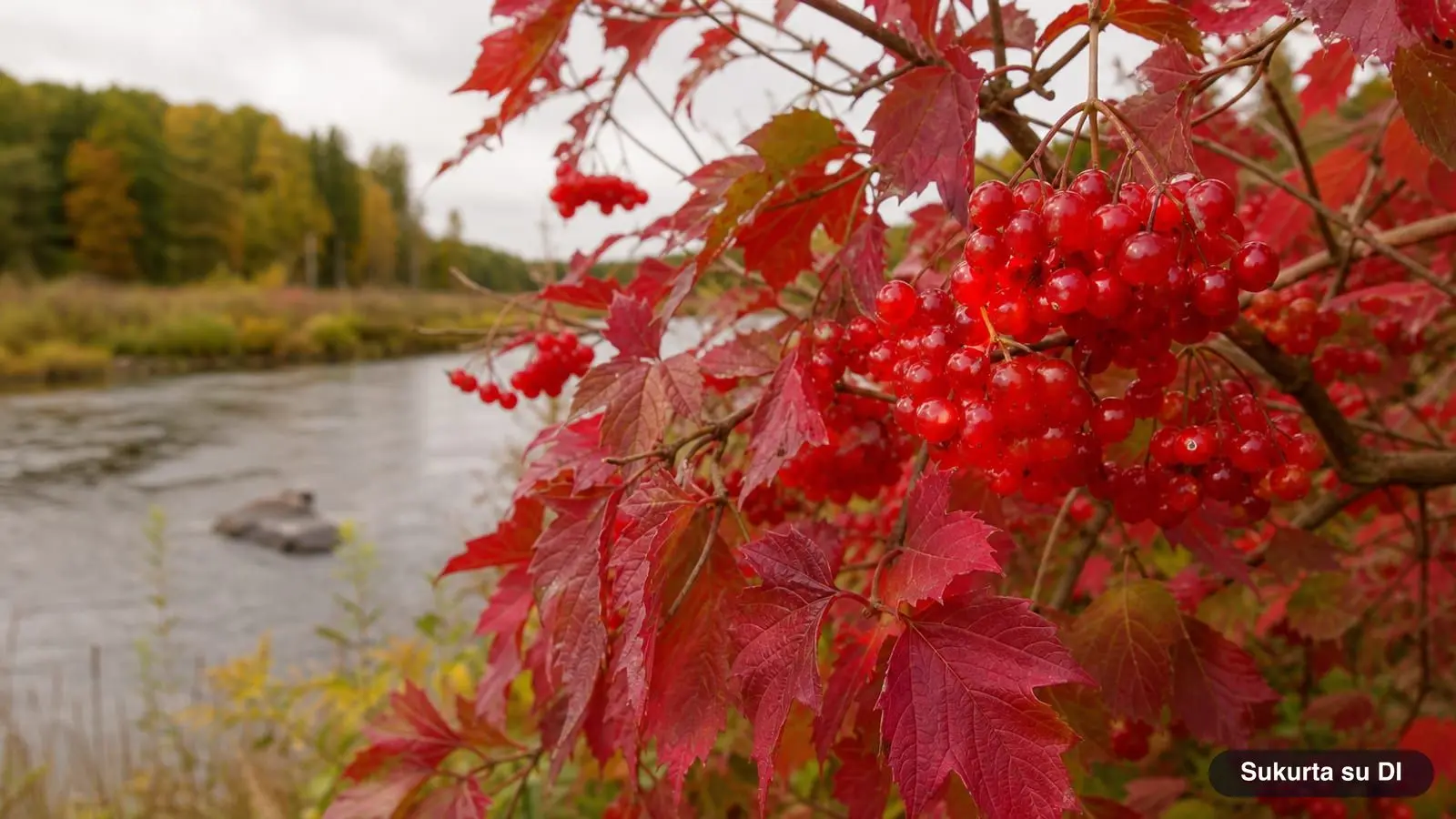
Thriving in moist forest edges and along banks, it is also a popular garden shrub
Viburnum opulus is native to Europe, North Africa, and Central Asia, and has naturalized in parts of North America. In cool temperate climates, it grows naturally in moist forest edges, thickets, and along the banks of rivers, lakes, and other bodies of water (hardy to USDA zones 3–8). The guelder rose is frequently planted in homesteads and landscapes for its beautiful flowers and berries, making an excellent choice for hedges and naturalistic garden designs. It performs best in moist, moderately alkaline soils, but is highly adaptable and tolerates a wide range of soil conditions.
In gardens, the ornamental cultivar 'Roseum' (often called the snowball tree) is incredibly popular. All of its flowers are large and sterile, forming dense, spherical clusters, which means it does not produce any berries. The Royal Horticultural Society has awarded the Award of Garden Merit to 'Roseum', 'Notcutt's Variety', and the yellow-fruited 'Xanthocarpum'. The common English name "guelder rose" is believed to originate from the Dutch province of Gelderland, where the popular snowball variety is thought to have originated.
Frost helps guelder rose berries lose some of their bitterness
Guelder rose berries ripen in autumn, but when fresh, they are extremely bitter. When crushed, they emit a distinct, somewhat unpleasant odor, which is why birds often leave them untouched. Freezing temperatures help break down the compounds responsible for the bitter taste, so most foragers wait to harvest them until after the first hard frost. Because the berries persist on the branches for so long, they can be picked well into winter. It is best to snip the entire fruit clusters (umbels) with their stems attached, stripping the berries off once you are back home.
Historically, people preserved guelder rose berries through the winter using a very simple method: packing them into wooden boxes and burying them in the snow. Today, they are more commonly frozen, mashed with sugar or honey, or boiled into preserves.
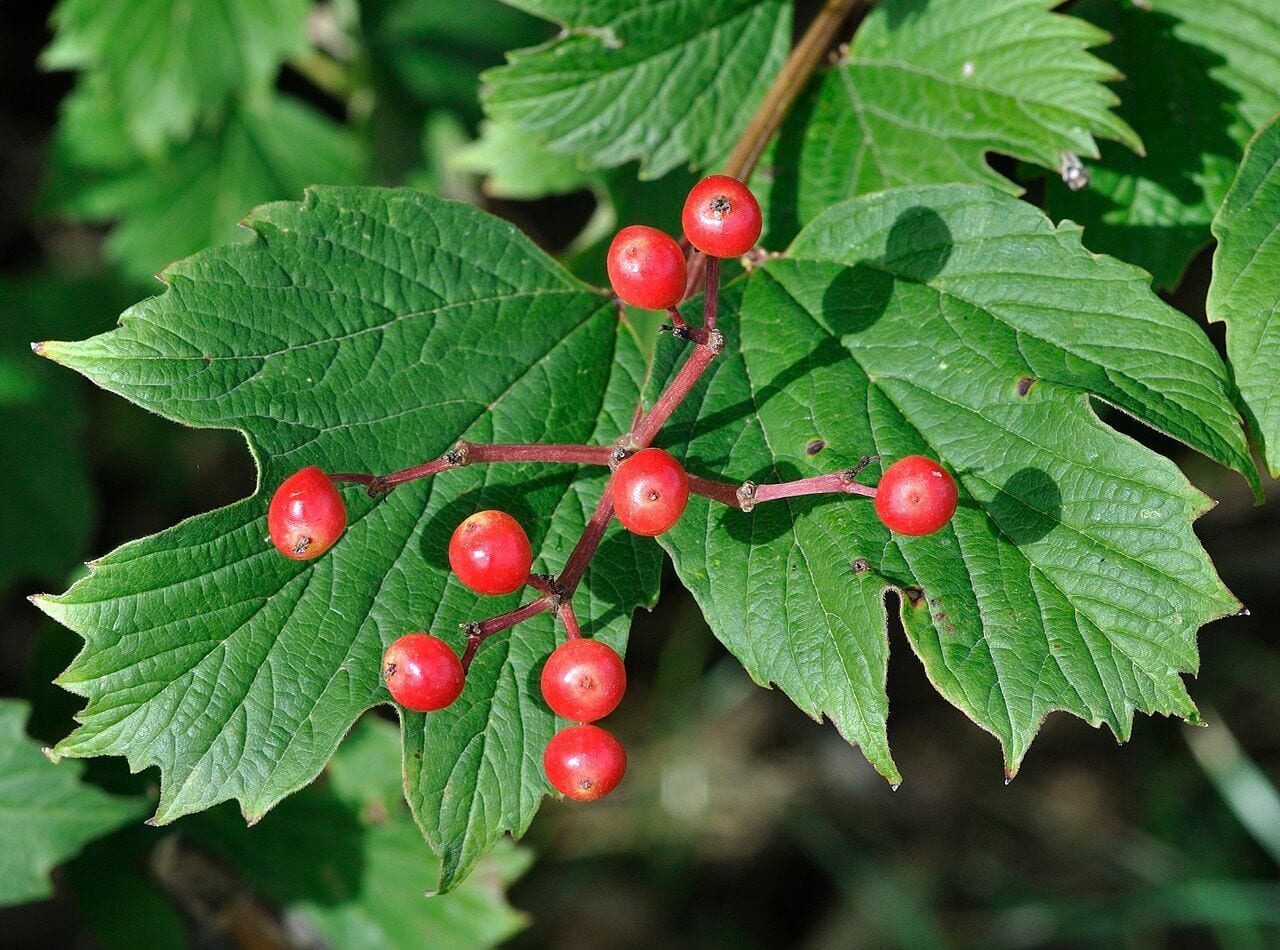
Mildly toxic raw—consume only in small quantities
Guelder rose berries are edible, but only in small amounts. They are mildly toxic when raw: eating a large quantity of fresh berries can cause nausea, vomiting, or diarrhea. For this reason, you should never eat them by the handful straight from the bush—especially children—and even when processed, they should be consumed in moderation. In traditional folk medicine, infusions of the berries and the plant's bark were used to treat coughs, hoarseness, colds, and muscle cramps (the bark is even commonly known as "cramp bark" in English), though there is limited scientific evidence to support its efficacy for cramps or other ailments.
Once softened by frost, the berries have long been valued in traditional foraging as a vitamin-rich winter food source. Before preparing anything with guelder rose berries, thoroughly sort through them, removing all stems and any diseased or rotting fruit.
Preparing jam, jelly, juice, and honey mixtures
Guelder rose berries are almost always consumed after processing. They are boiled into jam, jelly, and syrup, pressed for juice, or used to make fruit soups and tangy sauces for meats. A popular traditional preparation is guelder rose with honey: the berries are mashed and strained through a sieve to remove the seeds, then mixed with honey. This mixture is stored in the refrigerator and enjoyed by the spoonful, often stirred into hot tea. Rubbing the mashed fruit through a fine mesh sieve is the most effective way to separate the pulp from the large seeds.
Identifying red autumn berries: guelder rose, rowan, rose hips, barberry, and toxic yew
Many shrubs and trees display bright red berries in autumn, making it essential to know how to distinguish the guelder rose from similar-looking fruits—especially the highly toxic berries of the yew tree, which is commonly planted in parks and front yards.
| Plant | Berries | Habitat | Edible |
|---|---|---|---|
| Guelder rose | spherical, translucent, 0.3–0.4 in (7–10 mm), flat clusters | moist forest edges, banks | yes, in moderation, better after frost |
| Rowan (mountain ash) | orange-red pomes in heavy clusters | forests, gardens | yes, processed |
| Dog rose | oval, 0.6–0.8 in (1.5–2 cm), hairy inside | clearings, forest edges | yes, with hairs removed |
| Common barberry | oblong, 0.3–0.4 in (7–10 mm), drooping clusters | dry slopes, forest edges | yes, very tart |
| European yew | red aril containing a seed, among needles | parks, landscaping | no – the seed and needles are highly toxic |
You can identify guelder rose berries by their translucent appearance, the flat flower clusters with large outer blooms seen in spring, and the shrub's maple-like leaves. The yew, on the other hand, is a conifer with evergreen needles, making it easy to spot if you look closely at the branches.
Because it is easy to confuse guelder rose berries with other red fruits, always be absolutely certain of your identification before foraging—reviewing a list of poisonous berries is highly recommended. Other common red autumn fruits include rowan, rose hips, and barberries.
Frequently asked questions
Are guelder rose berries edible?
Yes, but only in small amounts. The raw berries are quite bitter and mildly toxic—eating too many can cause nausea, vomiting, or diarrhea. They lose some bitterness after a frost and are best consumed processed into jams, jellies, or juices.
When should I pick guelder rose berries?
The berries ripen in autumn, but most foragers wait until after the first frost when they become less bitter. Because they persist on the bush for a long time, they can be harvested well into winter.
How do you preserve guelder rose berries for winter?
You can freeze them, mash them with sugar or honey, or boil them into jam, jelly, or syrup. Historically, people preserved them simply by burying boxes of the berries in the snow.
Why do guelder rose berries smell unpleasant?
When crushed, ripe guelder rose berries emit a distinct, somewhat unpleasant odor, which is why they are often ignored by both humans and foraging birds.
What is the difference between the wild guelder rose and the 'Roseum' variety?
'Roseum' is an ornamental cultivar where all flowers are sterile and form spherical "snowball" clusters, meaning it produces no berries. The wild species has flat flower heads with fertile center flowers that develop into berries.
Where does the guelder rose grow?
It thrives in moist forest edges, thickets, and along the banks of rivers and lakes. Native to Europe, North Africa, and Central Asia, it is also widely planted globally as an ornamental shrub.
Log in to comment
No comments yet. Be the first.