Schisandra: How to Grow Five-Flavor Berries & Make Tea
- Schisandra (Schisandra chinensis) is a climbing vine native to the Russian Far East, China, Korea, and Japan that reaches up to 26–30 ft (8–9 m).
- It blooms in late spring to early summer with fragrant white flowers, followed by clusters of red berries that ripen in late summer to early fall.
- The fruit is known as the five-flavor berry because it contains bitter, sweet, sour, salty, and pungent tastes.
- The plant is usually dioecious; a notable self-fertile hybrid variety is 'Eastern Prince'.
- While well-known in cool temperate climates, schisandra is not widely cultivated commercially and is mostly grown in home gardens and enthusiast collections.
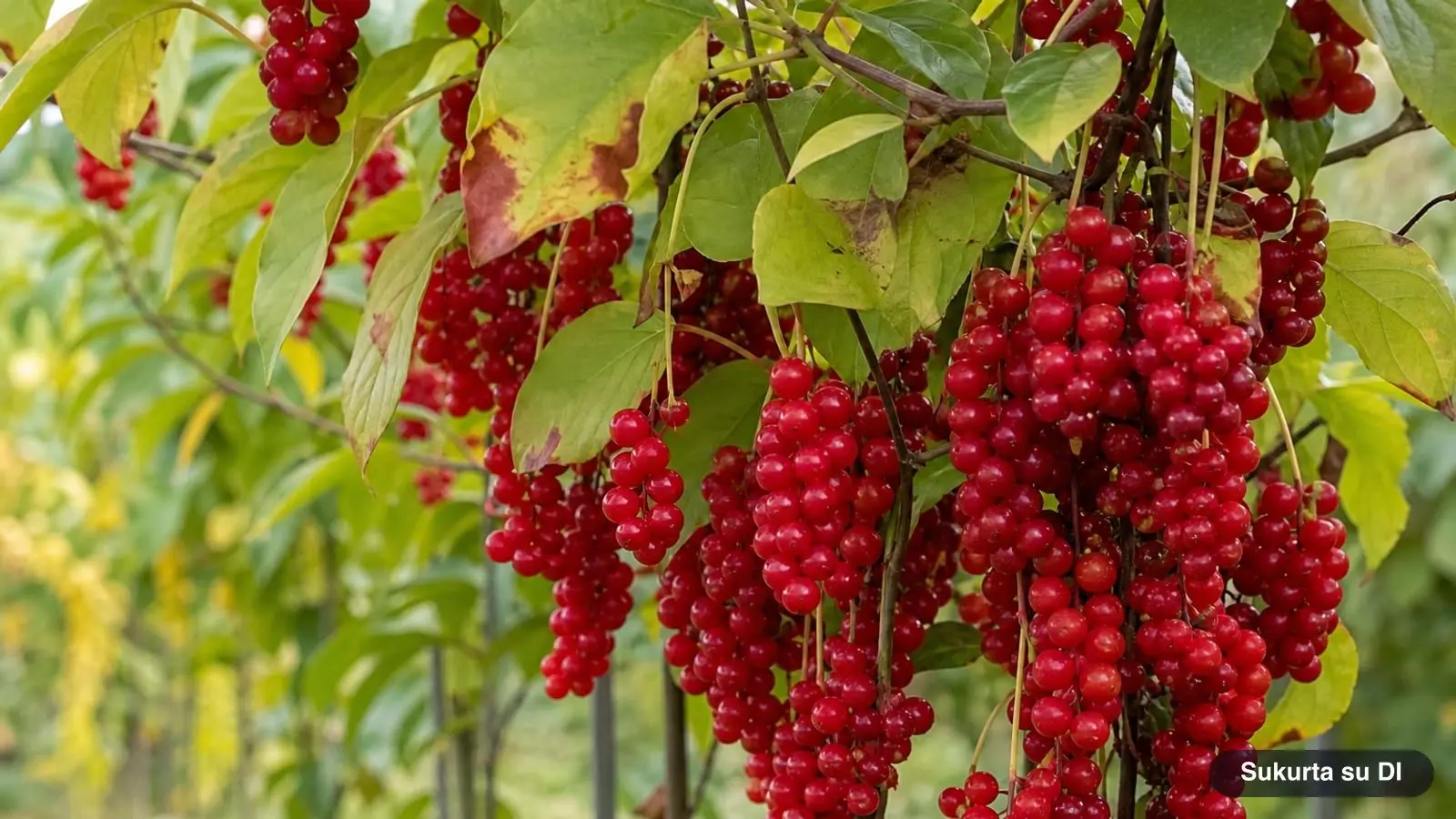
- Schisandra is a vine reaching up to 30 ft (9 m) with lemon-scented leaves
- Schisandra is usually dioecious—you need a male plant for berries
- Schisandra needs loose, humus-rich soil, partial shade, and a trellis
- Schisandra berries ripen in late summer to early fall and are called five-flavor berries
- Schisandra berries are a traditional medicinal plant, but should be used in moderation
This article is part of the 77.today berries guide, prepared by the 77.today editors from the sources listed at the end.
Schisandra (magnolia vine) is an exotic climbing vine that thrives in cool temperate climates. When crushed, its leaves smell like lemon, and in autumn, the vine is draped in clusters of bright red berries that resemble red currants. Schisandra berries are famous for their complex flavor profile—in East Asia, they are known as five-flavor berries. In this part of the berry growing guide, we cover how to identify and grow schisandra, why you usually need two plants, when to harvest the berries, and how to use them.
| Latin name | Schisandra chinensis |
|---|---|
| Other names | schisandra, five-flavor berry, magnolia vine, omija |
| Family | Schisandraceae |
| Origin | Russian Far East, Sakhalin, Japan, Korea, Northern China |
| Plant type | deciduous climbing vine, 26–30 ft (8–9 m), rarely up to 82 ft (25 m) |
| Blooms | late spring to early summer, with fragrant white flowers |
| Berries ripen | late summer to early fall |
| Berries | 0.2–0.4 inches (5–10 mm), red, glossy, in clusters |
| Cold hardiness | down to −22°F (−30°C), USDA zones 4–8 |
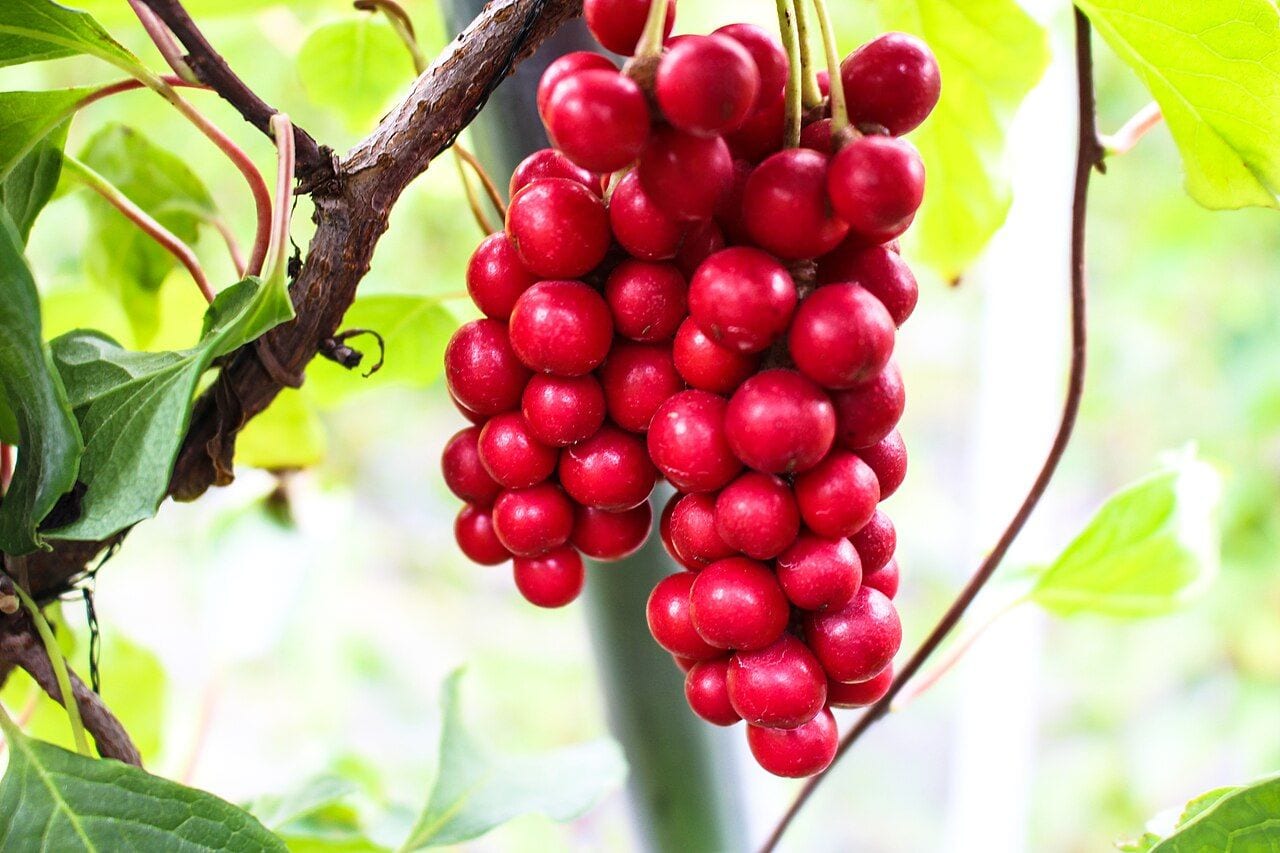
Schisandra is a vine reaching up to 30 ft (9 m) with lemon-scented leaves
Schisandra is a perennial, deciduous woody vine native to the mixed and coniferous forests, valleys, and stream banks of cool climates. It climbs up trees and shrubs in search of light, and when tangled, it can form dense, solid walls of foliage. The stems typically grow to 26–30 ft (8–9 m), though they can reach 82 ft (25 m), and are dark brown, measuring 0.6–0.8 inches (1.5–2 cm) thick. The leaves are simple, oval, 2–4.3 inches (5–11 cm) long with pinkish petioles. When crushed, they emit a distinct lemon scent.
In late spring to early summer, fragrant white or creamy flowers bloom from the leaf axils, turning pinkish as the blooming period ends. They are visited by bees, beetles, and small butterflies. The female flowers develop into glossy, spherical, 0.2–0.4 inch (5–10 mm) red berries that hang in 2.4–3.1 inch (6–8 cm) long clusters. Each berry contains one or two yellowish-brown, kidney-shaped seeds. The root system is branched and shallow, and the nodes on the stems can easily take root.
Schisandra is usually dioecious—you need a male plant for berries
Schisandra is typically dioecious: the flowers on female plants will only set fruit if they are pollinated by the pollen of a male plant. Therefore, when planting, you need to have both male and female vines. An exception is the hybrid variety 'Eastern Prince', which has bisexual flowers and is self-fertile. However, seedlings grown from its seeds—sometimes sold under the same name—are usually single-sex, so it is best to purchase vegetatively propagated plants from a reputable nursery.
Schisandra needs loose, humus-rich soil, partial shade, and a trellis
While well-known among gardening enthusiasts in cool temperate climates, schisandra is not widely cultivated on a commercial scale and is mostly found in home gardens and private collections. It is cold-hardy down to −22°F (−30°C), suitable for USDA zones 4–8, and grows best in temperatures around 68–77°F (20–25°C). In the wild, these plants typically grow in mixed forests, valleys, and clearings. In the garden, schisandra thrives in partial shade and requires moist but well-draining, deep, loose, humus-rich sandy loam with a slightly acidic pH of 6.5–6.8. Dense, compacted soils are not suitable.
Like grapes, schisandra needs a sturdy support system—posts, wires, or a pergola. On larger farms, schisandra is grown similarly to grapevines, tied to vertical trellises. The plant can be propagated by seeds, layering, cuttings, and root suckers. The seeds can remain dormant in the soil for a long time.
Nursery experts in northern climates note that schisandra is highly resilient: it tolerates severe freezing temperatures, is resistant to most pests and diseases, and overwinters without needing winter protection. In the shade, it climbs upwards more quickly, but it fruits most abundantly in brighter spots. During the first year after planting, it is a good idea to protect the young plant from direct, harsh sunlight. Shrubs should be planted in early spring or fall, spaced 5–6.5 ft (1.5–2 m) apart, alongside 6.5–10 ft (2–3 m) tall supports—without a trellis, schisandra will not form flowers. The roots are shallow, sitting just 2–6 inches (5–15 cm) deep, so the soil around the base should not be dug or cultivated; instead, apply organic fertilizers as a top-dressing mulch. Schisandra begins to bear fruit 4 to 5 years after planting. Yields can fluctuate: young plants often produce mostly male flowers, resulting in light harvests some years and heavy crops in others.
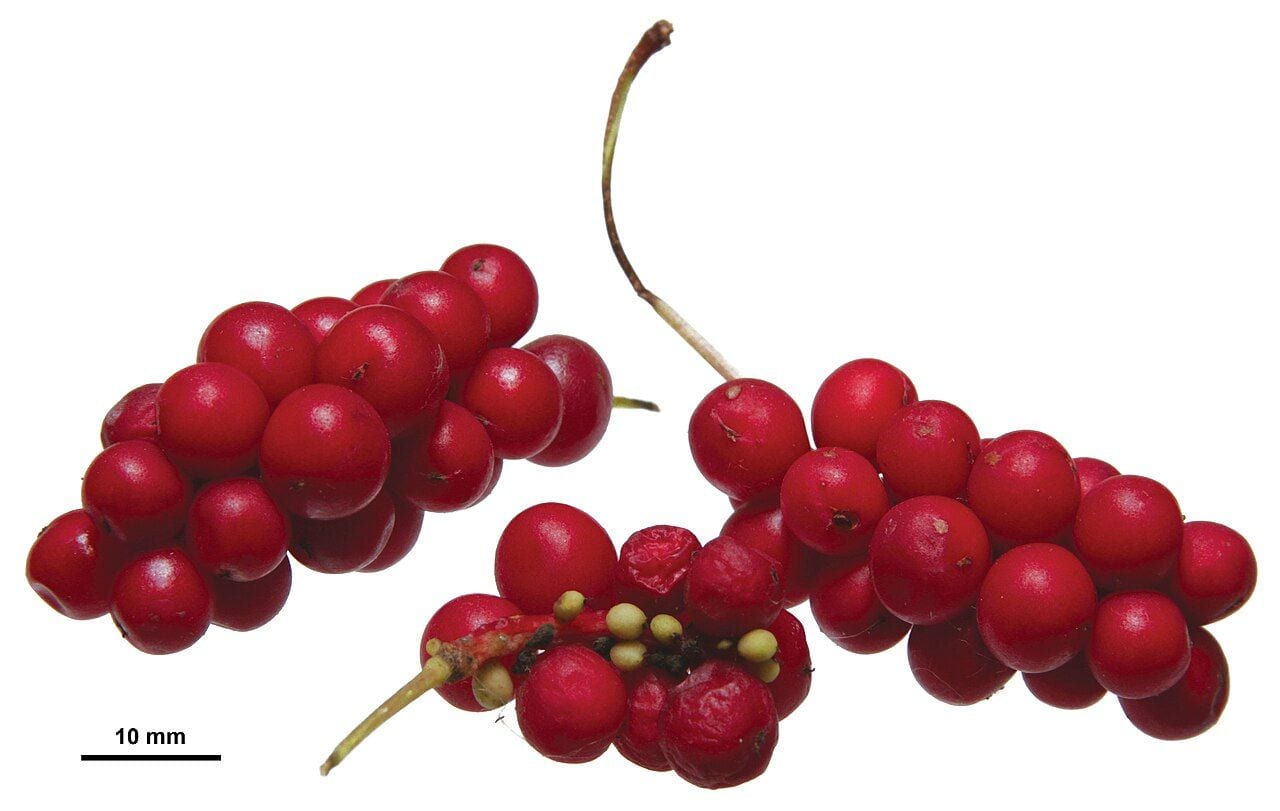
Schisandra berries ripen in late summer to early fall and are called five-flavor berries
In its native range, schisandra fruits are typically harvested in early fall, while in some temperate gardens, they may ripen earlier, by late summer. The berries are tart with a lemon-like flavor and contain natural sugars, malic acid, and essential oils. The Chinese name wǔwèizi and the Korean name omija translate to "five-flavor berry"—the fruit is said to encompass all five basic tastes: bitter, sweet, sour, salty, and pungent. Because of this intense and complex flavor, fresh berries are rarely eaten out of hand; they are more commonly dried or processed.
Schisandra berries are used to make non-alcoholic beverages, wines, and various culinary and confectionery items, while the bark and leaves serve as spices or tea substitutes. The leaves can even be consumed as a cooked vegetable. In Korea, the berries are used to brew a traditional sweet tea called omija-cha, and the Ainu people of Japan historically used schisandra for colds and seasickness. Dried berries can be steeped in hot water for tea or mixed with honey.
Schisandra berries are a traditional medicinal plant, but should be used in moderation
Schisandra berries have been used for centuries in traditional Chinese medicine, and they contain lignans such as schisandrin, gomisins, and other compounds. Today, schisandra is frequently sold as a dietary supplement, though it is not a proven medical treatment. Pregnant or nursing women, individuals taking medications, or those with chronic health conditions should consult a doctor or pharmacist before using schisandra products. Other climbing garden berries include hardy kiwi and grapes, while red currants offer a similar look with their bright red clusters.
Frequently asked questions
Why is schisandra called the five-flavor berry?
The Chinese (wǔwèizi) and Korean (omija) names translate to 'five-flavor berry.' It is believed that the berries contain all five basic tastes: bitter, sweet, sour, salty, and pungent. The foliage also has a tart, lemon-like scent.
Is schisandra self-fertile?
Usually, no. Schisandra chinensis is typically dioecious, meaning female plants only bear fruit when pollinated by a male plant. The hybrid variety 'Eastern Prince' is self-fertile, but plants grown from its seeds are often single-sex.
When should I harvest schisandra berries?
The berries ripen in late summer to early fall, becoming bright red and glossy. The entire cluster should be harvested at once.
How do you grow schisandra?
Schisandra prefers loose, humus-rich, well-draining, moist, and slightly acidic sandy loam (pH 6.5–6.8), partial shade, and a sturdy trellis. It is cold-hardy down to −22°F (−30°C), suitable for USDA zones 4–8. It can be propagated by seeds, layering, cuttings, and root suckers.
Are schisandra supplements safe?
Schisandra berries are used in traditional medicine and supplements, but they are not a proven medical treatment. Pregnant or nursing women, and anyone taking medication, should consult a doctor before using schisandra products.
How do you make schisandra tea?
Dried berries are steeped in hot water; in Korea, the berries are used to make a sweet tea called omija-cha. The bark and leaves, which smell like lemon when crushed, can also be used for tea.
Log in to comment
No comments yet. Be the first.