How to Grow Grapes: Varieties, Pruning, Calories & Benefits
- The common grape vine (Vitis vinifera) is the primary species, with 5,000 to 10,000 varieties known worldwide.
- Viticulture is rapidly expanding into cooler northern regions thanks to cold-hardy hybrids and a warming climate.
- Light-colored, early-ripening varieties are often the most reliable choice for areas with short growing seasons.
- A 3.5-ounce (100 g) serving of fresh grapes contains about 69 calories and 3.2 mg of vitamin C.
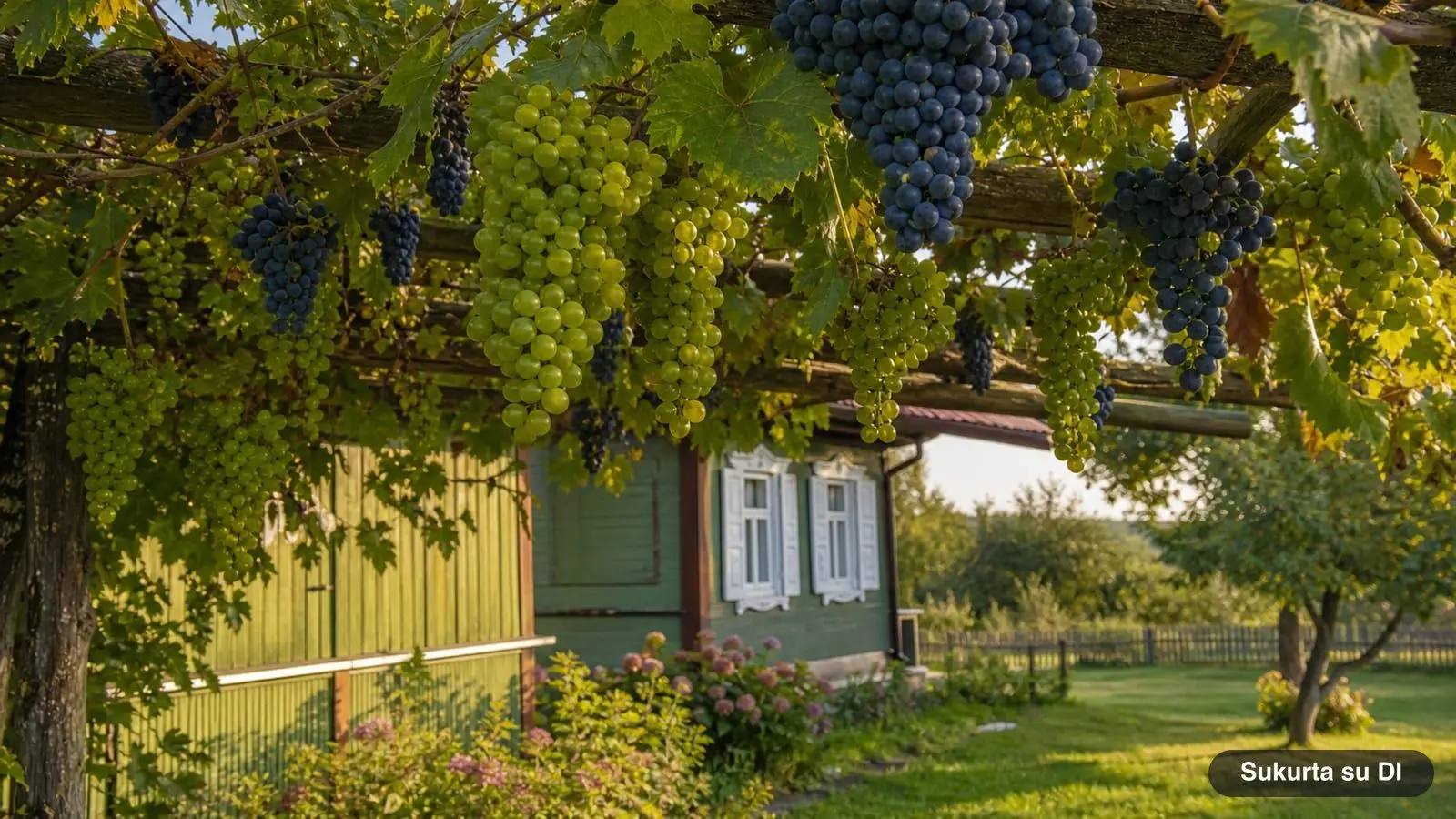
- There are 40–60 vine species worldwide, but the common grape vine is the foundation for wine and table grapes
- Growing grapes in cooler climates is becoming increasingly viable
- Cold-hardy, disease-resistant, and early-ripening varieties are best for short seasons
- Grapevines require a sunny, warm location, sturdy supports, and annual pruning
- A 3.5-ounce (100 g) serving of grapes contains about 69 calories, but only 3.2 mg of vitamin C
- Grapes are eaten fresh, dried, juiced, and fermented into wine
- Grapes, hardy kiwi, and schisandra: three climbing garden berries
This article is part of the 77.today berries guide, prepared by the 77.today editors from the sources listed at the end.
Grapes were once considered an exotic crop in cooler northern regions, but today, vines are thriving not only in greenhouses but also on garden pergolas, against sunny house walls, and in increasingly large commercial vineyards. As cold-hardy varieties improve, vineyard acreage is expanding into non-traditional climates. In this part of the berry growing guide, we cover which vine species and varieties are best for short seasons, how to plant, prune, and protect them from diseases, as well as grape calories and storage tips.
| Latin name | Vitis vinifera and other Vitis species and hybrids |
|---|---|
| Family | Vitaceae (grape family) |
| Origin | Mediterranean region, Central Europe, Southwestern Asia |
| Plant | Perennial climbing vine with tendrils |
| Varieties | 5,000–10,000 varieties of the common grape vine |
| Berries ripen | Late summer to early fall, depending on the variety and climate |
| Growing conditions | Requires full sun, well-draining soil, and sturdy supports |
| Energy value | About 69 kcal per 3.5 oz (100 g) |
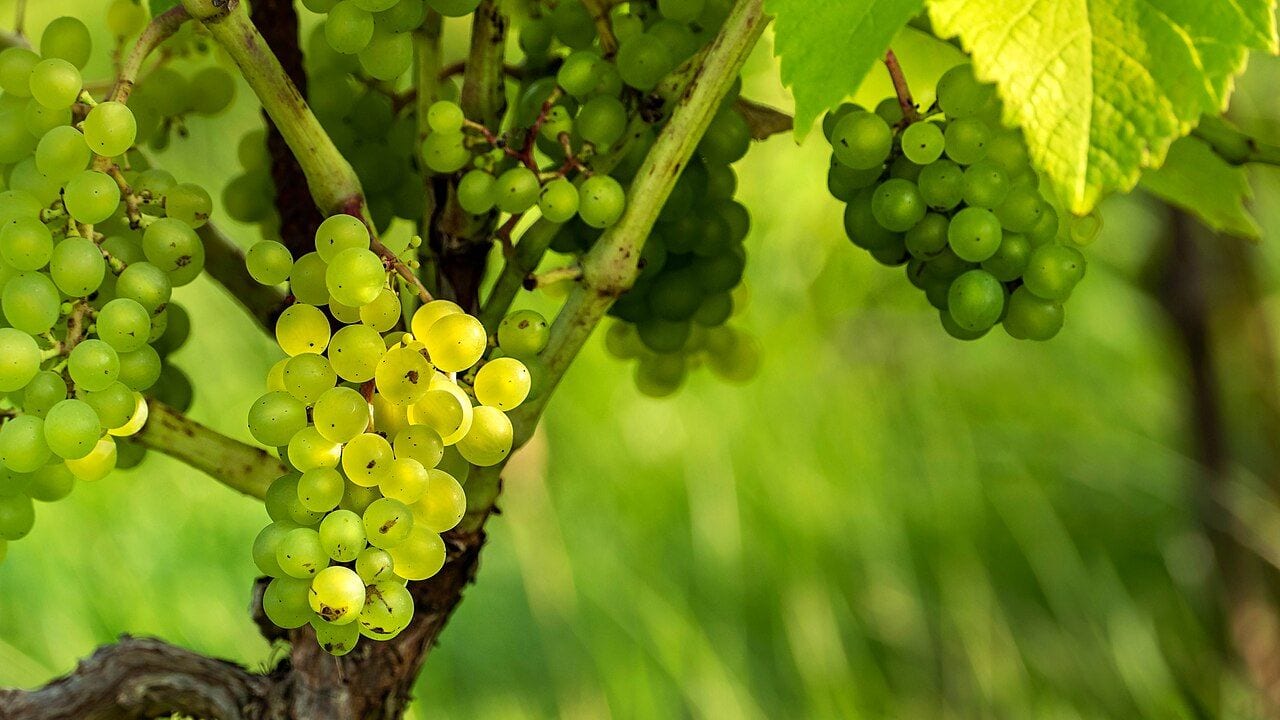
There are 40–60 vine species worldwide, but the common grape vine is the foundation for wine and table grapes
The grapevine genus is distributed mostly in the Northern Hemisphere and includes 40 to 60 species. The most commercially important include the common grape vine (Vitis vinifera), fox grape (Vitis labrusca), riverbank grape (Vitis riparia), sand grape (Vitis rupestris), and Amur grape (Vitis amurensis). The common grape vine originates from the Mediterranean region, Central Europe, and Southwestern Asia. There are between 5,000 and 10,000 known varieties of this species worldwide, though only a fraction hold commercial significance. Nearly all well-known wine grape varieties belong to this species.
Grapes are among the oldest fruits cultivated by humans. The earliest traces of domesticated grapes were found in Georgia and date back to around 6,000 BC, while the oldest known winery, discovered in Armenia, dates to about 4,100 BC. Botanically, a grape is a true berry: it develops from a single ovary, and the seeds are contained within the fleshy pulp.
Growing grapes in cooler climates is becoming increasingly viable
Over the past five years, vineyard acreage has expanded significantly into cooler northern latitudes. As climate change brings warmer, longer summers to non-traditional growing regions, commercial viticulture is pushing its boundaries. Many areas previously considered too cold for reliable harvests are now producing high-quality local wines.
A warming climate is increasingly favorable for grapes: table varieties that once only ripened in a greenhouse can now often be grown successfully outdoors. Growers in cooler zones note that light-colored, early-ripening grapes are generally the most dependable, as grape maturity is determined by accumulated sugar levels. Additionally, northern growers often face different disease pressures than those in traditional southern wine regions, sometimes allowing for reduced fungicide use.
Cold-hardy, disease-resistant, and early-ripening varieties are best for short seasons
For winemaking in cooler climates, growers often choose disease-resistant (often referred to as PIWI) and cold-hardy varieties and hybrids. For table grapes, early-ripening, frost-tolerant varieties are ideal. Seedless grapes are especially popular, though in marginal climates they are best grown in a greenhouse or trained against a warm, south-facing wall to ensure they ripen fully. Because not all varieties have time to mature during a short northern summer, selecting cultivars specifically bred for your local USDA hardiness zone is crucial.
Grapevines require a sunny, warm location, sturdy supports, and annual pruning
The grapevine is a vigorous climbing shrub that uses tendrils to cling to supports. It requires the sunniest and warmest spot in the garden, ideally sheltered from cold northern winds, with loose, well-draining soil. Vines need sturdy supports—such as wire trellises, pergolas, or arbors. Annual pruning is essential because grapes are produced on the current season's growth. A properly trained and pruned vine yields more abundant, higher-quality fruit and is easier to manage. In regions with severe winters, less cold-hardy varieties may require winter protection, such as laying the vines down and covering them with mulch.
Warm, humid summers are favorable for vine growth but also encourage fungal diseases, particularly powdery mildew and downy mildew. Wet nights combined with warm days create the perfect environment for these pathogens to spread. You can reduce disease risk by planting resistant varieties, ensuring the vine is well-ventilated, and promptly removing excess shoots and leaves around the fruit clusters to improve airflow and sun exposure.
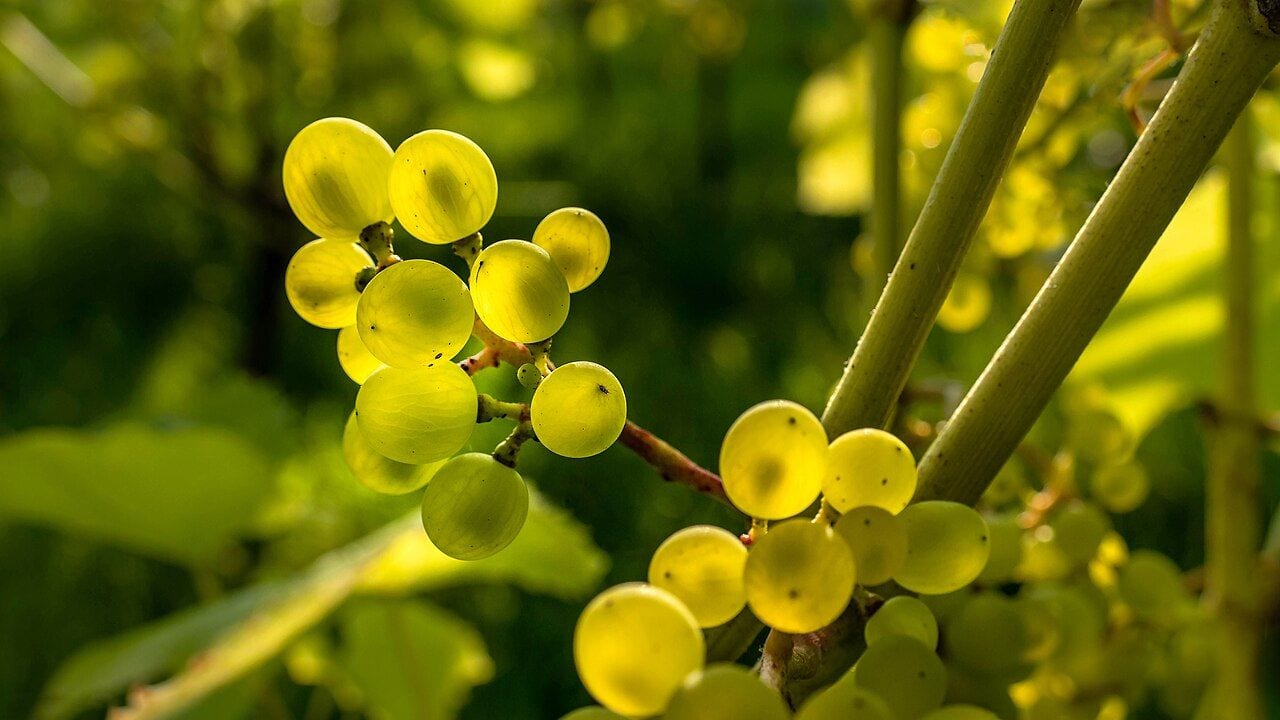
A 3.5-ounce (100 g) serving of grapes contains about 69 calories, but only 3.2 mg of vitamin C
Grapes are higher in calories than most other berries: 3.5 ounces (100 g) of fresh red or green grapes contain about 69 calories due to their high natural sugar content. They are relatively low in vitamin C, providing only about 3.2 mg per 3.5 ounces (100 g), falling far behind black currants or strawberries in this regard. Grapes are about 81% water. Dark-colored grapes are particularly rich in anthocyanins and other beneficial polyphenols.
Grapes are eaten fresh, dried, juiced, and fermented into wine
Grapes are enjoyed fresh, dried to make raisins, pressed for juice, and fermented into wine and vinegar. Vine leaves are also used in many culinary traditions to wrap savory fillings. Fresh grapes are best stored unwashed in the refrigerator and should only be rinsed right before eating. For winter storage, grapes can be frozen—making them a refreshing snack or a substitute for ice cubes in drinks—or cooked into juices, jellies, and jams. Other popular climbing berries for cool-climate gardens include hardy kiwi and schisandra.
Grapes, hardy kiwi, and schisandra: three climbing garden berries
Three climbing berry vines are becoming increasingly popular in home gardens. All of them require sturdy supports, but they differ significantly in their cold hardiness and pollination needs.
| Plant | Cold hardiness | Pollination | Fruit |
|---|---|---|---|
| Grapevine | Varies by variety; less hardy types need winter protection | Cultivated varieties are self-fertile | Berries in clusters, late summer to fall |
| Variegated kiwi (Actinidia kolomikta) | Hardy to about −40°F (−40°C), USDA zones 3–7 | Dioecious, requires a male plant | Mini kiwis, 0.07–0.18 oz (2–5 g) |
| Hardy kiwi (Actinidia arguta) | Hardy to about −30°F (−34°C), USDA zones 4–8 | Dioecious, though 'Issai' is self-fertile | 0.6–1.2 inches (1.5–3 cm), eaten with skin |
| Schisandra (Magnolia vine) | Hardy to about −22°F (−30°C), USDA zones 4–8 | Usually dioecious | Red berries in clusters, late summer to fall |
Of these three, grapes are the most demanding when it comes to heat, which is why they must be planted in the sunniest spots and early-ripening varieties chosen for short seasons. Hardy kiwi and schisandra tolerate severe winter cold exceptionally well, but their early spring growth is susceptible to late frosts, and most varieties require a pollinator partner to produce fruit.
Frequently asked questions
Can you grow grapes outdoors in cold climates?
Yes. While traditional viticulture favors warm regions, cold-hardy hybrids and a warming climate allow many varieties to thrive outdoors in cooler zones. Early-ripening varieties are best, while heat-loving table grapes can be grown in a greenhouse.
How many calories are in grapes?
A 3.5-ounce (100 g) serving of fresh grapes contains about 69 calories. They have a higher natural sugar content than many other berries and provide about 3.2 mg of vitamin C per serving.
Which grape varieties are best for short growing seasons?
For winemaking in cool climates, disease-resistant and cold-hardy hybrids (often called PIWI varieties) are ideal. For table grapes, look for early-ripening, cold-tolerant, and seedless varieties.
Is a grape botanically a berry?
Yes. Botanically, a grape is a true berry because it develops from a single ovary and contains seeds embedded in the fleshy pulp. This distinguishes it from strawberries or raspberries, which are not true berries.
What diseases most commonly affect grapevines?
Fungal diseases, particularly powdery mildew and downy mildew, spread quickly in warm, humid conditions. Ensuring good airflow through proper pruning and selecting disease-resistant varieties reduces the need for fungicide sprays.
Log in to comment
No comments yet. Be the first.