Rose Hips: When to Forage, How to Dry, and Making Tea
- Rose hips are the false fruits of the dog rose (Rosa canina) and other wild roses, resembling small berries.
- The shrubs bloom in early to mid-summer, while the fruits ripen in late summer to early fall and persist on the branches until frost.
- Wild rose hips are incredibly nutrient-dense, containing about 426 mg of vitamin C per 3.5 oz (100 g).
- The tiny hairs inside the fruit can severely irritate the skin and digestive tract, so they must be removed before eating.
- Rose hips are most commonly dried for tea, but they are also excellent for making syrups, jams, and wines.

- The rose hip: a fleshy shell with seeds and itching hairs
- Foraging rose hips: best picked after the first frost when they soften
- Wild rose hips pack about 426 mg of vitamin C per 3.5 oz (100 g)
- Dried rose hips: the perfect base for tea, syrups, and tinctures
- Rose hip jam, syrup, soup, and wine across Europe
- Handling rose hips safely: gloves, removing seeds and hairs, and careful straining
This article is part of the 77.today berries guide, prepared by the 77.today editors from the sources listed at the end.
Rose hips are a fantastic autumn and winter source of vitamins, commonly foraged along forest edges, roadsides, and in abandoned fields. The bright red-orange fruits of the dog rose persist on the branches for a long time, meaning they can be harvested from late summer right through to the hard frosts. In this part of our berry foraging guide, we cover how to identify the dog rose, when to pick the hips, why you must watch out for their irritating hairs, their vitamin C content, and how to prepare rose hip tea, syrup, or jam.
| Botanical name | Rosa canina |
|---|---|
| Family | Rose family (Rosaceae), Rosa genus |
| Plant | thorny shrub, 5–10 ft (1.5–3 m), sometimes up to 16 ft (5 m) |
| Habitat | clearings, forest edges, ravines, gardens |
| Blooms | early to mid-summer, with pink or whitish flowers |
| Fruits ripen | late summer to early fall, persisting on branches for months |
| Fruits | oval, 0.6–0.8 inches (1.5–2 cm), red-orange, glossy |
| Vitamin C | about 426 mg / 3.5 oz (100 g) (in wild varieties) |
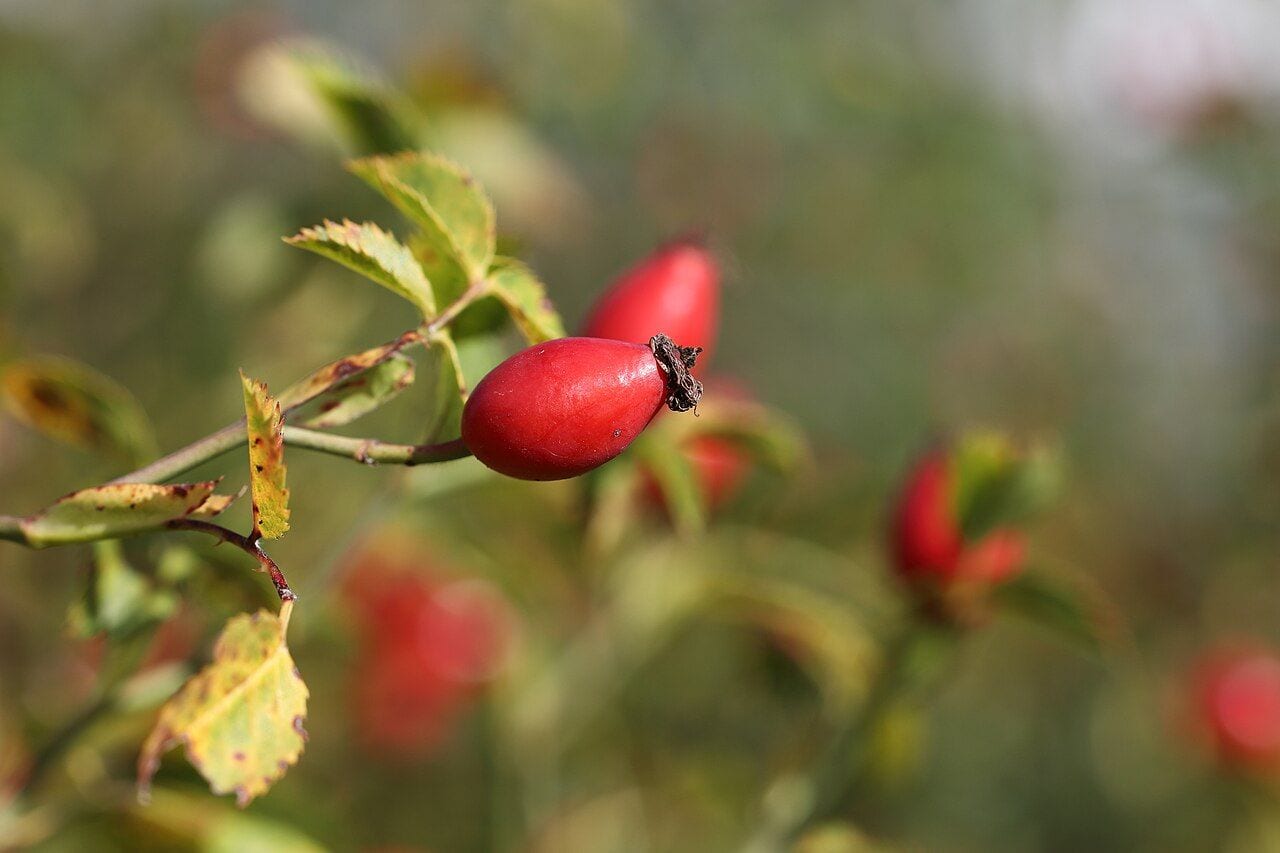
The rose hip: a fleshy shell with seeds and itching hairs
Hardy in USDA zones 3–9, the dog rose is a resilient perennial shrub that typically grows 5–10 feet (1.5–3 m) tall, occasionally reaching up to 16 feet (5 m). Its arching stems are covered in small, sharp, curved thorns that help it scramble over other vegetation. The pinnate leaves consist of 5 to 7 leaflets and release a pleasant scent when rubbed. In early to mid-summer, it produces fragrant, five-petaled flowers measuring 1.5–2.5 inches (4–6 cm) across. These are usually pale pink, though they can range from deep pink to pure white.
The flowers give way to oval, red-orange fruits measuring 0.6–0.8 inches (1.5–2 cm) in length. Botanically speaking, a rose hip is not a true berry. It is a fleshy, brightly colored, glossy shell that develops from the receptacle of the flower, and inside it contains tiny seed-like achenes covered in hairs. These hairs severely irritate the skin and mucous membranes—in fact, they were historically used to make itching powder. Rose hips have a water content of only about 65%, which is one of the lowest among fleshy fruits in temperate climates. This low moisture content means they dry easily and store exceptionally well.
Foraging rose hips: best picked after the first frost when they soften
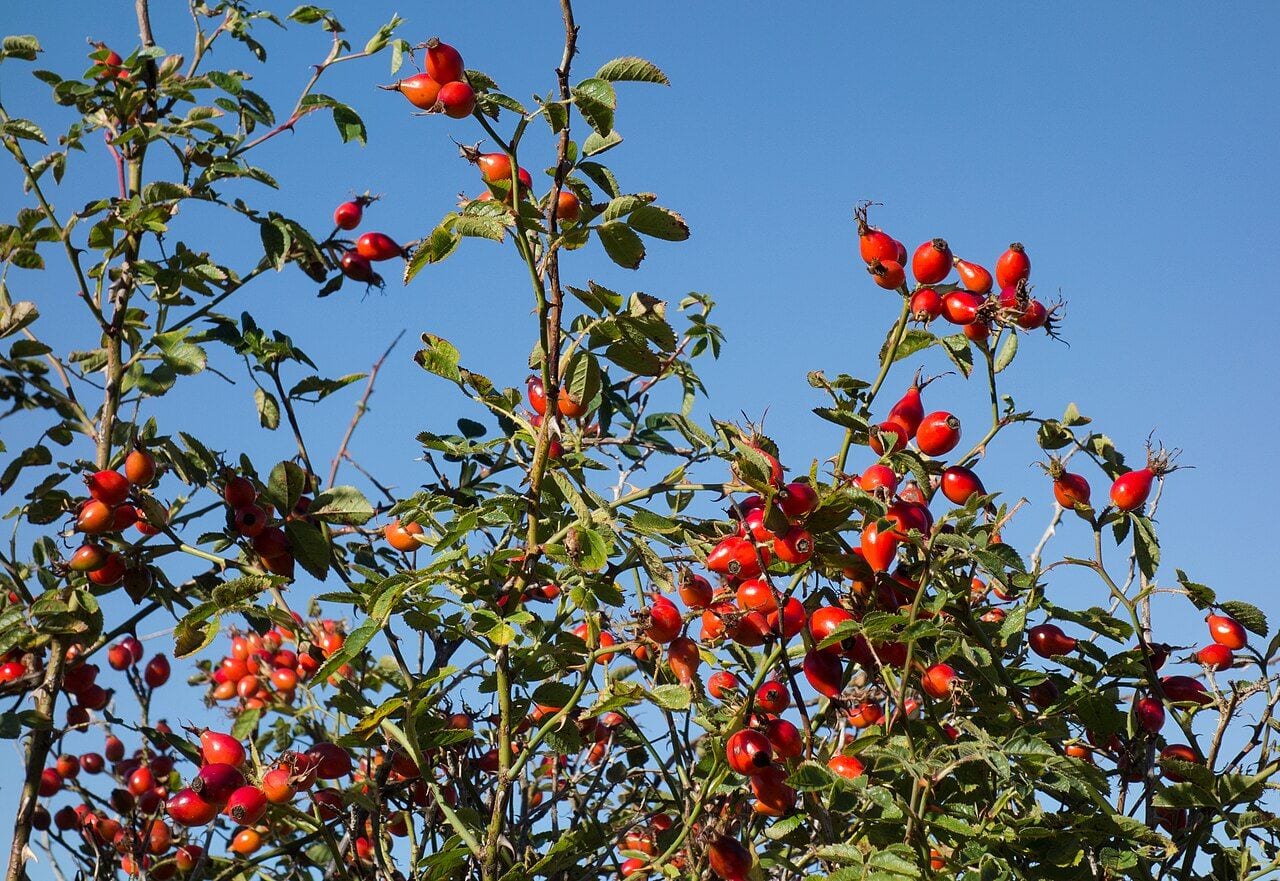
The dog rose thrives in clearings, along forest edges, in ravines, thickets, and roadsides. It is also frequently planted as an ornamental or medicinal garden shrub. The fruits ripen in late summer to early fall when they turn a brilliant red-orange. They can persist on the branches for several months until they are eaten by birds, eventually darkening to almost black as winter progresses. Foragers often recommend harvesting rose hips after the first frost: the freezing temperatures soften the fruits and make them noticeably sweeter.
When picking, you must watch out for the sharp thorns—wearing thick gardening gloves is highly recommended. Only collect healthy, unblemished, and clean fruits from bushes growing well away from busy roads.
Wild rose hips pack about 426 mg of vitamin C per 3.5 oz (100 g)
Rose hips are one of the richest wild sources of vitamin C available. Wild hips contain approximately 426 mg per 3.5 oz (100 g), though the exact amount varies significantly depending on the species, ripeness, and how they are processed. Studies of various fresh fruits and commercial products have found ascorbic acid levels ranging from 0.03% to 1.3%. They also contain beneficial carotenoids—such as beta-carotene, lutein, zeaxanthin, and lycopene—along with vitamin E, phenolic compounds, and essential minerals. The oil extracted from the seeds is particularly rich in linoleic and alpha-linolenic acids.
Rose hip extracts have been studied as a potential remedy for joint pain. While some meta-analyses have noted a minor effect, this requires further confirmation through rigorous clinical trials, and rose hips are not currently considered an effective standalone treatment for conditions like knee osteoarthritis. Therefore, they are best valued as a nutritious food and an excellent source of vitamin C, rather than a medical cure.
Dried rose hips: the perfect base for tea, syrups, and tinctures
Most commonly, rose hips are dried for long-term storage. After washing and thoroughly patting them dry, the fruits can be dehydrated in a food dehydrator or an oven set to a very low temperature until they are completely hard. Dried rose hips should be stored in an airtight container in a cool, dry place. You can also easily find them for sale in pharmacies, health food stores, and local markets.
To make rose hip tea, the dried fruits are crushed or sliced, steeped in hot water, and left to infuse in a thermos or a covered pot. Before drinking, the tea must be carefully strained through a fine mesh sieve or cheesecloth to remove any irritating hairs. Rose hip tea is frequently blended with hibiscus for a tart, fruity flavor profile. Because boiling destroys vitamin C, it is best to steep the hips in hot water rather than actively boiling them for extended periods.
Rose hip jam, syrup, soup, and wine across Europe
Once the seeds and hairs are painstakingly removed, fresh rose hips can be boiled down into delicious jams, marmalades, jellies, and syrups. They are also baked into pies, added to hearty stews, or fermented into wine. In Sweden, a sweet rose hip soup called nyponsoppa is a popular traditional dish. In Bulgaria, they are used to make sweet wines and teas, while in Slovenia, they are a key flavor in the popular soft drink Cockta. The fragrant flowers of the dog rose are also edible: they can be made into floral syrups, candied for decorations, or tossed fresh into salads. In Poland, the petals are famously cooked into a delicate jam used to fill traditional doughnuts.
Handling rose hips safely: gloves, removing seeds and hairs, and careful straining
Foraging and preparing rose hips is straightforward as long as you follow a few basic rules. The shrubs are heavily thorned, and the tiny hairs inside the fruit can cause severe irritation to the skin and digestive tract. Following these steps will help you avoid any unpleasant surprises.
| Step | Action | Reason |
|---|---|---|
| Harvesting | wear thick gloves; pick healthy, bright red fruits | the branches are covered in sharp, curved thorns |
| Cleaning | slice open and remove the seeds and internal hairs | the hairs severely irritate the skin and mucous membranes |
| Drying | dehydrate in a food dehydrator or an oven at a low temperature | rose hips contain only about 65% water, so they dry easily and efficiently |
| Drinking | strain tea through a fine mesh sieve or cheesecloth | to ensure no irritating hairs make it into your drink |
Dried rose hips prepared this way can be stored in airtight containers in a dry place, providing a steady supply for winter teas. Fresh, cleaned rose hips are the best raw material for making jams or syrups, as they retain the highest levels of vitamin C before drying.
Other wild autumn berries that are exceptionally high in vitamin C include sea buckthorn and guelder rose berries.
Frequently asked questions
When is the best time to harvest rose hips?
Dog rose fruits ripen in late summer to early fall when they turn bright red-orange. It is often recommended to pick them after the first frost, as the cold softens them and makes them sweeter.
How do you dry rose hips?
Wash and thoroughly dry the rose hips, then dehydrate them in a food dehydrator or an oven at a low temperature until they are hard. For larger hips, slice them in half and remove the seeds and hairs before drying. Store the dried hips in an airtight container in a cool, dry place.
How much vitamin C is in rose hips?
Wild rose hips contain about 426 mg of vitamin C per 3.5 oz (100 g), though the exact amount varies greatly depending on the species, ripeness, and processing method. Keep in mind that drying and boiling will destroy some of the vitamin C.
Can you eat rose hips raw?
Yes, ripe rose hips can be eaten straight from the bush, but you must be very careful to avoid the tiny hairs inside the fruit. These hairs irritate the skin and mucous membranes—in fact, they were historically used to make itching powder.
What is the difference between wild dog roses and cultivated garden roses?
In everyday language, the terms are often used interchangeably. The wild dog rose (Rosa canina) is the specific wild species most commonly foraged for its hips, while other wild or cultivated rose species are often simply referred to as wild roses or garden roses.
How do you make rose hip tea?
Crush or chop dried rose hips, pour hot—but not boiling—water over them, and let them steep in a thermos or covered container. Strain the tea carefully through a fine mesh sieve or cheesecloth before drinking to catch any stray hairs.
Log in to comment
No comments yet. Be the first.