Blackberries: Types, Thornless Varieties, Growing & Benefits
- Blackberries belong to the rose family, with over 375 species found worldwide.
- Several wild species grow naturally in temperate climates, with the European dewberry (Rubus caesius) being widely distributed.
- When picked, the blackberry retains its core (receptacle), unlike raspberries which are hollow.
- Modern thornless garden varieties have made growing and harvesting much easier.
- A 3.5 oz (100 g) serving contains about 43 calories, 21 mg of vitamin C, and 5.3 g of fiber.
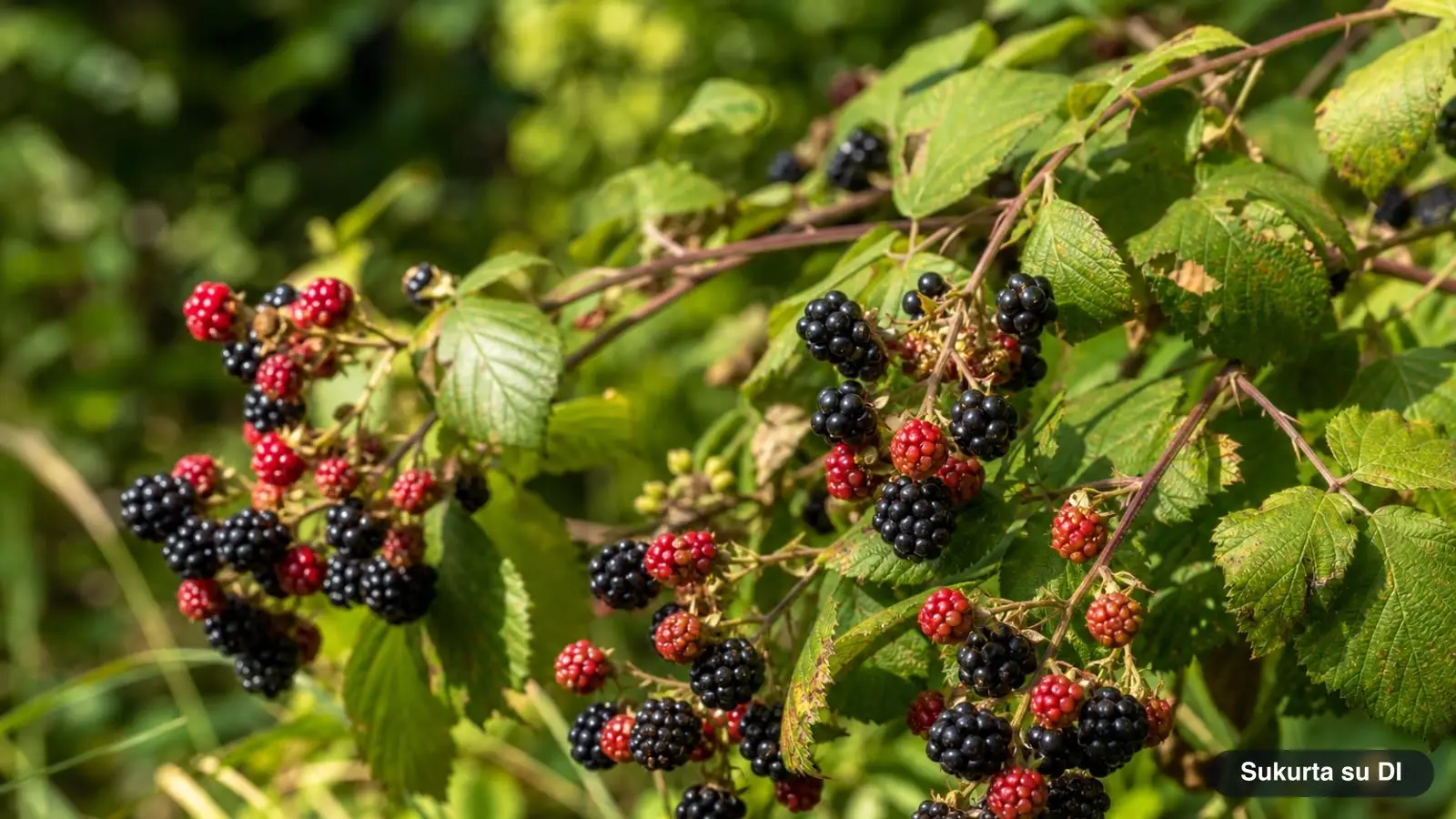
- The blackberry fruit is picked with its core—this is how it differs from a raspberry
- Hundreds of wild blackberry species grow naturally worldwide
- Thornless garden blackberries are grown on trellises in sunny, sheltered spots
- 3.5 oz (100 g) of blackberries contains 43 calories, 21 mg of vitamin C, and 5.3 g of fiber
- Preserving blackberries for winter: freezing, jams, juices, and wine
- Blackberries, raspberries, and cloudberries all belong to the same genus
This article is part of the 77.today berries guide, prepared by the 77.today editors from the sources listed at the end.
Blackberries are late summer berries whose ripe, dark fruits can be found along roadsides, forest edges, river valleys, and increasingly in home gardens. They are closely related to raspberries but differ in color, growth habit, and how they are harvested. In this part of the berry guide, we cover the types of wild blackberries, how they differ from raspberries, how to grow thornless garden varieties, their nutritional value, and the best ways to preserve them for winter.
| Botanical name | Rubus subgen. Rubus |
|---|---|
| Family | Rose family (Rosaceae), Rubus genus |
| Species | Over 375 worldwide, several native to temperate regions |
| Plant type | Subshrub with biennial, ribbed, usually thorny canes |
| Blooms | Late spring to early summer, with white or pink flowers |
| Fruit ripens | Mid to late summer into early fall |
| Fruit | Aggregate fruit, black or dark purple, picked with the receptacle |
| Energy value | About 43 kcal per 3.5 oz (100 g) |
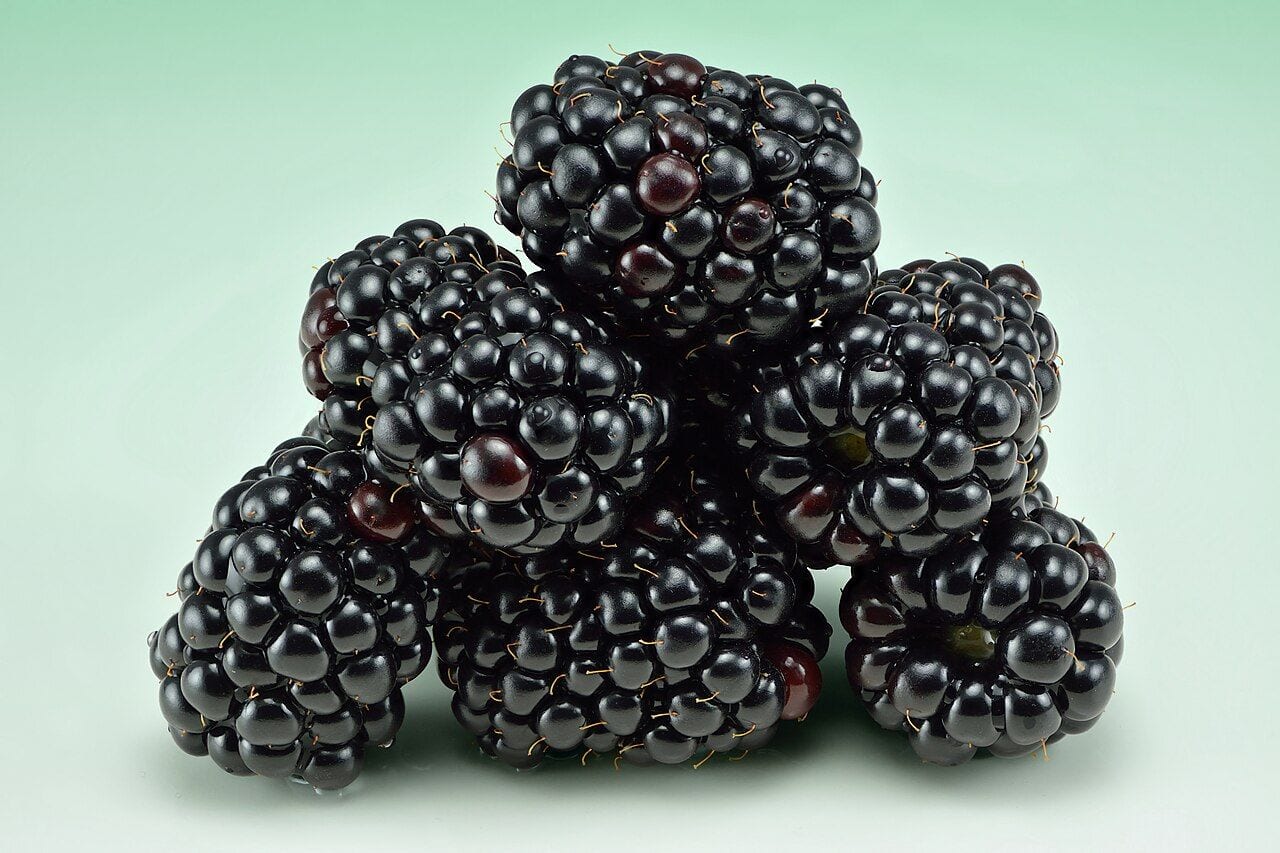
The blackberry fruit is picked with its core—this is how it differs from a raspberry
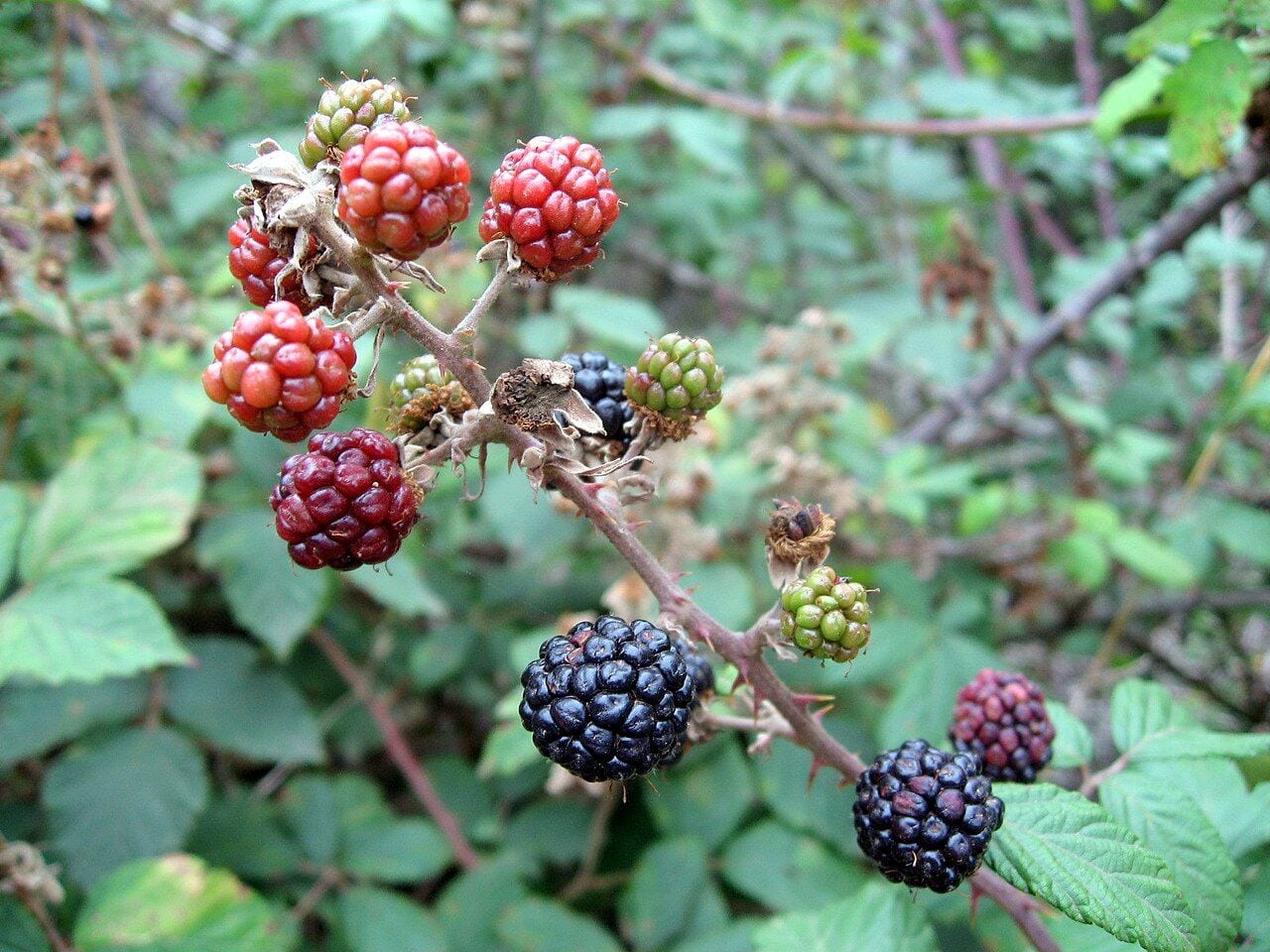
Blackberries and raspberries belong to the same genus, and their fruits look similar at first glance: both are aggregate fruits made of many small, juicy drupelets. The key difference is their connection to the receptacle (core). When picking a raspberry, the fruit slips off the conical receptacle, leaving it hollow. A blackberry's receptacle stays inside the fruit, so the entire berry is picked with its core intact. Ripe blackberries are usually black or dark purple, while unripe ones are red, which is why they are sometimes confused with raspberries.
Blackberry canes are biennial, ribbed, upright or trailing, and usually covered with short, curved, sharp thorns. The leaves are trifoliate or palmately compound with five leaflets. In the first year, the cane grows vegetatively and does not flower (primocane); in the second year, it produces lateral flowering shoots (floricane). The flowers are white or pink, 0.8–1.2 inches (2–3 cm) across, gathered in cluster-like inflorescences. Ripe fruits drop along with the receptacle.
Hundreds of wild blackberry species grow naturally worldwide
Blackberry taxonomy is highly complex: many species crossbreed and reproduce without fertilization (apomixis), resulting in over 375 closely related species described worldwide. The scientific study of blackberries even has its own name—batology. In temperate regions of Europe and North America, various wild species thrive. A widespread example in Europe is the European dewberry (Rubus caesius), while other regions have their own dominant native species.
Wild blackberries tolerate poor soils, thriving along roadsides, in ditches, abandoned lots, forest edges, and riverbanks. The ripe berries are eaten by birds and mammals—such as foxes and badgers—which then disperse the seeds. Deer and elk also browse on blackberry leaves.
Thornless garden blackberries are grown on trellises in sunny, sheltered spots
Home gardens feature various cultivated blackberry species and numerous garden varieties. A major breakthrough has been the development of thornless blackberries: varieties bred in recent decades without prickles, making them much easier to care for and harvest. Some modern blackberry cultivars, like certain raspberries, are primocane-fruiting, meaning they produce a crop on first-year canes.
Blackberries need a sunny location protected from cold winter winds, and fertile, moisture-retaining soil. Since the canes of some varieties can grow 10–20 feet (3–6 m) long and tend to trail or arch to the ground, they must be tied to wires or other trellises. After the harvest, the second-year canes (floricanes) that have finished fruiting should be pruned out to make room for new growth. If left unmanaged, blackberries spread rapidly through root suckers and tip layering (where branches root upon touching the ground), so it is important to keep the plants contained. In some parts of the world, such as Australia and the Pacific Northwest of North America, certain introduced blackberry species are considered invasive weeds.
Blackberries can be highly productive—commercial plantings can yield up to 20,000 lbs per acre (22.5 metric tons per hectare). During rainy seasons, they are susceptible to gray mold (botrytis), just like raspberries, so it is important to thin and ventilate the blackberry patch.
3.5 oz (100 g) of blackberries contains 43 calories, 21 mg of vitamin C, and 5.3 g of fiber
Fresh blackberries are relatively low in calories: a 3.5 oz (100 g) serving has about 43 calories. They provide roughly 21 mg of vitamin C and 5.3 g of dietary fiber. Blackberry fruits consist of about 87% water, 6.4% soluble solids, and 2.8% sugars. The dark color of the berries is due to anthocyanins.
Blackberry seeds are small and hard, which some people find unpleasant—however, this drawback is easily bypassed by straining the pureed berries through a sieve when making juices, sauces, or jellies.
Preserving blackberries for winter: freezing, jams, juices, and wine
Blackberries are very juicy and highly perishable, so they should be picked in dry weather and kept unwashed until right before use. For winter storage, blackberries are most commonly frozen by spreading them in a single layer on a baking sheet and then transferring them to freezer bags. They are also used to make jams, jellies, compotes, juices, wines, and liqueurs, and are baked into pies and cobblers. Blackberries pair exceptionally well with apples and pears.
Blackberries, raspberries, and cloudberries all belong to the same genus
The Rubus genus includes several well-known berries: blackberries, raspberries, and cloudberries. All of their fruits are aggregate berries made of small drupelets, but the plants and their habitats differ significantly.
| Berry | Habitat | Ripens | Fruit | Key feature |
|---|---|---|---|---|
| Blackberry | Roadsides, forest edges, riverbanks, gardens | Mid to late summer | Black, picked with the core | Thorny biennial canes |
| Raspberry | Clearings, forest edges, gardens | Midsummer | Red or yellow, hollow | Biennial canes, spreads by suckers |
| Cloudberry | Peat bogs | Midsummer | Amber-colored, single berry per stem | Herbaceous dioecious plant |
Blackberries and raspberries can also crossbreed—hybrids favored by gardeners produce berries of unusual colors and sizes. The cloudberry, on the other hand, is a herbaceous bog plant without woody canes, and its single berry per stem ripens to a golden-amber color.
The closest relatives to blackberries are raspberries and cloudberries. The dark berry season continues into late summer and fall with elderberries and aronia.
Frequently asked questions
What is the difference between a blackberry and a raspberry?
When picking a raspberry, the fruit slips off the conical receptacle, leaving it hollow. A blackberry is picked with its receptacle attached, so the inside is solid. Additionally, ripe blackberries are usually black or dark purple, while raspberries are red or yellow.
When do blackberries ripen?
In cool temperate climates, wild blackberries typically ripen in mid to late summer, while many garden varieties continue to fruit into early fall. The berries ripen gradually, so they are harvested multiple times over the season.
What are the most common wild blackberries?
The European dewberry (Rubus caesius) is widespread across Europe and parts of Asia. Depending on the region, many other species thrive in the wild, such as the elmleaf blackberry and various trailing or upright native varieties.
Can blackberries be grown in home gardens?
Yes. Gardeners grow various species and cultivars, including popular thornless varieties. They require a sunny, sheltered location and trellises for support, as their canes are long and trailing.
How many calories are in blackberries?
A 3.5 oz (100 g) serving of fresh blackberries has about 43 calories. They also provide roughly 21 mg of vitamin C and 5.3 g of dietary fiber.
Can blackberries become a weed?
Yes. Blackberries spread rapidly through root suckers and tip layering (where branches root upon touching the ground). If left unmanaged, they can form dense, impenetrable thickets. In some parts of the world, certain species are considered invasive weeds.
Log in to comment
No comments yet. Be the first.