How to Grow Red and White Currants: Varieties and Care
- The red currant (Ribes rubrum) is a 3–5 ft (1–1.5 m) deciduous shrub native to Western and Northern Europe.
- White currants are not a separate species, but rather a sweeter, less pigmented form of the red currant.
- A mature bush can yield 6.5–9 lbs (3–4 kg) of berries over the summer.
- A 3.5 oz (100 g) serving of red currants contains about 56 calories and 41 mg of vitamin C.
- Popular varieties include the early-ripening 'Jonkheer van Tets' and later-season cultivars like 'Detvan', 'Tatran', and 'Slovakia'.
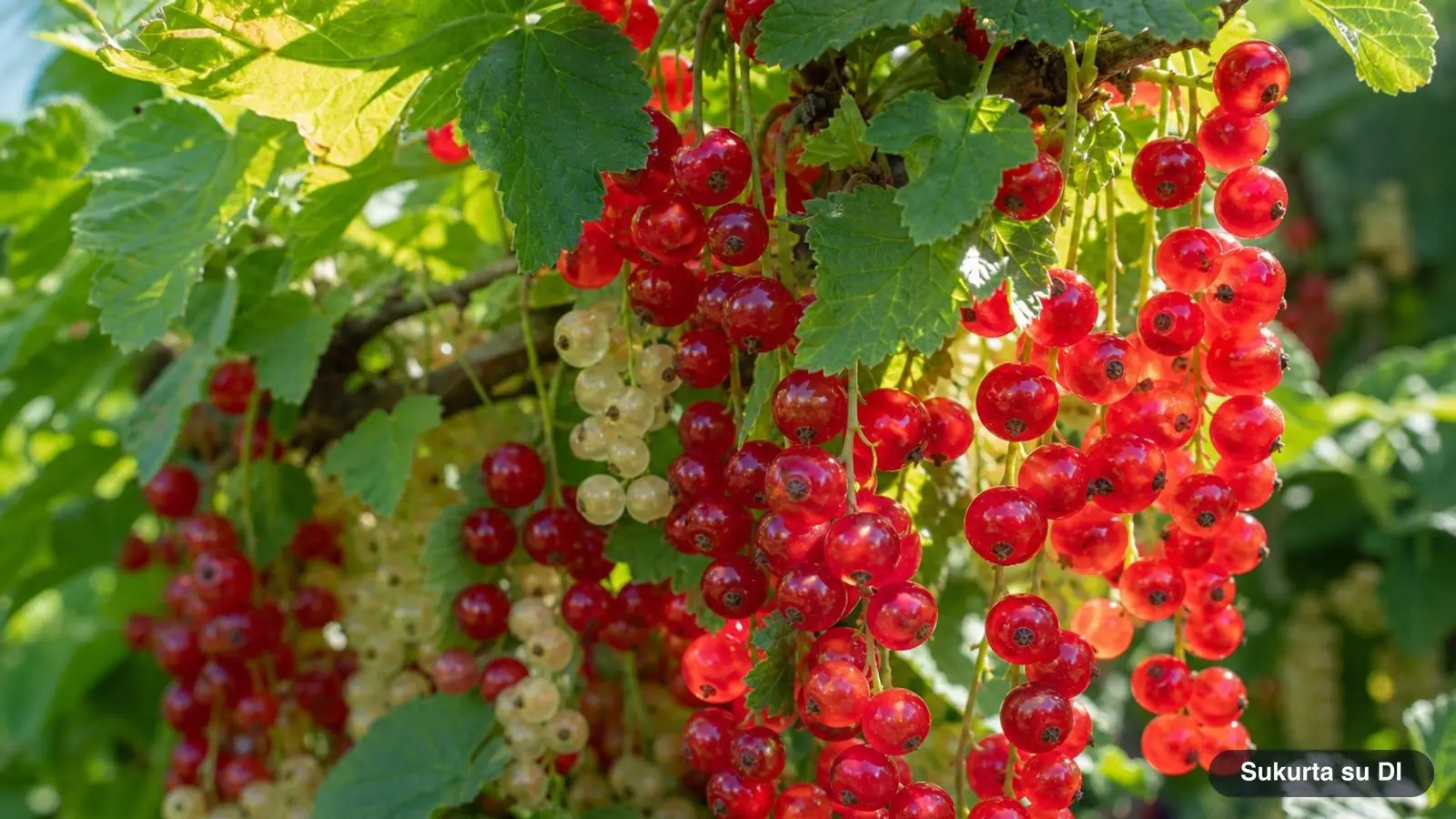
- Identify red currants by their long translucent berry clusters and unscented leaves
- White currants are not a separate species, but a sweeter red currant
- Popular varieties include 'Jonkheer van Tets', 'Rondom', and late-season 'Detvan'
- Red currants are undemanding: they thrive in most soils in sun or part shade
- 3.5 oz (100 g) of red currants provides about 56 calories and 41 mg of vitamin C
- Preserving red currants for winter: jelly, jam, crushed with sugar, and frozen
- Red, white, and black currants, gooseberries, and jostaberries: a comparison
This article is part of the 77.today berries guide, prepared by the 77.today editors from the sources listed at the end.
Red currants are one of the most beautiful sights in a summer garden: long clusters of translucent red berries hanging among the leaves like beads. Beside them, you will often find white currants, which are actually the exact same species, just sweeter. Growing currants has a long tradition in cool temperate climates. In this part of the berry guide, we cover how red and white currants differ from black ones, which varieties to choose, how to grow the shrubs, their expected yields, and how to preserve the harvest.
| Latin name | Ribes rubrum |
|---|---|
| Family | Gooseberry family (Grossulariaceae) |
| Origin | Western and Northern Europe |
| Plant | deciduous shrub, 3–5 ft (1–1.5 m), sometimes up to 6.5 ft (2 m) |
| Blooms | in spring with inconspicuous yellow-green flowers in clusters |
| Berries ripen | mid to late summer |
| Berries | 0.3–0.5 inches (8–12 mm), bright red or white, translucent |
| Yield | 6.5–9 lbs (3–4 kg) from a mature bush |
| Energy value | about 56 kcal per 3.5 oz (100 g) |
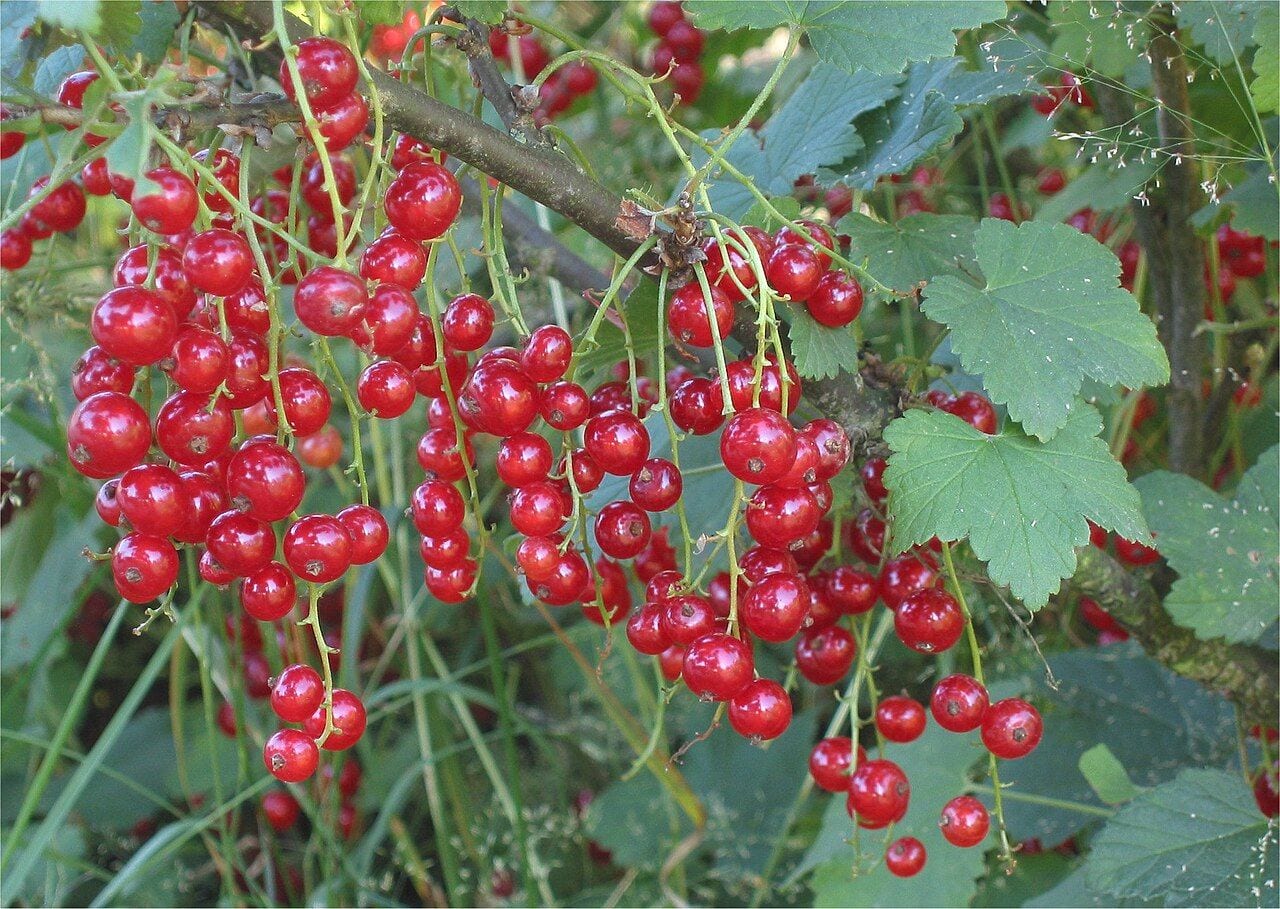
Identify red currants by their long translucent berry clusters and unscented leaves
The red currant is a deciduous shrub, typically 3–5 ft (1–1.5 m) tall, occasionally reaching 6.5 ft (2 m), with five-lobed leaves. In spring, it produces inconspicuous yellow-green flowers arranged in drooping 1.5–3-inch (4–8 cm) clusters. By summer, these develop into bright red, translucent berries measuring 0.3–0.5 inches (8–12 mm) across. A wild plant's cluster usually holds 3 to 10 berries, while garden cultivars produce much longer strings. The most important difference from the black currant is the foliage: black currant leaves contain fragrant essential oil glands, whereas red currant leaves lack this strong scent.
The red currant grows wild in Western and Northern Europe and is known for its excellent winter hardiness (thriving in USDA zones 3–7) and resistance to mildew. From gardens, it has escaped into the wild, so naturalized bushes can be found throughout Europe and Asia. Botanists generally recognize two main varieties: the downy and the common red currant.
White currants are not a separate species, but a sweeter red currant
Many people consider white currants to be a completely different plant, but botanically, they are simply red currant cultivars with less pigmented berries. They are sometimes sold under different Latin synonyms, yet the plant structure, care requirements, and fruiting times are identical. White currants share the same underlying tartness but are noticeably sweeter, making them a favorite for eating fresh right off the bush. There are also pink-fruited currant varieties available.
Popular varieties include 'Jonkheer van Tets', 'Rondom', and late-season 'Detvan'
Large-fruited red currant varieties were first developed in the 17th century in Belgium and northern France. Many of today's most popular cultivars trace their origins back to Western Europe, particularly France and the Netherlands. When selecting plants for a home garden, there are many excellent, globally recognized red and white currant varieties to choose from. Commercial orchards and home growers alike often rely on proven performers like 'Jonkheer van Tets', 'Rondom', and 'Dutch Red'.
Today's wide selection of cultivars allows gardeners to extend the currant season over several months—from the early-ripening 'Jonkheer van Tets' to late-season, new-generation varieties like 'Detvan', 'Tatran', and 'Slovakia'. For white currants, popular choices include 'Dutch White', 'Smolyaninovskaya', 'Zitavia', 'Werdavia', and 'Heros'. The UK's Royal Horticultural Society has awarded its prestigious Award of Garden Merit to several outstanding varieties, including 'Jonkheer van Tets', 'Red Lake', 'Stanza', and the white-fruited 'White Grape'.
Red currants are undemanding: they thrive in most soils in sun or part shade
Red currants are among the easiest berry bushes to maintain. They grow well in full sun or partial shade and adapt to most soil types. Thanks to their beautiful cascading berry clusters, they are often planted as ornamental edible shrubs. The red currant is self-fertile, but yields are usually heavier when bushes of different varieties are planted nearby, so it is worth growing at least two different cultivars. A mature bush can yield 6.5–9 lbs (3–4 kg) of berries over the summer.
Like black currants, the bushes need regular pruning: remove old, unproductive, dry, or diseased wood to keep the center of the shrub open to light and air circulation. During wet summers, the berries can be susceptible to gray mold (botrytis), so it is important to harvest them on time and not let them overripen on the branches.
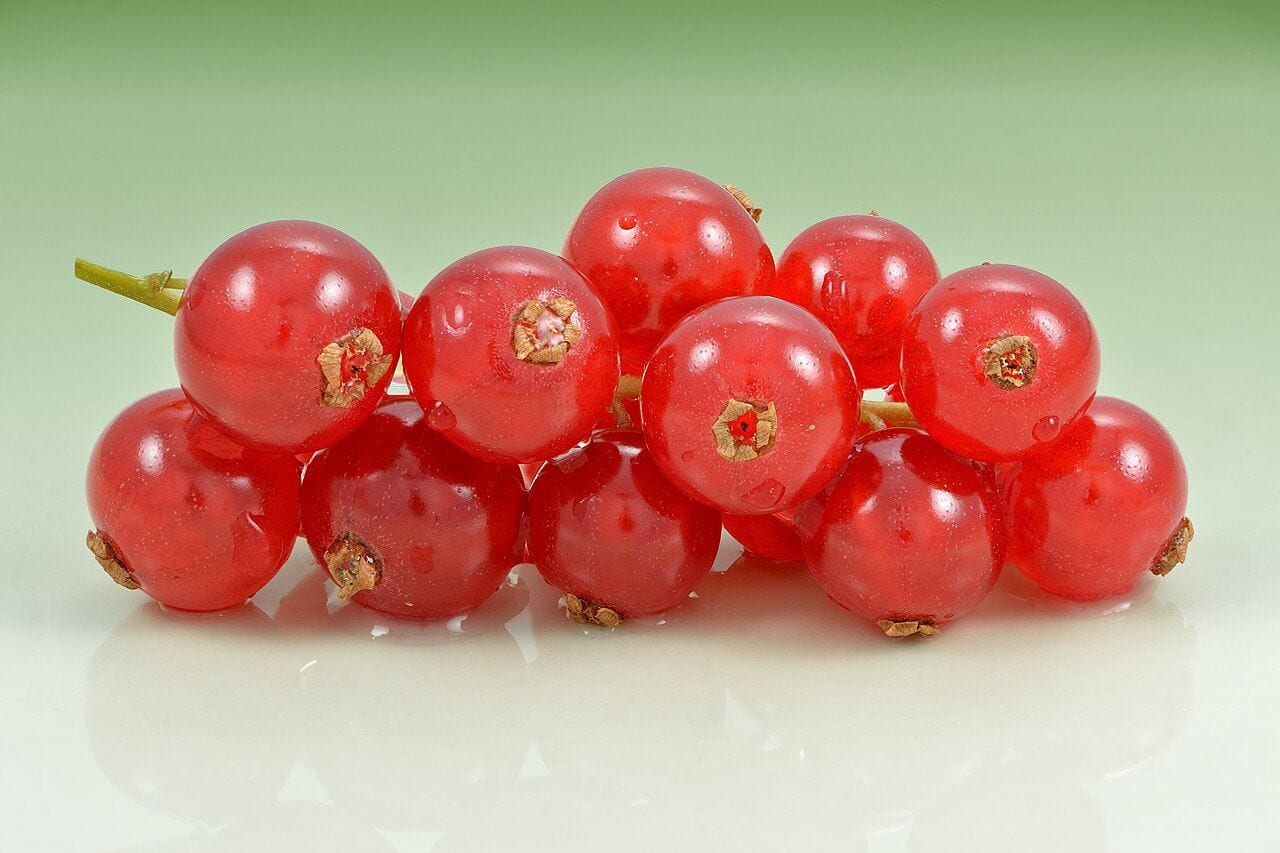
3.5 oz (100 g) of red currants provides about 56 calories and 41 mg of vitamin C
Fresh red and white currants consist of about 84% water, 14% carbohydrates, and 1% protein, with almost no fat. A 3.5 oz (100 g) serving contains roughly 56 calories and 41 mg of vitamin C—about 46% of the recommended daily value, though black currants contain several times this amount. The same serving also provides about 4.3 g of dietary fiber. Their tart, slightly astringent taste comes from organic acids and polyphenols: up to 65 different phenolic compounds have been identified in the berries, and their concentration peaks during the final month of ripening.
Preserving red currants for winter: jelly, jam, crushed with sugar, and frozen
Red currants are naturally high in pectin, making them ideal for a firm-setting jelly. In the UK, red currant jelly is a traditional condiment served with lamb, venison, turkey, and goose. Around the world, red currants are frequently crushed with sugar, cooked into jams and compotes, pressed for juice, or fermented into wine. For freezing, the berries should be stripped from their stems, gently dried, and frozen in a single layer on a tray before being transferred to containers.
Red, white, and black currants, gooseberries, and jostaberries: a comparison
Currants, gooseberries, and their hybrid, the jostaberry, all belong to the gooseberry family. Their care is very similar, but the berries differ significantly in color, flavor, and vitamin C content.
| Berry | Berry color | Energy value, kcal / 3.5 oz (100 g) | Vitamin C, mg / 3.5 oz (100 g) | Characteristic |
|---|---|---|---|---|
| Red currants | red, translucent | 56 | 41 | long clusters, high pectin |
| White currants | whitish, translucent | similar | similar | sweeter form of red |
| Black currants | black, glossy | 63 | 181 | fragrant leaves |
| Gooseberries | green, yellow, red | 44 | about 28 | thorny bush |
| Jostaberries | almost black | – | high | thornless hybrid |
Red currants are prized for their high pectin content, which creates perfectly set jellies, while black currants boast several times more vitamin C than red currants or gooseberries.
Fresh clusters of red and white currants make beautiful garnishes for desserts, cakes, salads, and cocktails, and their tartness perfectly balances sweet baked goods. Red currants are closely related to gooseberries and jostaberries, and they ripen in the same season as raspberries.
Frequently asked questions
What is the difference between white and red currants?
White currants are not a separate species—they are simply a form of the red currant (Ribes rubrum) with less pigmented, sweeter berries. The plants, care requirements, and fruiting times are identical.
When do red currants ripen?
Red currants ripen in mid to late summer. Early varieties like 'Jonkheer van Tets' are the first to be ready, while late-season cultivars such as 'Detvan', 'Tatran', and 'Slovakia' extend the harvest by several weeks.
How many berries does a red currant bush produce?
A fully grown, healthy red currant bush can produce 6.5–9 lbs (3–4 kg) of berries per season.
What is the difference between red and black currants?
Red currant leaves are unscented, and the berries are red or white, translucent, and hang in long clusters. Black currant leaves have glands that release a strong, distinct fragrance, and their dark berries contain significantly more vitamin C.
How do you preserve red currants for winter?
Red currants are most commonly made into jelly and jam, crushed with sugar, frozen, or pressed for juice. Thanks to their high pectin content, red currant jelly sets exceptionally well.
Are red currants self-pollinating?
Yes, red currants are self-fertile and will produce fruit on their own, but planting more than one variety nearby often results in a heavier harvest.
Log in to comment
No comments yet. Be the first.