Blueberries: Varieties, Planting, Care, and Calories
- The highbush blueberry (Vaccinium corymbosum) is native to eastern North America and became a cultivated garden crop in the early 20th century.
- The shrub grows 5–13 feet (1.5–4 m) tall, producing berries up to 0.6 inches (1.5 cm) in diameter that ripen in mid-to-late summer.
- Blueberries require highly acidic soil to thrive, with an ideal pH level between 4.5 and 5.5.
- Planting multiple varieties with different ripening times ensures cross-pollination, larger berries, and a harvest that lasts all summer.
- A 3.5-ounce (100 g) serving of fresh blueberries contains about 57 calories and 9.7 mg of vitamin C.
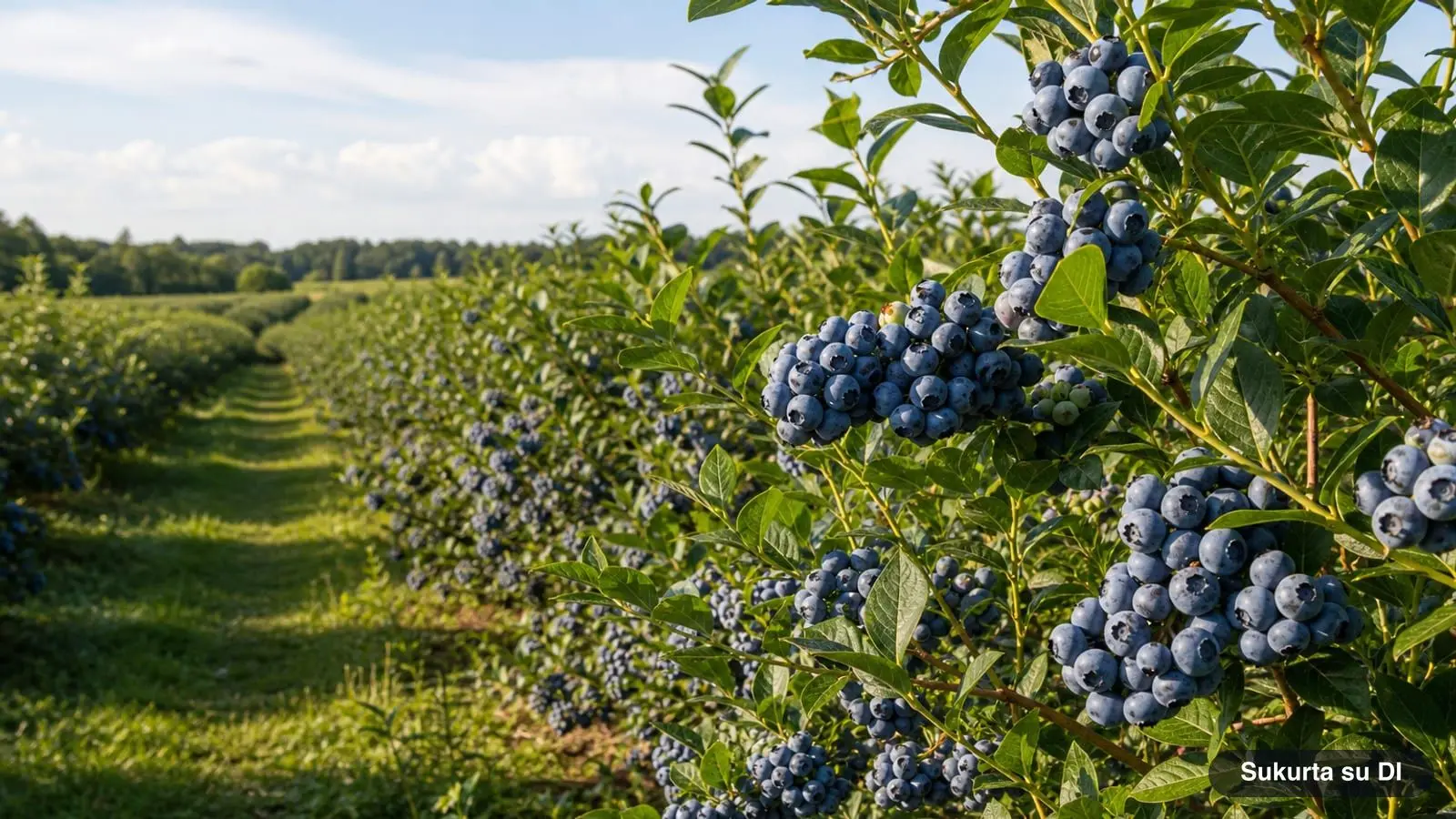
- The highbush blueberry is native to North America and became a garden crop in the 20th century
- Popular blueberry varieties include 'Duke', 'Bluecrop', 'Chandler', and 'Patriot'
- Planting blueberries: The soil pH must be 4.5–5.5
- Blueberries begin bearing fruit in their second or third year and require annual pruning
- A 3.5 oz (100 g) serving has about 57 calories and is a moderate source of vitamins C and K
- Blueberries store well in the refrigerator and are excellent for freezing
This article is part of the 77.today berries guide, prepared by the 77.today editors from the sources listed at the end.
Over the past few decades, blueberries have transformed from an exotic novelty into one of the most beloved garden berries worldwide. They are large, sweet, store well, and produce abundant harvests, making them popular in both home gardens and large commercial orchards. Many people refer to them as "garden bilberries," but they are an entirely different plant native to North America. In this section of our berry guide, we explore how highbush blueberries differ from wild bilberries, which varieties to choose, how to prepare the necessary acidic soil, how to care for the shrubs, and how many calories the berries contain.
| Latin name | Vaccinium corymbosum |
|---|---|
| Family | Heath family (Ericaceae), Vaccinium genus |
| Origin | Eastern North America |
| Plant | Shrub, 5–13 feet (1.5–4 m) tall and similarly wide |
| Blooms | Late spring, with white or pink bell-shaped flowers |
| Berries ripen | Mid-to-late summer |
| Berries | Spherical, up to 0.6 inches (1.5 cm), bluish-black with a whitish bloom |
| Soil acidity | pH 4.5–5.5 |
| Energy value | About 57 kcal / 3.5 oz (100 g) |
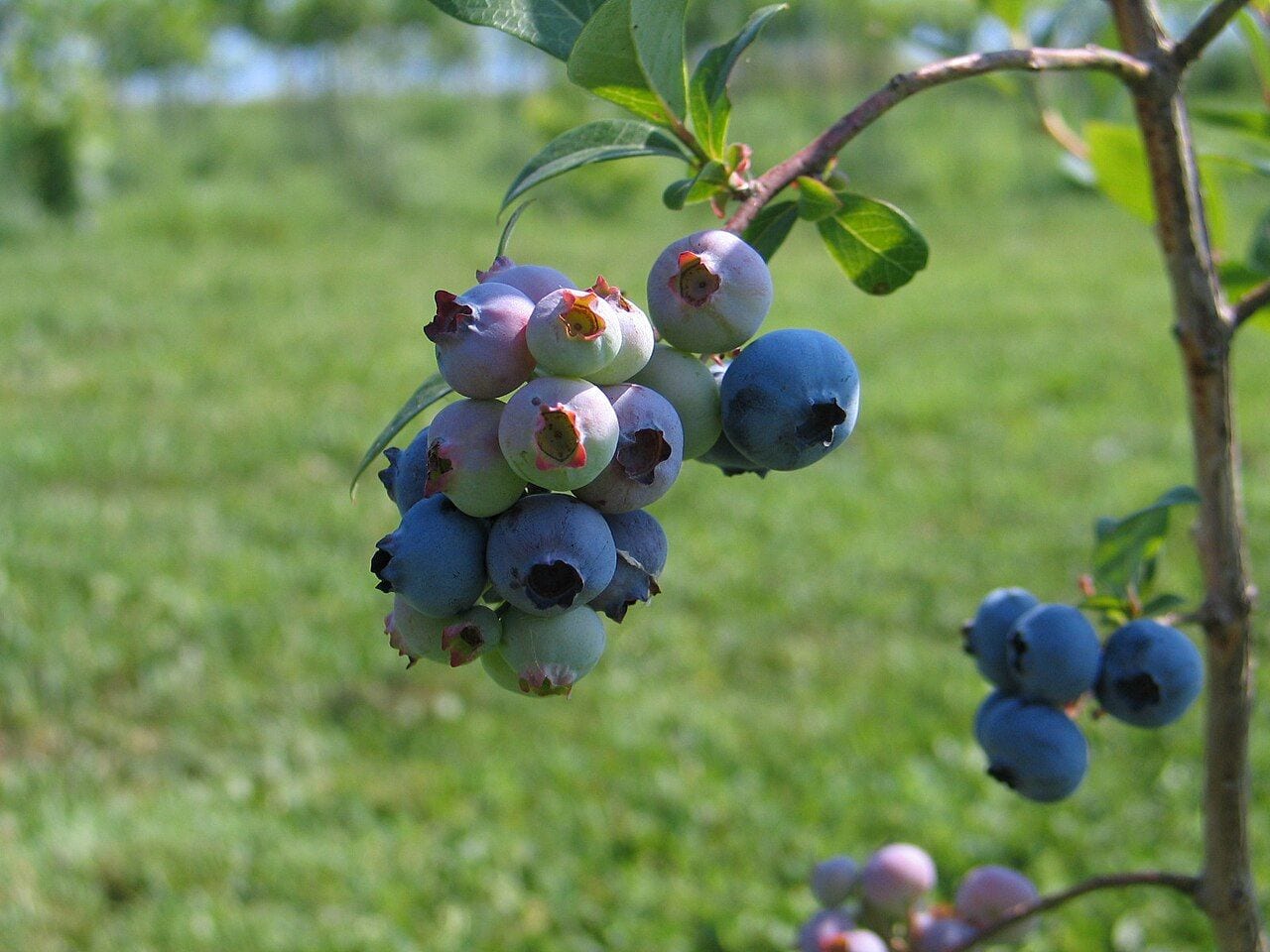
The highbush blueberry is native to North America and became a garden crop in the 20th century
Native American tribes foraged wild blueberries for thousands of years. The highbush blueberry only became a cultivated plant in 1908, when Americans Elizabeth Coleman White and Frederick Vernon Coville began researching and selecting wild specimens. The first commercial fields were established in New Jersey in the early 20th century, and the highbush blueberry soon became the most widely cultivated blueberry in North America. It later traveled to Europe and other parts of the world as a popular garden plant. In European forests, its close relative—the low-growing, dark-fleshed wild bilberry—grows abundantly. Because of this, people sometimes confuse the two; how to tell them apart is detailed in the bilberry section.
The blueberry shrub is dense, typically growing to about 5 feet (1.5 m), though some can reach up to 13 feet (4 m) in height and spread just as wide. The leaves are broadly lanceolate or oval, up to 3.5 inches (9 cm) long, and bright green. In autumn, they turn striking shades of red or yellow, making the blueberry a highly ornamental shrub. In late spring, white or pale pink bell-shaped flowers bloom in drooping clusters. The berries are spherical, up to 0.6 inches (1.5 cm) in diameter, and bluish-black with a powdery white waxy coating known as "bloom."
Popular blueberry varieties include 'Duke', 'Bluecrop', 'Chandler', and 'Patriot'
Dozens of blueberry varieties have been bred worldwide, primarily in the United States. Nurseries frequently offer reliable cultivars such as 'Duke', 'Bluecrop', 'Chandler', 'Patriot', 'Bluegold', 'Toro', 'Reka', and 'Elizabeth'. These varieties differ in their ripening times—from early types that are ready to harvest in mid-summer, to late varieties that bear fruit until late summer—as well as in berry size, bush height, and cold hardiness (many are cold-hardy to USDA zones 4–7). The UK's Royal Horticultural Society has even awarded the varieties 'Duke' and 'Spartan' its prestigious Award of Garden Merit.
When planning a blueberry patch, it is highly recommended to plant at least two or three different varieties. While highbush blueberries are generally self-fertile, cross-pollination between different cultivars significantly increases both the size of the berries and the overall yield. By selecting a mix of early, mid-season, and late-season varieties, gardeners can effectively extend the fresh berry harvest to last throughout the entire summer.
Planting blueberries: The soil pH must be 4.5–5.5
The most critical rule for growing blueberries is providing highly acidic soil. They require a pH of 4.5–5.5. In standard garden soil or alkaline, chalky conditions, blueberry bushes will turn yellow, stunt, and fail to produce fruit. When planting, dig a wide, shallow hole or prepare a raised bed filled with acidic sphagnum peat moss mixed with pine sawdust, pine needles, or sand. Blueberries have shallow, fibrous root systems, so the soil must be loose, well-aerated, yet consistently moist.
Shrubs should be planted in a sunny location, spaced about 4–5 feet (1.2–1.5 m) apart. The soil surface must be mulched with pine needles, wood chips, or sawdust to help retain moisture and maintain acidity over time. Fertilize only with special acid-forming fertilizers designed for acid-loving plants; manure and lime are strictly unsuitable for blueberries. It is best to water them with rainwater, as hard tap water will gradually neutralize the soil's acidity.
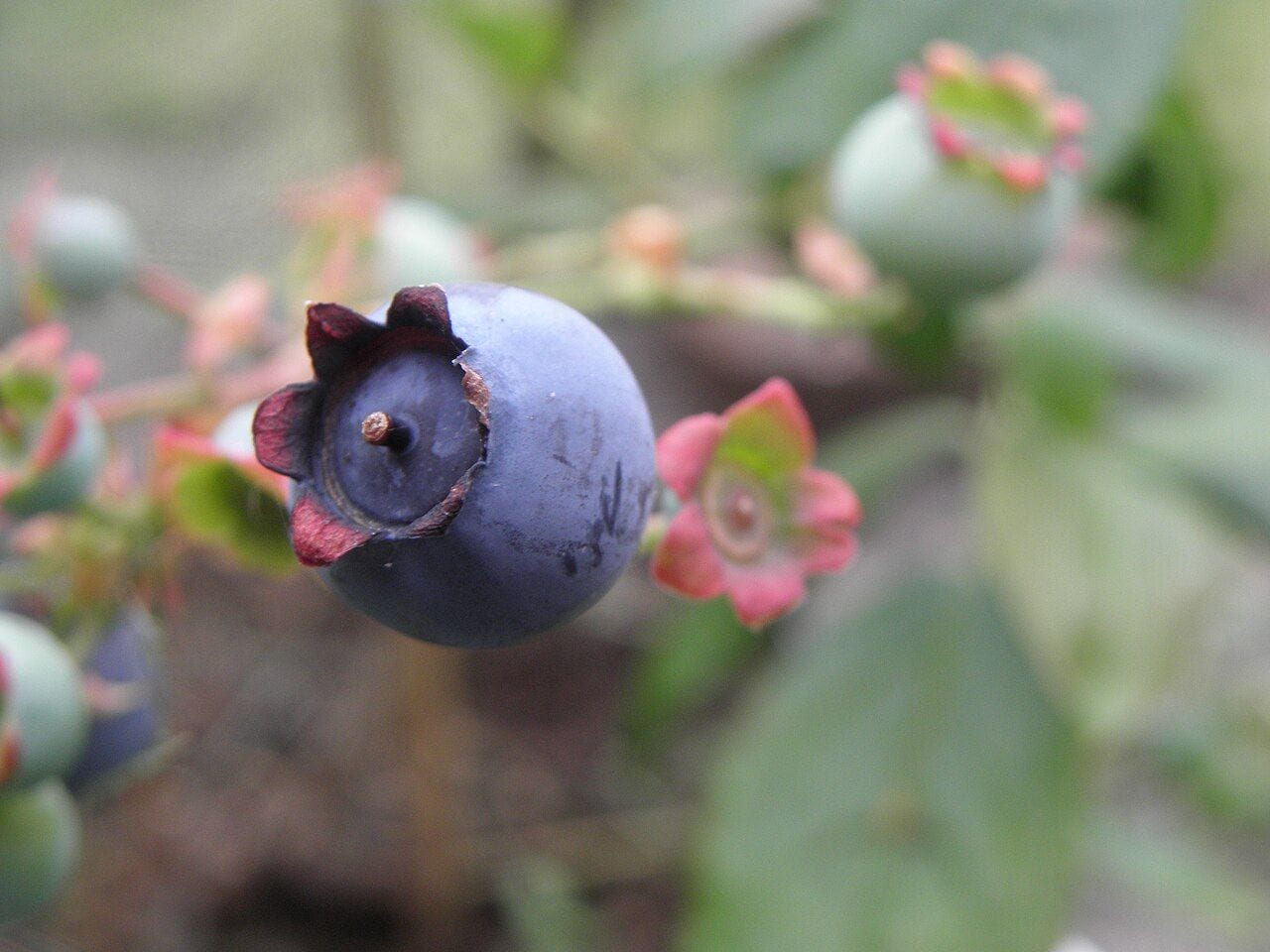
Blueberries begin bearing fruit in their second or third year and require annual pruning
Young shrubs begin to bear fruit in their second or third year, reaching full production after about five years. In the first year, it is often worth removing some of the blossoms so the plant can focus its energy on establishing a strong root system. Later on, the bushes must be pruned annually: in early spring, before the buds swell, remove any old, unproductive, dead, or inward-growing branches. A well-maintained blueberry patch can remain productive for decades.
The berries ripen gradually, so they are harvested in several passes. A fully ripe blueberry will detach easily from the stem. If a berry has just turned blue, it may still be slightly tart—leaving it on the bush for a few more days will allow it to become noticeably sweeter.
A 3.5 oz (100 g) serving has about 57 calories and is a moderate source of vitamins C and K
Fresh blueberries consist of about 84% water, 14% carbohydrates, and 1% protein, with almost no fat. A 3.5-ounce (100 g) serving contains approximately 57 calories and is a moderate source of vitamin K, vitamin C (9.7 mg), and manganese. The berries are rich in anthocyanins and other polyphenols, which give them their deep color. Scientists are actively studying these compounds, but since research is still ongoing, blueberries should be enjoyed as a healthy food rather than a medicine.
Blueberries store well in the refrigerator and are excellent for freezing
Unlike strawberries or raspberries, blueberries have a sturdy skin, allowing unwashed berries to last for about a week in the refrigerator. For winter storage, they are best frozen unwashed and completely dry, spread out in a single layer on a baking sheet before being transferred to freezer bags. Blueberries are delicious eaten fresh, added to oatmeal, yogurt, smoothies, pies, muffins, and pancakes. They can also be cooked into jams and sauces, or made into juice and wine. Prices for fresh blueberries in grocery stores and farmers' markets vary widely depending on the season, usually dropping significantly when the local harvest peaks.
Berries related to the highbush blueberry include bilberries, lingonberries, cranberries, and bog bilberries.
Frequently asked questions
How long do blueberries last in the fridge?
Blueberries have a sturdy skin, so unwashed berries can last about a week in the refrigerator. It is best to wash them only right before eating, or freeze them for longer storage.
What kind of soil do blueberries need?
They need highly acidic soil with a pH of 4.5–5.5. Blueberries will struggle in standard garden soil, so planting holes or beds must be prepared with acidic sphagnum peat moss, pine sawdust, or pine needles.
When do blueberries ripen?
Highbush blueberries typically bloom in late spring, and the berries ripen in mid-to-late summer. Early varieties start producing in mid-summer, while late varieties bear fruit until late summer.
How many calories are in blueberries?
A 3.5-ounce (100 g) serving of fresh blueberries has about 57 calories. They are composed of approximately 84% water and 14% carbohydrates.
Which blueberry varieties are best for home gardens?
Popular and reliable varieties include 'Duke', 'Bluecrop', 'Chandler', and 'Patriot'. Choosing a mix of early, mid-season, and late-season varieties will extend your harvest and improve pollination.
When is the best time to plant blueberries?
Container-grown seedlings can be planted throughout the growing season, but early spring or early autumn is the most ideal time. The most important factor is not the timing, but preparing acidic, loose, and moisture-retaining soil.
Log in to comment
No comments yet. Be the first.