Cornelian Cherry: How to Grow, Harvest, and Make Jam
- The Cornelian cherry (Cornus mas) is a species of dogwood native to Southern and Western Europe, and Southwestern Asia.
- It blooms very early in spring, before the leaves emerge, with clusters of small yellow flowers that often appear before forsythia.
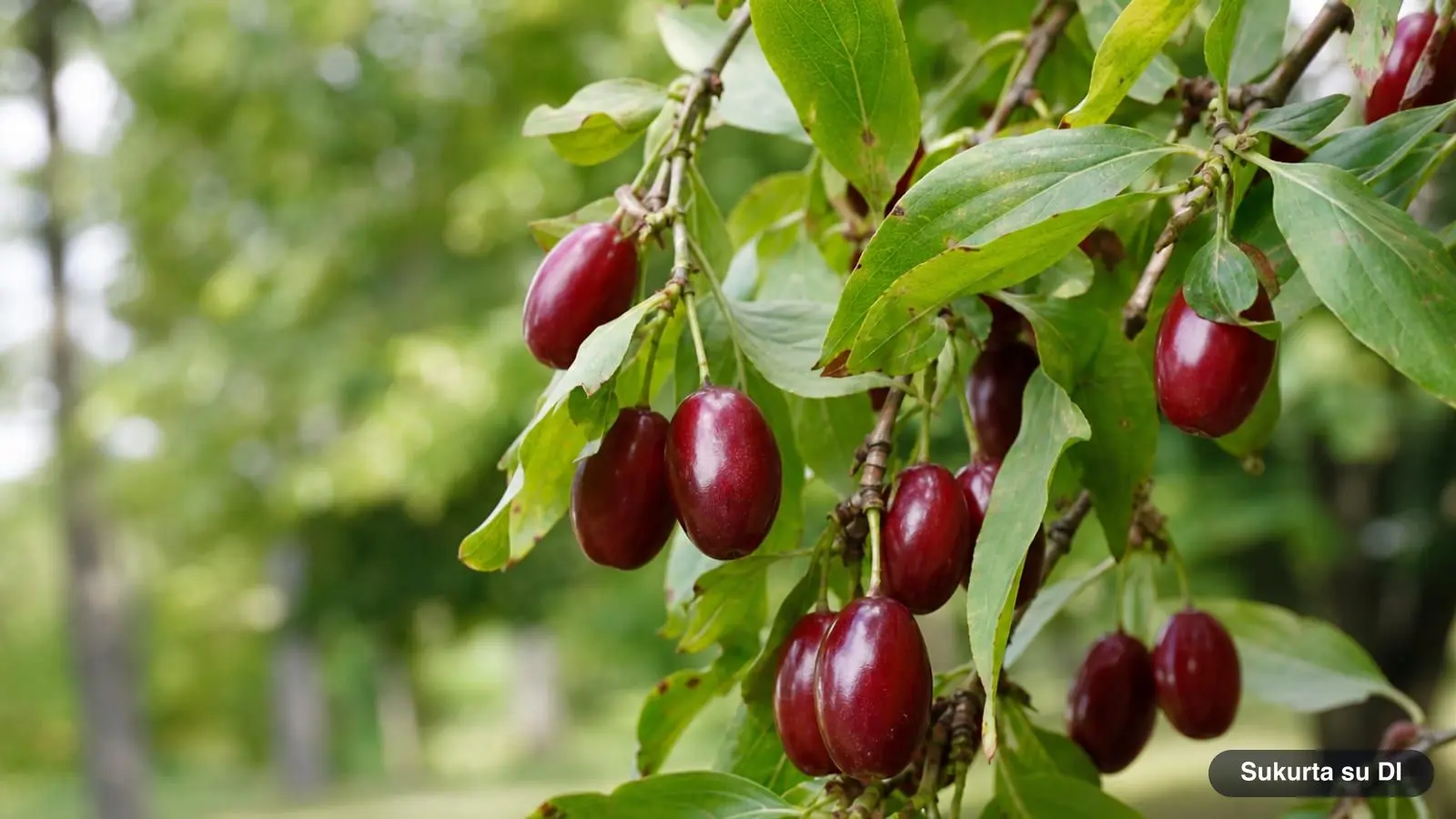
- The fruit is an oblong, red drupe about 0.8 inches (2 cm) long containing a single seed, ripening in mid-to-late summer.
- Fully ripe fruits are dark ruby red and tart, with a flavor often described as a cross between a cherry and a cranberry.
- Cornelian cherry wood is exceptionally dense—so heavy that it sinks in water—and was historically used by ancient Greeks to make spears.
- Blooms earlier than forsythia—even before the leaves emerge
- Berries ripen in mid-to-late summer, and unripe ones are highly astringent
- Cornelian cherry wood is so dense that it sinks in water
- Growing needs: cross-pollination and non-acidic soil
- Jam made with orange juice tastes like cranberry sauce
- Tart red berries for jam: Cornelian cherry, barberry, cranberries, and guelder rose
This article is part of the 77.today berries guide, prepared by the 77.today editors from the sources listed at the end.
The Cornelian cherry is one of the first signs of spring in the garden: early in the season, when other shrubs are still bare, its branches are enveloped in a cloud of yellow flowers. In summer, these give way to oblong, glossy dark red berries, which are highly valued in the Caucasus, the Balkans, and Eastern Europe for making jams and beverages. While often known primarily as an ornamental shrub in many temperate regions, the Cornelian cherry is increasingly planted by fruit enthusiasts. In this part of the berry guide, we cover how to identify the Cornelian cherry, when to pick its berries, what to make with them, and how to grow the shrub.
| Latin name | Cornus mas |
|---|---|
| Other names | Cornelian cherry dogwood, European cornel |
| Family | Dogwood family (Cornaceae) |
| Origin | Southern and Western Europe, Southwestern Asia |
| Plant | shrub or small tree, 16–40 ft (5–12 m) |
| Blooms | very early spring, before leaves, with yellow flowers |
| Berries ripen | mid-to-late summer |
| Berries | oblong red drupes, about 0.8 inches (2 cm) long, with one seed |
| Taste | tart, resembling a mix of cherry and cranberry |
Blooms earlier than forsythia—even before the leaves emerge
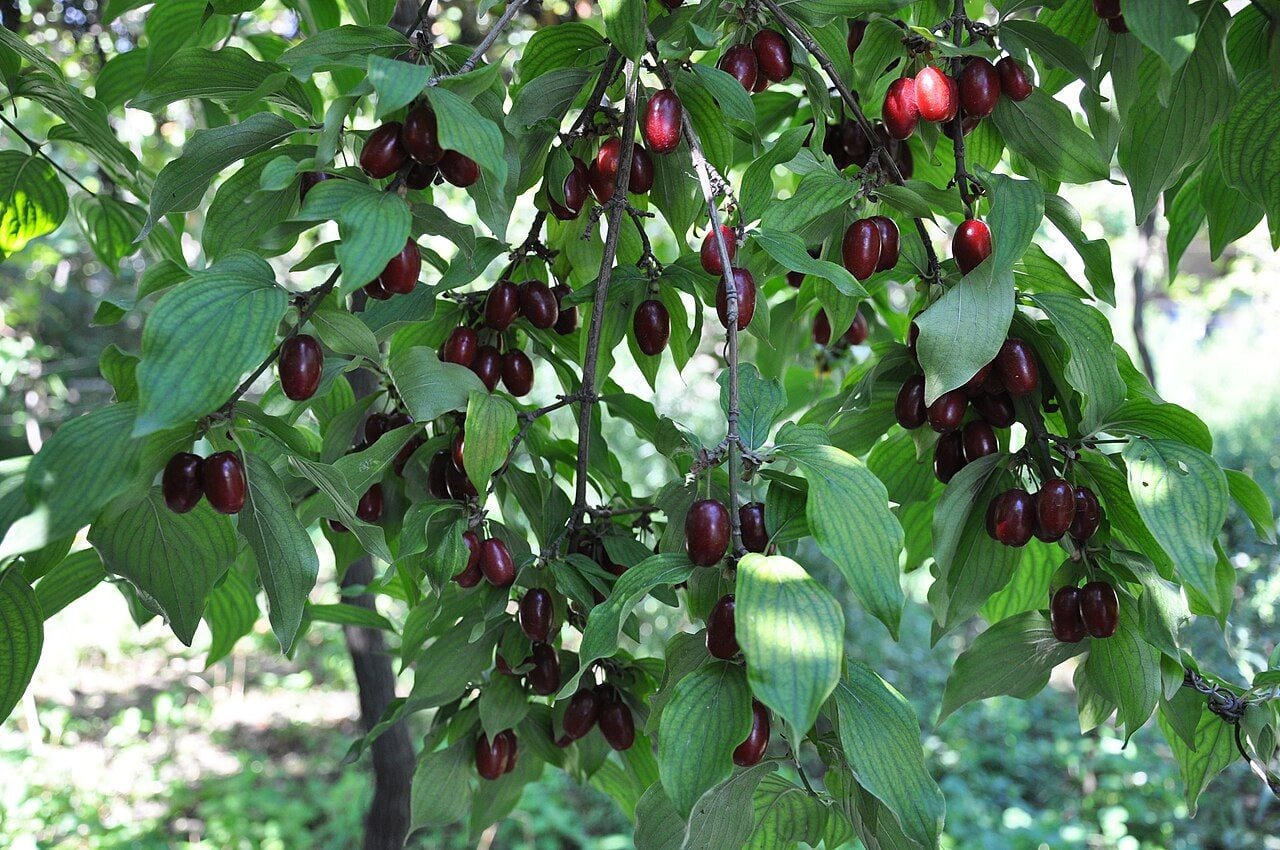
The Cornelian cherry is a medium to large deciduous shrub or small tree, growing up to 16–40 ft (5–12 m) tall, with dark brown branches and greenish twigs. The leaves are opposite, oval to oblong, with smooth edges, measuring 1.5–4 inches (4–10 cm) long and 0.8–1.5 inches (2–4 cm) wide. Very early in spring, well before the leaves appear, small flowers measuring 0.2–0.4 inches (5–10 mm) across with four yellow petals bloom in clusters of 10 to 25. The shrub flowers even earlier than forsythia, which is why it is often planted as an ornamental plant—although its individual flowers are smaller, from a distance, the blooming shrub looks quite similar.
The Latin name Cornus mas translates to "male dogwood": this distinguished it in antiquity from the common dogwood (Cornus sanguinea), which was historically referred to as the "female" dogwood. Many other dogwood species are grown in gardens—such as the white, red-twig, or Kousa dogwoods—but these are typically planted as ornamental shrubs for their colorful stems or showy bracts, rather than for edible berries.
Berries ripen in mid-to-late summer, and unripe ones are highly astringent
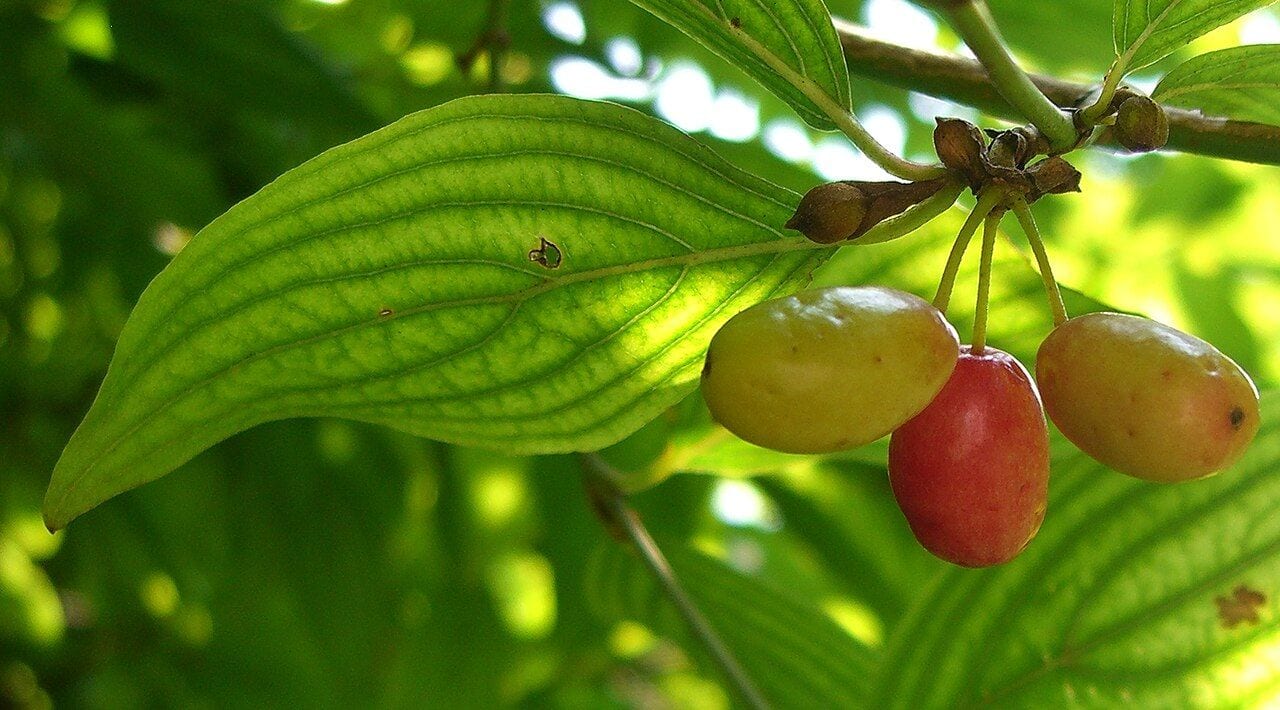
The fruit of the Cornelian cherry is an oblong red drupe, about 0.8 inches (2 cm) long and 0.6 inches (1.5 cm) in diameter, containing a single seed. When fully formed, the berries look somewhat like coffee berries. They ripen in mid-to-late summer (typically July to August in the Northern Hemisphere), but they are only fully ripe when they turn a dark ruby red color (though some specific cultivars are bright yellow). Many growers advise that the fruit is truly ripe only when it drops from the tree. Unripe berries are incredibly astringent and will strongly pucker your mouth, so they are not worth picking early. Ripe Cornelian cherries have a tart flavor that is most often described as a cross between a cherry and a cranberry.
Cornelian cherry wood is so dense that it sinks in water
A unique characteristic of the Cornelian cherry is its extremely dense wood, which, unlike most types of wood, sinks in water. It is highly valued for crafting tool handles and machine parts. From the 7th century BC onward, Greek craftsmen used Cornelian cherry wood to make spears, javelins, and bows, while the infantrymen of Macedonian kings Philip II and Alexander the Great used it to craft their long sarissa pikes. Additionally, dyes can be extracted from the bark, and tannins from the leaves.
Growing needs: cross-pollination and non-acidic soil
In many regions, the Cornelian cherry is not yet widely grown as a standard fruit tree, though it is becoming increasingly popular in the gardens of berry enthusiasts. The plant is cold-hardy to about −22°F (−30°C), suitable for USDA zones 4–8. Because the Cornelian cherry is largely cross-pollinated, you need to grow at least two different plants in the same area for a good harvest: space trees about 13 ft (4 m) apart, or shrubs about 10 ft (3 m) apart. It prefers alkaline to neutral soil. If your local soil is naturally acidic, it is advisable to enrich the planting hole with dolomite lime. The roots are shallow and sensitive to drying out, but waterlogged areas are also unsuitable. After ten years, a small tree can yield 11–13 lbs (5–6 kg) of berries, while a mature, large tree can produce around 110 lbs (50 kg). Birds love the berries, and hares may gnaw on young trees, so it is often more convenient to prune the tree to a manageable height and protect the harvest with netting.
Jam made with orange juice tastes like cranberry sauce
The majority of Cornelian cherries are used for jam: once pitted and boiled with sugar and orange juice, the resulting preserve tastes remarkably like cranberry sauce. The berries can also be dried. In Bulgaria, they are boiled into compotes; in Romania and Moldova, they are used to make a traditional alcoholic beverage called cornată; in Armenia and Azerbaijan, they are distilled into vodka. Also in Azerbaijan, the berries are pickled or added to drinks and rice dishes. In Iran and Turkey, fresh or salted berries are enjoyed as a summer snack, and they are also used to make sherbet, fruit leather, and a tart culinary spice.
Tart red berries for jam: Cornelian cherry, barberry, cranberries, and guelder rose
Cornelian cherries belong to a group of tart red berries that are more commonly cooked than eaten fresh. The table below highlights how they differ.
| Berry | Shape and size | Ripens | Taste and uses |
|---|---|---|---|
| Cornelian cherry | oblong drupe, about 0.8 in (2 cm) | mid-to-late summer | cherry-cranberry mix; jam, compotes |
| Barberry | oblong berry, 0.3–0.4 in (7–10 mm) | late summer to early fall | very tart; jam, zereshk |
| Cranberry | spherical, up to 0.5 in (1.2 cm) | late summer to fall | tart, slightly bitter; juice, sauces |
| Guelder rose | spherical drupe, 0.3–0.4 in (7–10 mm) | early to mid-fall | somewhat bitter; jam, jelly, in moderation |
Cornelian cherry berries contain one large seed, so they are usually pitted before making jam. Barberry and guelder rose berries are smaller, while cranberries are the only ones among these that grow in bogs.
In traditional Chinese medicine, the fruits of the Cornelian cherry, along with those of closely related species, have been used for centuries, though this does not mean their medicinal effects are scientifically proven. Other tart red berries suitable for making jam include cranberries, barberries, and guelder rose berries.
Frequently asked questions
Are Cornelian cherry berries edible?
Yes, the berries of the Cornelian cherry (Cornus mas) are edible. Unripe fruits are highly astringent and will pucker your mouth, but fully ripe, dark red berries have a tart flavor resembling a mix of cherry and cranberry. Most other ornamental dogwoods are typically grown for their colorful stems or bracts rather than for edible fruit.
When should you harvest Cornelian cherries?
The berries typically ripen in mid-to-late summer. They are fully ripe when they turn a dark ruby red and often fall from the tree on their own. It is best to harvest only the dark, softened berries to avoid astringency.
What can you make with Cornelian cherries?
They are most commonly used to make jam. When pitted and boiled with sugar and orange juice, the jam tastes remarkably similar to cranberry sauce. The berries can also be dried, boiled into compotes, or used to make traditional alcoholic beverages in Eastern Europe and the Caucasus.
When does the Cornelian cherry bloom?
It blooms very early in the spring, well before the leaves unfurl, and often earlier than forsythia. The small, four-petaled yellow flowers grow in clusters of 10 to 25.
What is special about Cornelian cherry wood?
The wood is extremely dense and, unlike most woods, it sinks in water. It is highly valued for tool handles and machine parts. Historically, ancient Greeks and Macedonians used it to craft spears and bows.
How much fruit does a Cornelian cherry tree produce?
A ten-year-old tree can yield about 11–13 lbs (5–6 kg) of berries, while a mature, large tree can produce up to 110 lbs (50 kg). Because the plant is largely cross-pollinated, it produces a much heavier harvest when multiple shrubs are planted nearby.
Log in to comment
No comments yet. Be the first.