Jostaberries: Growing the Blackcurrant and Gooseberry Hybrid
- The jostaberry (Ribes × nidigrolaria) is a complex hybrid of the blackcurrant, the European gooseberry, and the North American coastal black gooseberry.
- Its name is a portmanteau of the German words Johannisbeere (blackcurrant) and Stachelbeere (gooseberry).
- The first commercial variety, 'Josta', was introduced to the public in Germany in 1977.
- The thornless, self-fertile bush grows up to 6.5 feet (2 m) tall and is highly resistant to mildew, rust, and bud gall mites.
- The nearly black berries are larger than blackcurrants, offering a unique flavor that falls between a gooseberry and a blackcurrant.
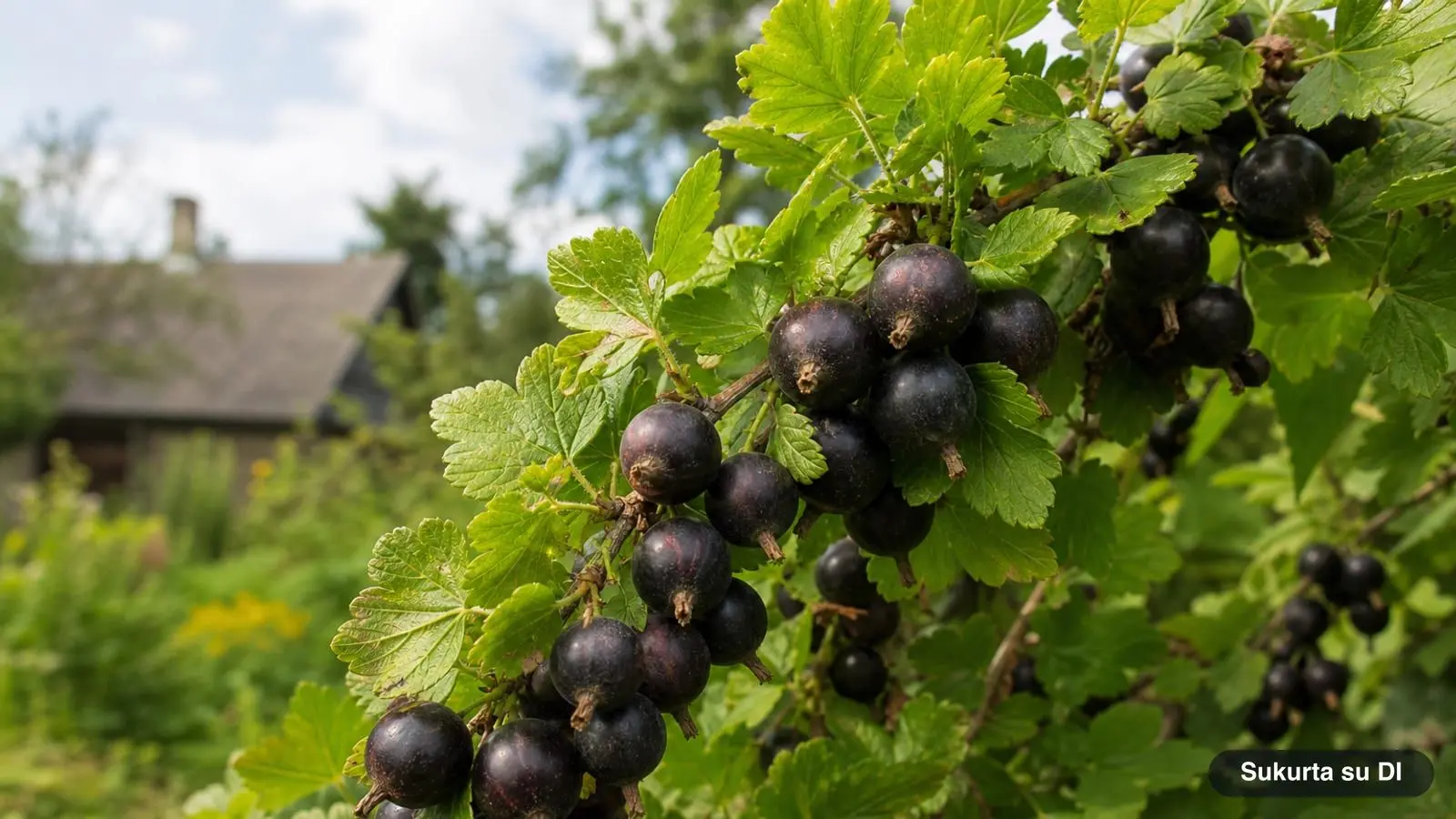
- Jostaberry: A complex blackcurrant and gooseberry hybrid bred in Germany
- Jostaberry varieties: 'Josta', 'Jogranda', 'Jostine', and the thorny US 'ORUS' series
- Disease resistance, self-pollination, and propagation
- Yields of 11 to 17 lbs (5–8 kg) per bush in the home garden
- The taste of jostaberries: A cross between gooseberry and blackcurrant
- Jostaberry, blackcurrant, and gooseberry: Traits inherited from the parents
This article is part of the 77.today berries guide, prepared by the 77.today editors from the sources listed at the end.
The jostaberry is a garden berry bush that combines two beloved fruiting plants: the blackcurrant and the gooseberry. Its nearly black berries, which are larger than currants, grow on a thornless bush that is self-fertile and highly disease-resistant. In this part of the berry growing guide, we cover how the jostaberry was bred, which varieties are cultivated, how to grow it, when to harvest, and how to use the fruit.
| Latin name | Ribes × nidigrolaria |
|---|---|
| Family | Grossulariaceae (gooseberry family) |
| Origin | Hybrid, bred in Germany in the 20th century |
| Parent species | Blackcurrant, European gooseberry, North American coastal black gooseberry |
| Plant | Thornless shrub, up to 6.5 ft (2 m) |
| Blooms | Mid-spring |
| Berries ripen | Summer, similar to blackcurrants |
| Berries | Nearly black, larger than currants, smaller than gooseberries |
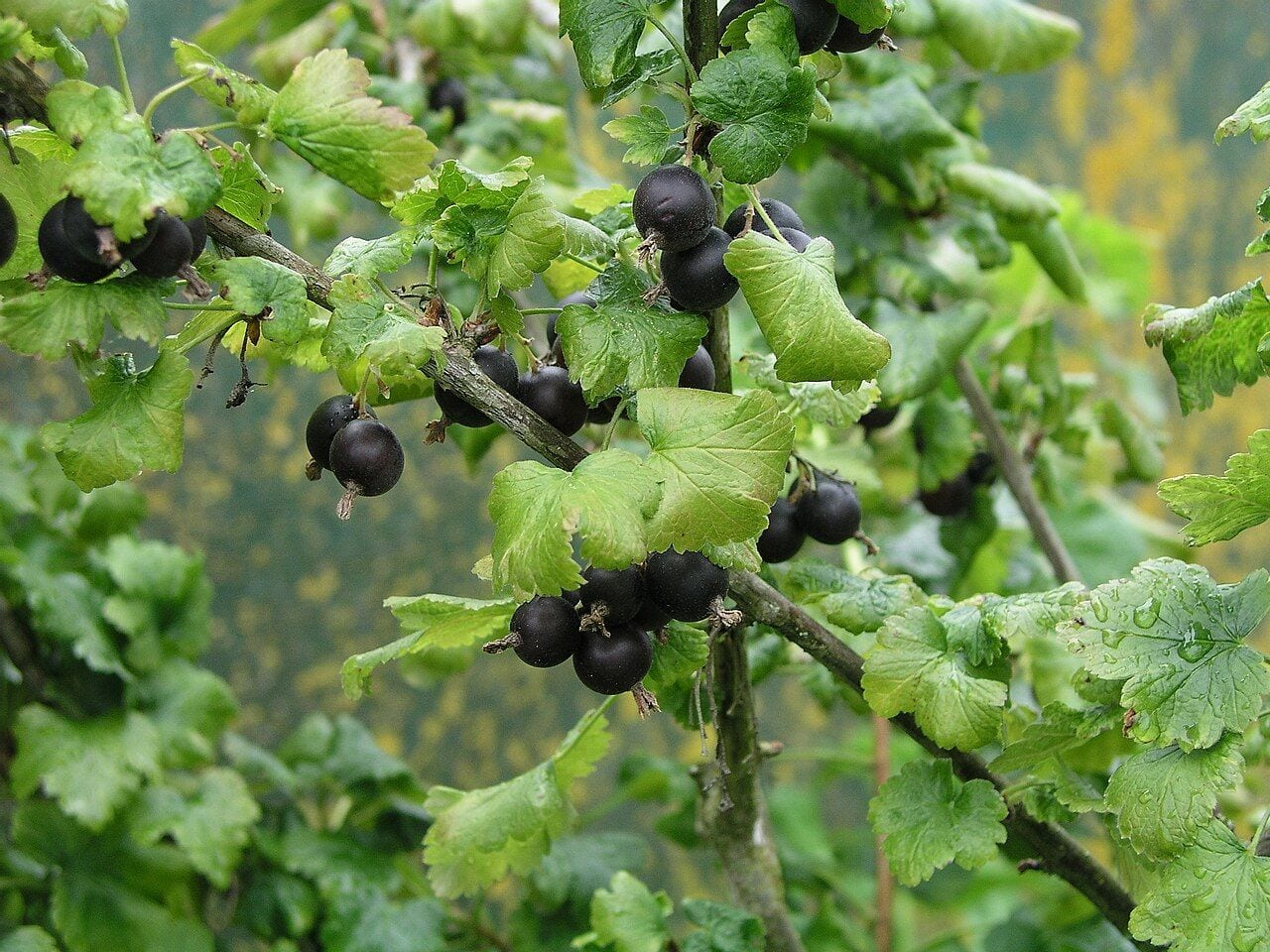
Jostaberry: A complex blackcurrant and gooseberry hybrid bred in Germany
Gardeners had long desired a berry with the taste of a gooseberry but growing on a thornless bush. The first successful cross between a blackcurrant and a European gooseberry was achieved in 1880 in Yorkshire, England, but the resulting hybrid was nearly sterile. The true jostaberry was developed later in Germany: in 1926, Paul Lorenz began crossing the plants at the Kaiser Wilhelm Institute in Berlin. Over 13 years, he created more than a thousand first-generation hybrids, but only eight survived World War II. Later, Rudolph Bauer doubled the chromosome count to produce fertile plants. Out of approximately 15,000 crosses, the three strongest, most disease-resistant, and most fruitful seedlings were selected.
As a result, the jostaberry descends from three distinct species: the blackcurrant, the European gooseberry, and the North American coastal black gooseberry. One of the first-generation parents provided resistance to American gooseberry mildew. The name itself is a portmanteau created from the beginnings of the German words Johannisbeere (blackcurrant) and Stachelbeere (gooseberry).
Jostaberry varieties: 'Josta', 'Jogranda', 'Jostine', and the thorny US 'ORUS' series
The first commercial variety, 'Josta', was made available to the public in 1977, followed later by 'Jostine' and 'Jogranda'. Many other varieties are primarily distributed in Germany, and the names of the three most common cultivars are often confused—all are sometimes simply sold as 'Josta'. In the United States, the 'ORUS' series of cultivars was bred independently in Oregon; unlike the European varieties, these bushes are quite thorny. Occasionally, the jostaberry is mistakenly confused with the very first, nearly sterile currant-gooseberry hybrid, but they are entirely different plants.
Disease resistance, self-pollination, and propagation
The jostaberry bush grows to about 6.5 feet (2 m) tall, blooming in mid-spring and setting fruit around the same time as blackcurrants. The plant exhibits hybrid vigor: it grows rapidly, yields abundantly, and is highly resistant to many common diseases and pests that plague currants and gooseberries, including powdery mildew, leaf spot, white pine blister rust, and the big bud gall mite. The flowers are perfect (bisexual), meaning the jostaberry is self-fertile as long as insects pollinate the blooms. It is most commonly propagated by hardwood cuttings rather than from seed.
Growing jostaberries is very similar to cultivating blackcurrants. They thrive in a sunny or partially shaded location with rich, moisture-retentive soil. Because the bush is exceptionally vigorous, it requires more spacing than a standard currant bush, along with regular pruning to maintain airflow and shape.
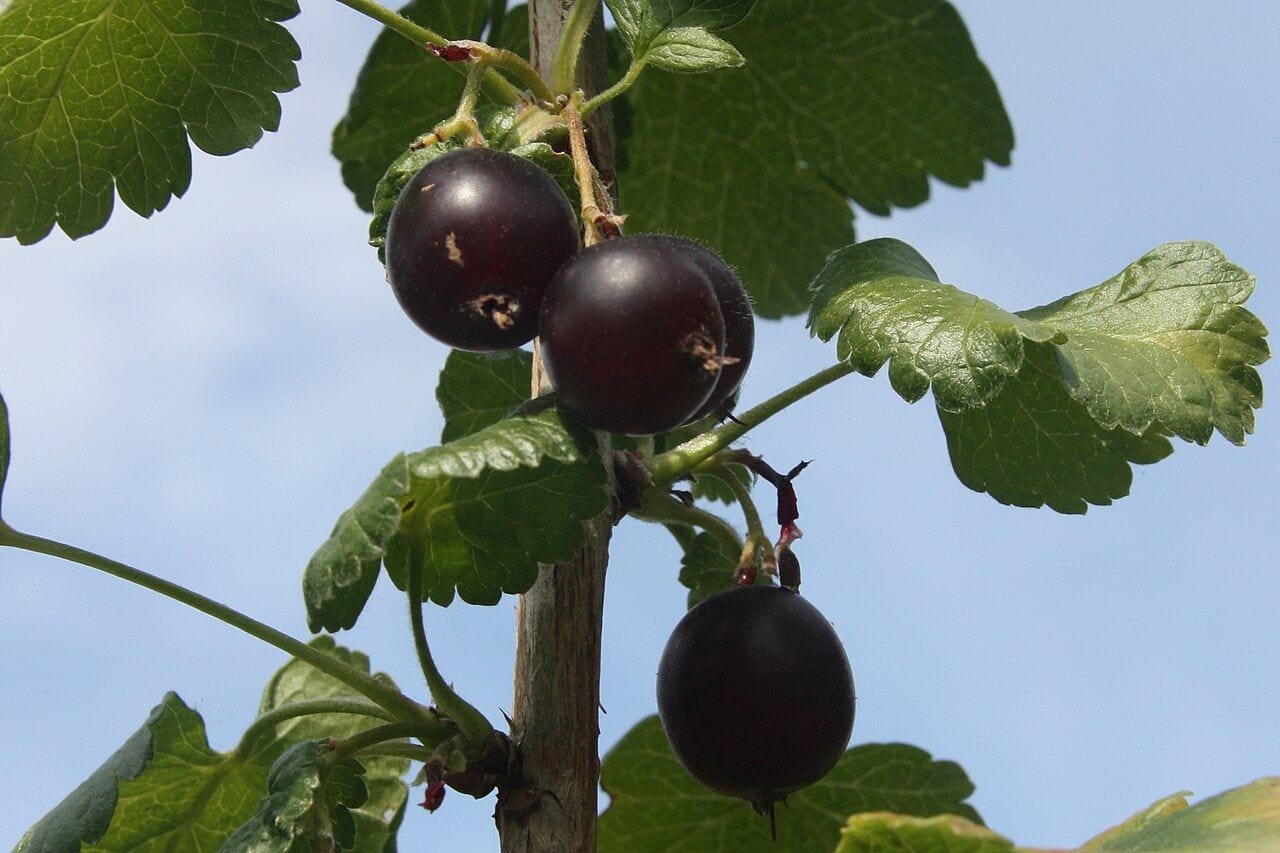
Yields of 11 to 17 lbs (5–8 kg) per bush in the home garden
According to nursery data, jostaberries grow much faster than both blackcurrants and gooseberries: by their second year, the branches can easily reach 5 feet (1.5 m) in height. The berries fully ripen by mid to late summer and hold onto the branches well without dropping. A single mature bush can produce 11 to 17 lbs (5 to 8 kg) of fruit, which are two to three times larger than standard blackcurrants. The berries have a sweet-tart flavor with a hint of muscat and a milder taste than pure blackcurrants. Jostaberries are typically planted in early spring or autumn, spaced about 5 feet (1.5 m) apart, in soil prepared just as you would for blackcurrants. They are very cold-hardy, typically thriving in USDA zones 3–8. Although the jostaberry is self-fertile, planting it near gooseberries or blackcurrants can encourage even heavier yields. The bushes should be pruned annually in early spring before buds break: three-year-old stems are the most productive, and older branches (7 to 8 years old) should be completely removed every few years to rejuvenate the plant.
The taste of jostaberries: A cross between gooseberry and blackcurrant
Jostaberries are nearly black, slightly smaller than gooseberries but larger than blackcurrants. They can be eaten fresh or cooked. Unripe berries have a more pronounced gooseberry tartness, while blackcurrant notes develop as the fruit ripens. The fully ripe berries hold well on the bush into late summer, though birds are also very fond of them. Slightly underripe berries can be used in recipes as a direct substitute for gooseberries. Like blackcurrants, jostaberries freeze exceptionally well and are packed with vitamin C, a common trait among plants in the Ribes genus.
Jostaberry, blackcurrant, and gooseberry: Traits inherited from the parents
The jostaberry combines the best characteristics of both the blackcurrant and the gooseberry. The table below highlights how it compares to each of its parent plants.
| Trait | Jostaberry | Blackcurrant | Gooseberry |
|---|---|---|---|
| Bush height | up to 6.5 ft (2 m) | 30–60 inches (80–150 cm) | up to 5 ft (1.5 m) |
| Thorns | none (European varieties) | none | sharp, abundant |
| Berries | nearly black, larger than currants | black, glossy | green, yellow, red |
| Taste | between gooseberry and currant | tart, aromatic | from tart to sweet |
| Diseases | resistant to mildew, rust, mites | susceptible to mildew and rust | susceptible to mildew |
As the table shows, jostaberry bushes are thornless like blackcurrants, while the size and flavor of the berries are an intermediate blend of both parents.
Jostaberries are excellent for making jams, jellies, compotes, juices, and homemade wine, and they are delicious baked into pies and desserts. They are rarely grown commercially because the fruit is not well-suited to mechanical harvesting, and hand-picking them is more labor-intensive than harvesting blackcurrants, despite the thornless branches. Closely related berries include blackcurrants, red and white currants, and gooseberries.
Frequently asked questions
What is a jostaberry?
A jostaberry is a complex hybrid of the blackcurrant, the European gooseberry, and the North American coastal black gooseberry. It was bred in Germany in the 20th century, with the first variety, 'Josta', released in 1977.
What does a jostaberry taste like?
The flavor is a cross between a gooseberry and a blackcurrant. Unripe berries have a pronounced gooseberry tartness, while fully ripe berries develop the deeper, sweeter notes of a blackcurrant.
Does a jostaberry bush have thorns?
European jostaberry varieties are completely thornless, which was one of the primary goals of the breeding program. Most bushes sold in nurseries today have smooth, thorn-free stems.
Is the jostaberry self-pollinating?
Yes. Jostaberry flowers are perfect (bisexual), and the plant is self-fertile, relying on insects like bees to pollinate the blooms.
When do you harvest jostaberries?
The bush blooms in mid-spring, and the berries ripen in mid-summer, around the same time as blackcurrants. Ripe berries hold well on the bush into late summer, while slightly underripe ones can be picked earlier for cooking.
How much fruit does a jostaberry bush produce?
A healthy, mature jostaberry bush typically yields between 11 and 17 lbs (5 to 8 kg) of fruit per season. The berries usually ripen fully by mid to late summer and do not drop easily from the branches.
Log in to comment
No comments yet. Be the first.