Common Barberry: Identification, Edible Berries and Uses
- The common barberry (Berberis vulgaris) is a thorny deciduous shrub that grows up to 10–13 feet (3–4 m) tall and produces fragrant yellow flowers.
- Native to parts of Europe and Asia, it thrives on dry slopes, along woodland edges, and in calcareous soils in cool temperate climates.
- The bright red, oblong berries are 0.3–0.4 inches (7–10 mm) long, highly acidic, and contain about 100 mg of vitamin C per 3.5 ounces (100 g).
- Common barberry is an alternate host for wheat stem rust, a destructive fungal disease, so it should not be planted near cereal crops.
- In Iranian cuisine, dried barberries (zereshk) are a staple ingredient, famously used to add a tart flavor to chicken and rice pilaf dishes.
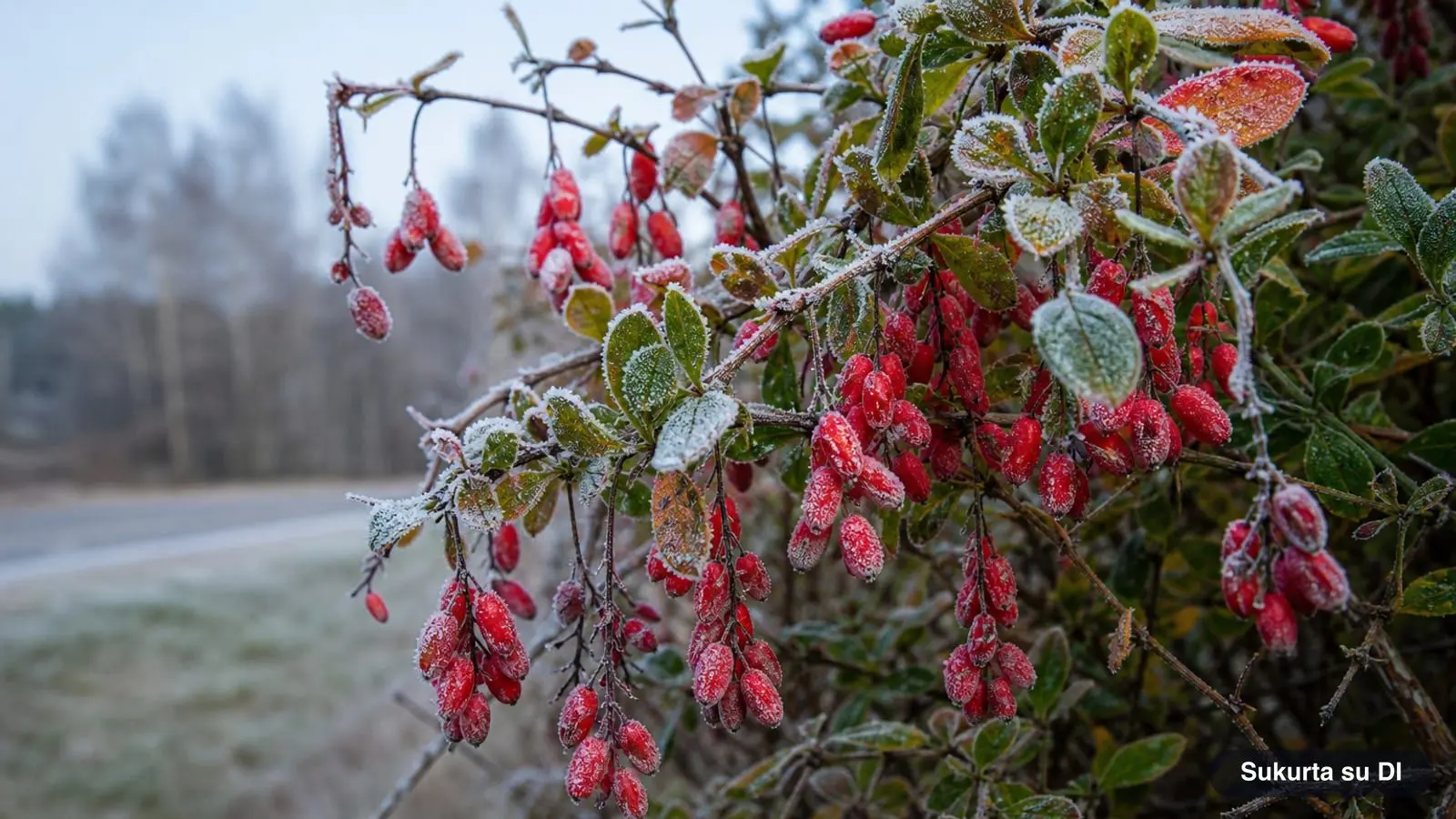
- Identify barberries by their three-pronged thorns, leaf clusters, and drooping yellow flower clusters
- Common barberry thrives in dry slopes and calcareous soils
- Barberry is an alternate host for wheat stem rust, so it should not be planted near cereal crops
- Barberries contain 2.4–6.5% organic acids and about 100 mg of vitamin C
- Barberries in the kitchen: European jams and Iranian zereshk with rice
- Common barberry, Japanese barberry, and other tart berries: a comparison
This article is part of the 77.today berries guide, prepared by the 77.today editors from the sources listed at the end.
The barberry is a thorny shrub whose bright red, oblong berries hang from the branches in autumn like tiny sparks of fire. For many, barberries are primarily associated with ornamental red-leaved shrubs in front yards and tart candies, but the common barberry is also a valuable plant with edible fruit. In this part of the 77.today berry guide, we will explore how to identify the common barberry, where it thrives, whether its berries are edible, what to make with them, and why it should not be planted near cereal crops.
| Latin name | Berberis vulgaris |
|---|---|
| Family | Berberidaceae (barberry family) |
| Plant | deciduous, dense, thorny shrub, up to 10–13 feet (3–4 m) tall |
| Where it grows | dry slopes, woodland margins, scrublands; prefers calcareous soils |
| Blooms | late spring to early summer, with fragrant yellow flowers in racemes |
| Berries ripen | late summer to early fall, persisting on the branches |
| Berries | 0.3–0.4 inches (7–10 mm) long, bright red, oblong, highly acidic |
| Vitamin C | about 100 mg per 3.5 ounces (100 g) |
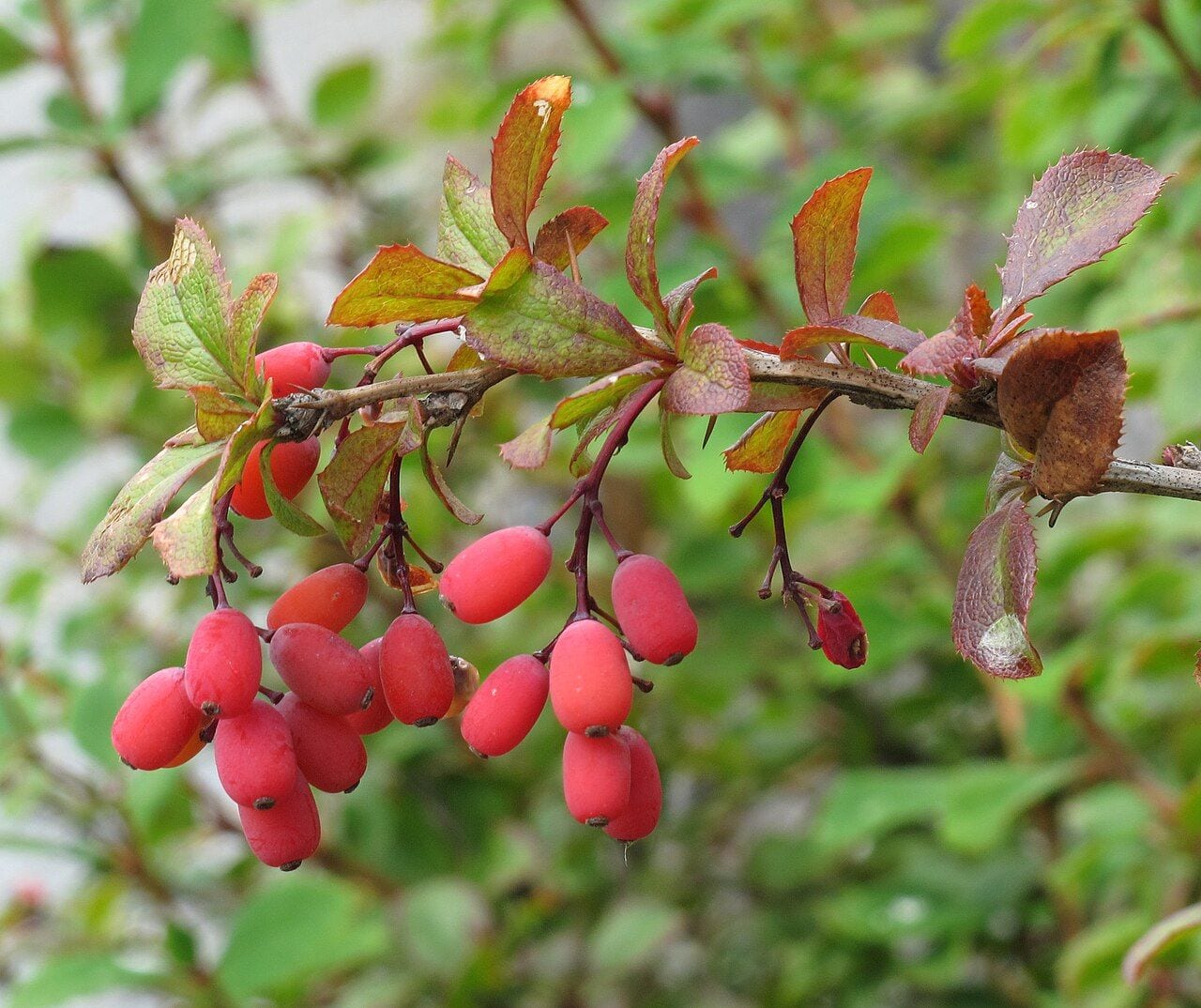
Identify barberries by their three-pronged thorns, leaf clusters, and drooping yellow flower clusters
The common barberry is a deciduous, dense, and thorny shrub that grows up to 10 feet (3 m), and occasionally 13 feet (4 m) tall. The leaves are small, oval or elliptical, 0.8–2 inches (2–5 cm) long, with toothed edges, and grow in clusters of two to five. Beneath each leaf cluster grows a three-pronged thorn that is 0.1–0.3 inches (3–8 mm) long—this is the most reliable identifying feature of the barberry. In late spring to early summer, it produces small, 0.15–0.25-inch (4–6 mm) fragrant yellow flowers arranged in drooping 1.2–2.4-inch (3–6 cm) racemes. The plant is highly attractive to pollinators.
The berries are bright red, elongated and elliptical, measuring 0.3–0.4 inches (7–10 mm) long and 0.1–0.2 inches (3–5 mm) wide. They are tart, juicy, and have a pleasant aroma. They ripen in late summer to early autumn and persist on the shrub for a long time. Small birds eagerly eat the berries and distribute the seeds, allowing the shrub to easily spread from gardens to woodland edges.
Common barberry thrives in dry slopes and calcareous soils
The common barberry is native to central and southern Europe, southern England, northwestern Africa, and western Asia, while it has naturalized in northern Europe and North America. In the wild, it grows on dry slopes, along woodland edges, and in scrublands. It is a light-loving plant that is highly cold-hardy (surviving temperatures well below freezing, suitable for USDA zones 3–7) and thrives best in calcareous (chalky) soils. It propagates by seeds and root suckers.
Barberries are widely grown as ornamental shrubs, especially the red-leaved forms. In gardens and landscaping, the Japanese barberry (Berberis thunbergii) is even more common. This is an ornamental species of East Asian origin with numerous cultivars featuring red, yellow, or variegated leaves, as well as columnar and compact forms. It is planted for hedges and landscape compositions, and is not typically grown for its berries.
The common barberry is useful for more than just its fruit. Horticultural sources indicate that the plant is an excellent nectar source for bees, and its hard wood is suitable for small woodworking projects. The berries ripen in late summer to early fall and remain on the shrub for an extended period, meaning they can be harvested later in the autumn when most other berries are no longer available.
Barberry is an alternate host for wheat stem rust, so it should not be planted near cereal crops
The common barberry has one significant drawback: it is an alternate host for wheat stem rust (black rust). This fungal disease causes severe damage to wheat and other cereal crops. For this reason, agricultural extension services strongly advise against planting barberries near grain fields. In fact, due to the threat to agriculture, the cultivation of common barberry is restricted or entirely banned in many grain-producing regions globally, including Canada and several US states such as Connecticut, Massachusetts, Michigan, and New Hampshire.
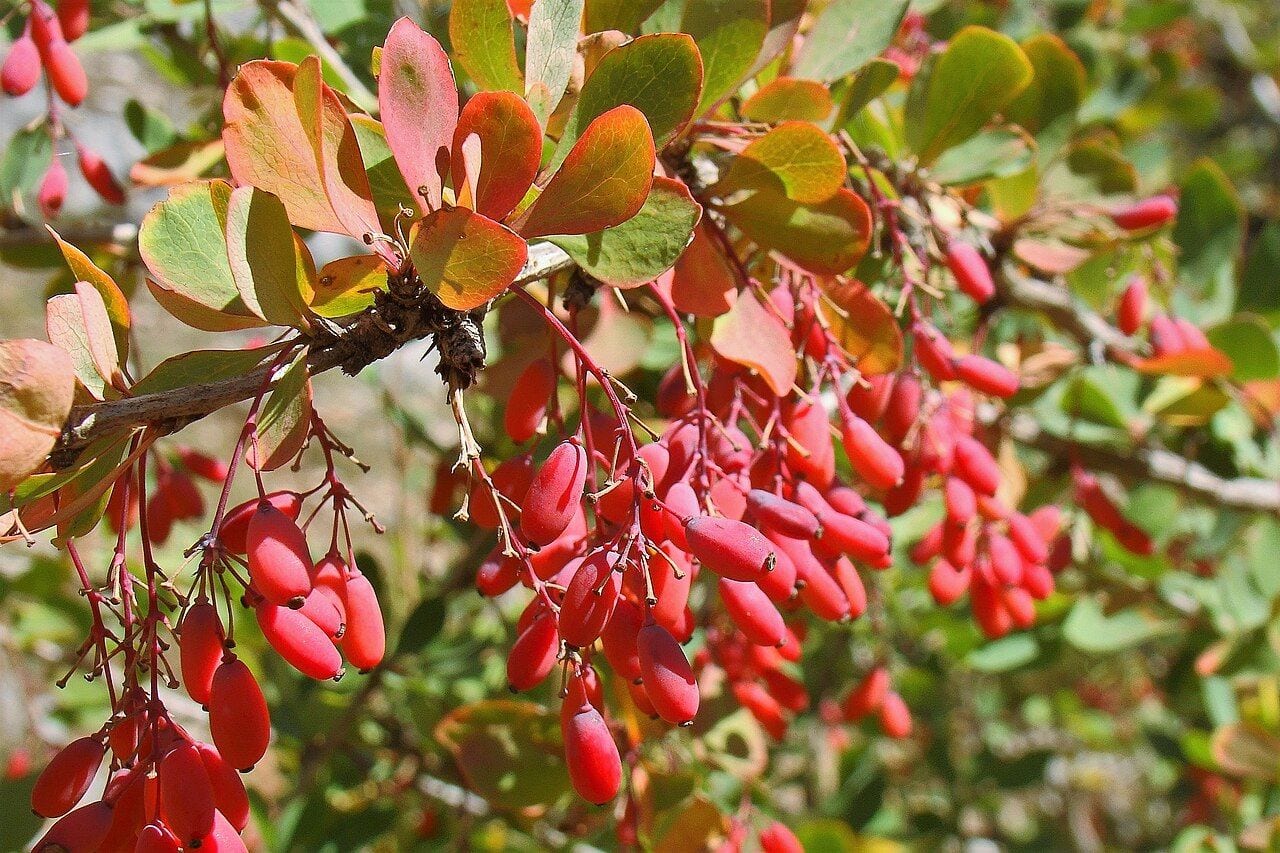
Barberries contain 2.4–6.5% organic acids and about 100 mg of vitamin C
Barberries are edible but highly acidic: they contain 2.4–6.5% organic acids, sugars, about 1% pectin, approximately 100 mg of vitamin C per 3.5 ounces (100 g), vitamins P and K, tannins, and minerals. Despite their high vitamin C content, they are eaten less frequently than other berries because of their intense tartness and the difficulty of harvesting them from thorny bushes. The plant is rich in isoquinoline alkaloids, including berberine, and botanical records note that the berries have historically been processed into herbal preparations.
Barberries in the kitchen: European jams and Iranian zereshk with rice
In Europe, barberries are traditionally cooked into jam—thanks to their high pectin content, the jam sets very well once cooled. The berries are also frequently consumed dried. They are especially popular in Southwest Asia, most notably in Iran, where dried barberries are known as zereshk. In Iranian cuisine, they are added to rice pilaf much like raisins, and the dish zereshk polo—rice with barberries and chicken—is one of the most beloved traditional meals. Iran is the world's largest producer of zereshk, particularly the South Khorasan province. The tart flavor of the berries also pairs well with meat sauces, compotes, beverages, and candies, while the young leaves can be used in salads.
Common barberry, Japanese barberry, and other tart berries: a comparison
Barberries are very common in gardens, but most of them are ornamental varieties. The table below helps distinguish the common barberry, whose berries are used in the kitchen, from other similar shrubs.
| Plant | Origin | Grown for | Berries |
|---|---|---|---|
| Common barberry | Europe, Western Asia | berries, hedges, ornamental value | oblong, red, highly acidic |
| Japanese barberry | East Asia | ornamental foliage, hedges | not typically grown for berries |
| Cornelian cherry | Southern Europe, Southwestern Asia | berries, early blooms | oblong red drupes, about 0.8 inches (2 cm) |
| Aronia (Chokeberry) | North America | berries, hedges | black, astringent pome fruits |
The common barberry can be distinguished from other shrubs by the three-pronged thorns beneath its leaf clusters and its drooping racemes of yellow flowers in the spring. When planting, it is important to remember that it should not be placed near cereal crops.
Other tart red berries include the cornelian cherry, cranberries, and rose hips.
Frequently asked questions
Are barberries edible?
Yes, the berries of the common barberry are edible but very tart. They are prized as a refreshing, acidic fruit and spice, often cooked into jams or dried for use in savory dishes.
When do barberries ripen?
The berries typically ripen in late summer to early fall and persist on the shrub for a long time, allowing them to be harvested well into late autumn.
Why shouldn't barberries be planted near wheat?
The common barberry is an alternate host for wheat stem rust (black rust). This fungal disease severely damages wheat and other cereals, which is why planting it is restricted or banned in many agricultural regions globally.
What is the difference between common and Japanese barberry?
Common barberry is native to Europe and is often grown for its tart, edible berries. Japanese barberry is native to East Asia and is primarily planted as an ornamental hedge, frequently featuring red or yellow foliage.
Where do barberries grow in the wild?
In the wild, common barberry thrives on dry slopes, along woodland edges, and in scrublands. It prefers well-draining, calcareous (chalky) soils and is highly cold-hardy, adapting well to cool temperate climates.
How are barberries used in cooking?
In Europe, they are traditionally made into jams, which set well due to their high pectin content. In Iran, dried barberries (zereshk) are a key ingredient in zereshk polo, a popular rice and chicken dish, adding a distinctively tart flavor.
Log in to comment
No comments yet. Be the first.