How to Grow Physalis (Cape Gooseberry): Care and Uses
- Physalis peruviana is native to Peru and Chile, and has been cultivated since the time of the Incas.
- In tropical regions it is a perennial, but in temperate climates it is grown as an annual plant.
- The fruit is a 0.5–0.8 inch (1.25–2 cm) yellow-orange berry enclosed in a papery, inedible husk.
- Unripe fruits, flowers, leaves, and stems contain toxic solanine and are dangerous to eat.
- A 3.5 oz (100 g) serving contains about 53 calories; fruits kept in their husks can last 30–45 days at room temperature.
- Native to the Andes and cultivated since the time of the Incas
- The fruit ripens inside a papery calyx husk
- Growing physalis from seed as an annual, similar to tomatoes
- Popular cultivated varieties: Cape gooseberry, ground cherry, and tomatillo
- Unripe fruits and leaves contain solanine—eat only fully ripe berries
- Physalis fruits last 30–45 days in their husks and are perfect for desserts and jams
- Cape gooseberry and other nightshade berries: what is edible and what is not
This article is part of the 77.today berries guide, prepared by the 77.today editors from the sources listed at the end.
Physalis, commonly sold under its botanical name or as Cape gooseberry, is one of the most visually striking fruits: a bright yellow-orange berry hidden inside a papery, straw-colored husk that resembles a miniature lantern. These fruits are often used to garnish cakes and cocktails, but they can also be easily grown at home—whether in a greenhouse or a sunny garden bed. In this section of our berry growing guide, we cover how to grow Physalis peruviana, when to harvest the fruits, why the unripe berries and plant parts are dangerous, and how the edible varieties differ from ornamental ones.
| Botanical name | Physalis peruviana |
|---|---|
| Common names | physalis, Cape gooseberry, goldenberry, ground cherry |
| Family | Nightshade (Solanaceae) |
| Origin | Peru and Chile, Andes Mountains |
| Plant type | Perennial in the tropics, up to 5.2 ft (1.6 m); grown as an annual in cooler climates |
| Flowers | Yellow, bell-shaped, with purplish-brown spots |
| Fruits | 0.5–0.8 inches (1.25–2 cm), yellow-orange, inside an inedible husk |
| Energy value | About 53 kcal per 3.5 oz (100 g) |
Native to the Andes and cultivated since the time of the Incas
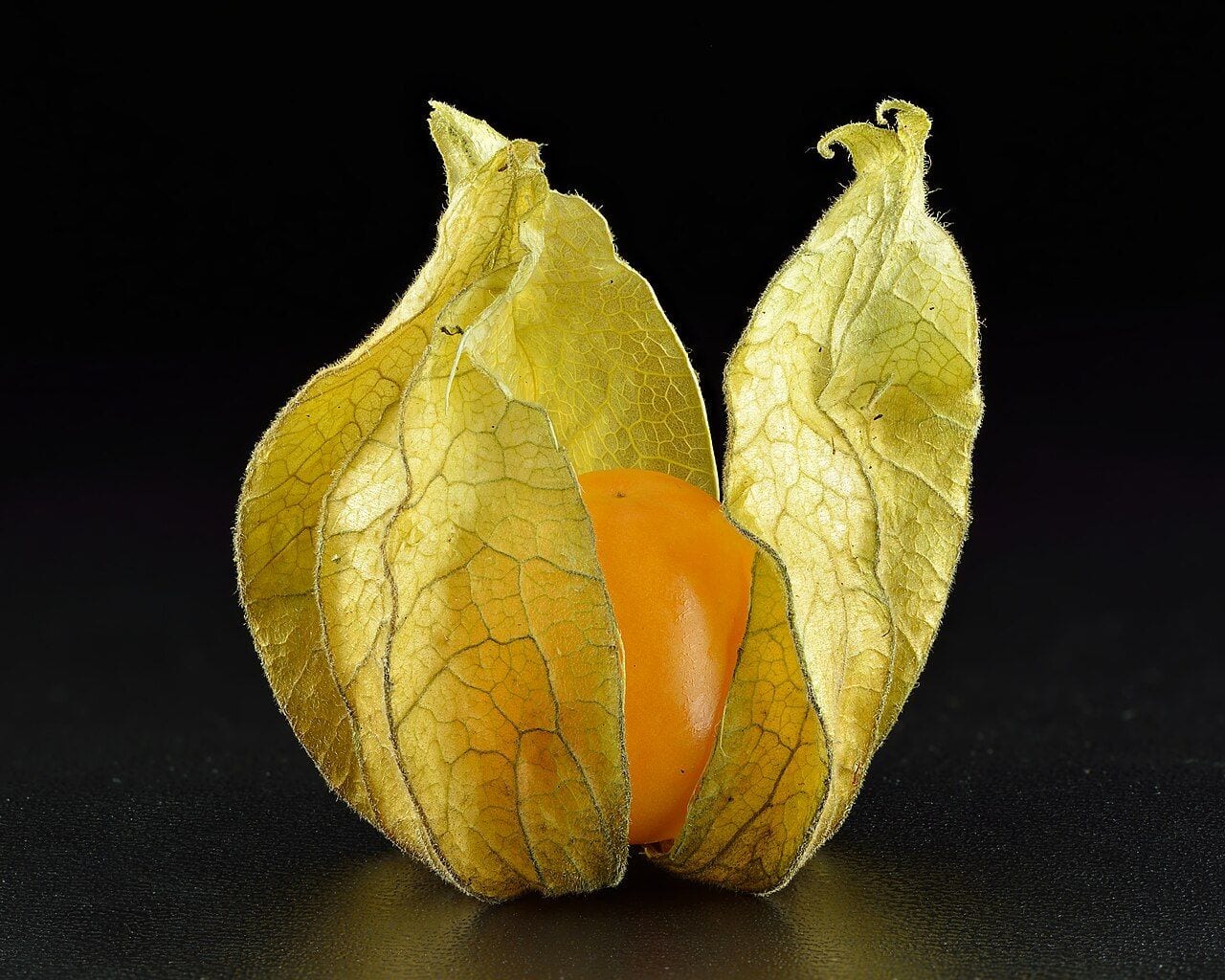
Physalis peruviana grows wild in Chile and Peru, where it can be found in the Andes Mountains at elevations up to about 9,800 feet (3,000 m). Its cultivation history in South America dates back to the Inca Empire. The English common name "Cape gooseberry" is most often associated with the Cape of Good Hope region in South Africa, where the plant was cultivated as early as the beginning of the 19th century, although the exact origin of the name is debated. Despite the name, it is not related to true gooseberries.
The plant belongs to the nightshade family and is closely related to the tomatillo, and more distantly to tomatoes, eggplants, and potatoes. The genus name Physalis comes from the Greek word meaning "bladder," referring to the inflated husk that surrounds the berry.
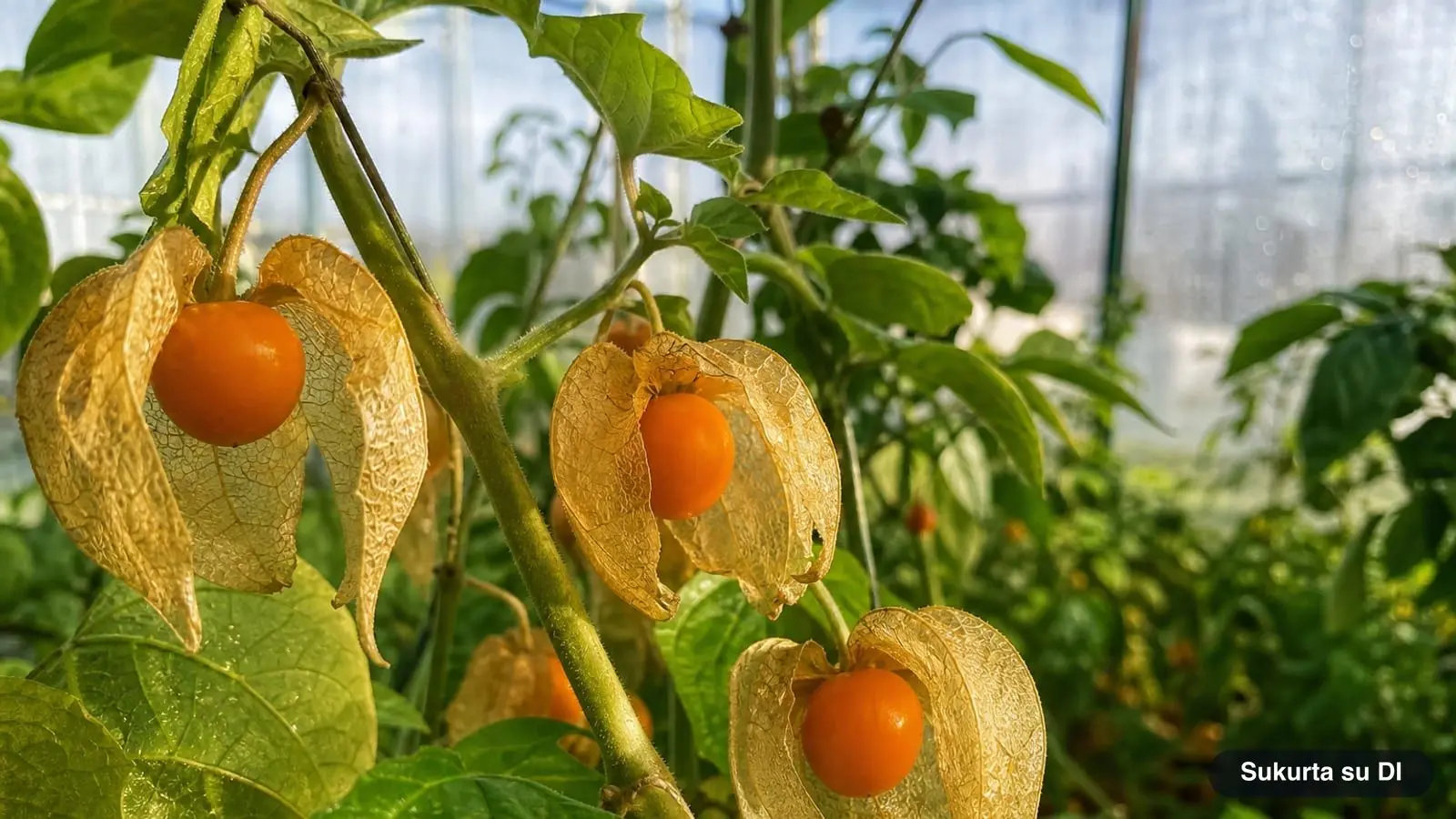
The fruit ripens inside a papery calyx husk
In tropical climates, the Cape gooseberry is a branching, perennial shrub reaching 3 to 5.2 feet (1–1.6 m) tall with velvety, heart-shaped leaves. In temperate zones, however, it is grown as an annual plant. The flowers are bell-shaped and drooping, measuring 0.6–0.8 inches (15–20 mm) across, and are yellow with purplish-brown spots inside. After the flower drops, the calyx continues to grow and eventually forms a straw-colored husk that is significantly larger than the fruit, completely enclosing and protecting it.
The fruit itself is a round, smooth, glossy berry about 0.5–0.8 inches (1.25–2 cm) in diameter, resembling a miniature yellow tomato. Once removed from its husk, it is bright yellow or orange, juicy, and filled with many tiny, yellowish seeds. A fully ripe fruit is sweet and mildly tart, with a flavor somewhat reminiscent of grapes or tropical fruits. The surrounding husk is bitter and strictly inedible.
Growing physalis from seed as an annual, similar to tomatoes
Because the Cape gooseberry is frost-tender, gardeners in temperate climates grow it from seed as an annual, much like tomatoes. Experienced growers recommend sowing seeds indoors about 6 to 8 weeks before the last expected spring frost. Sow them at a depth of about 0.2 inches (0.5 cm). When kept at a warm temperature of 64–68°F (18–20°C), they typically germinate within a week to ten days. Seedlings can be transplanted into a greenhouse or planted outdoors in a permanent spot only after all danger of frost has passed and the soil has warmed. The soil should be fertile, well-draining, and consistently moist; amending it with compost is highly beneficial. Because the bushes grow quite wide, they should be spaced generously—about 28 inches (70 cm) apart—and supported with stakes or cages to prevent them from collapsing under their own weight. Physalis can also be grown in large 4–5 gallon (15–20 liter) containers, though potted plants will require more frequent watering. Plants grown outdoors in cooler climates tend to be smaller, resulting in a more modest harvest compared to those in a greenhouse.
In cooler northern climates, the fruits typically begin to ripen in late summer and continue producing until the first autumn frosts. It is best to harvest them when the husk begins to dry and turn papery, and the berry inside has turned a rich yellow-orange. Fruits collected with their husks intact will store much longer. Seeds from fallen fruits often overwinter in the soil and sprout the following spring, though these volunteer plants usually bear fruit a bit later than those started indoors.
Popular cultivated varieties: Cape gooseberry, ground cherry, and tomatillo
Edible physalis species are becoming increasingly popular in home gardens worldwide. Four main types are most frequently planted. The Cape gooseberry (Physalis peruviana) is distinguished by its grayish, fuzzy leaves and tends to be one of the latest to mature; its bright orange, sweetish fruits have a citrusy undertone and weigh about 0.14–0.18 oz (4–5 g). The pineapple ground cherry (often sold as "Pineapple" physalis) produces smaller, pale yellow fruits with a distinct mango and pineapple flavor, while the hairy ground cherry (Physalis pubescens), sometimes called the strawberry ground cherry, offers a subtle wild strawberry taste. All three are excellent eaten fresh, added to desserts, or dried. The tomatillo (Physalis philadelphica), on the other hand, grows into the largest bushes and produces 1–1.4 oz (30–40 g) fruits that closely resemble green or purple tomatoes; because they are quite tart when fresh, they are most often roasted, pickled, or used in Mexican dishes like salsa verde.
Unripe fruits and leaves contain solanine—eat only fully ripe berries
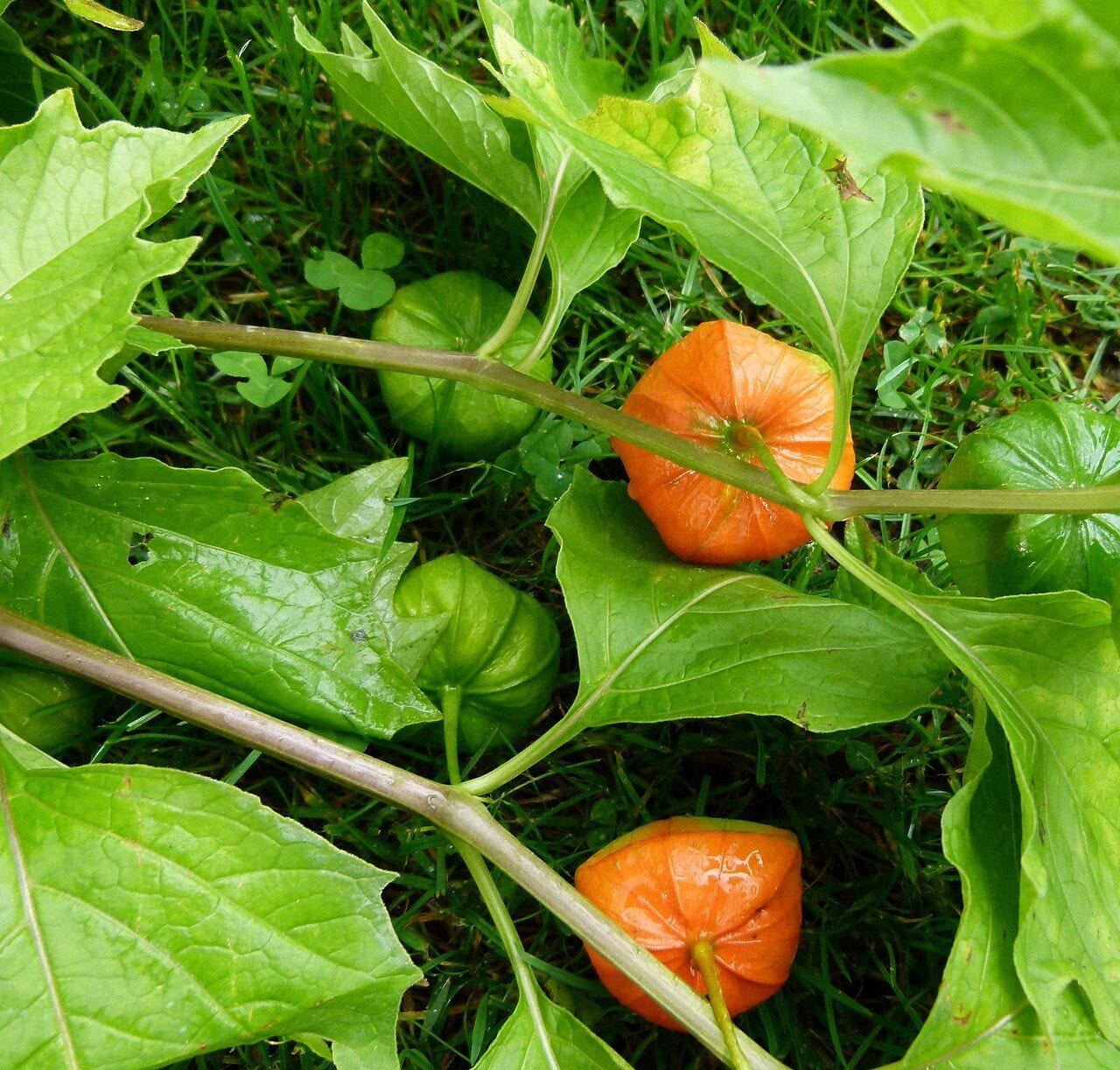
Like many members of the nightshade family, the physalis plant has toxic parts. Unripe green fruits, flowers, leaves, and stems contain solanine and solanidine alkaloids, which can cause poisoning in humans, cattle, and horses. Therefore, only the fully ripe, yellow-orange fruits should be eaten, and children should be taught never to pick or consume the green ones.
Another common species is the Chinese lantern (Physalis alkekengi), which produces bright orange, 1.5–2 inch (4–5 cm) "lanterns". It is widely grown as an ornamental plant in flower beds and used for dried floral arrangements, though it can spread aggressively like a weed. Opinions on the edibility of its fruits vary, but medical sources generally consider the plant to be mildly toxic and a gastrointestinal irritant, so it is best to avoid eating its berries entirely. You can read more about dangerous nightshades in our poisonous berries section.
Physalis fruits last 30–45 days in their husks and are perfect for desserts and jams
A 3.5 oz (100 g) serving of Cape gooseberries contains about 53 calories and roughly 11 mg of vitamin C. The fruits are rich in pectin, carotene, and essential minerals. When left unpeeled in their papery husks, the fruits will keep for about 30 to 45 days at room temperature, and can last for several months if stored in a cool, dry place.
Cape gooseberry and other nightshade berries: what is edible and what is not
The physalis belongs to the nightshade family, which includes both edible and highly toxic berry-producing plants. This table helps clarify the differences.
| Plant | Fruit | Edible? | Why |
|---|---|---|---|
| Cape gooseberry (Physalis peruviana) | Yellow-orange berry in a husk | Yes, only when ripe | Green fruits and leaves contain solanine |
| Chinese lantern (Physalis alkekengi) | Orange berry in a bright lantern | Better to avoid | Considered mildly toxic |
| Goji berry (Lycium barbarum) | Red elongated berry | Yes | Fruits are edible, but may interact with certain medications |
| Bittersweet nightshade (Solanum dulcamara) | Elongated red berry | No | Berries are toxic |
| Deadly nightshade (Atropa belladonna) | Black berry | No | Highly toxic, contains atropine |
Plants in the nightshade family—ranging from everyday tomatoes and potatoes to the deadly belladonna—often contain alkaloids. For this reason, you should only ever eat the fully ripe fruits of well-known, cultivated edible species. If you are ever in doubt about a berry's identity, do not taste it.
Cape gooseberries are excellent eaten fresh, tossed into fruit salads, mixed into desserts, or used as an elegant garnish for cakes and cocktails. They can also be cooked into jams, sauces, and pies, or dried like raisins. Thanks to their high pectin content, physalis jam sets very well. For more unusual garden fruits, check out our guides on goji berries, hardy kiwi, and mulberries.
Frequently asked questions
Can you grow Cape gooseberries in cooler climates?
Yes. While perennial in the tropics (USDA zones 8–11), Cape gooseberry is grown as an annual in temperate climates. It is usually started from seed indoors and planted out in a sunny, warm spot, much like tomatoes.
When should you harvest physalis fruits?
In temperate zones, the fruits usually begin to ripen in late summer and continue until the first frost. They are ready to pick when the berry turns yellow-orange and the husk begins to dry. Fruits harvested with their husks intact will store longer.
Are physalis fruits poisonous?
Fully ripe Cape gooseberries are safe and delicious to eat. However, unripe green fruits, flowers, leaves, and stems contain solanine and solanidine alkaloids, which can cause poisoning in humans and livestock. The papery husk is also bitter and inedible.
What is the difference between Cape gooseberry and Chinese lantern?
Cape gooseberry (Physalis peruviana) is grown for its sweet, edible fruits. The Chinese lantern (Physalis alkekengi), which produces bright orange husks, is grown as an ornamental plant for dried floral arrangements; medical sources consider it mildly toxic.
How many calories are in physalis?
A 3.5 oz (100 g) serving of Cape gooseberries contains about 53 calories and approximately 11 mg of vitamin C.
How should you store physalis fruits?
Store them unpeeled, inside their papery husks, in a dry place. At room temperature, they will keep for about 30 to 45 days, and if kept in a cool, dry environment, they can last for several months.
Log in to comment
No comments yet. Be the first.