Sea Buckthorn: Growing, Harvesting, and Benefits
- Sea buckthorn (Hippophae rhamnoides) is a hardy Eurasian shrub widely cultivated in cool temperate climates around the world.
- The plant is dioecious: only female shrubs produce berries, and a male pollinator must be planted nearby.
- The fruit contains about 400 mg of vitamin C per 3.5 oz (100 g), along with high levels of carotenoids, and vitamins E and K.
- Berries ripen in the fall and often persist on the branches through the winter until early spring.
- A healthy shrub can yield up to 15 lbs (7 kg) of berries annually, though harvesting is the most labor-intensive part of growing them.
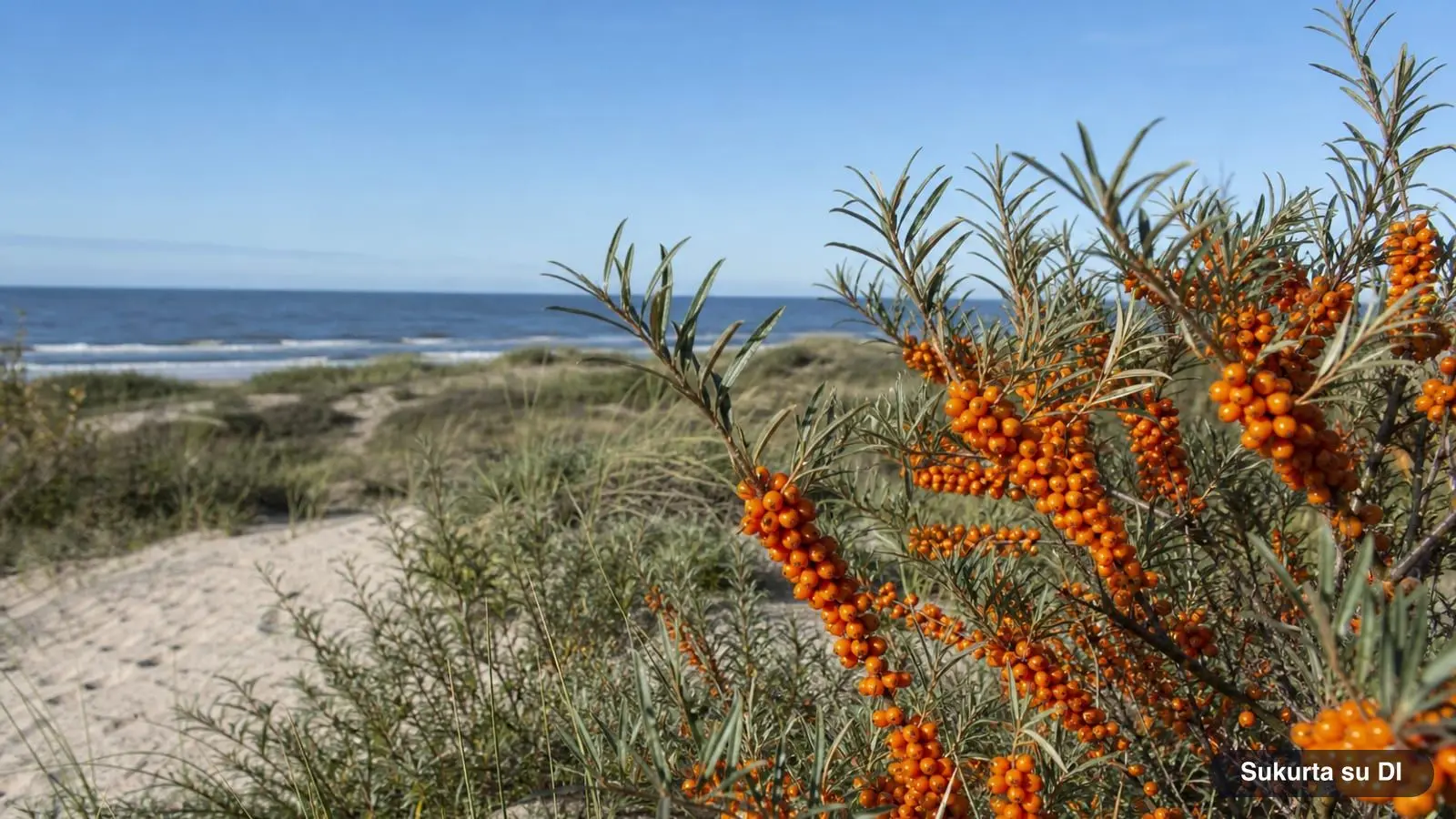
- Sea Buckthorn is Dioecious: Only Female Shrubs Produce Berries
- Tolerant of Poor, Sandy, and Even Salty Soils
- Berries Ripen in Fall, but Harvesting is the Hardest Task
- Packed with Vitamin C, Carotenoids, and Valuable Oil
- Sea Buckthorn in the Kitchen: Juice, Honey Puree, Jam, and Oil
- Sea Buckthorn, Rose Hips, and Black Currants: The Vitamin C Champions
This article is part of the 77.today berries guide, prepared by the 77.today editors from the sources listed at the end.
Sea buckthorn is one of the most striking shrubs in the autumn garden: its branches become heavily laden with bright orange berries, while its silvery leaves give it a distinct, ornamental appearance. Cultivated globally in home gardens, commercial orchards, and landscaping, its tart berries are pressed into juice, processed for their valuable oil, or mashed into a sweet puree with honey. In this installment of our comprehensive berry guide, we explore why sea buckthorn requires a pollinating partner, how to plant and care for it, the best ways to harvest the challenging fruit, and the nutritional benefits these berries offer.
| Latin name | Hippophae rhamnoides |
|---|---|
| Family | Oleaster family (Elaeagnaceae) |
| Plant | thorny shrub or small tree, 6.5–16 ft (2–5 m), dioecious |
| Distribution | mid-latitudes of Eurasia; widely cultivated globally |
| Blooms | mid-spring, before leaves emerge |
| Berries ripen | in the fall, persisting until spring |
| Berries | 0.2–0.3 in (6–8 mm), bright orange, in dense clusters |
| Vitamin C | about 400 mg / 3.5 oz (100 g) |
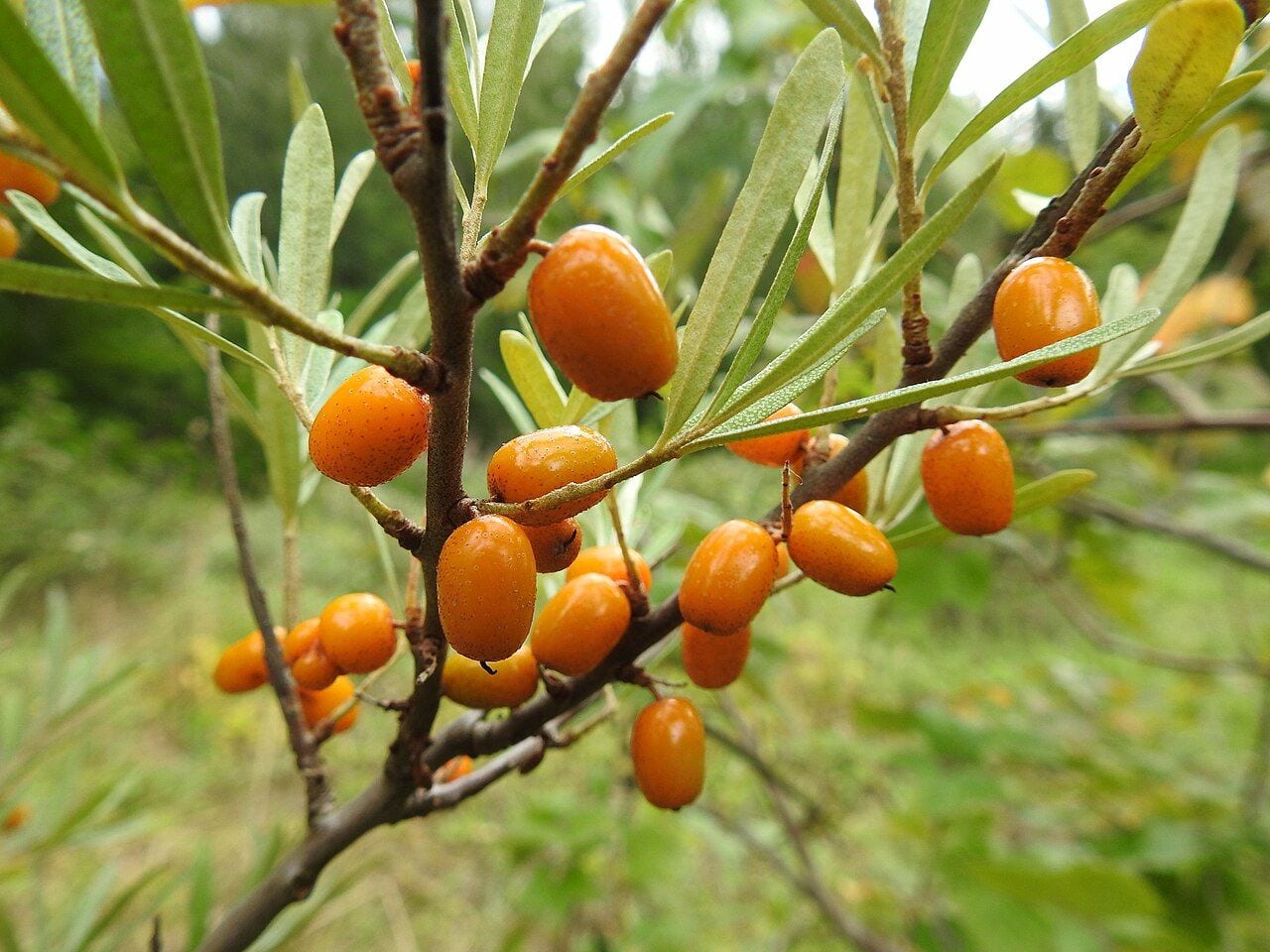
Sea Buckthorn is Dioecious: Only Female Shrubs Produce Berries
Sea buckthorn is a shrub or small tree that typically reaches 6.5–16 ft (2–5 m) in height, featuring rough brown or black bark and a dense, grayish-green canopy. The branches are straight and heavily armed with sharp thorns. Its leaves are narrow and lance-shaped, measuring 1.2–3.1 in (3–8 cm) long and up to 0.4 in (1 cm) wide. Young shoots and leaves are covered in silvery scales; as summer progresses, the upper side of the leaves darkens while the underside retains its silvery sheen. The plant blooms in mid-spring, just before the foliage fully emerges.
The most crucial characteristic of sea buckthorn is that it is dioecious: male and female flowers grow on entirely separate shrubs. Only the female plants produce berries, and they must be pollinated by wind carrying pollen from the male plants. Therefore, a male shrub must be planted in close proximity to the females, or there will be no fruit. Because the sex of a seed-grown plant can only be determined when it first flowers—usually after three years—gardeners almost always choose vegetatively propagated saplings of a known sex.
Tolerant of Poor, Sandy, and Even Salty Soils
Sea buckthorn grows naturally in the cool temperate regions of Europe and Asia, including the coasts of the North and Baltic Seas, mountain ranges, river valleys, the Himalayas, and northern China. Today, it is widely cultivated in gardens and commercial orchards around the world. Its roots form a symbiotic relationship with nitrogen-fixing bacteria, allowing the plant to thrive in poor, sandy, eroded, and even slightly saline soils. Because of this resilience, it is frequently planted to stabilize slopes, restore degraded land, and serve as a hardy windbreak. Very cold-hardy, many varieties thrive in USDA zones 3–7.
Sea buckthorn loves full sun and produces numerous root suckers, allowing it to quickly form dense thickets. In a home garden, it should be planted where these suckers will not be a nuisance, or they must be regularly pruned away. In commercial plantations, growers typically plant about 1,000 shrubs per acre (2,500 per hectare), leaving 13 ft (4 m) between rows and 3 ft (1 m) between individual plants, maintaining a male-to-female ratio of 1:7. A well-managed orchard can yield around 4.5 tons of berries per acre (10 tons per hectare), with a healthy, mature shrub producing up to 15 lbs (7 kg) of fruit annually.
Berries Ripen in Fall, but Harvesting is the Hardest Task
Sea buckthorn berries are spherical or oval, measuring 0.2–0.3 in (6–8 mm) in diameter and weighing 270–480 mg each, clustered tightly around the branches. They are most commonly bright orange, though varieties range from pale yellow to deep reddish-orange. The berries ripen in the fall and often remain on the shrub through the winter until the following spring. Because the fruits are small, soft, and firmly attached to thorny branches, harvesting is by far the most labor-intensive aspect of growing sea buckthorn. In parts of Asia where berries are hand-picked, it can take up to 600 labor hours per acre (1,500 hours per hectare) to complete the harvest.
To make harvesting easier, breeders are constantly working to develop cultivars with larger berries, longer stems, and fewer thorns. Less thorny subspecies are often used in breeding programs for this exact reason. In a home garden, you can pick the berries by hand while wearing thick gloves, or you can prune off sections of the berry-laden branches and place them in the freezer. Once frozen, the berries can be easily knocked or stripped off the wood.
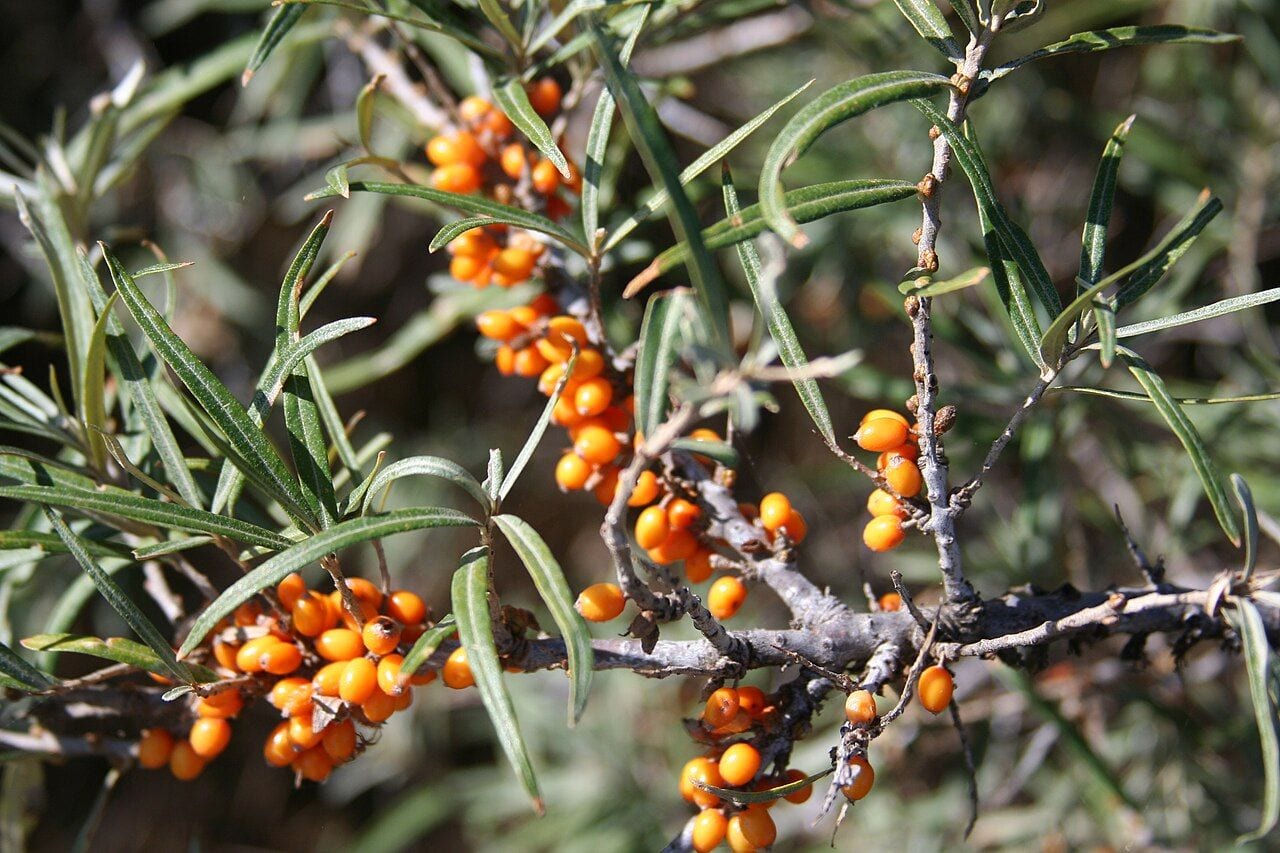
Packed with Vitamin C, Carotenoids, and Valuable Oil
Sea buckthorn is one of the most vitamin C-rich berries available, containing approximately 400 mg of vitamin C per 3.5 oz (100 g) of fruit. The berries are also loaded with vitamins E and K, potassium, phytosterols, flavonols, and beta-carotene alongside other carotenoids, which give the fruit its vibrant orange color. The fruit contains about 3.6% sugar and 2.6% acid, with its characteristically tart, astringent flavor driven primarily by a high concentration of malic acid.
Sea buckthorn is highly unusual because it stores oil not only in its seeds but also in its fleshy pulp. The pulp contains 1.5–3% oil, while the seeds hold about 11% by fresh weight. Sea buckthorn oil is exceptionally rich in carotenoids and is widely used in cosmetics, dietary supplements, and traditional medicine. The leaves, which contain tannins, can also be dried and brewed into a nutritious herbal tea.
Sea Buckthorn in the Kitchen: Juice, Honey Puree, Jam, and Oil
Most commonly, sea buckthorn berries are washed and pressed to separate the juice from the pomace (the solid remains). The pomace is then used to extract oil, create natural yellow or orange food coloring, or make jam, while the juice is processed further. Because pure sea buckthorn juice is highly acidic and somewhat astringent, it is usually diluted with water or blended with sweeter fruit juices. A popular preparation in many cooler climates is sea buckthorn with honey: the berries are mashed and strained to remove the seeds, and the resulting tart puree is mixed with honey and stored in the refrigerator for daily use.
Sea Buckthorn, Rose Hips, and Black Currants: The Vitamin C Champions
Sea buckthorn belongs to a small, elite group of berries whose vitamin C content dwarfs that of citrus fruits. Below is an approximate comparison based on data from this guide's sources.
| Berry | Vitamin C, mg / 3.5 oz (100 g) | Harvest time | Common uses |
|---|---|---|---|
| Rose hips | about 426 (wild) | late summer to fall | dried for tea, syrup |
| Sea buckthorn | about 400 | early to mid-fall, persists till spring | juice, honey puree, oil |
| Cloudberries | up to 200 | mid to late summer | fresh, jam |
| Black currants | 150–300 (USDA: 181) | mid to late summer | mashed with sugar, jam |
Sea buckthorn stands out for its high levels of carotenoids and unique fruit oil, while rose hips are notable for having the lowest water content among fleshy European fruits. Because vitamin C is highly sensitive to heat, the highest concentrations are found in fresh or frozen berries, whereas boiling or cooking will cause a significant portion of the vitamin to degrade.
Raw sea buckthorn puree is an excellent addition to hot tea, sauces, desserts, and smoothies, and the frozen berries will easily keep until the next harvest season. Other berries renowned for their exceptionally high vitamin C content include rose hips, black currants, and hardy kiwis.
Frequently asked questions
Why is my sea buckthorn not fruiting?
The most common reason is the lack of a male plant nearby. Sea buckthorn is dioecious: only female shrubs bear fruit, and they rely on wind pollination from male plants. Since a seedling's sex can only be determined when it first blooms—usually after three years—it is best to purchase vegetatively propagated plants of a known sex.
How many male sea buckthorn plants do I need?
In commercial orchards, the standard ratio is one male plant for every seven females. In a small home garden, a single male shrub is sufficient to pollinate several female plants, provided they are planted close to one another.
When should I harvest sea buckthorn berries?
The berries ripen in the fall when they turn a vibrant orange, and they often remain on the branches through the winter. Because the fruits are small, soft, and tightly clustered against thorny branches, harvesting is the most time-consuming part of cultivation.
How much vitamin C is in sea buckthorn?
Sea buckthorn berries contain approximately 400 mg of vitamin C per 3.5 oz (100 g)—significantly more than most other fruits. They are also rich in beta-carotene, as well as vitamins E and K.
How do you prepare sea buckthorn with honey?
Washed berries are typically mashed or pressed through a sieve to remove the seeds. The resulting tart puree is then mixed with honey to taste and stored in the refrigerator. It makes a delicious spread or a flavorful addition to hot tea.
Where does sea buckthorn grow in the wild?
Sea buckthorn is native to the cold and temperate regions of Europe and Asia, naturally thriving along the coasts of the Baltic and North Seas, in mountainous areas, and across northern Asia. Today, it is widely cultivated in gardens and orchards across cool temperate climates globally.
Log in to comment
No comments yet. Be the first.