Elderberries: Black Elderberry, Flower Syrup, and Berries
- Black elderberry (Sambucus nigra) is a 13–20 ft (4–6 m) shrub or small tree, common in temperate climates globally.
- It blooms in early summer with flat, yellowish-white fragrant umbels; berries ripen in late summer to fall.
- Unripe berries, seeds, and green plant parts contain cyanogenic glycosides—consuming them raw can cause nausea and diarrhea.
- Ripe berries can only be eaten after cooking—they are used to make jams, jellies, soups, and wines.
- There is no clinically proven evidence that elderberry supplements have significant health benefits.
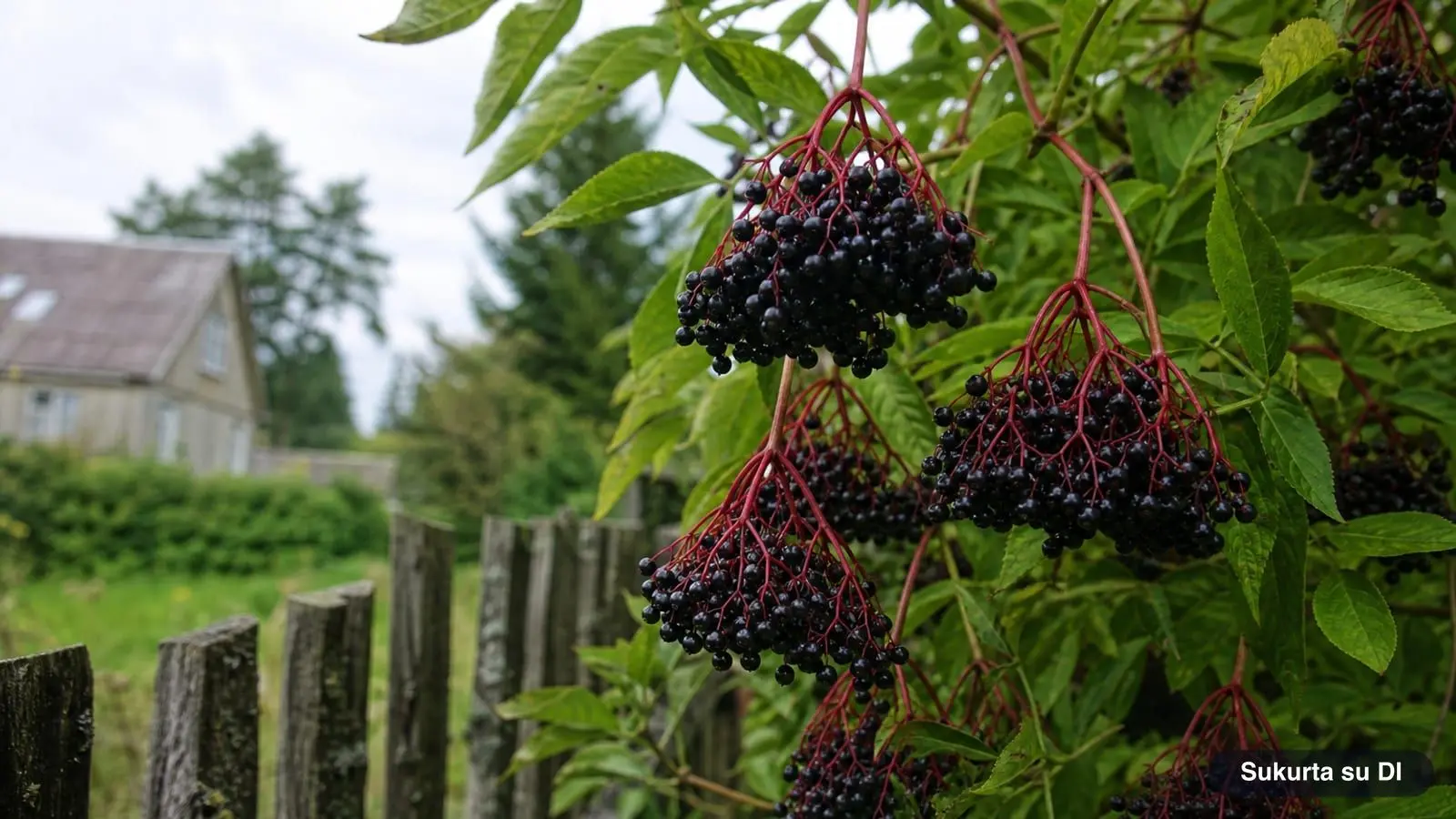
- Identify black elderberry by its pinnate leaves, white umbels, and clusters of black berries
- Raw elderberries and green plant parts are toxic—berries must be cooked
- Elderflower syrup is the most popular use for the blooms in Northern Europe
- Cooked elderberries are used for jam, jelly, soup, and wine
- Elderberry is easy to grow, and ornamental forms like 'Black Lace', 'Aurea', and 'Laciniata' decorate gardens
- Black and red elderberry: a table to help you avoid mistakes
This article is part of the 77.today berries guide, prepared by the 77.today editors from the sources listed at the end.
Black elderberry is one of the most common shrubs in temperate regions: it grows along forest edges, around rural properties, near buildings, along stream banks, and in abandoned areas. In early summer, its flat umbels of white flowers scent the entire neighborhood, and in the fall, its branches bend under the weight of black berry clusters. However, the elderberry is no ordinary fruit: its unripe berries and other plant parts can cause poisoning. In this part of our berry guide, we cover how to identify black elderberry, how to safely use its flowers and berries, how it differs from red elderberry, and how to grow it.
| Latin name | Sambucus nigra |
|---|---|
| Family | Adoxaceae (Moschatel family) |
| Plant | shrub or small tree, 13–20 ft (4–6 m), rarely up to 33 ft (10 m) |
| Habitat | fertile partial shade, forest edges, rural properties, landscaping |
| Blooms | early summer, with yellowish-white fragrant umbels |
| Berries ripen | late summer to fall |
| Berries | glossy dark purple or black drupes with 3–5 seeds |
| Safety | raw berries and green parts are toxic; berries are edible only when cooked |
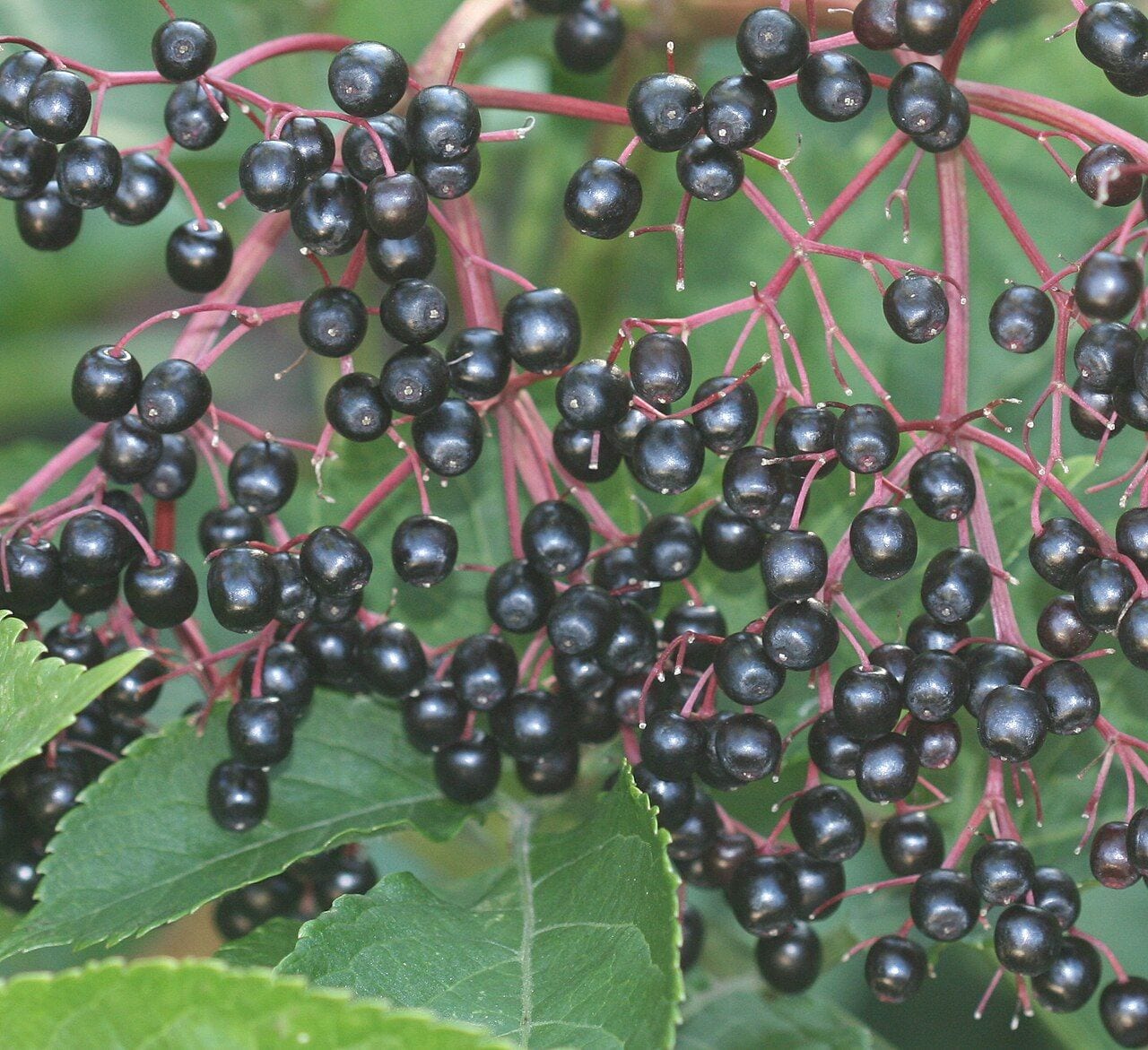
Identify black elderberry by its pinnate leaves, white umbels, and clusters of black berries
Black elderberry is a lush, deciduous shrub or small tree, typically 13–20 ft (4–6 m) tall and wide, rarely reaching up to 33 ft (10 m). The bark of a young plant is light gray, later darkening and cracking, while young stems are hollow inside. The leaves are opposite, 4–12 inches (10–30 cm) long, pinnate, consisting of 5–7 toothed leaflets that emit a distinct odor when crushed. Elderberry bark is often colonized by a fungus known as wood ear or jelly ear.
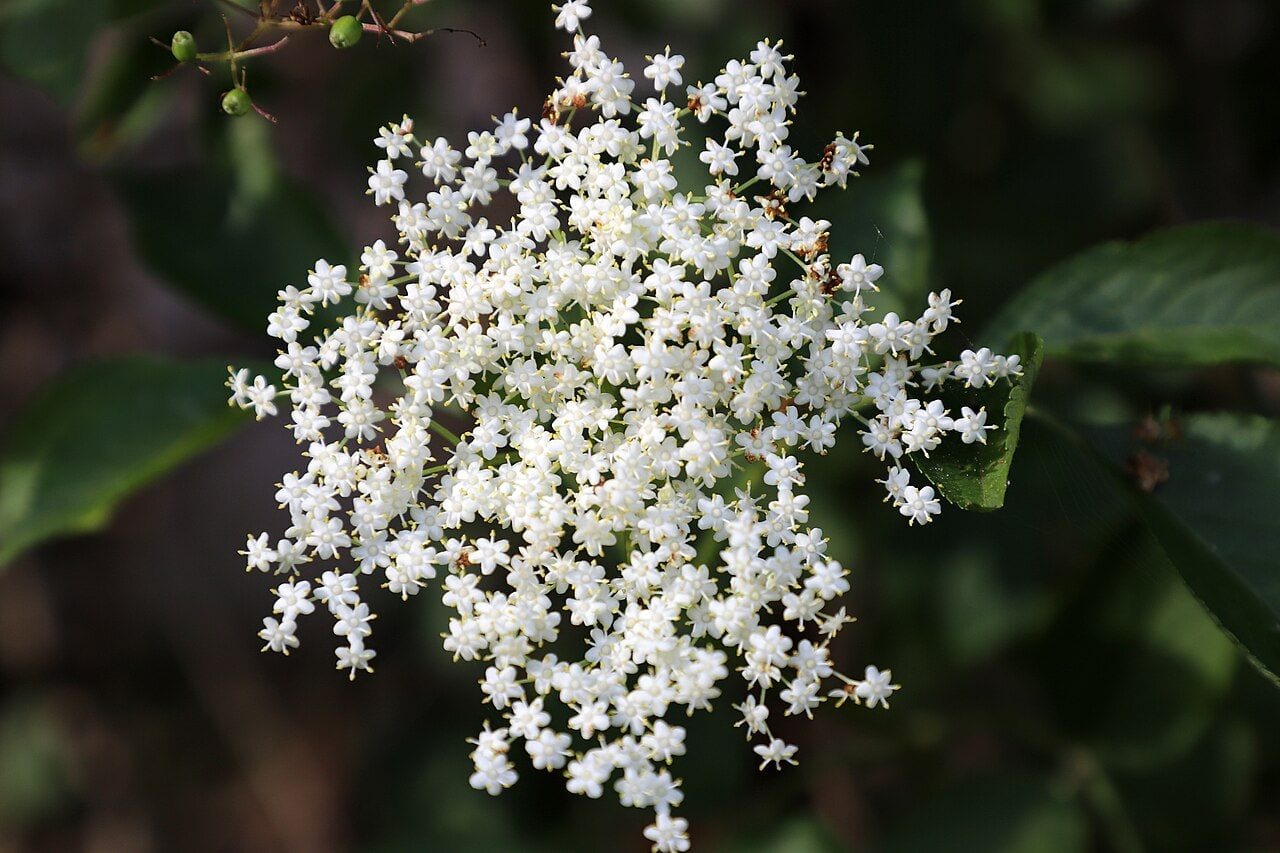
In early summer (May to June in the Northern Hemisphere), small, 0.2–0.3 inches (5–7 mm) yellowish-white, five-petaled flowers bloom, gathered in flat umbels 3–10 inches (8–25 cm) across. The flowers produce no nectar but are highly fragrant, attracting flies, beetles, and bees. In late summer to fall, glossy, dark purple or black drupes about 0.2 inches (5–6 mm) in diameter with 3–5 seeds mature, hanging in drooping clusters. Their dark color is due to anthocyanins. The berries are eaten by many birds, especially Eurasian blackcaps in their native range.
Raw elderberries and green plant parts are toxic—berries must be cooked
Parts of the black elderberry plant, including the fruit, contain alkaloids, lectins, and cyanogenic glycosides, which can be toxic when raw. Cyanogenic glycosides, including sambunigrin, are present in the seeds and all green parts of the plant. Botanical literature indicates that the entire plant, except for the flowers and ripe berries, is toxic, and even the seeds and unripe berries are mildly poisonous. Improperly prepared berries, leaves, bark, or stems can cause nausea, vomiting, and severe diarrhea.
Therefore, ripe berries must be picked when completely black, removed from their stems, and heat-treated—cooked into jam, jelly, soup, syrup, or wine. Elderberry products are not recommended for pregnant women, allergy sufferers, or those with gastrointestinal diseases. Anyone taking prescription medications should consult a doctor, as interactions are possible.
Elderflower syrup is the most popular use for the blooms in Northern Europe
Elderflowers are aromatic and used for infusions, teas, and soft drinks. In Northern Europe and the Balkans, the flower heads are used to make elderflower syrup (or cordial), which is diluted with water and drunk as a refreshing beverage—in Romania it is called socată, in Sweden flädersaft, and in Denmark hyldeblomstsaft. The flower heads are picked at the peak of blooming on a dry, sunny day in a clean area, steeped in water, usually with lemon, left to infuse, then strained and boiled with sugar.
Cooked elderberries are used for jam, jelly, soup, and wine
Heat-treated black elderberries are suitable for jam, jelly, chutney, sauces, pies, and cakes, and are used to make wine and liqueurs. In Scandinavia and Germany, elderberry soup is a traditional dish, such as the German Fliederbeersuppe. The berries themselves are not particularly tasty raw, so they are typically processed before use. Elderberry is often used in dietary supplements and folk medicine, but there is no clinical evidence proving it has a significant effect on health.
Elderberry is easy to grow, and ornamental forms like 'Black Lace', 'Aurea', and 'Laciniata' decorate gardens
The natural habitats of elderberry are fertile, moist woodlands, so it thrives in fertile, slightly damp soil in a home garden (hardy to USDA zones 4–8). The shrubs grow quickly, regenerate well if cut or broken, tolerate polluted city air, and are quite resistant to diseases and cold. It is best to plant them during dormancy, watering them abundantly after planting. They are propagated by seeds, root suckers, and layering. Hard pruning in early spring stimulates the growth of new shoots.
Black and red elderberry: a table to help you avoid mistakes
Both elderberries grow in temperate climates and are often confused, although their blooming, berries, and edibility differ. The most important difference is that red elderberries are best left uneaten, while black elderberries are edible only when cooked.
| Feature | Black Elderberry | Red Elderberry |
|---|---|---|
| Latin name | Sambucus nigra | Sambucus racemosa |
| Blooms | early summer, with flat white umbels | mid-spring, with yellowish clusters |
| Berries | black, drooping clusters | red |
| Ripens | late summer to fall | mid-summer |
| Edibility | only heat-treated ripe berries; flowers for syrup | better not to taste; raw berries can be toxic |
If you are unsure which elderberry is growing in your yard, wait for it to bloom: black elderberry blooms later with wide white umbels, while red elderberry blooms earlier, just as the leaves are unfolding. The stems, roots, and leaves of the red elderberry are toxic, and the raw berries can cause nausea, so it is best considered inedible. Read more about dangerous berries in our poisonous berries section.
There are many ornamental forms. The most popular is the yellow-leaved 'Aurea', bred in England. The cut-leaved 'Laciniata' is found in landscaping and has been grown in Western Europe since the mid-17th century. Especially favored is 'Black Lace' (also known as 'Eva') with its dark purple, deeply dissected leaves—along with 'Gerda' and 'Laciniata', it has received the Award of Garden Merit from the UK's Royal Horticultural Society. Black berries in the fall are also produced by aronia and blackberries.
Frequently asked questions
Are elderberries poisonous?
Raw (unripe) berries, seeds, leaves, bark, and stems contain cyanogenic glycosides, alkaloids, and lectins, which can cause nausea, vomiting, and diarrhea if eaten raw. Ripe black elderberries are only edible when cooked or otherwise heat-treated.
What is the difference between black and red elderberry?
Black elderberry blooms in early summer with flat white umbels, and its black berries ripen in late summer to fall. Red elderberry blooms earlier, starting in mid-spring, with yellowish clusters, and its red berries ripen by mid-summer; it is generally considered inedible.
When should you harvest elderflowers?
Flowers are picked at the peak of blooming, typically in late spring to early summer, on a dry, sunny day when the umbels are fully open and fragrant. Only harvest flower heads growing in clean, unpolluted areas.
How do you make elderflower syrup?
The flower heads are steeped in water, usually with lemon, left to infuse for a day or more, then strained and boiled with sugar. The resulting syrup is diluted with water and enjoyed as a refreshing beverage.
Do elderberry supplements help with colds?
Elderberry is often used in dietary supplements and folk medicine, but there is no clinical evidence proving its health benefits. Elderberry products are not recommended for pregnant women, allergy sufferers, or those with digestive disorders.
What is Black Lace elderberry?
It is an ornamental variety of black elderberry featuring dark purple, deeply dissected leaves. It has been awarded the Award of Garden Merit by the UK's Royal Horticultural Society.
Log in to comment
No comments yet. Be the first.