Lingonberries: Foraging, Benefits, and Preserving for Winter
- The lingonberry (Vaccinium vitis-idaea) is a 3–10 inch (7–25 cm) evergreen shrub with leathery, glossy leaves.
- It grows in dry pine forests and bog margins, with berries ripening in late summer to early fall.
- It blooms in late spring to early summer, often producing a second flush of flowers in late summer.
- A 3.5 oz (100 g) serving contains about 54 calories; the tart berries are usually sweetened before eating.
- In Scandinavian cuisine, lingonberry jam is a classic accompaniment to meatballs, venison, and game meats.
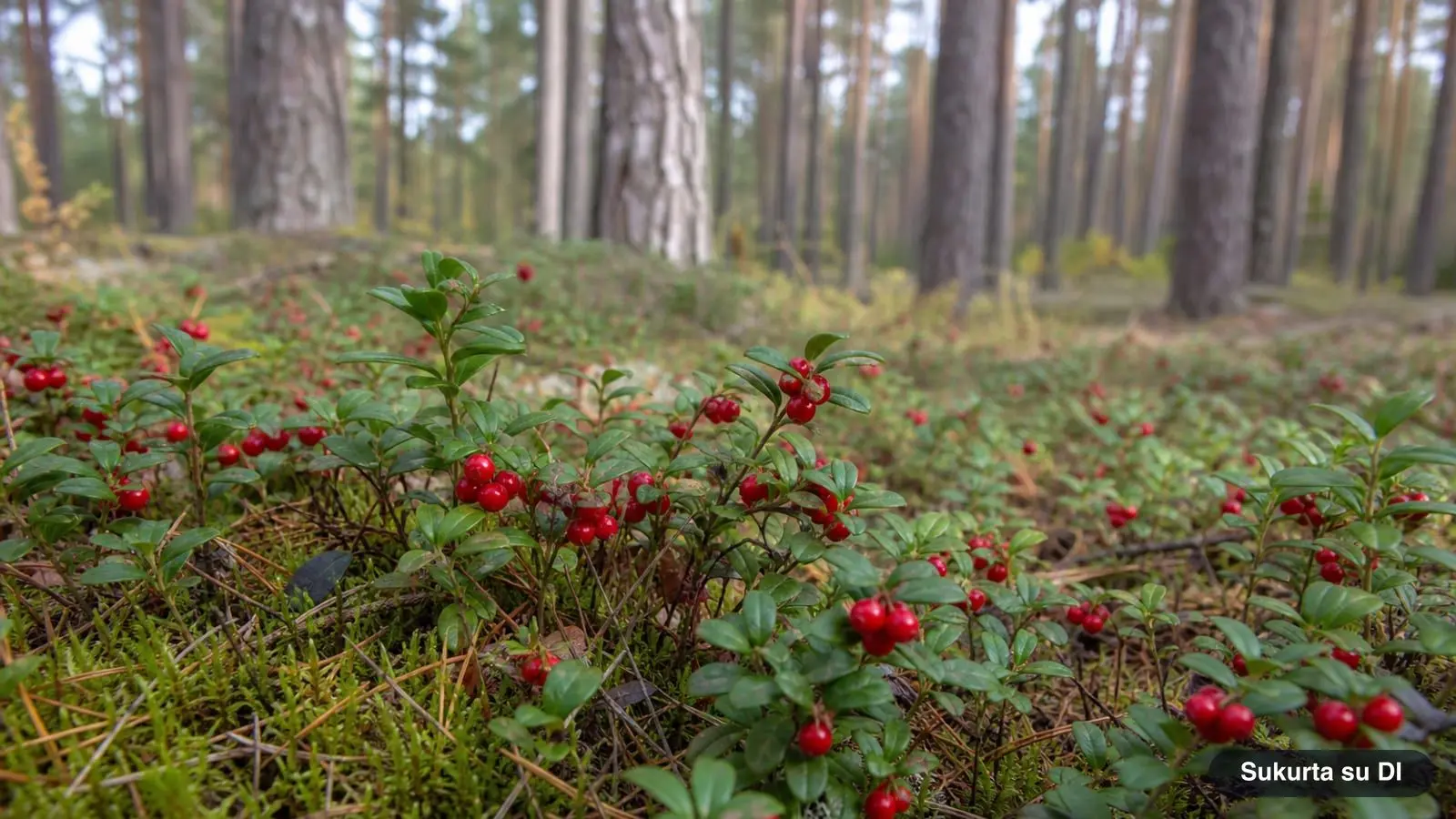
- Identify lingonberries by their leathery, evergreen, glossy leaves and berry clusters
- Lingonberries thrive in dry pine forests and ripen in late summer
- Cultivated lingonberries have been grown commercially since the 1960s
- A 3.5 oz (100 g) serving provides about 54 calories, organic acids, pectin, and vitamin C
- Preserving for winter: mashed with sugar or honey, or cooked into jam with apples
- Lingonberries, cranberries, and bilberries differ in habitat, leaves, and taste
This article is part of the 77.today berries guide, prepared by the 77.today editors from the sources listed at the end.
Lingonberries are a classic autumn forest berry: when the bilberries have already been picked, clusters of glossy red lingonberries appear in dry pine forests. They are quite tart and slightly bitter, so they are rarely eaten fresh; instead, they are mashed with sugar, cooked with apples or pears, and served alongside meat. In this part of the berry guide, we cover how to identify lingonberries, where and when to forage them, their nutritional value, and how to preserve them for winter.
| Latin name | Vaccinium vitis-idaea |
|---|---|
| Family | Heath family (Ericaceae), blueberry genus |
| Plant | Evergreen shrub, 3–10 inches (7–25 cm) |
| Habitat | Dry pine forests, margins of raised bogs and transitional mires |
| Flowering | Late spring to early summer, often a second time in late summer |
| Berries ripen | Late summer to early fall |
| Berries | 0.2–0.4 inches (6–10 mm), bright red, glossy, tart |
| Energy value | About 54 kcal per 3.5 oz (100 g) |
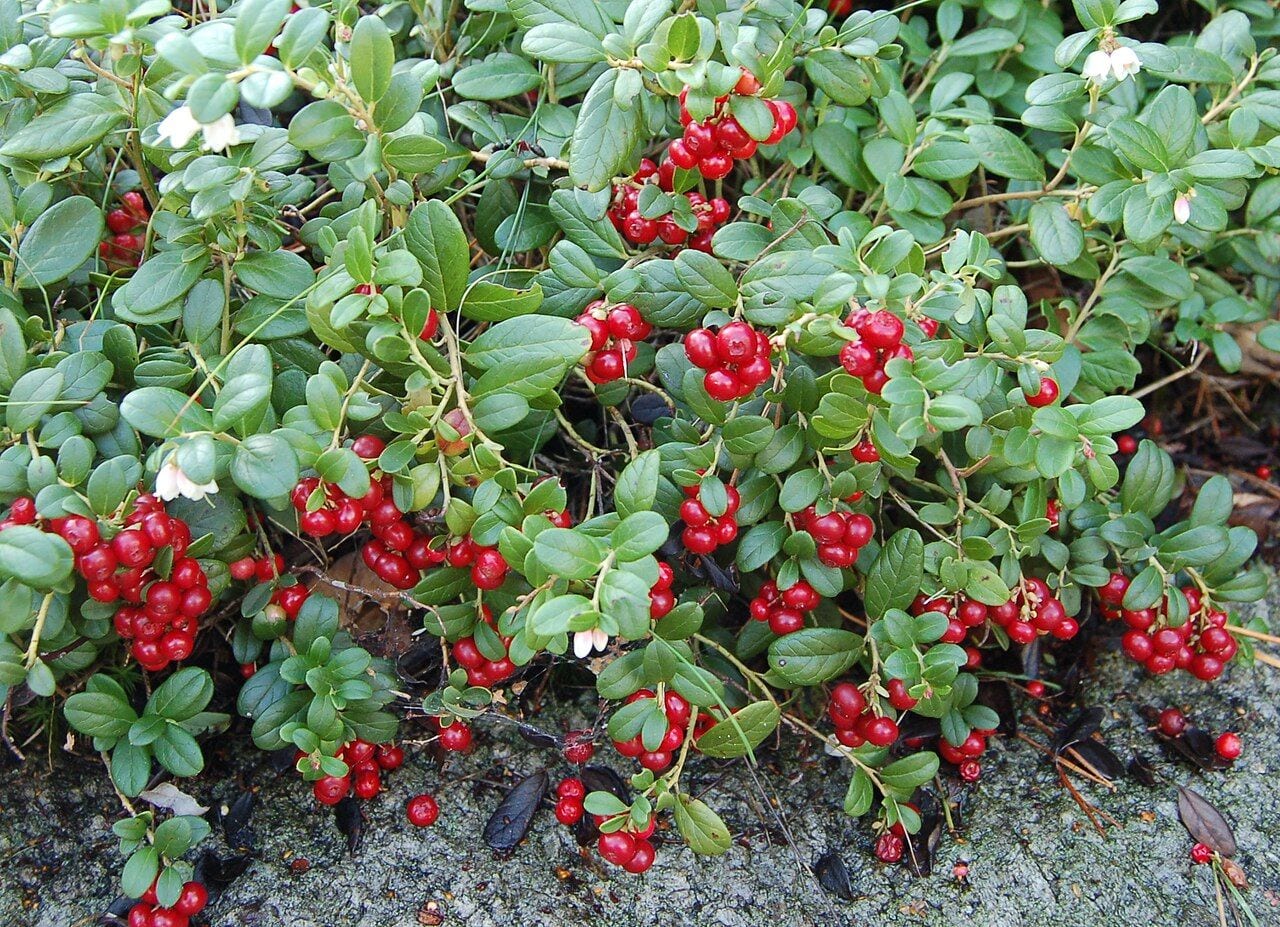
Identify lingonberries by their leathery, evergreen, glossy leaves and berry clusters
The lingonberry is a perennial evergreen shrub. Upright, leafy stems rise 3–10 inches (7–25 cm) from creeping underground rhizomes, allowing lingonberry patches to form dense carpets. The leaves are leathery, smooth-edged, 0.4–1.2 inches (1–3 cm) long, and oval, sometimes with a small notch at the tip. Their upper surface is dark green and glossy, while the underside is pale green with tiny dark spots. The lingonberry does not drop its leaves even in the deepest freezing temperatures, as they are usually protected by a blanket of snow.
In late spring to early summer, the lingonberry blooms with white or pale pink bell-shaped flowers clustered together. They have a faint fragrance and are pollinated by bumblebees and other insects. In late summer, the shrub often blooms a second time. The berries are initially white, later turning bright red and glossy. They contain multiple seeds, measure 0.2–0.4 inches (6–10 mm) across, and retain a remnant of the calyx at the top. As they ripen, the acid content decreases while sugar levels rise.
Lingonberries thrive in dry pine forests and ripen in late summer
The lingonberry is distributed throughout the temperate and northern zones of the Northern Hemisphere—from boreal forests to the Arctic tundra. It thrives in dry, open pine forests, as well as on the edges of raised bogs and transitional mires. The lingonberry prefers consistently moist, acidic soil and partial shade; it tolerates poor, infertile ground but cannot survive in alkaline, chalky soils.
In cool northern climates, the first berries turn red in mid-August, with the main harvest peaking in early fall. There is no need to rush: early berries tend to be quite bitter, while those left on the shrub longer become sweeter. When foraging for lingonberries, general wild harvesting rules apply—while quantities for personal use are often unrestricted in many regions, mechanical berry pickers and rakes are frequently discouraged or banned by local forestry regulations because they can tear and damage the delicate plants. Always check local foraging laws before harvesting.
Cultivated lingonberries have been grown commercially since the 1960s
Lingonberries are not only found in the wild. Since the 1960s, cultivated varieties have been grown commercially in countries like the Netherlands, Germany, Sweden, Poland, the US, and Latvia. In a home garden, lingonberries require similar conditions to blueberries—acidic peat, consistent moisture, and a partially shaded location (they are generally hardy in USDA zones 2–7). Some varieties are also grown as ornamental evergreen ground covers.
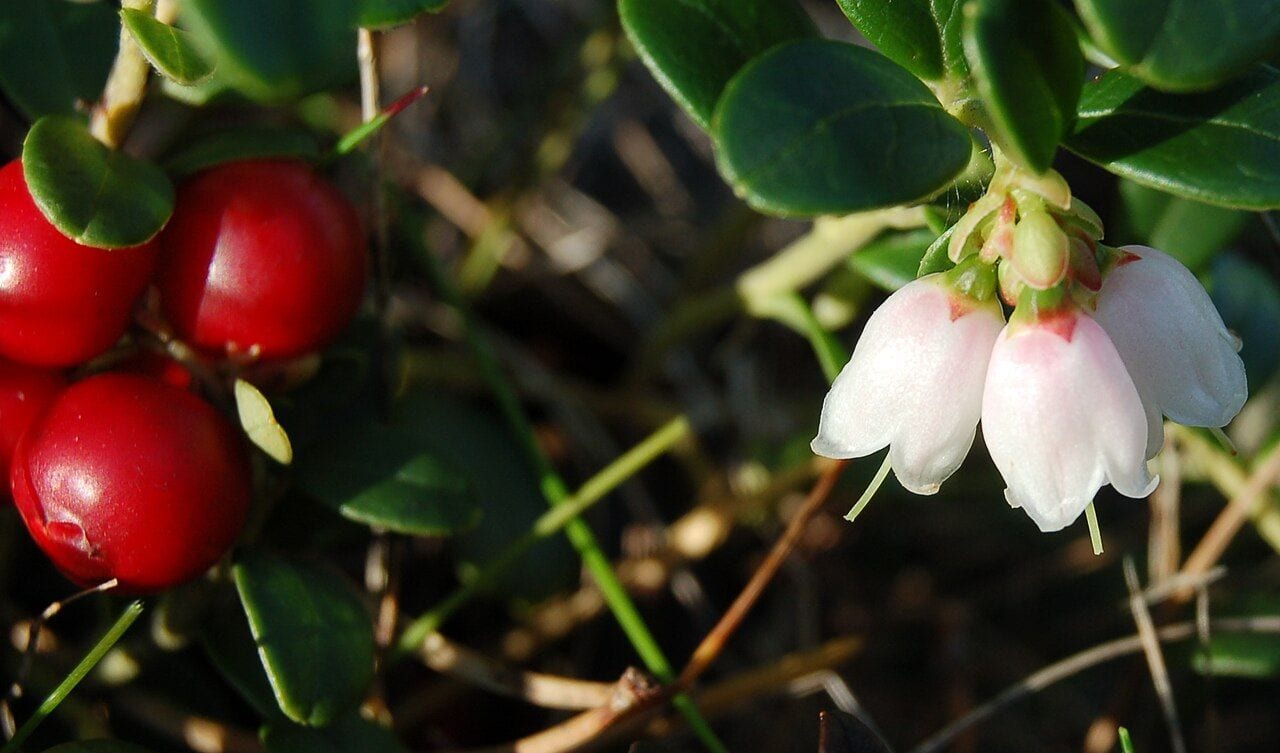
A 3.5 oz (100 g) serving provides about 54 calories, organic acids, pectin, and vitamin C
Fresh lingonberries consist of about 86% water, 13% carbohydrates, and 1% protein. A 3.5 oz (100 g) serving contains roughly 54 calories and serves as a modest source of vitamin C, B vitamins, and essential minerals. Lingonberries contain natural sugars, pectin, tannins, citric and malic acids, carotene, iron, potassium, and calcium. Thanks to their high acid and pectin content, lingonberry jam sets beautifully and has a long shelf life.
A decoction made from dried lingonberry leaves has historically been used in folk medicine as a throat gargle. However, the leaves are not considered food, so if you intend to use them for therapeutic purposes, it is always best to consult a doctor or pharmacist first.
Preserving for winter: mashed with sugar or honey, or cooked into jam with apples
The most popular way to preserve lingonberries is to mash them with sugar: sorted, washed, and dried berries are crushed with sugar and packed into clean jars. Increasingly, honey is used as a natural alternative to sugar. Lingonberry jam is frequently cooked with apples or pears, which help mellow the berries' tartness and slight bitterness. Lingonberries can also be easily frozen or dried.
In Nordic countries, lingonberry jam is a staple accompaniment to meat dishes. In Sweden, it is famously served with meatballs, mashed potatoes, and gravy. Across Sweden, Finland, and Norway, it pairs perfectly with venison and elk roasts. In Finland, lingonberries are whipped into a traditional semolina porridge, while in Poland, they are mixed with pears and served alongside poultry or game. In the past, when sugar was a luxury, people in Sweden and Russia simply packed the berries into bottles and submerged them in water, where their natural preservatives kept them fresh until the next harvest.
Lingonberries, cranberries, and bilberries differ in habitat, leaves, and taste
In autumn forests and bogs, lingonberries, cranberries, and bilberries often grow near one another, so it is useful to know how to tell them apart quickly. Lingonberries and cranberries are evergreen, while bilberries drop their leaves in the fall. Lingonberry leaves are leathery and 0.4–1.2 inches (1–3 cm) long; cranberry leaves are tiny, barely reaching 0.5 inches (1.2 cm); and bilberry leaves are bright green with finely toothed edges.
| Berry | Habitat | Ripens | Berries | Key feature |
|---|---|---|---|---|
| Lingonberry | Dry pine forests, bog margins | Late summer to early fall | Bright red, 0.2–0.4 in (6–10 mm), in clusters | Evergreen, tart, slightly bitter |
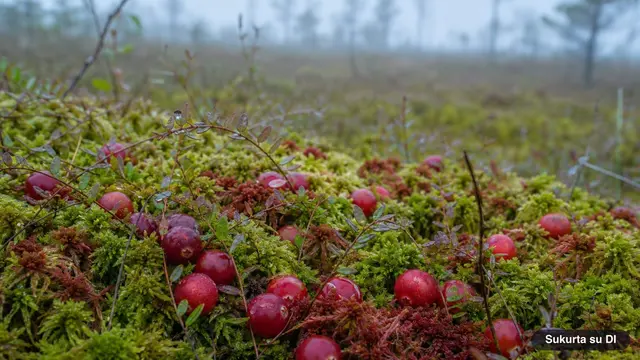
| Cranberry | Raised bogs on sphagnum moss | Late summer to spring | Dark red, up to 0.5 in (1.2 cm), on long delicate stems | Creeping vine, very tart and bitter |
| Bilberry | Pine and spruce forests | Mid to late summer | Dark blue, 0.3–0.5 in (8–12 mm), solitary | Deciduous, flesh stains purple |
Lingonberries grow in tight clusters at the tips of the stems, whereas cranberries hang singly or in small groups on thin, delicate stalks. Lingonberry flowers are white bells, while cranberry flowers are pink with swept-back petals. In dry pine forests, the common bearberry sometimes grows alongside lingonberries; its leaves look similar but lack the dark spots underneath, and its berries are mealy and flavorless. Occasionally, a natural hybrid between a lingonberry and a bilberry can be found in European forests.
In many European cuisines, lingonberries are incorporated into sauces for game meats and liver, baked into pies, or made into traditional fruit soups (kissel), juices, and liqueurs. Other classic wild berries include autumn cranberries and summer bilberries.
Frequently asked questions
When do lingonberries ripen?
In cool northern climates, lingonberries typically ripen in August and September. The first red berries appear in mid-August, with the main harvest peaking in early fall. Berries left on the shrub through the winter become sweeter.
How does a lingonberry differ from a bearberry?
The common bearberry sometimes shares the same dry pine forest habitat and has similar leaves, but it lacks the dark spots on the undersides of the foliage. Bearberry fruits are also mealy and tasteless.
How do you prepare lingonberries for winter?
They are most commonly mashed with sugar or honey, boiled into jam with apples or pears, or frozen. Thanks to their high acidity, they keep exceptionally well—historically in Sweden and Russia, they were simply submerged in water and stored until the next season.
What are lingonberry leaves used for?
Decoctions of dried lingonberry leaves have been used in traditional folk medicine, for example, as a throat gargle. The leaves are not considered food, and you should consult a doctor or pharmacist before using them for health purposes.
How many calories are in lingonberries?
A 3.5 oz (100 g) serving of fresh lingonberries has about 54 calories. They consist of roughly 86% water and 13% carbohydrates.
Can lingonberries be grown in the garden?
Yes. Cultivated lingonberries have been grown commercially since the 1960s in countries like the Netherlands, Germany, Sweden, Poland, the US, and Latvia. They require acidic, consistently moist soil and partial shade, and are generally hardy in USDA zones 2–7.
Log in to comment
No comments yet. Be the first.