How to Grow Gooseberries: Varieties, Pruning, and Recipes
- The European gooseberry (Ribes uva-crispa) is native to southern and central Europe, North Africa, and the Caucasus.
- Cultivated in gardens for centuries, a healthy gooseberry bush can live and produce fruit for 30 to 40 years.
- The berries can be green, yellow, red, purple, or white, and their skin may be smooth or covered in fine hairs.
- Gooseberries thrive in full sun and slightly acidic soil with a pH of 5.5 to 6.5.
- A 3.5 oz (100 g) serving of gooseberries contains about 44 calories and is an excellent source of vitamin C.
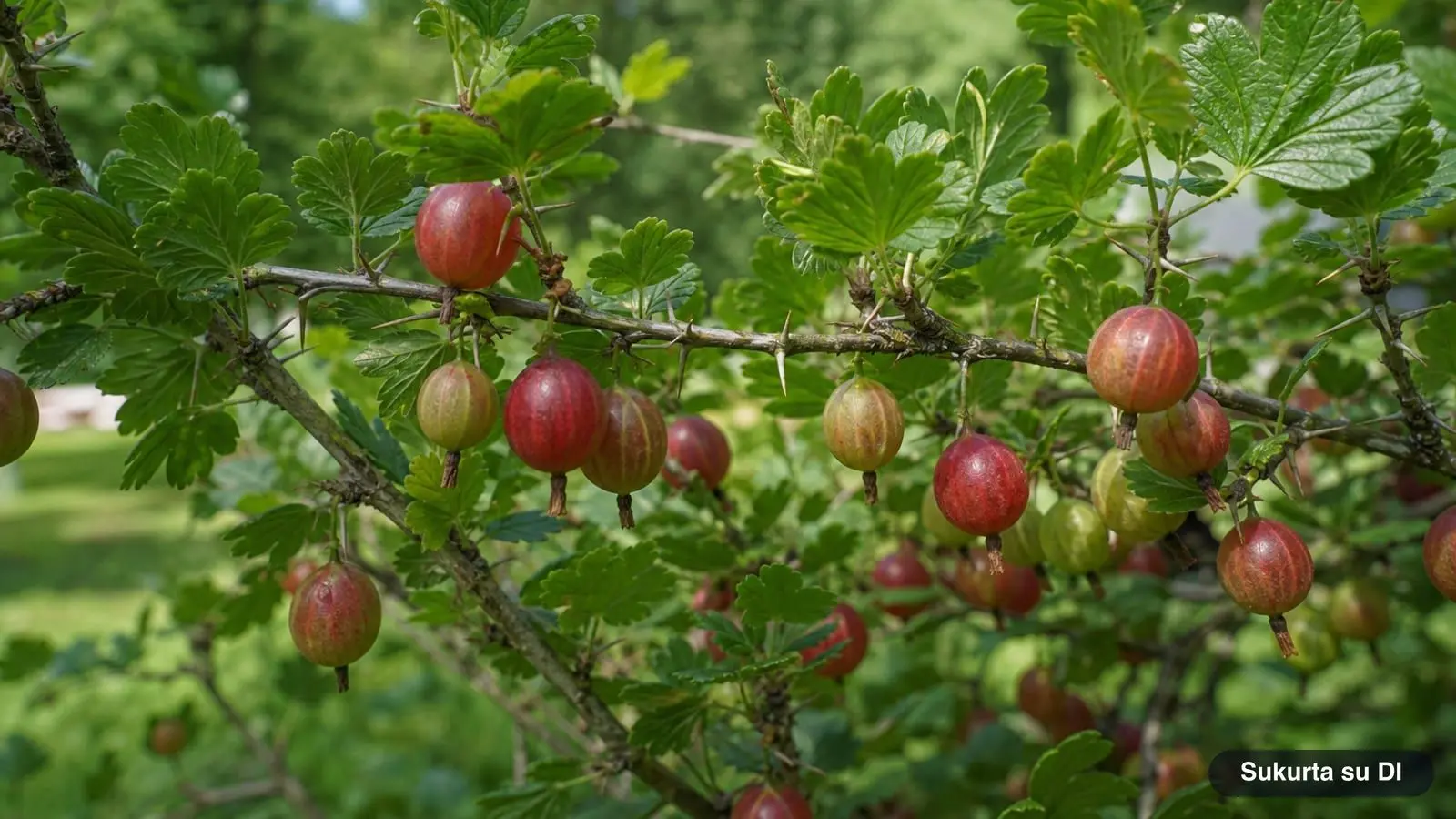
- Identify gooseberries by their thorny branches, lobed leaves, and stemmed berries
- Gooseberry varieties: From thorny European classics to thornless and standard forms
- Gooseberries need a sunny location and slightly acidic soil (pH 5.5–6.5)
- Excess nitrogen makes gooseberries vulnerable to powdery mildew
- A 3.5 oz (100 g) serving of gooseberries provides 44 calories and plenty of vitamin C
- Preserving gooseberries for winter: Jam, orange blends, pickling, and freezing
This article is part of the 77.today berries guide, prepared by the 77.today editors from the sources listed at the end.
Gooseberries are a traditional and beloved berry bush in many temperate gardens. Their thorny branches are a familiar sight in homesteads, and the green, yellow, or red berries are harvested both when tart for jams and when sweet for fresh eating. The English name is often thought to stem from the traditional tart sauce served with roast goose. In this part of the Berry Guide, you will learn how to identify a gooseberry bush, which varieties to choose, how to plant and prune them, how to protect them from powdery mildew, how many calories the berries contain, and how to preserve them for winter.
| Latin name | Ribes uva-crispa |
|---|---|
| Family | Grossulariaceae (gooseberry family) |
| Origin | Southern and Central Europe, the Caucasus, North Africa |
| Plant | Thorny shrub up to 5 ft (1.5 m) tall and wide |
| Cultivated | For centuries in temperate gardens worldwide |
| Berries ripen | Midsummer |
| Berries | Green, yellow, red, purple, white; smooth or hairy |
| Soil pH | 5.5–6.5 |
| Energy value | About 44 kcal per 3.5 oz (100 g) |
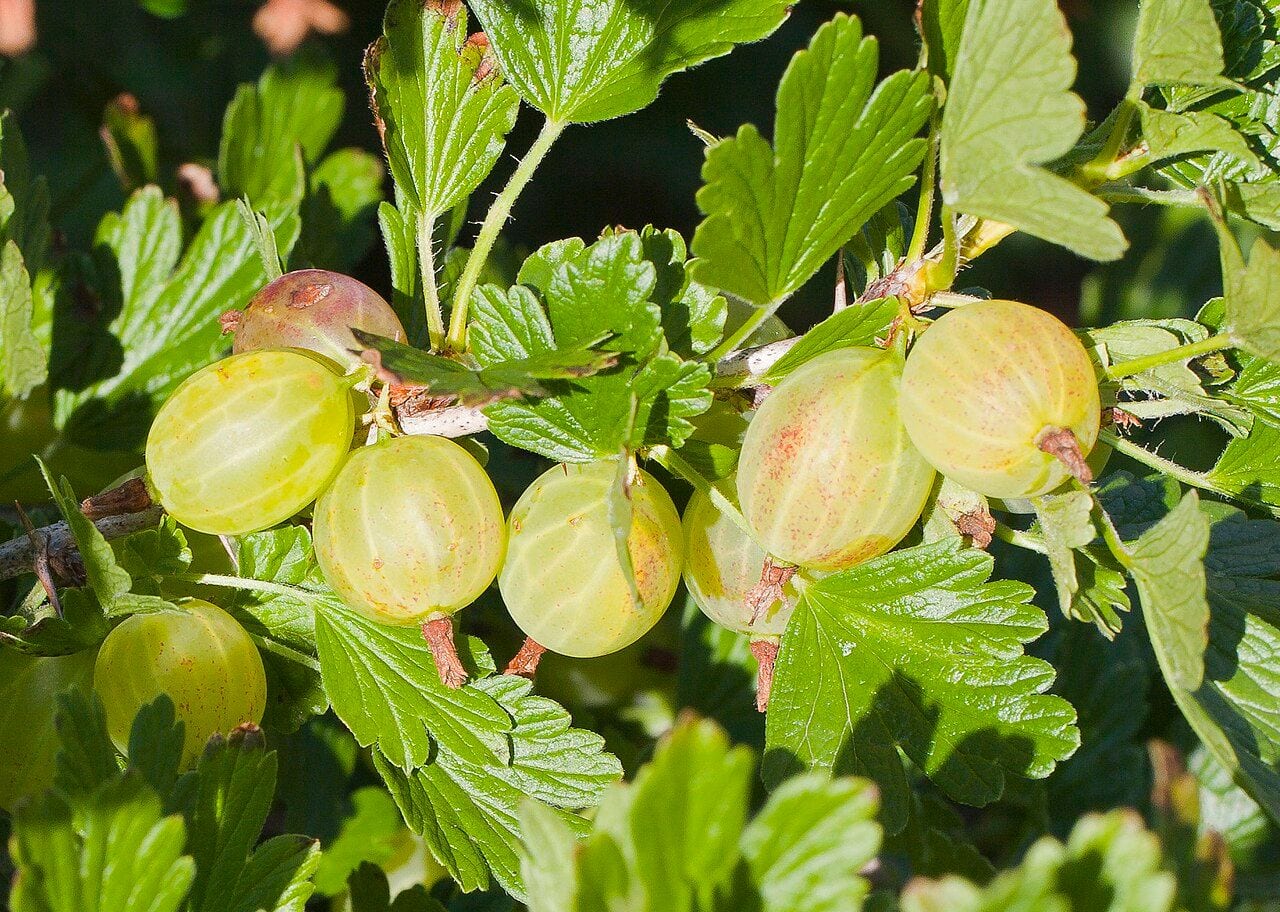
Identify gooseberries by their thorny branches, lobed leaves, and stemmed berries
The European gooseberry is a sprawling shrub that grows up to 5 feet (1.5 m) in height and width. The branches are usually densely covered with sharp spines, which grow singly or in groups of two or three at the bases of short shoots. The leaves are rounded, deeply lobed with three to five sections, and have toothed edges. In spring, small, bell-shaped flowers bloom singly or in pairs. The berries, which hang from short stems, can be round or elongated, smooth or covered in fine hairs. They are most commonly green, but yellow, red, purple, and white varieties also exist. Wild gooseberries are smaller than cultivated ones but are often just as tasty.
The gooseberry is native to Europe, the Caucasus, and North Africa, where it grows in mountainous regions and rocky forests. Because gooseberries have been cultivated for so long, it is often difficult to distinguish truly wild plants from those that have escaped from gardens. Gooseberry cultivation reached the height of its popularity in 19th-century Great Britain, where enthusiasts formed clubs to breed the largest and most flavorful berries, a tradition that helped spread the fruit to gardens across the globe.
Gooseberry varieties: From thorny European classics to thornless and standard forms
Old European varieties are descended from the wild Ribes uva-crispa, and today there are countless garden and commercial cultivars differing in berry color, size, flavor, thorniness, and disease resistance. The Royal Horticultural Society in the UK has awarded its prestigious Award of Garden Merit to excellent varieties such as 'Careless', 'Greenfinch', 'Invicta', 'Leveller', and 'Whinham's Industry'. Gardeners also highly value thornless gooseberries—varieties bred to have stems with few or no spines, making harvesting a much more pleasant task.
Standard gooseberries (tree-form) are also popular. These are bushes grafted onto a tall rootstock to form a small tree. They take up less ground space, keep the berries off the soil so they are less prone to rotting, and make picking easier. You might also come across so-called "black gooseberries," which are dark-fruited varieties or hybrids, such as the jostaberry—a cross between a gooseberry and a black currant.
Gooseberries need a sunny location and slightly acidic soil (pH 5.5–6.5)
Gooseberries grow and yield best in full sun, planted in medium-weight, well-draining, and slightly acidic soils with a pH of 5.5 to 6.5. They are cold-hardy plants, typically thriving in cool temperate climates (USDA zones 3–8). They are propagated vegetatively—by softwood or hardwood cuttings, layering, grafting, or dividing the bush. Cuttings planted in the fall root quickly and begin bearing fruit after a few years. In commercial orchards, bushes are planted in rows spaced about 10 feet (3 m) apart, with 3 feet (1 m) between each plant, allowing for thousands of bushes per acre and yields of several tons of berries.
Under good conditions, a gooseberry bush can live for 30 to 40 years. It begins to bear fruit in its second or third year, reaches peak production between 15 and 20 years, and produces the best fruit on three- to five-year-old wood. Berries develop on short lateral shoots and on the previous year's growth, so the bush requires regular pruning. You should remove old, unproductive branches, thin out the center to allow light and air to penetrate, and leave space for new shoots to grow. A well-pruned, open bush is less susceptible to disease and much less likely to scratch your hands during harvest. If a branch is overly burdened with ripe fruit, you can even prune the entire branch and strip the berries off afterward—this does not harm the bush.
Excess nitrogen makes gooseberries vulnerable to powdery mildew
The greatest enemy of the gooseberry is powdery mildew, particularly American gooseberry mildew, which attacks the leaves and the tips of new shoots. Heavy applications of nitrogen fertilizer encourage lush, soft growth that is highly susceptible to mildew, so gooseberries should not be over-fertilized. The risk of disease is also reduced by keeping the bush properly thinned for good airflow and by selecting mildew-resistant varieties. Like currants, gooseberries act as an alternate host for white pine blister rust, so check local regulations before planting them near susceptible pine forests.
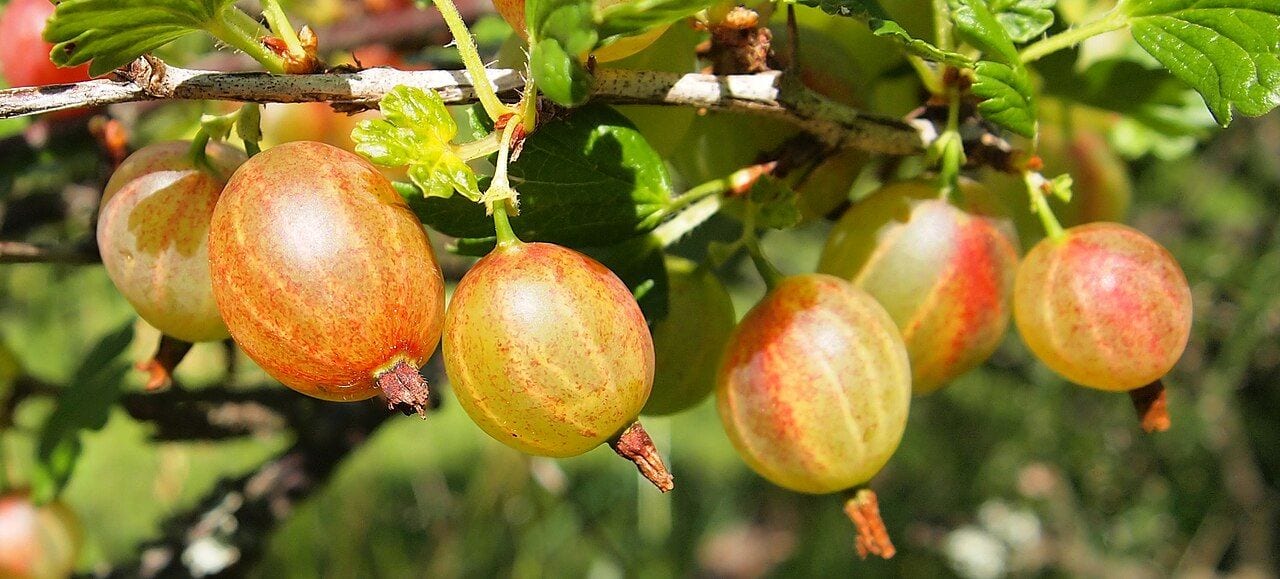
A 3.5 oz (100 g) serving of gooseberries provides 44 calories and plenty of vitamin C
Fresh gooseberries are composed of about 88% water, 10% carbohydrates, and roughly 1% each of fat and protein. A 3.5 oz (100 g) serving of berries contains about 44 calories and is a rich source of vitamin C, providing around 31% of the recommended daily value. Gooseberries contain fructose, glucose, sucrose, pectin, and various organic acids (including citric, malic, succinic, and tartaric acids), as well as potassium, iron, phosphorus, manganese, and B vitamins.
Preserving gooseberries for winter: Jam, orange blends, pickling, and freezing
How you use gooseberries depends entirely on their ripeness. Underripe green berries, which are picked earlier in the season and store well, are quite tart and perfect for baking and making jams. Semi-ripe berries are excellent for general canning and preserving, while fully ripe berries are eaten fresh, added to desserts, or used to make marmalade and homemade wine. For long-term storage, the berries can be frozen, freeze-dried, or preserved with sugar.
Gooseberry jam is a traditional favorite in many regions, sometimes cooked with oranges or lemons to add a bright citrus aroma. Gooseberries can also be pickled and served as a tangy relish alongside meats, or simmered into compotes, jellies, and sauces. In British cuisine, gooseberries are famously baked into pies and crumbles, or folded into a whipped cream dessert known as a gooseberry fool. In classic French cooking, a tart gooseberry sauce was traditionally served with mackerel—in fact, the French word for gooseberry, groseille à maquereau, literally translates to 'mackerel berry'.
Gooseberries are closely related to black currants and red currants, and they ripen in the garden around the same time as summer raspberries.
Frequently asked questions
When do gooseberries ripen?
Gooseberries typically ripen in midsummer. Underripe green berries are often picked earlier for their tartness, making them ideal for baking and jams, while fully ripe berries are eaten fresh.
What are standard (tree-form) gooseberries?
These are gooseberries grafted onto a tall rootstock to form a small tree. This shape takes up less space, keeps the fruit off the ground, and makes harvesting easier with less interference from thorns.
Are there thornless gooseberries?
Yes. While traditional gooseberry stems and shoots are covered in sharp spines, breeders have developed varieties that have very few or almost no thorns, making them much easier to harvest.
How do you protect gooseberries from powdery mildew?
The most important steps are regularly thinning the bush to ensure good light and airflow, and avoiding excessive nitrogen fertilizer, which encourages soft, vulnerable growth. Choosing mildew-resistant varieties is also highly recommended.
How many calories are in gooseberries?
A 3.5 oz (100 g) serving of fresh gooseberries contains about 44 calories. They are composed of roughly 88% water and 10% carbohydrates.
Where does the word gooseberry come from?
The exact origin of the English word 'gooseberry' is debated. It likely comes from the Norman French 'groseille' or from the traditional use of the tart berries in a sauce served with roast goose.
Log in to comment
No comments yet. Be the first.