Hardy Kiwi & Kolomikta: Planting, Care, and Harvesting
- The variegated kiwi vine (Actinidia kolomikta) is the most cold-hardy species, surviving temperatures down to −40°F (−40°C).
- The hardy kiwi (Actinidia arguta) produces sweet, bite-sized fruits that can be eaten whole, skin and all.
- Most kiwi vines are dioecious: you need both a male and a female plant to produce fruit.
- 'Issai' is a popular self-pollinating hybrid variety of hardy kiwi and silver vine.
- Cats are highly attracted to kiwi vines, often more so than catnip, and can severely damage young plants.
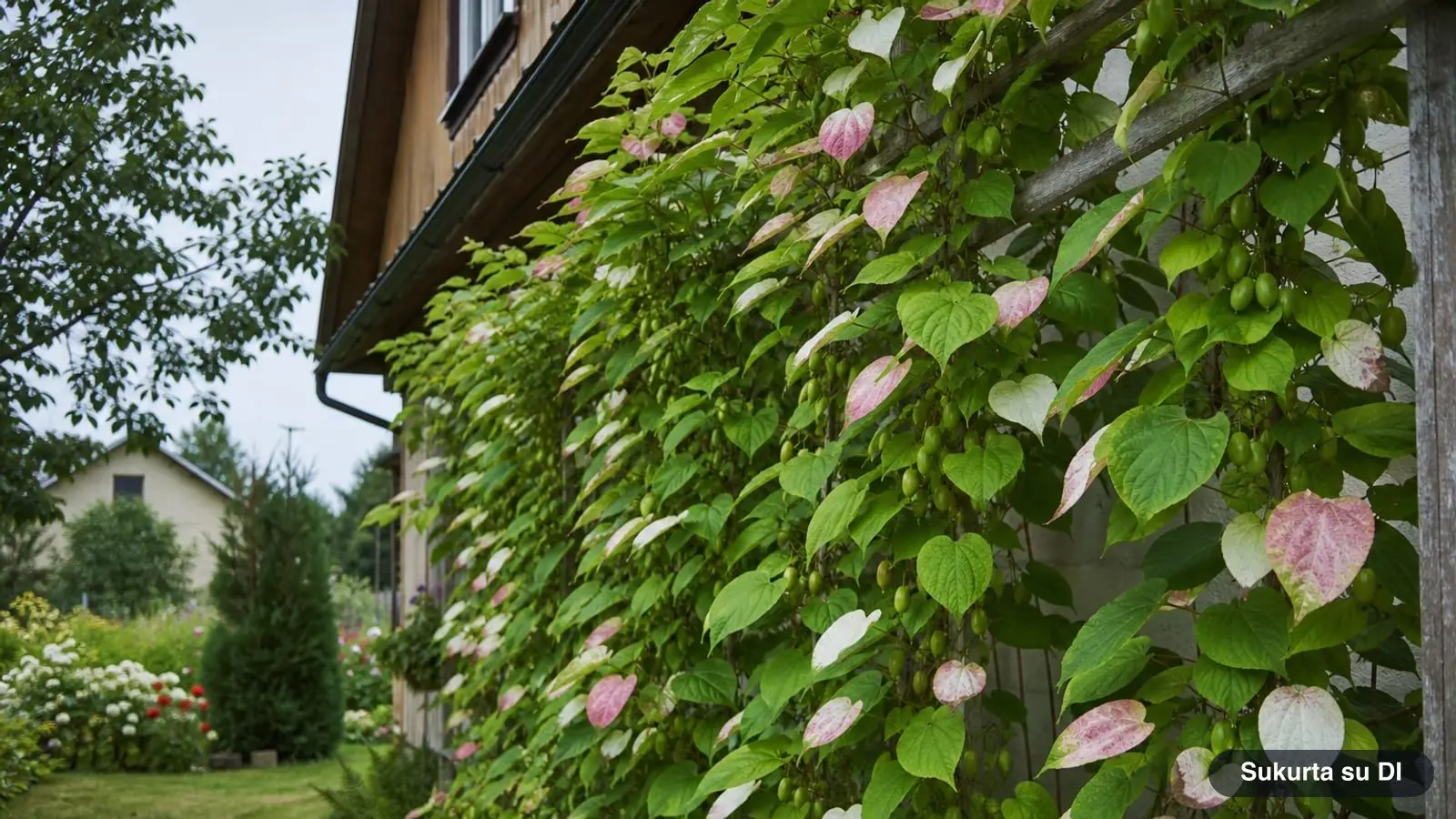
- Variegated kiwi vine (kolomikta) – the most cold-hardy species with pink and white leaves
- Hardy kiwi (arguta) produces larger, sweet fruits eaten with the skin
- Most kiwi vines are dioecious – female plants need a male nearby
- Kiwi vines require sturdy supports, frost protection, and defense against cats
- Kiwi berries ripen in late summer to autumn and are eaten fresh
- Hardy kiwi, standard kiwi, and other vining berries: a comparison
This article is part of the 77.today berries guide, prepared by the 77.today editors from the sources listed at the end.
Actinidia (kiwi vines) are climbing vines increasingly grown in home gardens worldwide. They are valued for two main reasons: beautiful leaves variegated with pink and white spots, and sweet fruits that look like miniature kiwis. The two most commonly grown cold-hardy species are the variegated kiwi vine (kolomikta) and the hardy kiwi (arguta). In this section of our global berry guide, we cover how they differ, why you usually need both male and female plants, how to plant and care for them, what to protect them from, and when to harvest the fruits.
| Species | Variegated kiwi vine (Actinidia kolomikta), hardy kiwi (A. arguta) |
|---|---|
| Family | Actinidiaceae |
| Origin | Russian Far East, Japan, Korea, China |
| Plant | Climbing vine: kolomikta – up to 26–33 ft (8–10 m), hardy kiwi – up to 100 ft (30 m) |
| Cold hardiness | Kolomikta – down to −40°F (−40°C), hardy kiwi – down to −30°F (−34°C) |
| Blooms | Early to mid-summer |
| Fruits | Kolomikta – 0.07–0.17 oz (2–5 g), hardy kiwi – 0.6–1.2 in (1.5–3 cm), eaten skin-on |
| Gender | Mostly dioecious, some self-pollinating varieties exist |
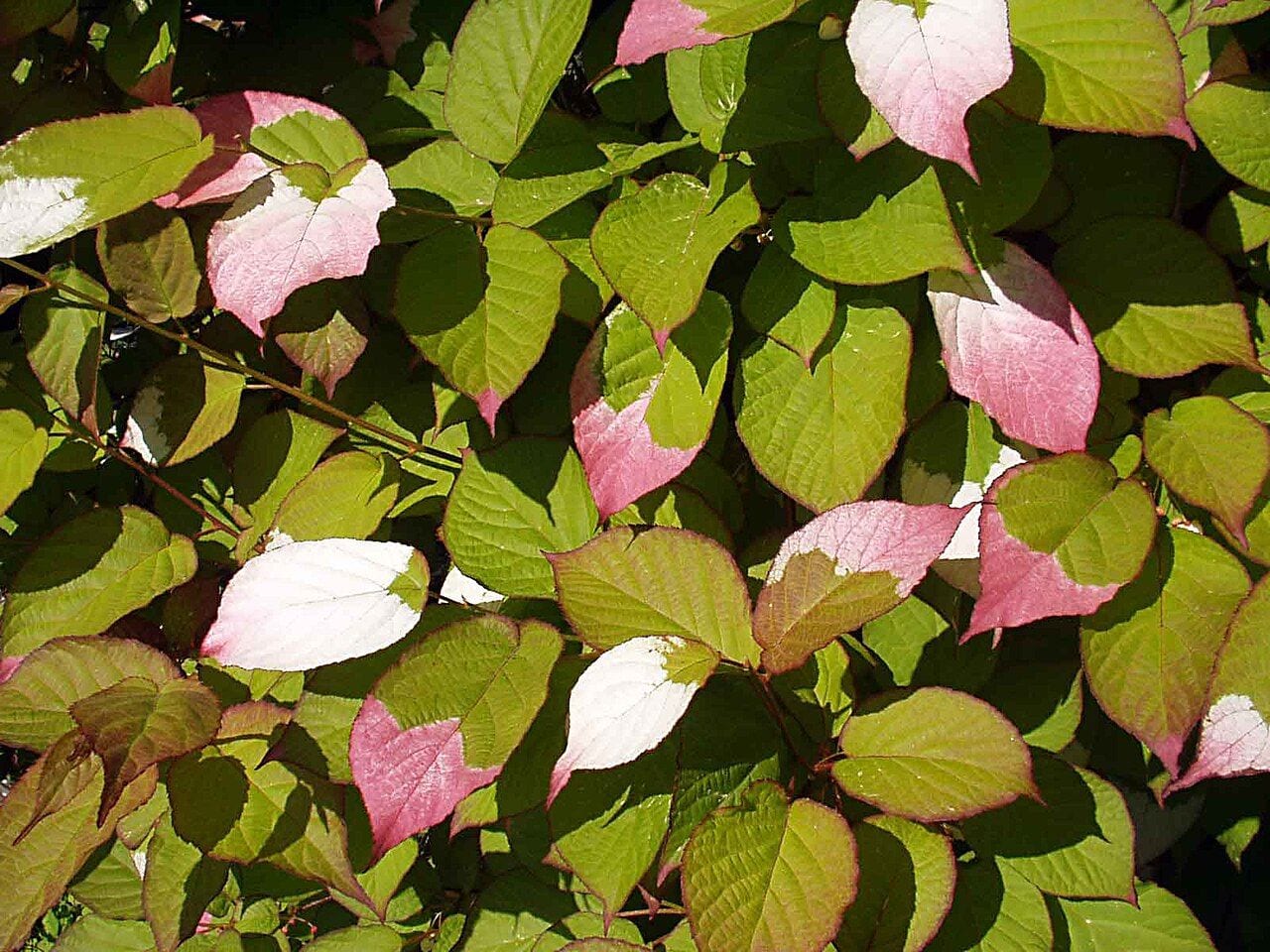
Variegated kiwi vine (kolomikta) – the most cold-hardy species with pink and white leaves
The variegated kiwi vine, also known as kolomikta or Arctic beauty kiwi, grows naturally in the mixed temperate forests of the Russian Far East, Korea, Japan, and China. It is a very long-lived, deciduous woody vine that can reach 26–33 feet (8–10 m) in length and, under favorable conditions, live for 80–100 years. It is the most cold-hardy species in the Actinidia genus, surviving temperatures down to at least −40°F (−40°C, USDA zones 3–8), although it can be somewhat sensitive to late spring frosts.
Its most interesting feature is the random pink and white variegation on its leaves, which is believed to reduce the plant's attractiveness to herbivores. Because of these striking leaves, the variegated kiwi vine is frequently planted along pergolas, fences, and house walls as an ornamental climber. The name "kolomikta" originates from the indigenous language of the Amur region.
Hardy kiwi (arguta) produces larger, sweet fruits eaten with the skin
The hardy kiwi, or tara vine, is a vigorous climber that can grow up to 100 feet (30 m) long, featuring large leaves up to 6.3 inches (16 cm) in length. It grows naturally in the Russian Far East, Japan, Korea, and northern China, and is widely cultivated across temperate climate zones. Horticultural sources indicate it can withstand cold down to −30°F (−34°C, USDA zones 4–8), while some records suggest even greater hardiness if temperatures drop gradually.
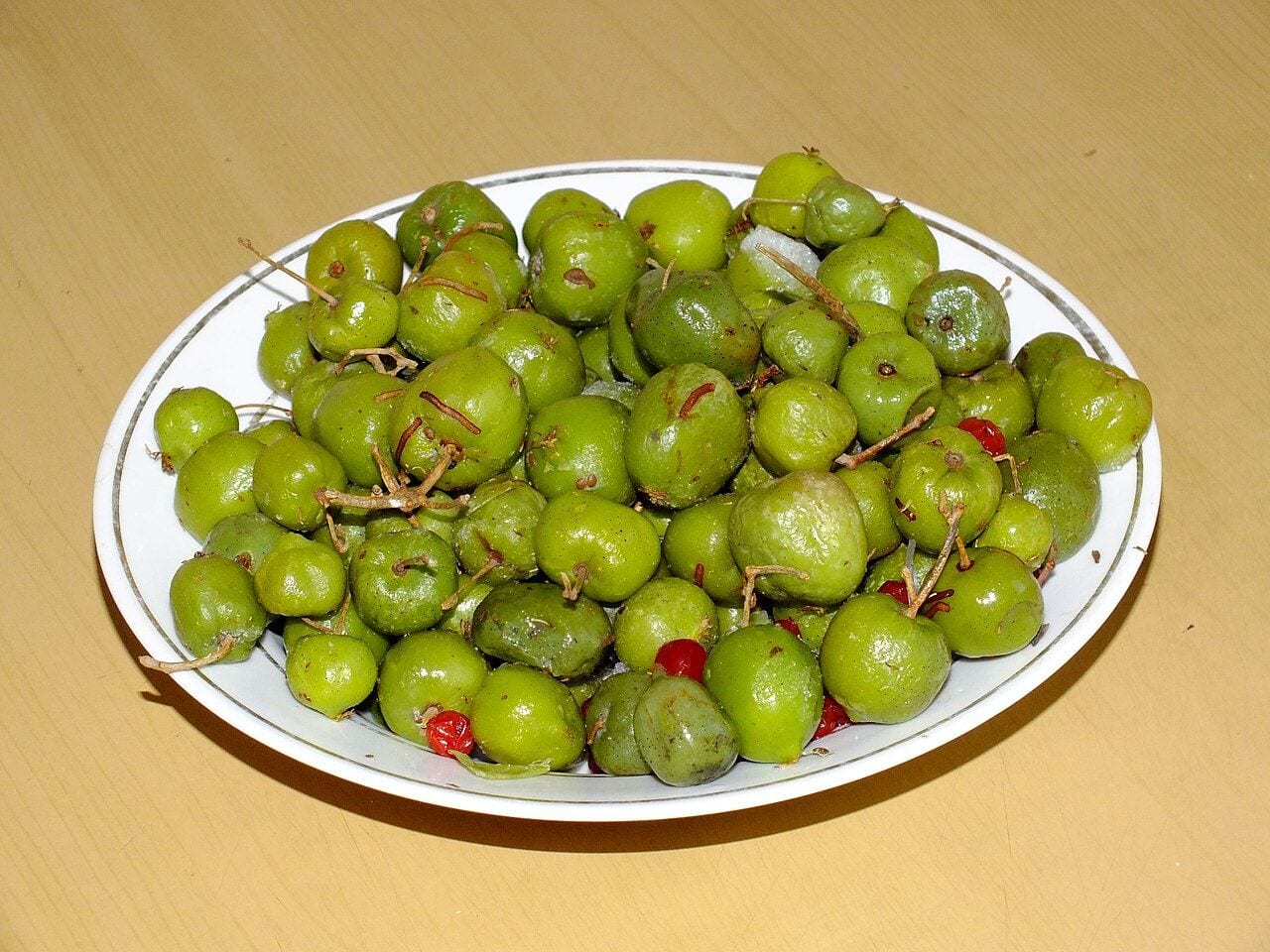
The fruits of the hardy kiwi are 0.6–1.2 inches (1.5–3 cm) long, oblong, and resemble standard kiwis but without the fuzzy skin. They are smooth, green, brownish, or purplish, sometimes with a red blush. Often sweeter and more intensely flavored than grocery store kiwis, they are eaten whole with the skin and are commonly called "kiwi berries" or "mini kiwis." For some varieties, it is beneficial to harvest them after the first light frost, when the fruits soften even more.
Most kiwi vines are dioecious – female plants need a male nearby
Actinidia species are usually dioecious, meaning male and female flowers grow on separate plants. Only the female plants produce fruit, and they require a male plant for pollination. Therefore, wild vines and most cultivated varieties need a pollinator. When planting, it is crucial to know which plants are male and which are female.
A convenient exception is self-pollinating kiwi vines. The most commonly sold self-pollinating variety is the Japanese 'Issai', a hybrid of the hardy kiwi and the silver vine (Actinidia polygama), along with its descendant 'Super Issai'. These set fruit without a separate male plant, making them ideal for small gardens. Various fruit-bearing varieties of the variegated kiwi vine have also been bred internationally for home orchards.
Kiwi vines require sturdy supports, frost protection, and defense against cats
As a vigorous climber, the kiwi vine needs a sturdy support structure: a pergola, heavy-duty trellis, wire system, or gazebo. For the first three years, the variegated kiwi vine grows rapidly, but it typically only begins to bloom around its fifth year, flowering in early summer for up to 20 days. The hardy kiwi requires a frost-free growing season of about 150 days. Late spring frosts are its biggest threat: young shoots can freeze, and if the blossoms are damaged by frost, there will be no fruit that year.
An unexpected enemy of kiwi vines is cats. The variegated kiwi vine is even more attractive to them than catnip or valerian, and felines can severely chew or break young plants. Because of this, it is highly recommended to surround young kiwi vines with protective wire fencing.
Kiwi berries ripen in late summer to autumn and are eaten fresh
The berries of the variegated kiwi vine are up to 1.2 inches (3 cm) long and 0.6 inches (1.5 cm) in diameter. When ripe, they are sweet, fragrant, and soft; sources note they weigh around 0.07–0.17 oz (2–5 g). The fruits of both species are eaten fresh straight off the vine, added to desserts, salads, and smoothies, or cooked into jams, preserves, and compotes. Kiwi berries are exceptionally rich in vitamin C, often ranking among the highest vitamin C-containing fruits grown in temperate gardens.
Hardy kiwi, standard kiwi, and other vining berries: a comparison
Hardy kiwis and kolomikta are close relatives of the standard supermarket kiwi, but the species grown in cooler climates are significantly more cold-hardy and produce smaller, smooth-skinned fruits. The table below shows how they compare to other vining garden berries.
| Plant | Height | Fruits | Key Feature |
|---|---|---|---|
| Variegated kiwi vine (Kolomikta) | up to 26–33 ft (8–10 m) | 0.07–0.17 oz (2–5 g), sweet, fragrant | Pink and white leaves, highly attractive to cats |
| Hardy kiwi (Arguta) | up to 100 ft (30 m) | 0.6–1.2 in (1.5–3 cm), hairless | Large leaves, fruits sweeter than standard kiwi |
| Schisandra (Magnolia vine) | 26–30 ft (8–9 m), up to 82 ft (25 m) | Red berries in clusters | Leaves smell like lemon |
The variegated kiwi vine is valued not only for its fruit but also as one of the most ornamental climbers due to its striking foliage.
Ripe kiwi berries soften quickly, so they must be harvested on time and consumed within a few days or frozen. Other popular vining garden berries include schisandra berries and grapes.
Frequently asked questions
Why is my kiwi vine not producing fruit?
The most common reasons are the lack of a male pollinator, the plant being too young, or late spring frosts damaging the blossoms. Most kiwi vines are dioecious, requiring a male plant nearby. Kolomikta vines typically only begin to bloom around their fifth year.
What is a self-pollinating kiwi vine?
It is a variety that can set fruit without a separate male plant. The most well-known is the Japanese 'Issai', a hybrid of hardy kiwi and silver vine, along with its descendant 'Super Issai'.
What is the difference between kolomikta and hardy kiwi?
Kolomikta (variegated kiwi) is a smaller vine reaching 26–33 feet (8–10 m) with striking pink and white leaf variegation, hardy to −40°F (−40°C), producing small fruits weighing 0.07–0.17 oz (2–5 g). Hardy kiwi (arguta) is a vigorous vine up to 100 feet (30 m) with large leaves and larger, very sweet 0.6–1.2-inch (1.5–3 cm) fruits eaten with the skin.
Can you eat hardy kiwi fruits with the skin on?
Yes. Hardy kiwi fruits look like miniature kiwis but lack the fuzzy skin, so they do not need to be peeled. They are often sweeter and more intensely flavored than standard grocery store kiwis.
Why do cats chew on kiwi vines?
Kolomikta vines contain compounds that are even more attractive to cats than catnip or valerian. Felines can severely chew or break young plants, so it is highly recommended to protect new vines with wire fencing.
When should you harvest kiwi berries?
The fruits ripen in late summer to autumn when they soften and become sweet. For some hardy kiwi varieties, it is beneficial to harvest them after the first light frost, which softens the fruits even further.
Log in to comment
No comments yet. Be the first.