Poisonous Berries: How to Identify Them and What to Do
- If someone ingests unknown berries, contact your local poison control center immediately; they are usually available 24/7.
- Mezereon berries are highly toxic, with just 10 to 12 berries considered a lethal dose for humans.
- Every part of the yew tree is poisonous except the red fleshy aril, but the seed inside is extremely dangerous.
- Medical professionals advise against inducing vomiting at home; instead, seek emergency medical help right away.
- Birds eat many toxic berries without harm, so bird activity does not mean a berry is safe for human consumption.
- Call Poison Control Immediately and Do Not Induce Vomiting
- The Most Poisonous Berries: Where They Grow and What Makes Them Toxic
- Just 10 to 12 Mezereon Berries Are Considered a Lethal Dose
- Everything on the Yew is Toxic Except the Red Aril, and the Seed is the Most Dangerous
- Lily of the Valley, Herb Paris, and Baneberry Grow in the Same Forests as Bilberries
- Spindle, Bittersweet Nightshade, and Deadly Nightshade Fruits Attract Children with Bright Colors
- Snowberry, Red Elderberry, and Mistletoe are Common in Parks and Gardens
- The Safest Rule is Never to Eat Berries You Cannot Identify
This article is part of the 77.today berries guide, prepared by the 77.today editors from the sources listed at the end.
In forests, parks, and even near playgrounds, there are many plants with brightly colored berries that look delicious but are highly toxic. According to poison control centers, the summer and fall months always see a spike in cases where people ingest unknown plants, mushrooms, or berries, with young children being especially drawn to the colorful fruits. In this section of our wild berry guide, we cover the most dangerous poisonous berries, how to identify them, what they are commonly confused with, and what to do if you suspect poisoning.
| Poisoning assistance | Local poison control center (available 24/7) |
|---|---|
| Emergency help | Local emergency services (e.g., 911, 112, 999) |
| Most dangerous | mezereon, yew, lily of the valley, herb paris, baneberry, spindle, deadly nightshade |
| Highest risk period | late summer and fall, when berries ripen |
| Golden rule | if you do not know it, do not eat it |
Call Poison Control Immediately and Do Not Induce Vomiting
If a child or adult has eaten unknown berries, toxicology specialists advise calling your national poison control hotline immediately—these services are typically available 24 hours a day. If the person is already feeling unwell—experiencing vomiting, dizziness, breathing difficulties, or altered consciousness—call emergency services right away. Be sure to take a branch of the plant or a few berries with you to the hospital: this will help medical staff quickly identify what was consumed.
Pediatric intensive care specialists, when discussing yew berry poisonings, strongly recommend against using any home remedies. For instance, do not try to induce vomiting, as it can be ineffective or even increase the risk of complications. Even if a child shows no immediate symptoms after eating yew berries, they must be observed in a hospital setting for at least 24 hours, as life-threatening symptoms can develop later. Poison control experts add that while a very small amount of a plant might sometimes pose little danger, consuming larger quantities can lead to severe poisoning, so it is always worth consulting a professional.
The Most Poisonous Berries: Where They Grow and What Makes Them Toxic
| Plant | Berries | Where it grows | Toxic parts |
|---|---|---|---|
| Mezereon | bright red, 0.3–0.5 inches (7–12 mm), attached to branches | shady deciduous and mixed forests, slopes | whole plant, especially berries |
| European yew | red fleshy aril containing a seed | parks, gardens, landscaping near schools | everything except the red aril |
| Lily of the valley | spherical, red, 0.2–0.3 inches (5–7 mm) | all forest types, especially deciduous | all plant parts |
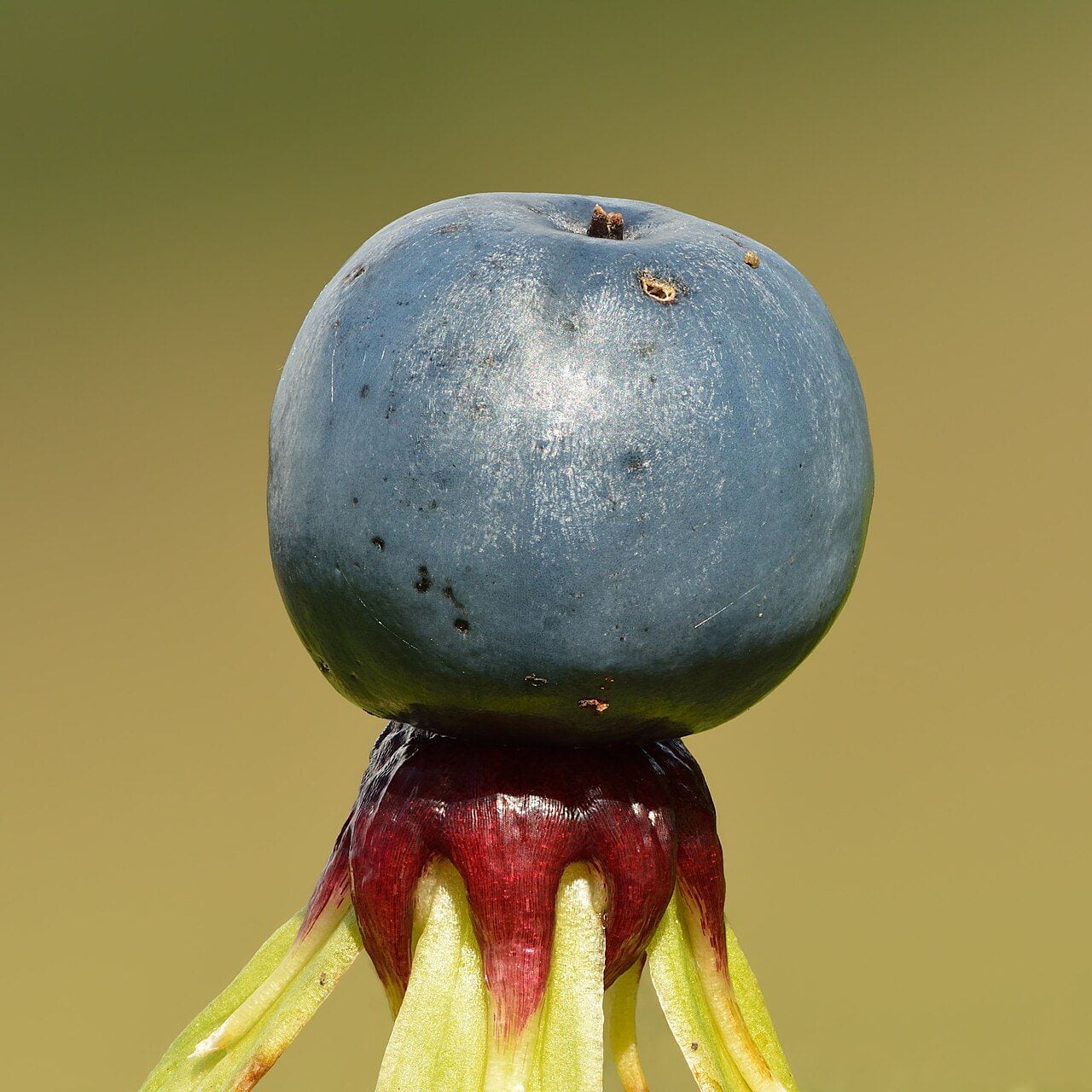
| Herb paris | single blue-black berry in the center of a leaf whorl | deciduous and mixed forests, shady slopes | all parts, especially berries and rhizomes |
| Baneberry | black, glossy, 0.4 inches (1–1.1 cm), with red juice | deciduous and mixed forests, shade | whole plant, especially berries |
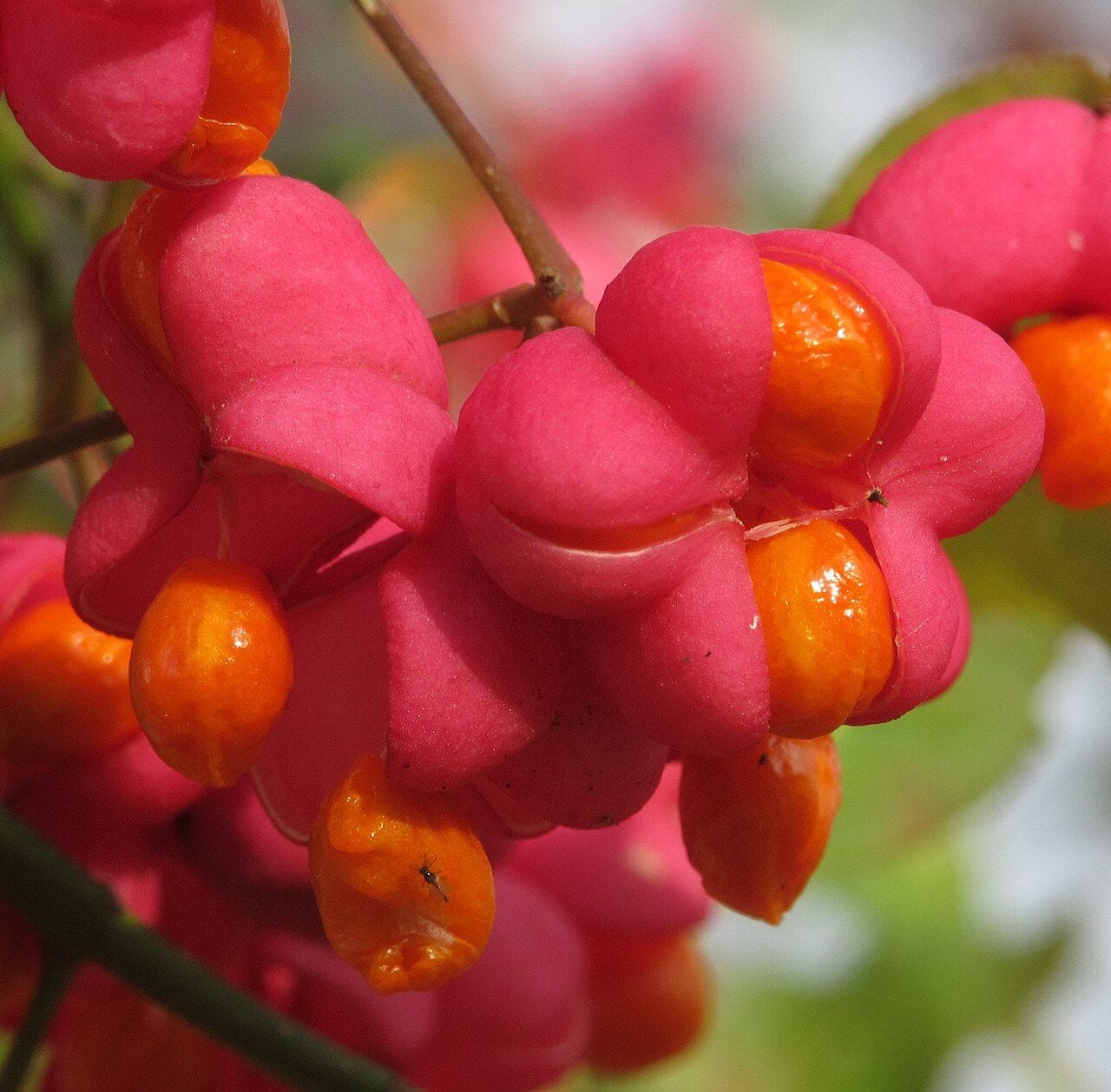
| European spindle | pink capsules with orange seeds | forests, riverbanks, parks | fruits |
| Bittersweet nightshade | elongated red, 0.3–0.5 inches (0.8–1.2 cm) | damp forests, shrubs, banks, ditches | berries |
| Deadly nightshade | cherry-like | grown as a medicinal or ornamental plant | leaves and berries |
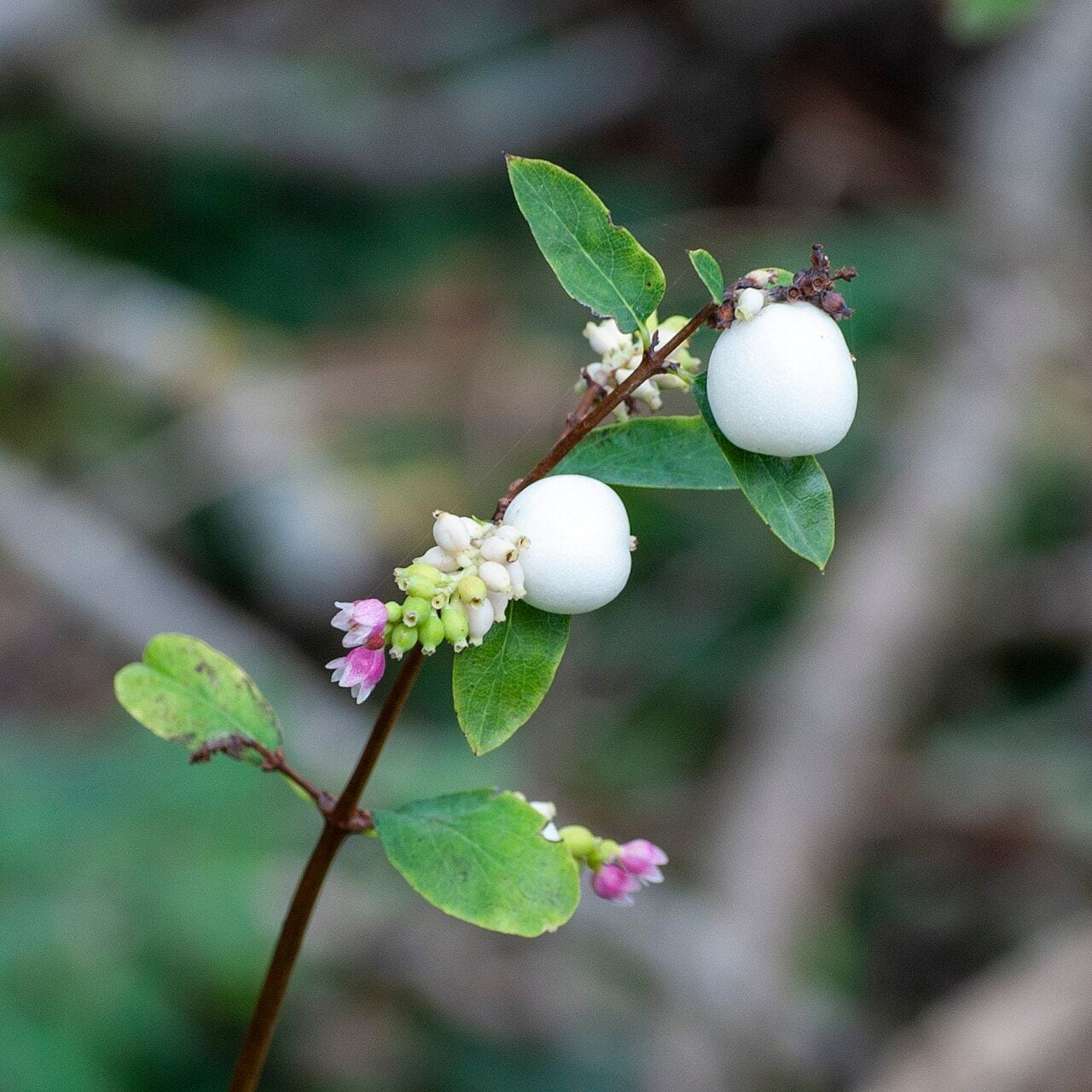
| Snowberry | snow-white, spongy | hedges, parks, homesteads | berries and shrub |
| Red elderberry | red in clusters, midsummer | mixed forests, stream banks | stems, roots, leaves, unripe berries |
| European mistletoe | white false berries | on branches of birch, poplar, apple trees | whole plant |
Just 10 to 12 Mezereon Berries Are Considered a Lethal Dose
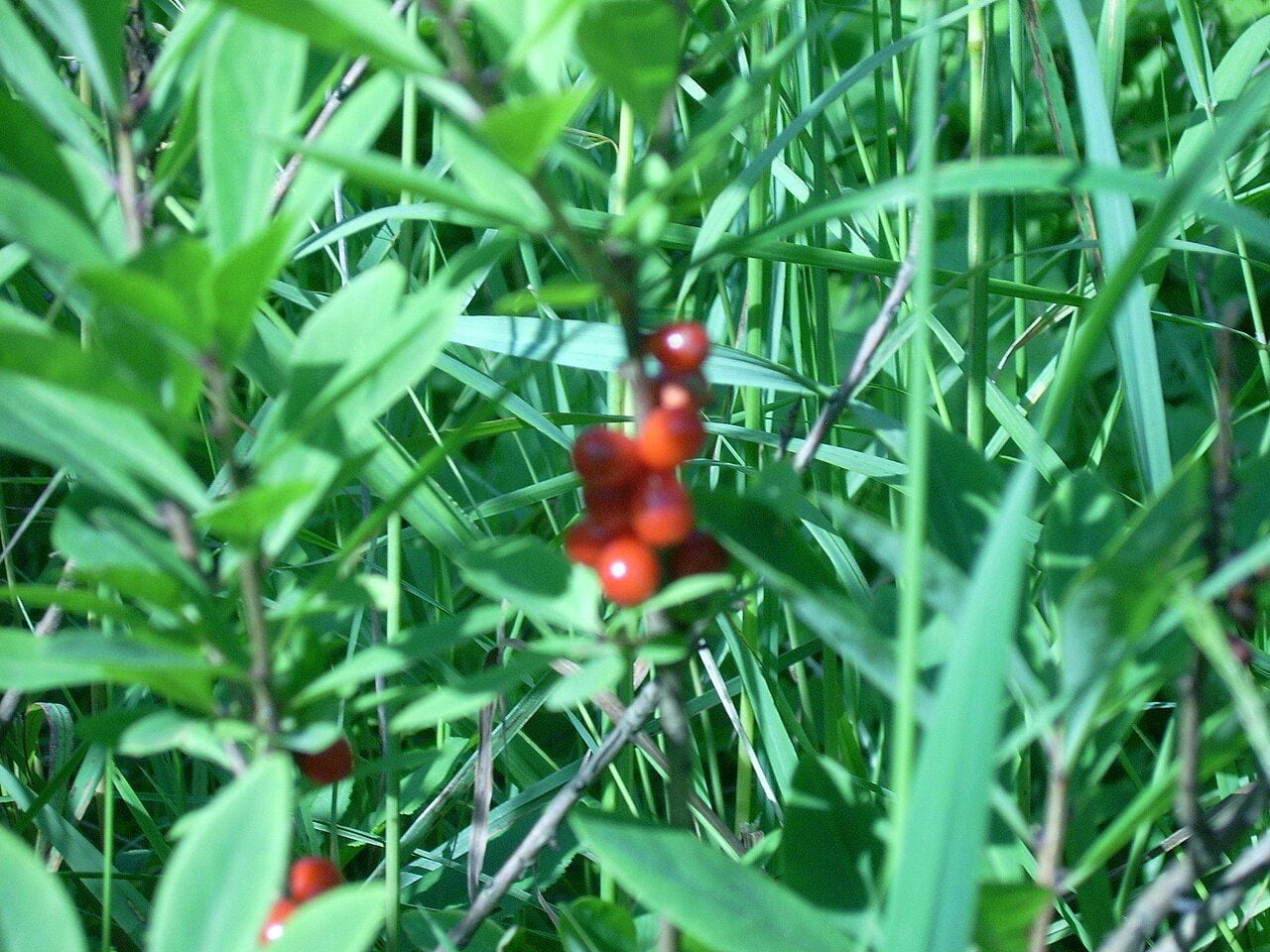
Mezereon (Daphne mezereum) is a 1.5–5 ft (40–150 cm) tall shrub found in many cool temperate regions. It grows in shady, damp deciduous and mixed forests, as well as on shrubby river and lake slopes. In early spring, before the trees even leaf out, fragrant purplish-pink flowers bloom directly on the bare branches. By summer, bright red, juicy drupes ripen tight against the stems. The entire plant is highly poisonous due to the presence of mezerein and daphnin. Chewing a twig will cause the lips and mouth to swell, and the fruits are exceptionally dangerous: 10 to 12 berries are considered a lethal dose, with children being particularly vulnerable. Even touching fresh twigs can cause severe skin rashes in sensitive individuals.
Everything on the Yew is Toxic Except the Red Aril, and the Seed is the Most Dangerous
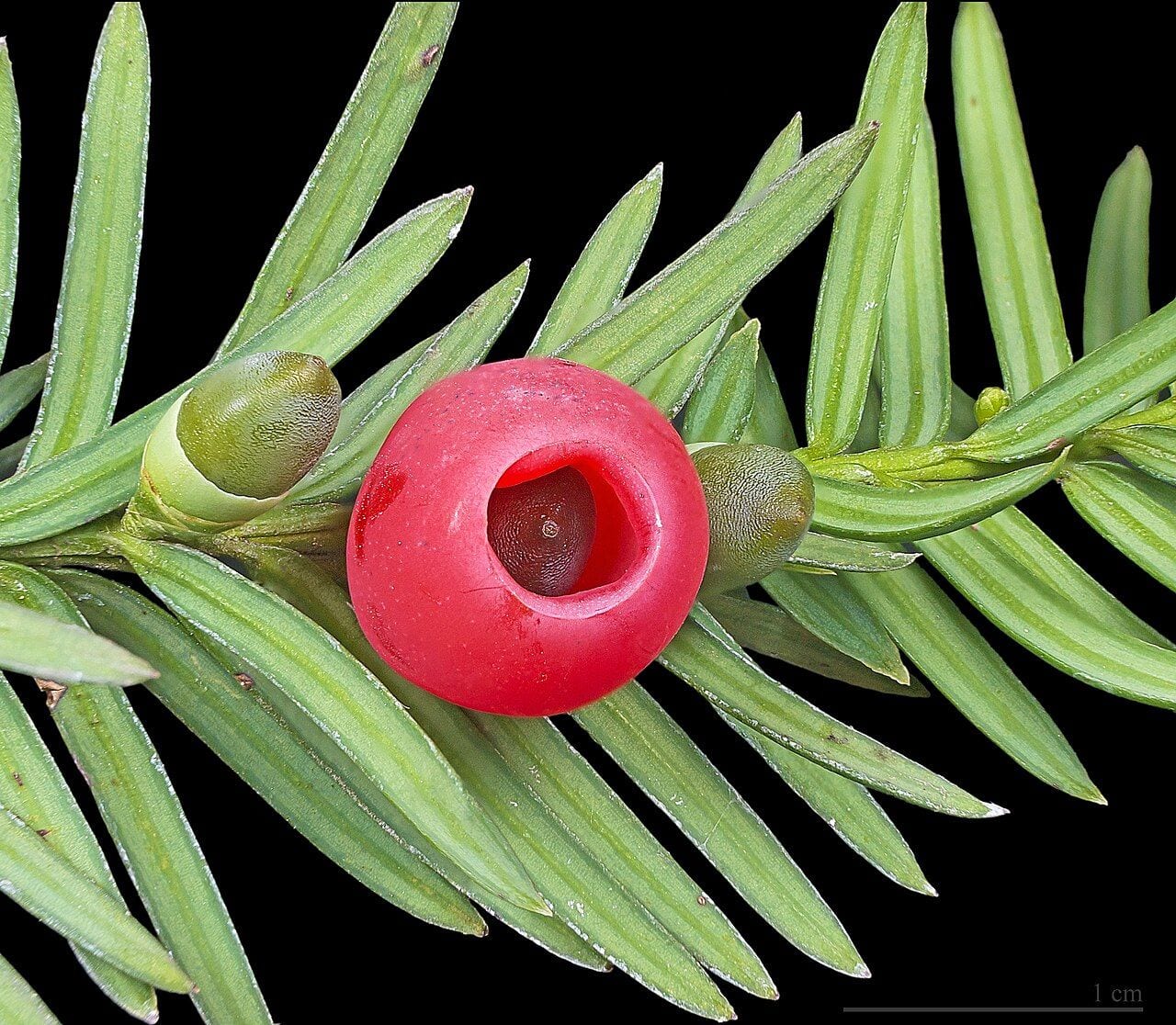
The European yew (Taxus baccata) is frequently grown in parks, gardens, and landscaping, including near schools and playgrounds. Its red "fruits" look deceptively like currants or lingonberries. Every part of the plant is highly toxic except for the sweet, red, fleshy aril. However, the seed hidden inside that aril contains high levels of poisonous alkaloids, and the needles hold even more toxins. The primary poison, taxine, severely damages the heart's conduction system and the digestive tract.
Medical centers frequently treat young children who have tasted yew berries; with prompt intervention, the most dangerous consequences can usually be avoided. The first symptoms—vomiting, nausea, and weakness—typically appear within 1 to 3 hours. In severe cases, the heart rhythm can be disrupted, accompanied by a sudden drop in blood pressure. There is no specific antidote. You can read more about this tree in the yew section of our tree guide.
Lily of the Valley, Herb Paris, and Baneberry Grow in the Same Forests as Bilberries
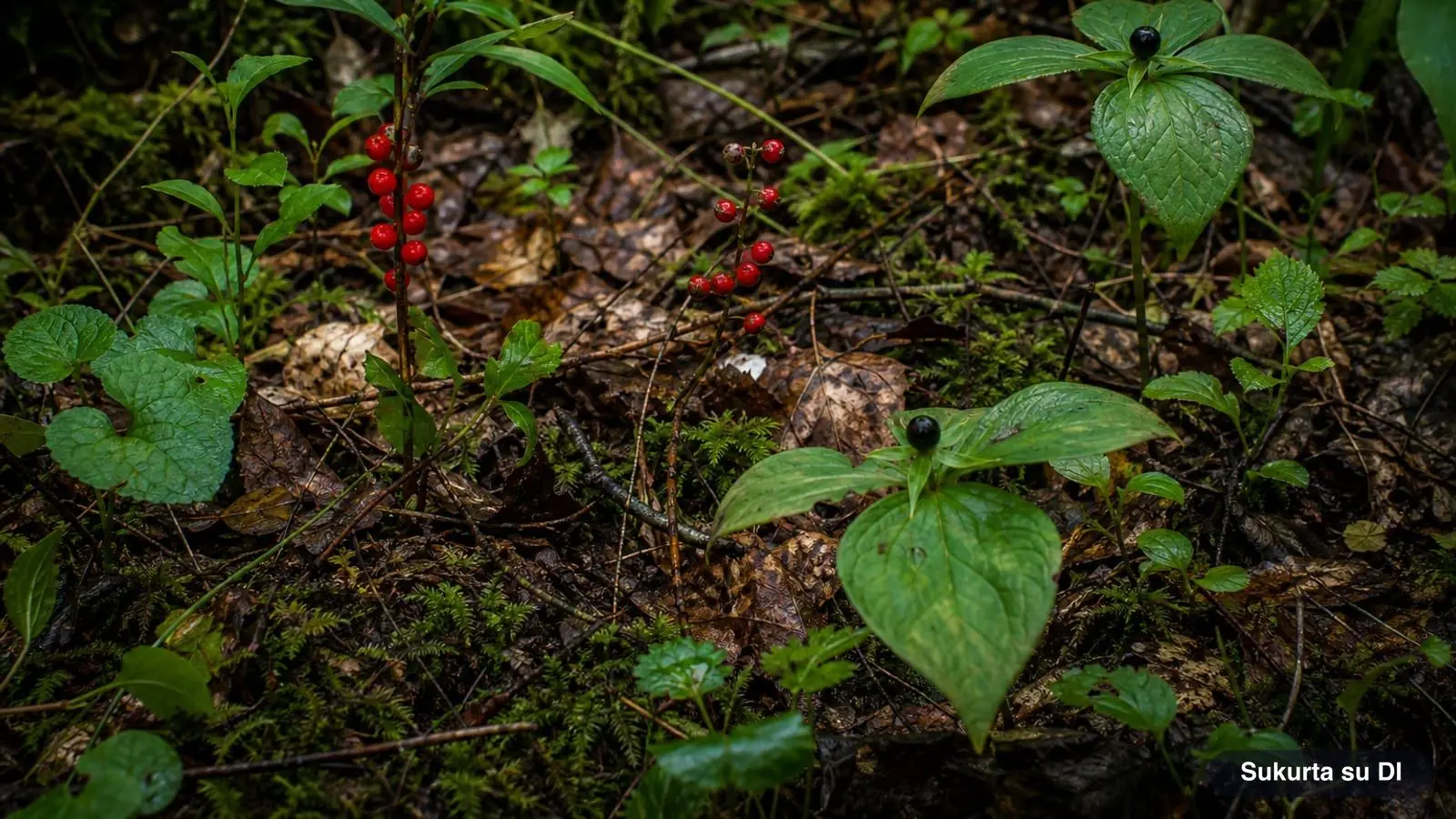
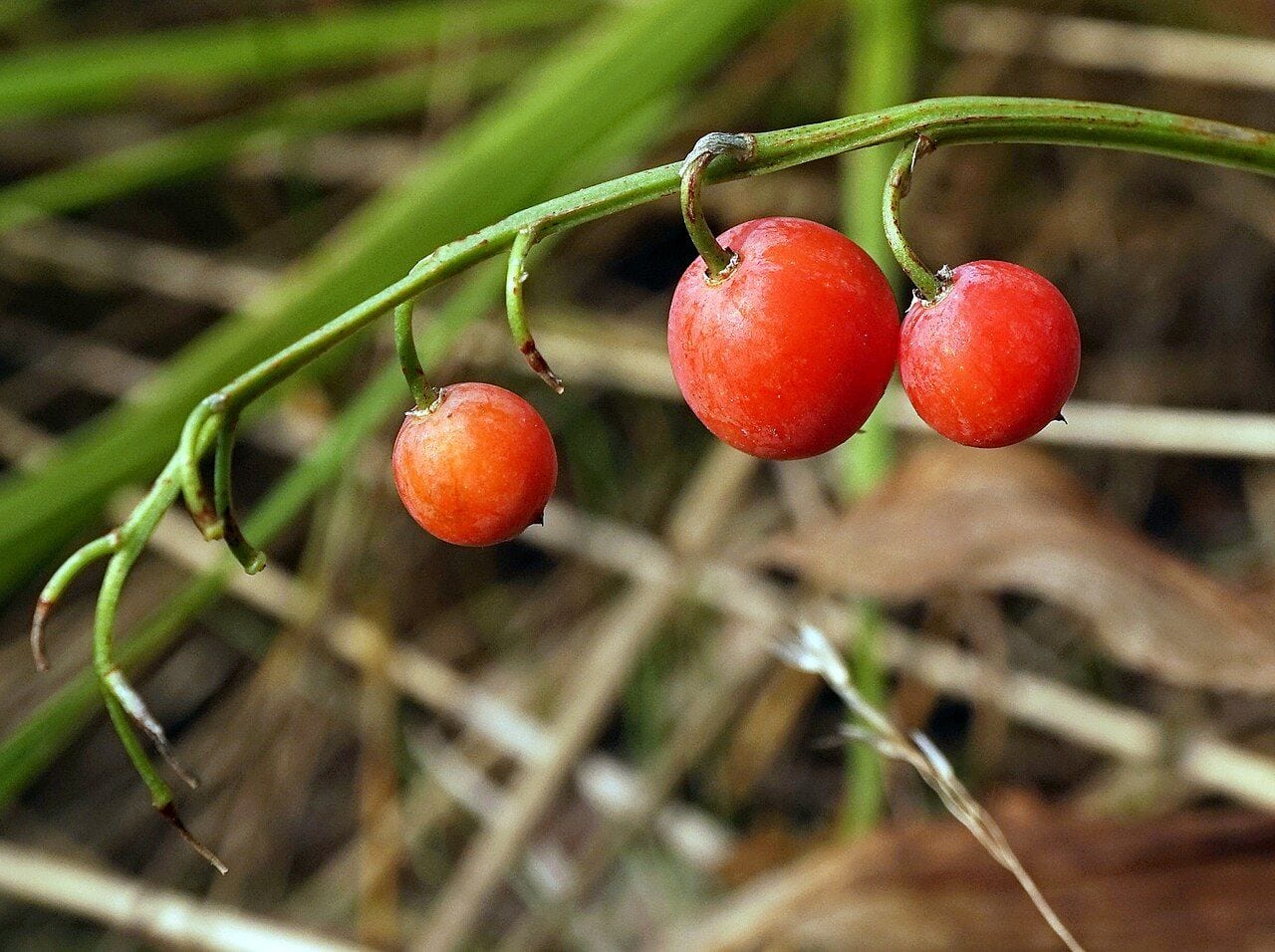
Lily of the valley (Convallaria majalis) grows abundantly in many woodland areas, particularly deciduous forests. In late spring, it blooms with fragrant white bell-shaped flowers, and by late summer to early fall, it produces spherical, red berries measuring 0.2–0.3 inches (5–7 mm). The plant contains around 38 different cardiac glycosides, making every part of it—including the bright red berries that tempt children—highly poisonous.
Herb paris (Paris quadrifolia) is a common sight in deciduous and mixed forests. It is easy to identify: at the top of an upright, 8–12 inch (20–30 cm) stem sit four cross-like leaves. In late spring, a single greenish flower blooms in the center, which later matures into a single blue-black, multi-seeded berry. All parts of the plant, especially the rhizomes and the berry, are toxic to humans, particularly children. The plant emits a foul odor, and poisonings are rare because the berry tastes repulsive and is hard to confuse with a bilberry, but it remains a hazard for small children.
Baneberry (Actaea spicata) grows as solitary specimens in shady deciduous and mixed forests. It is a 12–28 inch (30–70 cm) tall plant with large, bi-ternate leaves and small flowers in a cluster. By mid-to-late summer, it produces black, glossy, 0.4 inch (1–1.1 cm) berries filled with red juice. The entire plant, especially the berries and rhizomes, is toxic and acts as a strong skin irritant.
Spindle, Bittersweet Nightshade, and Deadly Nightshade Fruits Attract Children with Bright Colors
European spindle (Euonymus europaeus) is a 16–23 ft (5–7 m) shrub or small tree found in forests, along riverbanks, and frequently planted in parks. In the fall, it is covered in bright pink, four-lobed capsules from which seeds with orange arils dangle. The fruits are toxic, containing cardiac glycosides and other harmful substances. Poisoning can cause liver and kidney damage, and can even be fatal. Small children are the most common victims, drawn in by the vivid colors.
Bittersweet nightshade (Solanum dulcamara) is a 20–60 inch (50–150 cm) perennial toxic vine with a woody base, growing in damp forests, thickets, near water bodies, and in ditches. It blooms with purple flowers in the summer and later produces elongated, 0.3–0.5 inch (0.8–1.2 cm) bright red berries. The berries are poisonous to humans and livestock, and their familiar, tomato-like appearance makes them dangerous to children. Deadly nightshade (Atropa belladonna) is sometimes grown as a medicinal or ornamental plant; its leaves and glossy black berries are extremely toxic due to atropine and other alkaloids. Eating the berries can result in fatal poisoning. Its cherry-like appearance makes it particularly dangerous, as it looks appetizing but is highly harmful to humans.
Snowberry, Red Elderberry, and Mistletoe are Common in Parks and Gardens
Snowberry (Symphoricarpos albus) is a shrub native to North America that grows up to 5 ft (1.5 m) tall and is widely planted in hedges and parks. In the fall, it produces snow-white berries with a spongy flesh. Both the berries and the shrub are toxic to humans and can cause severe vomiting. Red elderberry (Sambucus racemosa) is a shrub up to 20 ft (6 m) tall that produces clusters of red berries as early as midsummer. It grows in mixed forests and along stream banks. The stems, roots, leaves, and unripe berries are toxic and can cause intense nausea. While cooked berries are consumed in some regions, it is best to avoid them entirely. The black elderberry, whose berries are edible only when cooked, is described in the separate elderberry section.
European mistletoe (Viscum album) is an evergreen, semi-parasitic shrub that grows on the branches of birch, poplar, apple, and other trees. It is common in many temperate regions. Its fruits are white false berries, and its leaves stay green all winter. Mistletoe is poisonous: it contains the toxic protein viscumin, and concentrated mistletoe products, such as strong decoctions, can even be fatal.
The Safest Rule is Never to Eat Berries You Cannot Identify
Medical professionals suggest treating unknown plants the same way you would treat wild mushrooms: if you do not know exactly what it is, assume it is poisonous. Children should be taught from a young age never to taste unfamiliar berries or leaves. When planting yews, spindles, or snowberries in your yard, consider whether small children will be playing nearby. Thrushes and other birds eat many toxic berries because they are immune to the poisons, so bird activity never indicates that a berry is safe for a human. If you are unsure whether a berry is edible, compare it with the descriptions of safe berries in this guide, such as bilberries, lingonberries, wild strawberries, guelder rose, or rowan.
Frequently asked questions
What should I do if a child eats an unknown berry?
Call your local poison control center or emergency services immediately. Bring a branch or a sample of the berries with you to the hospital. Medical professionals strongly advise against trying to induce vomiting at home.
Which wild berries are the most poisonous?
Some of the most dangerous include the berries of mezereon, yew, lily of the valley, herb paris, baneberry, European spindle, and deadly nightshade.
Are all red berries in the woods poisonous?
Not all, but many highly toxic berries are red, including mezereon, lily of the valley, yew, bittersweet nightshade, and red elderberry. Edible red berries include cranberries, wild strawberries, and raspberries. If you are not 100% sure of the identification, do not eat it.
What is herb paris?
Herb paris (Paris quadrifolia) is a woodland plant characterized by four cross-like leaves and a single blue-black berry in the center. All parts of the plant, especially the rhizomes and the berry, are toxic.
Are yew berries poisonous?
Yes. The only non-toxic part is the sweet red aril (the fleshy cup), but the seed inside it and the plant's needles are highly poisonous. Symptoms typically appear within 1 to 3 hours and can include severe heart arrhythmias.
Is it safe to eat berries that birds are eating?
No. Many birds, such as thrushes, are immune to the toxins found in berries that are deadly to humans. They eat them and help disperse the seeds. A bird eating a berry is never an indicator that it is safe for human consumption.
Sources
- Wikipedia: Daphne mezereum
- Wikipedia: Paris quadrifolia
- Wikipedia: Euonymus europaeus
- Wikipedia: Sambucus racemosa
- Wikipedia: Viscum album
- Wikimedia Commons: Mezereon berries (Whitefish Island) 3.JPG (CC BY-SA 3.0)
- Wikimedia Commons: Convallaria majalis 2.jpg (CC BY-SA 3.0)
- Wikimedia Commons: Paris quadrifolia fruit - Keila.jpg (CC BY-SA 4.0)
- Wikimedia Commons: Euonymus europaeus 2 RF.jpg (CC BY 4.0)
- Wikimedia Commons: Taxus baccata MHNT.jpg (CC BY-SA 4.0)
- Wikimedia Commons: Buds and berries, Symphoricarpos albus.jpg (CC BY-SA 4.0)
Log in to comment
No comments yet. Be the first.