Goji Berries: Growing Wolfberry and What the Research Shows
- Goji berries are the fruit of the wolfberry (Lycium barbarum), a plant in the nightshade family.
- It is a 3–10 ft (1–3 m) shrub with arching, often thorny branches, widely grown for hedges and its nutritious berries.
- In the Northern Hemisphere, it blooms from June to September, and berries ripen from August to October; the plant is self-fertile.
- Many health claims about goji berries are unsubstantiated, and high-quality clinical evidence is lacking.
- Goji berries can interact with the metabolism of certain medications, such as warfarin, so consult a doctor if you take them.
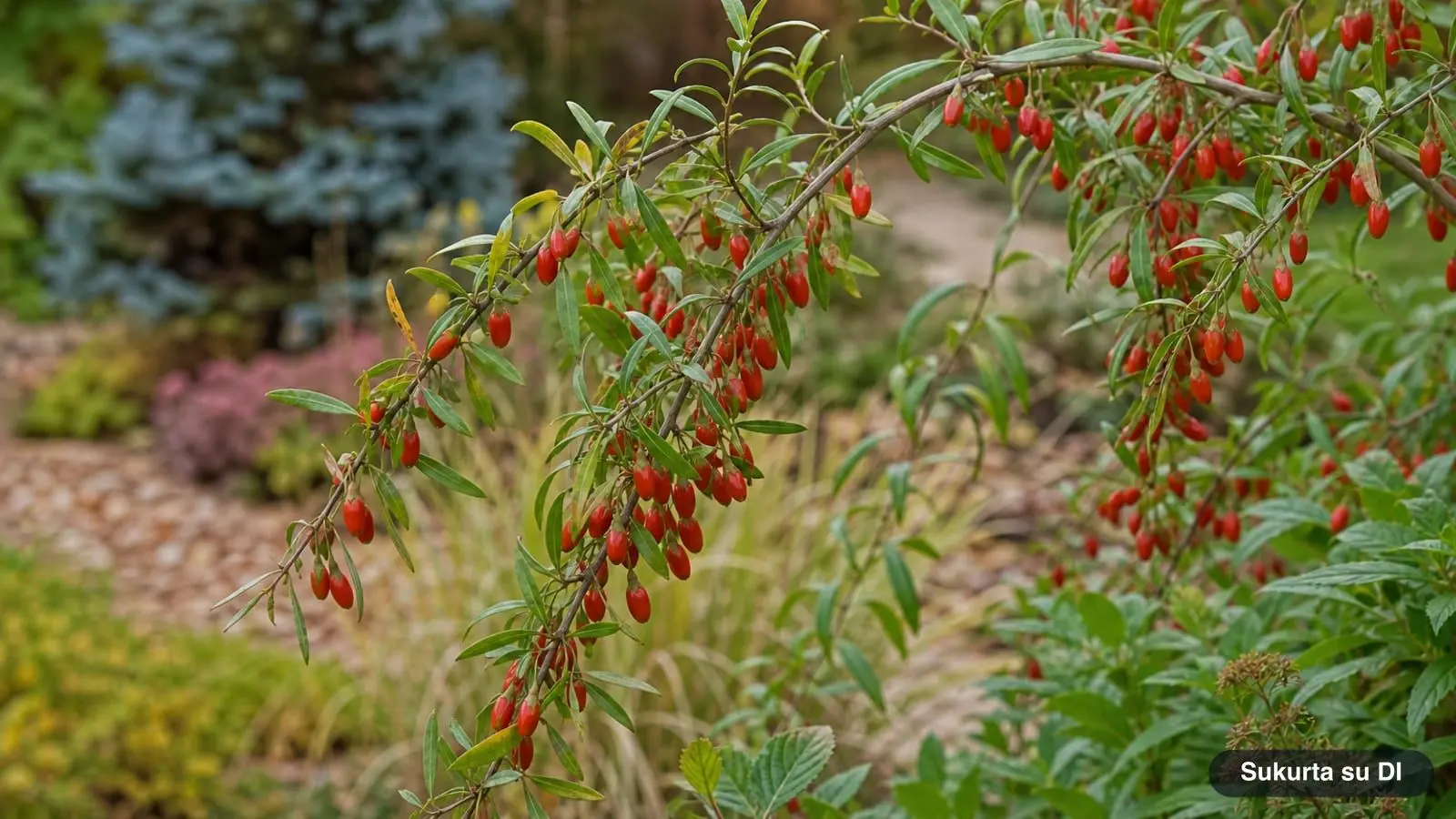
- Goji berries are the fruit of the wolfberry, a nightshade family shrub
- Growing wolfberry in hedges and home gardens
- Many claims about goji benefits are unsubstantiated—high-quality clinical evidence is lacking
- Goji can interact with medications, and pesticide residues are found in commercial products
- Dried goji berries are eaten like raisins, while fresh ones are enjoyed like other garden berries
- Goji, ground cherry, mulberry, and hardy kiwi: exotic berries for temperate gardens
This article is part of the 77.today berries guide, prepared by the 77.today editors from the sources listed at the end.
Over the past two decades, goji berries have become one of the most famous examples of a so-called superfood: bags of dried goji berries can be found in almost every grocery store, and their saplings are common in nurseries. Fewer people realize that goji berries are the fruit of the wolfberry shrub, a plant that has long been grown in hedges across temperate regions. In this part of the berry guide, we cover how to identify and grow the wolfberry, when goji berries ripen, what the research actually shows, and how to consume them safely.
| Latin name | Lycium barbarum |
|---|---|
| Family | Nightshade (Solanaceae), boxthorn genus (Lycium) |
| Origin | China; now widespread across Asia and southeastern Europe |
| Plant | Deciduous shrub, 3–10 ft (1–3 m), arching branches, often thorny |
| Blooms | June to September (in the Northern Hemisphere), with light pinkish-purple flowers |
| Berries ripen | August to October |
| Berries | Elliptical, 0.4–0.8 inches (1–2 cm), bright orange-red, 10–60 seeds |
| Pollination | Self-fertile |
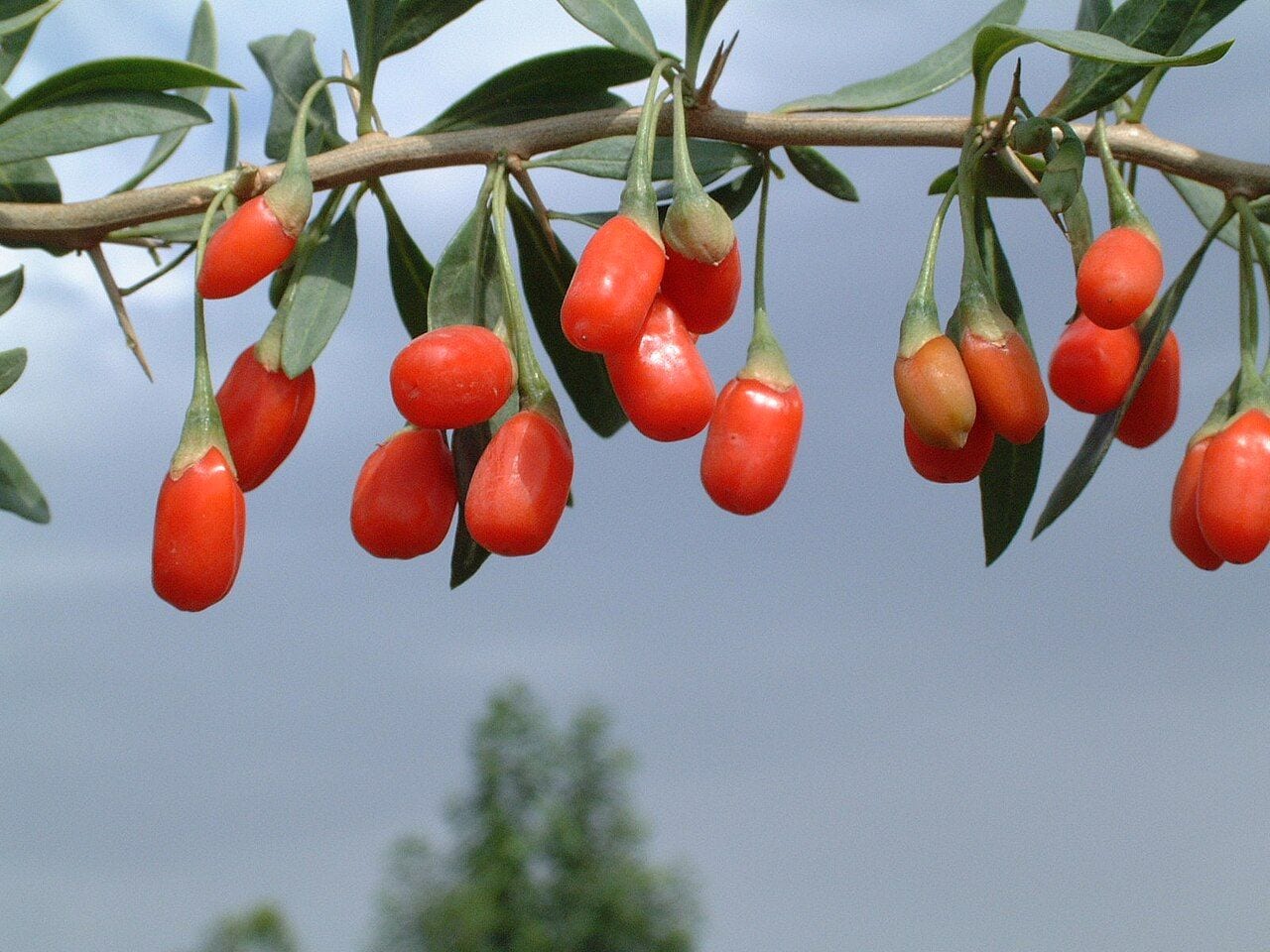
Goji berries are the fruit of the wolfberry, a nightshade family shrub
The wolfberry is a deciduous woody shrub that reaches 3 to 10 feet (1 to 3 m) in height. It features weak, arching branches where the lateral shoots often develop into short, leafless thorns. The leaves are lanceolate and green; solitary leaves grow up to 2.2 inches (55 mm) long, while those growing in clusters reach about 1 inch (25 mm). In the Northern Hemisphere, light pinkish-purple flowers bloom from June to September, appearing in groups of one to four in the leaf axils. These flowers develop into bright orange-red, elliptical berries measuring 0.4 to 0.8 inches (1 to 2 cm) across, each containing 10 to 60 tiny yellowish seeds.
The wolfberry belongs to the same nightshade family as potatoes, tomatoes, and peppers. Goji berries are harvested from two closely related species—Lycium barbarum and Lycium chinense—but in traditional Chinese medicine, the fruits of Lycium barbarum are considered to be of the highest quality. The vast majority of the world's goji berries are cultivated in northern China, particularly in the Ningxia region.
Growing wolfberry in hedges and home gardens
The wolfberry is highly adaptable and very cold-hardy, surviving winter temperatures down to −22°F (−30°C) or USDA zones 3 to 8. It is frequently planted as an ornamental shrub in hedges, around homes, in flower beds, and in public parks, and more recently, it has become popular specifically for its berry harvest.
The plant is self-fertile, meaning a single shrub will set fruit on its own, though insect pollination can improve yields. In the Northern Hemisphere, the berries ripen from August to October, depending on the latitude, elevation, and local climate. In China, the wolfberry is even planted to control soil erosion and reclaim desertifying lands. Because birds eat the berries and spread the seeds, the shrub can easily naturalize and spread into the wild in temperate regions.
Many claims about goji benefits are unsubstantiated—high-quality clinical evidence is lacking
Since around the year 2000, dried goji berries, powders, and juices have become a popular snack and a purported alternative medicine remedy in developed countries. However, this surge in popularity has been accompanied by exaggerated and unsubstantiated health claims. In 2007, a program by the Canadian broadcaster CBC investigated goji juice marketing, which falsely claimed that clinical trials had proven its protective effects against breast cancer.
The actual scientific data is much more modest. A review of several small studies showed that healthy Chinese adults who consumed goji berries, juice, or capsules for 4 to 16 weeks had slightly lower triglyceride levels and higher "good" cholesterol in their blood, but the quality of the evidence was low. Due to the lack of robust clinical evidence and poor quality control of commercial products, goji is not recommended as a medical treatment. The berries are rich in polysaccharides, carotenoids, and other compounds—making them a nutritious food, but not a medicine.
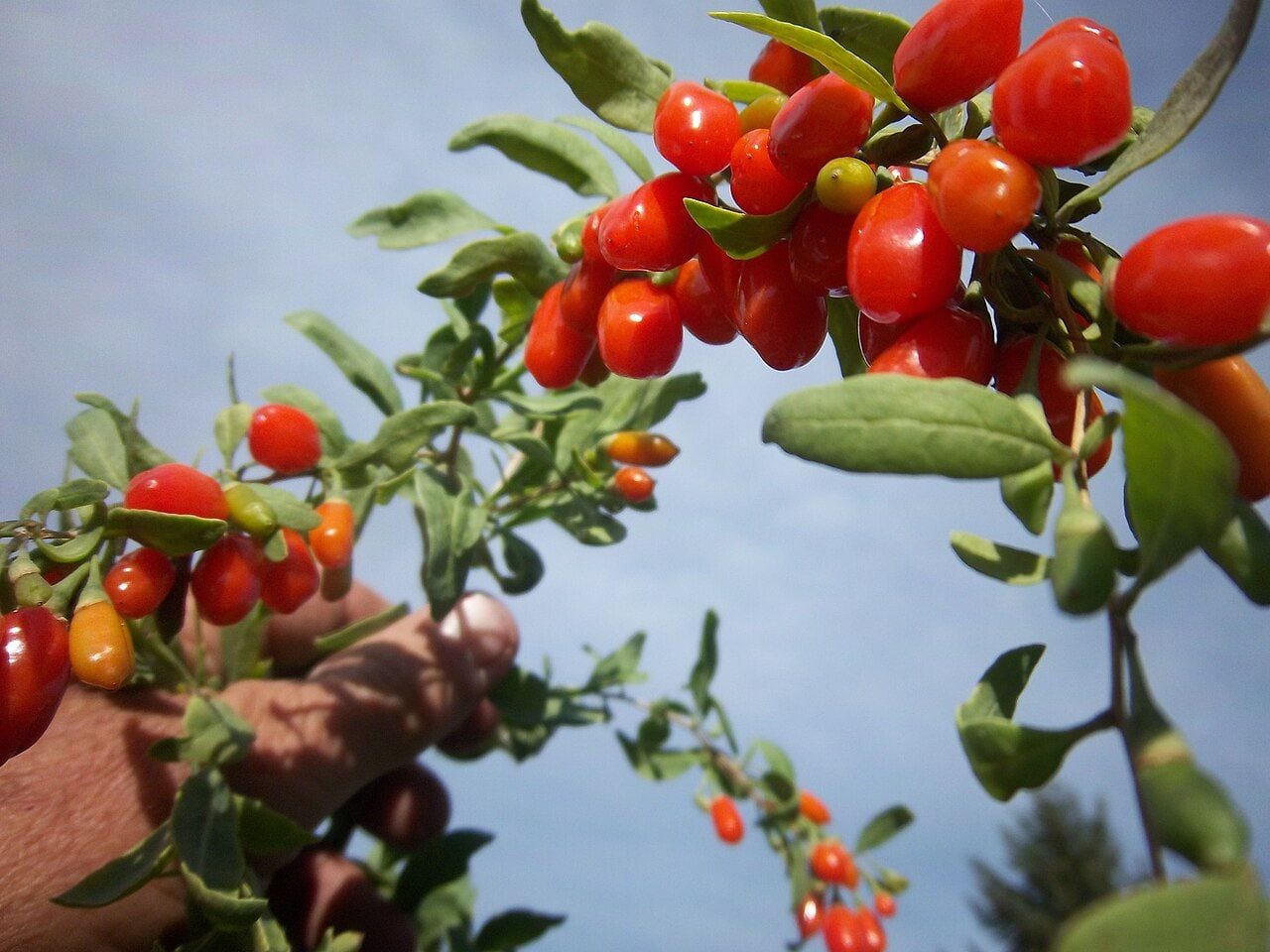
Goji can interact with medications, and pesticide residues are found in commercial products
Laboratory studies indicate that compounds in goji tea can inhibit the metabolism of drugs in the liver—specifically medications broken down by cytochrome P450 enzymes, including the blood thinner warfarin. Therefore, anyone taking warfarin or other regular prescription medications should consult a doctor before consuming large amounts of goji berries or drinking goji tea.
In commercial goji cultivation, pesticides are routinely used to control pests. Because of this, it is highly recommended to buy dried berries from reputable brands and to verify their organic certifications if you want to avoid chemical residues.
Dried goji berries are eaten like raisins, while fresh ones are enjoyed like other garden berries
Most often, goji berries are sold dried. They are frequently compared to raisins and are added to oatmeal, yogurt, cereal bars, baked goods, salads, or tea. Before eating, they can be soaked briefly in water to soften them. Ripe fresh goji berries are soft and spoil quickly, so they are carefully picked or shaken onto trays and dried in the sun or in a dehydrator. In China, the young shoots and leaves of the wolfberry are harvested as a leafy vegetable, while the berries are used in dishes for garnish or added sweetness. If you grow your own, fresh goji berries can be eaten straight from the shrub, frozen, or dried at home. Other garden berries that are exceptionally rich in vitamin C and carotenoids include sea buckthorn and rose hips.
Goji, ground cherry, mulberry, and hardy kiwi: exotic berries for temperate gardens
Goji berries belong to a group of somewhat exotic fruits that can be successfully grown in cool temperate climates. The table below outlines their origins and growing characteristics.
| Plant | Origin | Plant type | Growing in temperate climates |
|---|---|---|---|
| Wolfberry (goji) | China | 3–10 ft (1–3 m) shrub | Hedges, gardens; self-fertile |
| Cape gooseberry (ground cherry) | Peru, Chile | Annual (perennial in the tropics) | Grown from seedlings in a greenhouse or warm, sunny spot |
| White mulberry | China, India | 30–65 ft (10–20 m) tree | Best in the warmest, most sheltered locations |
| Hardy kiwi | Far East, Japan, Korea | Vine up to 100 ft (30 m) | Grown on a trellis; usually requires a male pollinator plant |
Goji and ground cherries both belong to the nightshade family: the unripe green fruits and leaves of ground cherries contain solanine, while goji berries can interact with certain medications. Mulberries and hardy kiwis are long-lived woody plants that will produce fruit for many years once established.
Frequently asked questions
Are goji berries really good for you?
Goji berries are edible, nutritious fruits, but many marketing claims about their health benefits are unsubstantiated. A few small, low-quality reviews show weak effects on some blood markers, but high-quality clinical trials are lacking, so they are not recommended as a medical treatment.
Can you grow goji berries in cool temperate climates?
Yes. The wolfberry is very cold-hardy (down to USDA zone 3) and is often grown in hedges, home gardens, and parks in northern climates. The plant is self-fertile, meaning a single shrub will produce berries.
When do goji berries ripen?
In the Northern Hemisphere, the wolfberry blooms from June to September, and the berries ripen from August to October, depending on the latitude, elevation, and local climate.
Do goji berries interact with medications?
They can. Laboratory studies show that compounds in goji tea can inhibit the liver's metabolism of certain drugs, such as warfarin. If you take blood thinners or other regular medications, consult your doctor before consuming large amounts of goji berries.
How do you use dried goji berries?
Dried goji berries are eaten like raisins—by the handful, or added to oatmeal, yogurt, cereal bars, baked goods, and tea. They can also be soaked briefly in water. It is best to choose products from reliable brands, as commercial cultivation often involves pesticides.
What is the difference between Lycium barbarum and Lycium chinense?
Both are wolfberry species that produce goji berries. Lycium barbarum is the primary goji species, widely cultivated in northern China, especially in the Ningxia region, while Lycium chinense is a closely related, slightly smaller species.
Log in to comment
No comments yet. Be the first.