How to Grow Black Currants: Varieties & Care
- The black currant (Ribes nigrum) is a 30–60-inch (80–150 cm) deciduous shrub native to damp forests in cool northern climates.
- These tart berries pack 150–300 mg of vitamin C per 3.5 oz (100 g), with some wild Siberian forms reaching up to 800 mg.
- Modern black currant breeding began in the mid-20th century to improve yield, disease resistance, and fruit quality.
- Popular international varieties include 'Titania', the 'Ben' series, and 'Consort', chosen for their size, sweetness, and hardiness.
- Black currants were banned in the US for much of the 20th century because they host white pine blister rust, though many states have now lifted the ban.
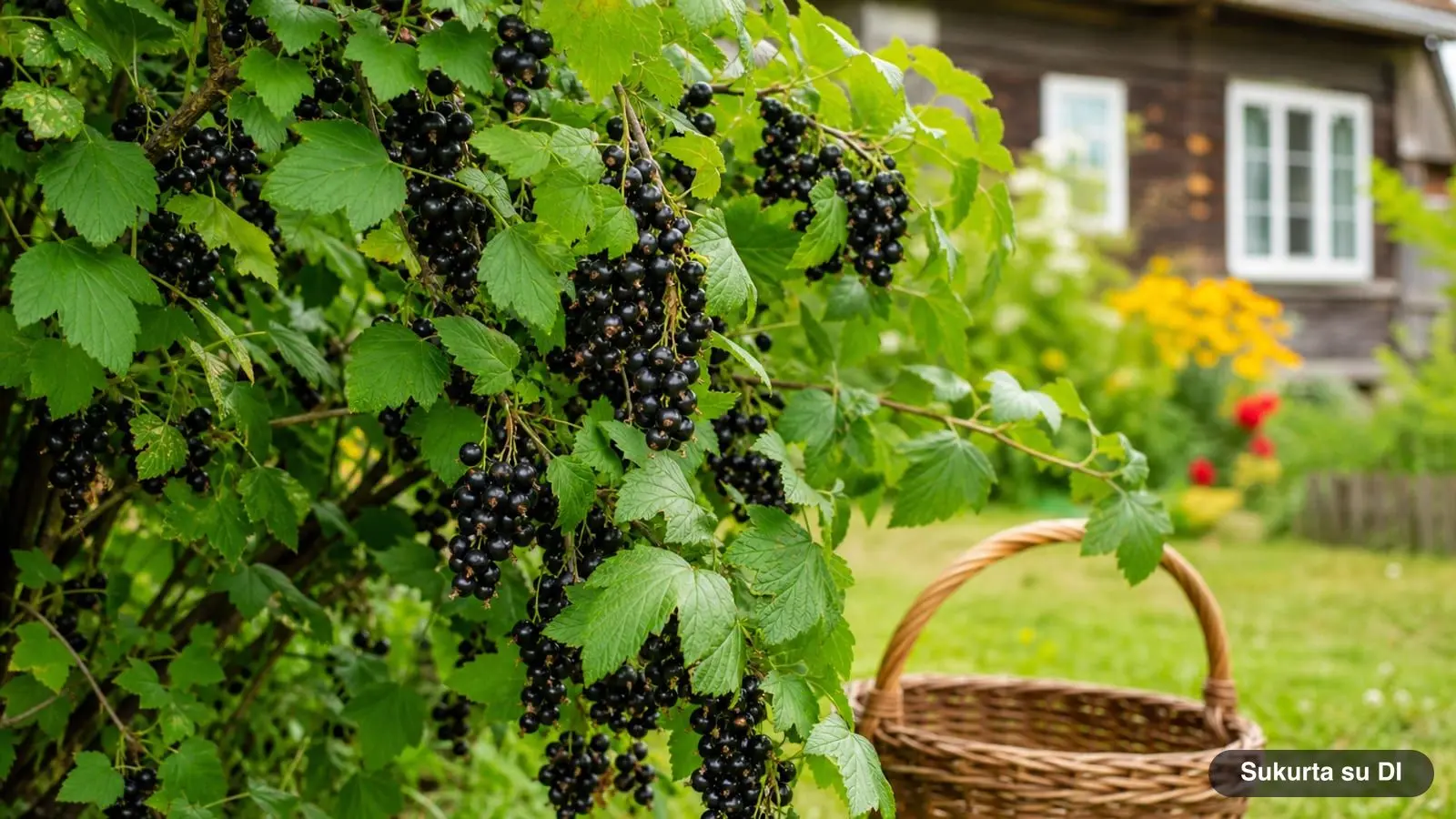
- Fragrant leaves with essential oil glands identify the black currant
- Modern breeding focuses on disease resistance and berry quality
- Black currants need moist, fertile soil and protection from spring frosts
- White pine blister rust, mildew, and botrytis are common challenges
- A 3.5 oz (100 g) serving packs 150–300 mg of vitamin C
- Preserving black currants for winter: mashing, freezing, and jams
This article is part of the 77.today berries guide, prepared by the 77.today editors from the sources listed at the end.
Black currants are among the most beneficial and beloved garden berries. Almost every rural homestead in cool temperate climates has a few of these bushes, and mashing the berries with sugar is a traditional way to store winter vitamins. These shrubs also grow wild in damp forests and thickets. In this part of the Berry Guide, we cover how to identify black currants, which varieties to choose, how to grow and prune the bushes, their impressive vitamin C content, and how to preserve them for winter.
| Latin name | Ribes nigrum |
|---|---|
| Family | Grossulariaceae (gooseberry family) |
| Plant | Deciduous shrub, 30–60 inches (80–150 cm) |
| Habitat | Wild in thickets and damp forests; widely cultivated in gardens |
| Blooms | Mid-spring, with reddish-green flowers in racemes |
| Fruit ripens | Mid-to-late summer |
| Vitamin C | 150–300 mg / 3.5 oz (100 g) (USDA – 181 mg) |
| Energy value | About 63 kcal / 3.5 oz (100 g) |
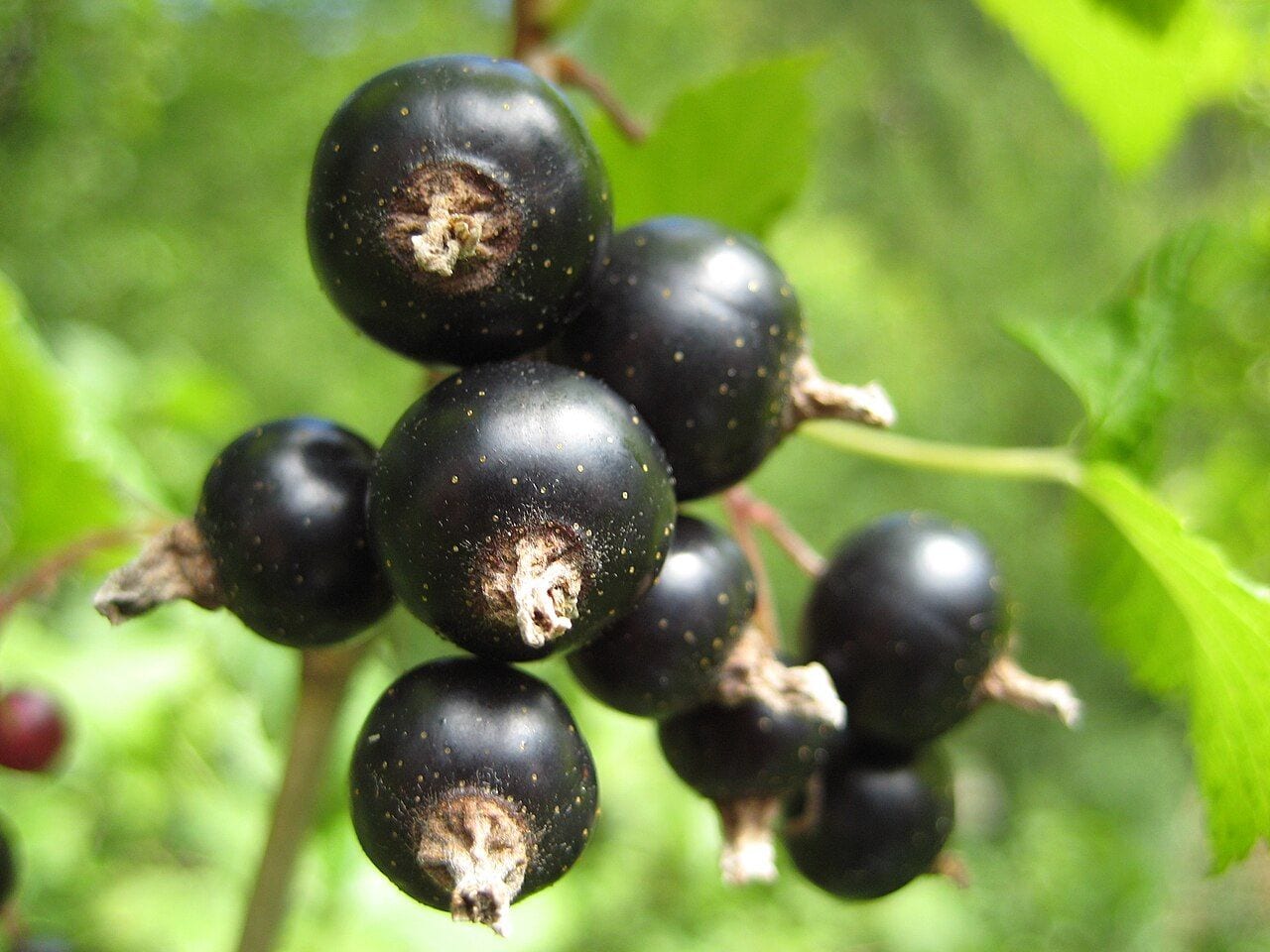
Fragrant leaves with essential oil glands identify the black currant
The black currant is a deciduous shrub typically reaching 30–60 inches (80–150 cm) tall, with some vigorous bushes growing up to 5 feet (1.5 m) in height and spread. The leaves are palmate with five distinct lobes and toothed edges, measuring about 1.2–2 inches (3–5 cm) across. The undersides of the leaves feature small glands that secrete essential oils; rubbing a leaf releases a strong, characteristic aroma, which is one of the easiest ways to distinguish a black currant from a red currant. In mid-spring, the bush produces reddish-green flowers arranged in drooping clusters (racemes), followed by glossy, dark, seed-filled berries that ripen in mid-to-late summer.
The black currant is native to the temperate regions of Central and Northern Europe and Northern Asia. Botanists generally recognize two main subspecies—European and Siberian—though some also classify a Scandinavian subspecies. The Siberian and Scandinavian forms tend to have a more spreading, prostrate growth habit and are highly prized for their exceptional winter hardiness and disease resistance, making them valuable in modern breeding programs.
Modern breeding focuses on disease resistance and berry quality
Compared to other fruits, black currant breeding began relatively late. By 1930, there were only about 60 known varieties, compared to over 2,000 for strawberries and 1,500 for gooseberries. In the mid-20th century, intensive breeding programs were launched across Europe and North America. In the UK, the Scottish Crop Research Institute (SCRI) developed the famous "Ben" series, such as 'Ben Lomond' and 'Ben Sarek', which revolutionized commercial growing. Meanwhile, North American breeders focused heavily on creating varieties resistant to white pine blister rust, resulting in successful cultivars like 'Consort' and 'Crusader'.
Today, newer breeding efforts prioritize fruit quality, sweetness, and adaptability to changing climates. When selecting a variety for your garden, it is important to consider berry size, flavor profile, ripening time, and local disease pressures. Popular international choices include 'Titania', a Swedish variety renowned for its vigorous growth and immunity to rust, and 'Black Down', which is favored for its exceptionally sweet berries that are perfect for fresh eating. Checking with local extension services or nurseries can help you find the best cultivar for your specific region.
Black currants need moist, fertile soil and protection from spring frosts
Black currants thrive in loamy, sandy loam, or forest-type soils, provided they are rich in organic matter and nutrients. They prefer moist, fertile, but well-draining ground and do not tolerate drought well. During dry summer spells, the bushes must be watered consistently, and applying a thick layer of mulch helps retain soil moisture. The shrubs are incredibly cold-hardy, typically thriving in USDA zones 3–7, but late spring frosts and cold winds during the blooming period can deter pollinators and significantly reduce the harvest. Because of this, it is best to plant them in a sheltered location.
To maintain a healthy harvest, the bushes require annual pruning. In early spring, as soon as the soil can be worked, or in late fall, older, dark-wooded branches that no longer produce well should be cut back to the base, leaving the strongest young shoots to thrive. A well-maintained bush will produce fruit for many years. The berries can be picked by hand in home gardens, while large commercial orchards typically use mechanical harvesters.
White pine blister rust, mildew, and botrytis are common challenges
Black currants are susceptible to several fungal diseases. White pine blister rust causes small orange spots on the currant leaves and leads to premature leaf drop, though it rarely impacts the berry yield significantly. However, the disease is devastating to its other host, the North American white pine. Because of this, black currants were federally banned in the US for much of the 20th century. The federal ban was lifted in 1966, but restrictions still remain in certain states. The bushes can also be affected by American gooseberry mildew, which attacks leaves and shoot tips, and botrytis (gray mold), which rots the berries during unusually wet summers. Planting resistant varieties and maintaining an open, well-pruned canopy for good airflow greatly reduces disease risks.
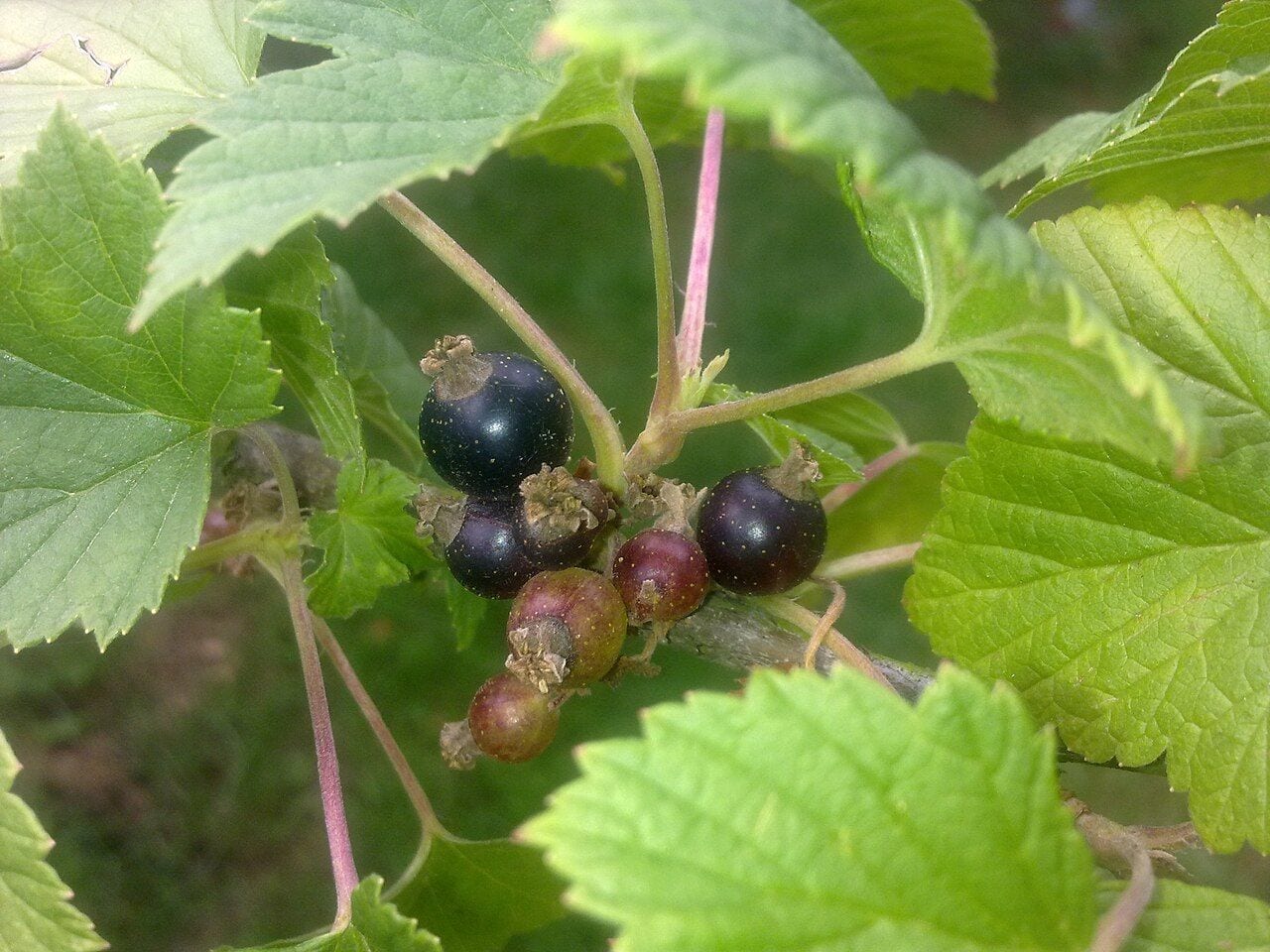
A 3.5 oz (100 g) serving packs 150–300 mg of vitamin C
Black currants are among the most nutritionally valuable berry plants. A 3.5 oz (100 g) serving of fresh berries contains between 150 and 300 mg of vitamin C, and some wild populations of the Siberian subspecies can reach up to 800 mg. The USDA nutrient database lists them at 181 mg per 3.5 oz (100 g)—more than double the recommended daily allowance. This means black currants contain several times more vitamin C than strawberries, raspberries, or gooseberries. Only a few other fruits, such as rose hips, sea buckthorn, and certain hardy kiwi varieties, offer comparable or higher amounts.
The berries contain 4.5–10.7% sugars, but their high levels of citric and malic acids (1.5–4.5%) give them a distinctly tart flavor. They are also rich in potassium, calcium, iron, pectin, dietary fiber, and anthocyanins, while the seed oil is an excellent source of vitamin E and unsaturated fatty acids. A 3.5 oz (100 g) serving of fresh berries provides about 63 calories. Their nutritional density is so high that during World War II, when oranges could no longer be imported to the UK, the British government actively encouraged the cultivation of black currants to ensure the population had a reliable source of vitamin C.
Preserving black currants for winter: mashing, freezing, and jams
One of the most popular ways to preserve black currants is by mashing them with sugar. Sorted, washed, and dried berries are crushed with sugar and stored in the refrigerator or freezer. Black currants are also excellent for freezing whole, or for making into jams, syrups, compotes, and jellies. While processing does degrade some of the vitamin C, a significant amount remains: juices and compotes retain 42–100%, and frozen berries keep about 40–70% of their original vitamin C content.
Beyond simple preserves, black currants are used to make rich juices, syrups, the famous French liqueur crème de cassis, fruit wines, desserts, and savory sauces for meats. Their tartness pairs beautifully with apples in pies and baked goods. The black currant is closely related to red currants, gooseberries, and their hybrid cross, the jostaberry.
Frequently asked questions
How much vitamin C is in black currants?
Black currants contain 150–300 mg of vitamin C per 3.5 oz (100 g), with the USDA listing 181 mg. This is significantly more than strawberries, and comparable to rose hips and sea buckthorn.
When should you harvest black currants?
Black currants typically ripen in mid-to-late summer. It is best to pick them when all the berries on the cluster have turned deep black and softened; berries picked too early will be overly tart.
What are the best black currant varieties to grow?
Excellent choices include 'Titania' for vigorous growth and rust resistance, 'Consort' for its immunity to white pine blister rust, and the Scottish 'Ben' series (like 'Ben Lomond' or 'Ben Sarek') for heavy yields and frost resistance.
How do you preserve black currants for winter?
They are commonly mashed with sugar and kept in the fridge or freezer. They can also be frozen whole, or made into jams, syrups, and compotes. Freezing retains 40–70% of their vitamin C, while juices can retain up to 100%.
Why were black currants banned in the US?
The black currant is an intermediate host for white pine blister rust, a devastating disease for North American white pines. A federal ban was in place for most of the 20th century, and while lifted in 1966, some state restrictions remain.
What kind of soil do black currants need?
They thrive in moist, fertile, well-draining soils like loam or sandy loam. They do not tolerate drought well, so consistent moisture and a good layer of mulch are essential.
Log in to comment
No comments yet. Be the first.