How to Grow Raspberries: Summer vs. Everbearing Varieties
- The red raspberry (Rubus idaeus) is a perennial plant with biennial canes that grow 5–8 feet (1.5–2.5 m) tall.
- First-year canes typically do not flower; the fruit is borne on the second-year canes.
- Everbearing (primocane-bearing) varieties produce fruit at the tips of first-year canes in late summer and fall.
- Botanically, the raspberry is not a true berry but an aggregate fruit composed of many small drupelets.
- A 3.5 oz (100 g) serving of raspberries contains about 53 calories, 26.2 mg of vitamin C, and 6.5 g of fiber.
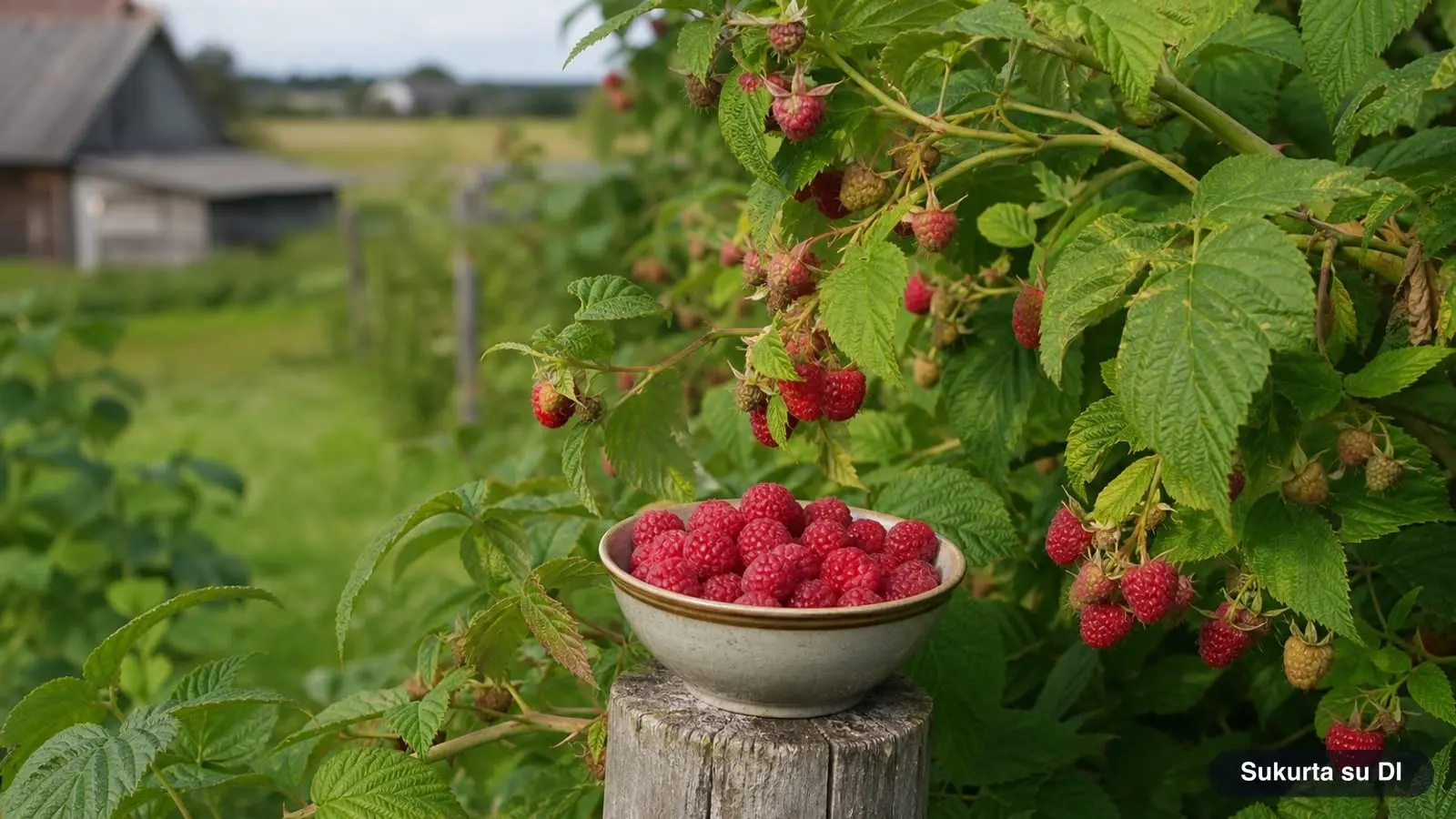
- Raspberry canes live for two years: growing the first, fruiting the second
- Wild raspberries are common in woodland clearings, forest edges, and moist thickets
- Everbearing raspberries produce fruit on first-year canes from late summer to frost
- A raspberry patch thrives best in a sunny, sheltered spot with loose, moist soil
- 3.5 oz (100 g) of raspberries provides 53 calories, 26.2 mg of vitamin C, and 6.5 g of fiber
- Raspberries spoil quickly, so they are best eaten fresh, frozen, or cooked immediately
This article is part of the 77.today berries guide, prepared by the 77.today editors from the sources listed at the end.
Raspberries are a beloved fruit found both in the wild and in home gardens. Wild raspberries can be seen ripening in woodland clearings and along forest edges in midsummer, while cultivated patches have been a staple in gardens for centuries. In this part of the Berry Guide, we cover how to identify the plant, the differences between summer-bearing and everbearing varieties, how to plant, prune, and protect your raspberry patch, as well as the nutritional benefits and the best ways to store your harvest.
| Latin name | Rubus idaeus |
|---|---|
| Family | Rose family (Rosaceae), blackberry genus (Rubus) |
| Plant | Shrub with biennial canes, 5–8 ft (1.5–2.5 m) |
| Habitat | Forests, woodland edges, clearings, thickets, gardens |
| Flowering | Early to midsummer |
| Berries ripen | Midsummer, everbearing varieties until frost |
| Fruit | Aggregate fruit made of small drupelets, red or yellow |
| Energy value | About 53 kcal per 3.5 oz (100 g) |
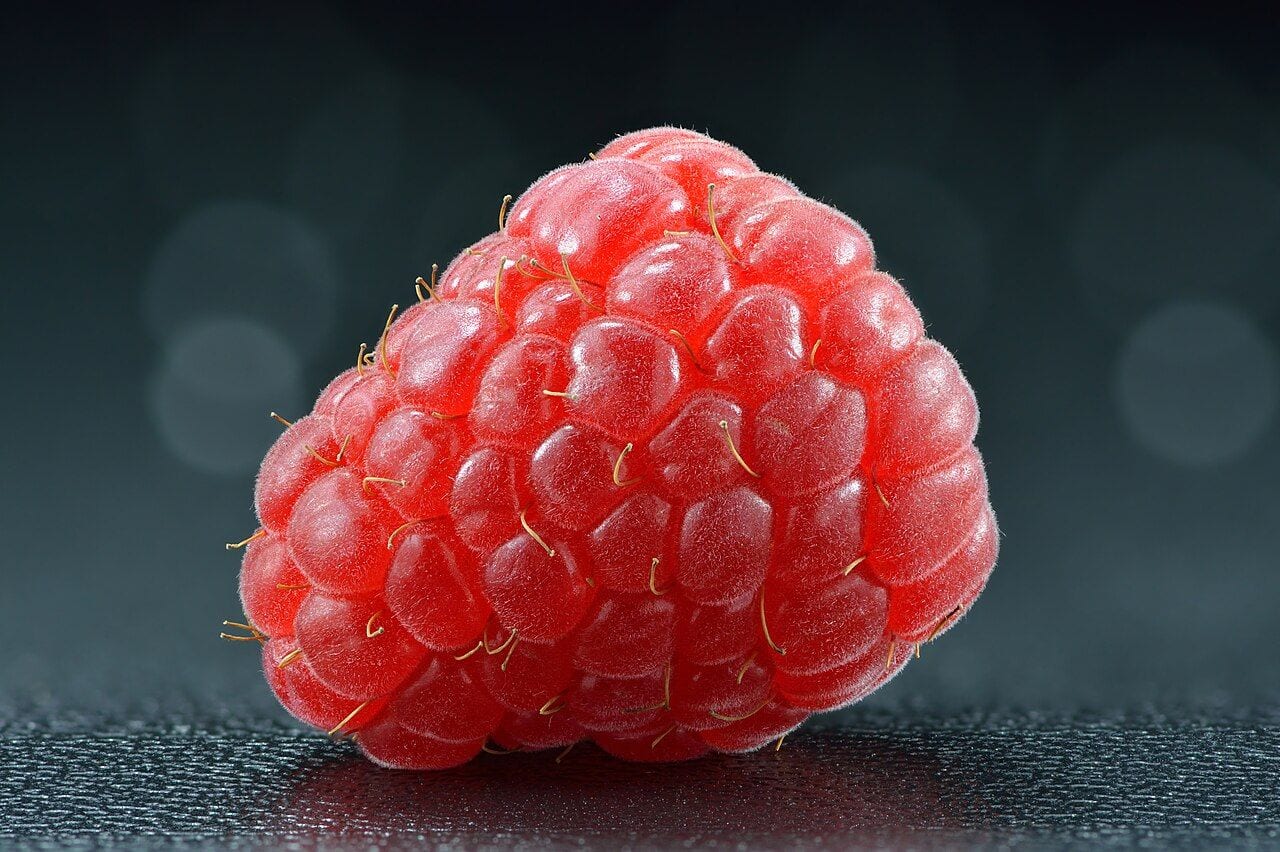
Raspberry canes live for two years: growing the first, fruiting the second
The red raspberry is a perennial plant with biennial canes. The root system lives for many years, sending up new shoots annually. During their first year, these canes (called primocanes) do not branch out, rapidly growing to a height of 5–8 feet (1.5–2.5 m). They feature large, pinnate leaves with five or seven leaflets but typically do not produce flowers. In their second year, the canes (now called floricanes) stop growing taller and instead develop lateral shoots with smaller leaves. In late spring or early summer, these shoots produce white flowers about 0.4 inches (1 cm) in diameter. After fruiting, the second-year canes die back.
The canes are erect, prickly, and slightly arching at the tips. The leaves are whitish and slightly hairy underneath. Raspberries spread vigorously through underground root suckers, quickly forming dense thickets in both the wild and the garden. Botanically, the raspberry is not a true berry but an aggregate fruit consisting of many small drupelets clustered around a conical receptacle. When a raspberry is picked, the fruit detaches from the receptacle, leaving a hollow core—this is the main feature that distinguishes raspberries from blackberries, which retain their solid core when picked.
Wild raspberries are common in woodland clearings, forest edges, and moist thickets
Wild raspberries are native to the temperate zones of Europe and northern Asia, growing as far north as the 66th parallel and restricted to mountainous regions further south. They are a widespread species, commonly found in deciduous, coniferous, and mixed forests, particularly thriving in clearings, along woodland edges, in thickets, and in moist areas. Beneath a dense tree canopy, raspberries form sparse patches, but in open clearings, they can create impenetrable thickets. The species name idaeus refers to Mount Ida in northwestern Turkey, where the plant was well known to the ancient Greeks.
Wild raspberries are generally smaller than cultivated garden varieties but are highly prized for their intense, aromatic flavor. They typically ripen in mid-to-late summer. When foraging for wild raspberries, it is important to watch out for the prickly canes and take care not to damage the surrounding plants.
Everbearing raspberries produce fruit on first-year canes from late summer to frost
Cultivated garden raspberries are divided into two main groups. Summer-bearing raspberries fruit just like their wild counterparts—on second-year canes in the middle of summer. Everbearing raspberries (also known as primocane-bearing or fall-bearing) produce fruit at the tips of their first-year canes, yielding a harvest from late summer right up until the first autumn frosts. They are highly convenient because their harvest is delayed until the summer-bearing varieties have finished, and in the fall, all the canes can be cut down to the ground, which helps eliminate many overwintering pests and diseases. Popular everbearing varieties grown internationally include cultivars like 'Polka'.
Raspberries also come in unusual colors. The fruits of the standard red raspberry (Rubus idaeus) can sometimes be yellow—these yellow-fruited varieties generally have a milder, sweeter, and less acidic flavor. Black raspberries (Rubus occidentalis) are a separate species native to North America. Other novelties, such as the strawberry raspberry (Rubus illecebrosus) and various raspberry-blackberry hybrids, are distinct plants favored by gardeners looking for unique fruits.
A raspberry patch thrives best in a sunny, sheltered spot with loose, moist soil
Raspberries produce the best yields in sheltered, sunny locations with moist, loose, and fertile soil that warms up easily. They are generally cold-hardy down to about −30°F (−34°C), suitable for USDA zones 3–9 depending on the variety. A well-maintained commercial raspberry patch can yield up to 9,000 lbs per acre (10 metric tons per hectare). Because raspberries spread aggressively via root suckers, it is wise to contain the patch—either by burying a physical barrier in the ground or by planting them in rows with wide aisles that can be mowed regularly. The tall canes of summer-bearing varieties are often tied to wire trellises or stakes to prevent them from bending and breaking under the weight of the fruit.
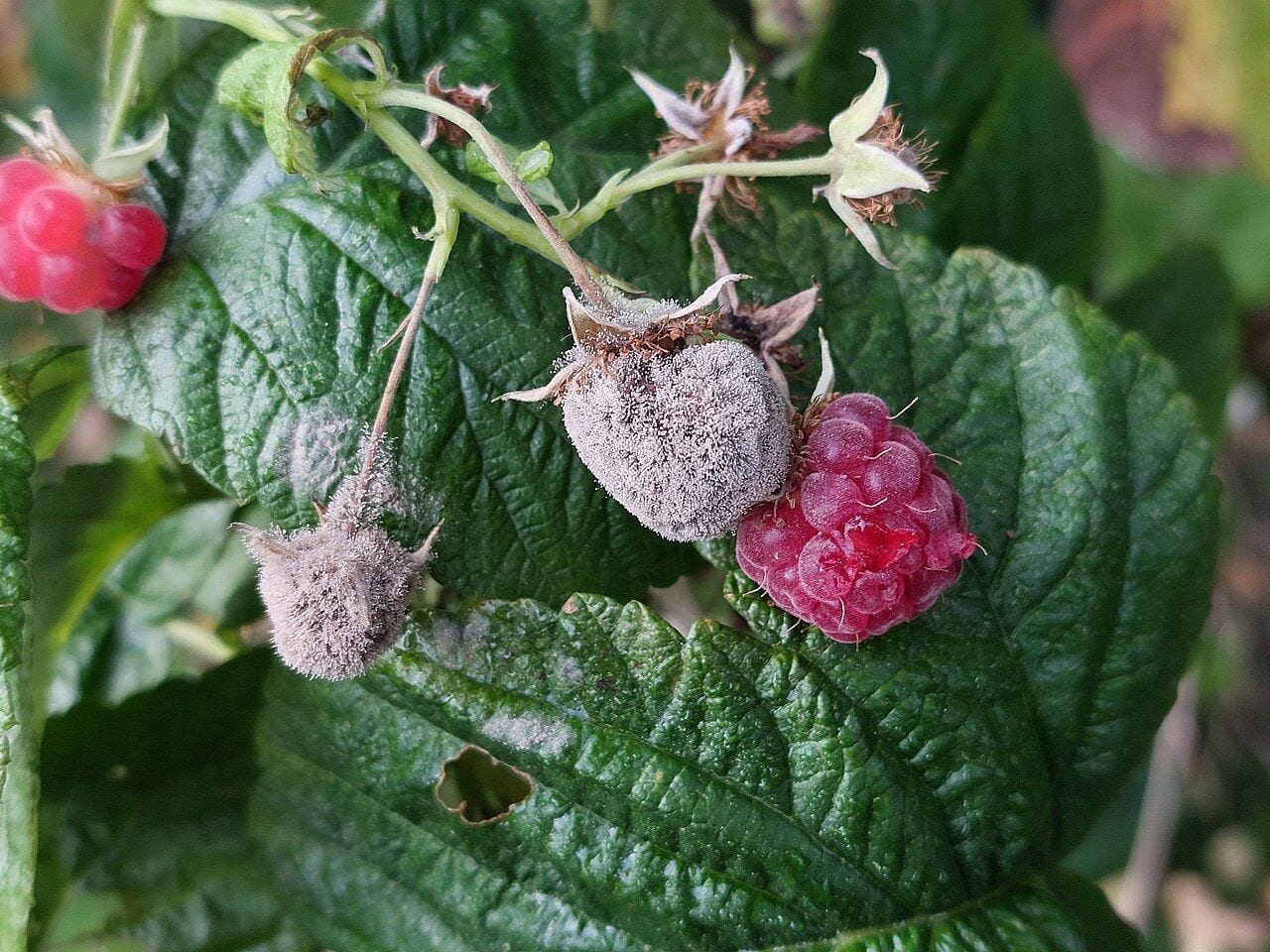
The most important maintenance task in a raspberry patch is pruning. For summer-bearing raspberries, the spent second-year canes should be cut to the ground immediately after the harvest, leaving only enough strong young canes so that the row does not become overcrowded. For everbearing raspberries, all canes are typically cut down to the ground in late fall or early spring. Raspberries can be attacked by pests such as the raspberry beetle, strawberry blossom weevil, aphids, raspberry cane maggot, and spider mites. The most common diseases include anthracnose, rust, gray mold (botrytis), crown gall, and spur blight. A properly thinned, well-ventilated raspberry patch is much less susceptible to disease.
3.5 oz (100 g) of raspberries provides 53 calories, 26.2 mg of vitamin C, and 6.5 g of fiber
Raspberries are among the highest-fiber fruits available: a 3.5 oz (100 g) serving of fresh raspberries contains about 6.5 g of dietary fiber, 53 calories, and 26.2 mg of vitamin C. The berries consist of 80–86% water and 2.6–7.1% sugars. Raspberries are rich in anthocyanins, ellagitannins, and other polyphenols. In laboratory settings, the polyphenols found in raspberry seeds exhibit antioxidant effects, though there is no conclusive evidence that this translates to significant health benefits in the human body. The widely advertised dietary supplements known as "raspberry ketones" are typically synthesized from other plants, not extracted from raspberries, and there is no clinical evidence proving they aid in weight loss.
In traditional folk medicine, dried raspberries and young raspberry leaves have long been used as a diaphoretic (sweat-inducing) remedy for colds. Because of this, pairing hot raspberry tea with a spoonful of raspberry jam remains a classic, comforting winter tradition in many cool northern climates.
Raspberries spoil quickly, so they are best eaten fresh, frozen, or cooked immediately
Freshly picked raspberries are extremely soft and can begin to mold within a day or two. To maximize their shelf life, they should not be washed before storing in the refrigerator and should never be stacked in deep layers, which crushes the bottom fruit. For winter storage, raspberries are best frozen by spreading them in a single layer on a baking sheet before transferring them to a container. They can also be mashed with sugar or cooked into jams, jellies, syrups, and compotes. Frozen raspberries are excellent for stirring into oatmeal, blending into smoothies, baking into pies, or simmering into sauces. Raspberries are also used to make fruit wine, liqueurs, and infused vinegars, while the dried berries make a flavorful addition to herbal teas.
Closely related berries include blackberries and northern bog cloudberries. In the garden, raspberries typically ripen around the same time as black currants.
Frequently asked questions
What is the difference between everbearing and summer-bearing raspberries?
Summer-bearing raspberries produce fruit on second-year canes in midsummer. Everbearing (primocane-bearing) varieties fruit at the tips of first-year canes from late summer until the first fall frost. Because of this, everbearing canes are often cut to the ground in late fall or early spring.
When do raspberries ripen?
Wild and summer-bearing garden raspberries typically ripen in midsummer, while everbearing varieties produce fruit from late summer right up until the first frost.
How do you prune raspberries?
For summer-bearing raspberries, the spent second-year canes should be cut to the ground immediately after the harvest or in the fall, leaving only the strongest young canes. For everbearing raspberries, all canes are usually cut down to the ground in late fall or early spring.
How many calories are in raspberries?
A 3.5 oz (100 g) serving of fresh raspberries contains about 53 calories. They also provide approximately 26 mg of vitamin C and 6.5 g of dietary fiber.
Are there yellow raspberries?
Yes. The fruits of the red raspberry species can be either red or yellow. Yellow-fruited raspberry varieties often have a milder, less acidic flavor than their red counterparts.
Do raspberry ketones help with weight loss?
No. The compounds marketed as "raspberry ketones" in supplements are typically synthesized or extracted from other plants, and there is no clinical evidence that they aid in human weight loss.
Log in to comment
No comments yet. Be the first.