Aronia (Black Chokeberry): How to Grow, Benefits & Recipes
- Black chokeberry (Aronia melanocarpa) is native to eastern North America and has been cultivated in Europe since the 18th century.
- The shrub grows up to 10 feet (3 m) tall, is cold-hardy, tolerates poor soils, and can yield up to 17 lbs (8 kg) of berries per plant.
- Berries ripen in late summer to early fall and have a highly astringent, somewhat bitter taste when eaten fresh.
- Aronia is one of the richest plant sources of polyphenols, though its juice contains relatively little vitamin C.
- The berries are excellent for processing into jams, juices, syrups, and wine, or they can be dried for tea.
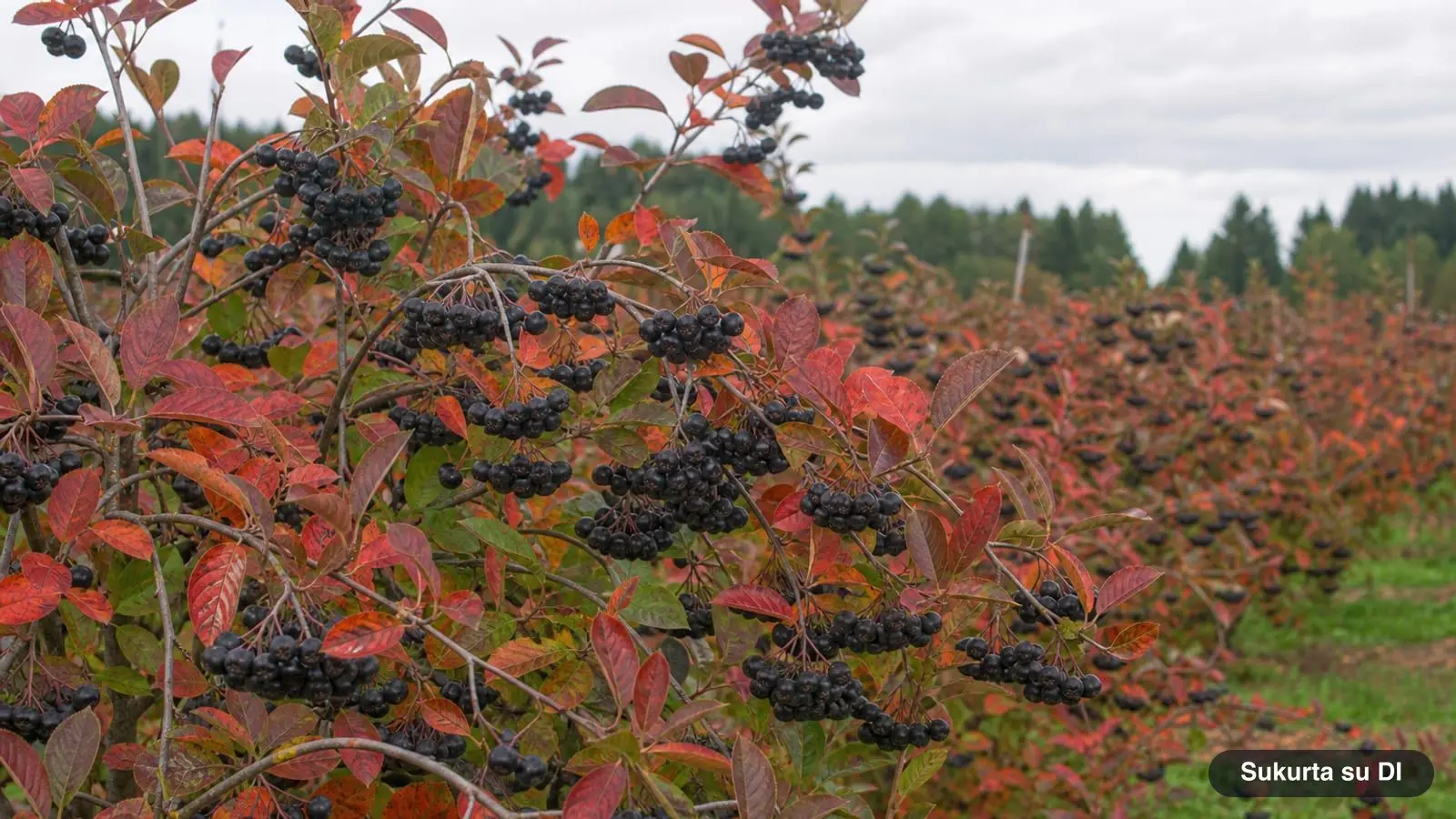
- Black chokeberry is native to North America and was widely cultivated in Europe
- Aronia is soil-tolerant, cold-hardy, and can yield up to 17 lbs (8 kg) per bush
- Aronia berries ripen in late summer and are highly astringent when fresh
- Aronia is incredibly rich in polyphenols, but low in vitamin C
- Jams, juices, wines, and teas: the best ways to process aronia
- Aronia, rowan, black currant, and elderberry: dark autumn berries compared
This article is part of the 77.today berries guide, prepared by the 77.today editors from the sources listed at the end.
Aronia is one of the most low-maintenance berry bushes you can grow in a home garden. Often called black chokeberry, it produces clusters of glossy black berries in late summer and early fall, followed by brilliant red foliage. Fresh aronia berries are somewhat bitter and highly astringent, but once processed, they make excellent jams, juices, and wines. In this part of the berry guide, we explore the origins of the black chokeberry, how to grow it, when to harvest, its nutritional value, and what to make with the harvest.
| Latin name | Aronia melanocarpa |
|---|---|
| Family | Rose family (Rosaceae) |
| Origin | Eastern North America; in Europe since the 18th century |
| Plant | Perennial shrub up to 10 ft (3 m) |
| Blooms | Late spring, with white or pinkish flowers |
| Berries ripen | Late summer to early fall |
| Berries | Black, glossy pomes with an astringent taste |
| Yield | Up to 17 lbs (8 kg) per bush |
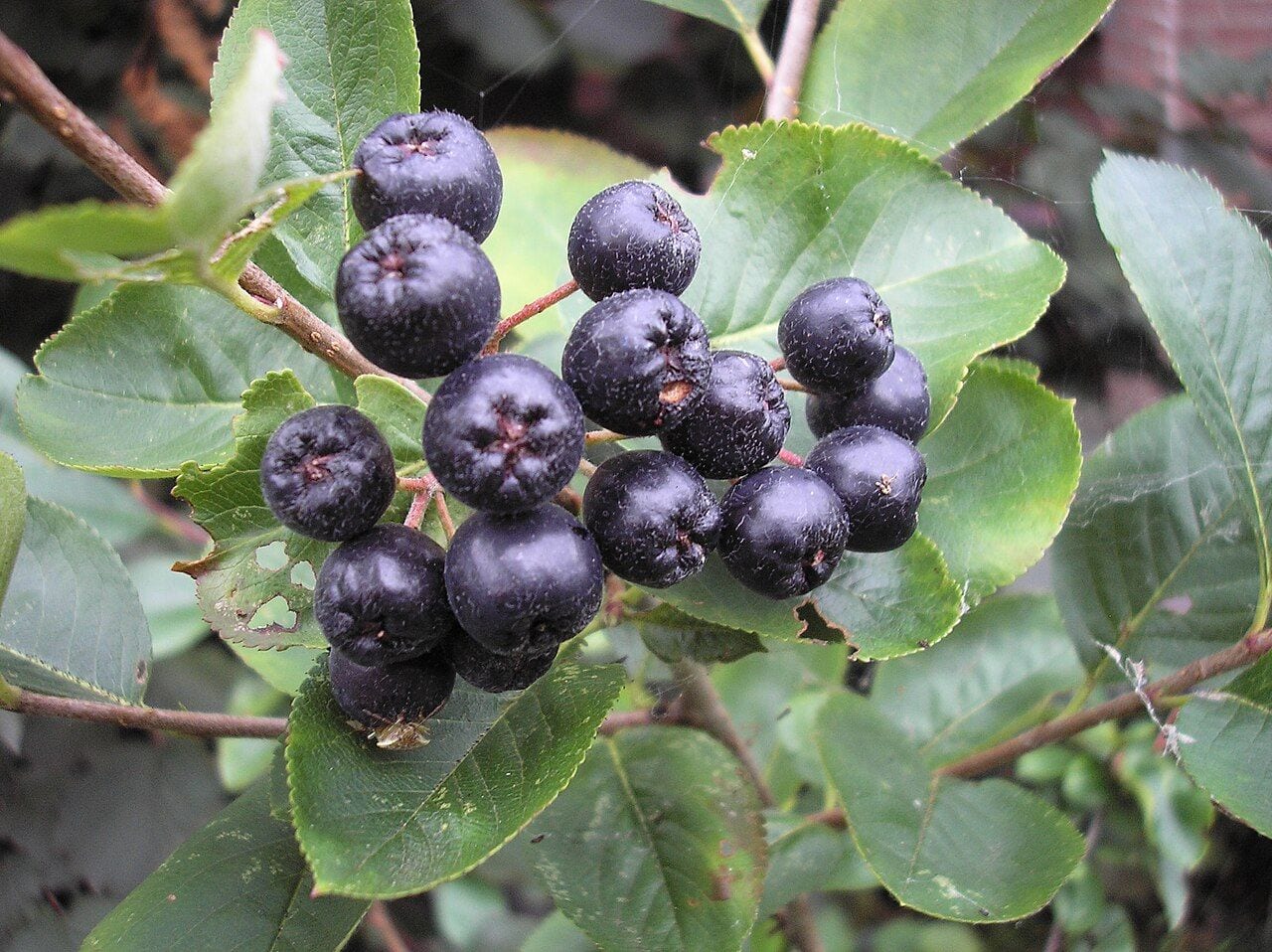
Black chokeberry is native to North America and was widely cultivated in Europe
Black chokeberry grows wild in eastern North America, ranging from Canada down to the central United States—from Newfoundland across to Ontario and Minnesota, and south to Arkansas, Alabama, and Georgia. Aronia was first cultivated in North America, and in the 18th century, the first bushes reached Europe, where they were initially grown in Scandinavia and Russia. Today, aronia is cultivated globally as both an ornamental and an edible plant.
Although it is sometimes mistakenly associated with the rowan (mountain ash) due to its similar fruit clusters, it is a completely different species. Aronia has simple, elongated, glossy leaves with toothed edges, whereas rowan leaves are pinnate. In English-speaking regions, aronia is also sometimes confused with the chokecherry (Prunus virginiana), simply because their common names sound so similar.
Aronia is soil-tolerant, cold-hardy, and can yield up to 17 lbs (8 kg) per bush
Black chokeberry is a multi-stemmed shrub that reaches up to 10 feet (3 m) in height, featuring dark green, glossy leaves that turn a striking red in autumn. In late spring, it blooms with clusters of white or pinkish flowers, and by late summer to early fall, it ripens its black berries. Aronia is a light-loving, highly cold-hardy plant (hardy down to about −40°F (−40°C), USDA zones 3–8) that is undemanding when it comes to soil, thriving in both full sun and partial shade. It spreads by suckers from the roots to form dense thickets, making it an excellent choice for hedges. The shrub is also notably resistant to drought, insects, pollution, and diseases.
The bushes are easily propagated by cuttings, with summer being the best time to take them. A single mature bush can yield up to 17 lbs (8 kg) of berries. Certain cultivars, such as 'Autumn Magic', have been specifically selected for their spectacular fall foliage. Aronia berries are also a valuable food source for various bird species.
Aronia berries ripen in late summer and are highly astringent when fresh
Botanically speaking, aronia berries are small pomes (like tiny apples) that are black or dark purple and glossy. They typically ripen in late summer or early fall (August to September in the Northern Hemisphere), but they should only be picked when they have turned completely black. Fresh berries are highly astringent and dry out the mouth—which is exactly how they earned the name "chokeberry." However, when sugar is added or they are blended with other fruits, their flavor improves dramatically.
Aronia is incredibly rich in polyphenols, but low in vitamin C
Black chokeberry stands out for its exceptionally high polyphenol content: the berries are packed with anthocyanins, proanthocyanidins, and phenolic acids. Based on total phenolic compounds, aronia ranks among the most antioxidant-rich plants, though exact levels depend on growing conditions, ripeness, and processing methods. Nutritional analyses show the berries contain up to 10% sugars, about 1.8% organic acids, and various flavonoids. However, the vitamin C content in ripe aronia juice is quite low—in this regard, it falls far behind black currants or sea buckthorn.
In folk medicine, aronia has been used to support cardiovascular health, though many such claims require further clinical trials to be fully substantiated. It is generally recommended that people with low blood pressure, increased blood clotting, or stomach and duodenal ulcers consume aronia with caution. Anyone taking prescription medications, especially those affecting blood pressure or clotting, should consult a doctor before adding large amounts of aronia to their diet.
Jams, juices, wines, and teas: the best ways to process aronia
While you can eat aronia berries straight from the bush, they are almost always processed. They are used to make jam, jelly, syrup, and juice, as well as wine, beer, liqueurs, tinctures, ice cream, candies, and even salsa. Aronia wine is produced commercially in many regions. The berries are frequently added to mixed-fruit jams and juices, or dried to make tea, which pairs exceptionally well with black currants. Aronia juice is tart, mildly sweet, and astringent, and thanks to its intense, dark pigment, it is widely used as a natural food coloring for beverages and yogurts.
Aronia, rowan, black currant, and elderberry: dark autumn berries compared
Aronia is sometimes confused with other dark, clustering berries like black currants or elderberries. The table below helps distinguish these plants and explains how their berries are typically used.
| Plant | Leaves | Berries | How they are used |
|---|---|---|---|
| Black chokeberry (Aronia) | Simple, glossy, toothed | Black pomes, highly astringent | Jam, juice, wine, tea |
| Rowan (Mountain ash) | Pinnate, 9–15 leaflets | Orange-red small pomes | Eaten after frost or processed |
| Black currant | Lobed, highly fragrant | Black berries with many seeds | Fresh, mashed, jam |
| Black elderberry | Pinnate, opposite | Black drupes on red stalks | Must be cooked before eating |
Of all four, black currants contain the most vitamin C, while aronia stands out for its abundance of polyphenols. Unlike the others, elderberries cannot be eaten raw under any circumstances—they must be thoroughly cooked to neutralize their natural toxins.
To preserve aronia for the winter, the berries can be frozen, dried, or mashed with sugar. The sugar helps mellow out the berries' intense astringency. Other notable dark autumn berries include elderberries, while dark summer fruits are produced by the honeyberry (haskap) and the serviceberry (juneberry).
Frequently asked questions
When should I harvest aronia berries?
Aronia berries ripen in late summer to early fall when they turn completely black and glossy. Because they are highly astringent when fresh, they are usually processed with sugar.
Why is aronia sometimes confused with rowan or chokecherry?
Aronia produces berry clusters that resemble those of the rowan (mountain ash), but it has simple, glossy leaves rather than pinnate ones. Its common name, chokeberry, also sounds similar to chokecherry, which is a completely different plant.
What are the health benefits of aronia berries?
Aronia berries are exceptionally rich in polyphenols, including anthocyanins, proanthocyanidins, and phenolic acids. While they contain some vitamins, their vitamin C content is low. They are highly valued as a nutritious food rather than a medicine.
Who should avoid consuming aronia?
It is generally advised that individuals with low blood pressure, increased blood clotting, or stomach and duodenal ulcers consume aronia with caution. If you are taking medications, especially for blood pressure or clotting, consult your doctor.
How much fruit does an aronia bush produce?
A single black chokeberry bush can yield up to 17 lbs (8 kg) of berries. The plants thrive in full sun, are highly cold-hardy, and adapt well to various soil types.
What can I make with aronia berries?
Aronia is mostly processed: it is used to make jams, syrups, juices, wines, and liqueurs, or dried for tea. It is also a popular natural food coloring for beverages and yogurts.
Log in to comment
No comments yet. Be the first.