Aspen Tree: Why Its Leaves Quiver, Identification, and Wood Uses
- Eurasian aspen (Populus tremula) is a native species of the poplar genus and one of the most widespread broadleaf trees in boreal and temperate forests.
- The leaves are nearly round with wavy edges, set on long, laterally flattened stalks—causing them to tremble in even the faintest breeze.
- Across its vast native range in Europe and Asia, aspen is a pioneer species that quickly colonizes clearings, burned areas, and forest edges.
- Aspen grows very rapidly and spreads primarily through root suckers, often forming entire groves of genetically identical clones around a single parent tree.
- The wood is white, lightweight, and soft, traditionally used for matches, paper, engineered wood panels, and historically for roofing shingles.
This article is part of the 77.today trees guide, prepared by the 77.today editors from the sources listed at the end.
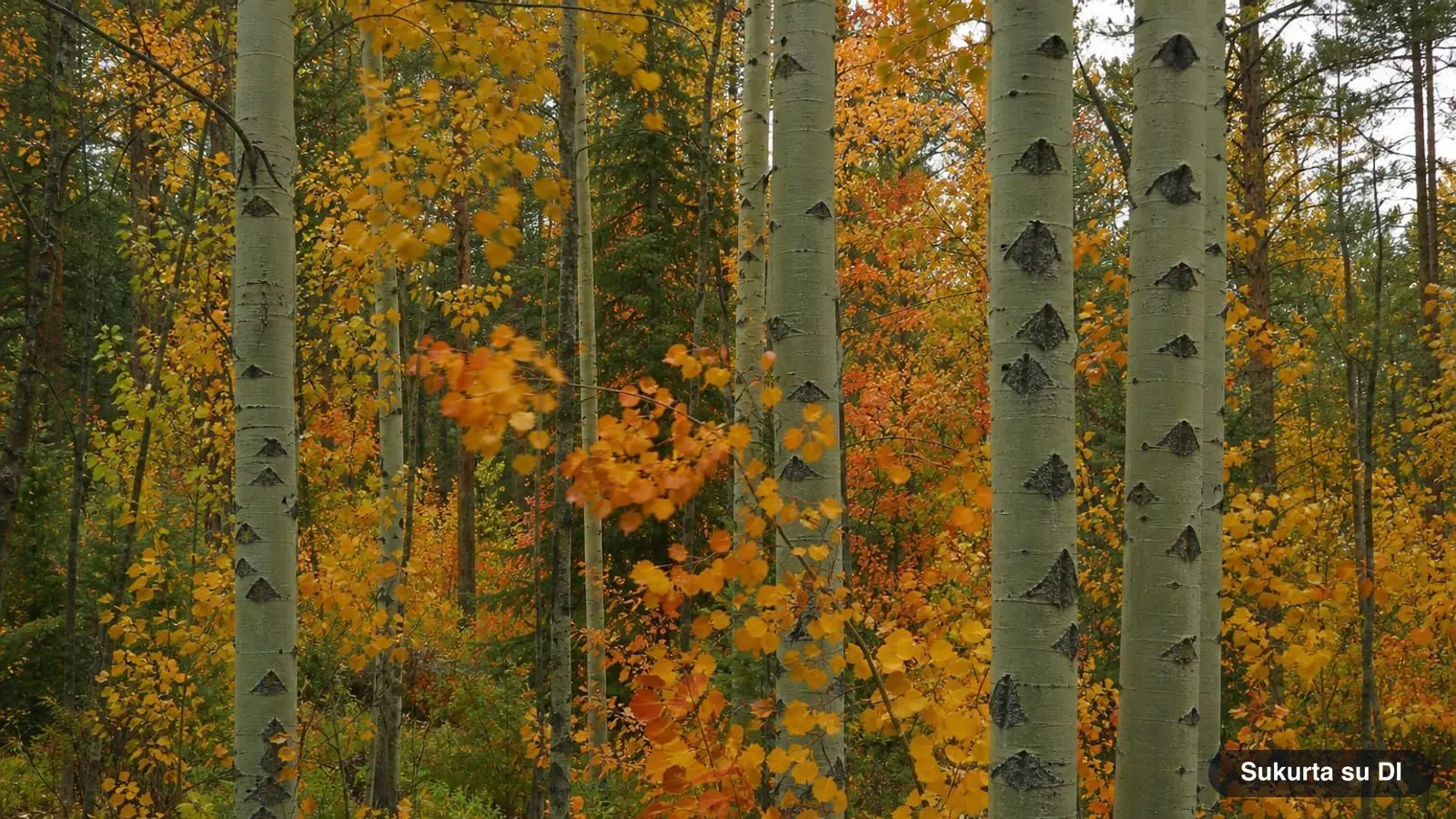
On a calm summer day, when not a single leaf seems to be moving, the canopy of an aspen tree still rustles and shimmers quietly. This tree earned its name for this exact trait—its leaves tremble in the slightest air current. Aspen grows almost everywhere across its native range: in forests, along woodland edges, in clearings, near homesteads, and by rivers, painting the autumn landscape in bright shades of yellow and red. In this profile from our tree identification guide, you will learn how to recognize aspen year-round, why it spreads in clonal groves, and why it is more important to forest wildlife than it might appear.
| Latin name | Populus tremula |
|---|---|
| Other names | Eurasian aspen, common aspen, trembling aspen |
| Family | Willow family (Salicaceae), poplar genus |
| Group | Broadleaf, native to Europe and Asia |
| Height | Usually about 65 ft (20 m), up to 80 ft (25 m), exceptionally taller |
| Lifespan | 80–90 years, rarely up to 150 |
| Flowering | Mid-spring, before leaves appear; dioecious |
| Habitat & Range | Widespread across boreal and temperate forests of Europe and Asia |
How to Identify Aspen
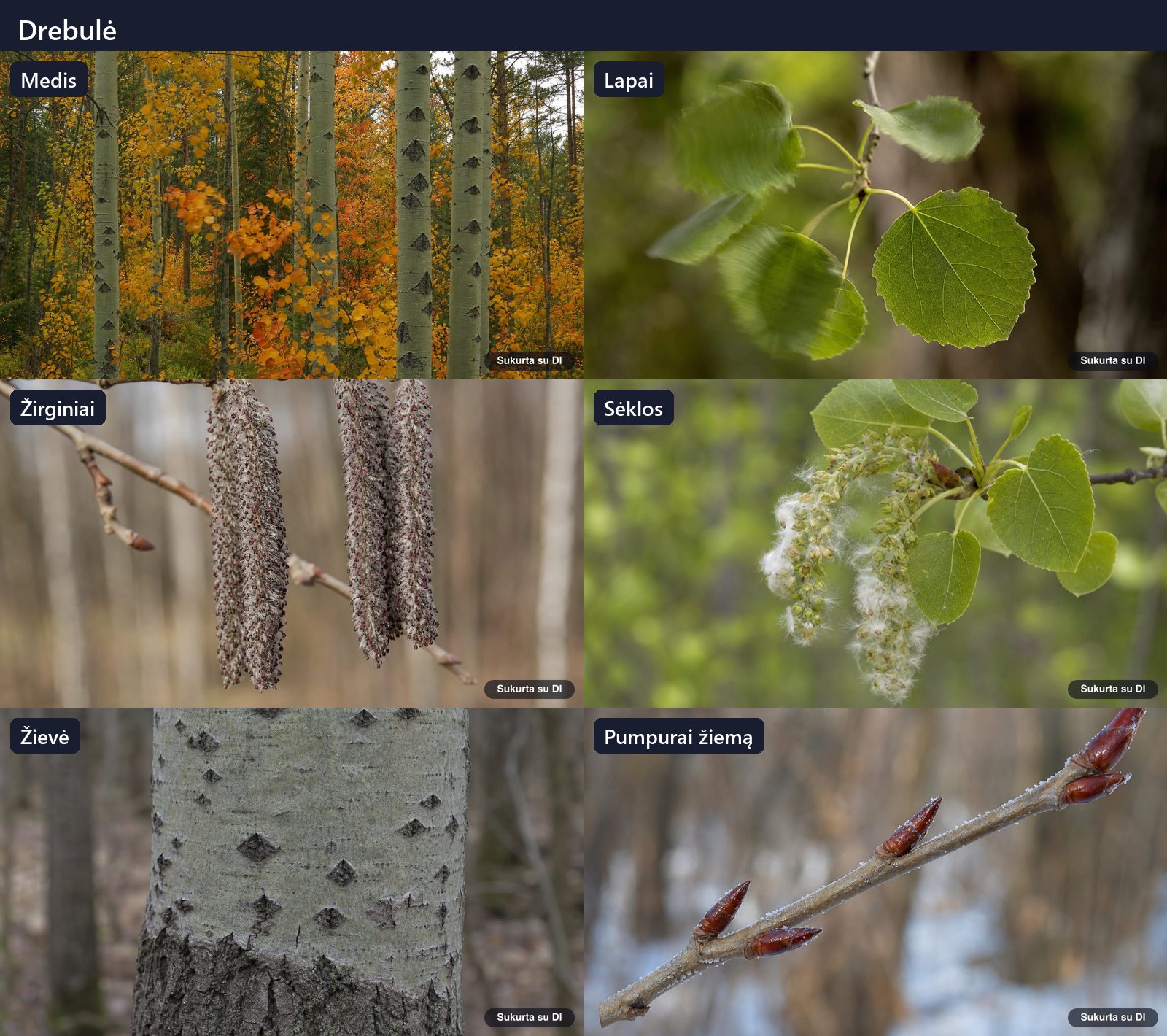
Aspen is a straight-trunked tree with a relatively sparse, high canopy: the lower part of the trunk is usually free of branches. It is a highly light-demanding pioneer species, typically growing in the upper canopy or along forest margins, and is one of the first trees to colonize clearings and burned areas. Aspen is not demanding when it comes to soil: it thrives in loam and sandy loam, tolerates acidic soils, extreme cold, droughts, and even prolonged flooding, though it dislikes dry sand and raised bogs.
Leaves
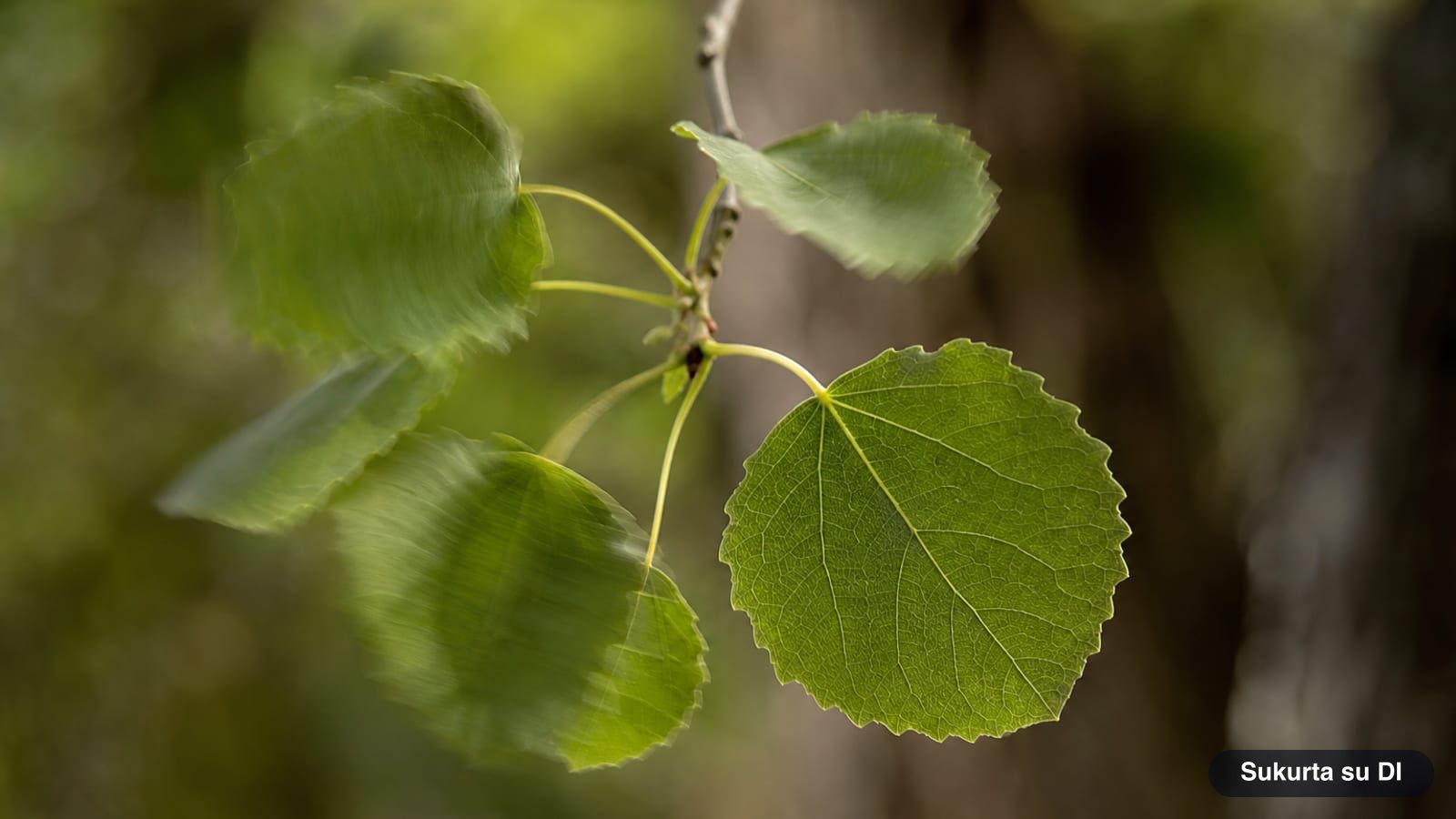
The leaves are nearly round, 1.2–2.8 inches (3–7 cm) long and equally wide, with a short pointed tip and a coarsely wavy, blunt-toothed margin. They are stiff, firm, light green above, and grayish beneath. The most distinctive feature is the long, laterally flattened leaf stalk (petiole), which is almost as long as the leaf blade itself: this is exactly what causes the leaf to twist and tremble. Leaves on young suckers and fast-growing shoots look different—they are larger, heart-shaped or triangular, and can reach up to 8 inches (20 cm) in length. In autumn, aspen leaves turn vibrant yellow, orange, or red.
Flowers
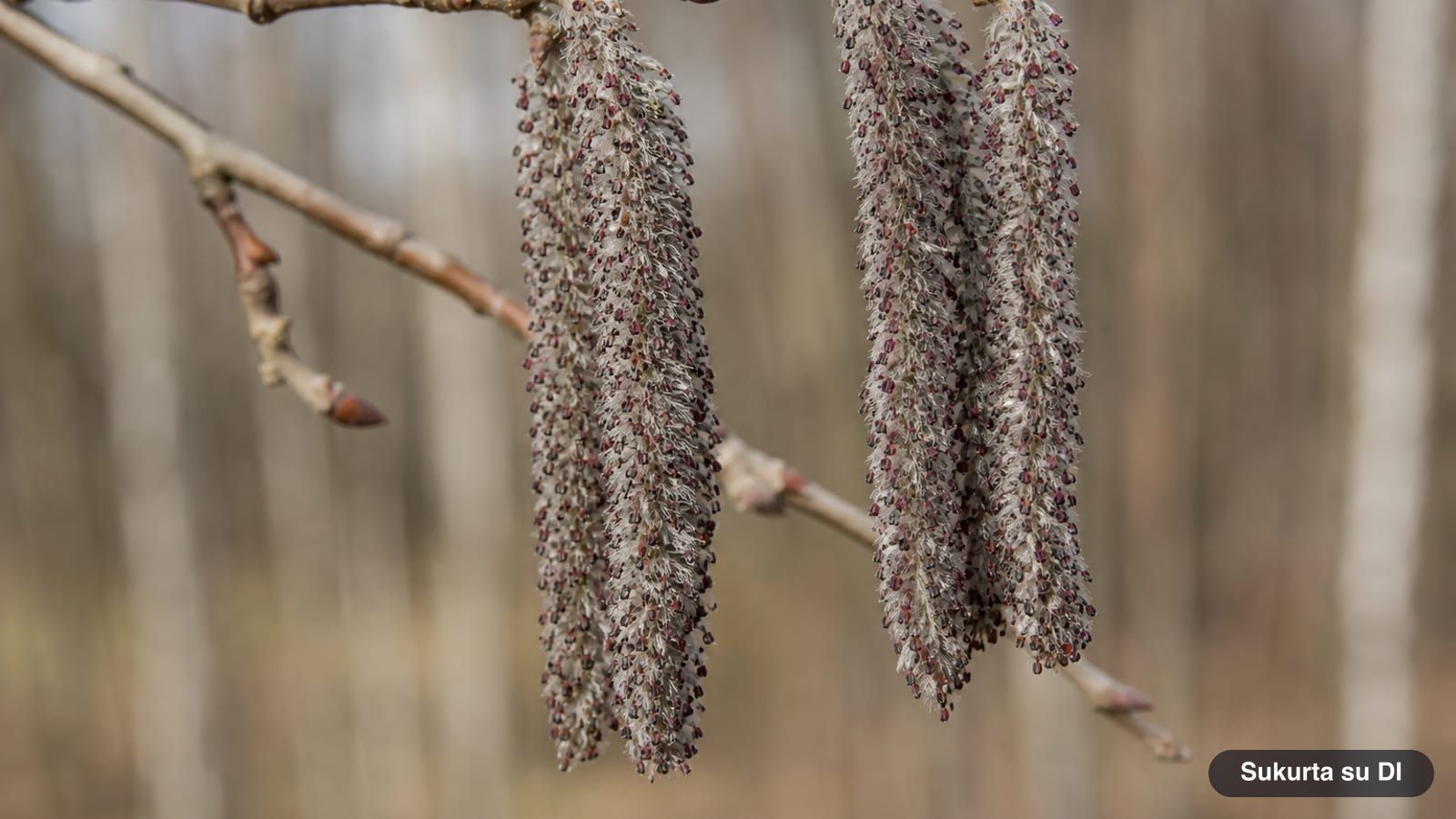
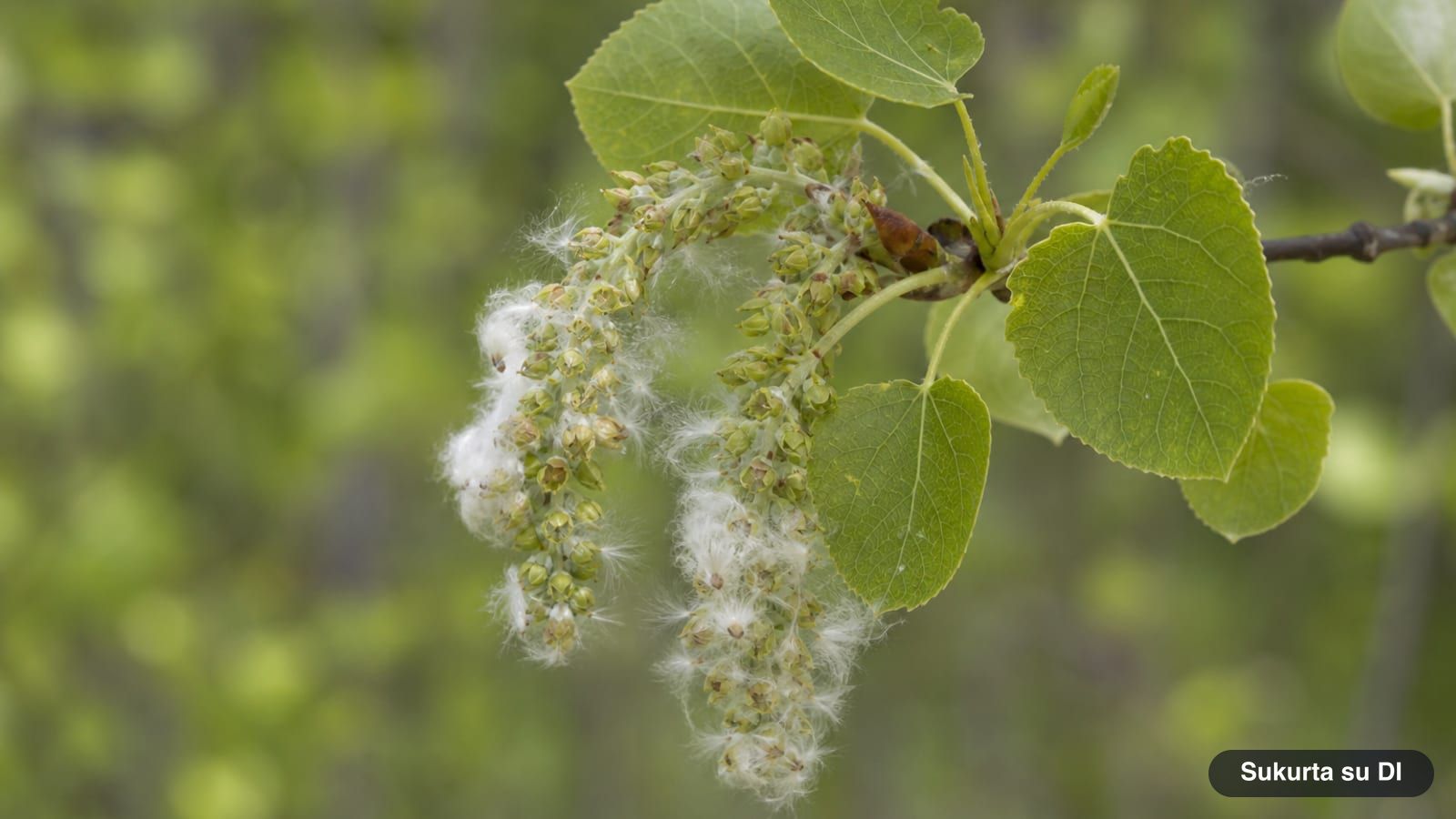
Aspen is a dioecious tree, meaning male and female catkins grow on separate trees. It flowers in early to mid-spring, before the leaves unfold. The male catkins are thick, up to 4–5.5 inches (10–14 cm) long, grayish and silky, speckled with dark red anthers. The female catkins are slightly shorter, grayish-green, with pinkish stigmas; they elongate after pollination.
Seeds
The seeds mature very quickly—about 25 days after flowering, usually in late spring just as the leaves are fully out. The small capsules open to release tiny seeds attached to tufts of white hairs, which the wind carries over long distances. However, aspen reproduces by seed much less frequently than by root suckers.
Bark and Buds
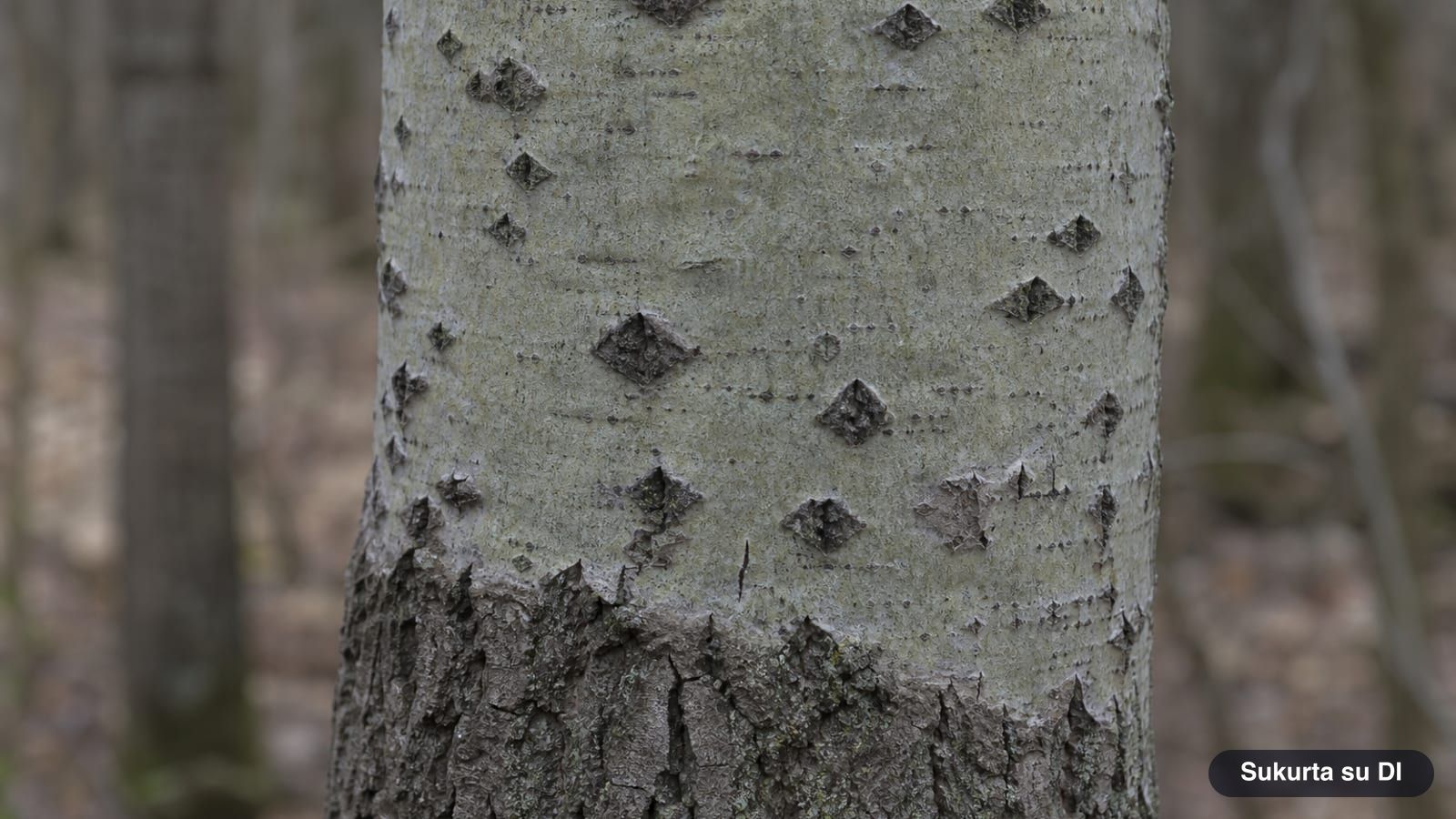
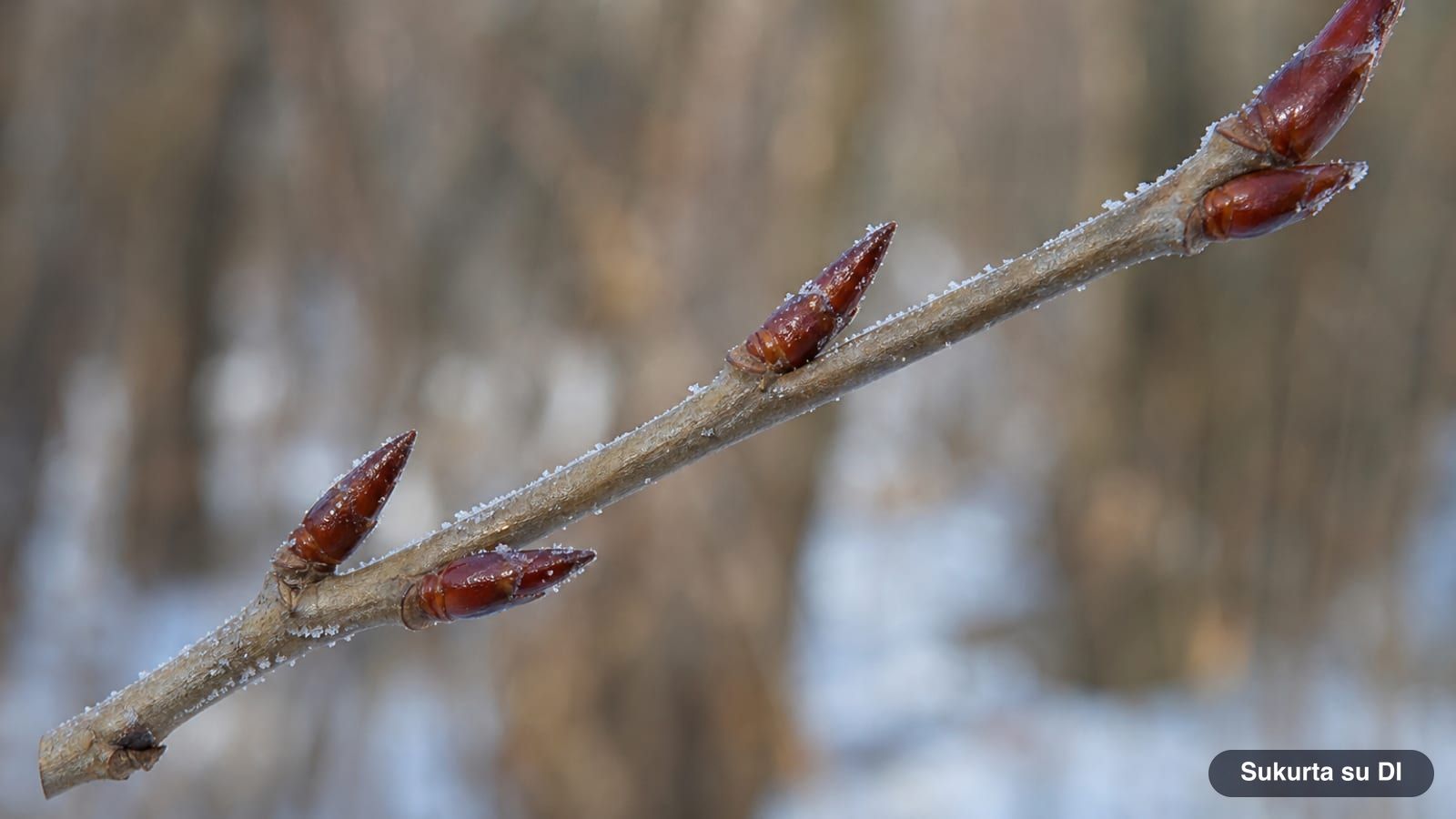
The bark of young trees is smooth, pale, and greenish-gray, marked with dark, diamond-shaped lenticels. From a distance, it can easily be confused with the bark of a young birch or gray alder. As the tree ages, the lower part of the trunk darkens, becoming grayish-brown, rough, and deeply fissured, while the upper trunk remains smooth and greenish. The buds are about 0.4 inches (1 cm) long, elongated-ovoid, pointed, reddish-brown, slightly sticky, and fragrant.
Aspen, Birch, or White Poplar?
| Feature | Aspen | Silver Birch | White Poplar |
|---|---|---|---|
| Leaf | round, wavy, on a long flattened stalk | triangular, double-toothed | white and felt-like beneath, often lobed |
| Bark | greenish-gray, smooth, diamond marks | white papery bark with black fissures | whitish-gray, diamond marks, dark at the base |
| Flowers | gray hairy catkins, mid-spring | yellow drooping catkins, mid-spring | catkins, mid-spring |
| Origin | native to Eurasia, very common | native to Eurasia, very common | native to central/southern Europe and central Asia |
Aspen readily crossbreeds with white poplar—their hybrid is known as gray poplar (Populus × canescens), which grows taller and thicker than both parent species. You can learn more about its relatives in our poplar tree guide, and about birches in our birch tree guide.
Aspen Groves and Clonal Colonies
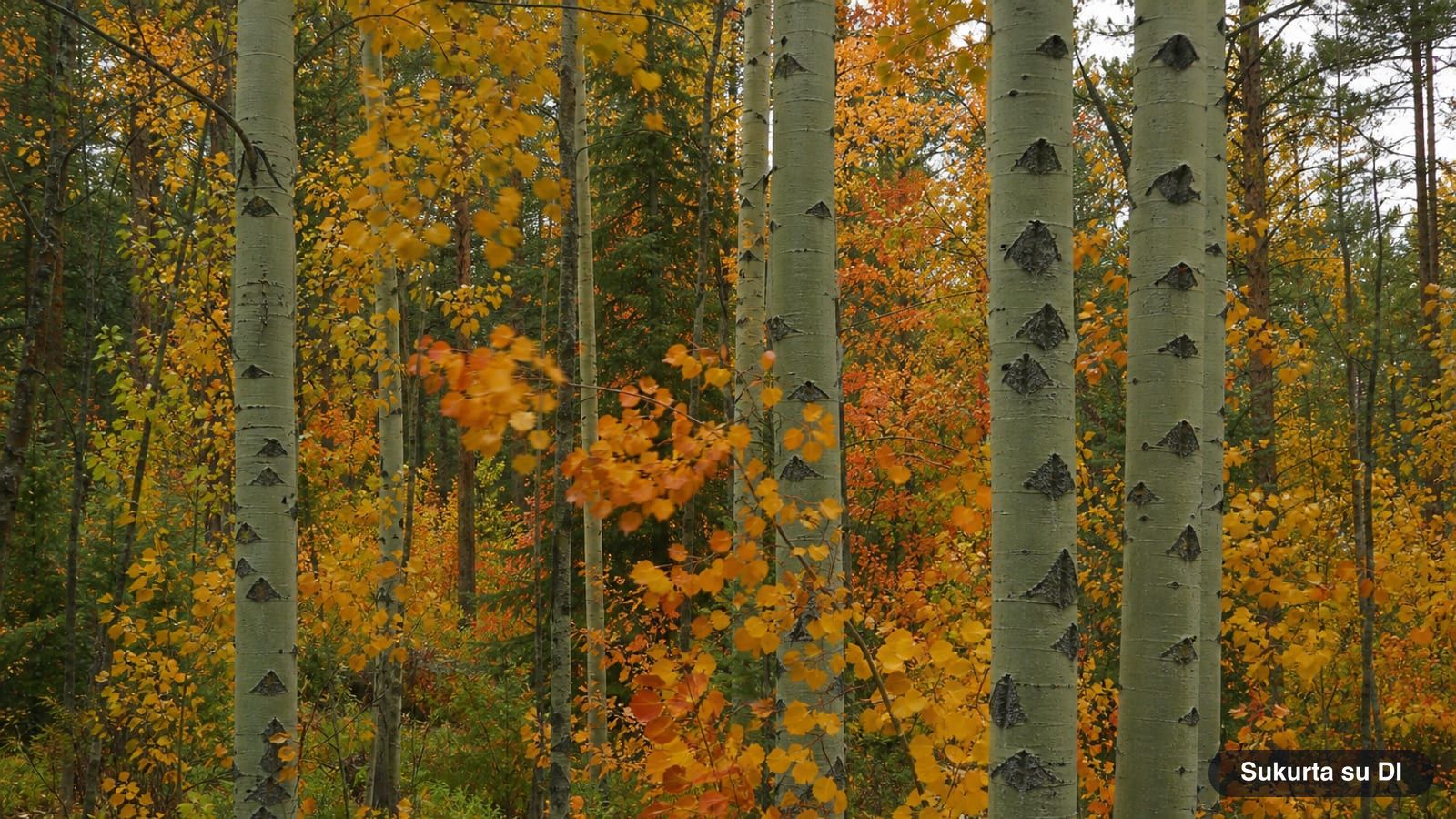
Eurasian aspen is a highly adaptable and widespread species, forming a major component of boreal and temperate forests across Europe and Asia. It frequently mixes into broadleaf or coniferous stands alongside birch, spruce, oak, pine, or ash, but it also forms pure, dense aspen groves. As a pioneer species, it plays a crucial role in forest succession, quickly covering open ground after logging, windstorms, or wildfires.
Aspen grows incredibly fast: young shoots can shoot up by as much as 6.5 feet (2 m) in a single year. Its primary method of reproduction is through root suckers, which can sprout up to 130 feet (40 m) away from the parent tree. This creates expansive clonal colonies where all the trees are genetically identical and share a single, interconnected root system. When the main stems are cut down or destroyed by fire, the surviving root system responds by sending up an even denser thicket of new shoots.
Aspen and Forest Wildlife
For ecologists, aspen is one of the most valuable keystone species in the forest. Woodpeckers favor its relatively soft wood for excavating nesting cavities, which are later used by owls, bluebirds, and other hole-nesting species. Forest mammals, including deer, moose, and beavers, heavily browse on aspen bark and tender shoots. A vast array of insects and fungi rely specifically on aspen, and young, dense clonal groves provide essential cover for wildlife that depends on early-successional forest habitats.
Older trees are highly susceptible to disease. Aspen is frequently attacked by the aspen bracket fungus (Phellinus tremulae)—a hard, hoof-shaped conk that grows on the trunk and causes severe heart rot. Because of this vulnerability, aspens are relatively short-lived, and in commercial forestry, they are typically harvested while still relatively young before the wood degrades.
Wood and Uses
Aspen wood is white, lightweight, soft, and has the distinct advantage of shrinking very little as it dries. It is an ideal timber for making matches, paper pulp, plywood, particleboard, oriented strand board (OSB), and tool handles. Historically, split aspen wood was a traditional material for roofing shingles. It is also valued as a fast-growing, renewable source of firewood. In urban landscaping, aspen is surprisingly resilient—pollution and poor city soils do little to shorten its lifespan compared to more sensitive trees.
Aspen in Folklore and Mythology
Throughout European folklore, the perpetual trembling of aspen leaves has inspired numerous myths and legends. In some traditions, the tree was said to be cursed, doomed to tremble forever because its wood was used to construct the cross of the crucifixion. In other ancient mythologies, the rustling leaves were believed to be the voices of spirits communicating with the living. These stories beautifully explain why the aspen canopy never truly rests. You can read more about the mythology of other forest trees in our spruce tree guide. For tips on identifying this restless tree after it drops its leaves, check out our winter tree identification guide.
Frequently asked questions
Why do aspen leaves quiver?
Aspen leaf stalks (petioles) are long and flattened laterally. This unique shape makes the leaf highly flexible, allowing it to pivot and flutter in the slightest breeze. This causes the entire canopy to tremble and produce a distinct rustling sound, giving the tree its botanical name tremula (trembling).
What is the difference between aspen and birch?
Both are light-canopy broadleaf trees with pale bark, but birch bark is papery, white, and peeling, while aspen bark is greenish-gray, smooth, and marked with dark diamond-shaped lenticels. Birch leaves are triangular and double-toothed, whereas aspen leaves are nearly round with wavy edges and long, flattened stalks.
How long do aspen trees live?
They typically live for 80 to 90 years, rarely reaching up to 150 years. Aspen grows rapidly in its youth, but growth slows down after 40 to 50 years. Older trees are highly susceptible to heart rot caused by the aspen bracket fungus.
What is aspen wood used for?
Aspen wood is white, lightweight, soft, and shrinks very little as it dries. It is widely used to manufacture matches, paper pulp, plywood, particleboard, and tool handles. Historically, it was a popular choice for roofing shingles, and it is also used as firewood.
How do you get rid of aspen root suckers?
Aspen roots spread extensively in the shallow soil layers and send up numerous shoots—sometimes up to 130 feet (40 m) away from the parent tree. Cutting down the main tree often stimulates even more suckers to emerge. To control them, you must consistently remove the new shoots over several years until the root system exhausts its energy reserves.
Log in to comment
No comments yet. Be the first.