Juniper Tree Guide: Needles, Berries, and Garden Varieties
- The common juniper (<em>Juniperus communis</em>) is a widespread evergreen shrub or small tree native to the Northern Hemisphere.
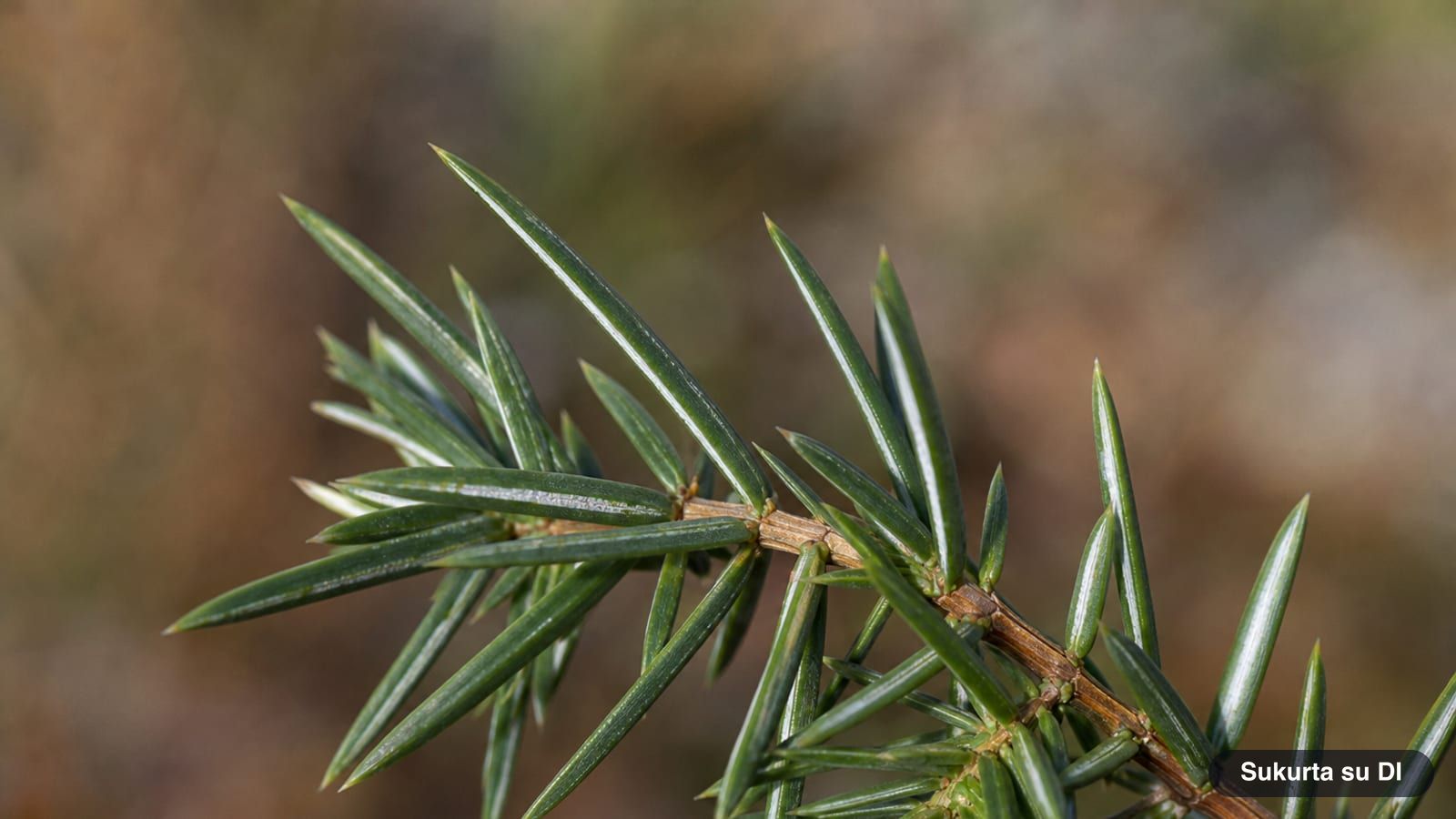
- Its needles are very sharp, grow in whorls of three, and feature a distinct whitish band on the upper surface.
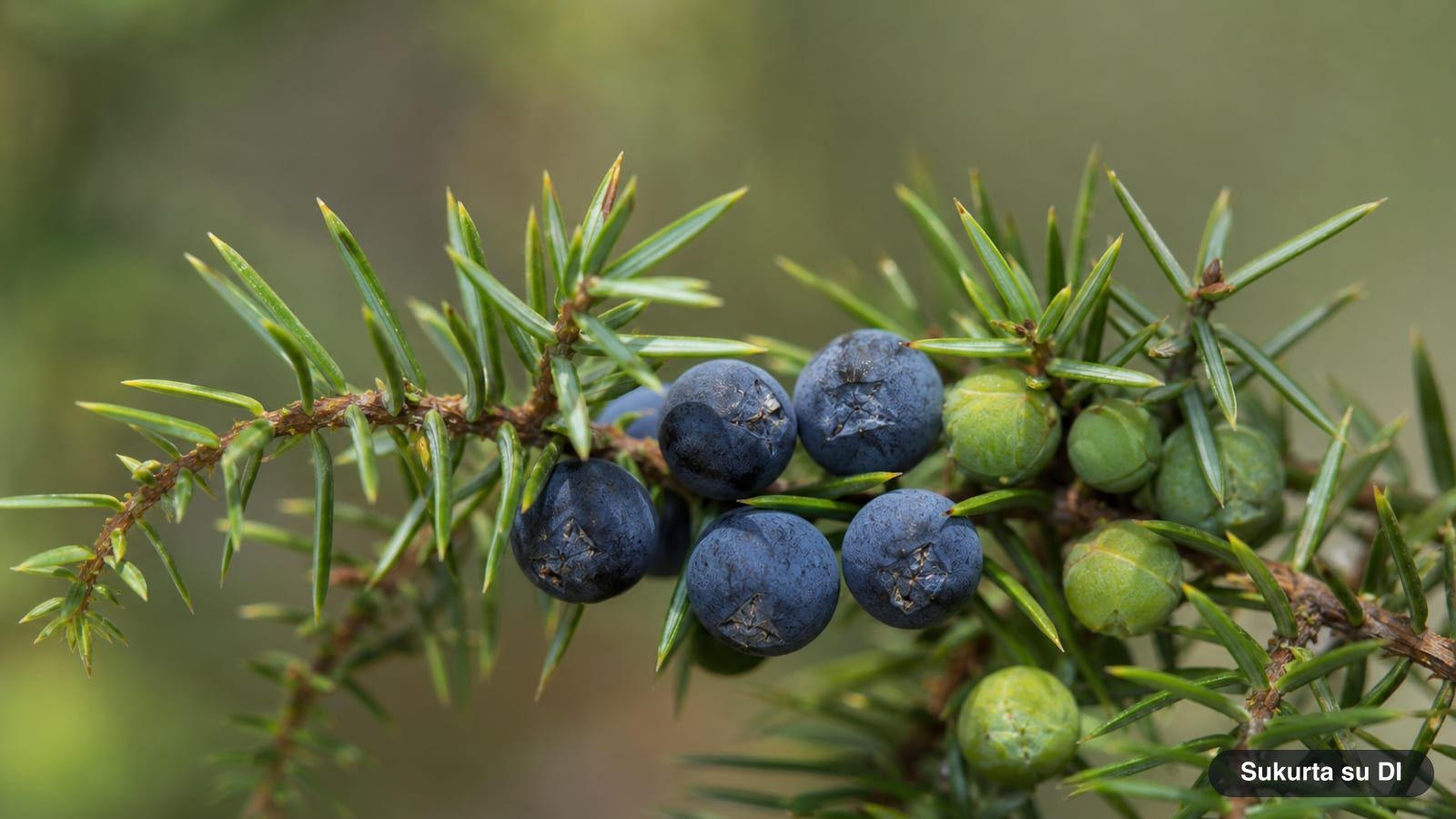
- The "berries" are actually fleshy seed cones that take two years to ripen, eventually turning a deep bluish-black.
- Junipers grow very slowly and can live for hundreds of years, with some ancient specimens documented at over 800 years old.
- While common juniper berries are used as a spice, other species like the Savin juniper are highly toxic, and even common juniper should be avoided by pregnant women.
This article is part of the 77.today trees guide, prepared by the 77.today editors from the sources listed at the end.
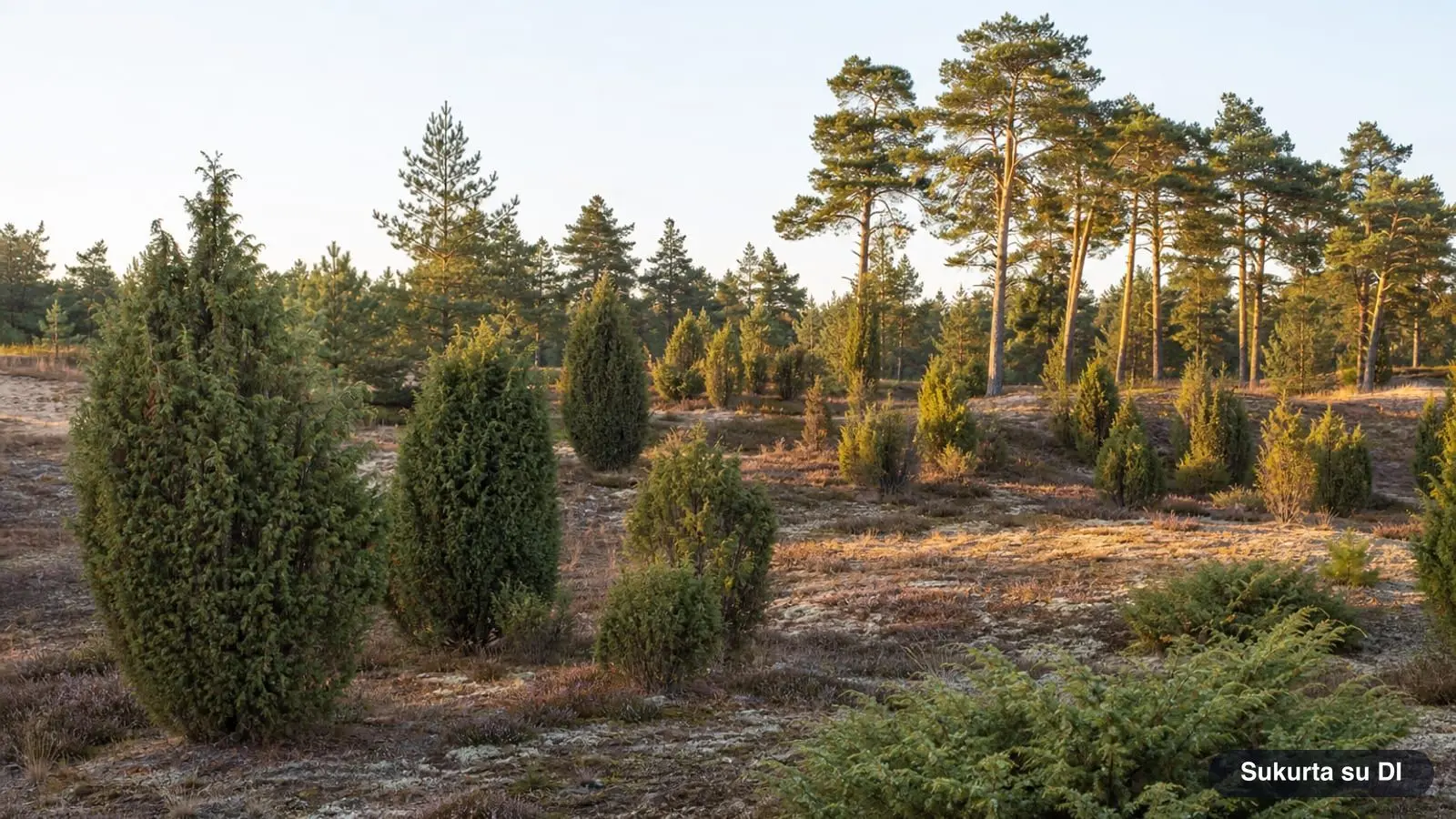
The juniper is that prickly, bluish-green shrub that dots sandy heaths, rocky slopes, and pine forest understories across the Northern Hemisphere, sometimes growing into a narrow, cypress-like small tree. Although most often a shrub, the juniper is classified among our coniferous trees and is one of the longest-lived. In this part of the Tree Guide, we explore the common juniper: its needles, flowers, "berries," bark, and shape, where it grows naturally, how its berries are used, and the differences between popular garden varieties.
| Latin name | Juniperus communis |
|---|---|
| Family | Cypress family (Cupressaceae) |
| Group | Evergreen coniferous shrub or tree, native to the Northern Hemisphere, dioecious |
| Height | Usually 10–16 ft (3–5 m), rarely a tree up to 33–50 ft (10–15 m) |
| Age | Up to 600 years or more |
| Pollination | Mid-spring (late April to early May) |
| Seed cones | Ripen in September–October of the second year |
| Other names | Common juniper, ground juniper |
How to Identify the Juniper
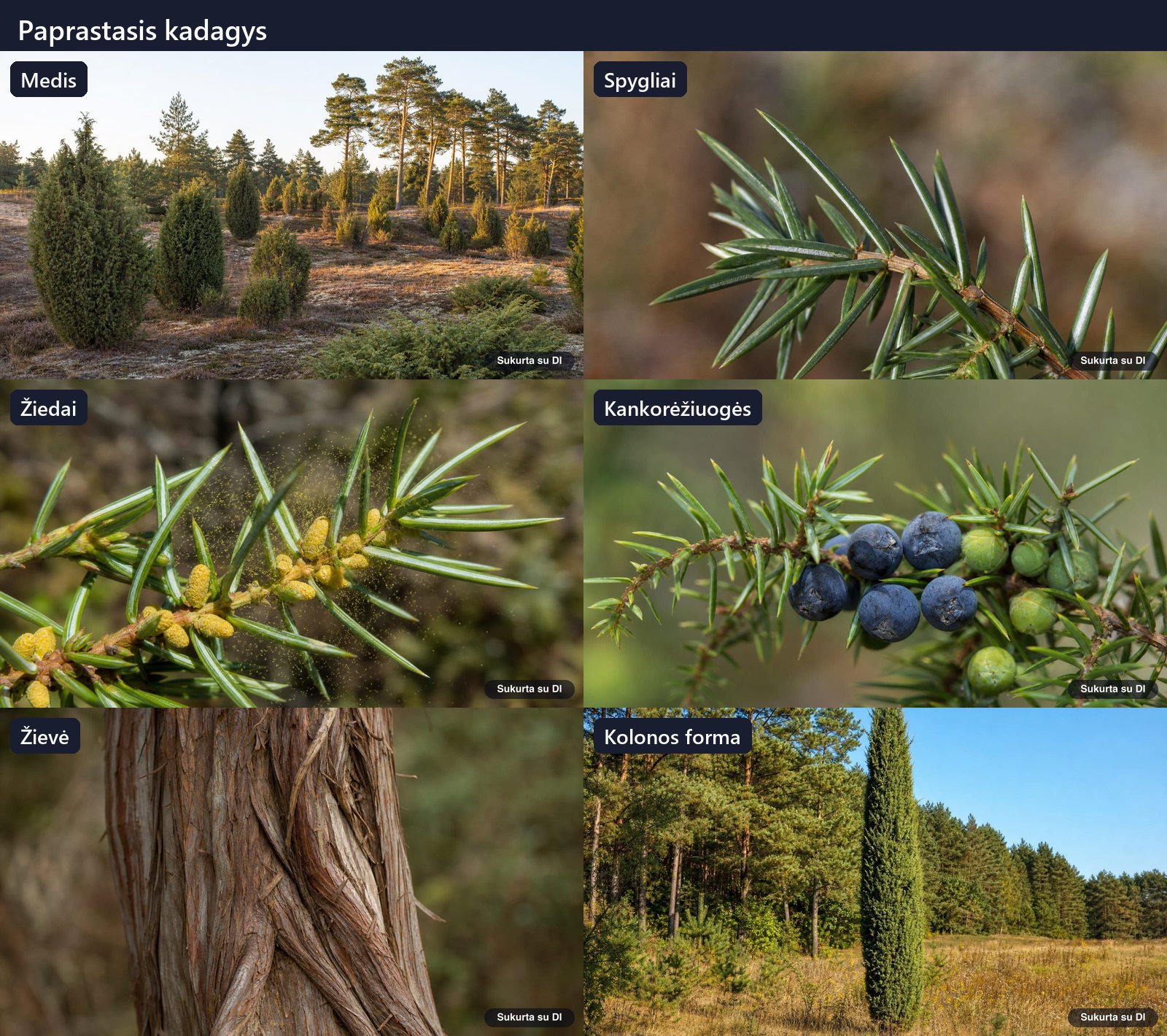
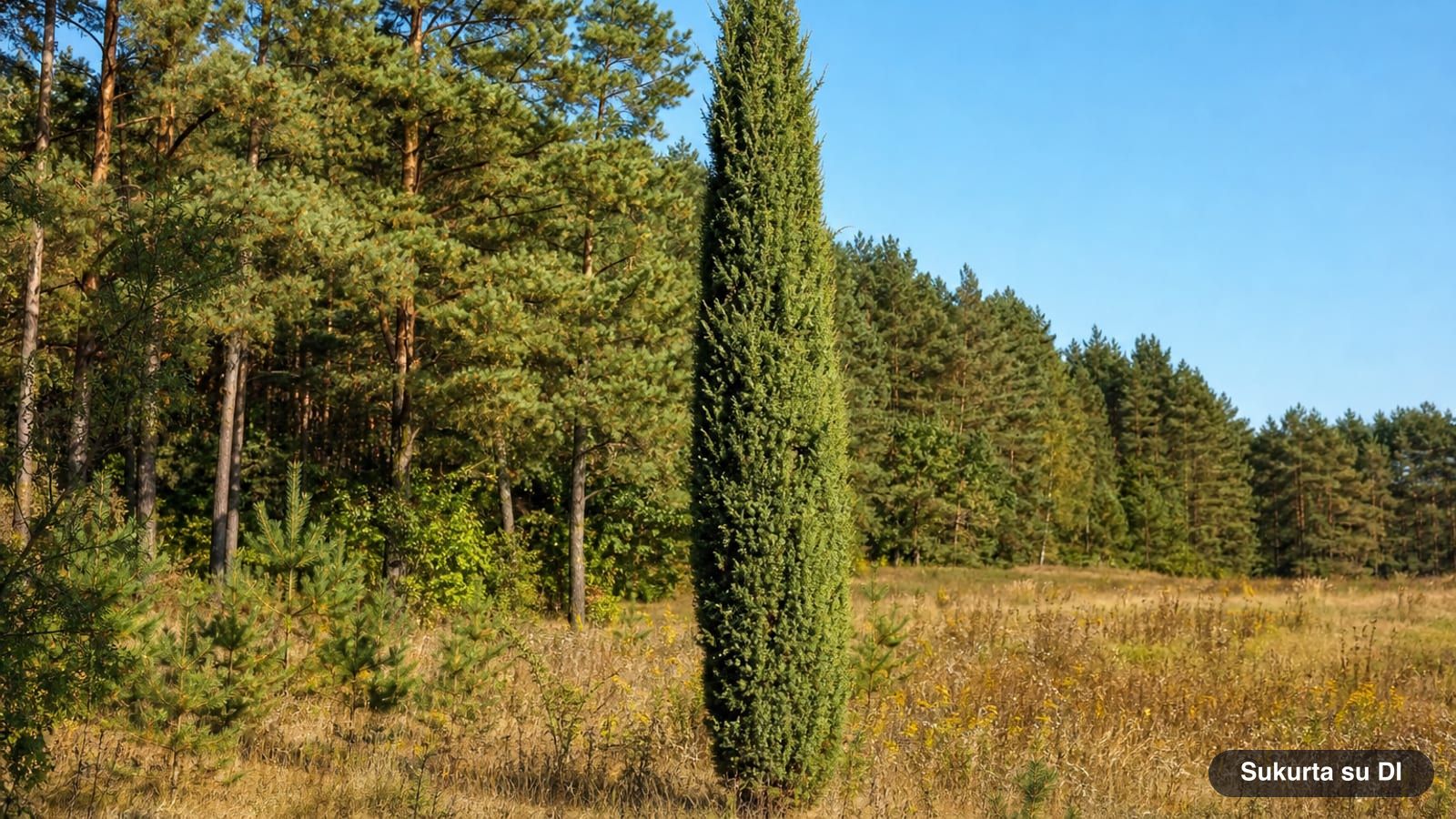
The common juniper is a perennial, evergreen, slow-growing shrub or small tree with a dense canopy that varies greatly in shape: from a broad, spreading bush to a narrow column. Dendrologists note that male plants are often narrower and more tree-like, while female plants tend to spread out more broadly. The juniper is dioecious: some plants produce only pollen, while others produce only the "berries." It is a light-loving plant but can tolerate partial shade. It is highly resilient to drought and extreme cold—hardy down to −40°F (−40°C), USDA zones 2–7—but it does not tolerate heavily polluted urban air well.
Needles
Juniper needles are 0.4–0.6 inches (10–15 mm) long and about 0.04–0.08 inches (1–2 mm) wide. They are stiff, hard, and very sharp—easy to identify just by touching them. They grow in whorls of three, are longitudinally grooved, grayish-green, and feature a whitish stomatal band on the upper surface. The needles remain on the branches for about four years. Young shoots are triangular and brownish.
Flowers
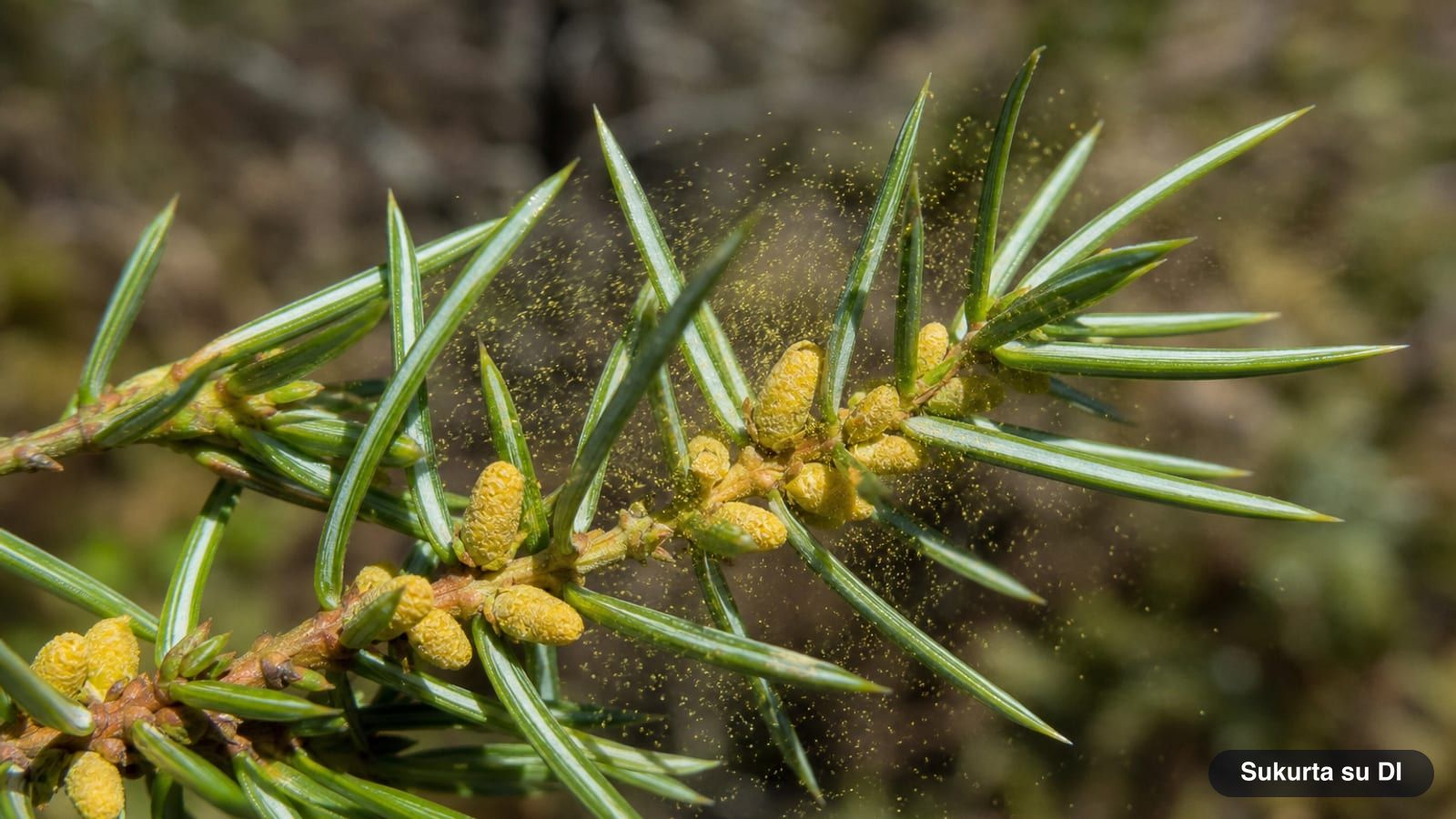
The juniper pollinates in mid-spring, typically from late April to early May in cool northern climates. The male cones are oval, up to 0.2 inches (5 mm) long, yellow, and clustered in the axils of the needles. The female cones are even smaller, 0.1–0.15 inches (3–4 mm), yellowish-green, and inconspicuous. The pollen is dispersed by the wind.
Juniper Berries
Along with the yew, the juniper stands out from other conifers because its cones look like berries. Botanically, these are fleshy seed cones—spherical cones 0.2–0.4 inches (5–10 mm) in diameter, made of 3 (sometimes 6) fleshy, fused scales. During their first summer, they are green, and they only ripen in September or October of their second year, turning bluish-black with a whitish waxy bloom. Because of this two-year cycle, a single bush will almost always have both green and ripe berries at the same time. The flesh contains 1 to 3 small, triangular, resinous seeds. Junipers begin to bear fruit at 10 to 12 years of age and produce abundant crops every 3 to 5 years. The berries are eaten by thrushes and other birds, which then disperse the seeds.
Bark and Shape
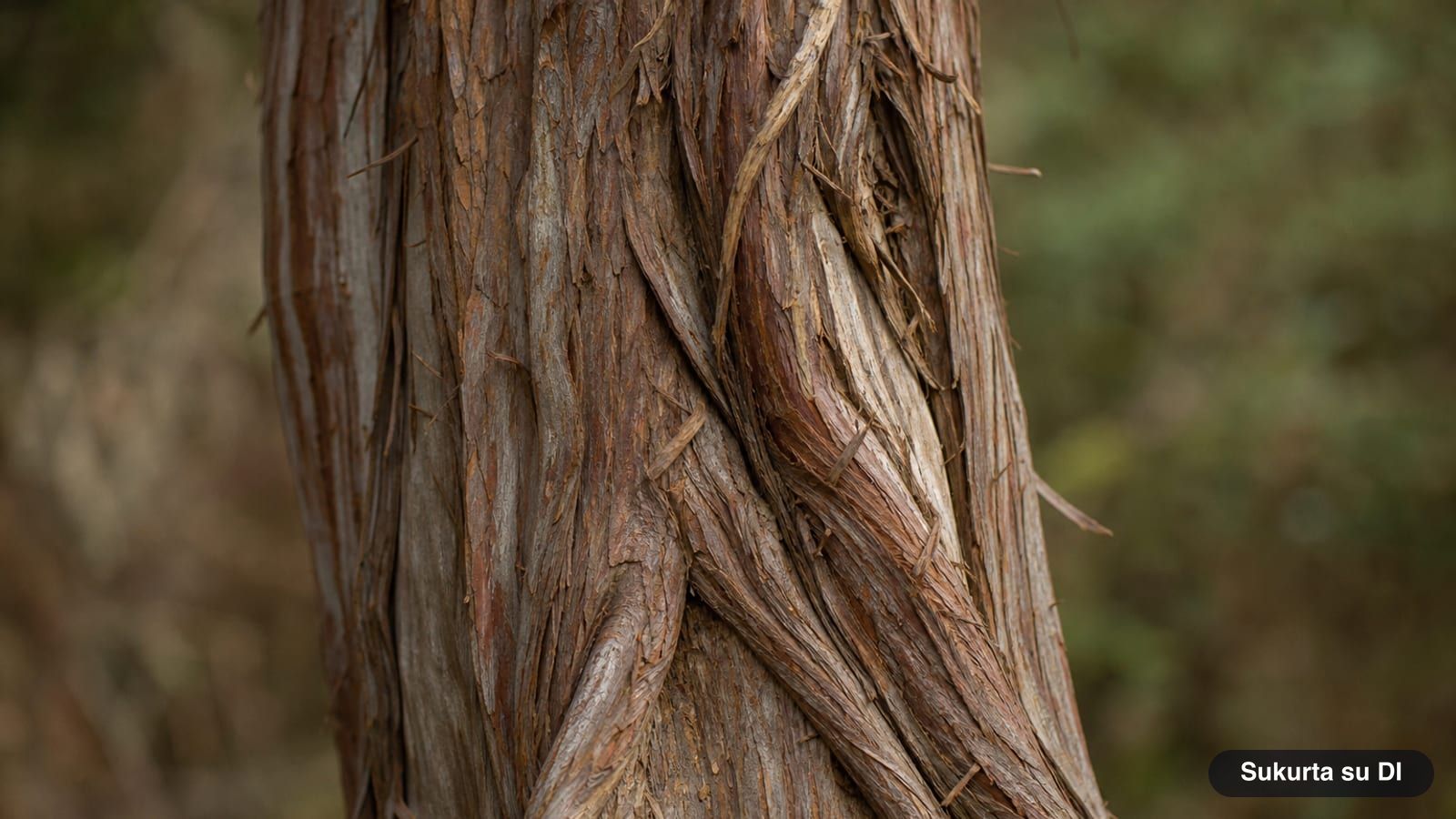
The bark of young junipers is smooth, but it later cracks into longitudinal ridges and peels off in long strips, ranging in color from grayish-brown to reddish-brown. The twigs are round or slightly ridged and reddish-brown. The root system is shallow. The juniper grows very slowly: a five-year-old plant is barely 8 inches (20 cm) tall, a ten-year-old is about 20 inches (50 cm), and it only reaches its typical height of 10 to 16 feet (3 to 5 m) after about 50 years.
Where Junipers Grow
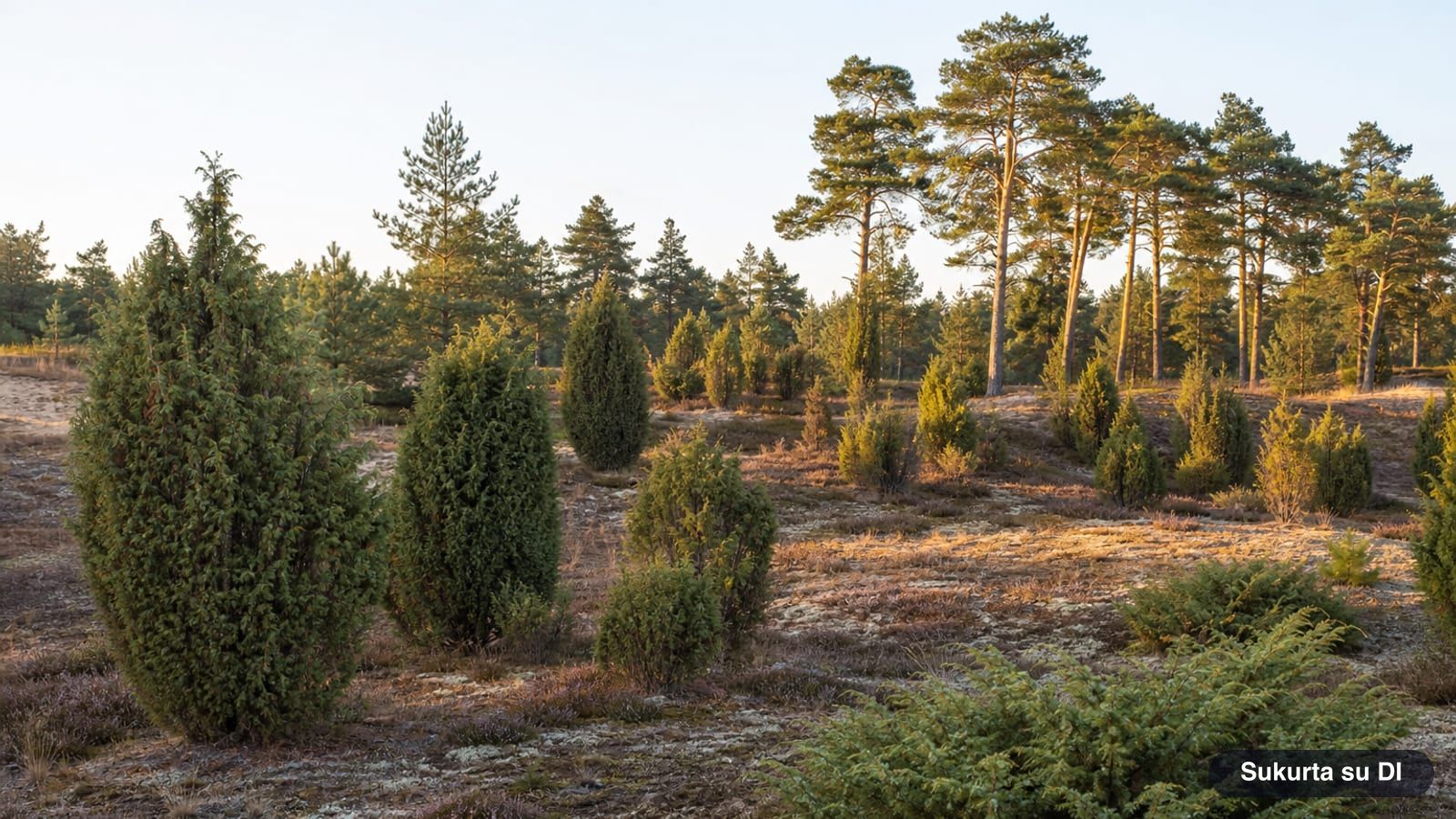
The common juniper has the widest geographical distribution of any woody plant on Earth: it grows naturally throughout almost the entire Northern Hemisphere, spanning North America, Europe, and Asia. It is a highly adaptable species that thrives in a variety of environments. Most often, the juniper grows in the understory of pine forests, as well as in spruce, birch, and oak woodlands. It is a pioneer species that readily colonizes open areas such as sandy heaths, gravel pits, abandoned pastures, and rocky slopes. It requires well-drained soil and struggles in waterlogged conditions.
While individual shrubs are common, dense juniper woodlands are rarer and often protected. Across Europe and North America, specific nature reserves manage these habitats to prevent them from being shaded out by taller forest trees. These open, sunlit juniper scrublands are vital ecosystems for many specialized insects and birds.
Famous Junipers
Because of their incredibly slow growth and resilience, junipers can reach astonishing ages and sizes. Notable historic examples of the common juniper include the Obelų Ragas thirteen-trunk juniper in Lithuania, which stands about 39 feet (12 m) tall and was declared a natural monument in 1984. Other impressive specimens include the Pakuodžiupiai and Dvareliškiai junipers; the latter is a single-trunk tree reaching 30 feet (9 m) high in the middle of a cultivated field. While these are renowned for their size, junipers in harsh, cold environments can also achieve extreme longevity; a specimen in Sweden has been documented at over 800 years old. For more on ancient trees, visit our section on the oldest and largest trees.
Juniper Berries in the Kitchen
Due to their high resin content, juniper berries should not be eaten raw by the handful, but in moderation, they make an excellent spice. Dried juniper berries are traditionally added to venison, pork dishes, sauerkraut, and marinades, and are often used when smoking meat. They are also the essential botanical used to flavor gin and the Dutch spirit jenever. The berries are harvested in the fall when fully ripe; they can easily be gathered by shaking the branches over a cloth spread on the ground.
It is important to know the limits. As noted in botanical and culinary resources, consuming large quantities can cause digestive irritation or potentially harm the kidneys. Pregnant and breastfeeding women are strongly advised to avoid juniper berries due to the risk of miscarriage. Furthermore, only the berries of the common juniper are suitable for culinary use—the berries of many other juniper species, especially the Savin juniper, are toxic.
Junipers in Gardens
Many species and cultivars of juniper are grown in gardens, ranging from creeping ground covers to narrow columns. The most common include:
| Juniper | Shape | Notes |
|---|---|---|
| Common juniper | Shrub or narrow column | Native to the Northern Hemisphere, very hardy; columnar varieties are popular in landscaping |
| Rocky Mountain juniper (J. scopulorum) | Narrow, bluish, columnar | Native to North America; the 'Blue Arrow' cultivar is highly popular |
| Savin juniper (J. sabina) | Broad, creeping shrub | All parts are toxic; emits an unpleasant odor when crushed |
| Flaky juniper (J. squamata) | Low, bluish | Native to Asian mountains; 'Blue Star' is a common cultivar |
| Creeping juniper (J. horizontalis) | Hugging the ground | Excellent ground cover for slopes |
Junipers require a sunny location and well-drained soil that does not become waterlogged; in the shade, their foliage tends to thin out. They tolerate drought and cold very well, but struggle with heavy urban air pollution. When planting or transplanting junipers, it is crucial to keep the root ball intact, as their root systems are quite sensitive to disturbance.
Juniper in Traditions
The juniper has a rich history in folklore and tradition across the Northern Hemisphere. In many European cultures, juniper branches were traditionally burned to cleanse the air in homes and stables, a practice rooted in the plant's high concentration of phytoncides—volatile compounds that have antimicrobial properties. This is why the air in juniper woodlands often feels exceptionally fresh. The wood itself is highly valued for its durability and pleasant, lasting fragrance, often used for carving small household items. To learn about our other native conifers, check out the guides on spruce, pine, and yew trees.
Frequently asked questions
What are the other names for the juniper?
The common juniper is scientifically known as <em>Juniperus communis</em>. Depending on the region, it may simply be called common juniper or ground juniper. In historical texts, it is sometimes referred to by various local folk names across Europe and North America.
When do juniper berries ripen?
Juniper "berries" are actually fleshy cones. They are green during their first summer and only ripen in September or October of their second year, turning bluish-black with a whitish waxy bloom. Because of this, a single bush often has both green and ripe berries at the same time.
Are juniper berries edible?
They should not be eaten raw by the handful due to their strong, resinous flavor, but dried berries are widely used as a spice for meats, sauerkraut, and marinades, and are the primary flavoring in gin. Large quantities can irritate the kidneys, and they are not recommended for pregnant or breastfeeding women.
Which juniper is poisonous?
The Savin juniper (<em>Juniperus sabina</em>), often planted in gardens as a ground cover, is highly toxic in all its parts. It can be identified by the unpleasant odor it emits when its branches are crushed. Only the berries of the common juniper should be used for culinary purposes.
How long does a juniper live?
The common juniper grows very slowly: a five-year-old plant might be just 8 inches (20 cm) tall, and it can take about 50 years to reach a typical height of 10 to 16 feet (3 to 5 m). They can live for up to 600 years, and some exceptional specimens in harsh climates are known to be over 800 years old.
Where do junipers grow naturally?
The common juniper has the largest geographical range of any woody plant, growing throughout the cool temperate and subarctic regions of the Northern Hemisphere. It thrives in well-drained soils, often appearing in pine forest understories, rocky slopes, sandy heaths, and abandoned pastures.
Log in to comment
No comments yet. Be the first.