European Ash Tree: Leaves, Black Buds, Seeds and Ash Dieback
- The European ash (Fraxinus excelsior) is a large, native deciduous tree in the olive family, widely distributed across Europe.
- Its compound pinnate leaves consist of 7 to 13 leaflets arranged in opposite pairs, while winter twigs feature distinctive velvety black buds.
- Ash trees are among the last to leaf out in spring, and their leaves often fall in autumn while still completely green.
- Since the 1990s, ash dieback—a devastating disease caused by an invasive fungus from East Asia—has severely threatened ash populations.
- Today, healthy ash woodlands are increasingly rare, prompting widespread conservation efforts and research into disease-resistant trees.
This article is part of the 77.today trees guide, prepared by the 77.today editors from the sources listed at the end.
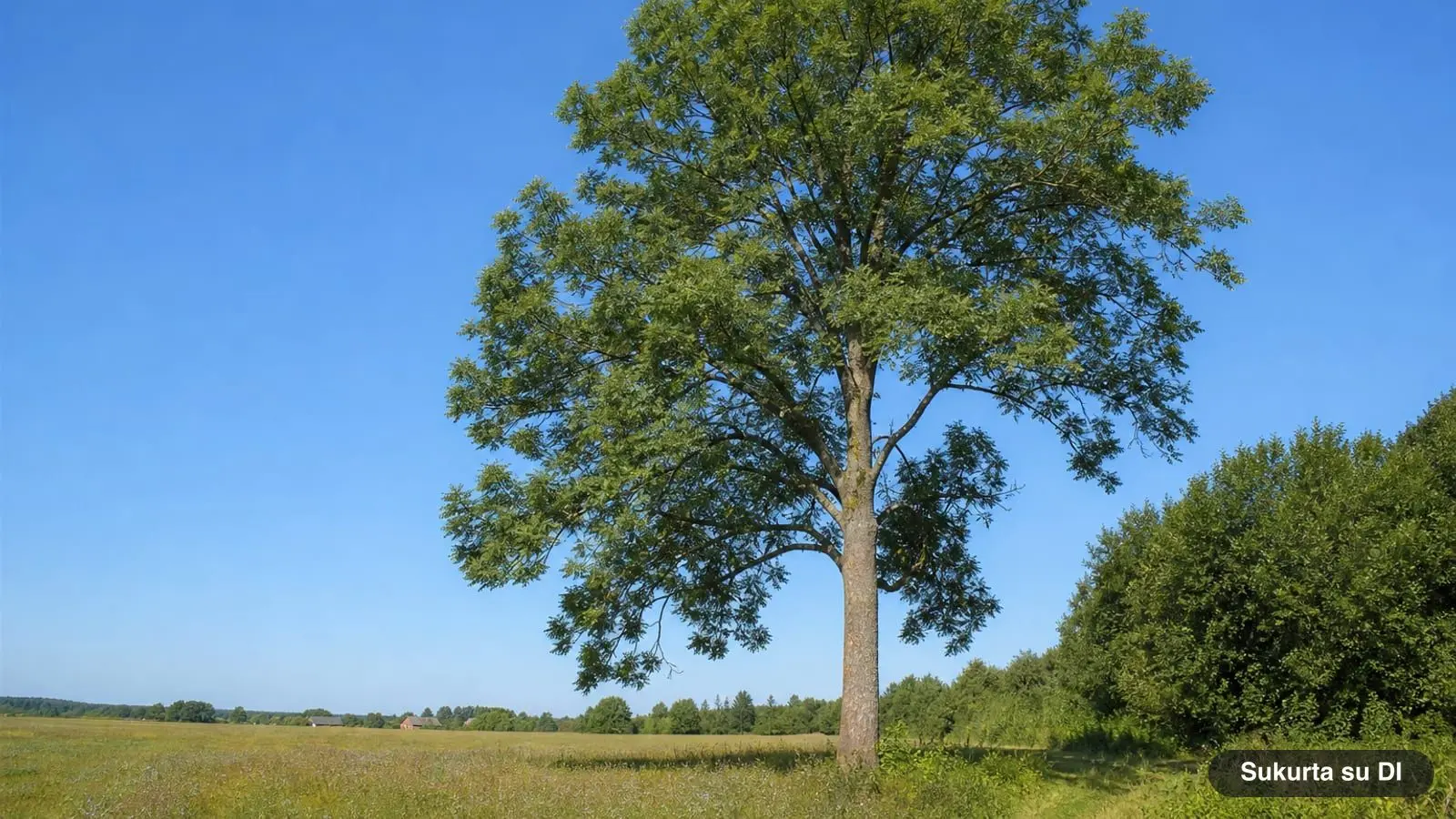
The ash is a tall, light-canopied deciduous tree with pinnate leaves, whose wood has long been valued for its strength and elasticity. Thirty years ago, ash woodlands were a common sight across Europe, but since the 1990s, they have been devastated by ash dieback. In this part of the tree guide, we explore the European ash profile: how to identify its leaves, flowers, fruits, bark, and buds, where it grows, what its wood is used for, and the ongoing crisis facing ash populations.
| Latin name | Fraxinus excelsior |
|---|---|
| Family | Olive family (Oleaceae) |
| Group | Deciduous tree, native to Europe |
| Height | 65–115 ft (20–35 m), exceptionally up to 157 ft (48 m) |
| Lifespan | Up to 250–300 years |
| Flowers | Mid-spring, before the leaves appear |
| Fruits | Single winged seeds in clusters, Sept–Oct, persisting through winter |
| Woodland share | Ash woodlands – severely declining globally |
How to Identify an Ash Tree
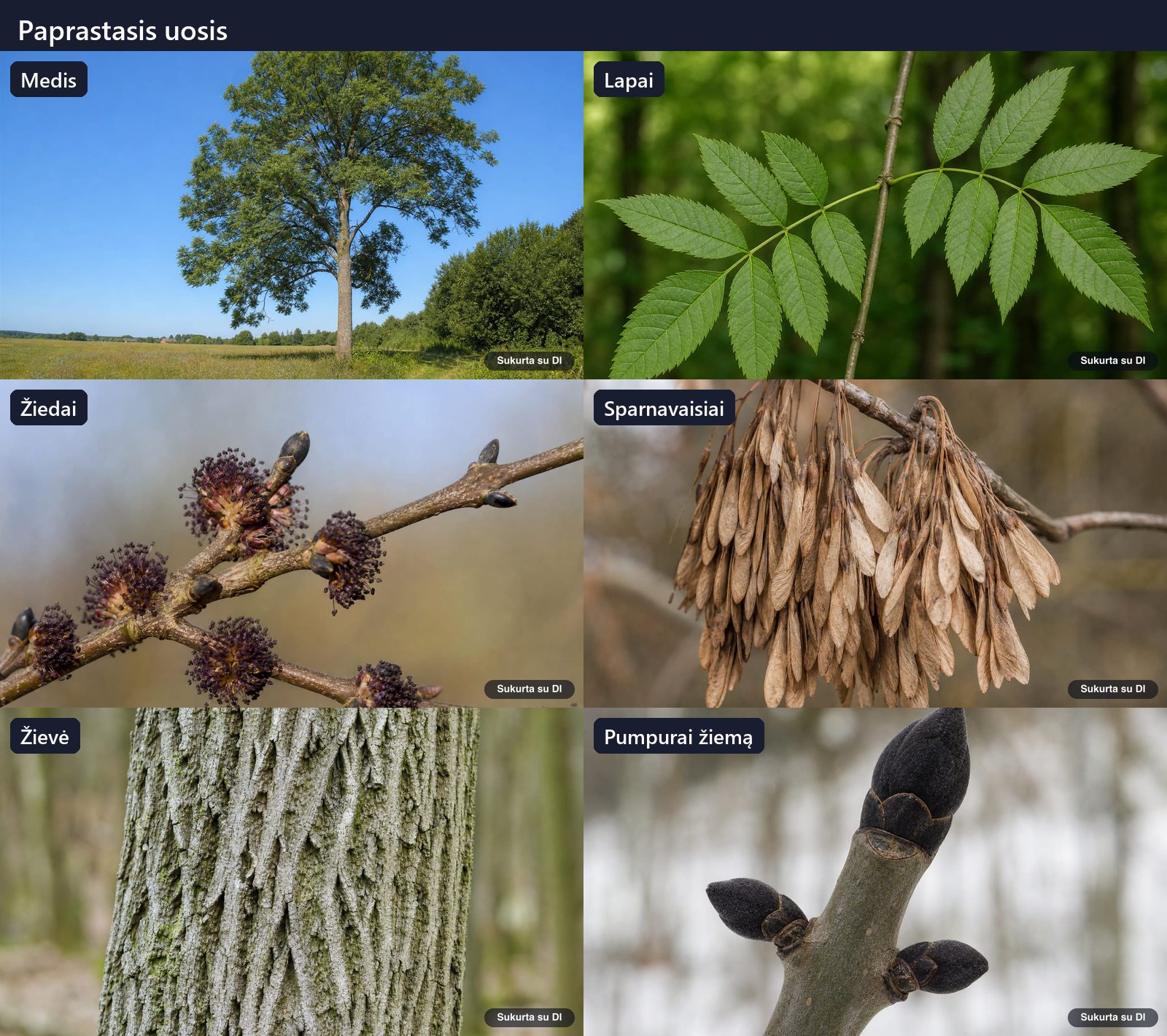
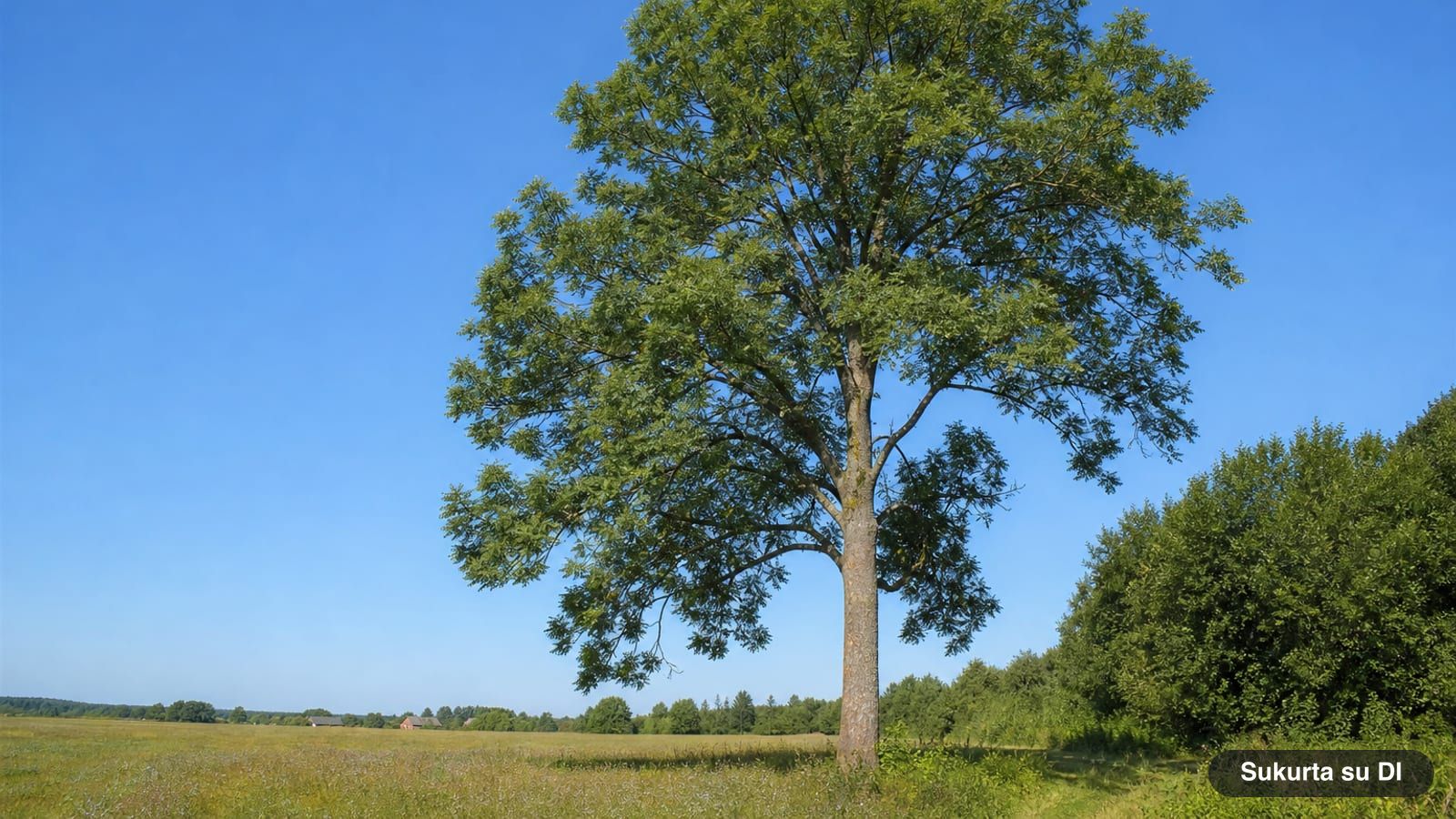
The European ash is a vigorous, fast-growing tree with a tall, broad, domed canopy and a straight trunk. Its canopy is more open and lets in more light than a linden or maple because its compound leaves allow sunlight to filter through. Ash is a light-loving tree that prefers fertile, moist, but well-drained, neutral to alkaline soils. It is cold-hardy to about −30°F (−34°C), USDA zones 4–7. Among common European trees, it is unique in having leaves that are both opposite and pinnate—a combination that makes it instantly recognizable. The only common exception is the introduced box elder (ash-leaved maple), but its leaves typically consist of only 3 to 5 (rarely 7) leaflets.
Leaves
The ash leaf is compound and pinnate, measuring 8–14 inches (20–35 cm), sometimes up to 16 inches (40 cm) long. It consists of 7 to 13 lanceolate or elongated oval, nearly stalkless leaflets with pointed tips and toothed edges; there is a single terminal leaflet at the tip. The leaves grow in pairs on the twigs, opposite each other. The ash is one of the last trees to leaf out in cool northern climates—usually not until late spring—and in autumn, it is among the first to drop its leaves, often while they are still completely green.
Flowers
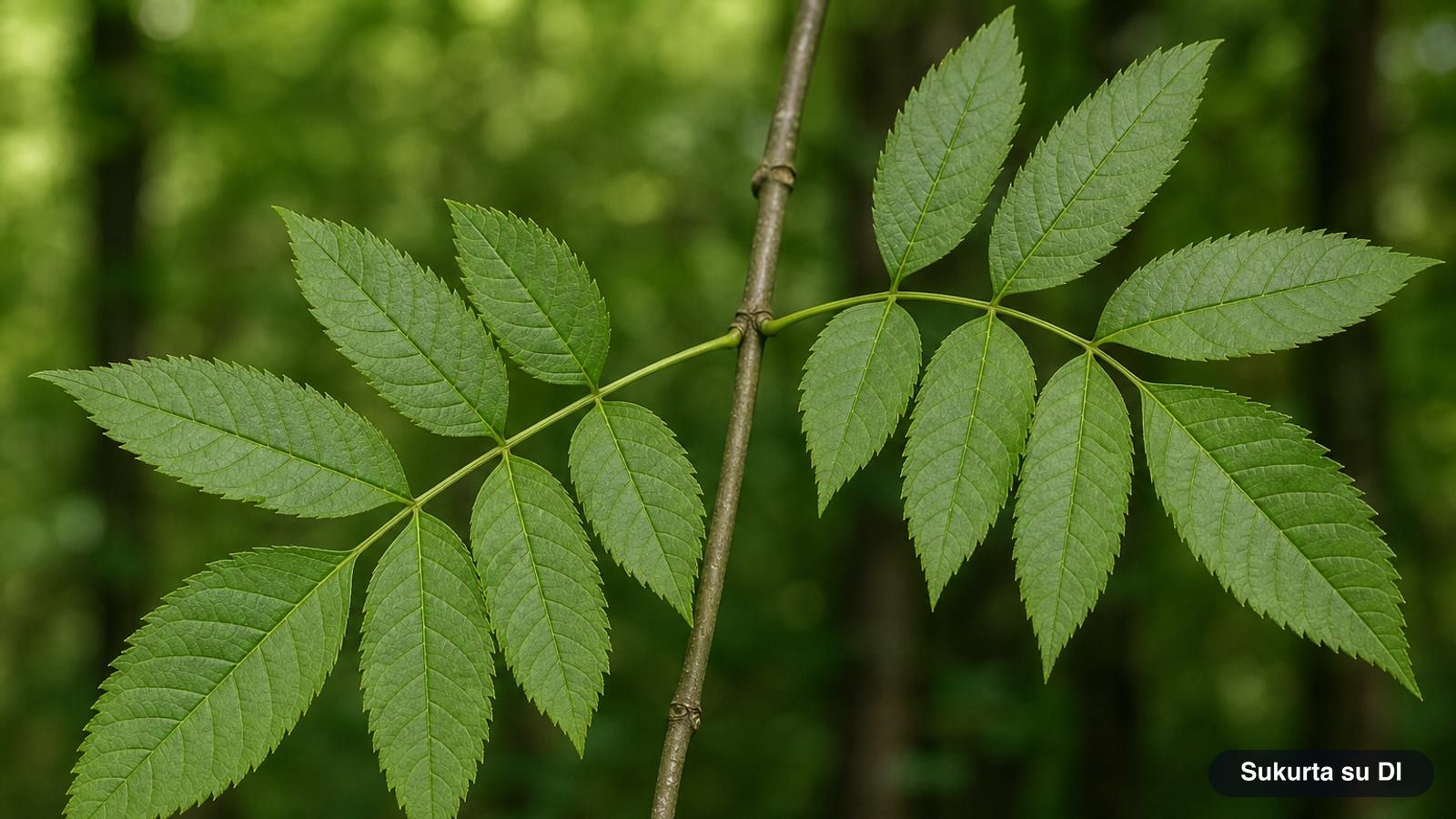
The ash blooms in mid-spring, before its leaves emerge. The flowers are small, lack petals, and are dark purple or blackish, clustered in tufts or panicles and pollinated by the wind. The European ash is usually dioecious (having separate male and female trees), but interestingly, the same tree can produce female flowers one year and male flowers the next.
Winged Seeds
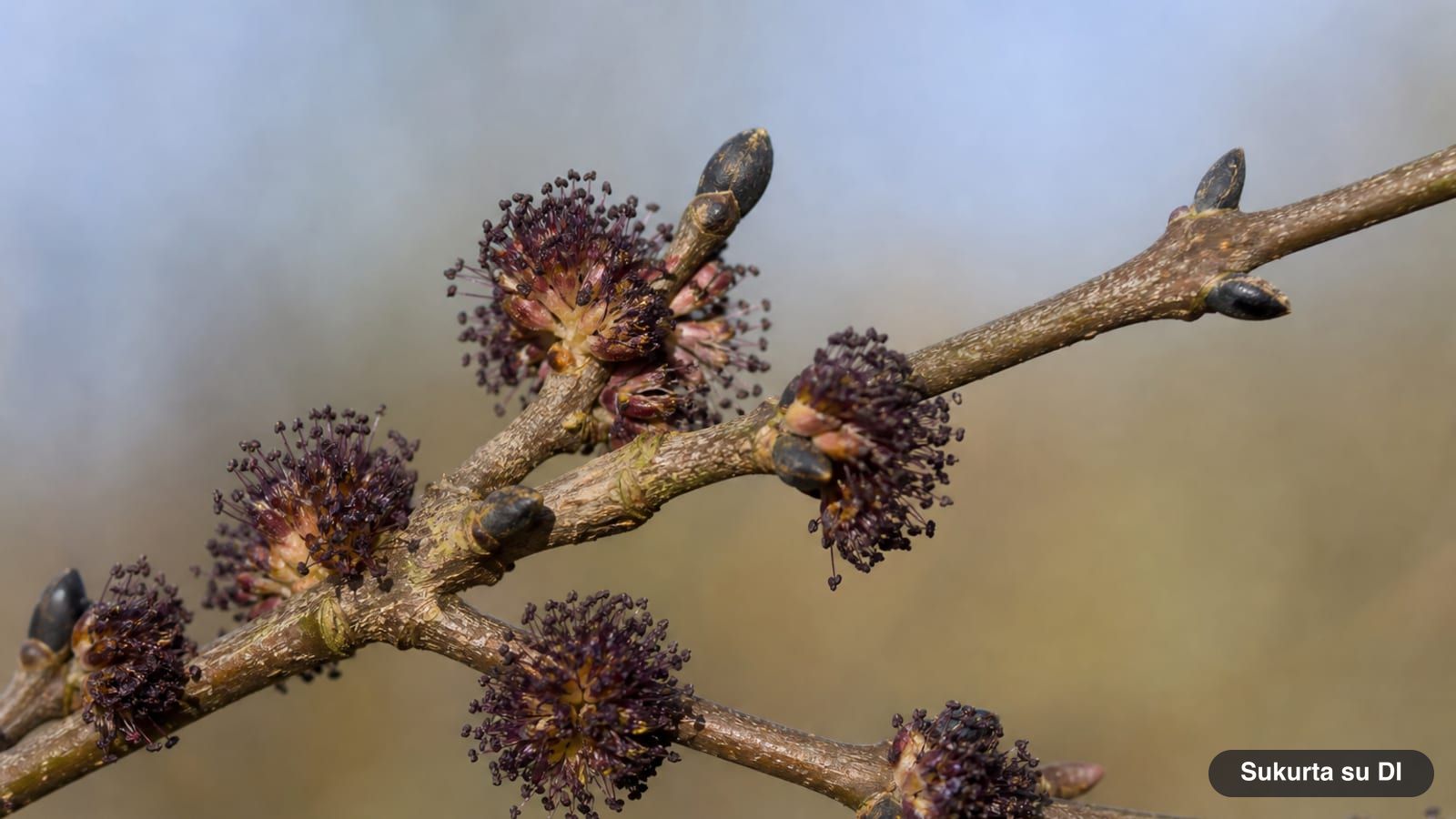
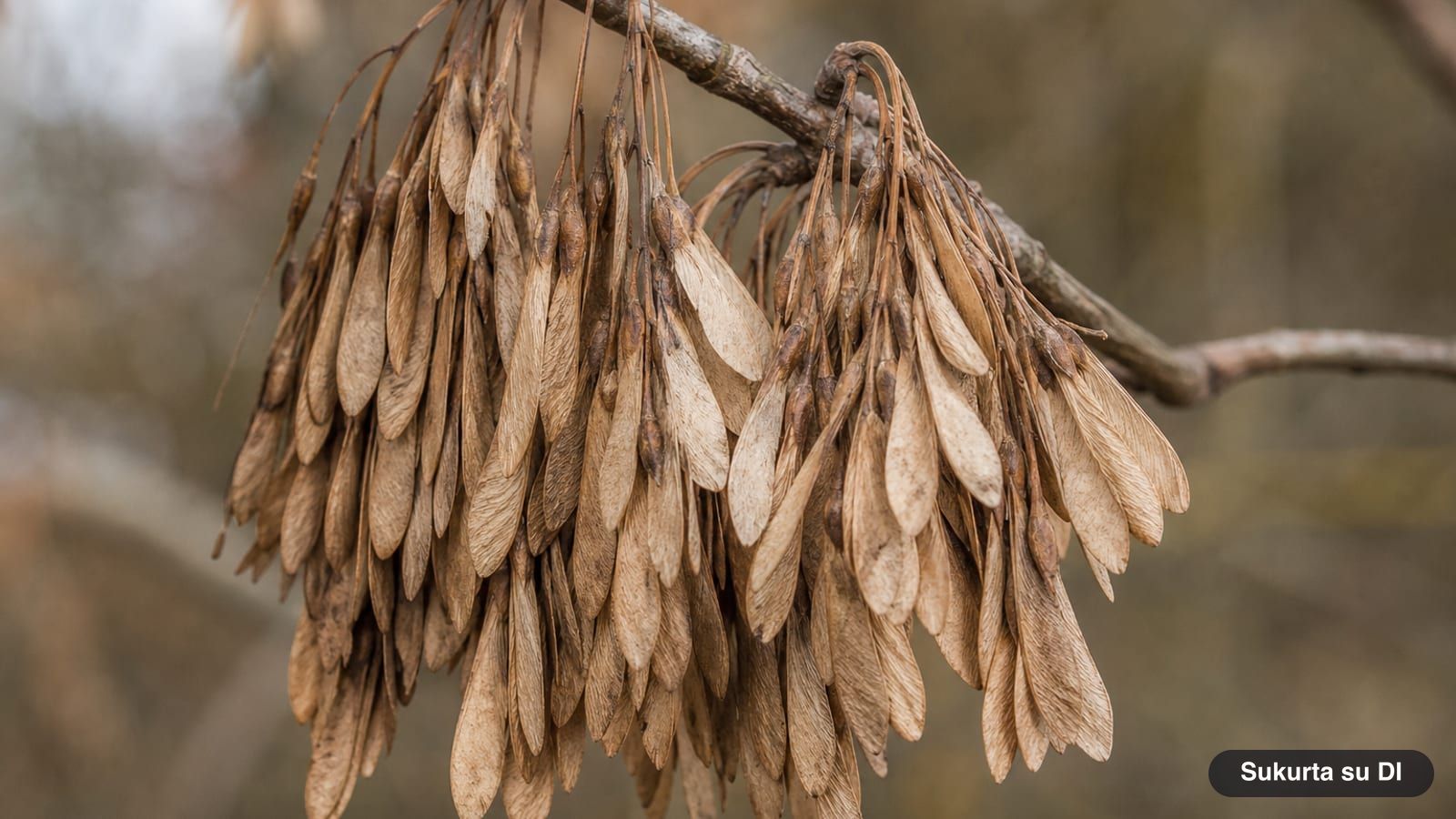
The fruit of the ash is a single winged seed (samara), 1–1.8 inches (2.5–4.5 cm) long and 0.3–0.4 inches (0.7–1 cm) wide. It is lanceolate or elongated elliptical, yellowish or light brown, often with a notched tip. Each contains a single seed at the base. The fruits ripen in September to October, hanging in large clusters, and many remain on the tree throughout the winter. As it falls, the winged seed spins in the air for a long time, allowing the wind to carry it far away. Compare this with the paired winged seeds of the maple and other seeds in the seed guide.
Bark and Buds
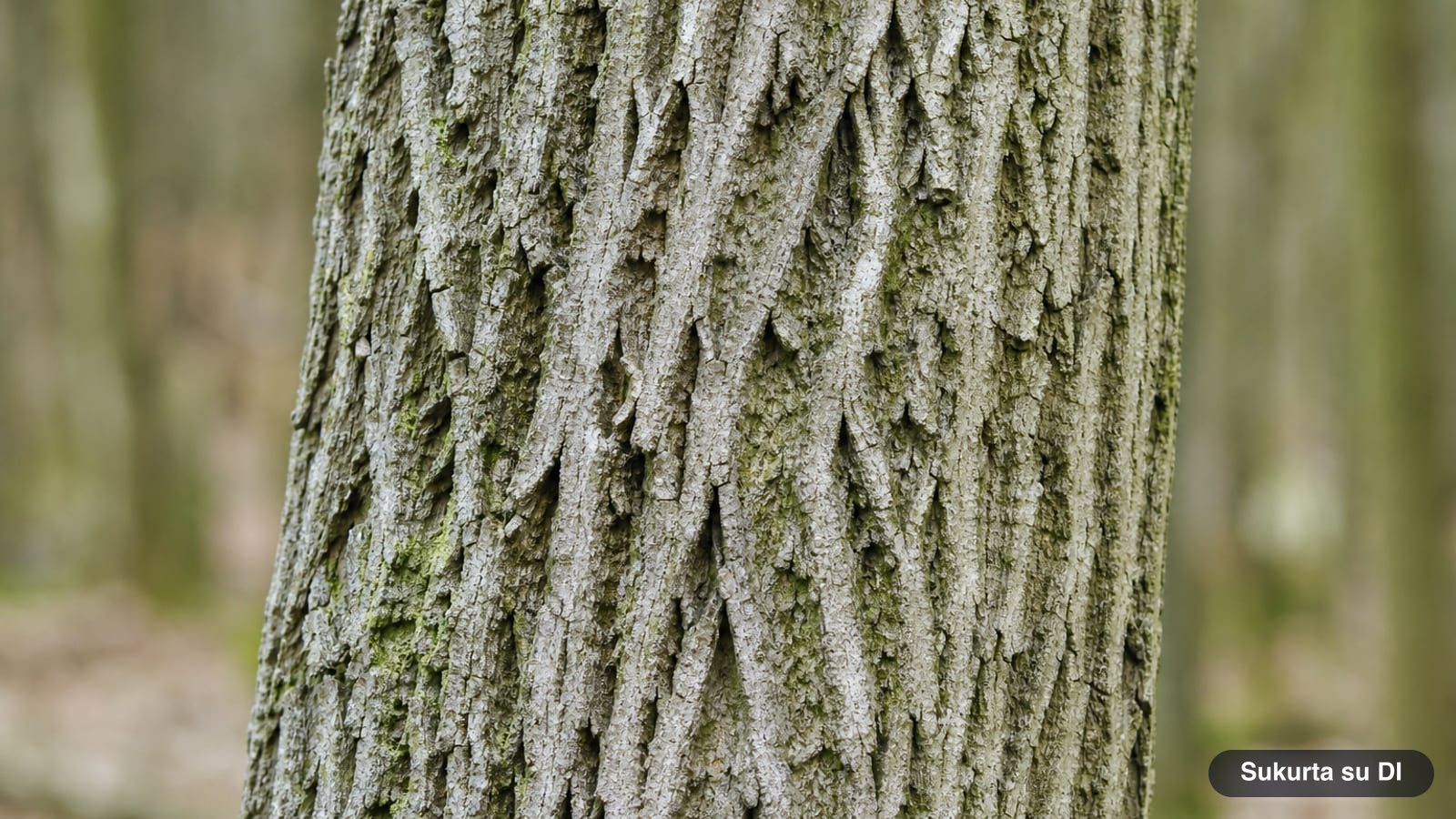
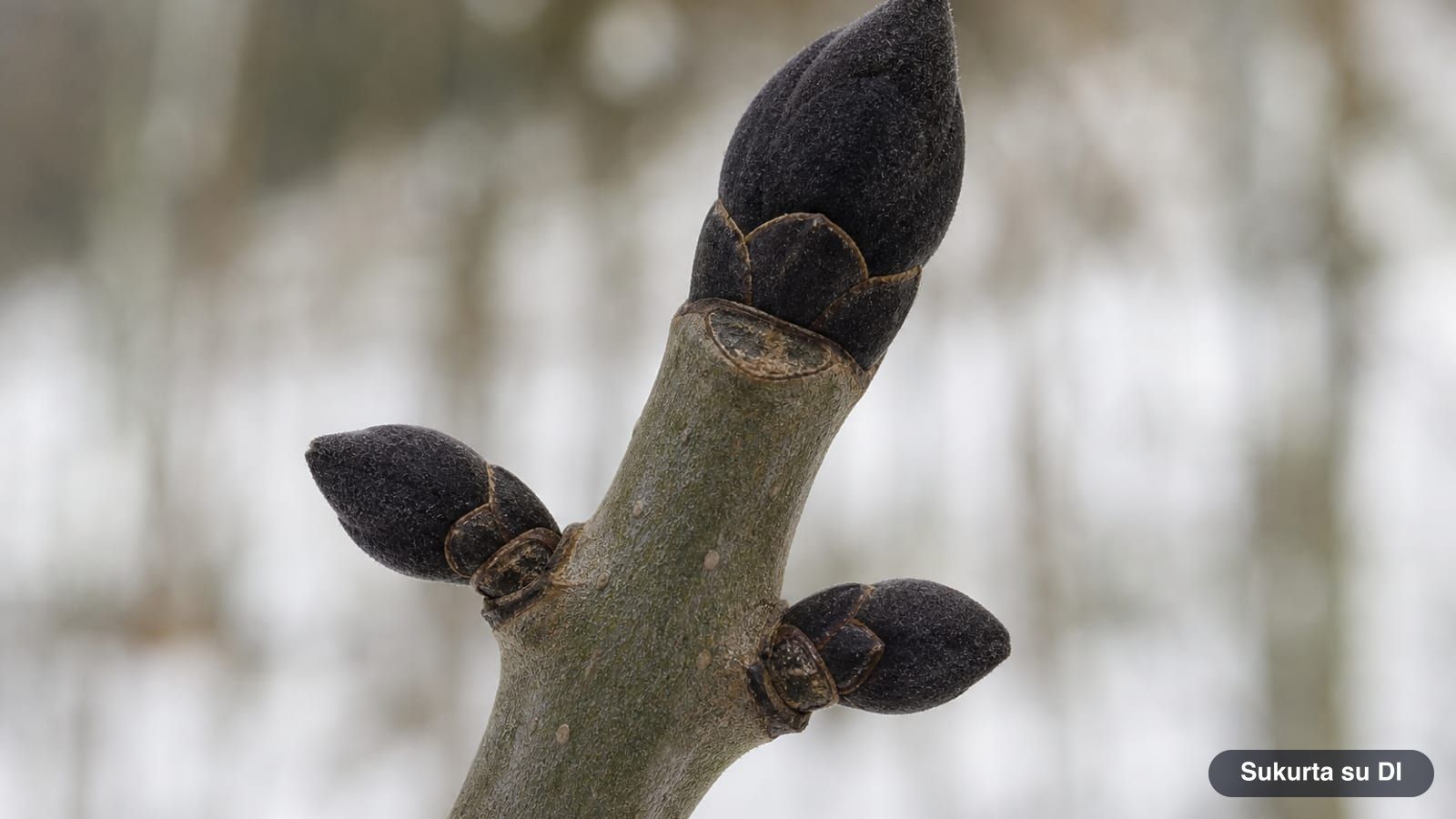
The bark of young ash trees is smooth and pale gray. As the tree ages, the bark thickens and fissures into a regular network of narrow, interlacing ridges, creating a diamond pattern. In winter, the ash is given away by its black buds: a large terminal bud and two smaller lateral buds growing opposite each other on a thick, smooth, grayish-green twig. The buds are matte, almost velvety, with tiny warts—a feature unmatched by any other native European tree.
Ash and Similar Trees
Other common trees also have pinnate leaves, but their leaves are arranged alternately, not in opposite pairs.
| Tree | Leaves | Buds | Fruits |
|---|---|---|---|
| European Ash | pinnate, 7–13 leaflets, opposite | black, velvety | single winged seeds in clusters |
| Rowan (Mountain Ash) | pinnate, 9–15 narrow leaflets, alternate | purplish-brown, white hairs at the tip | clusters of orange-red pomes |
| Box Elder (Ash-leaved Maple) | compound, only 3–5 (7) leaflets, opposite | whitish and hairy | paired winged seeds |
| Walnut | pinnate, 5–9 large smooth-edged leaflets, alternate | dark, large | nuts in a green husk |
Ash Dieback
According to forestry data, ash dieback was first noticed in northeastern Poland around 1992, and within a few years, the disease spread across many European countries. It is caused by the invasive fungus Hymenoscyphus fraxineus. Scientists believe it arrived in Europe with infected nursery stock of the Manchurian ash from East Asia. In its native range, the fungus does not harm local ash species and only breaks down fallen leaves, but it colonizes and kills the European ash while the tree is still alive.
The disease has become chronic across the continent—there are almost no unaffected woodlands left, with both old and young trees falling ill. Ash trees in dense woodlands tend to die more frequently, while isolated trees are often more resilient. In recent years, the situation has shown slight signs of stabilizing in some regions: mass die-offs have slowed slightly, and surviving trees are producing more seeds. While no effective cure has been found, European researchers are actively identifying and breeding naturally resistant trees.
The shift is stark: in the early 2000s, ash woodlands made up a significant percentage of broadleaf forests across Europe, but today those numbers have plummeted dramatically. Scientists also warn of another major threat: the emerald ash borer, an insect native to Asia that destroys all ash species. It has already spread in Russia and Ukraine, and scientists consider it the second major threat to European ash trees after ash dieback.
Where Ash Trees Grow
The European ash is widespread across almost all of Europe, except for the southern Iberian Peninsula and the extreme north. It thrives most abundantly in central plains and valleys where fertile, calcareous soils prevail. Pure ash woodlands are relatively rare; more commonly, ash trees grow alongside spruce, linden, maple, oak, black alder, and birch. A famous historic specimen is the Witch's Ash (Raganos uosis) in Lithuania, which reaches 105 feet (32 m) in height and boasts a trunk circumference of 24 feet (7.3 m).
Ash Wood
Ash wood is pale, hard, durable, and highly elastic, with a density of about 43 lbs/ft³ (690 kg/m³), and it shrinks very little as it dries. Because of this, ash is highly valued for furniture, parquet flooring, stairs, tool handles, and sports equipment; historically, it was the premier wood for making skis. Ash firewood is classified in the highest heat category: it produces a lot of heat, burns well even when relatively green, and does not heavily pollute chimneys. Ornamental forms of ash—such as those with weeping branches or golden shoots—are frequently planted in parks and large gardens.
Ash in Folklore and Tradition
In Old Norse mythology, the world tree, Yggdrasil, is depicted as an immense ash tree connecting heaven, earth, and the underworld. In traditional herbal medicine, the bark and leaves of young ash trees were sometimes used, though their effects are not well-studied, and they should not be used for treatment without medical advice. Learn more about other broadleaf trees in the profiles for the oak, birch, and linden (lime tree).
Frequently asked questions
How do you identify an ash tree?
Look for compound pinnate leaves with 7 to 13 pointed, toothed leaflets growing in opposite pairs. In winter, its velvety, coal-black buds are the most reliable identifier. The tree also features hanging clusters of brown, winged seeds and gray bark with a diamond-patterned network of ridges on older trunks.
Why are ash trees dying?
Ash trees are suffering from ash dieback, a disease caused by the invasive fungus Hymenoscyphus fraxineus. It likely arrived in Europe via infected nursery stock from East Asia. The disease has spread rapidly since the 1990s, leaving very few woodland areas unaffected.
When do ash trees leaf out?
Ash is one of the last trees to leaf out, typically in late spring when other trees are already green. It flowers even earlier, usually in mid-spring, on bare branches. In autumn, ash leaves are among the first to drop, often falling while still green instead of turning yellow.
What is ash wood used for?
Ash wood is hard, durable, and highly elastic, with minimal shrinkage as it dries. It is highly valued for furniture, flooring, tool handles, and sports equipment. Ash is also an excellent firewood, burning hot and clean even when relatively green.
How long do ash trees live?
The European ash is not exceptionally long-lived, typically surviving for 250 to 300 years. A famous historic specimen is the Witch's Ash (Raganos uosis) in Lithuania's Žemaitija National Park.
What is the emerald ash borer?
The emerald ash borer is an invasive beetle native to Asia that destroys all species of ash trees. It has already spread in Russia and Ukraine, and scientists consider it the second major threat to European ash trees after ash dieback.
Log in to comment
No comments yet. Be the first.