Fir Trees: Silver, Nordmann & Balsam Fir vs. Spruce
- The fir genus (Abies) includes about 48–55 species of evergreen conifers, widely cultivated in parks and gardens across temperate regions.
- Historically widespread during interglacial periods, firs are now native to mountainous and northern regions across North America, Europe, and Asia.
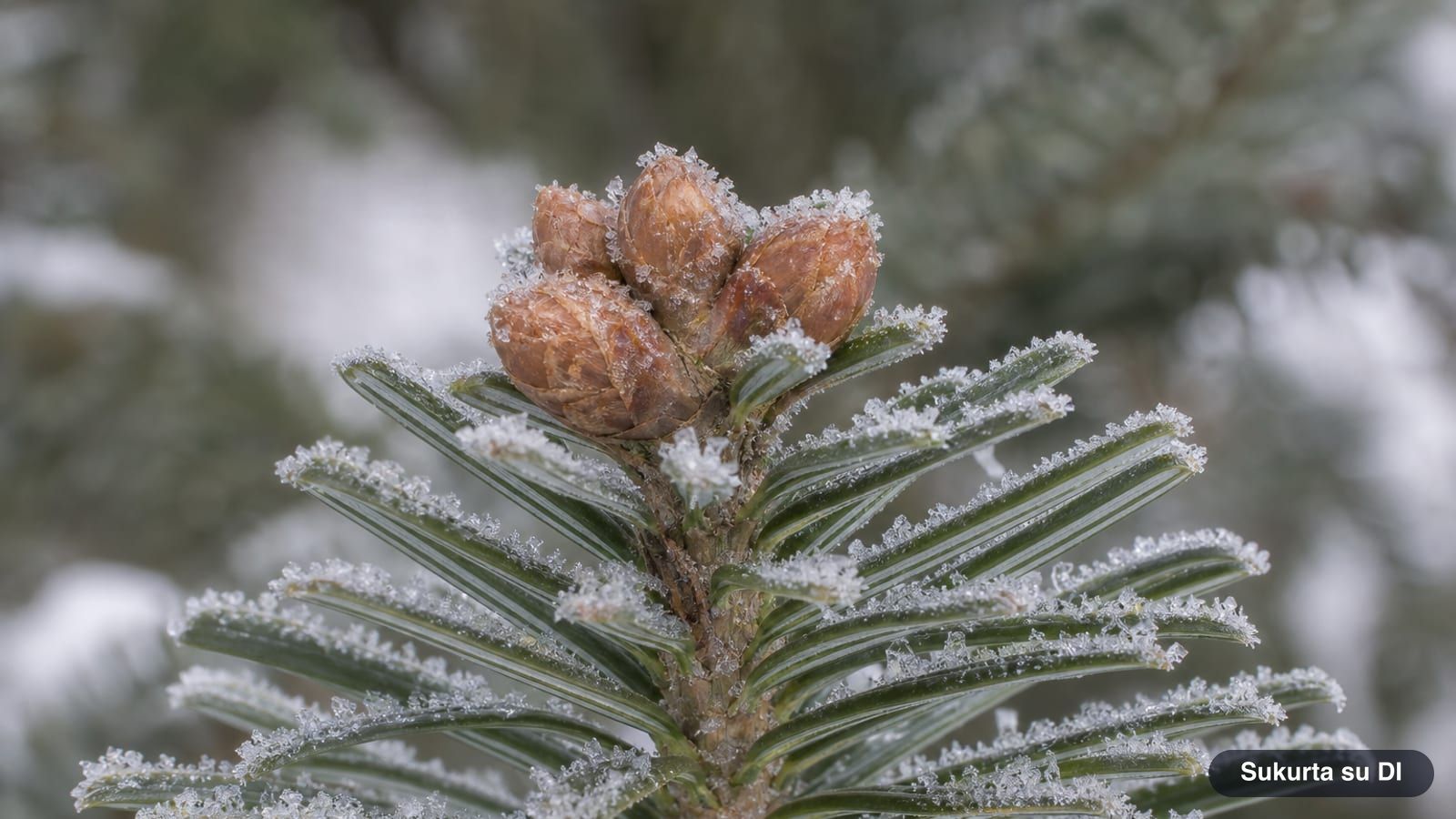
- Fir needles are flat, soft, and blunt or notched at the tip, featuring two white bands underneath and attaching to the twig with a circular base.
- Unlike other conifers, fir cones stand upright on the branches and disintegrate upon maturity, leaving only a bare central spike on the tree.
- The Nordmann fir is one of the most popular Christmas tree species globally, prized for its soft, glossy needles that resist dropping when dry.
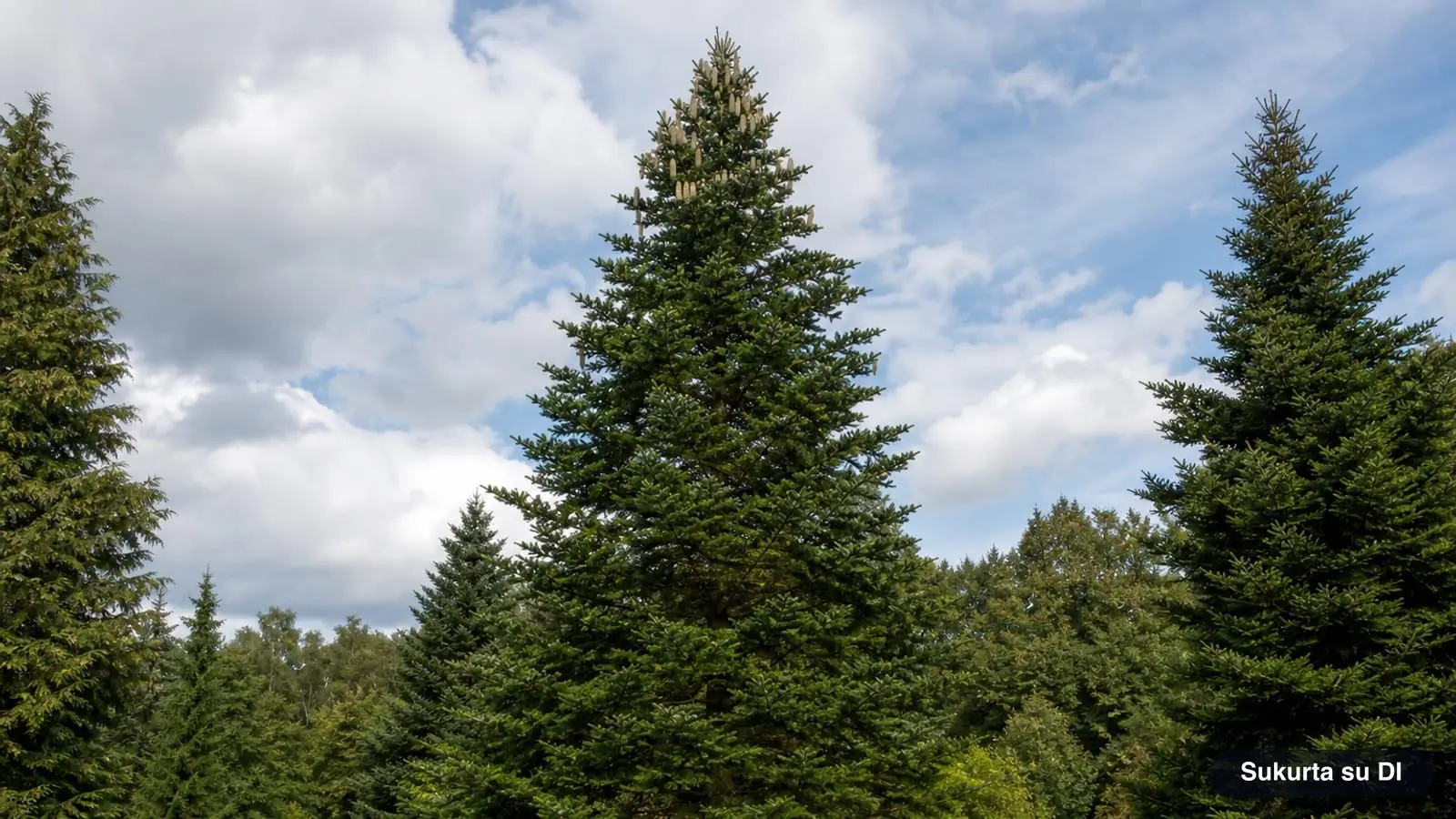
This article is part of the 77.today trees guide, prepared by the 77.today editors from the sources listed at the end.
When the house smells like a "pine tree" at Christmas, but the needles are soft, blunt, and don't drop easily, it is very likely not a spruce or pine at all, but a Nordmann fir. Firs are evergreen conifers that resemble spruce trees, but they are easy to tell apart up close: the needles are flat and soft, and the cones stand upright on the branches like candles. While native to mountainous and northern regions, firs have long been planted in estate parks, homesteads, and gardens worldwide. In the tree guide's fir section, we describe how to identify them and which species thrive best in cool temperate climates.
| Latin name | Abies (genus), European silver fir – Abies alba |
|---|---|
| Family | Pinaceae (pine family), like spruce and pine |
| Species | about 48–55 |
| Cultivation | widely planted in parks and gardens across temperate zones |
| European silver fir height | 100–160 ft (30–50 m) in native range, record 223 ft (68 m) |
| Lifespan | European silver fir 300–500 years |
| Cones | upright, mature in early autumn, disintegrate on the tree |
| Notable specimens | record-breaking tree in the Black Forest |
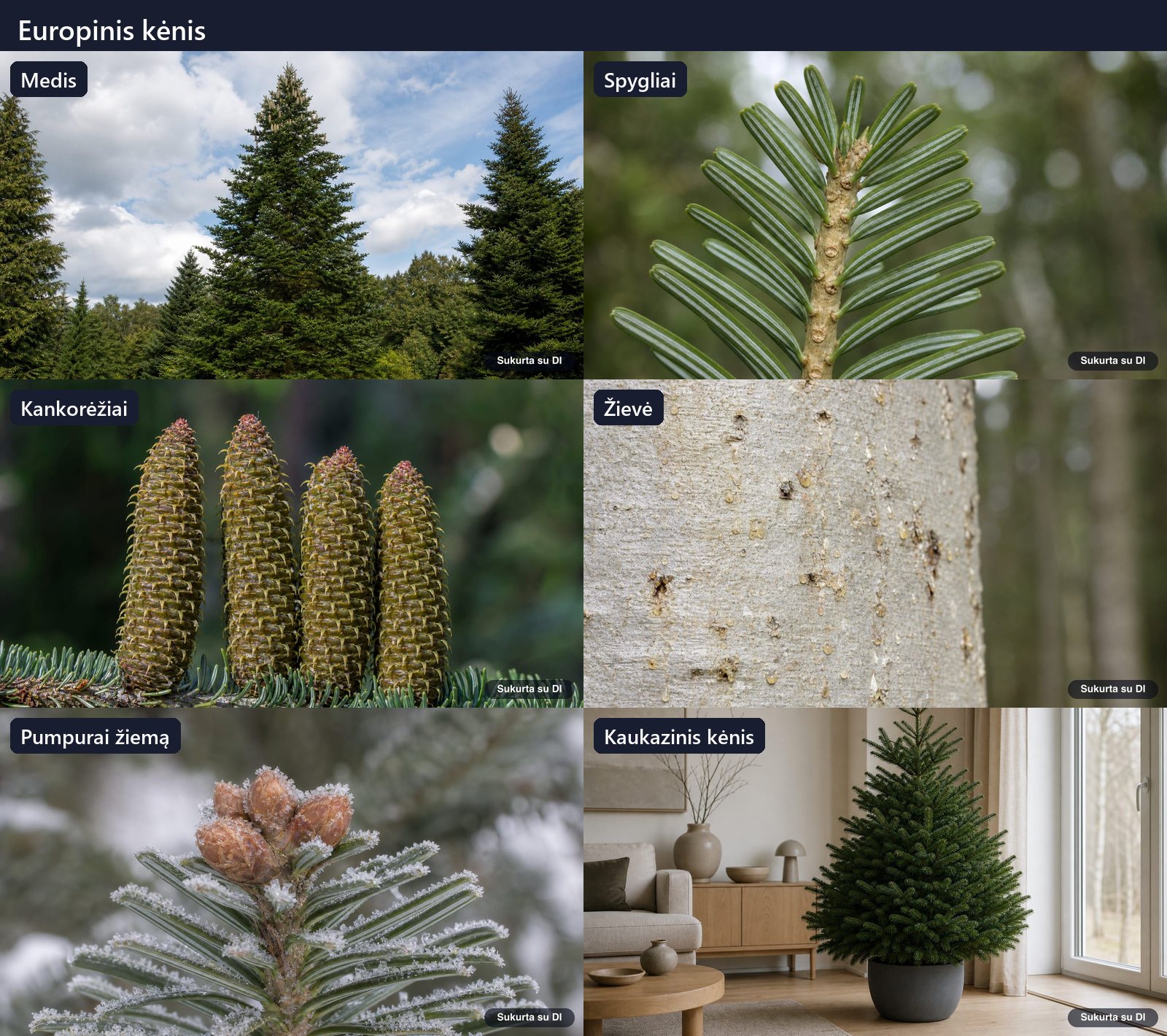
How to identify a fir tree
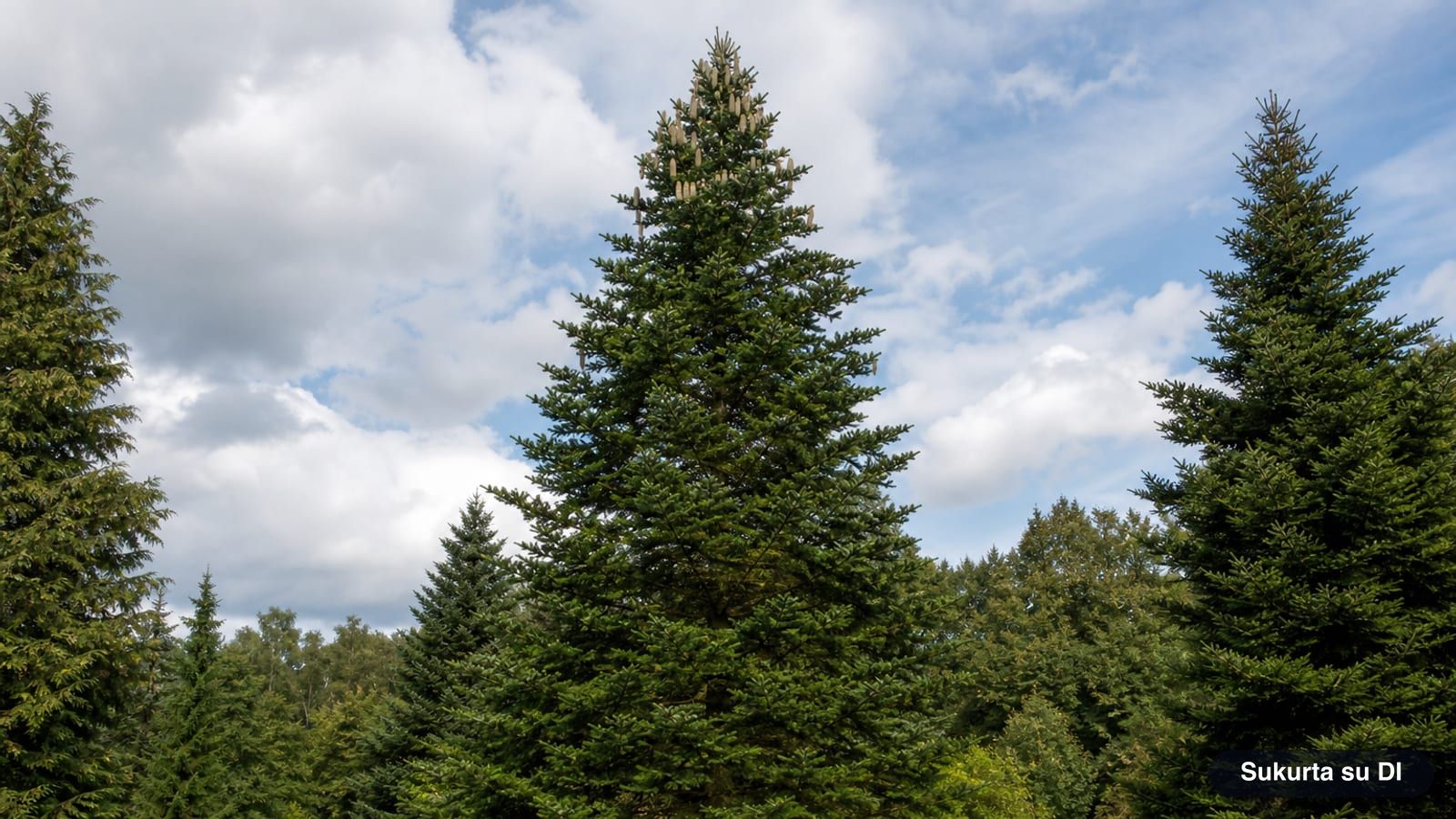
Firs are straight-trunked evergreen trees with a dense, conical crown that becomes somewhat cylindrical or flat-topped on older trees. Grown in an open area, a fir will branch right down to the ground. Firs require humid air and abundant precipitation, and they tolerate shade exceptionally well: a young European silver fir can survive in the dense shade of a forest understory for up to a century, waiting for a gap in the canopy to grow into the light.
Needles
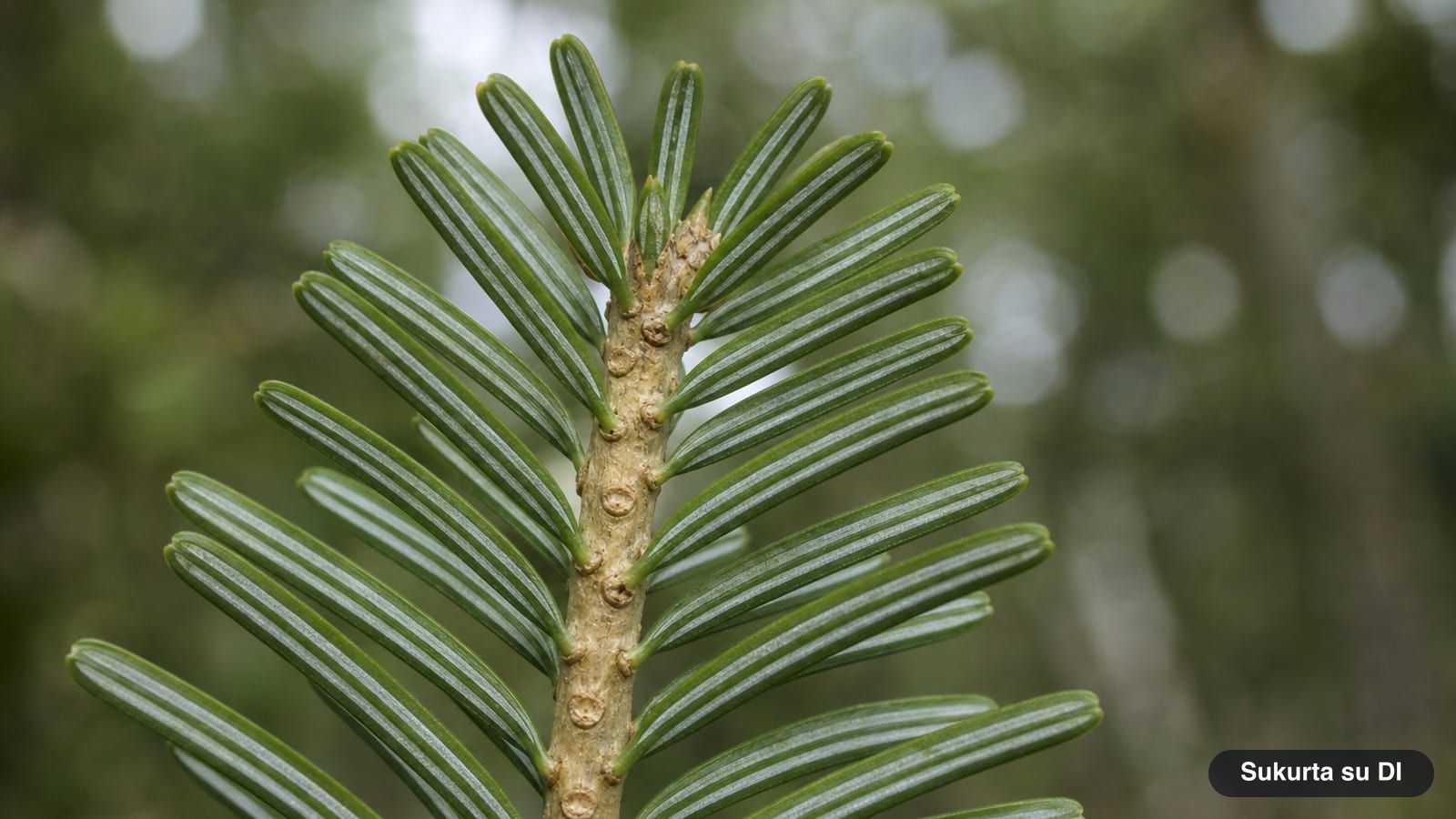
Fir needles grow individually and are flat and soft, typically 0.6–1.4 inches (1.5–3.5 cm) long, with a blunt or slightly notched tip. The upper side is glossy and dark green, while the underside features two distinct white or bluish-white bands. On many species, the needles are arranged in a comb-like pattern, spreading out flat on either side of the twig. Each needle is attached to the twig by a circular, suction-cup-like base, so when it falls, it leaves a smooth, circular scar, rather than a woody bump like a spruce.
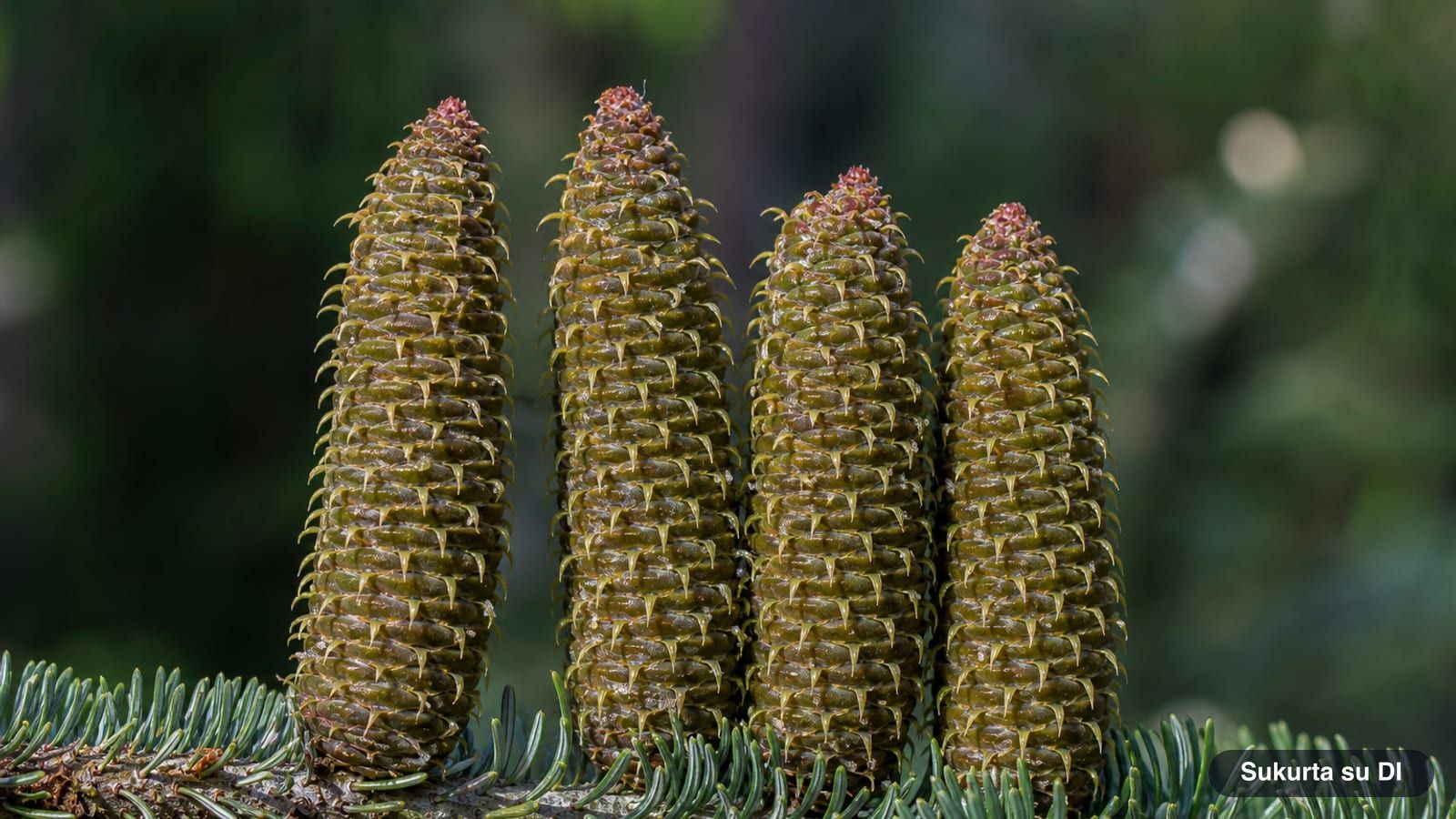
Cones
The most striking feature of a fir is its upright cones, which stand on the upper side of the top branches like candles. European silver fir cones are 4–6.5 inches (10–17 cm) long and oval-cylindrical; young ones are greenish-brown, turning brown as they mature, with long, backward-bending bracts protruding from beneath the seed scales. The cones mature by early autumn of their first year and soon disintegrate right on the tree: the scales and winged seeds fall away, leaving only the bare central spike standing on the branch. Because of this, you will never find an intact, healthy fir cone under the tree. You can compare the cones of other conifers in our tree seeds and fruits guide.
Bark and buds
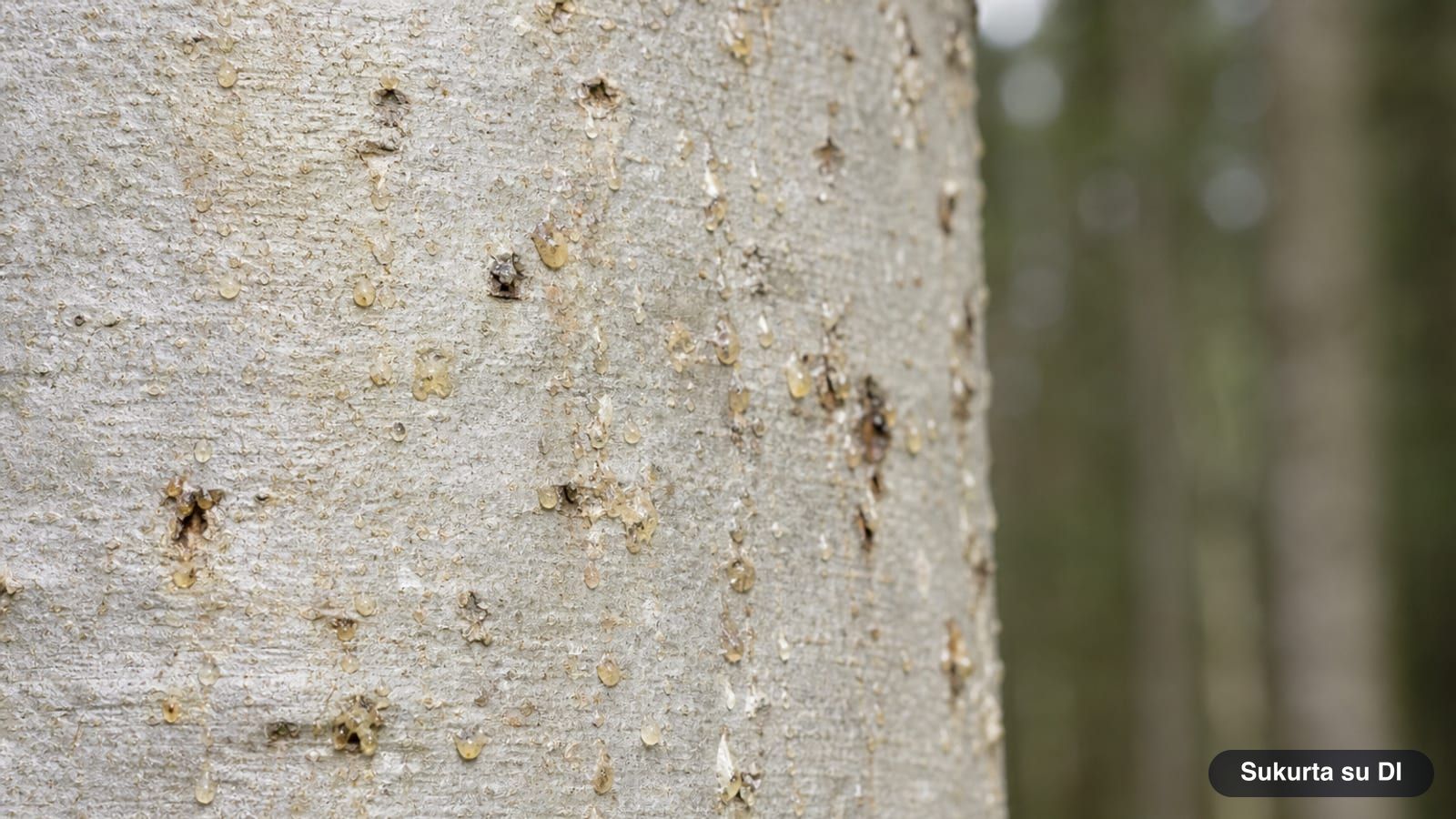
The bark of young firs is smooth and gray or whitish-gray, often dotted with resin blisters—if pierced, fragrant resin flows out. As European silver firs age, their bark cracks into narrow, elongated plates. The buds are oval or egg-shaped, light brown, and blunt or pointed; European silver fir buds are mostly resin-free. The shoots are brownish-gray, often covered with short hairs.
Fir or spruce?
| Feature | Fir | Spruce (Norway spruce) |
|---|---|---|
| Needles | flat, soft, two white bands underneath | four-sided, stiff, sharp, no distinct bands |
| Needle base | circular, leaves a smooth scar when it falls | on a small peg, which remains on the twig |
| Cones | upright, disintegrate on the tree | hanging downward, fall intact |
| Bark | smooth, gray, with resin blisters | reddish-brown, finely scaly |
| Origin/Status | often introduced ornamentals | native forest-forming trees (in many regions) |
People frequently confuse spruce and fir trees because they look very similar from a distance. For more on the common spruce, see the spruce tree guide.
Common Fir Species in Cultivation
Dozens of fir species are cultivated globally; the following are most commonly found in parks, estates, and gardens:
| Fir | Origin | Characteristics |
|---|---|---|
| Silver fir (A. alba) | Mountains of Central and Southern Europe | large, long-lived tree; cones 4–6.5 in (10–17 cm); requires high humidity |
| Nordmann fir (A. nordmanniana) | Caucasus, northern Turkey | glossy, soft needles, popular Christmas tree; can suffer frost damage in severe cold |
| Balsam fir (A. balsamea) | Eastern Canada, northeastern US | narrow crown, 45–65 ft (14–20 m), resin blisters on bark, fragrant needles, cones 1.5–3 in (4–8 cm) |
| Siberian fir (A. sibirica) | Taiga of Russia and Asia | extremely cold-hardy down to −58°F (−50°C), soft aromatic needles, rarely lives past 200 years |
| Korean fir (A. koreana) | South Korea | small tree, produces abundant purple cones even at just 3–6.5 ft (1–2 m) tall |
The European silver fir is one of the tallest tree species in Europe: in its native habitat, it grows 100–160 feet (30–50 m) tall, and a record-breaking tree in the Black Forest reaches 223 feet (68 m) with a diameter of 12.5 feet (3.8 m). It grows naturally in the Alps, Carpathians, Pyrenees, and the Balkans, and its range extends northeast to the Białowieża Forest in eastern Europe. While it thrives in cool, moist temperate climates, it is more commonly planted in urban parks and residential landscapes than in commercial forestry outside its native range.
The Fir as a Christmas Tree
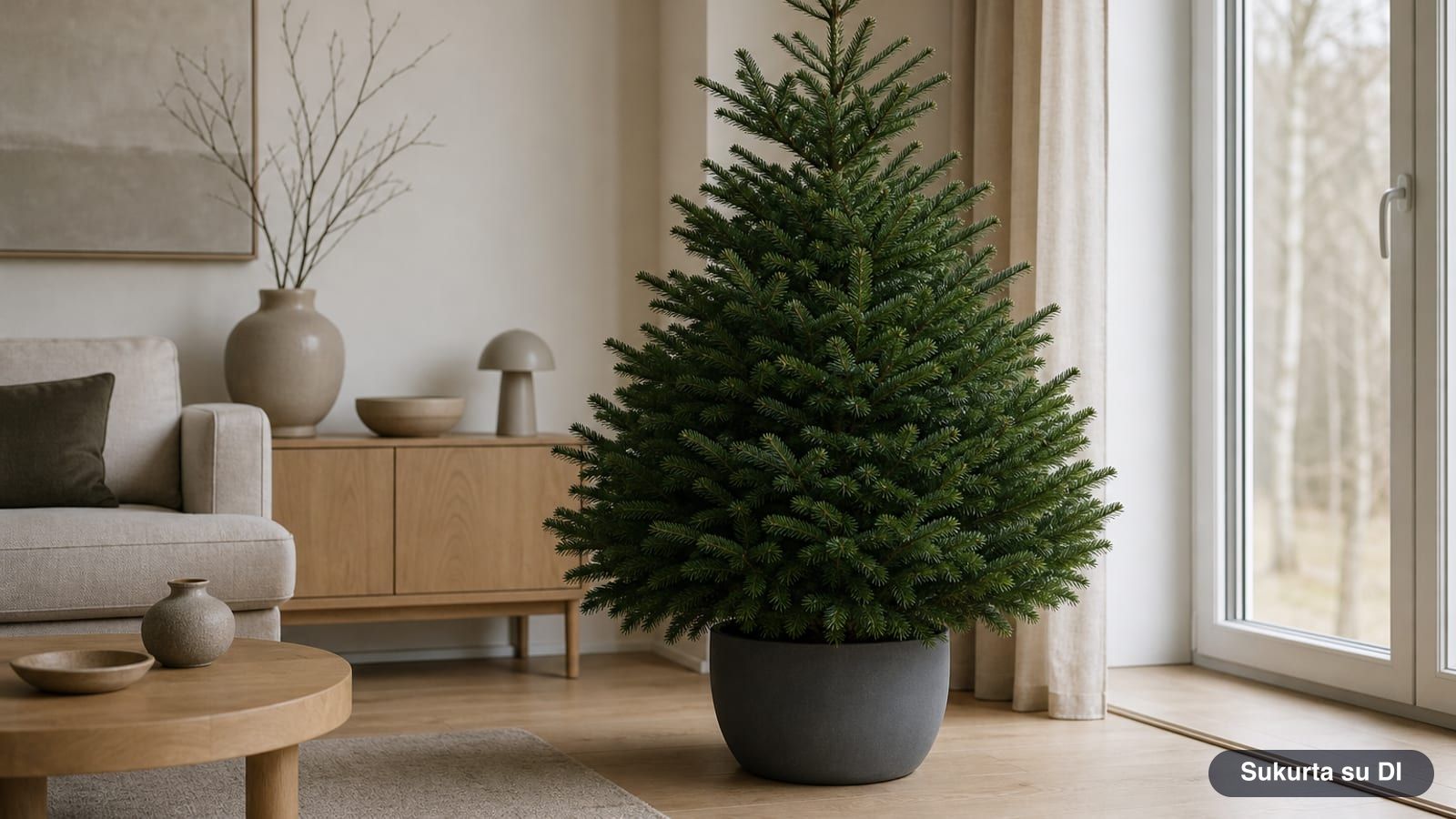
The Nordmann fir is one of the most important species grown for Christmas trees in Europe and increasingly worldwide. It is highly valued for its dark green, glossy needles that are not sharp and do not easily drop when the tree dries out, keeping it looking beautiful indoors much longer than a traditional spruce. In North America, the balsam fir is a top choice for the holidays, famous for its rich, classic fragrance; it is cultivated on large plantations rather than cut from wild forests. We discuss how to choose the perfect Christmas tree and how to care for it in our guide on selecting a holiday tree.
Firs in the Garden
- Location. Firs prefer moist, loose, fertile loams and sandy loams, along with humid air and abundant rainfall. For the European silver fir, high atmospheric humidity and well-drained, non-waterlogged soil are especially important.
- Shade. Firs tolerate shade exceptionally well, making them suitable for partially shaded areas of the garden.
- Cold hardiness. Hardiness varies by species: the Siberian fir can withstand extreme cold down to −58°F (−50°C, USDA zone 1), the European silver fir is hardy to about −11°F to −18°F (−24°C to −28°C, USDA zones 4–5), while the Nordmann fir (USDA zones 4–7) performs best in milder coastal or maritime climates where winters are less severe.
- Wind. The European silver fir has a deep and expansive root system, allowing it to withstand strong winds effectively.
Wood and Fir Oil
Fir wood is white, soft, less resinous than spruce, elastic, easy to split, and has excellent resonant qualities. It is used in construction, carpentry, paper and packaging manufacturing, and for making musical instruments. Fir essential oil, distilled from the needles and young shoots, is widely used in aromatherapy and perfumery. Additionally, the resin of the balsam fir is used to produce Canada balsam, which was historically utilized as an adhesive for optical instruments. We describe other commonly grown conifers in the larch, thuja (arborvitae), and yew guides.
Frequently asked questions
What is the difference between a fir and a spruce?
Fir needles are flat, soft, and leave a smooth, circular scar when they fall. Spruce needles are four-sided, sharp, and leave a rough, peg-like bump on the twig. Fir cones stand upright and disintegrate on the branch, while spruce cones hang downward and fall intact.
Why can't I find intact fir cones under the tree?
When fir cones mature, they disintegrate directly on the tree. The scales and seeds fall off individually, leaving only the bare central spike standing on the branch. You will only find scattered scales on the ground, not whole cones like you would under a pine or spruce.
Which fir makes the best Christmas tree?
Nordmann firs are highly favored for their dark green, glossy, and soft needles that have excellent needle retention. In North America, the balsam fir is incredibly popular due to its strong, classic fragrance. Korean firs are also increasingly used as ornamental Christmas trees.
Where do fir trees grow naturally?
Firs are native to much of North and Central America, Europe, Asia, and North Africa, typically thriving in mountainous regions and cool, moist climates. Many non-native species are also widely planted as ornamental trees in parks and large gardens worldwide.
Which fir tree is best for a small garden?
The Korean fir is an excellent choice for smaller spaces. It is a compact, slow-growing tree that produces striking purple cones at a very young age, even when it is just 3–6.5 feet (1–2 m) tall. Larger species like the silver fir or Nordmann fir require spacious landscapes.
Log in to comment
No comments yet. Be the first.