Wild Apple and Pear Trees: Identification, Flowers & Fruit
- The European crab apple (Malus sylvestris) is a true wild species; its apples are up to 0.8–1.2 inches (2–3 cm) in diameter and very tart.
- The wild pear (Pyrus pyraster) is somewhat rare in its native range, often protected in woodlands and valued for its ecological importance.
- Both wild fruit trees frequently have thorny branches, which is a key feature distinguishing them from cultivated orchard varieties.
- Wild apples easily crossbreed with domestic apples, so true wild specimens are most reliably identified by the lack of hair on their flowers and leaves.
- DNA studies show domestic apples primarily descend from the Central Asian apple, but the European wild apple contributed heavily to their genome.
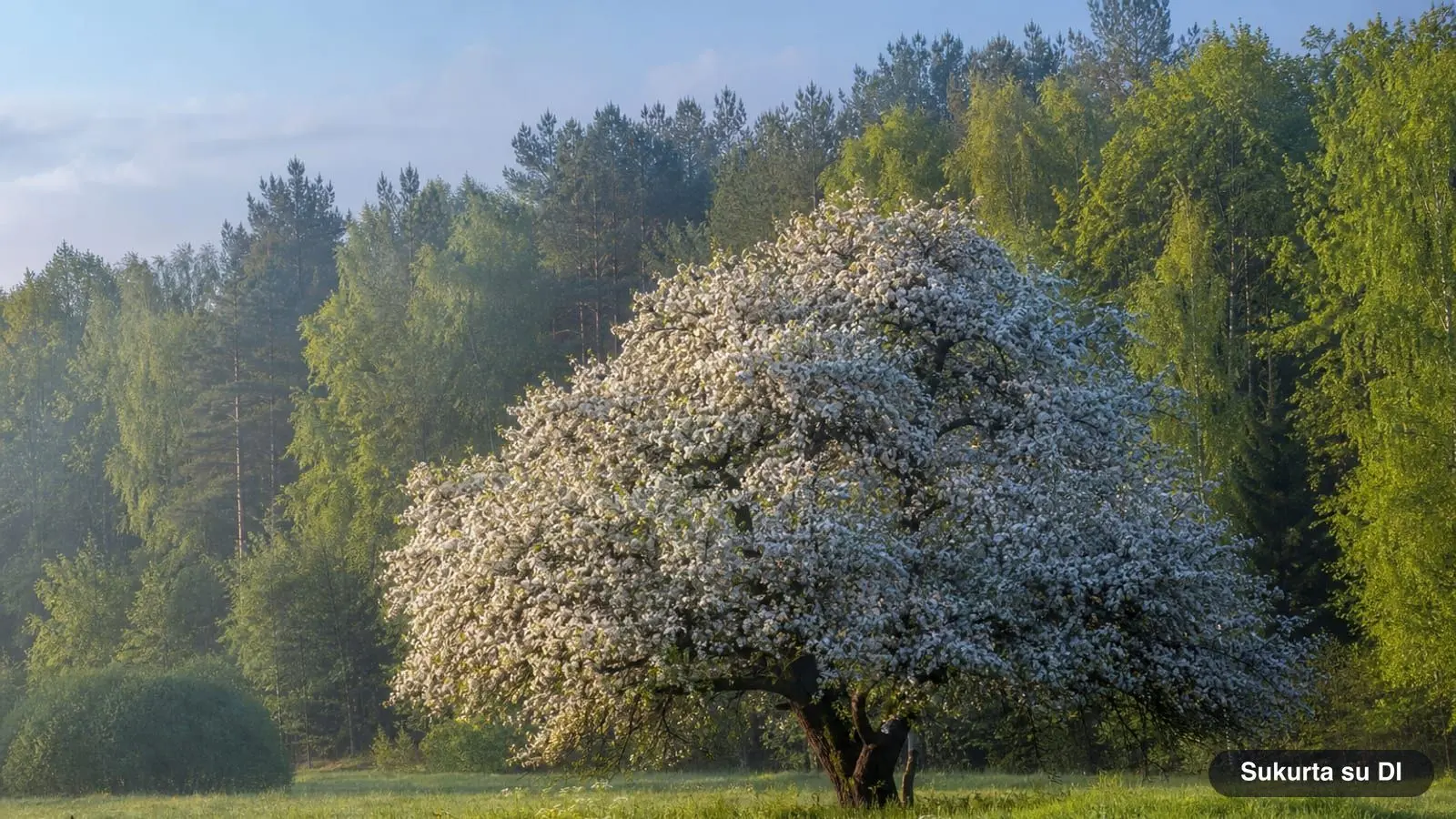
This article is part of the 77.today trees guide, prepared by the 77.today editors from the sources listed at the end.
In spring, solitary trees along woodland edges and riverbanks sometimes burst into bloom, covered in white or pink flowers. By autumn, the ground beneath them is scattered with small, tart apples or hard little pears. These are the wild apple and wild pear—the untamed relatives of our cultivated orchard trees. Though their fruits are small, these trees are ecologically vital and hold a fascinating place in horticultural history. In this tree guide profile, we explore both wild fruit trees and explain how to tell them apart from feral garden escapes.
| Latin names | Malus sylvestris, Pyrus pyraster |
|---|---|
| Family | Rose family (Rosaceae), apple subfamily |
| Group | Deciduous trees, native to Europe |
| Height | Apple – up to 33–46 ft (10–14 m), pear – 49–65 ft (15–20 m) |
| Lifespan | Apple 80–100+ years, pear 100–150 years |
| Blooms | Pear early to mid-spring, apple late spring |
| Fruit | Apples 0.8–1.2 inches (2–3 cm), pears 1.2–1.6 inches (3–4 cm); ripens early autumn |
| Protection | Wild pear is somewhat rare – often protected and preserved in woodlands |
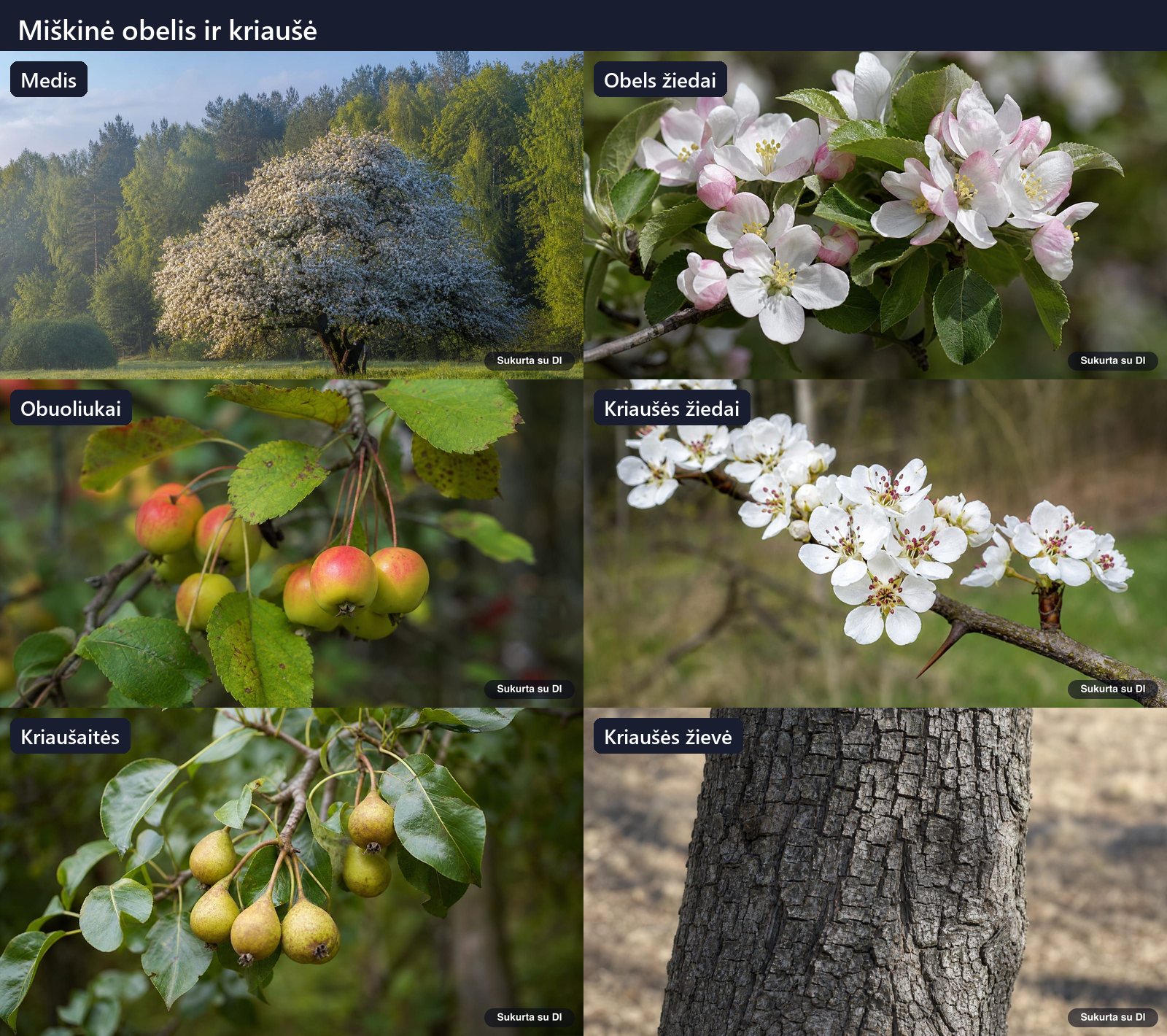
Wild Apple
The European crab apple (Malus sylvestris) is a true wild species native to Europe. It grows in mixed deciduous forests, along woodland edges, and on slopes. It prefers fertile, moderately moist loam and tolerates partial shade; historically, it was also a common sight near old rural homesteads. It is a relatively short tree, reaching up to 33–46 feet (10–14 m), or sometimes growing as a 10–16-foot (3–5 m) multi-stemmed shrub. The crown is dense and rounded, and the branches are often armed with thorns, especially where the young trees are browsed by wildlife. The bark is gray or light brown, peeling in small plates. It is cold-hardy to USDA zones 4–7.
Leaves and Flowers
The leaves are elliptical or ovate, 1.2–2.8 inches (3–7 cm) long, with pointed tips and serrated edges, sitting on a 0.8–1.6-inch (2–4 cm) petiole. They are slightly hairy at first but soon become smooth, bright green above and paler beneath. Compared to cultivated apples, wild apple leaves are smaller, stiffer, and glossier. The wild apple blooms in late spring (typically May to June in cool northern climates), just as the leaf buds are opening, slightly earlier than the hawthorn. The flowers are white or pink, bisexual, and pollinated by insects.
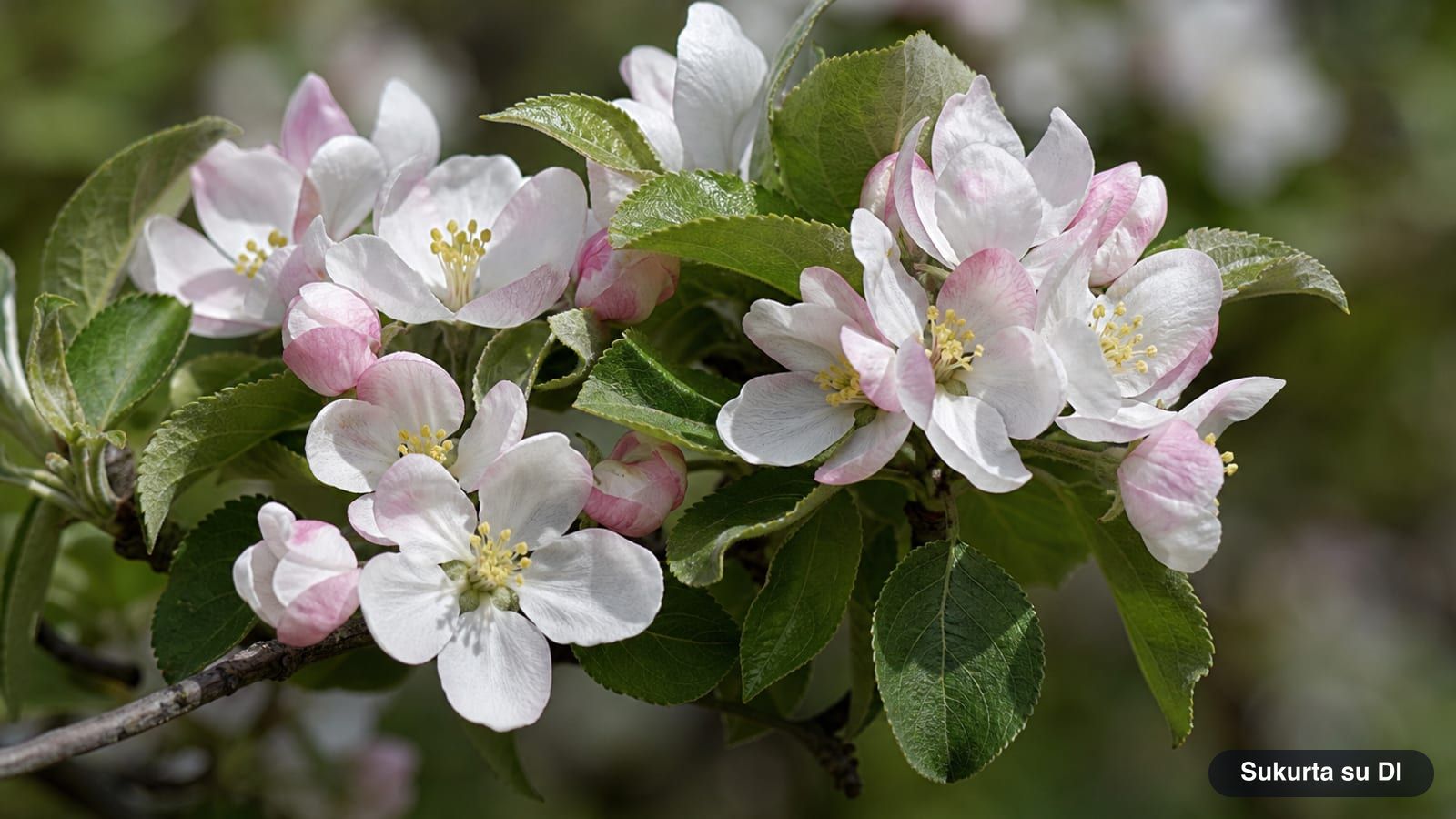
Apples
The apples are spherical or slightly ovate, up to 0.8–1.2 inches (2–3 cm) in diameter, hanging on long stems. They are indented at the base and apex, turning yellow with a pinkish blush on the sun-facing side. They ripen in early autumn and drop to the ground. These little apples are incredibly tart, so they are best eaten fresh only after they have softened (bletted) slightly. However, they are excellent for making jams, jellies, compotes, cider, or dried for herbal teas. Wild apples are a valuable food source for hoofed mammals, which in turn help distribute the seeds.
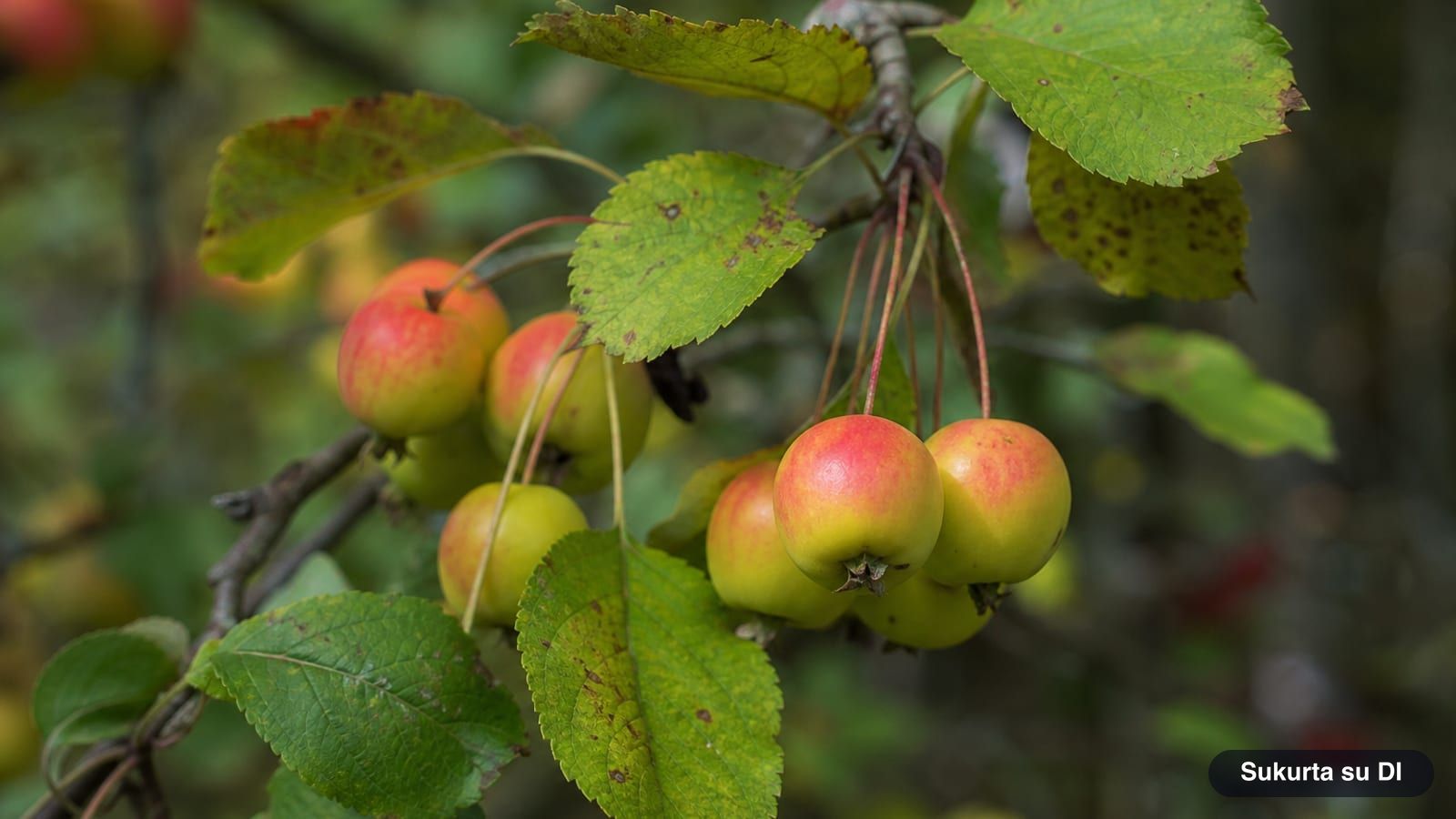
Wild Pear
The wild pear (Pyrus pyraster) is somewhat rare across much of its native range, and as a result, it is often protected from logging in managed forests. It grows sparsely in mixed and deciduous woodlands across Europe, favoring sunny, wooded slopes, hillsides, forest margins, riverbanks, and the remnants of old homesteads. It thrives in calcareous, humus-rich, light loamy soils. It is a light-demanding tree that can tolerate some shade, and it is highly resistant to both frost and drought (hardy to USDA zones 4–8). The tree grows slowly, typically reaching 49–65 feet (15–20 m), and exceptionally up to 85 feet (26 m); it can also take the form of a 6–13-foot (2–4 m) shrub.
Leaves, Flowers, and Fruit
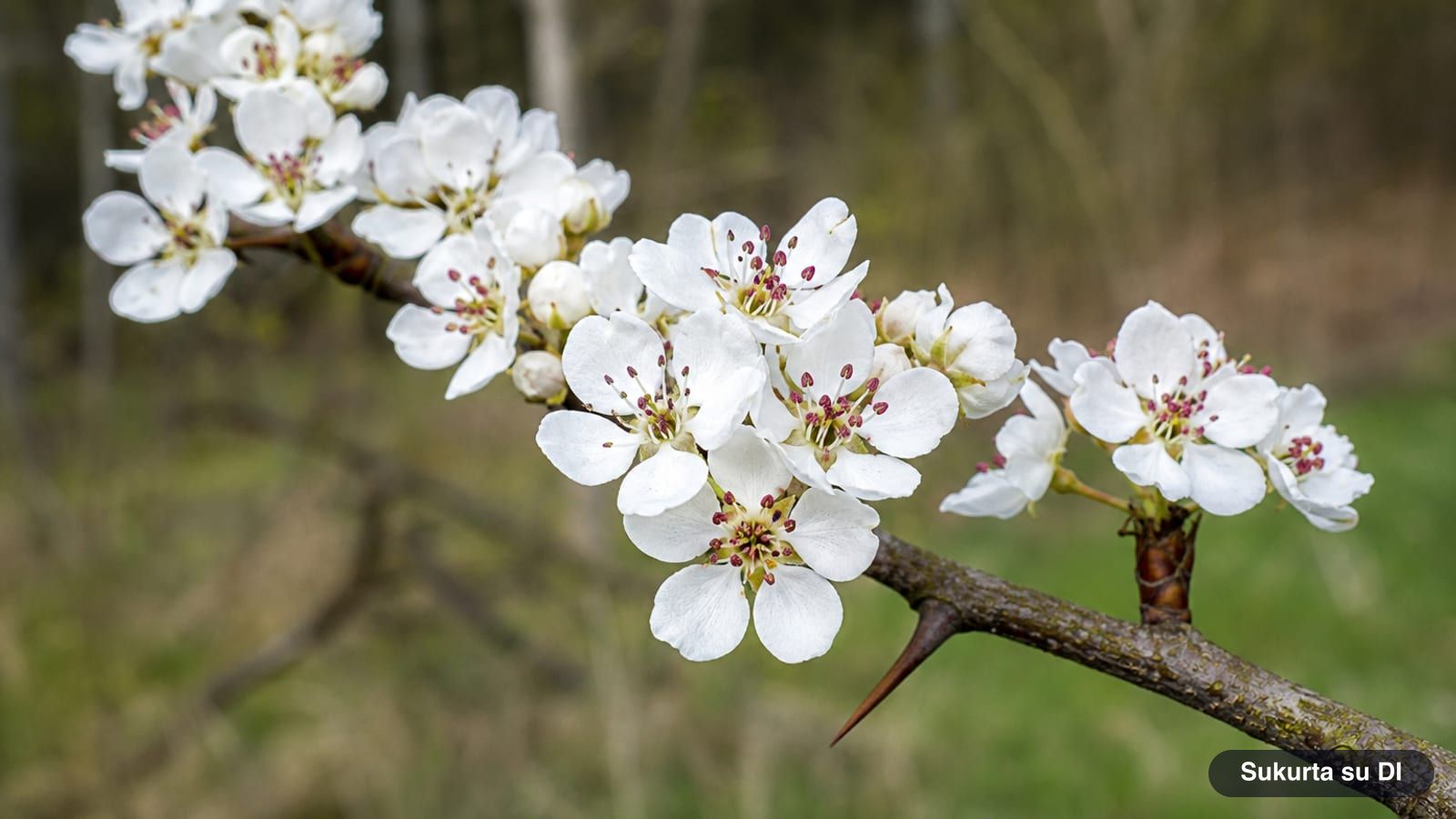
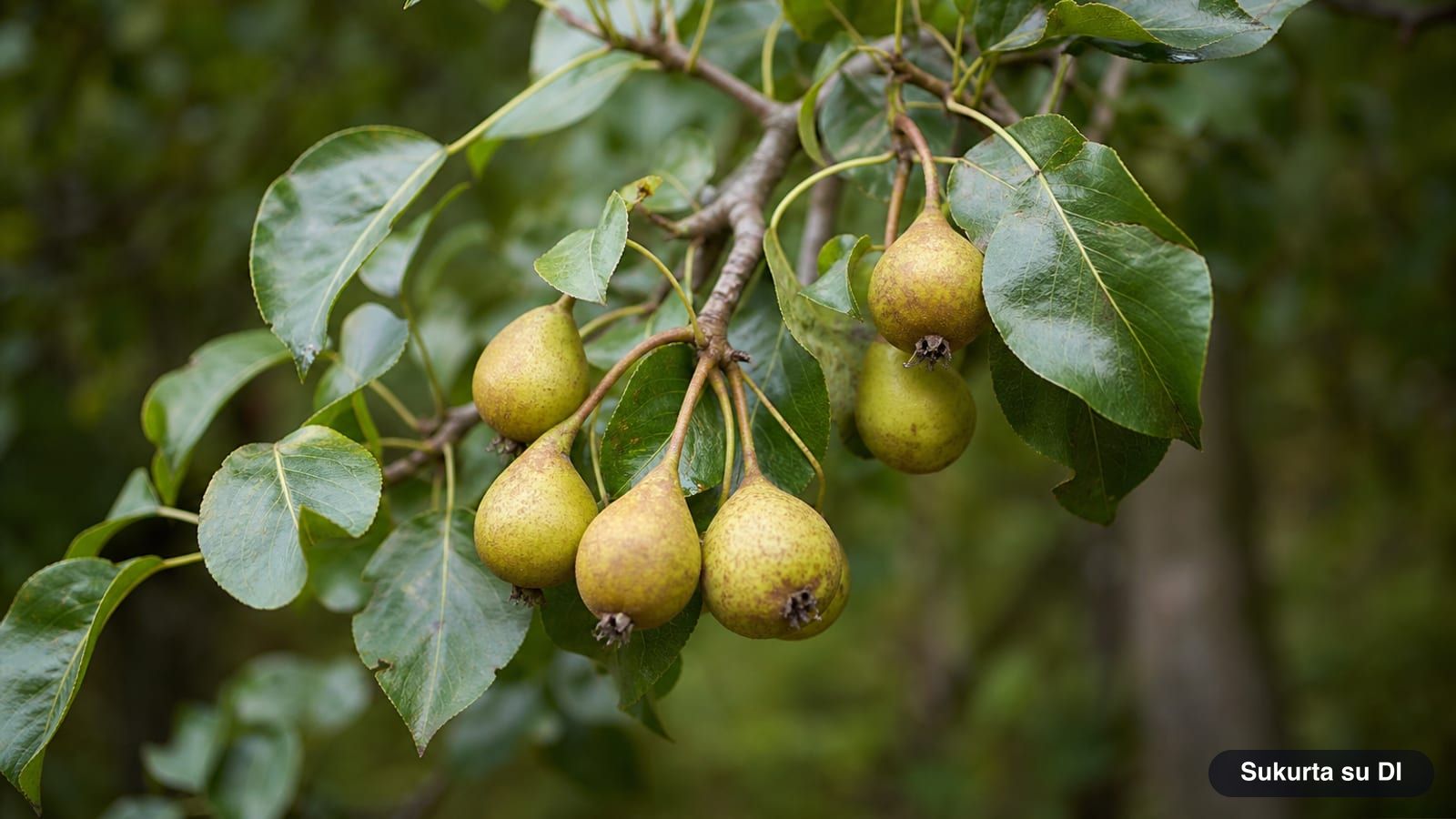
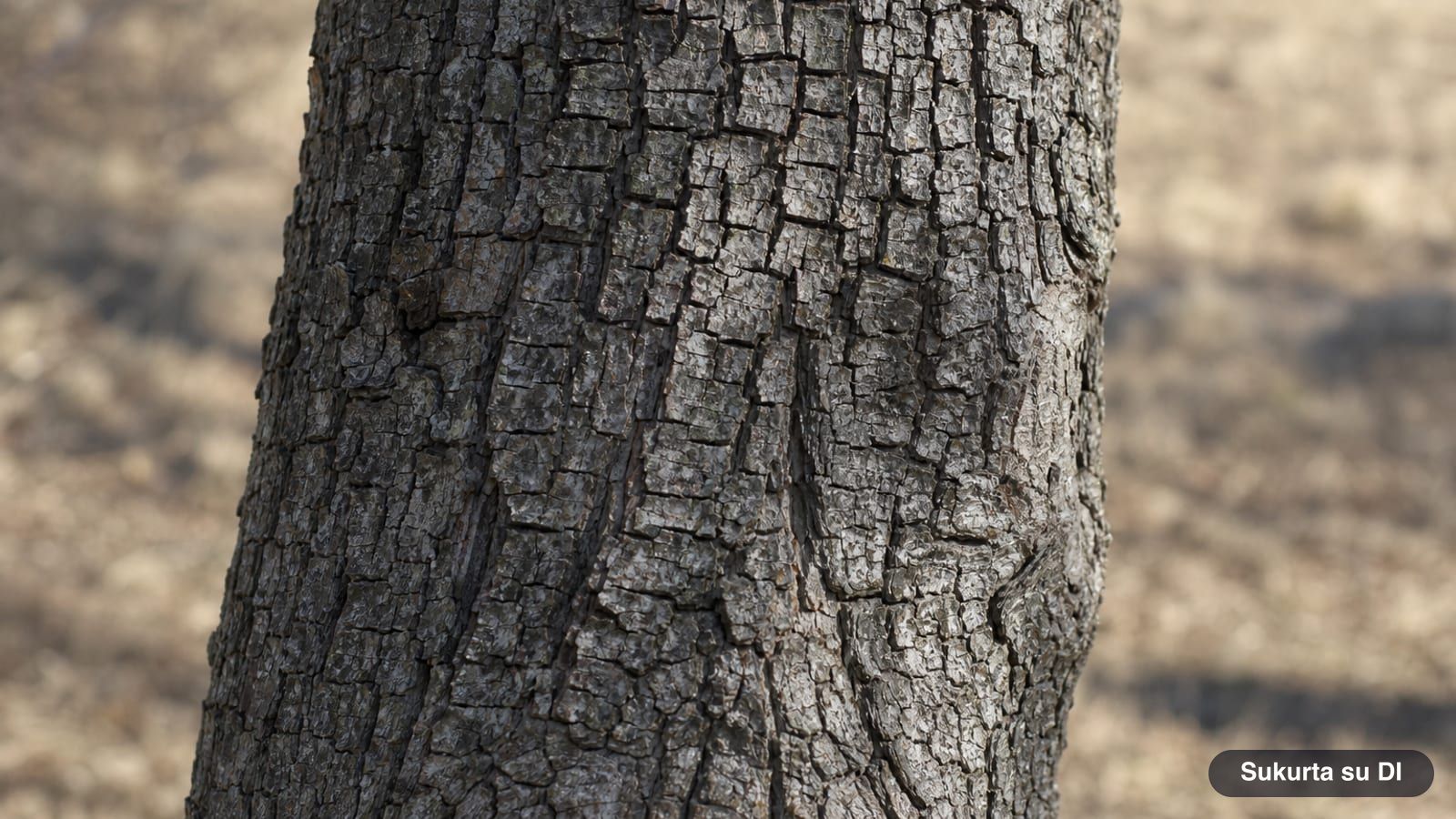
The wild pear has a broad, conical crown, and its dark gray bark is deeply fissured into small, square plates. The branches are thorny, with long, sharp spines, and young shoots often terminate in a thorn—a feature absent in cultivated garden pears. The leaves are small, 0.8–1.6 inches (2–4 cm) long, nearly circular, glossy on top, with finely serrated margins and a petiole about as long as the leaf blade. When drying, the leaves turn black, but in autumn they take on yellow and red hues.
The tree blooms profusely and almost annually in early to mid-spring, before the leaves fully unfurl. The white flowers, about 1.2 inches (3 cm) across with distinctive red anthers, are clustered in groups of 5 to 9; the lower flowers in the inflorescence open first. The fruits are 1.2–1.6 inches (3–4 cm) long, spherical or conical, greenish-yellow, and very hard, ripening in early autumn. While not particularly sweet, they can be eaten fresh once bletted or dried for culinary use.
True Wild Tree or Feral Garden Escape?
| Trait | Wild Apple | Wild Pear | Feral Cultivated Apple |
|---|---|---|---|
| Crown | dense, rounded | broad, conical | sparser, straighter branches |
| Thorns | often present | present, long | usually absent |
| Leaves | 1.2–2.8 in (3–7 cm), stiff, glossy, nearly hairless beneath | 0.8–1.6 in (2–4 cm), nearly circular, long petiole | larger, hairy beneath |
| Blooms | late spring | early to mid-spring | mid to late spring |
| Fruit | up to 0.8–1.2 in (2–3 cm), very tart | 1.2–1.6 in (3–4 cm), hard | usually larger than 1.2 in (3 cm) |
The wild apple easily crossbreeds with domestic apples, meaning many "wild" apples found along roadsides and forest edges are actually hybrids. A true wild apple can only be reliably identified during the blooming period: its flower calyx and the veins on the underside of its leaves will be completely hairless. Similarly, distinguishing a true wild pear from a feral cultivated pear can sometimes be challenging without close inspection.
Wild Fruit Trees and Orchard History
For a long time, it was believed that domestic apples descended directly from the European wild apple. However, modern DNA studies have revealed that the primary ancestor of the cultivated apple is the Central Asian apple (Malus sieversii). Even so, the European wild apple contributed more to the domestic apple's genome than any other secondary species, making today's orchard apples genetically very close to their wild European cousins. Similarly, the wild pear is one of the most important foundational species from which cultivated pears were bred; it remains highly valued for rootstocks and ongoing breeding programs.
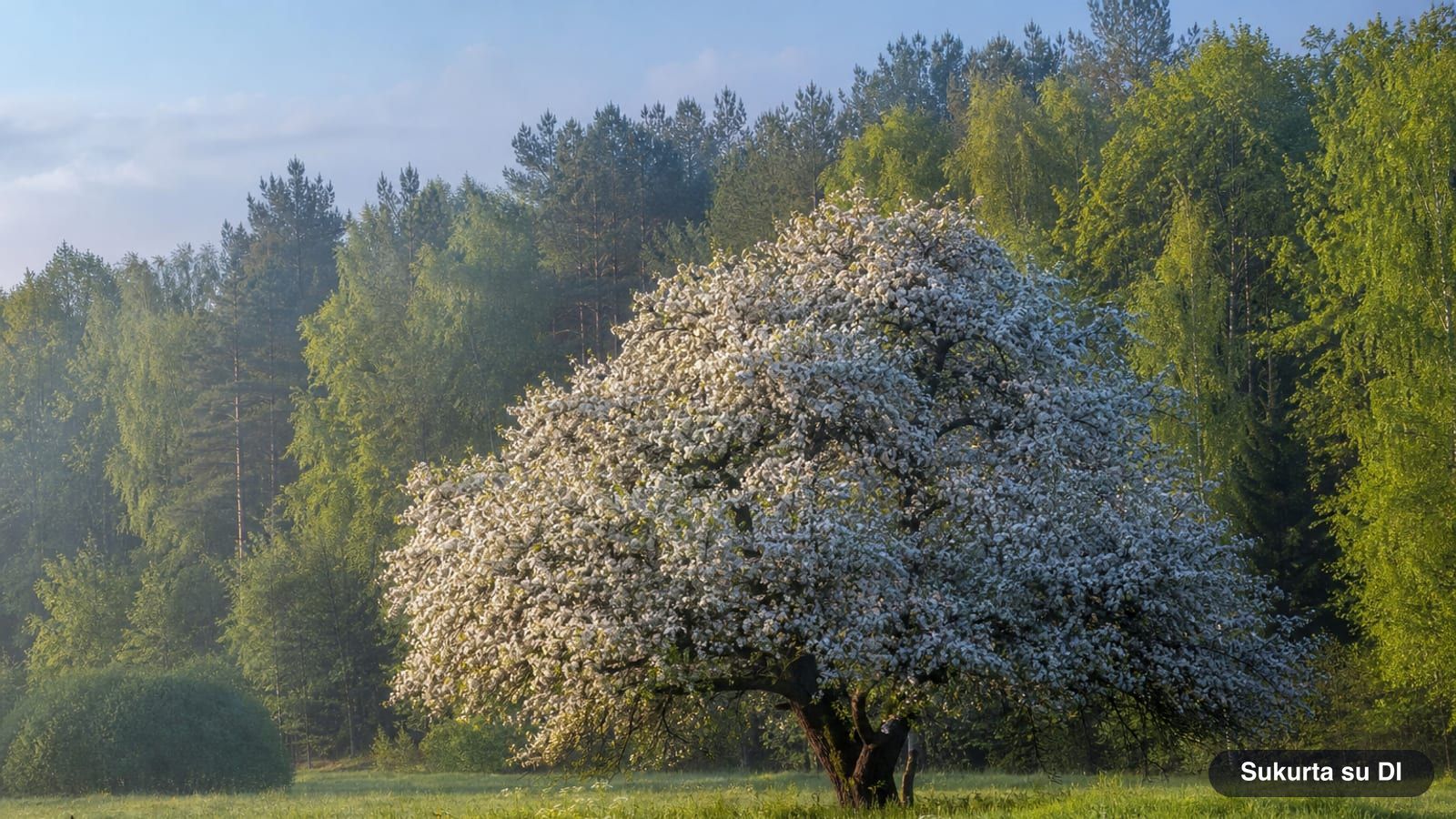
Large-scale apple orchards have been cultivated for centuries, and by the 19th and 20th centuries, renowned nurseries were breeding countless regional varieties. Preserving true wild species like Malus sylvestris and Pyrus pyraster remains a priority for botanical conservation. Historic, ancient fruit trees are often designated as protected natural heritage monuments, safeguarding their unique genetic legacy. For example, the Old Kaunas Apple Tree in Lithuania was declared a protected botanical natural heritage object in 1960.
Ecological Value and Wood
The blossoms of wild fruit trees are a crucial food source for bees and other pollinators. The wild pear, in particular, is a highly melliferous plant, providing abundant nectar and pollen. In autumn and winter, the fallen fruits sustain a wide variety of birds and woodland mammals. The wild apple is also incredibly resilient; it can survive severe crown damage and readily sprouts anew from the stump.
Wild pear wood is exceptionally uniform, dense, and features a beautiful reddish hue, making it highly sought after for crafting exclusive furniture and musical instruments. Apple wood is similarly hard and reddish, favored for fine woodturning and artistic carvings. You can learn about other members of the rose family in our guides to the rowan (mountain ash), bird cherry, and hawthorn.
Frequently asked questions
Are wild apples edible?
Yes, but the fruits of the wild apple are very tart, so they are best eaten fresh only after they have bletted (softened). They are excellent for making jams, jellies, compotes, cider, or dried for herbal teas.
How do you tell a true wild apple from a feral orchard apple?
A wild apple tree has a dense crown, often thorny branches, and smaller, stiffer, glossy leaves that are nearly or completely hairless underneath. The apples are usually under 1.2 inches (3 cm). True wild apples are best identified in bloom by their hairless flower calyxes and leaf veins. Hybrids show intermediate traits.
Where do wild pear trees grow?
Wild pears grow sparsely in mixed and deciduous forests across Europe and parts of Western Asia. They favor sunny woodland edges, hillsides, riverbanks, and old homesteads. Due to their rarity in many regions, they are often protected from logging.
When do wild apple and pear trees bloom?
The wild pear blooms earlier, usually in mid-spring, flowering abundantly before the leaves fully emerge. The wild apple blooms in late spring as the buds open, slightly earlier than hawthorn, producing white or pinkish flowers.
How long does a wild apple tree live?
Depending on the environment, a wild apple tree typically lives 80 to 100 years, though some specimens can reach 150 to 200 years. Wild pear trees generally live for about 100 to 150 years.
Log in to comment
No comments yet. Be the first.