Norway Spruce Tree: Needles, Cones, Flowers & Identification
- The Norway spruce (Picea abies) is a large, fast-growing evergreen conifer native to Northern, Central, and Eastern Europe.
- These trees form vast, dense, and dark boreal forests, thriving in cool climates and moist, well-draining soils.
- Needles are short, 0.4–1 inch (1–2.5 cm) long, four-sided, grow individually all around the twig, and can last 5 to 7 years.
- Cones are long, 4–6 inches (10–15 cm), and hang downward; seeds ripen by the end of the year and fall in late winter to spring.
- While they can grow exceptionally tall, their greatest natural threat is the European spruce bark beetle, which devastates weakened trees.
This article is part of the 77.today trees guide, prepared by the 77.today editors from the sources listed at the end.
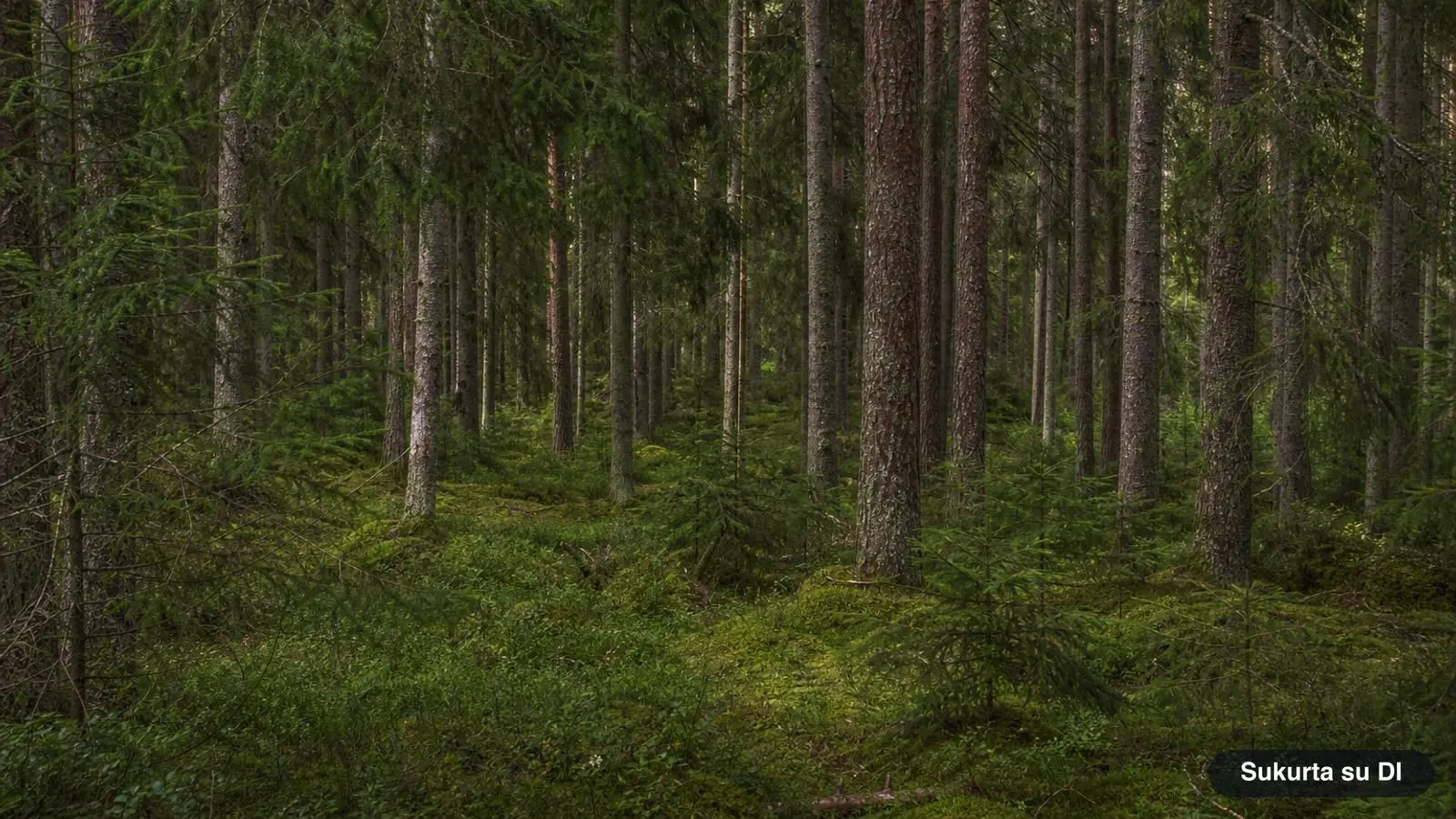
The spruce is a tree many of us bring into our homes during the winter holidays, but in the wild, it lives an entirely different life. Dark, dense spruce forests, where almost nothing grows beneath the thick canopy, are a defining feature of the Northern Hemisphere's boreal landscapes. In this section of the tree identification guide, we explore the Norway spruce (Picea abies): how to identify its needles, flowers, cones, bark, and buds, how it differs from firs and blue spruces, where it thrives, and why these magnificent trees are increasingly drying out in recent years.
| Latin name | Picea abies |
|---|---|
| Family | Pine (Pinaceae) |
| Group | Evergreen conifer |
| Height | Typically 100–130 ft (30–40 m), occasionally taller |
| Lifespan | 250–300 years, sometimes longer |
| Blooms | Late spring |
| Cones | 4–6 inches (10–15 cm), hanging; seeds fall in winter to spring |
| Habitat | Dominant species in European boreal and subalpine forests |
How to Identify a Norway Spruce
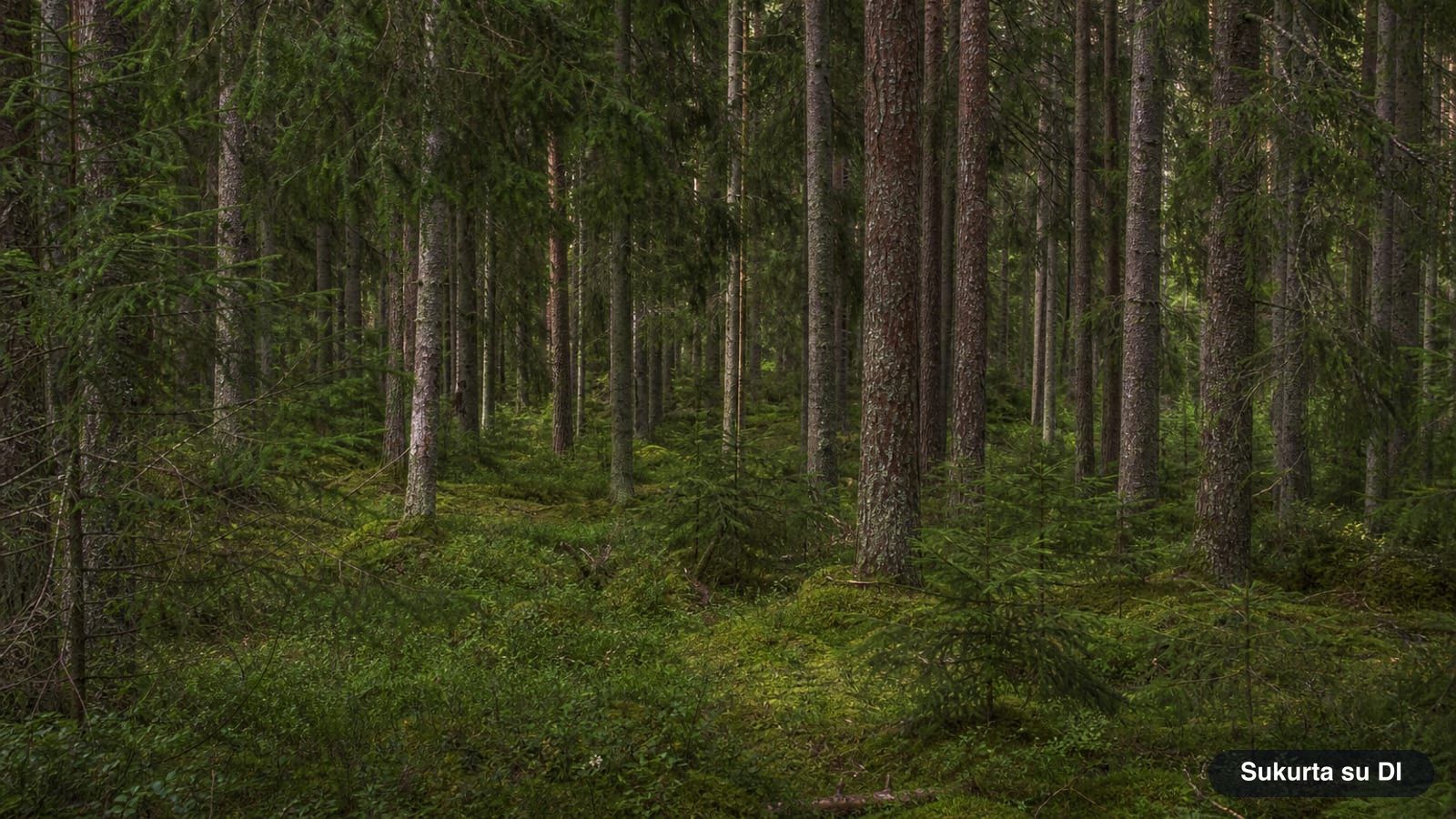
The crown of a Norway spruce is conical with a pointed tip, the trunk is straight, and trees growing in open areas often have branches reaching all the way to the ground. The branches are arranged in irregular whorls, spreading almost horizontally with their tips curving slightly upward, while the smaller branchlets often droop downward. The spruce is incredibly shade-tolerant—more so than most other conifers—which is why spruce forests are often dense and dark. Only 1–2% of sunlight reaches the forest floor, meaning little more than moss can grow beneath the trees.
Needles
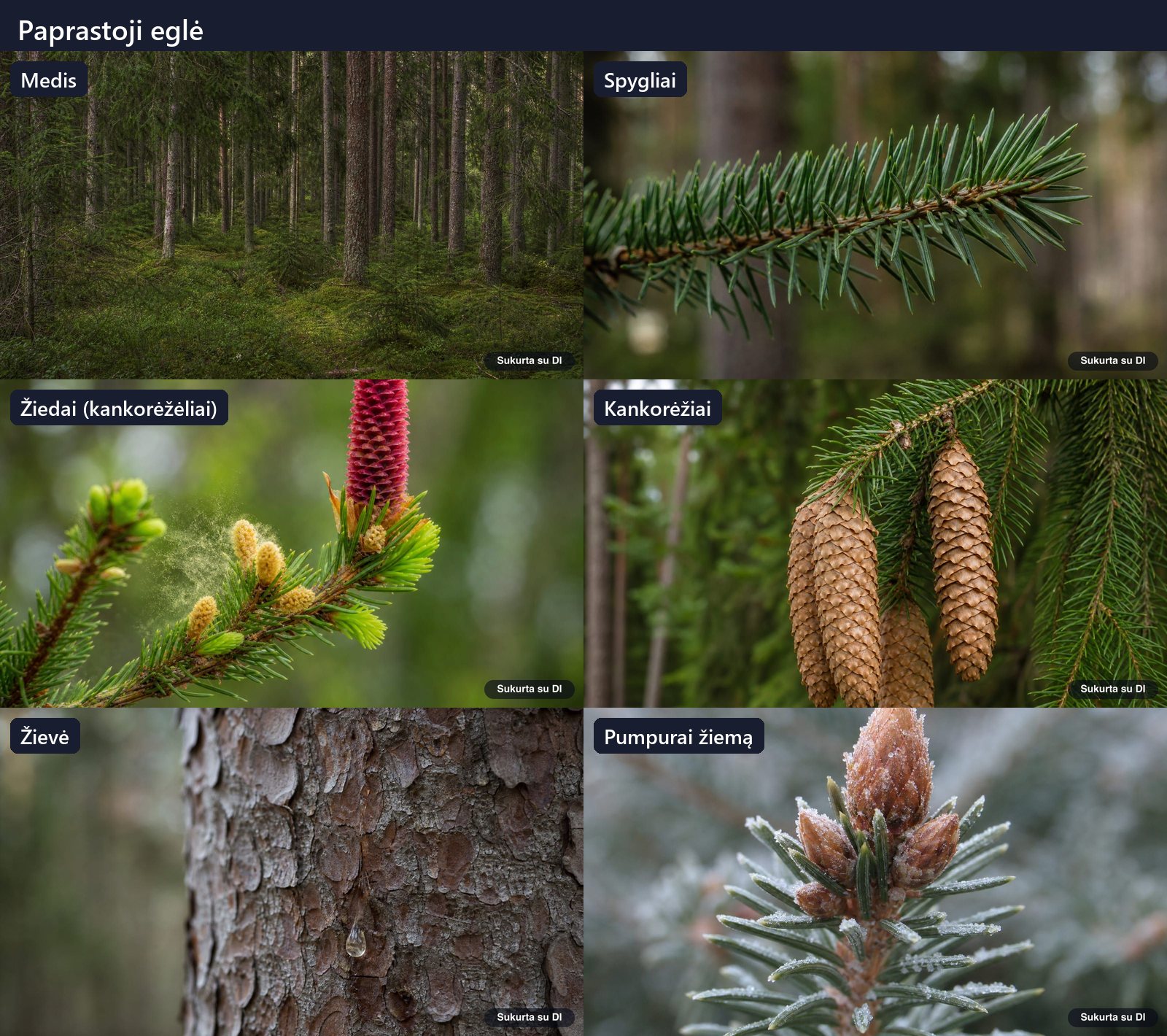
The needles are short, about 0.4–1 inch (10–25 mm) long and 0.08–0.12 inches (2–3 mm) wide. They are dark green, stiff, and sharp. If you cut a needle in half crosswise, you will see it is almost square, meaning it is four-sided, with stomatal lines (tiny white breathing pores) on all four sides. Each needle grows individually and is attached to a small, woody peg. When the needles fall off, these pegs remain, leaving the twig feeling very rough. Needles typically stay on the tree for 5 to 7 years, sometimes up to 9 years. In the lower, more shaded parts of the canopy, the needles may grow flatter, softer, and arrange themselves in a single plane.
Flowers
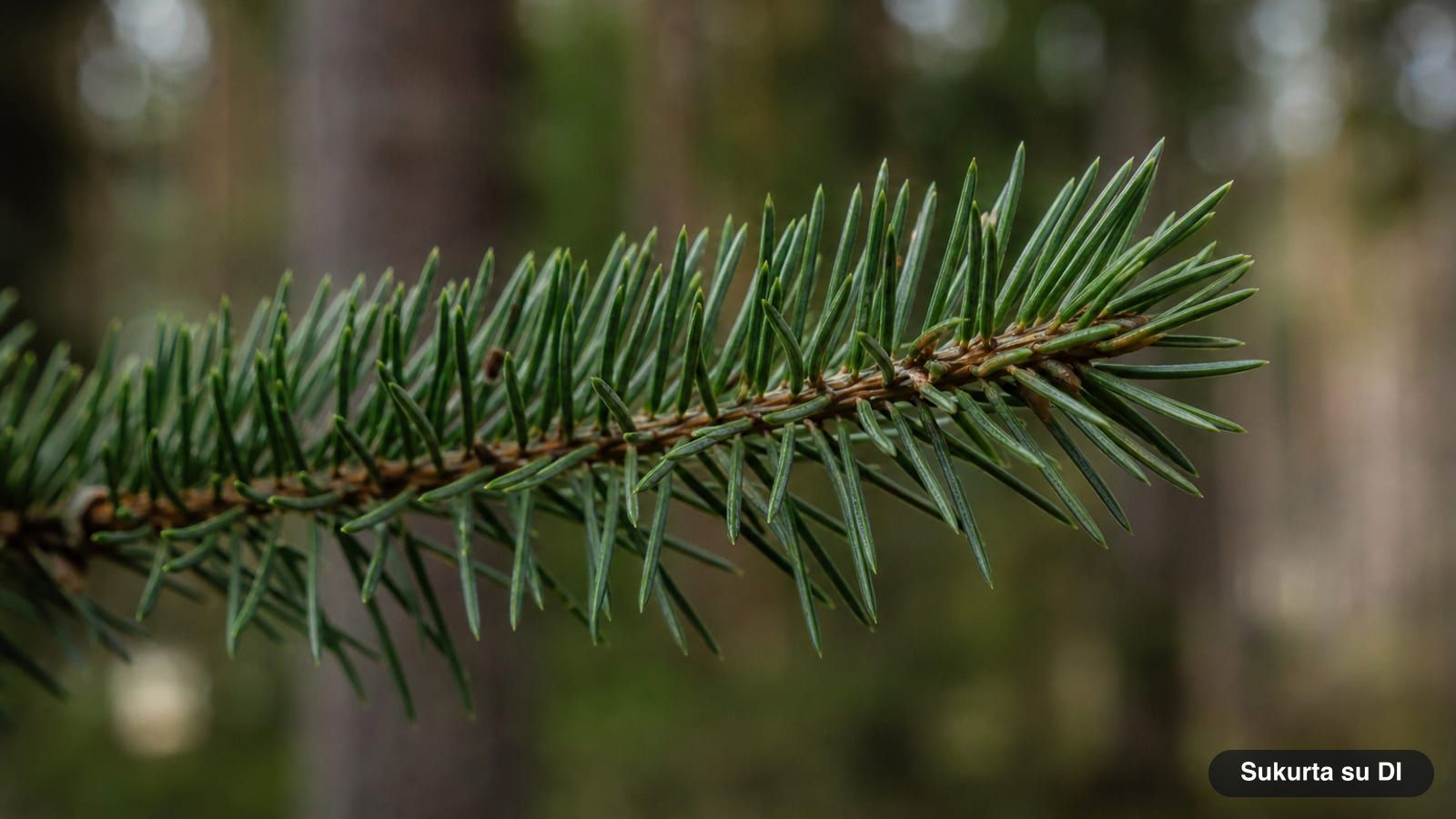
In late spring, just as the new shoots begin to grow, the spruce "blooms." The male pollen cones are initially oval and bright purple, turning yellow and drooping as they release their pollen into the wind. The female conelets are 0.8–1.2 inches (2–3 cm) long, stand upright at the tips of the branches, and can be bright red, purplish, or yellowish-green depending on the individual tree. The Norway spruce is wind-pollinated. Once pollinated, the female conelet turns downward, and within three months, the seeds inside are fully formed.
Cones and Seeds
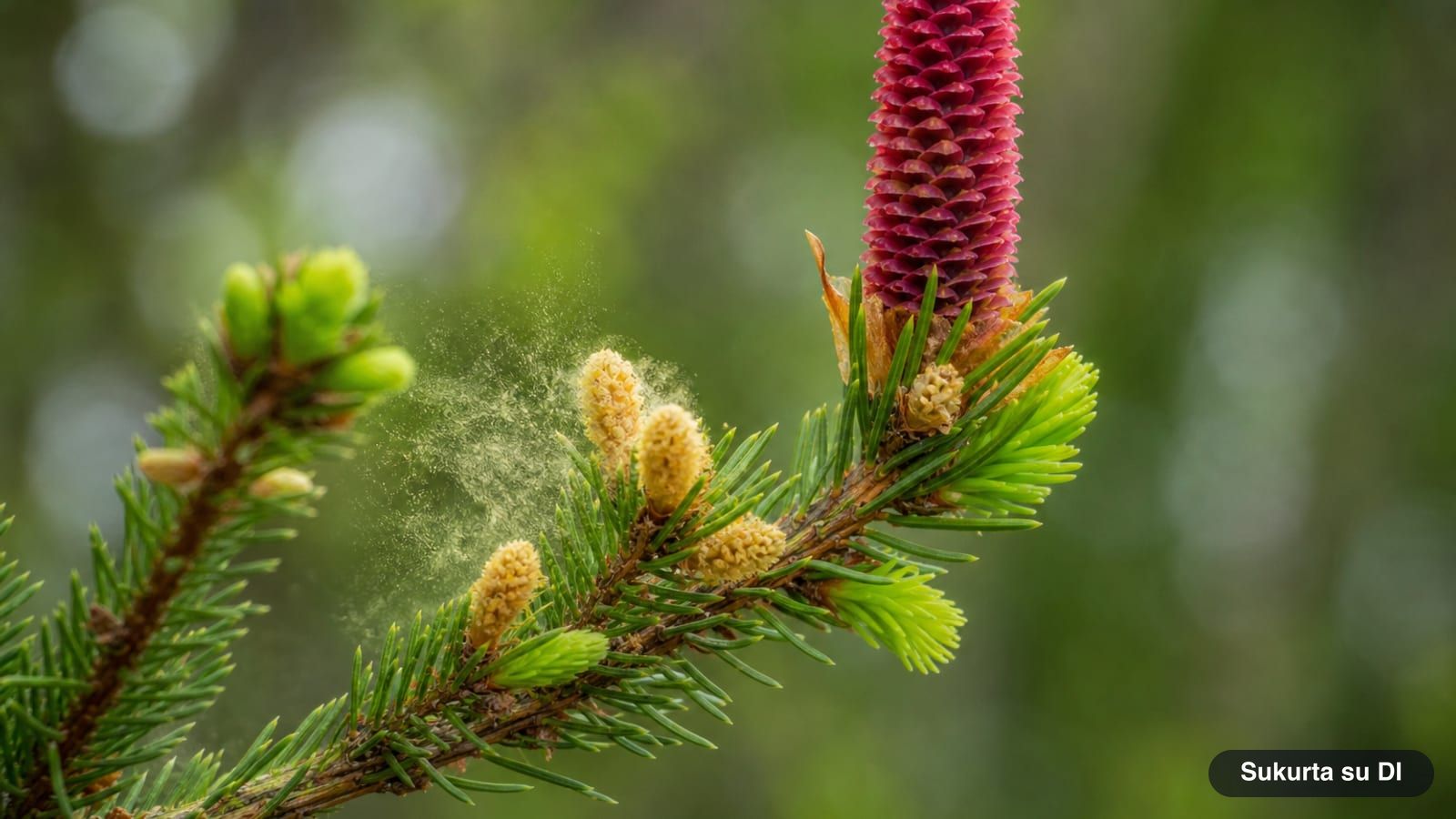
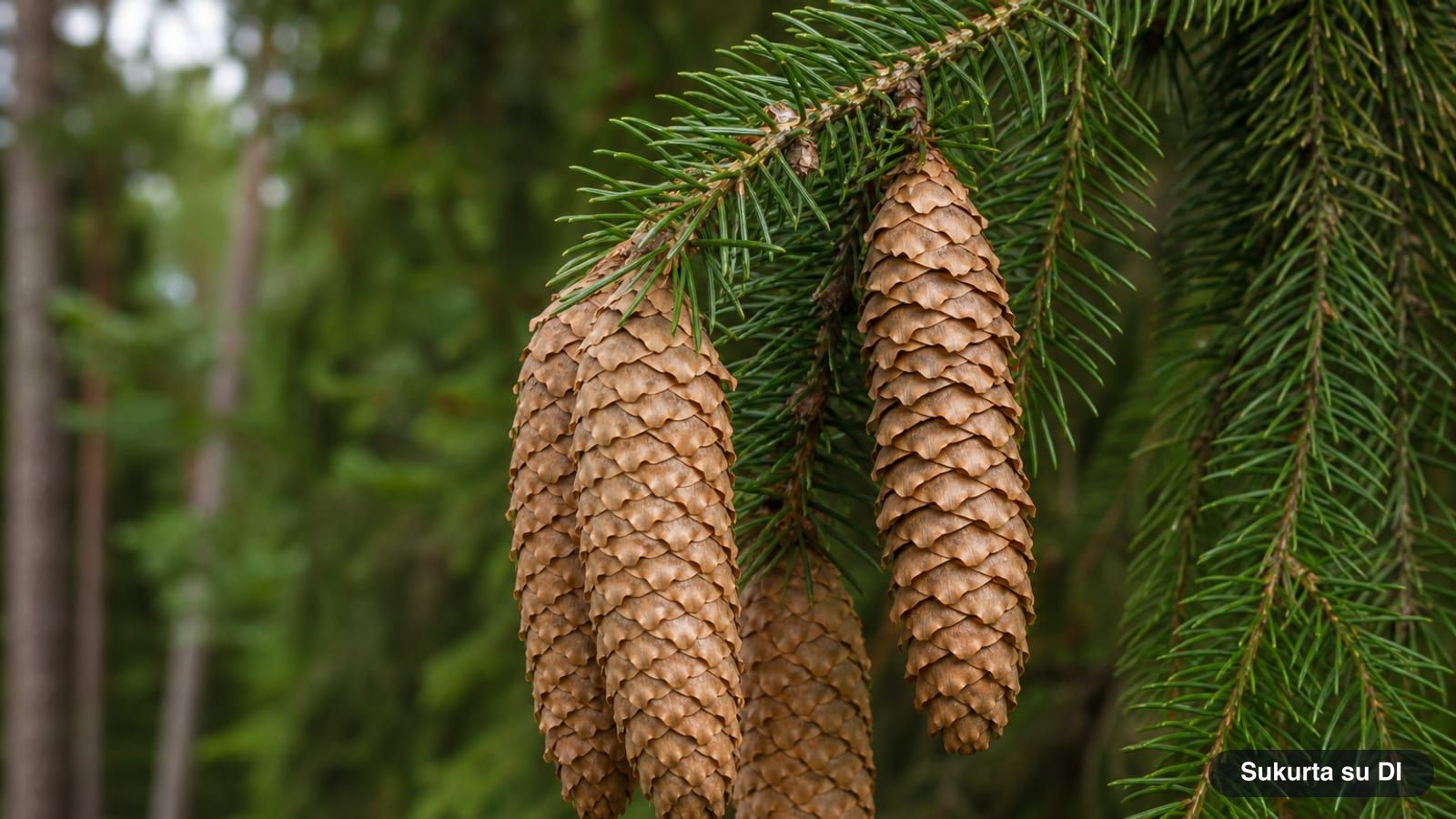
Mature cones are cylindrical, usually 4–4.5 inches (10–11 cm) long, but sometimes reaching up to 6 inches (15 cm). They are 1.2–1.6 inches (3–4 cm) in diameter, reddish or yellowish-brown, and always hang downward. Their scales are thin and diamond-shaped, with a wavy, slightly jagged upper edge. The seeds are small, about 0.12–0.16 inches (3–4 mm) long, dark brown, and feature a shiny wing that is three times the length of the seed. They ripen in late autumn or early winter but mostly fall out during the second half of winter and early spring, particularly on clear days with significant temperature fluctuations. Empty cones drop to the ground intact during the summer, which is why you will often find the forest floor littered with them. Spruces typically begin producing cones between 20 and 30 years of age.
Bark and Buds
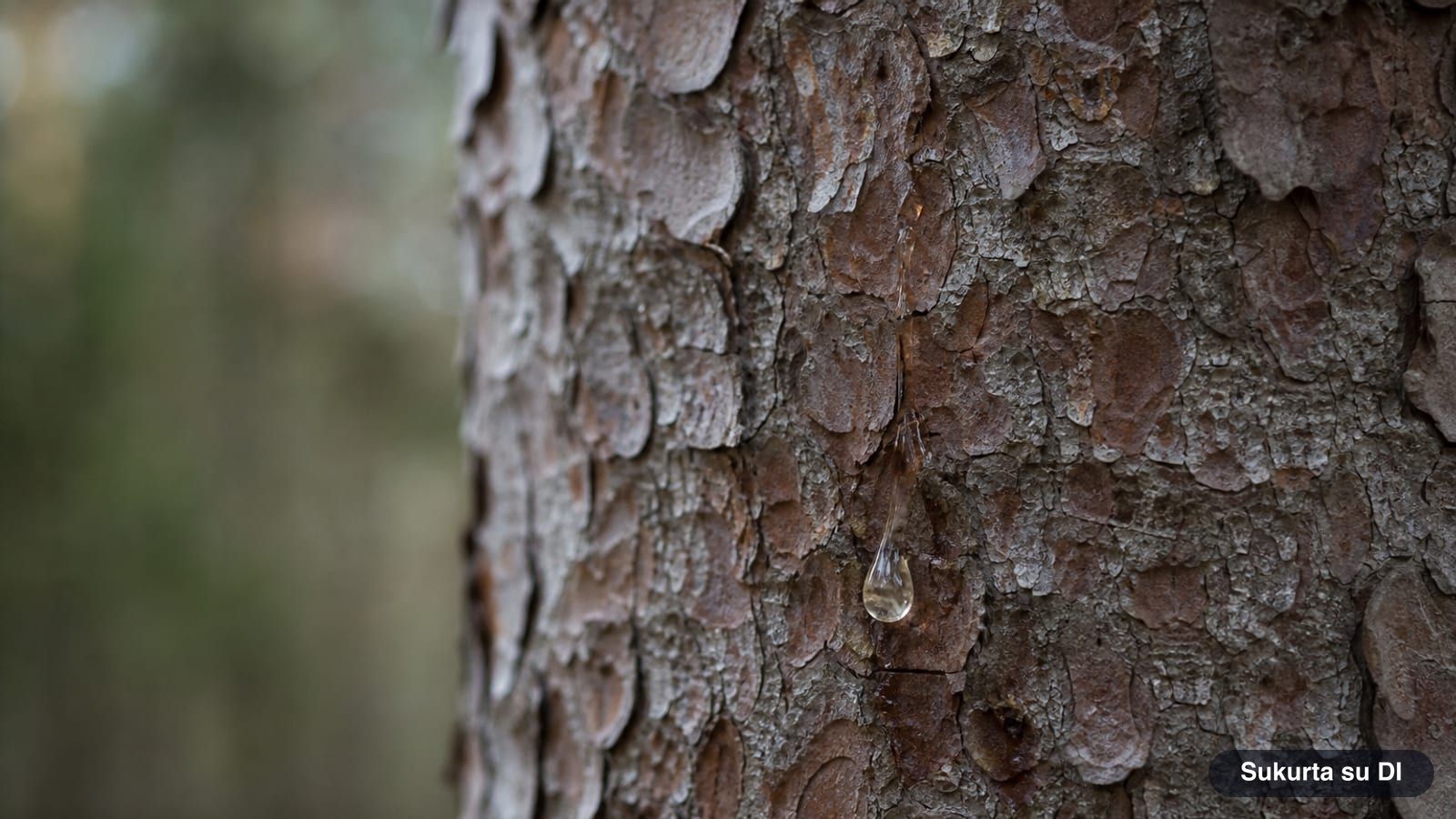
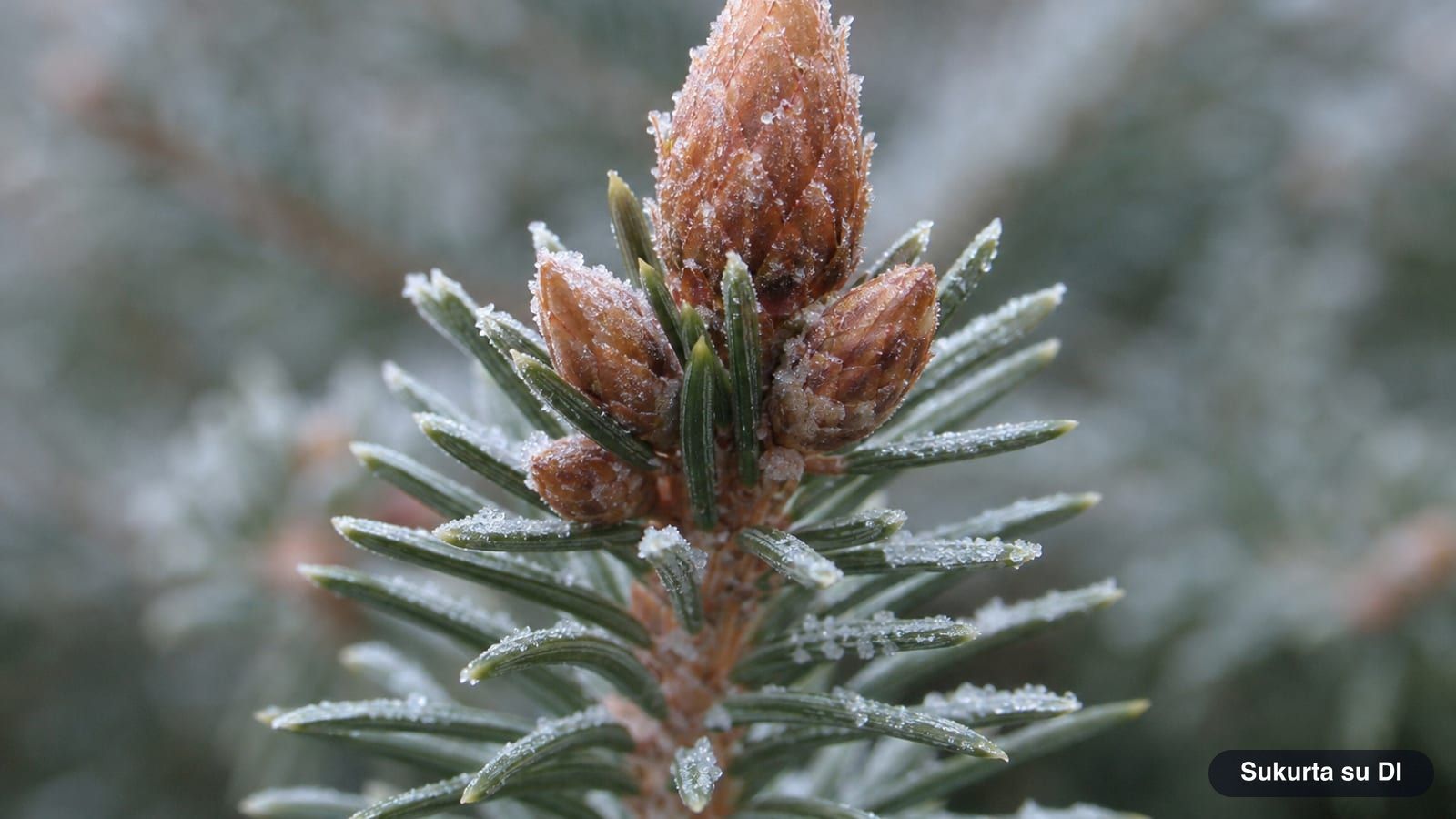
The bark of young spruces is smooth and pale brown. At around 30 to 40 years of age, it begins to crack into round, slightly concave plates that resemble scales, turning reddish-brown or grayish. The buds are narrowly conical, pointed, covered with reddish or pale brown scales, and, unlike pine buds, they are not resinous. At the tip of a shoot, the terminal bud is surrounded by 4 to 7 smaller buds, all of which burst open together in the spring.
Spruce, Fir, or Colorado Blue Spruce?
While the Norway spruce is native to Europe, many gardens and parks feature the Colorado blue spruce or various species of fir. During the holiday season, Nordmann firs are widely sold as Christmas trees, though many people mistakenly call them spruces. Here is how to tell them apart.
| Feature | Norway Spruce | Colorado Blue Spruce | Fir Tree |
|---|---|---|---|
| Needles | 0.4–1 inch (1–2.5 cm), four-sided, sharp, dark green | 0.7–1 inch (1.7–2.5 cm), very stiff and sharp, often bluish | Flat, softer, blunt-tipped, with two white stripes underneath |
| Twig after needles fall | Rough, covered in woody pegs | Rough, covered in woody pegs | Smooth, with circular scars |
| Cones | 4–6 inches (10–15 cm), hanging, fall intact | 2–4 inches (5–10 cm), hanging | Upright, disintegrate on the tree |
| Origin | Native to Europe | Mountains of the western US | Various regions; widely planted |
Where Norway Spruces Grow
The Norway spruce is one of the most economically and ecologically important coniferous species in Europe. It dominates the boreal forests of Scandinavia and Russia, and forms extensive subalpine forests in the mountainous regions of Central Europe, such as the Alps and the Carpathians. The spruce is more demanding of its soil than the pine: it thrives in fertile, consistently moist, well-draining loams and sandy loams, and can even grow in heavy clay. However, it struggles in dry, sandy soils and highly acidic bogs. Because of its shallow root system, it requires regular moisture to survive.
Following the last Ice Age, the Norway spruce spread westward from refuges in Eastern Europe and Russia. Today, it is widely planted far beyond its native range, including in North America and the British Isles, for timber and ornamental purposes. However, because it prefers cool, temperate climates (USDA hardiness zones 3–7), the species is increasingly threatened at the southern and lower-elevation edges of its range due to climate change, rising temperatures, and prolonged summer droughts.
Tallest and Most Famous Spruces
The Norway spruce is capable of reaching impressive heights, making it one of the tallest native trees in Europe. In ideal conditions, such as the sheltered valleys of the Dinaric Alps or the Carpathian Mountains, individual trees can soar past 160 feet (50 m). One of the tallest accurately measured Norway spruces in Europe, located in Slovenia, stands over 200 feet (62 m) tall. Historically, many giant spruces were highly prized and unfortunately felled for timber, but today, many record-breaking specimens are protected in national parks and reserves.
Perhaps the most famous Norway spruce in the world is not known for its height, but for its incredible age. High in the mountains of Sweden grows a clonal spruce known as Old Tjikko. While the visible trunk is only a few hundred years old, the root system has been continuously regenerating new trunks for an astonishing 9,550 years, making it one of the oldest known living clonal trees on Earth. You can learn more about ancient giants in our section on the oldest and largest trees.
The Spruce Bark Beetle and Other Threats
The primary pest threatening spruce forests is the European spruce bark beetle (Ips typographus), a dark brown insect about 0.15–0.2 inches (4–5.5 mm) long. The males bore into the bark and release pheromones to attract others. The larvae then excavate intricate galleries beneath the bark that resemble printed letters—hence the species name "typographus." Infested trees suffer from yellowing, thinning crowns, and eventually die. These beetles thrive during hot, dry summers when they can produce multiple generations in a single season. Massive outbreaks typically follow severe windstorms, which leave behind plenty of fallen, weakened timber for the beetles to colonize. Spruces are also highly susceptible to root rot fungi, windthrow (being uprooted by strong winds due to their shallow roots), droughts, and heavy air pollution, which is why they often struggle in urban environments.
Spruce Wood and Uses
The Norway spruce is a cornerstone of the forestry industry. Its wood is light, pale, and versatile, widely used in construction, furniture making, and the production of paper and cellulose. Wood from trees that have grown slowly and evenly, producing very narrow growth rings, is highly prized as "tonewood" and is used to craft the soundboards of stringed musical instruments like violins and guitars. Essential oils are also distilled from the needles. In horticulture, there are hundreds of recognized cultivars of the Norway spruce, ranging from dwarf, globe-shaped shrubs to dramatic weeping forms. Because the tree tolerates pruning well, it is frequently used to create dense hedges and windbreaks.
Spruce in Mythology and Culture
In many Northern European and Baltic mythologies, the spruce was traditionally associated with the underworld, death, and protective spirits. Because of its dark, evergreen foliage, it was often seen as a bridge between the living and the dead, and in some regions, spruce branches are still used to line the path to a cemetery. However, the tree's cultural significance shifted dramatically with the popularization of the Christmas tree. While the tradition of bringing an evergreen indoors has ancient roots, the modern custom of decorating a Norway spruce for Christmas originated in Central Europe and has since become a global phenomenon. You can find tips on selecting a live tree in our dedicated holiday guides.
The English word "spruce" actually has an interesting geographic origin. In late Middle English, it was derived from the Old French word Pruce, meaning Prussia. Goods brought from the Baltic region, including timber, were said to be "from Spruce." Over time, the name became attached specifically to the coniferous trees that dominated the Prussian and Baltic landscapes.
Growing Spruce in the Garden
The Norway spruce is an excellent choice for windbreaks and large hedges on spacious properties, as it tolerates both shade and regular shearing. It requires consistently moist, fertile soil to thrive. In dry, sandy soils, the tree will become stressed and highly vulnerable to pests, especially during drought years. Because its root system is shallow, solitary old trees growing in open, exposed areas are prone to being uprooted by strong winds—for this reason, it is best not to plant large spruces too close to a house. For smaller yards, dwarf cultivars are a much safer and more manageable option.
Frequently asked questions
How do you identify a Norway spruce?
Look for a conical, pointed crown and short, stiff, four-sided needles, 0.4–1 inch (1–2.5 cm) long, that grow individually all around the twig on small, woody pegs. The cones are long, light brown, and hang downward. Older trees have reddish-brown or gray bark that flakes off in round scales.
What is the difference between a spruce and a fir?
Spruce needles are four-sided, sharp, and leave a rough, woody peg on the twig when they fall. Fir needles are flat, softer, blunt-tipped, and usually have two white stripes underneath, leaving a smooth, circular scar when they drop. Spruce cones hang down and fall intact, while fir cones stand upright and disintegrate on the tree.
How long does a Norway spruce live?
A Norway spruce typically lives for 250 to 300 years, though exceptional trees can survive much longer. In commercial forestry, however, spruce stands are usually harvested much earlier, often between 60 and 80 years of age.
When does a spruce tree bloom?
In late spring, alongside the growth of new shoots. Female conelets stand upright and are bright red or green, while male pollen cones are initially purple before turning yellow. Once pollinated, the female cones turn downward and grow into long mature cones by autumn.
Why do spruce trees dry out and die?
The most common cause is the European spruce bark beetle, a small insect whose larvae tunnel under the bark. Outbreaks typically occur after severe storms or during hot, dry summers when trees are stressed. Spruces are also harmed by root rot fungi, droughts, and heavy air pollution.
What is the difference between a Norway spruce and a Colorado blue spruce?
The Colorado blue spruce is native to the western United States. Its needles are longer, 0.7–1 inch (1.7–2.5 cm), very stiff, incredibly sharp, and often have a distinct blue or silvery tint. Its cones are shorter, typically 2–4 inches (5–10 cm) long. It is widely planted as an ornamental tree in gardens and parks.
Log in to comment
No comments yet. Be the first.