Bird Cherry Tree: Flowers, Berries, Leaves and Identification
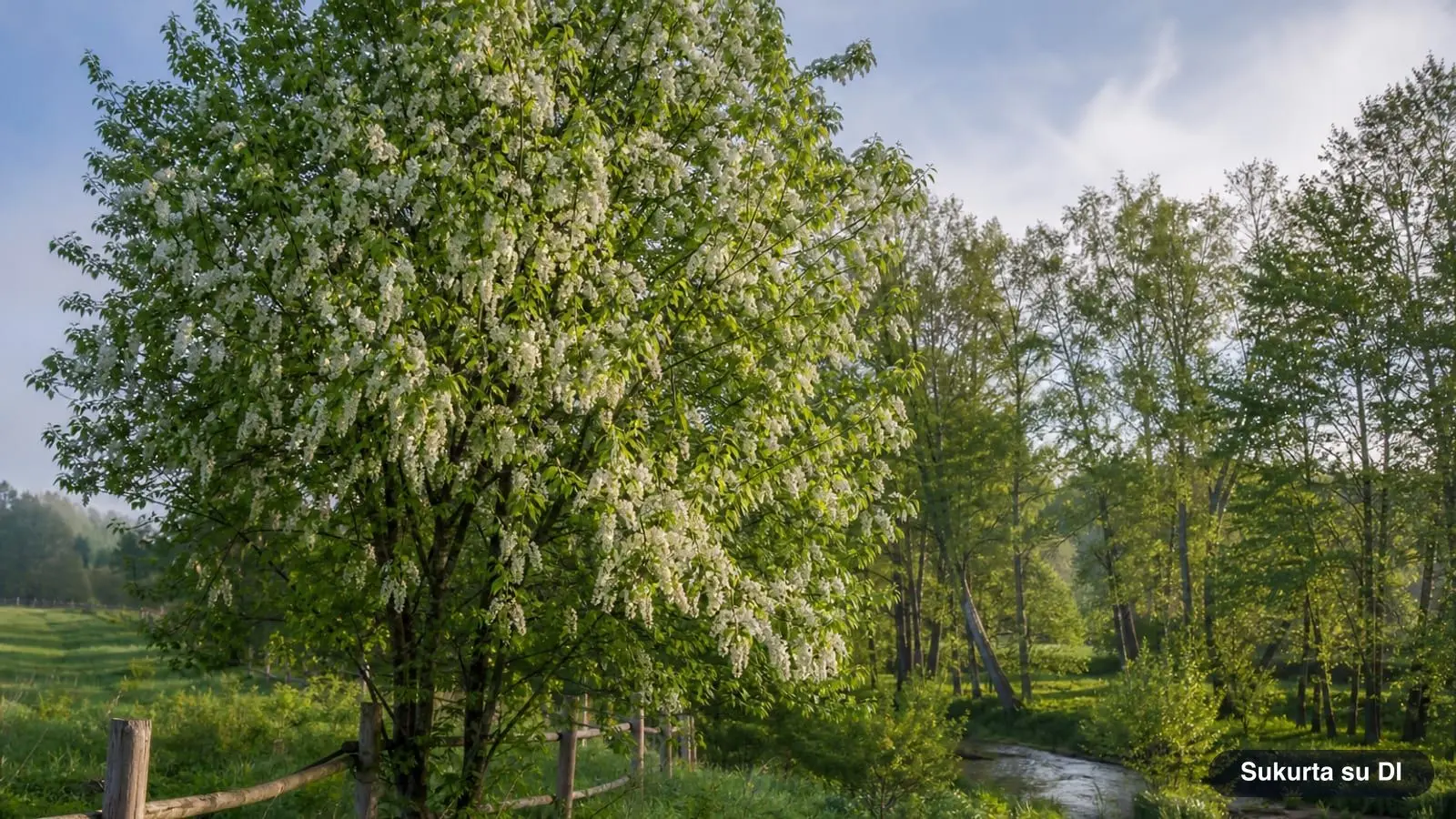
- The bird cherry (Prunus padus) is a deciduous tree or large shrub native to Europe and northern Asia, typically growing 10–33 ft (3–10 m) tall.
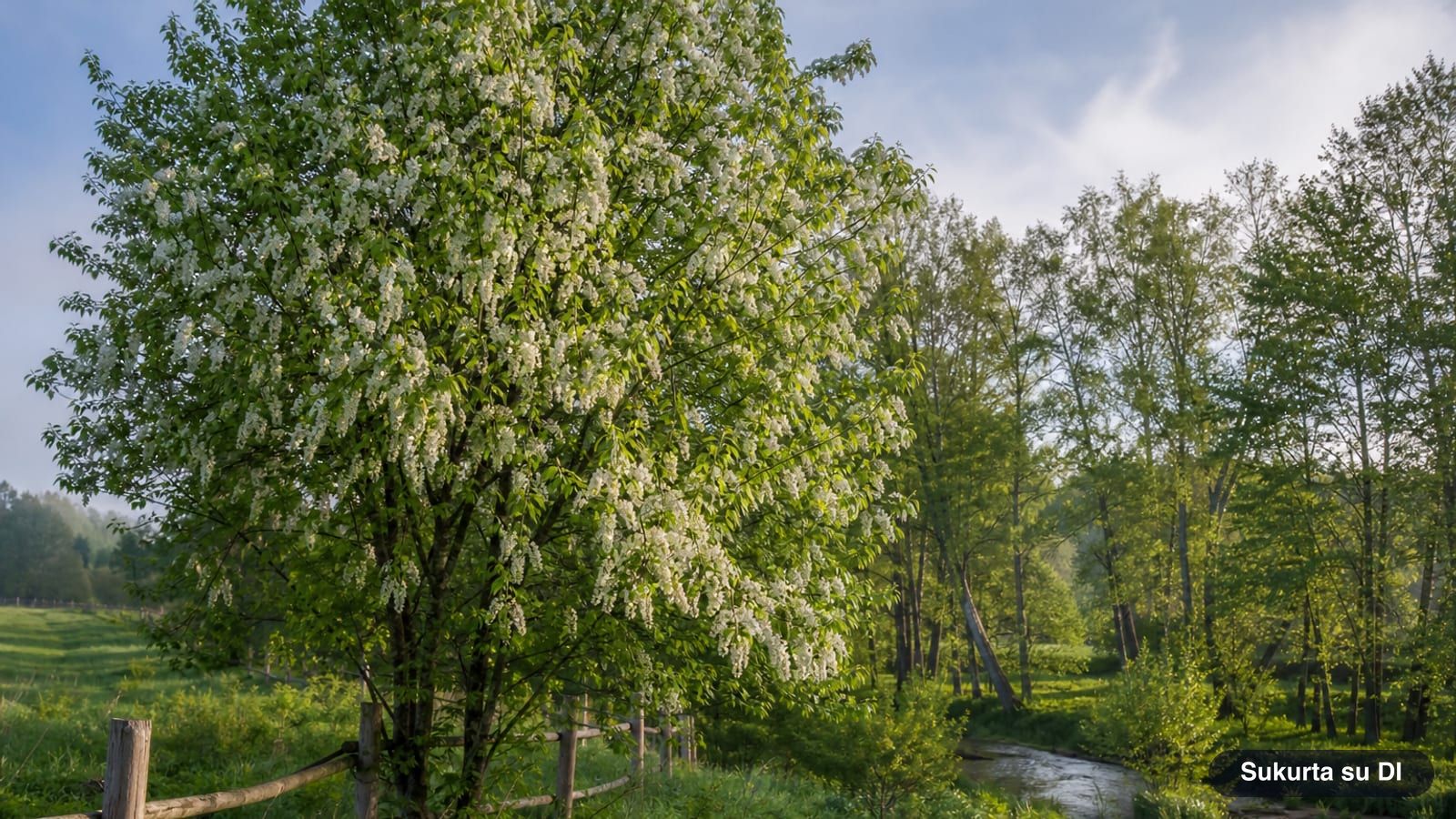
- It blooms in mid-to-late spring: the flowers are white, fragrant, and clustered in 3–6-inch (8–15 cm) drooping racemes.
- The fruits are black, 0.3-inch (8 mm) drupes that ripen in mid-to-late summer; they are highly astringent, and the pits must not be chewed.
- The leaves, bark, and seeds contain amygdalin, a compound that can release cyanide when metabolized.
- The similar black cherry (Prunus serotina) is native to North America but considered invasive in parts of Europe—it blooms later and has glossy, leathery leaves.
This article is part of the 77.today trees guide, prepared by the 77.today editors from the sources listed at the end.
When the meadows are just turning green and the oaks still stand bare, bird cherry trees are already blooming white along riverbanks and forest edges. Their sweet, slightly intoxicating fragrance is one of the most distinct signs of spring in cool northern climates, and the tree has long been planted near homesteads and celebrated in folklore. In this card from our tree guide, we explore the bird cherry: how it looks in every season, whether its berries are edible, why the trees sometimes become shrouded in white webbing, and how to avoid confusing it with its invasive relative, the black cherry.
| Latin Name | Prunus padus (syn. Padus avium) |
|---|---|
| Family | Rose family (Rosaceae), plum genus |
| Group | Deciduous tree, native to Europe and northern Asia |
| Height | Usually 10–33 ft (3–10 m), tree or large shrub |
| Blooms | Mid-to-late spring |
| Fruits | Black drupes, mid-to-late summer |
| Habitat | Riverbanks, forest edges, moist deciduous woodlands, roadsides, gardens |
| Safety | Leaves, bark, and seeds are toxic (amygdalin) |
How to Identify the Bird Cherry
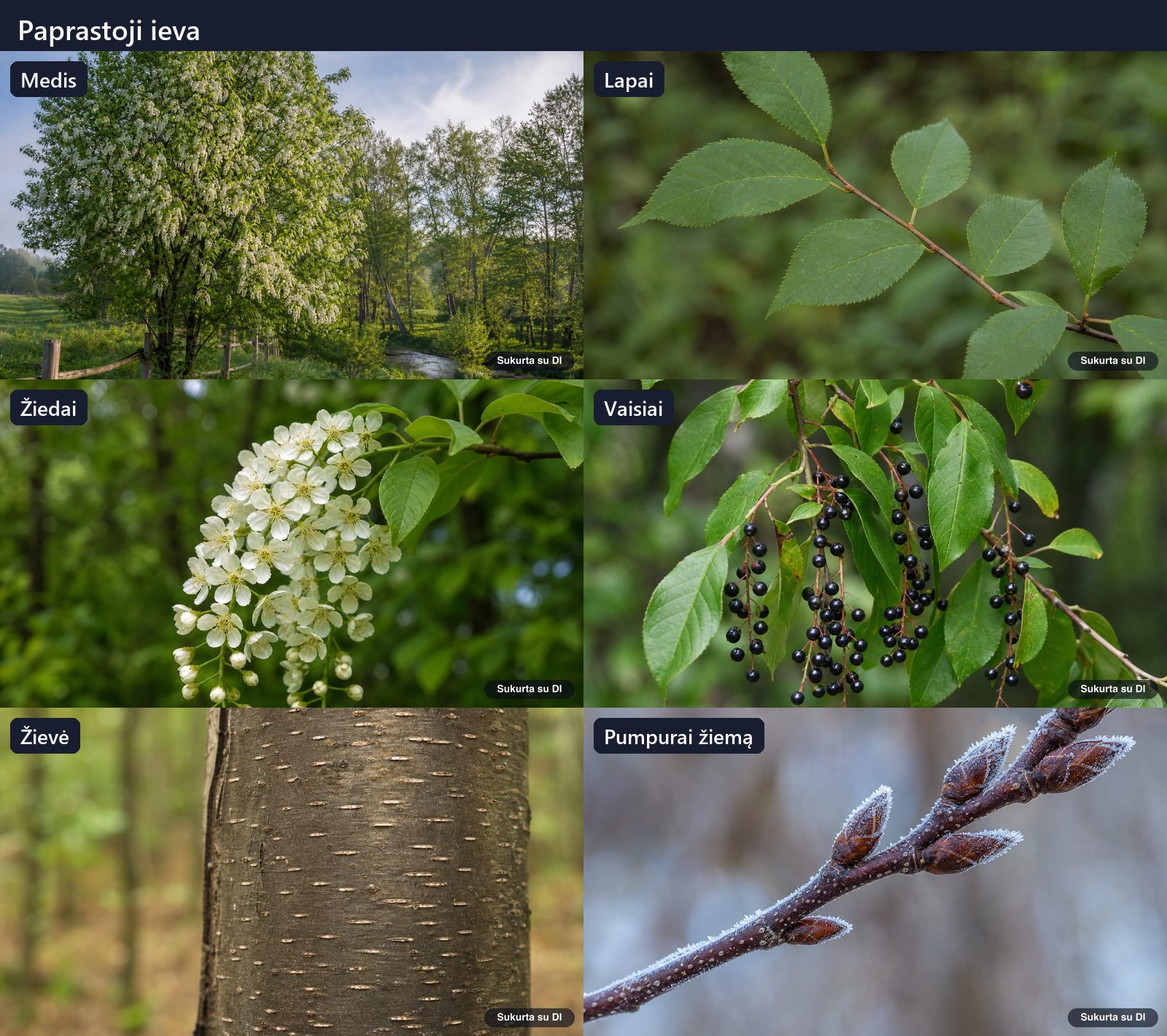
The bird cherry is a small tree or large shrub, often with several leaning trunks and a broad, irregular crown. It thrives in moist, fertile locations: it is most commonly found along the banks of streams and rivers, in damp deciduous forests and their margins, along roadsides, and in abandoned homesteads. The bird cherry tolerates shade well and easily regenerates from stumps and root suckers, sometimes forming dense thickets along waterways. It is extremely cold-hardy, thriving in USDA zones 3–7.
Leaves
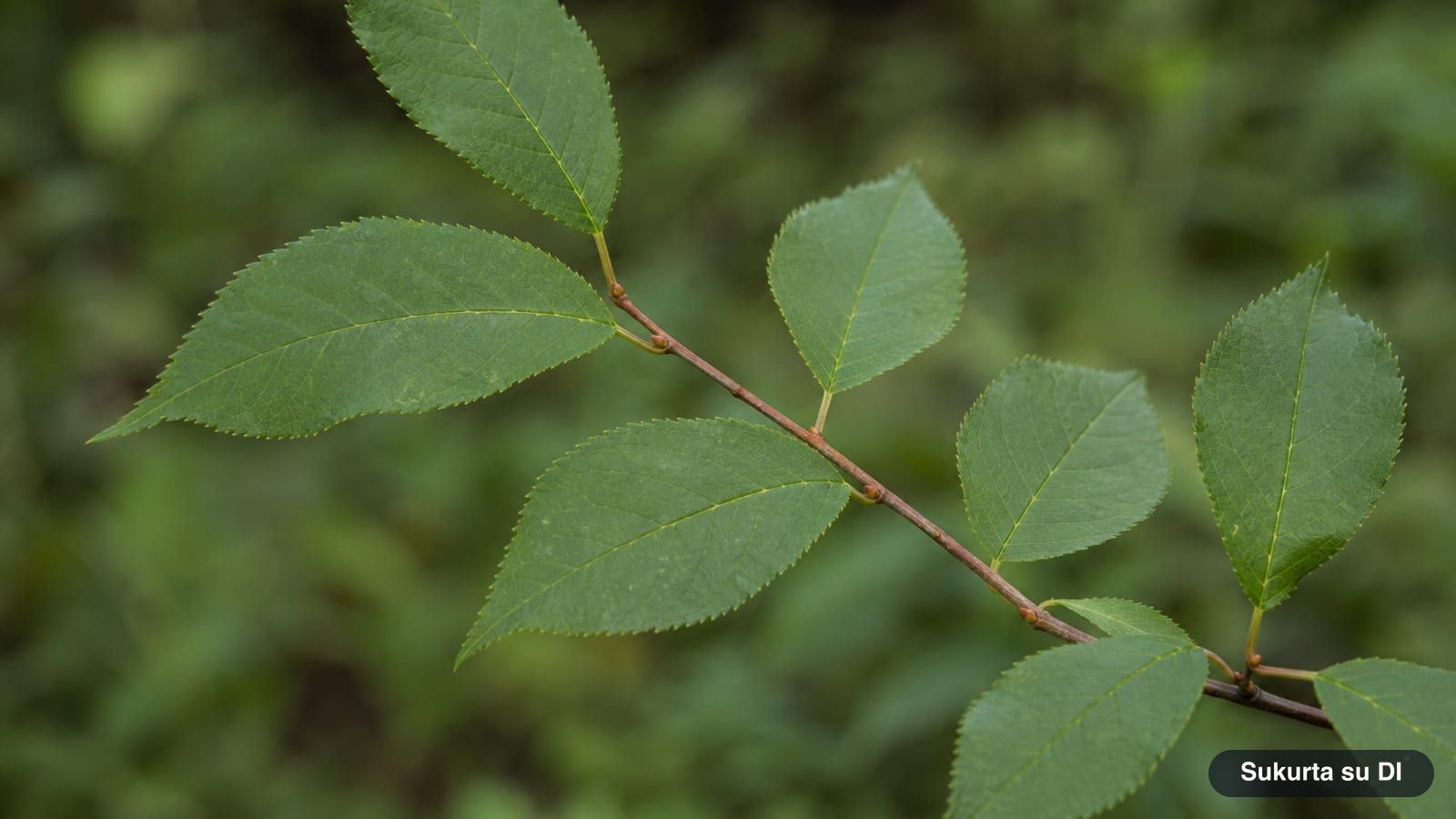
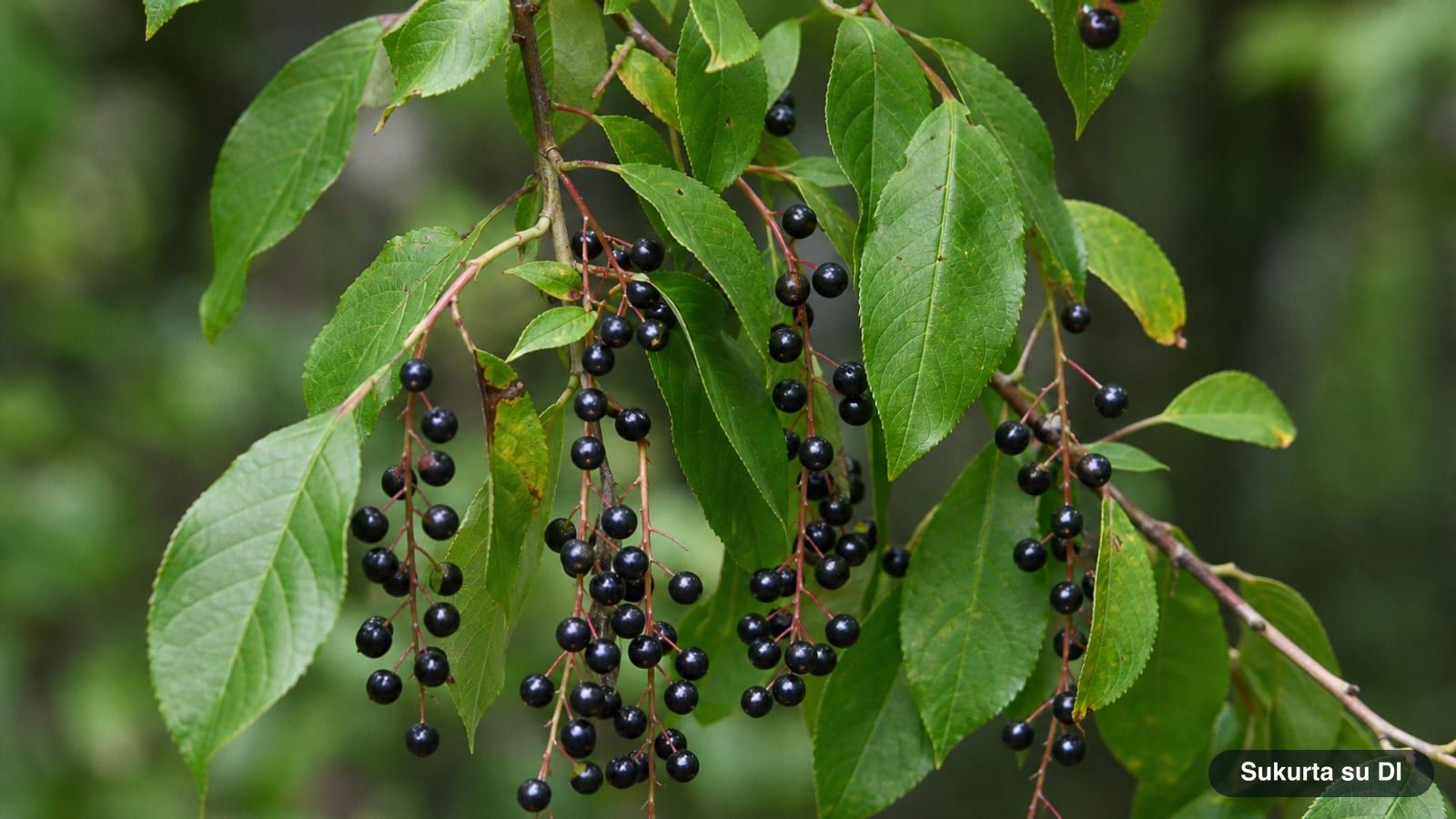
The leaves are arranged alternately, elliptic to obovate, 2.5–5 inches (7–13 cm) long and 1.5–2.5 inches (4–7 cm) wide, with an acute tip and finely, sharply serrated edges. The upper surface is matte and dark green, while the underside is lighter and slightly bluish. The petiole is short, and two tiny glands are often visible at the base of the leaf blade—a typical characteristic of the Prunus genus. Bird cherry leaves are among the first to unfurl in early spring, and they turn yellow or reddish in the fall.
Flowers
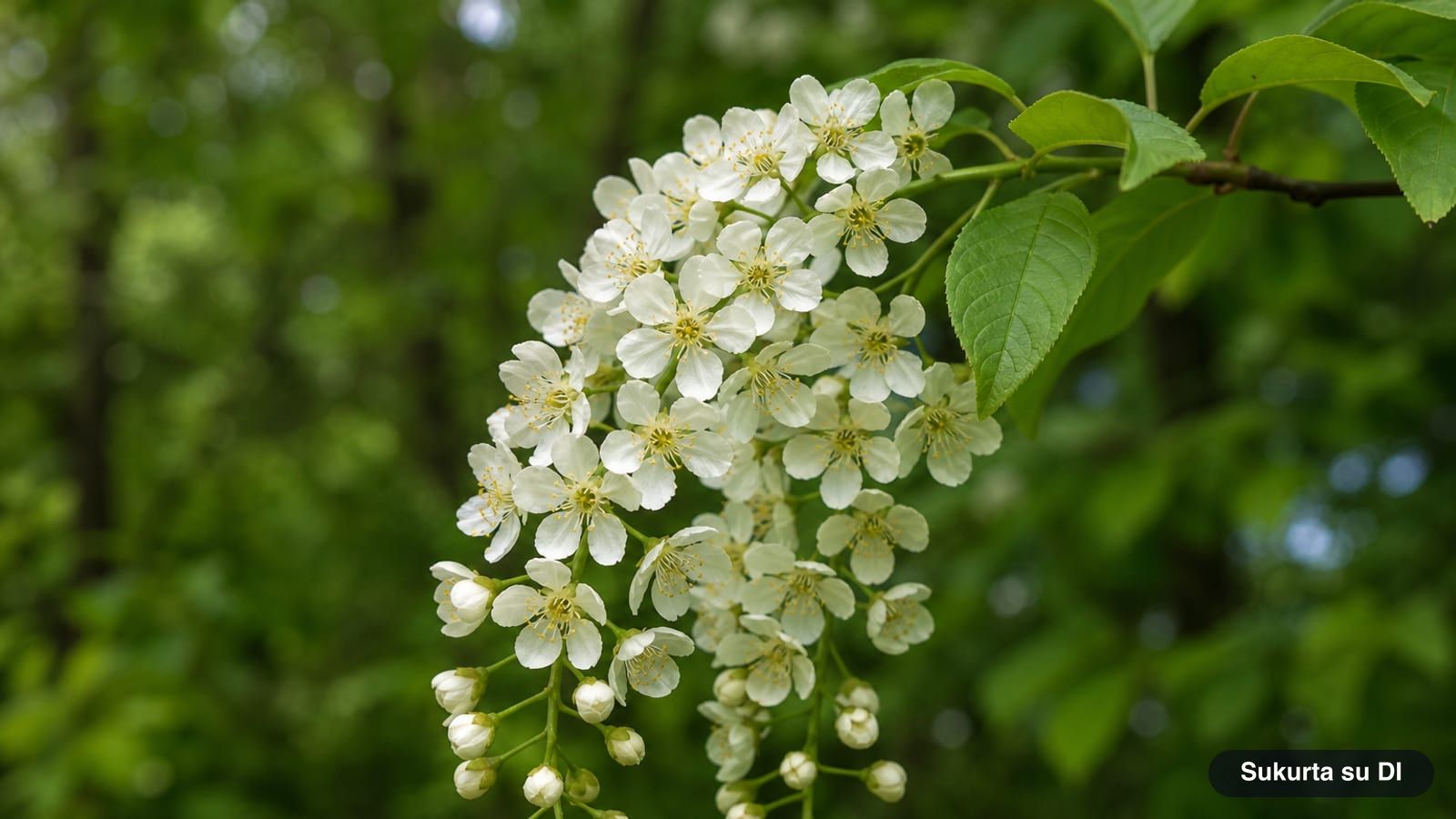
The bird cherry blooms in mid-to-late spring, just as the leaves are expanding. The flowers are white, featuring five petals and numerous yellow stamens, clustered in loose, drooping or spreading racemes that are 3–6 inches (8–15 cm) long. The fragrance is strong and sweet, especially noticeable in the evenings. The flowers are hermaphroditic and are pollinated by bees, bumblebees, and flies, making the blooming bird cherry an important early food source for insects.
Fruits
The fruits are spherical drupes about 0.3 inches (8 mm) in diameter. They are initially green, then turn red, and finally ripen to a glossy black in mid-to-late summer. Each fruit contains a single pit with a wrinkled surface. Bird cherry berries are eagerly eaten by thrushes, blackcaps, and other birds, which spread the seeds far from the mother tree through their droppings. You can read more about how birds sow trees in our guide to tree seeds and fruits.
Bark and Buds
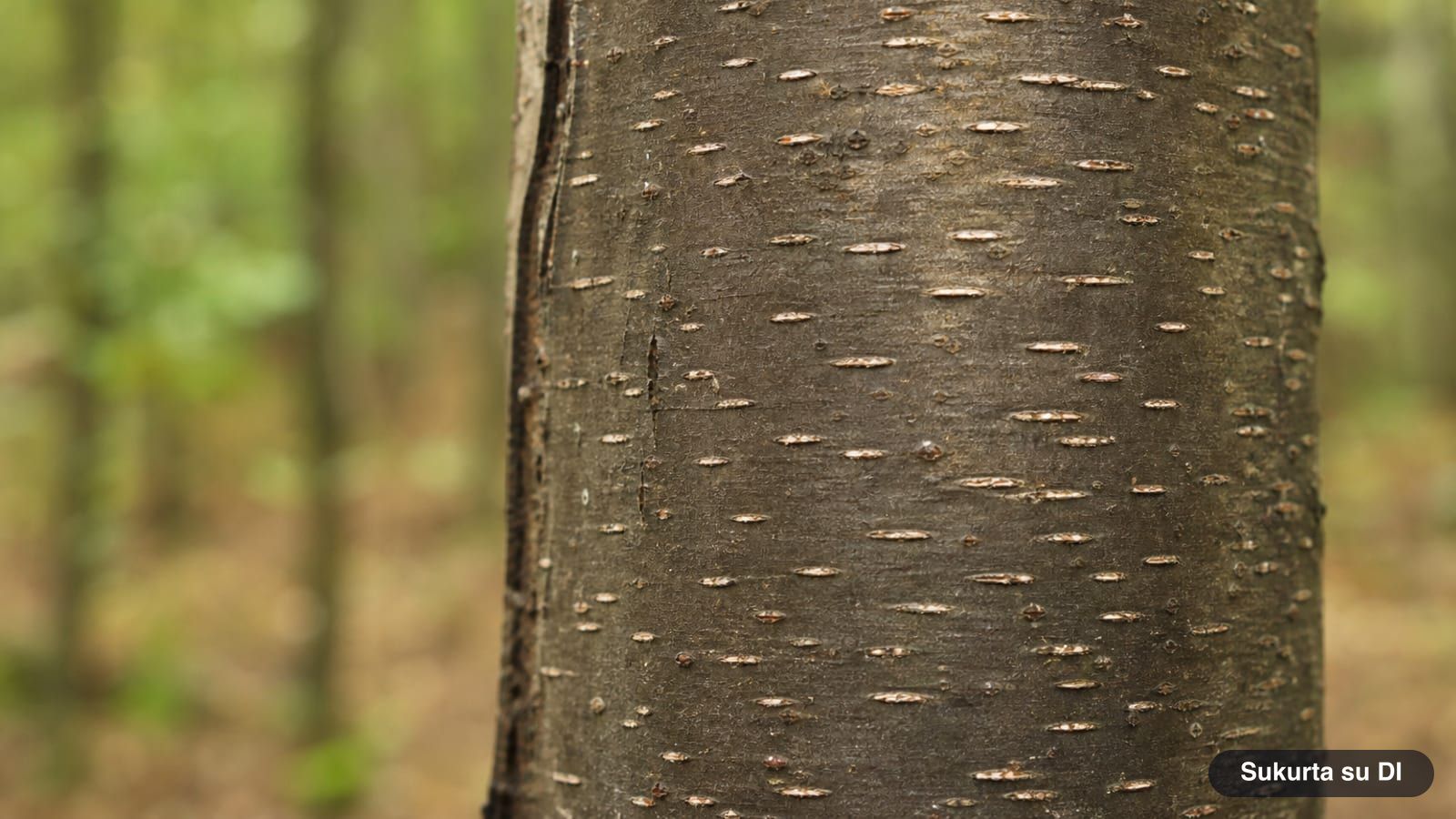
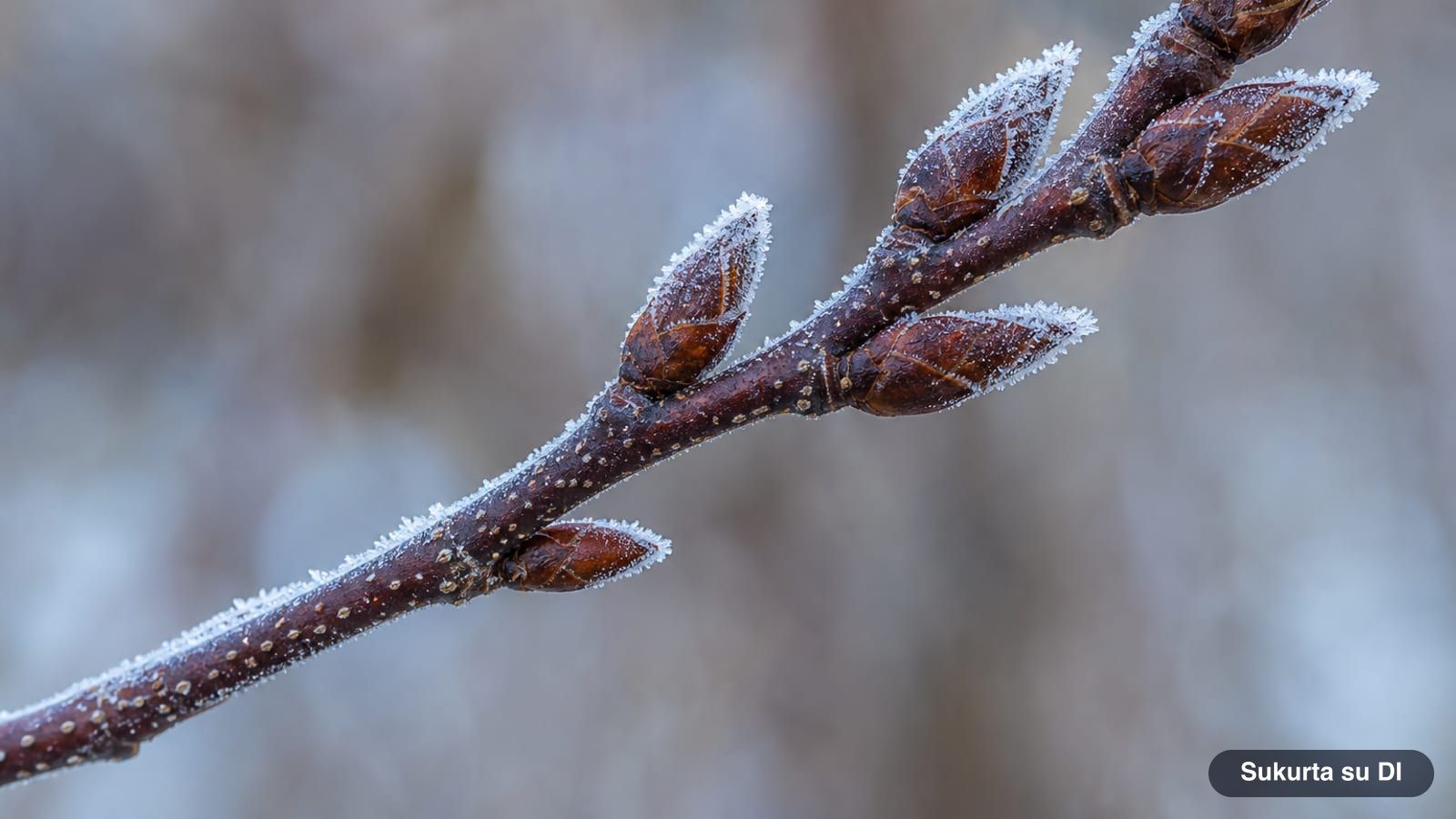
The bark is dark gray or grayish-brown, relatively smooth, with abundant light horizontal lenticels—the "pores" of the bark. When peeled or scratched, the bark and twigs emit a distinct, pungent odor reminiscent of bitter almonds, caused by the glycosides they contain. The buds are long, pointed, conical, about 0.4 inches (1 cm) long, brown with darker scale edges, and arranged alternately. The shoots are dark brownish and glossy.
Bird Cherry, Black Cherry, or Chokecherry?
In Europe and northern Asia, the bird cherry grows natively, but several relatives originating from North America are also planted in parks and gardens. The most important distinction to make is with the black cherry (Prunus serotina): it has been declared an invasive species in many parts of Europe because, spread by birds, it invades light pine forests and clearings, forming dense thickets that outcompete native plants.
| Feature | Bird Cherry (P. padus) | Black Cherry (P. serotina) | Chokecherry (P. virginiana) |
|---|---|---|---|
| Origin | Native to Eurasia | North America, invasive in Europe | North America, cultivated |
| Leaves | Thin, matte, finely serrated | Leathery, glossy, 2.5–5.5 in (6–14 cm) | Glossy, small, 1.2–4 in (3–10 cm) |
| Inflorescences | Long, loose, drooping racemes | Denser racemes, up to 5.5 in (14 cm) | Short racemes of 15–30 flowers |
| Blooms | Mid-to-late spring | Late spring to early summer | Mid-to-late spring |
| Fruits | Black, without calyx | Black, with remaining calyx | Dark red to black |
If a black cherry is growing in your garden in a region where it is invasive, it is advisable to prevent it from spreading: remove self-seeded saplings and do not discard cut branches with fruit into the wild. The bird cherry is also sometimes confused with the rowan (mountain ash) or hawthorn, as these also bloom white, but their flowers are clustered in flat corymbs rather than drooping racemes.
The Bird Cherry Ermine Moth and Cobweb-Covered Trees
In some years during early summer, bird cherry trees look as if they have been draped in a white veil: the branches, trunks, and even the grass beneath them become covered in a dense silken web. This is the work of the bird cherry ermine moth (Yponomeuta evonymella) caterpillars. They live in communal nests, encasing the branches in silk, and can strip the tree of almost all its leaves within a few weeks. The sight is alarming, but the bird cherry is the primary host plant for this moth—its caterpillars only occasionally appear elsewhere, such as on cherries or buckthorns. Female moths lay their eggs on overwintering buds; the young caterpillars overwinter under the bud scales and begin eating the leaves as the buds open in spring. In late spring or early summer, they spin their cocoons in dense communal webs on the trunk or grass. A defoliated bird cherry usually survives, though it may grow more slowly in subsequent years. In a garden setting, it is usually enough to prune out and destroy the nests while the caterpillars are still small.
Are Bird Cherry Berries Edible and Why is the Tree Toxic?
The leaves, bark, twigs, and seeds of the bird cherry contain cyanogenic glycosides—amygdalin and prunasin. When the plant's tissues are damaged, these compounds can release hydrogen cyanide, making the leaves (especially when wilted) dangerous to livestock. The flesh of the ripe berries contains very little of these substances and is edible, but it is highly astringent due to tannins. When eating the berries, you must not chew or crush the pits.
In Russia, bird cherry berries are still used in the kitchen: the dried and ground fruits yield a fragrant brown flour used to bake traditional cakes. In most other regions, the berries are left primarily for the birds. As with any wild plant, no part of the bird cherry should be used medicinally without the advice of a doctor or herbalist.
The Bird Cherry in the Garden
- Location. The bird cherry prefers moist, fertile soil and tolerates partial shade, making it suitable near a pond, ditch, or at the edge of a garden. It struggles in dry, sandy soils.
- Suckers. The tree produces root suckers and easily regenerates when cut, so it requires regular thinning in a small yard.
- Wildlife Value. The early flowers feed bees and bumblebees, the berries sustain thrushes and other birds, and small songbirds love to nest in its dense canopy.
- Caution. Because the leaves and seeds are toxic, bird cherries should not be planted in or near livestock pastures.
Ornamental cultivars of the bird cherry are also available for landscaping, including varieties with reddish foliage or exceptionally abundant blooms. When selecting a sapling, verify the species to ensure you are not accidentally purchasing the invasive black cherry.
The Name and Folklore of the Bird Cherry
The common name "bird cherry" simply refers to the fact that birds eagerly consume the tree's fruit. In various parts of Europe, the tree has a rich history in folklore. Historically, its strong-smelling bark was believed to ward off disease and evil spirits, and branches were sometimes placed over doors for protection. The wood, which is relatively soft but has a pleasant reddish-brown hue, has traditionally been used for small crafts and tool handles. You can find other spring-blooming trees in our guides to the rowan (mountain ash), horse chestnut, and hawthorn.
Frequently asked questions
When do bird cherry trees bloom?
In cool northern climates, the bird cherry typically blooms in mid-to-late spring (often May), just as the leaves are unfolding or shortly after. In a warm spring, the first blossoms may appear earlier, while a late spring can push blooming back. The related black cherry blooms a few weeks later, usually in late spring or early summer.
Are bird cherry berries edible?
The flesh of ripe black bird cherry berries is edible, but it is highly astringent due to a high tannin content. The pits must never be chewed or swallowed, as they—like the leaves and bark—contain amygdalin, which can release cyanide in the body. In Russia, dried bird cherry fruits are traditionally ground into a specialized flour used for baking cakes.
Why do bird cherry trees get covered in cobwebs?
This is the work of bird cherry ermine moth (Yponomeuta evonymella) caterpillars. They live in communal silken tents, sometimes enveloping the entire tree and stripping it of its leaves. The tree usually survives such an attack, though its growth may be slowed the following year.
What is the difference between the bird cherry and the black cherry?
Bird cherry leaves are matte and thin, its flower racemes are long and drooping, and it blooms in mid-to-late spring. Black cherry (Prunus serotina) leaves are leathery and glossy, its racemes are denser, it blooms later, and the fruit retains its calyx. The black cherry is native to North America and is considered an invasive species in many parts of Europe.
Can I plant a bird cherry near my house?
Yes, the bird cherry is a common homestead tree, loved for its fragrant flowers and the wildlife its fruit attracts. However, it produces abundant root suckers, so it requires maintenance in a small yard. If young children play in the yard or if you keep livestock, be aware that the leaves, bark, and seeds are toxic.
How tall does a bird cherry grow?
The bird cherry typically grows to a height of 10–33 ft (3–10 m), often developing multiple trunks. Under highly favorable conditions in its native European range, trees can sometimes reach up to 52 ft (16 m) tall.
Log in to comment
No comments yet. Be the first.