Thuja (Arborvitae): Varieties, Hedges, Browning & Toxicity
- Northern white-cedar (Thuja occidentalis) is an evergreen conifer in the cypress family, native to eastern North America.
- Its leaves are not needles but small scales tightly pressed against flat, fan-like branchlets.
- Introduced to Europe around 1540, it is now widely grown in parks, cemeteries, and residential gardens as a popular hedge plant worldwide.
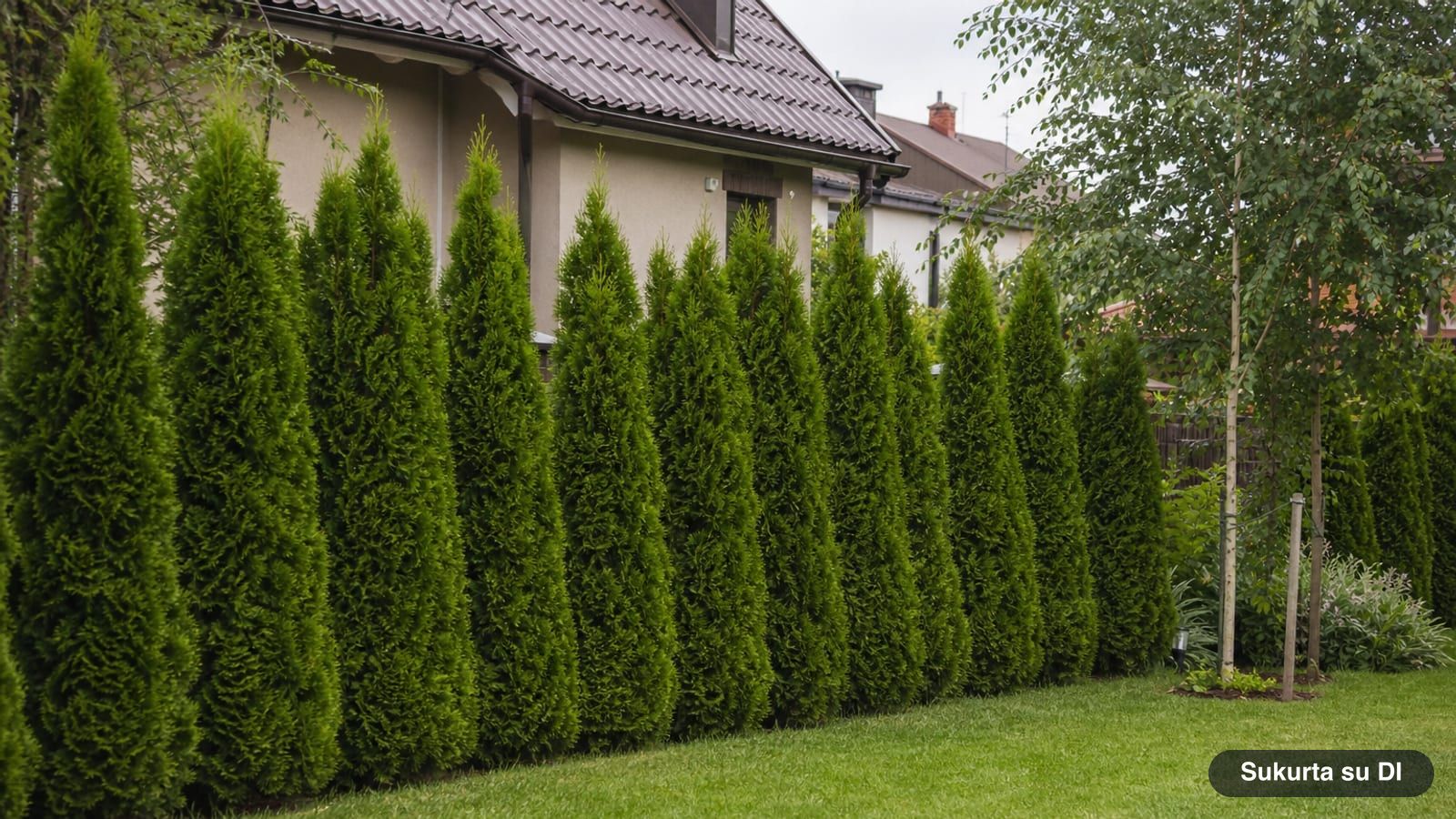
- There are over 300 cultivars; the most common for hedges are the narrow, conical 'Smaragd' (Emerald Green) and the much taller, broader 'Brabant'.
- The foliage, cones, and wood contain thujone, a neurotoxic compound, meaning no parts of the plant should be consumed.
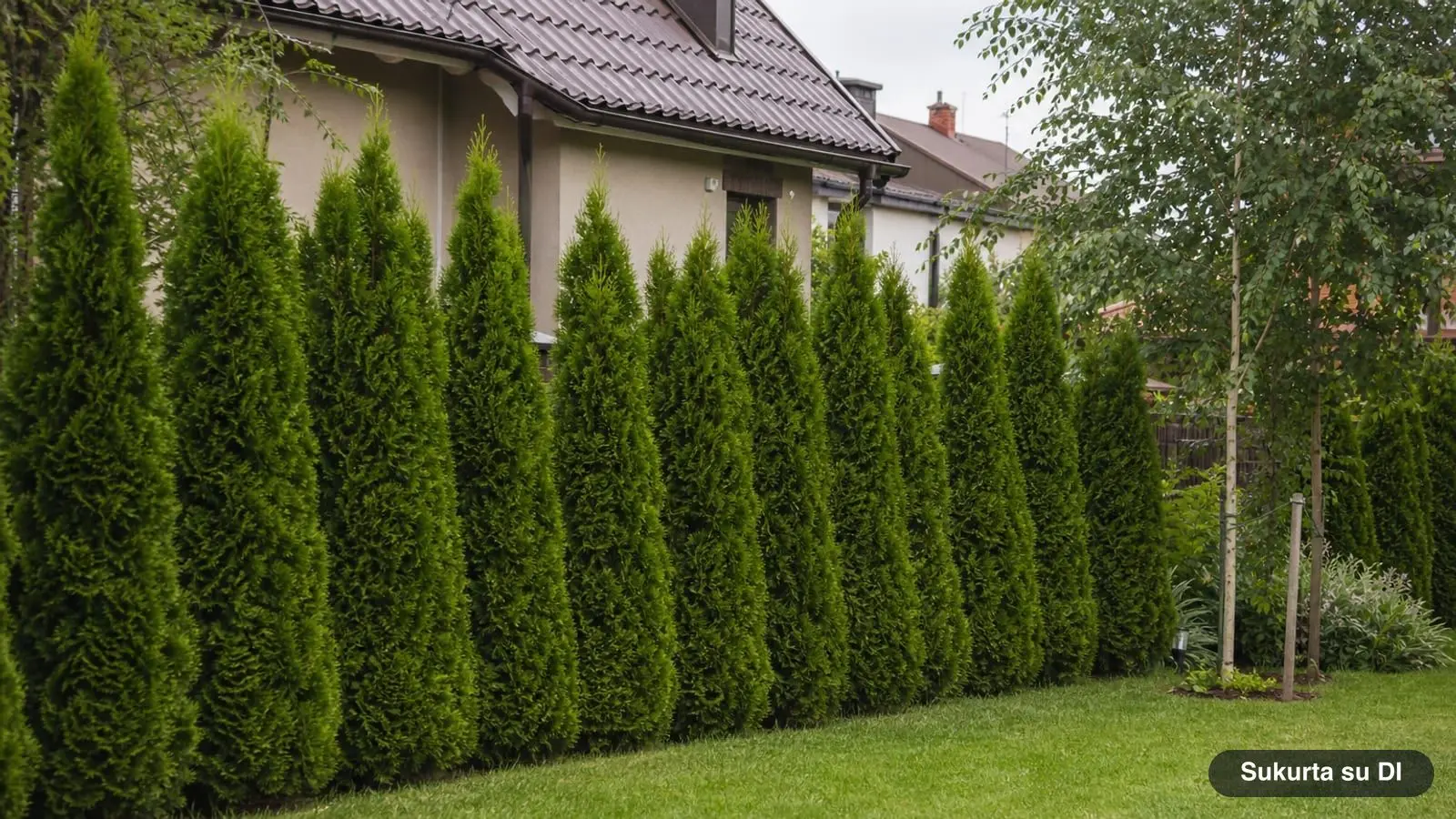
This article is part of the 77.today trees guide, prepared by the 77.today editors from the sources listed at the end.
Northern white-cedar (Thuja occidentalis), commonly known as arborvitae, is a familiar sight in gardens across temperate regions. It forms dense green walls around properties, stands in narrow columns in cemeteries, and decorates entrances as rounded globes. Because it is so widely planted, many assume it is a local native, but it actually originates from North America. There, it thrives in swampy forests and on rocky cliffs, with the oldest specimens living for over a thousand years. In this guide from the Tree Guide, you will learn how to identify arborvitae, the differences between popular cultivars, what it needs to thrive in your garden, and why its branches should never be consumed.
| Scientific name | Thuja occidentalis |
|---|---|
| Family | Cypress (Cupressaceae) |
| Plant type | Evergreen conifer |
| Native range | Eastern Canada and northeastern US |
| Height | Typically up to 50 ft (15 m), exceptional wild trees up to 125 ft (38 m) |
| Leaf type | Tiny scales on flattened branchlets |
| Cone size | About 0.4 in (1 cm) (0.3–0.6 in / 0.8–1.4 cm), 6–10 scales; seeds ripen in September |
| Toxicity | Yes – foliage, cones, and wood contain thujone |
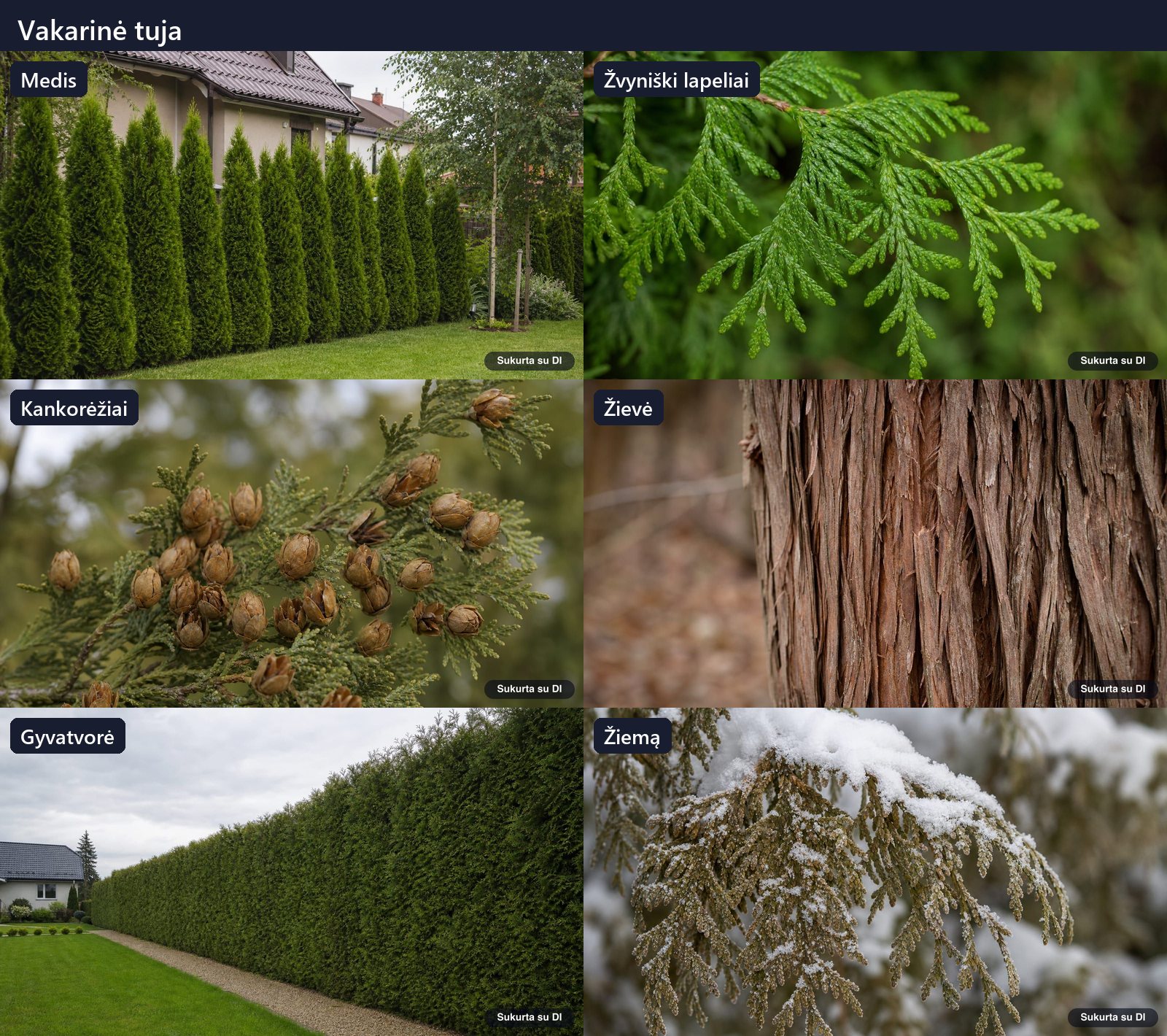
How to Identify Arborvitae
This is a conical tree or large shrub with one or multiple trunks. Its branches are relatively short, dense, and grow almost horizontally. In the wild, northern white-cedar typically reaches about 50 ft (15 m) in height, but in gardens, it is usually pruned, and landscapers often choose lower-growing cultivars. In its native habitat, it establishes itself where larger trees cannot outcompete it: in damp, swampy coniferous forests, on rocky slopes, and along cliff faces. It is extremely cold-hardy, thriving in USDA zones 2–7.
Leaves
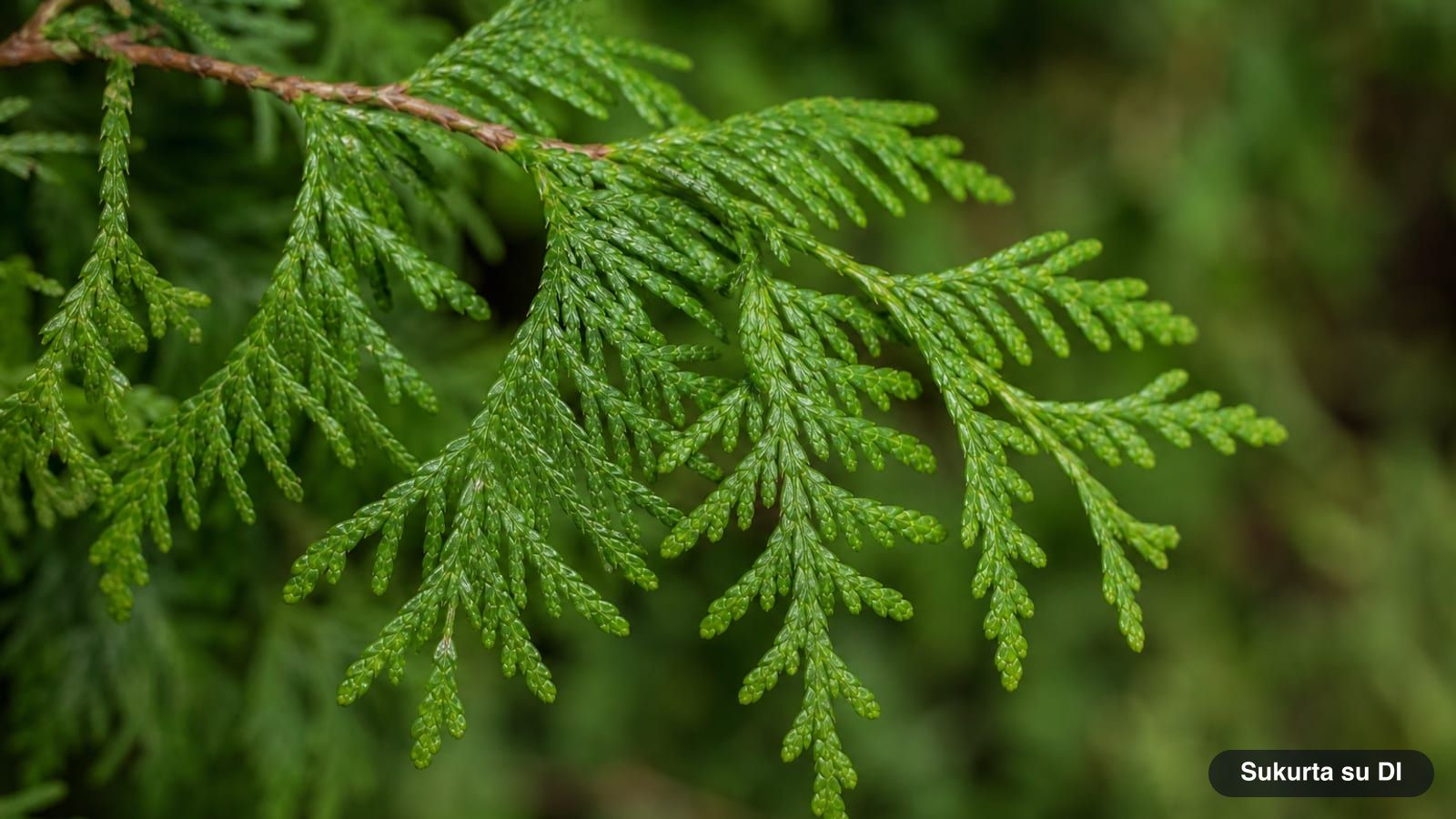
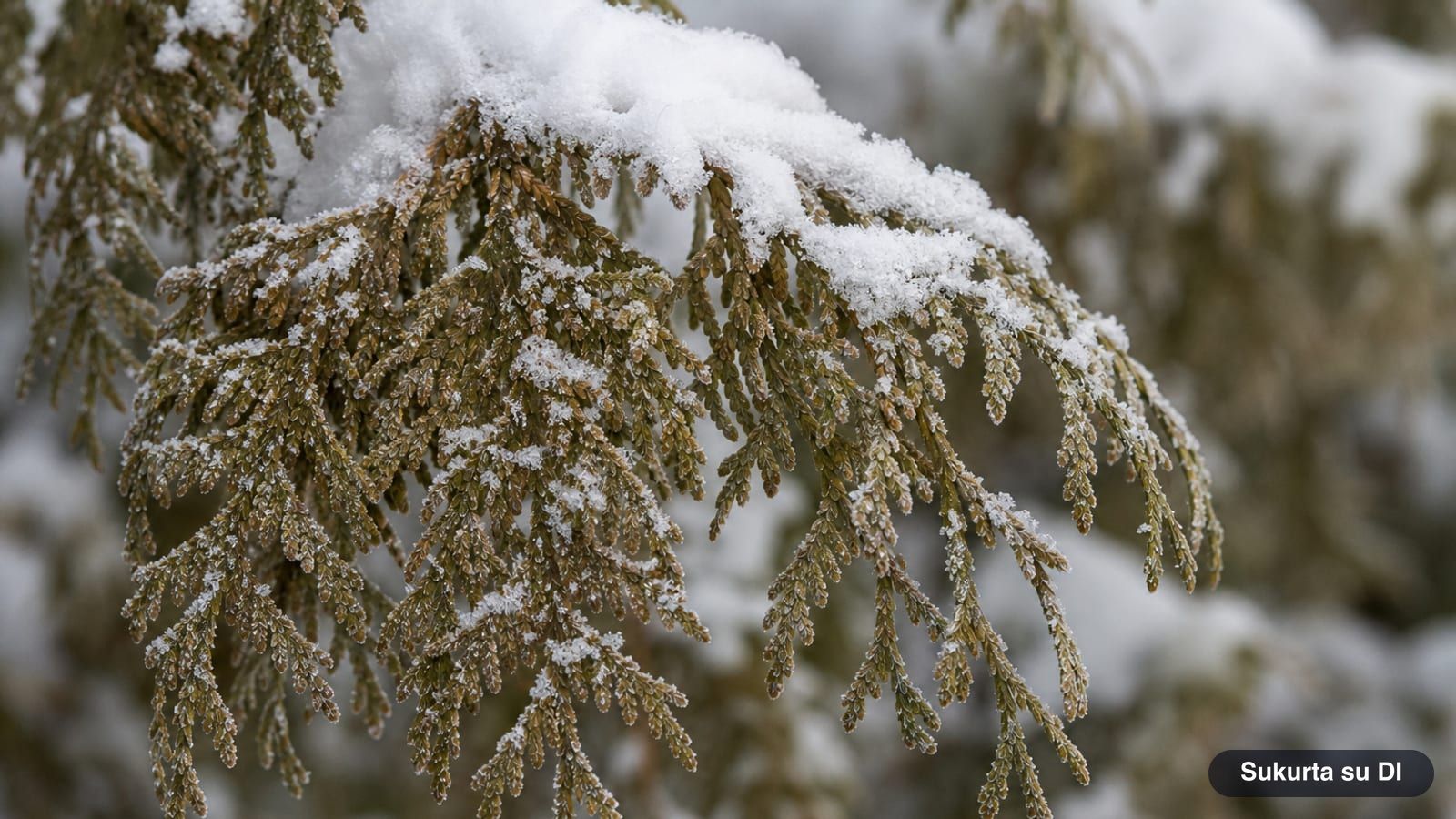
What we often call arborvitae needles are actually tiny scale-like leaves. Each is just a fraction of an inch (a few millimeters) long, tightly pressed against the twig and partially overlapping its neighbor, much like roof tiles. The flattened branchlets grow alternately and form feather-like, fan-shaped sprays. On top, they are dark green and slightly glossy; underneath, they are paler and matte. When crushed between your fingers, the foliage releases a strong, distinctive scent. During the colder months, the scales often take on a bronze or brownish tint, but they turn green again in the spring. You can compare its foliage with other conifers in our tree leaf identification guide.
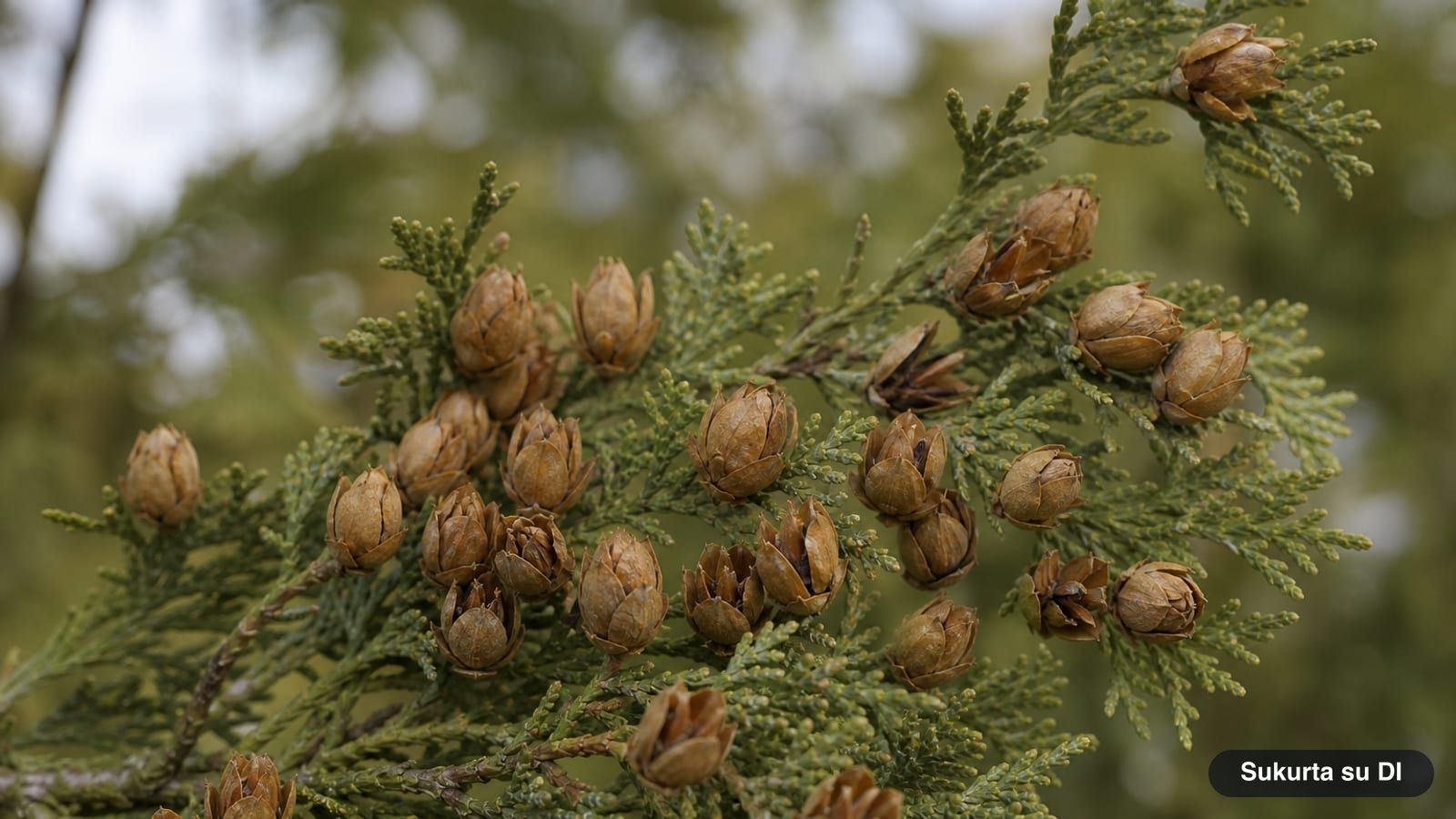
Cones
A single arborvitae plant produces both male and female flowers; they appear at the tips of the branchlets in spring and are so small they easily go unnoticed. The cones are upright, elongated ovals, about 0.4 inches (1 cm) long (various sources note 0.3 to 0.55 inches / 0.8 to 1.4 cm). They consist of 6 to 10 thin scales. Young cones are greenish, turning brown as they mature. In September, flat, winged seeds about 0.1 inches (3 mm) long ripen, and most fall out shortly after. Heavily fruiting trees can be so covered in cones that they appear brown from a distance.
Bark
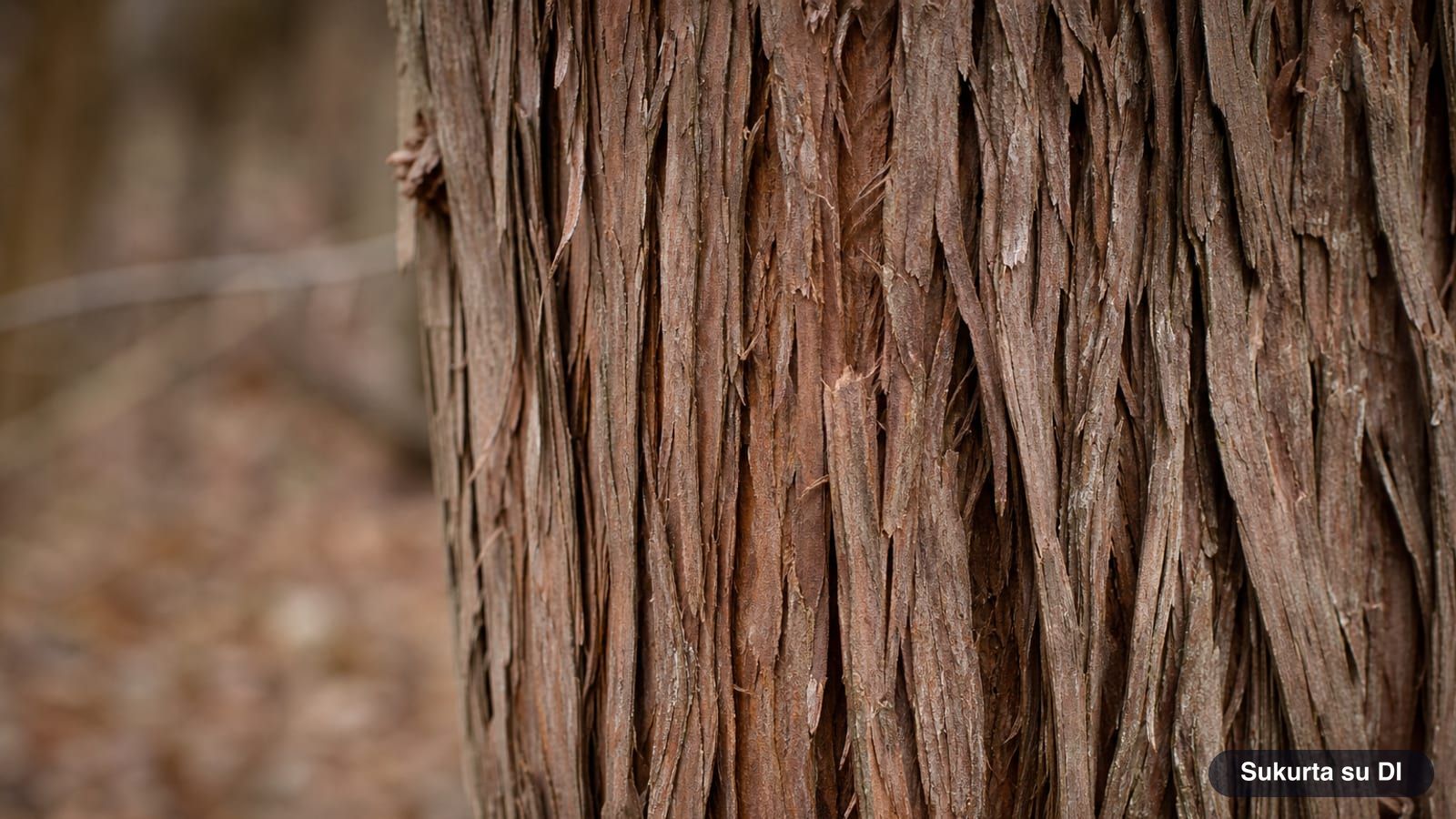
The trunk is covered with thin, reddish-brown or grayish-brown fibrous bark that fissures and peels off in long, narrow longitudinal strips. The trunks of old trees are often twisted and deeply furrowed. Juniper has similar bark, which makes sense as both plants are members of the cypress family.
Arborvitae, Juniper, or Yew?
| Feature | Northern White-Cedar | Common Juniper | European Yew |
|---|---|---|---|
| Leaves | tiny scales pressed against flattened branchlets | sharp needles growing in whorls of three | soft, flat needles arranged in two rows |
| Fruit | small brown cones | blue-black berry-like cones | bright red fleshy arils |
| Origin | native to North America, widely planted elsewhere | native across the Northern Hemisphere | native to Europe, parts of Asia and Africa |
| Toxicity | yes, due to thujone | no, the "berries" are used as a spice | highly toxic, all parts except the fleshy red aril |
When choosing an evergreen hedge, arborvitae is often compared to yew, which tolerates shade and heavy pruning much better, and to juniper, which is better suited for dry, sunny locations. Aside from northern white-cedar, other species like the western redcedar and Korean thuja are frequently grown in parks and botanical gardens.
Most Popular Arborvitae Varieties
There are over 300 cultivars of northern white-cedar, varying in shape, color, and mature size. Cultivated in Europe since around 1540, it is now found everywhere—serving as a cypress substitute in cemeteries and providing year-round privacy screens in residential yards.
| Variety | Appearance | Best Uses |
|---|---|---|
| 'Smaragd' | dense and narrow, slow-growing; reaches 10–16 ft (3–5 m) tall and 3–6.5 ft (1–2 m) wide; stays bright green in winter | narrow hedges and specimen planting |
| 'Brabant' | densely branched conical tree, much taller than 'Smaragd', canopy width 10–13 ft (3–4 m); stays green in winter | tall privacy screens in spacious yards |
| 'Columna' | narrow column, 16–26 ft (5–8 m) tall and 3–5 ft (1–1.5 m) wide | avenues and vertical accents |
| 'Rheingold' | usually multi-stemmed, about 13 ft (4 m) tall, light yellow, turning almost orange in spring | color accents |
Arborvitae Hedges and Care
- Location and soil. Because it naturally grows in damp areas, arborvitae needs consistently moist soil that does not completely dry out. It tolerates both full sun and partial shade, but it grows densest in bright light.
- Watering. Drought is the biggest challenge for an arborvitae. During summer heatwaves and dry autumns, it should be watered deeply, and applying a layer of mulch around the base will help retain soil moisture.
- Pruning. Trim arborvitae hedges just as the new shoots finish growing. Never cut back into old, bare wood that lacks green scales—arborvitae rarely regenerates from old wood.
- Winter care. In early spring, while the ground is still frozen in cold climates, young arborvitae benefit from being shaded from intense sunlight. The foliage transpires moisture in the sun, but the roots cannot yet draw water from the frozen soil, leading to winter burn.
- Animal protection. In winter, deer and other browsing mammals happily munch on the soft arborvitae foliage. In North America, high deer populations pose a significant threat to both wild and cultivated arborvitae, so it is highly recommended to fence young plants or protect them with netting during the colder months.
Why is Arborvitae Poisonous?
The wood, cones, and branch tips of the arborvitae contain an essential oil whose main component is the neurotoxin thujone. Ingesting parts of the plant can irritate mucous membranes, causing nausea, vomiting, bloating, and diarrhea. In severe cases, it can damage the kidneys or liver and induce seizures. For some individuals, simply brushing against the foliage causes skin redness and itching, so it is best to wear gloves when pruning. Ingesting arborvitae can be fatal to pets and livestock. If you suspect poisoning, contact a doctor or veterinarian immediately.
A famous historical episode is tied to this tree. It is believed that during the winter of 1535–1536, Native Americans cured the scurvy-stricken crew of French explorer Jacques Cartier using a decoction made from arborvitae foliage, which is rich in vitamin C. Since then, the tree earned the Latin name arbor vitae, meaning "tree of life." However, due to the presence of thujone, arborvitae preparations should never be consumed internally, especially over long periods or during pregnancy.
Name and Relatives
The word Thuja is derived from a Greek word used for a fragrant wood. The Thuja genus contains five species native to North America and East Asia. The Oriental arborvitae, once classified as a Thuja, has now been moved to its own genus (Platycladus). To learn about other conifers commonly planted in gardens, read our guides on fir, larch, and spruce trees.
Frequently asked questions
Is arborvitae poisonous?
Yes. The foliage, cones, and wood contain an essential oil largely composed of the neurotoxin thujone. Ingesting plant parts can cause nausea, vomiting, diarrhea, and in rare cases, kidney and liver damage or seizures. Even touching the foliage can irritate sensitive skin. Ingesting arborvitae can be fatal to pets and livestock.
What is the difference between 'Smaragd' and 'Brabant' arborvitae?
'Smaragd' (often sold as Emerald Green) is a dense, narrow, slow-growing conical shrub reaching 10–16 ft (3–5 m) tall and 3–6.5 ft (1–2 m) wide, keeping its bright green color in winter. 'Brabant' is a densely branched conical tree that grows much taller with a broader canopy of 10–13 ft (3–4 m), also retaining its green winter color. 'Smaragd' is typically chosen for narrow hedges, while 'Brabant' is used for tall, expansive screens.
Why do arborvitae turn brown?
The scales of northern white-cedar naturally take on a brownish or bronze tint in winter, greening up again in spring. If an arborvitae turns brown in summer or fails to green up in spring, lack of moisture is usually the culprit: in the wild, this species grows in damp, swampy forests, so it needs consistently moist soil in the garden. Inner branches that do not receive sunlight also naturally brown and die off.
Is arborvitae a conifer?
Yes. Northern white-cedar belongs to the cypress family, just like juniper, and is an evergreen conifer. However, its leaves are not sharp needles but tiny scales pressed against flat branchlets. Its seeds develop in small cones about 0.4 inches (1 cm) long.
How long does an arborvitae live?
In the wild, northern white-cedar can be incredibly long-lived. On cliff faces in Canada and the US, living trees have been found that are over 1,100 years old, alongside a dead specimen with more than 1,650 tree rings.
Log in to comment
No comments yet. Be the first.