Trees in Winter: How to Identify Leafless Trees by Buds and Bark
- The best way to identify a tree in winter is by combining several features: silhouette, bark, buds, and any fruit left on the branches.
- Opposite buds (growing in pairs) indicate maple, ash, or horse chestnut; most other common deciduous trees have alternate buds.
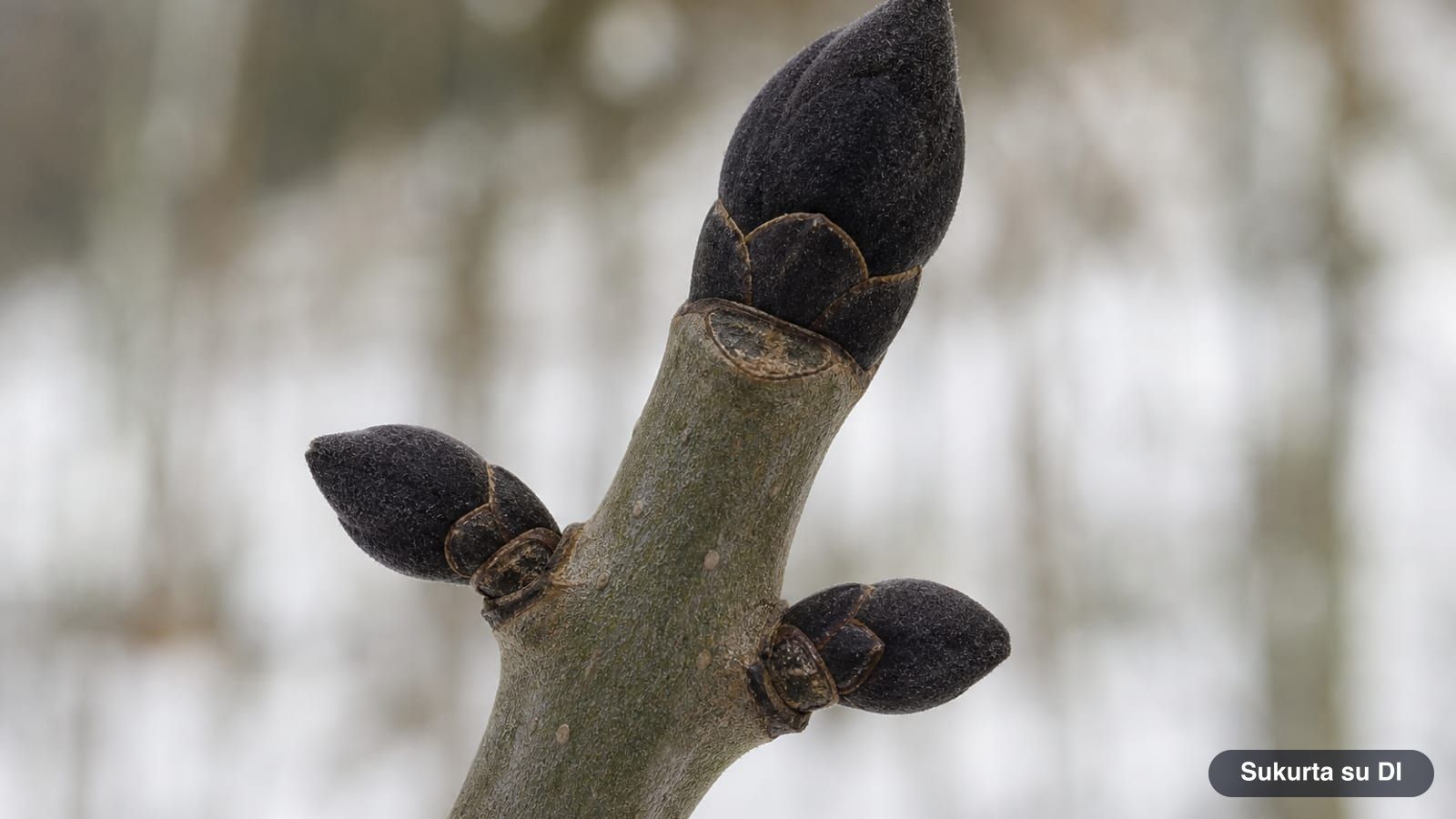
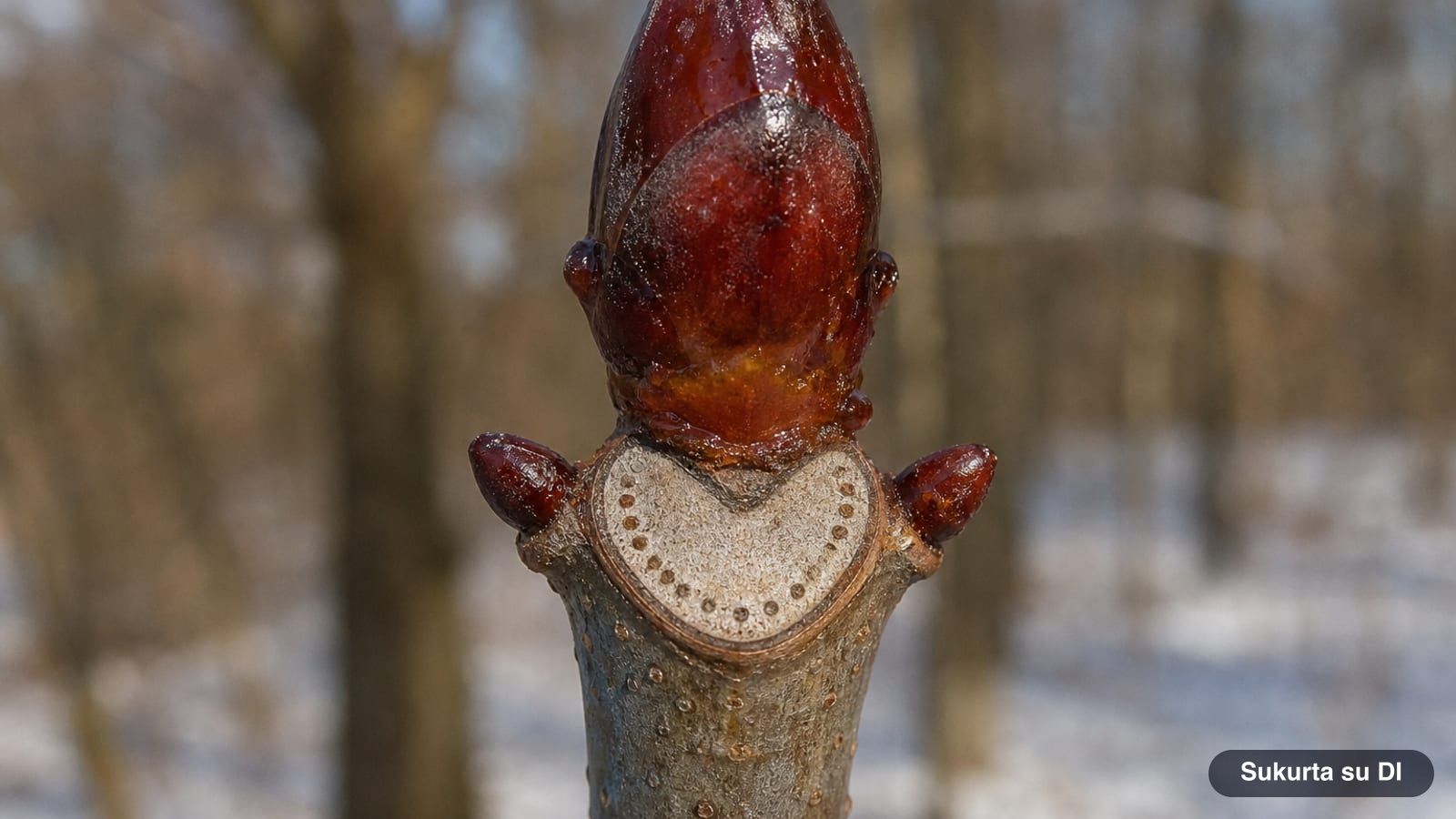
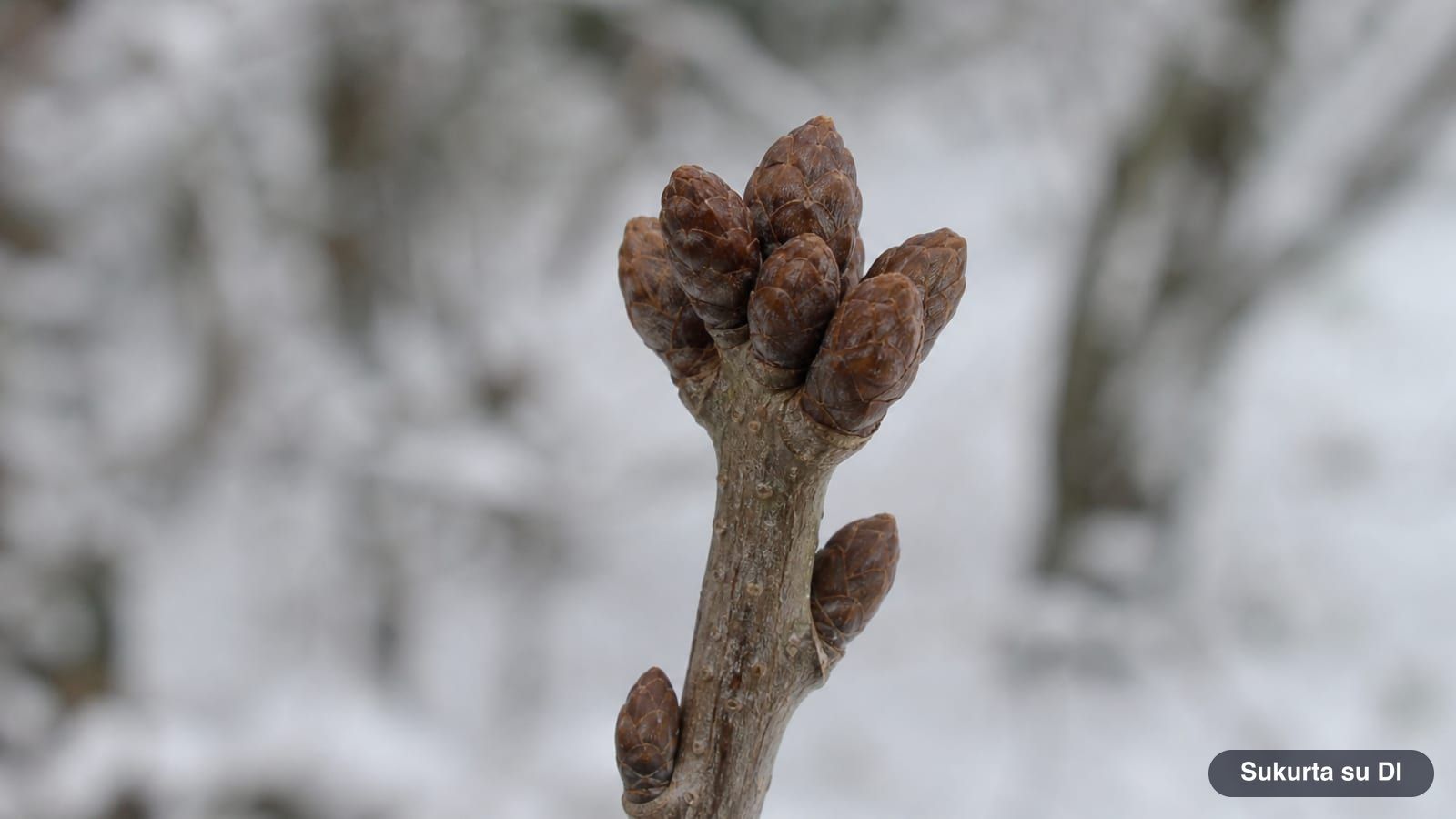
- Look for black buds on ash, large sticky buds on horse chestnut, shiny red buds on linden (lime tree), and a cluster of buds at the twig tip on oak.
- Winter branches often hold ash samaras, linden nutlets, alder "cones," rowan (mountain ash) berries, and birch or alder catkins.
- Young oaks, hornbeams, and beeches frequently hold onto their dry, brown leaves until spring.
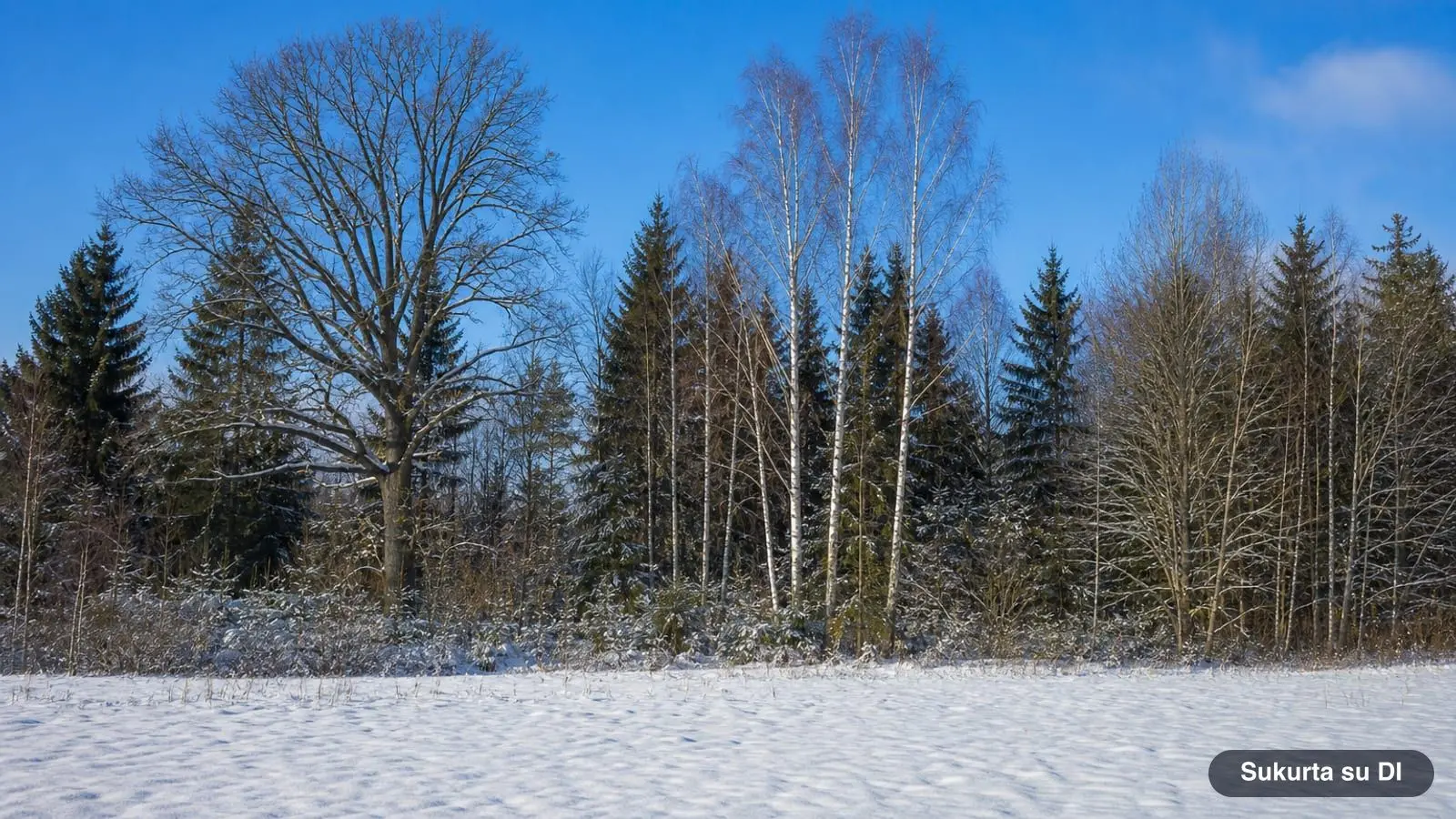
This article is part of the 77.today trees guide, prepared by the 77.today editors from the sources listed at the end.
In winter, the forest can look like a black-and-white sketch: the leaves are gone, and at first glance, all deciduous trees might seem identical. However, every tree has its own winter "signature"—a unique canopy silhouette, bark pattern, bud shape and color, and remaining fruit on the branches. In this part of the tree guide, you will find a complete winter identification manual: what to look for, how to read buds and leaf scars, which fruits and catkins stay on the branches, and how trees survive the cold. For summer characteristics, explore the tree leaf identification guide.
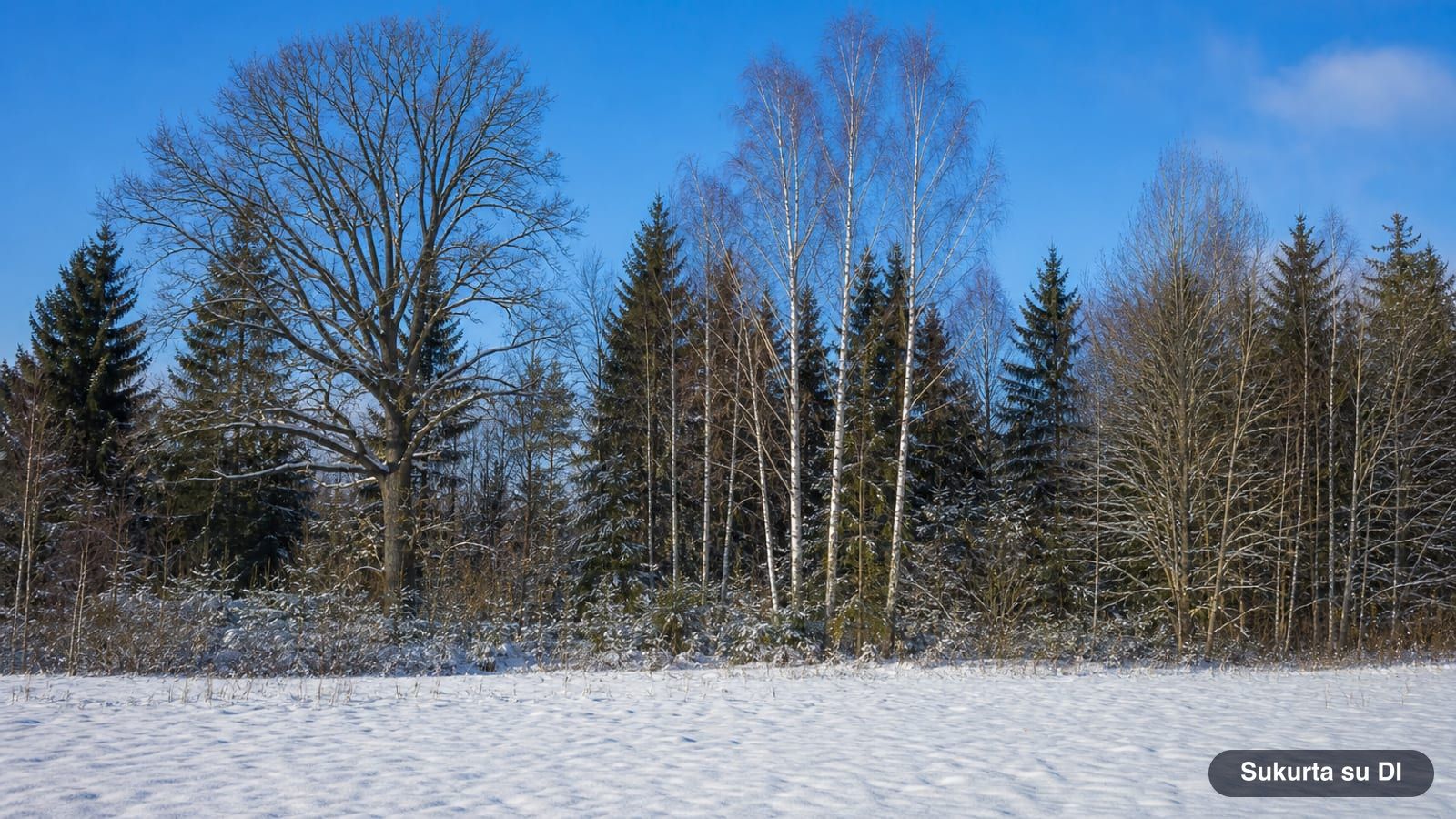
What to Look For in Winter
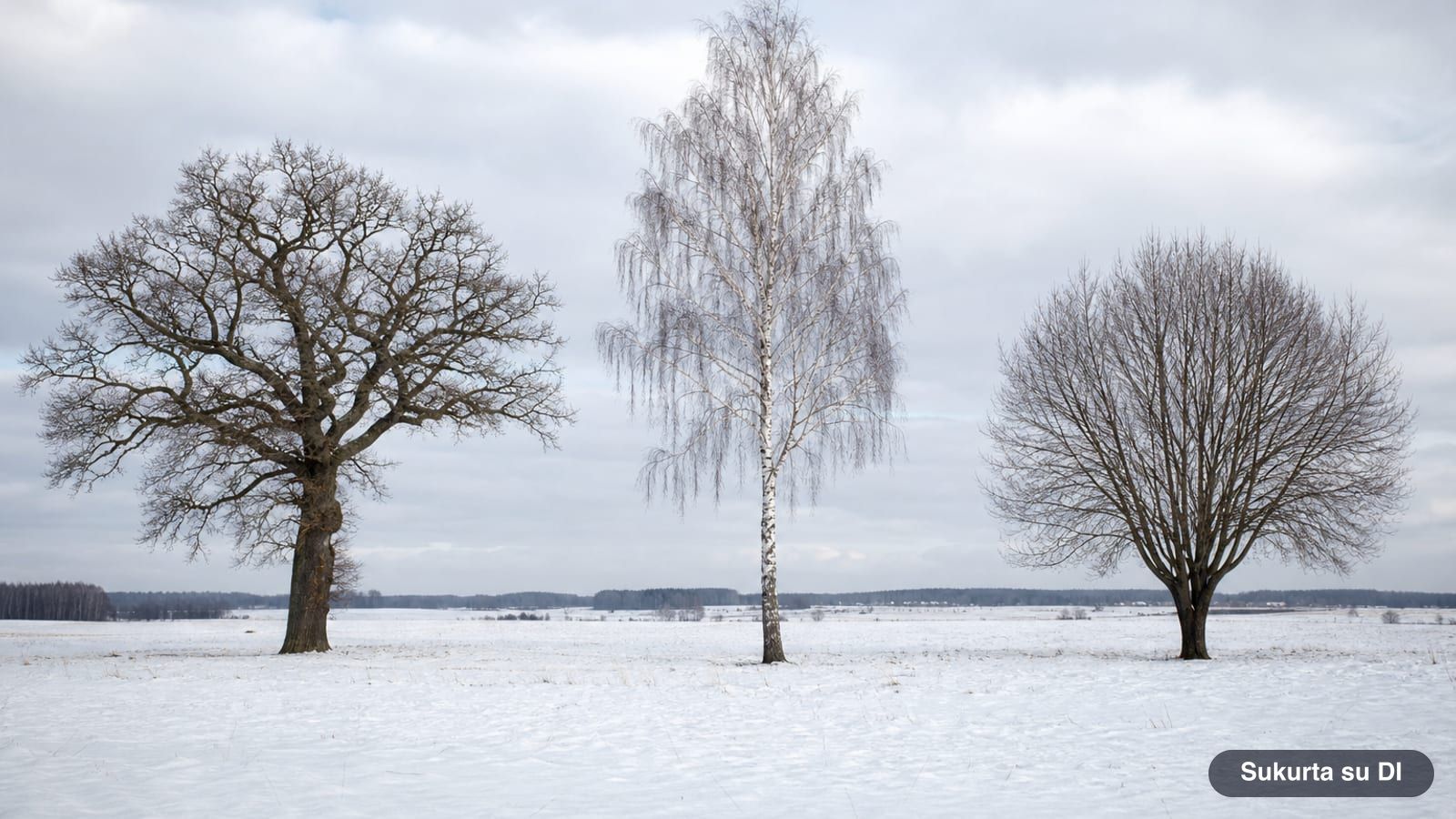
- Silhouette. From a distance, trees can be distinguished by their canopy shape and branch direction. Oak is broad with thick, angular, twisting branches; birch is slender with thin, drooping twigs; linden (lime tree) and maple have dense, rounded canopies; ash is tall and sparse with thick, upward-curving branches; aspen and poplars have branches pointing sharply upward.
- Bark. White peeling bark indicates birch; smooth light gray bark points to gray alder, hornbeam (with "muscular" fluting), or young maples and lindens; greenish-gray bark belongs to aspen; dark, deeply furrowed bark is typical of mature oak and black alder; an interlacing diamond pattern indicates ash; and flaky, peeling plates are characteristic of horse chestnut and sycamore.
- Buds. Check whether they grow in pairs (opposite) or alternate along the twig. Note their color, shape, and whether they are sticky, hairy, or stalked.
- What remains on the branches. Look for lingering fruits, cones, catkins, or dry leaves.
- Habitat. Near water, you will often find alders and willows; in dry sandy soils, pines and birches thrive; in rich, fertile soils, expect oaks, lindens, maples, and ashes.
Buds: The Most Important Winter Key
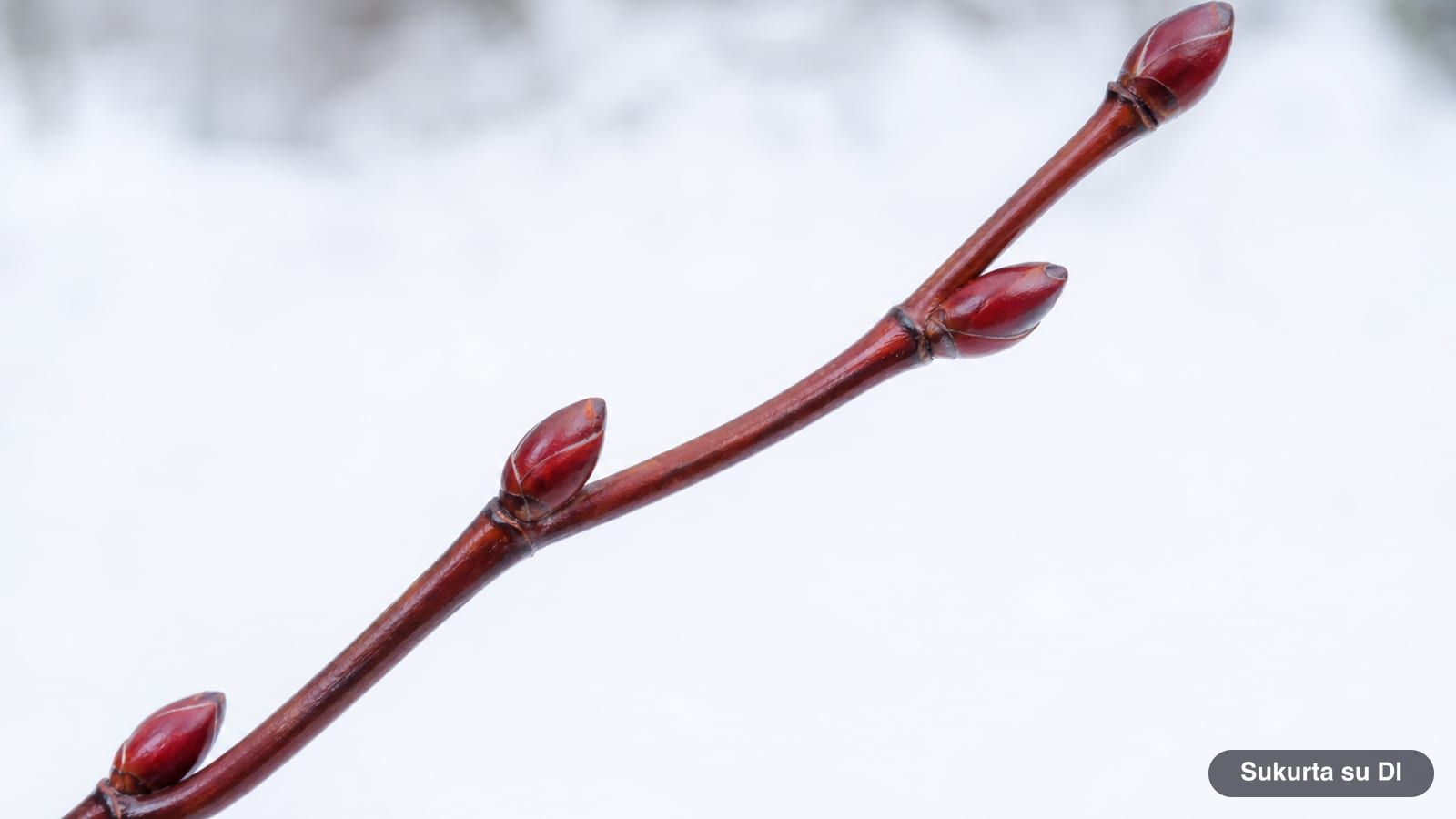
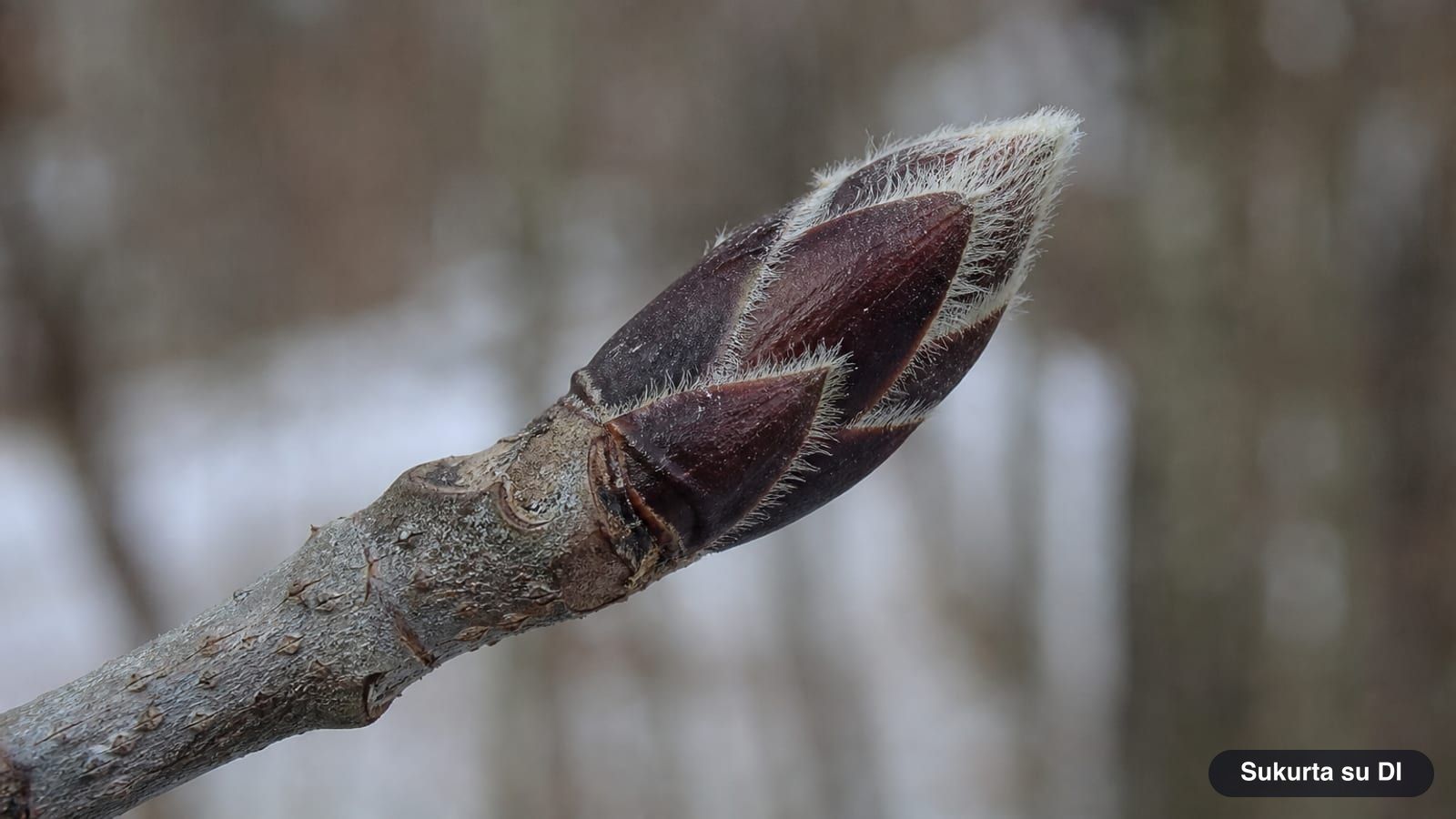
A bud is an undeveloped shoot containing embryonic leaves or flowers, protected by bud scales. Trees form all of their buds for the following year in autumn, so by winter, they are large and clearly visible. First, determine the arrangement: if the buds grow in pairs, opposite each other, it is almost certainly a maple, ash, or horse chestnut. If they alternate along the stem, it is one of the other common deciduous trees. Next, examine their color, shape, and surface texture.
Winter Tree Identification Chart
| Tree | Buds | Bark | What remains on branches |
|---|---|---|---|
| Oak | alternate, egg-shaped, brown, clustered at twig tip | dark, deeply furrowed vertically | dry leaves on young trees |
| Birch | alternate, small, pointed, slightly sticky | white peeling bark, black at the base | small male catkins at twig tips |
| Linden (Lime Tree) | alternate, red, shiny, 2–3 scales | gray, finely ridged | nutlets attached to a leafy bract |
| Maple | opposite, reddish-purple, larger terminal bud | dark gray, regularly and finely fissured | sometimes winged samaras |
| Ash | opposite, black, velvety | gray, interlacing diamond pattern | bunches of single-winged samaras |
| Horse Chestnut | opposite, large, sticky, dark reddish-brown | grayish-brown, peeling in plates | large horseshoe-shaped leaf scars |
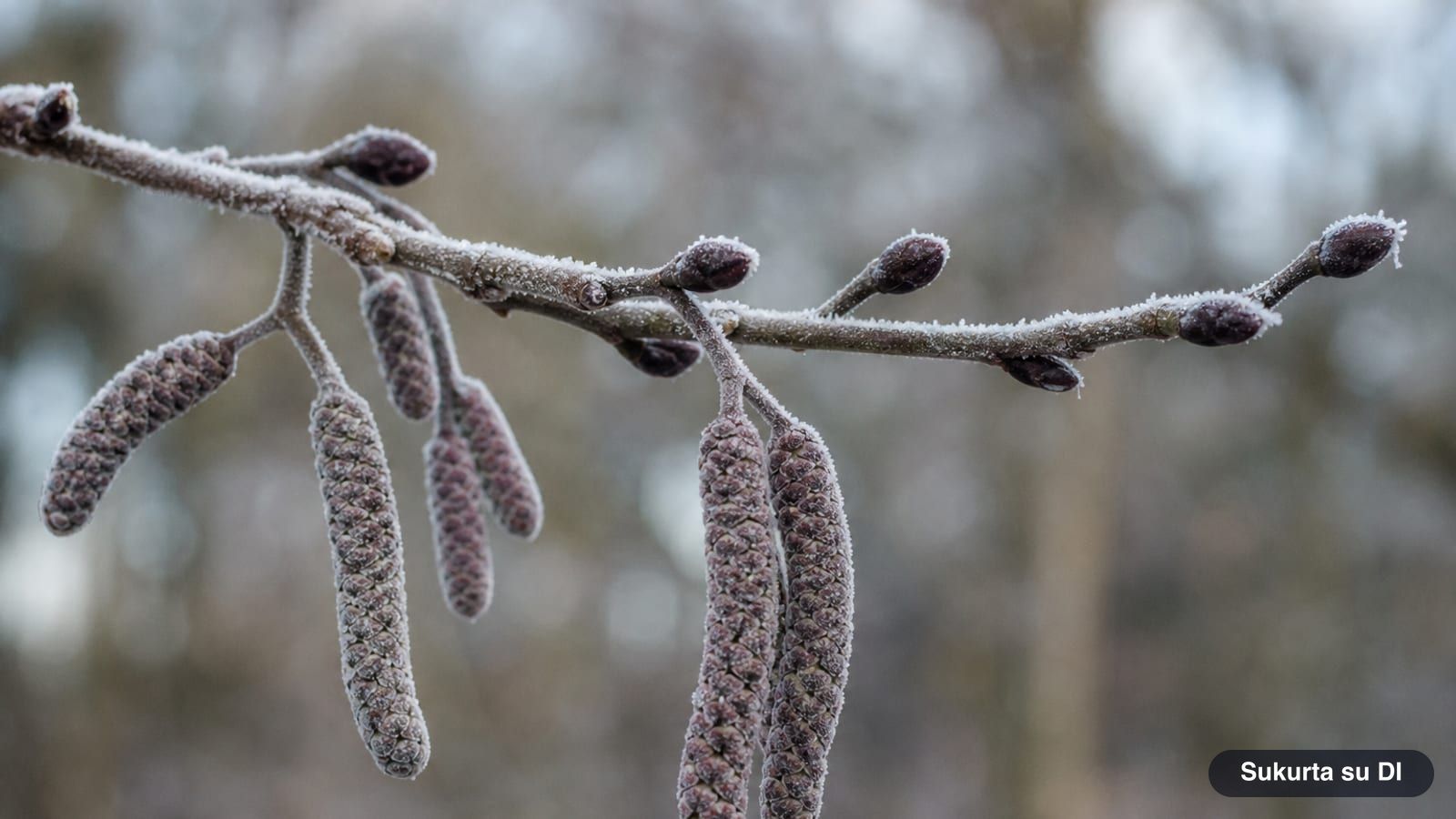
| Black Alder | alternate, stalked, purple | dark, scaly plates | woody "cones" and male catkins |
| Gray Alder | alternate, stalked, blunt | light gray, smooth, shiny | woody "cones" and catkins |
| Hornbeam | alternate, narrow, pointed, pressed against the twig | smooth, gray, "muscular" fluting | often dry leaves, fruiting clusters |
| Rowan (Mountain Ash) | alternate, large, purple, hairy tip | smooth, gray, shiny | lingering berries |
| Aspen | alternate, pointed, slightly sticky, brown | greenish-gray, smooth, with dark diamond-shaped marks | – |
| Willows | alternate, pressed against the twig, covered by a single scale | deeply furrowed on older trees | goat willow buds swell into "pussy willows" as early as February |
| Hazel | alternate, round, greenish-brown | smooth, brownish, shiny | male catkins, shedding pollen as early as late February to March |
| Beech | alternate, long, thin, pointed, up to 0.8–1.2 in (2–3 cm) | smooth, silvery-gray | often dry leaves |
What Remains on the Branches in Winter
Many trees release their fruits and seeds gradually throughout the winter, providing excellent clues for identification. Ash trees hold large bunches of single-winged samaras, lindens (lime trees) keep small nutlets attached to leafy bracts, alders retain their woody, cone-like structures, rowans (mountain ashes) display berries not yet eaten by birds, and larches feature small, upright cones. Birches, alders, and hazels develop male catkins in the autumn; these hang from the tips of the twigs all winter and are the first to open in the spring.
Another winter sign is the presence of dry leaves. Young oaks, hornbeams, and beeches frequently hold onto their browned leaves until spring, giving them a russet appearance in the winter forest. This phenomenon is known as marcescence: in autumn, the abscission layer at the base of the leaf does not fully form, so the dead leaves remain attached until they are finally pushed off by expanding buds in the spring.
Leaf Scars
Where a leaf has fallen, a leaf scar remains on the twig. Within this scar are tiny dots, which are the traces of the vascular bundles that once transported water and nutrients. The scars of each species have a distinct shape. The largest and most easily noticeable belong to the horse chestnut: they are horseshoe-shaped with a distinct row of dots (some say this resemblance to a horseshoe is how the tree got its English name). Ash leaf scars are crescent-shaped, situated just below the black buds, while rowan leaf scars are narrow and elongated.
Conifers in Winter
Conifers are generally easier to identify in winter because they retain their needles. Pine needles grow in pairs or bundles, spruce needles grow individually all around the twig and are four-sided, juniper needles grow in whorls of three and are very sharp, and yew needles are flat, soft, and arranged in two rows. The larch is the only conifer that drops its needles, but it can be recognized by its knobby short shoots and upright cones. During the winter, spruce and pine cones release their seeds; on clear, cold days, the snow beneath them is often sprinkled with tiny winged seeds.
Tracks and Traces in the Snow
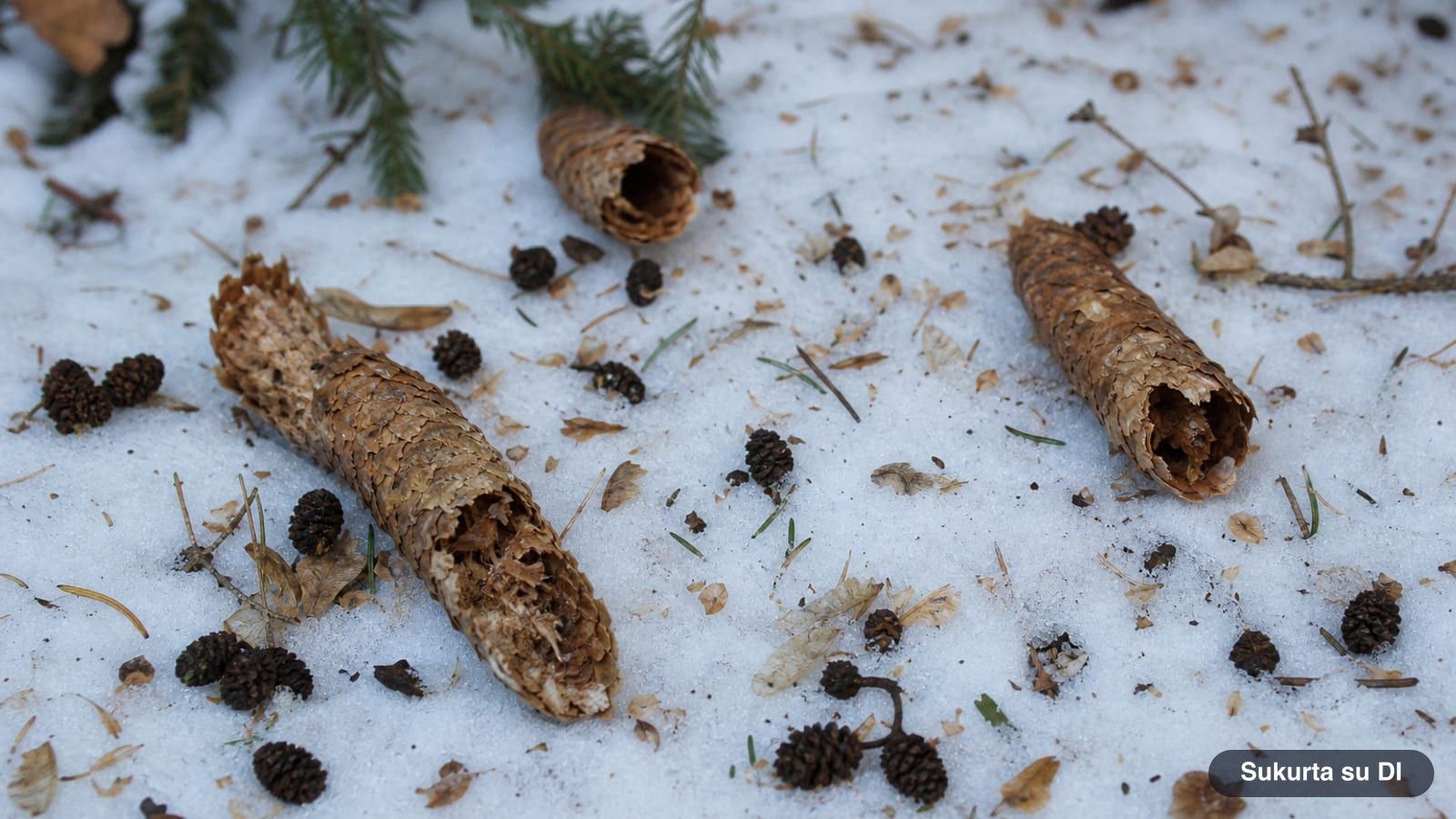
You can find even more clues in the snow beneath the trees. Spruce cones gnawed down to the central core, surrounded by scattered scales, are the remains of a squirrel's lunch. Pine cones wedged into a bark crevice indicate a woodpecker's "anvil," where the bird extracts the seeds. Tiny winged seeds and three-lobed bracts scattered on the snow reveal a nearby birch, while small brown nutlets point to an alder.
How Trees Survive the Winter
In autumn, deciduous trees drop their leaves. During winter, roots can barely extract water from the frozen ground, and broad leaves would continue to lose moisture through transpiration. The trees enter a state of dormancy: growth halts, and the buds will not awaken even during a brief thaw until the tree has experienced a sufficient period of cold and the days begin to lengthen. Inside the tree, cells accumulate sugars and other compounds that act as a natural antifreeze. A portion of the water moves out of the cells into the intercellular spaces, where freezing ice will not rupture the cell walls. Buds are protected by tough scales, and sometimes by resin (as in the horse chestnut) or hairs (as in the rowan). Conifer needles are shielded by a thick layer of wax. The greatest danger to trees is not the deep cold of midwinter, but sudden freezes following warm spells, or late spring frosts that strike after the buds have already begun to open.
Frequently asked questions
How do you identify a tree in winter?
First, check if the buds on the twigs grow in pairs (opposite) or alternate. Then evaluate the bud color and shape, the bark, the canopy silhouette, and any remaining fruit or catkins. For example, black opposite buds indicate ash, shiny red alternate buds indicate linden (lime tree), and a cluster of buds at the twig tip points to oak.
Which trees have opposite buds?
Among common trees, maples, ashes, and horse chestnuts have opposite buds (as do honeysuckles, elders, and some other shrubs). Almost all other common deciduous trees—such as oak, birch, linden, alder, hornbeam, and rowan—have alternate buds.
Why do some trees keep their dry leaves in winter?
In autumn, young oaks, hornbeams, and beeches do not fully form an abscission layer at the leaf base. As a result, the dry leaves remain attached until spring, when the expanding buds finally push them off. This phenomenon, known as marcescence, is more common in young trees and pruned hedges.
How do trees survive the winter?
In autumn, deciduous trees drop their leaves to prevent water loss when roots cannot absorb moisture from frozen ground, entering a state of dormancy. Cells accumulate sugars and other substances that act as antifreeze, while water moves into intercellular spaces where freezing will not rupture the cells. Buds are protected by scales, and sometimes by resin or hairs.
What are leaf scars?
Leaf scars are the marks left on a twig where a fallen leaf was attached. Their shape and the tiny dots within them—traces of former vascular bundles—are unique to each species. For example, horse chestnut leaf scars are large and horseshoe-shaped, featuring a distinct row of dots.
How do you identify conifers in winter?
Pine needles grow in pairs or bundles, spruce needles grow individually around the twig and are four-sided, while juniper needles grow in whorls of three and are very sharp. The larch is leafless in winter, but its branches are covered in knobby short shoots and small, upright cones.
Log in to comment
No comments yet. Be the first.