Walnut Tree: English Walnut Leaves, Nuts, Species, and Growing
- The English walnut (Juglans regia) is a large tree in the walnut family, naturally distributed from the Balkans to the Himalayas and China.
- Leaves are odd-pinnate, 8–18 inches (20–45 cm) long, usually with 7 entire leaflets; they emit a strong fragrance when crushed.
- The nut ripens inside a green, fleshy husk that splits open in autumn; 3.5 oz (100 g) of kernels contain about 2.3 oz (65 g) of fat and 0.5 oz (15 g) of protein.
- English, Manchurian, and butternut (white walnut) are commonly cultivated species in temperate climates.
- Walnut leaves, roots, and fruit husks contain juglone, a chemical compound that inhibits the growth of many other plants.
This article is part of the 77.today trees guide, prepared by the 77.today editors from the sources listed at the end.
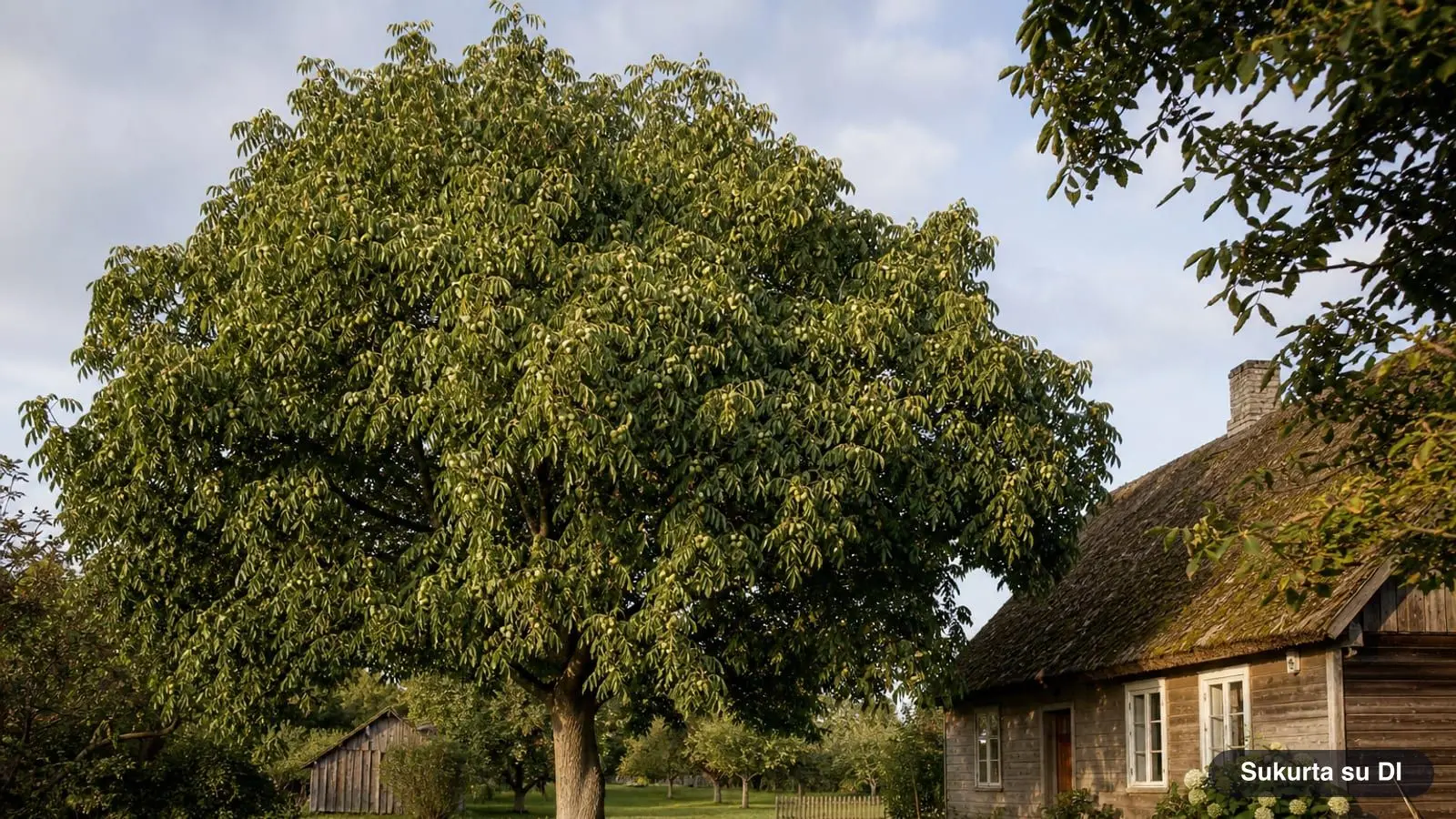
In autumn, visitors to homesteads or old manor parks can often find green, ball-like fruits fallen under a large tree—once the husk splits, familiar walnuts spill out. While not native to many of the regions where it is now grown, the English walnut has a long history of cultivation, and some ancient trees are even protected as natural heritage monuments. In this profile from our Tree Guide, you will learn how to identify the English walnut, how it differs from the Manchurian and butternut species, and why not all plants thrive in its vicinity.
| Latin name | Juglans regia |
|---|---|
| Family | Walnut (Juglandaceae) |
| Group | Broadleaf, cultivated |
| Origin | Balkans to the Himalayas and China; largest forests in Kyrgyzstan |
| Height | 65–100 ft (20–30 m), sometimes up to 115 ft (35 m) |
| Leaves | Odd-pinnate, 8–18 inches (20–45 cm), usually 7 leaflets |
| Blooms | Late spring |
How to identify a walnut tree
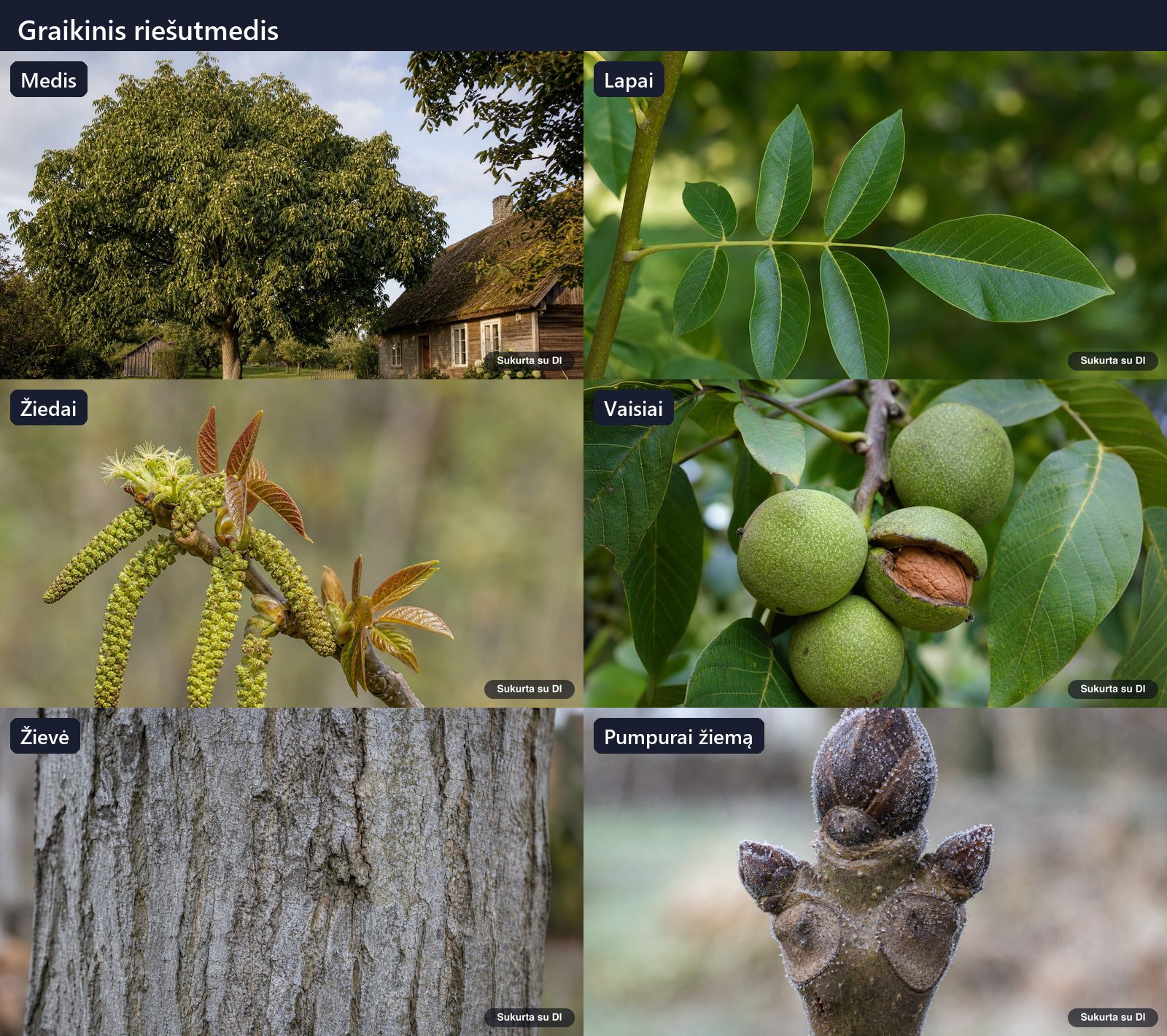
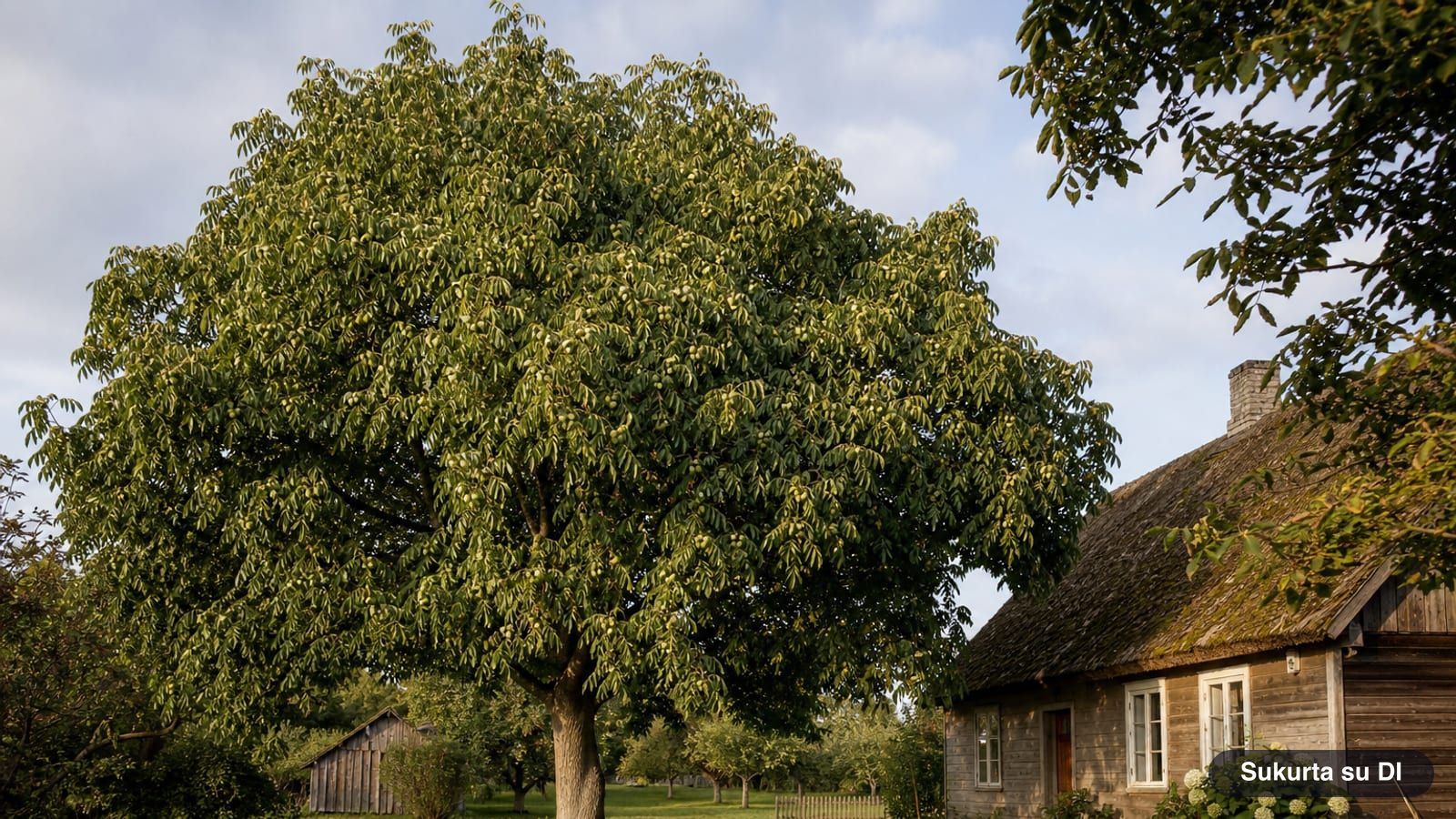
The English walnut is a large tree with a dense, widely spreading canopy. In its native habitat, it grows 65–100 ft (20–30 m) tall, sometimes reaching up to 115 ft (35 m), with a trunk diameter of up to 5 ft (1.5 m). Its natural range stretches from the Balkans to the Himalayas and China, and the largest remaining walnut forests are found in Kyrgyzstan—the famous Arslanbob forest. In cultivation, the walnut is grown in many countries between 30° and 50° northern latitude, generally thriving in USDA hardiness zones 5–9.
Leaves
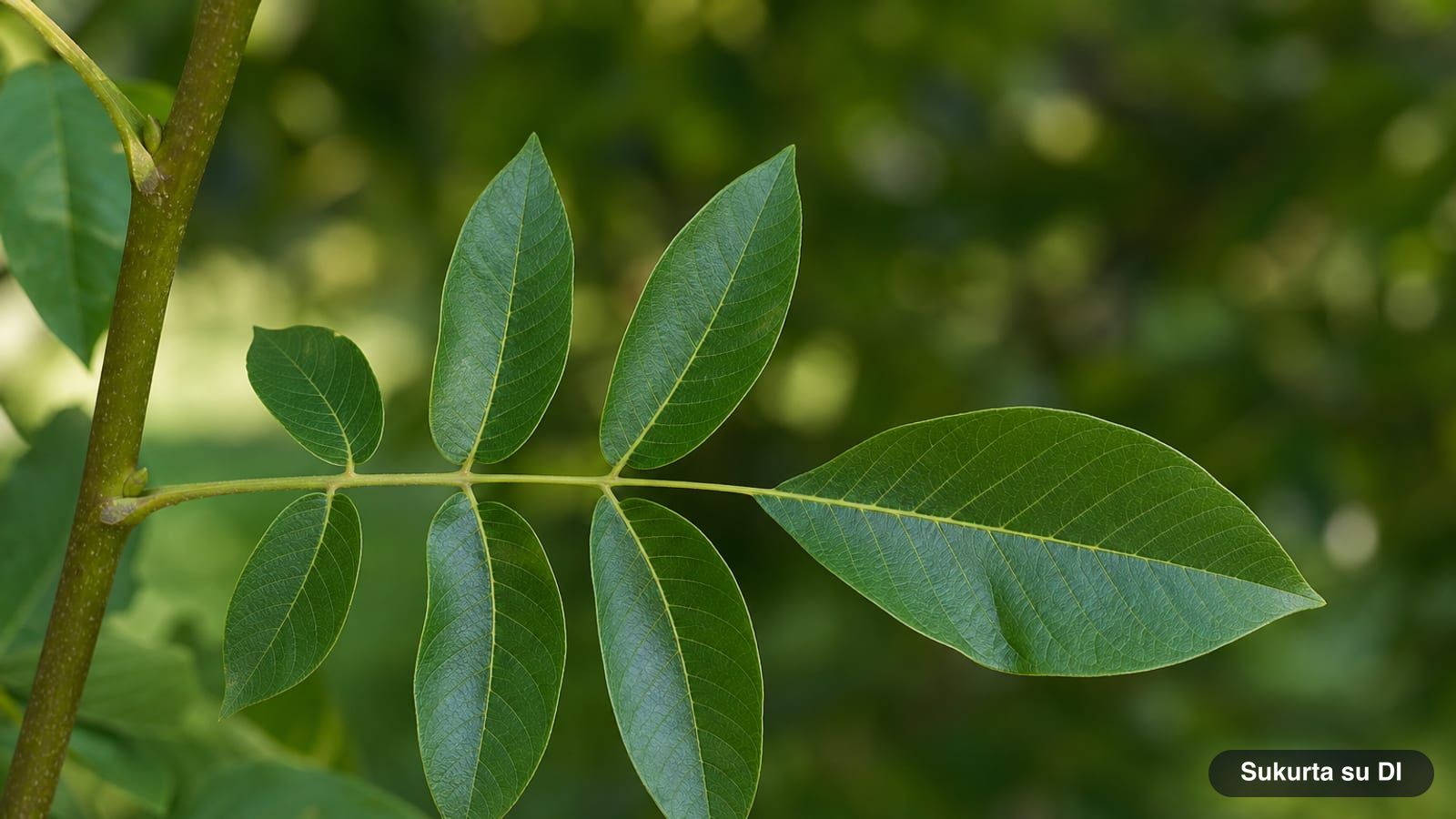
The leaves are alternate, odd-pinnate, and 8–18 inches (20–45 cm) long, consisting of 5–9 (usually 7) leaflets arranged in pairs with a single terminal leaflet. The top three leaflets are the largest, while the bottom pair is significantly smaller. The leaflet margins of mature trees are entire (smooth), though seedlings and certain varieties may have toothed edges. The walnut leafs out late in spring: young leaves are initially reddish-brown before turning dark green. When crushed, the leaves emit a strong, distinctive fragrance.
Flowers
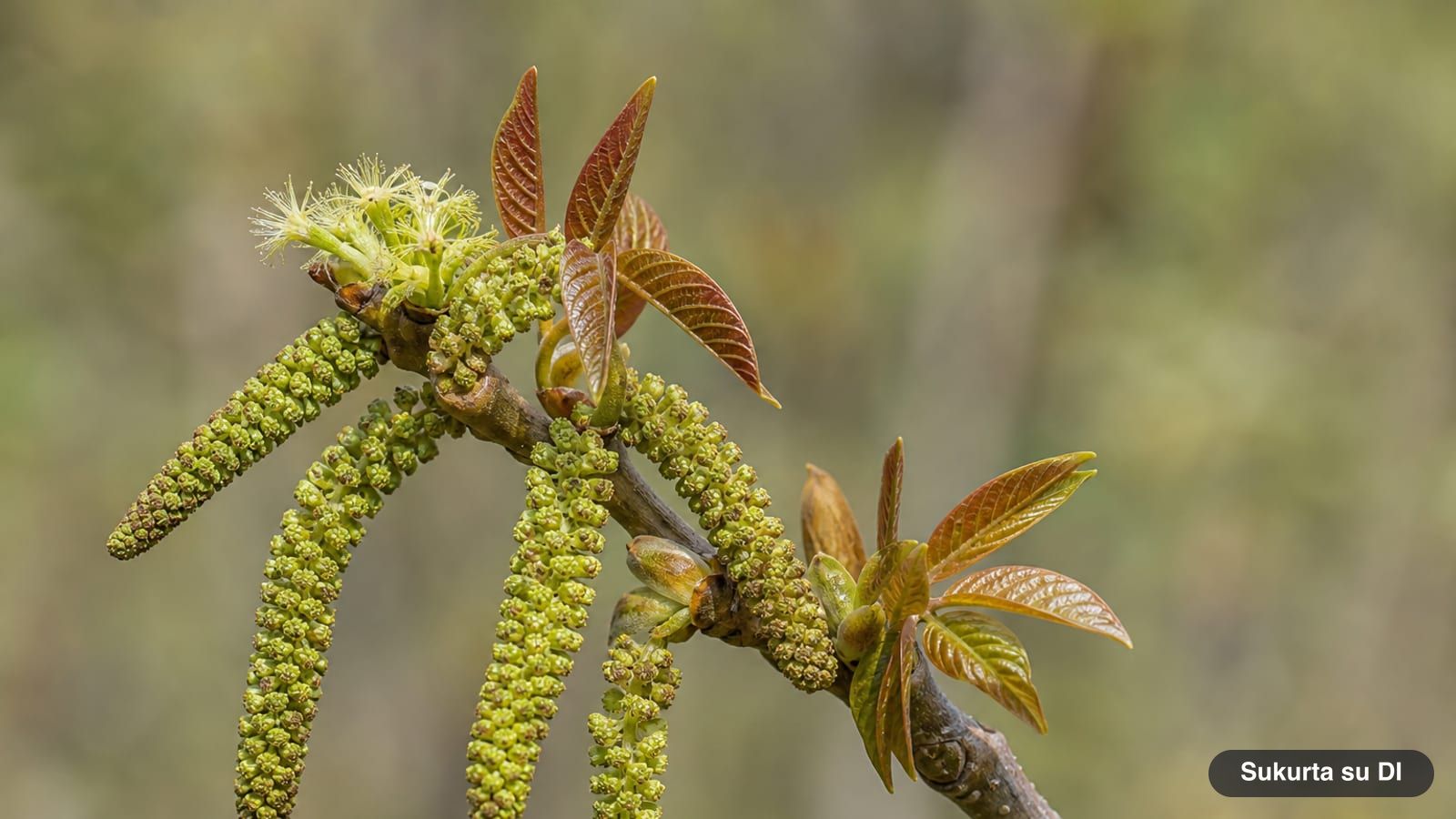
The walnut is a monoecious tree that blooms in late spring (typically May to June in the Northern Hemisphere), alongside the emerging leaves. Male flowers are small, greenish, and clustered in thick, drooping catkins 2–4 inches (5–10 cm) long. Female flowers grow in clusters of 2–5 at the tips of young shoots and feature feathery yellow stigmas. The flowers are wind-pollinated.
Fruits and nuts
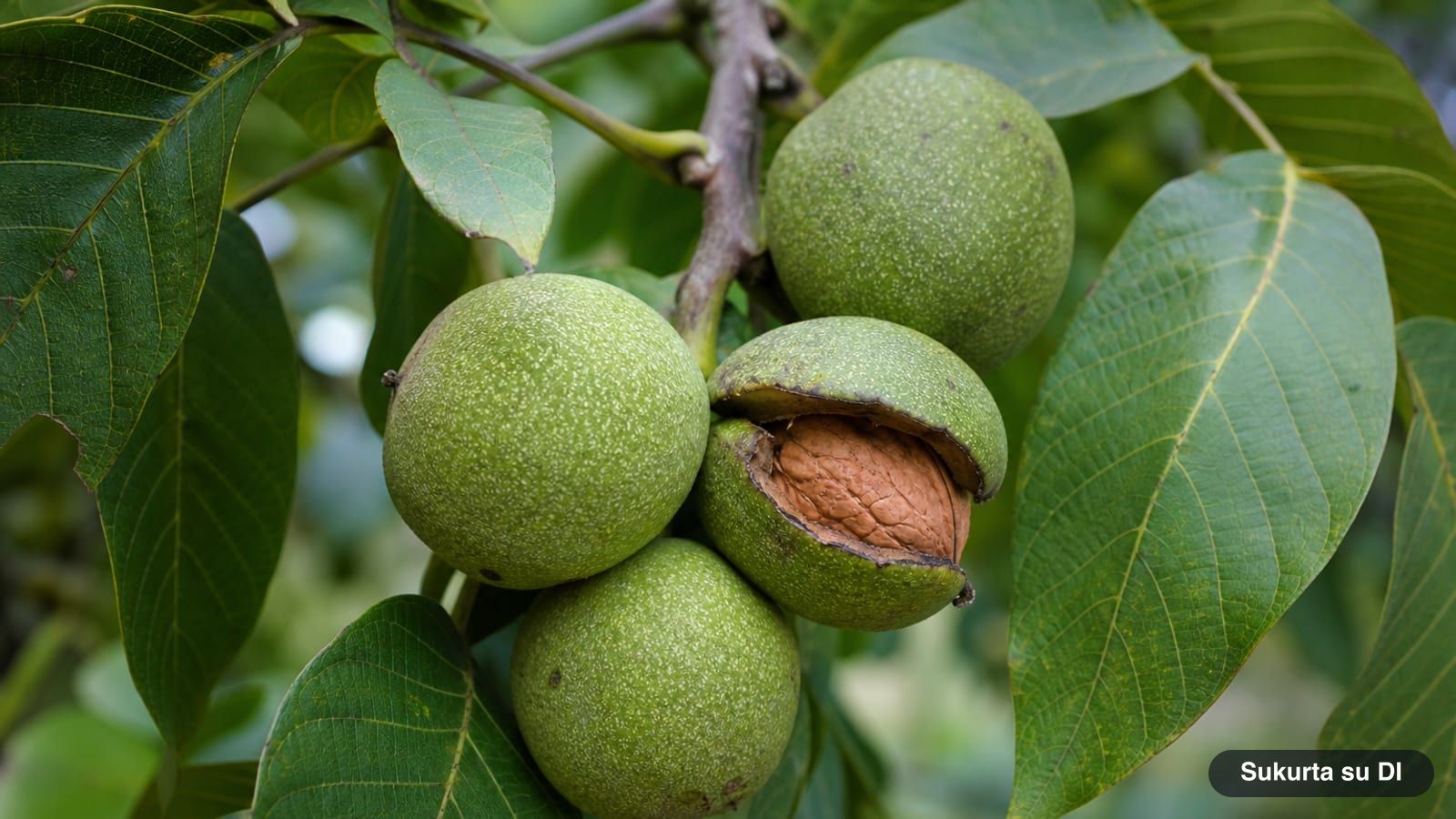
Botanically, the fruit of the English walnut is a drupaceous nut: the nut is covered by a green, semi-fleshy husk. In autumn, the entire fruit drops, the husk cracks open, and the brown, wrinkled, hard nutshell remains inside. Inside the shell are the kernel halves separated by partitions, which are the parts we eat. Wild walnuts have thick shells, while most cultivated varieties have thinner ones. The husk contains strong dyes, so peeling fresh walnuts will stain your hands brown.
Bark and buds
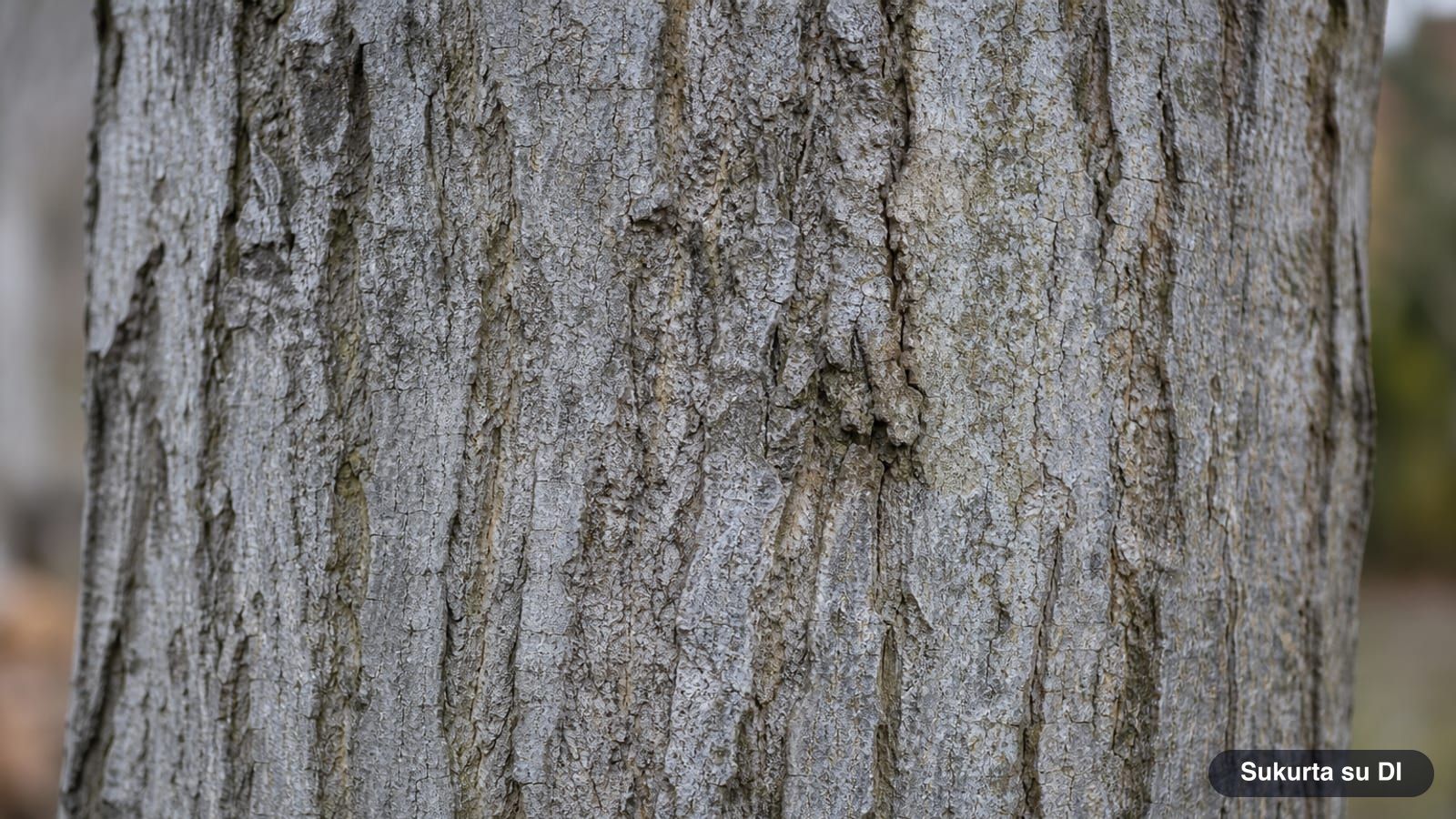
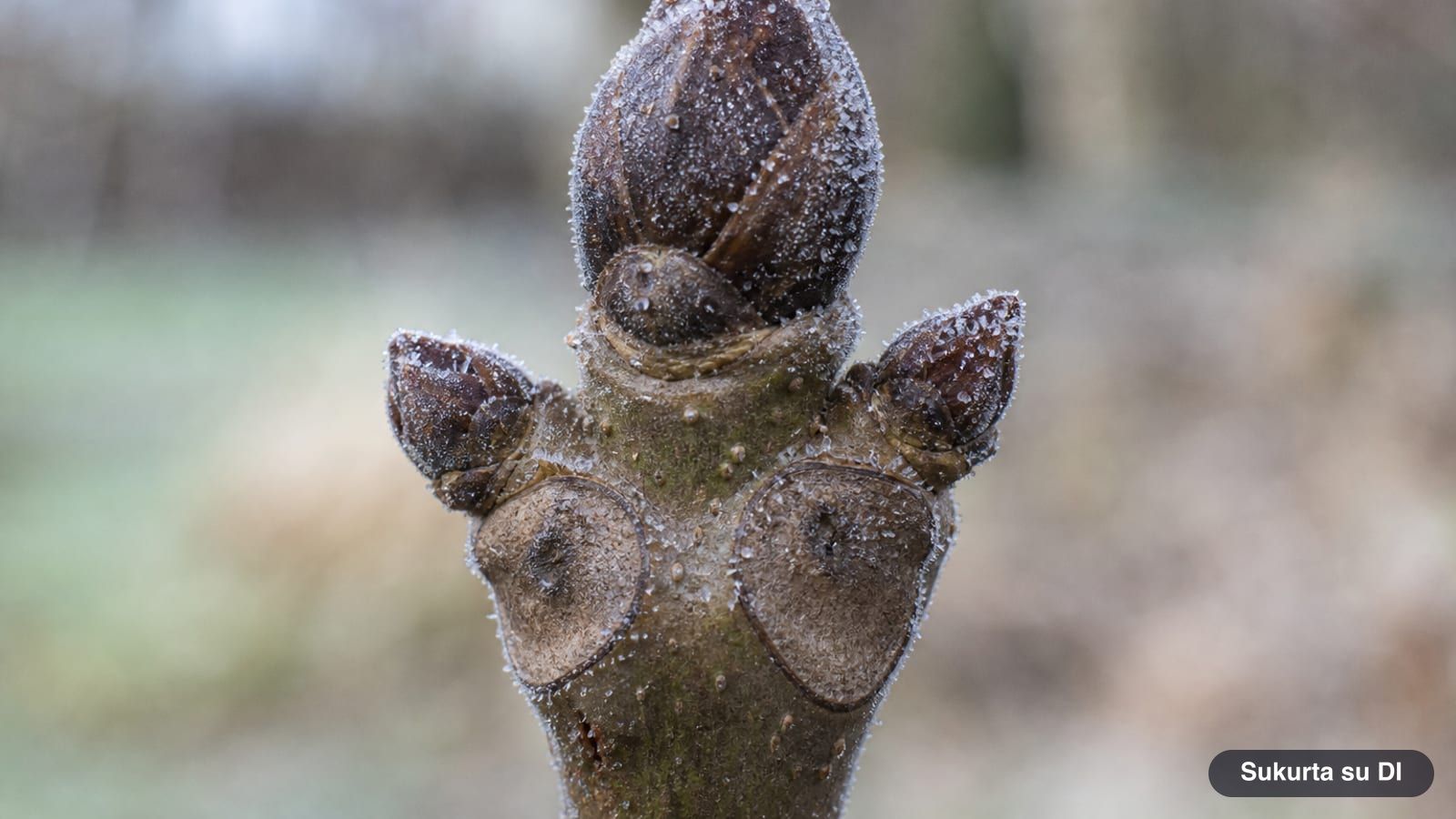
The bark of young trees is smooth and silvery-gray, while older trees develop rougher bark with widely spaced longitudinal fissures. The shoots are thick, and cutting a twig open reveals a characteristic chambered pith—featuring air gaps that are initially cream-colored and later turn brown. This trait is common to all walnut species. The terminal bud is large, round, and dark, and large heart-shaped leaf scars are visible beneath the lateral buds.
English, Manchurian, or Butternut?
The walnut genus includes over a dozen species native to Eurasia and the Americas. The English walnut is the most commonly cultivated, while the Manchurian walnut and butternut (white walnut) are grown less frequently but are valued in cooler climates.
| Trait | English | Manchurian | Butternut |
|---|---|---|---|
| Origin | Balkans–Himalayas–China | Far East, Manchuria, Korea | Eastern North America |
| Leaves | 8–18 in (20–45 cm), 5–9 entire leaflets | 16–40 in (40–100 cm), 9–19 serrated leaflets | 20–28 in (50–70 cm), 11–19 serrated leaflets |
| Nuts | Round, wrinkled | Ovoid, pointed, thick shell with 6–8 ridges | Elongated, pointed, sharp wavy ridges |
| Bark | Silvery-gray | Blackish-gray | Gray, deeply fissured |
The Manchurian walnut grows rapidly, reaching 75–82 ft (23–25 m) in height, and can live up to 200 years; young saplings can be sensitive to late frosts, so they may need protection in autumn and winter in colder zones. The butternut grows up to 100 ft (30 m), is light-loving, and is highly resilient to harsh climates. Both species produce hard, durable wood with a beautiful texture, and their flowers are rich in nectar. Breeders have also developed more cold-hardy varieties of the English walnut—often referred to as Carpathian walnuts, which can withstand colder winters.
Juglone: why other plants grow poorly under a walnut tree
The leaves, roots, fruit husks, and bark of trees in the walnut family contain juglone—a substance that inhibits the growth of many other plants or even poisons them. This phenomenon is known as allelopathy. The black walnut is most famous for its strong allelopathic effects, but other walnuts contain juglone as well. People noticed that walnuts harm neighboring plants as early as the 1st century, and scientists isolated the juglone compound in 1856. Early 20th-century studies described how tomatoes wilt, certain apple varieties suffer, and alfalfa dies near walnut trees, though grass growth is mostly unaffected. Therefore, when planning a garden, it is worth knowing that the area under and immediately around a walnut tree can be hostile to sensitive plants. Juglone has also been traditionally used as a dye for fabrics and ink.
Nuts, wood, and uses
English walnuts are highly nutritious: 3.5 oz (100 g) of kernels contain about 2.3 oz (65 g) of fat, 0.5 oz (15 g) of protein, and 0.5 oz (14 g) of carbohydrates, along with vitamin B6, folate, manganese, copper, zinc, magnesium, and phosphorus. Walnut leaves have been used in folk medicine, but you should consult a professional before using them for any treatments.
Walnut wood is among the most valuable in the world. When freshly cut, it has a mustard color, but it darkens within a few days and dries to a chocolate brown or almost black, often featuring striking patterns. It is hard, heavy, durable, and takes a high polish, making it highly prized for luxury furniture, flooring, veneer, guitars, and gunstocks.
History and name
The walnut has been cultivated since ancient times: its nuts were mentioned by Ancient Greek writers, and Alexander the Great brought the "Persian nut" to Macedonia in the 4th century BC. The Romans later spread walnut trees across southern Europe and North Africa. English speakers commonly call it the "English walnut," though "Persian walnut" is a more historically accurate name, as the tree originally came to Europe from Asia. We cover other introduced and notable trees in our Ginkgo, Horse Chestnut, and Beech profiles, while wild fruit trees are detailed in the Wild Apple and Pear guide.
Frequently asked questions
Where do English walnut trees grow?
English walnuts are widely cultivated in homesteads, orchards, and parks across temperate zones globally (USDA zones 5–9). Other species, like the Manchurian walnut and butternut, are also grown in cooler regions.
When should you harvest walnuts?
Walnuts ripen in autumn. When the green, fleshy husk begins to crack and open, the nuts easily fall out and are ready to be collected.
Why do other plants struggle to grow under a walnut tree?
Walnut leaves, roots, husks, and bark contain juglone, a substance that inhibits the growth of many plants. The black walnut is most famous for this, but other walnuts produce it too. Tomatoes and certain apple varieties grow poorly near them.
What is the difference between an English and a Manchurian walnut?
English walnut leaves have 5–9 entire leaflets, and the nuts are round with a thinner shell. Manchurian walnut leaves are much larger, 16–40 inches (40–100 cm) long, with 9–19 serrated leaflets, and the nuts are elongated, pointed, and have a thick, ridged shell.
Are walnut leaves poisonous?
Walnut leaves, like other parts of the tree, contain juglone, which suppresses the growth of other plants. While the leaves have been used in folk medicine and for making dyes, they should only be used for medicinal purposes after consulting a professional.
Log in to comment
No comments yet. Be the first.