Hazel Tree: Identification, Leaves, Nuts, and Garden Growing
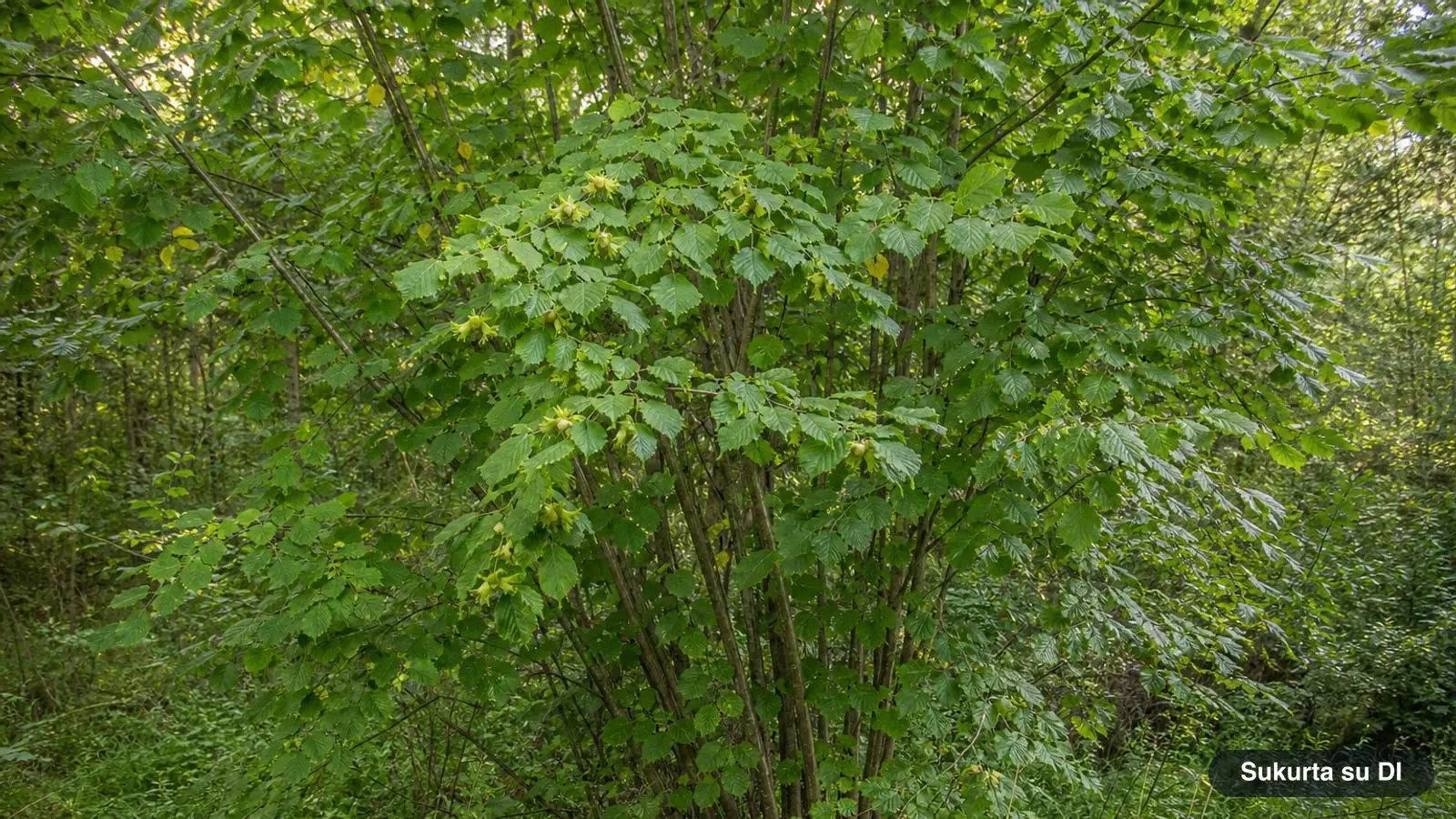
- The common hazel (Corylus avellana) is a deciduous shrub in the birch family, typically reaching 16–23 ft (5–7 m), sometimes up to 33 ft (10 m) tall.
- It is one of the earliest blooming woody plants in cool temperate climates, with catkins releasing pollen in early spring or even late winter.
- Male catkins form in summer and overwinter on the branches; female flowers are tiny buds with red stigmas.
- Hazelnuts ripen in late summer to early fall; the kernel contains up to 70% fat and about 16% protein.
- The most dangerous pest is the nut weevil, whose larvae eat the nut kernel from the inside.
This article is part of the 77.today trees guide, prepared by the 77.today editors from the sources listed at the end.
While snow may still be on the ground, hazel shrubs at the forest edge are already dusting the air: long yellow catkins sway in the wind, releasing clouds of pollen. The common hazel is one of the first heralds of spring among woody plants, and in autumn, it provides a rich source of nuts for humans, squirrels, and birds. Although it usually grows as a large shrub, hazel is an integral part of deciduous forests across Europe and western Asia, earning its place in our Tree Guide. Here you will find how to identify it, when to pick the nuts, and why some of them turn out empty.
| Latin name | Corylus avellana |
|---|---|
| Family | Birch (Betulaceae) |
| Group | Deciduous shrub, native to Europe and western Asia |
| Height | Usually 16–23 ft (5–7 m), sometimes up to 33 ft (10 m) |
| Lifespan | About 60–100 years |
| Blooms | Late winter to early spring; before leaves emerge |
| Nuts | Ripen late summer to early fall, 0.6–1.1 inches (1.5–2.7 cm) long |
| Habitat | Understory of deciduous and mixed forests, ravines, clearings, forest edges |
How to Identify Hazel
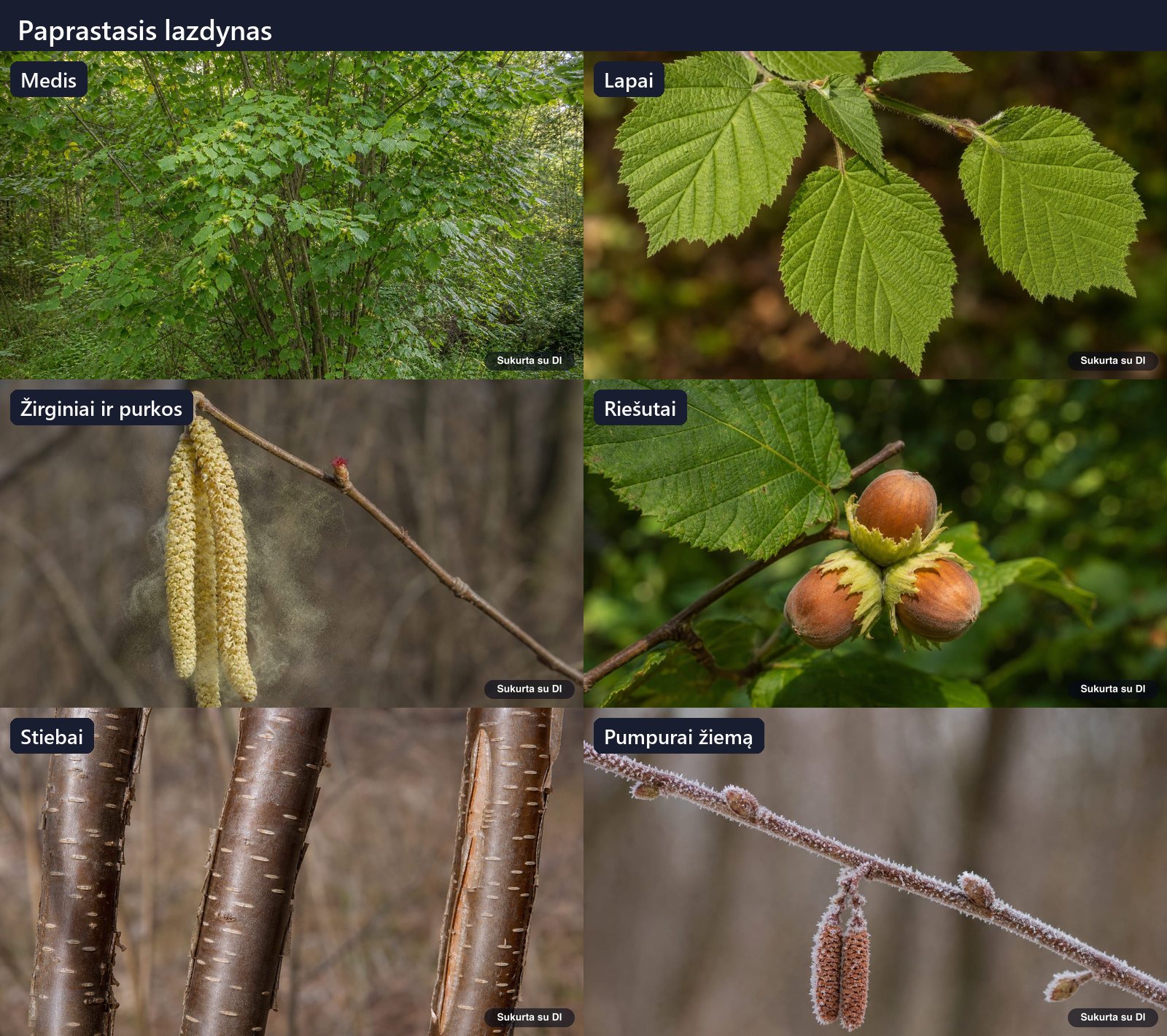
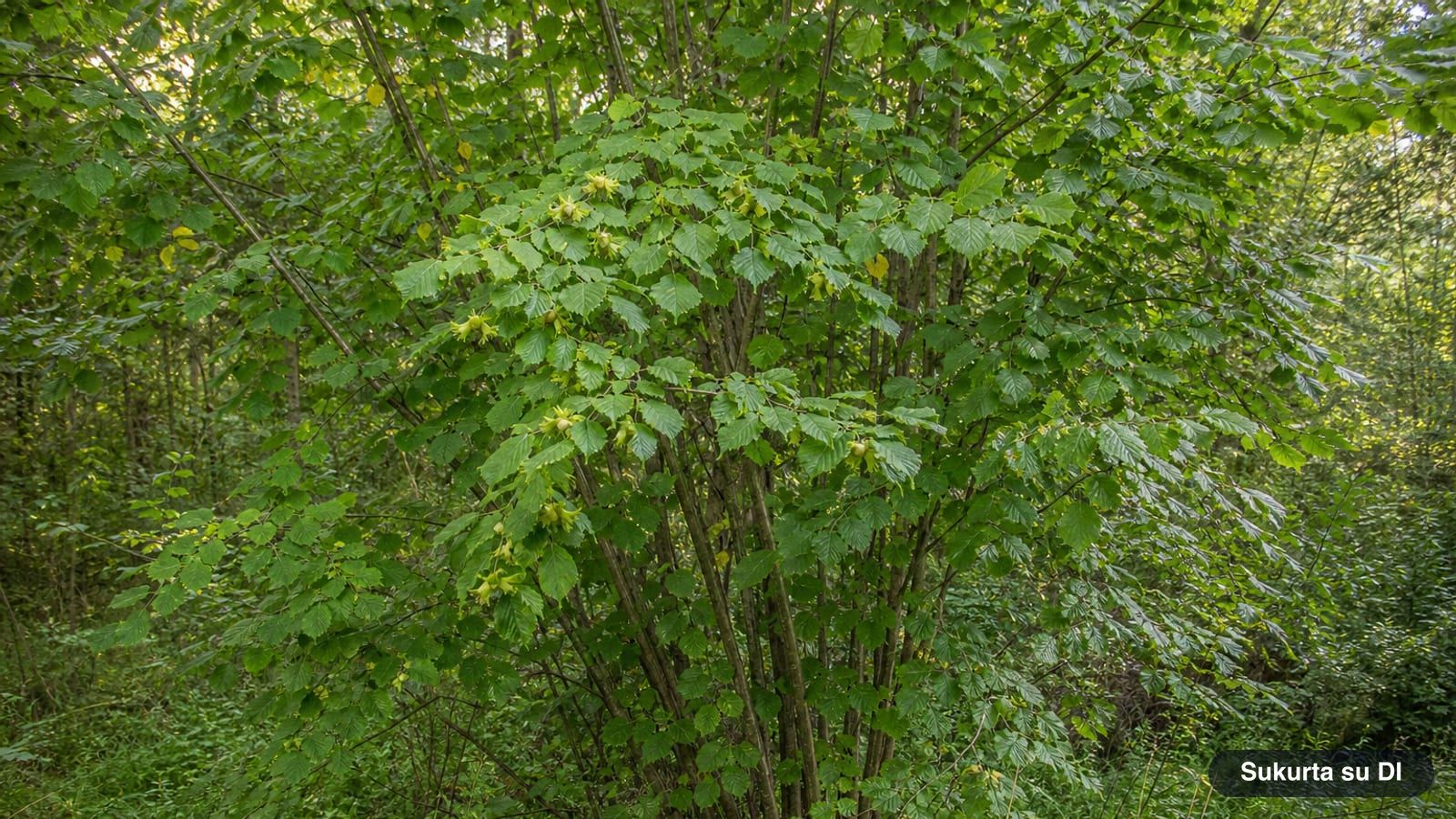
Hazel usually grows as a broad shrub with many straight stems rising from a single base; it rarely takes the form of a single-trunked tree. Native to Europe and western Asia, it is widespread across its range. Hazel thrives best in fertile, calcareous loams: it frequently forms the understory in deciduous and mixed forests, growing abundantly in ravines, clearings, forest edges, and slopes. In dense, shaded forests, hazel produces poorly and has a shorter lifespan, but in open areas, it grows lush and highly productive.
Leaves
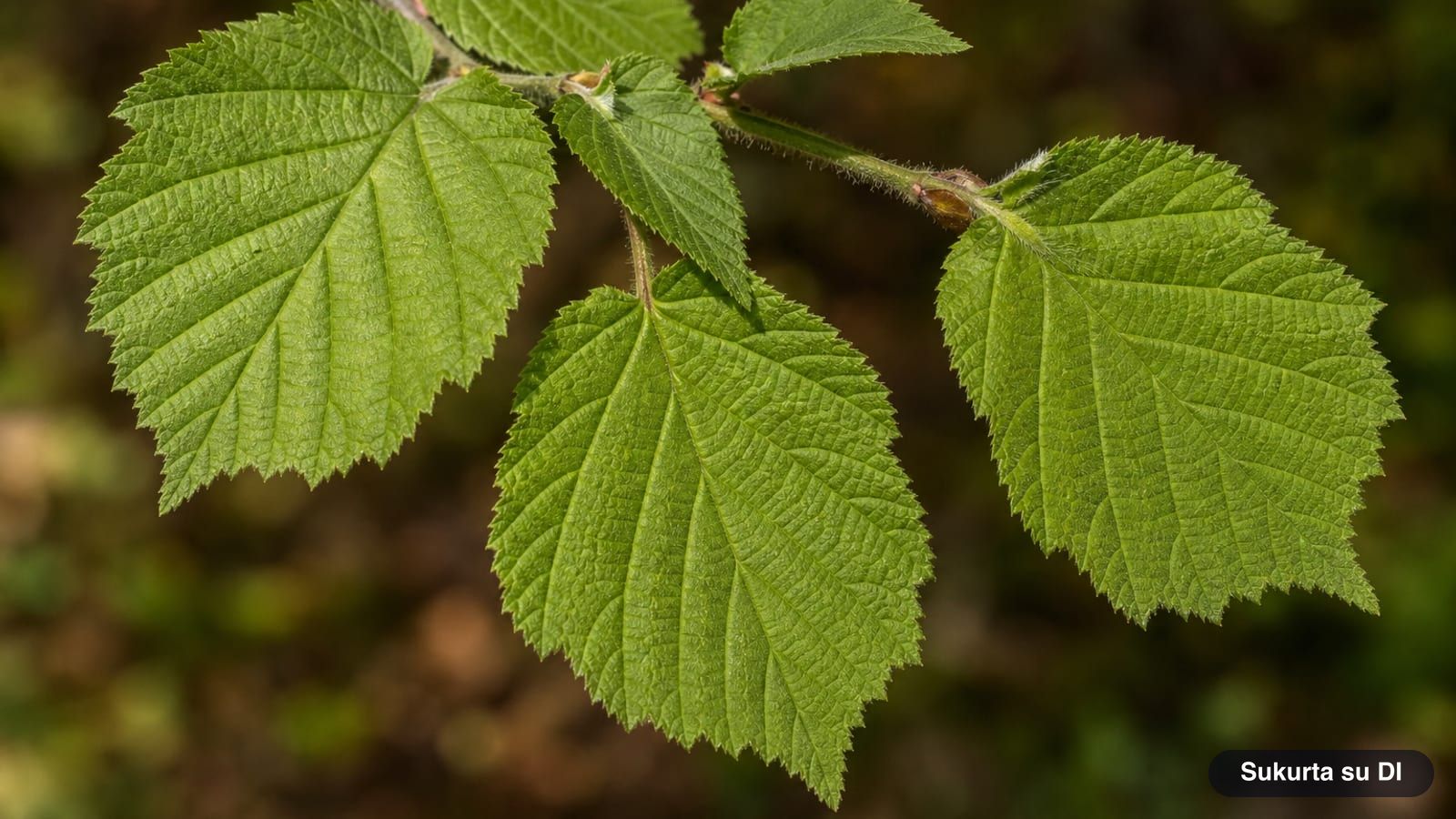
The leaves are alternate and large—2.4–4.7 inches (6–12 cm) long and 2–3.5 inches (5–9 cm) wide. They are almost circular, with a short pointed tip and a deeply heart-shaped (cordate) base. The margins are doubly serrated, and both sides are hairy and matte; the upper surface is bright green, while the underside is lighter. The petiole is short, up to 0.8 inches (2 cm), and hairy. In autumn, hazel leaves turn yellow. For comparison with other tree leaves, check our tree leaf identification guide.
Flowers
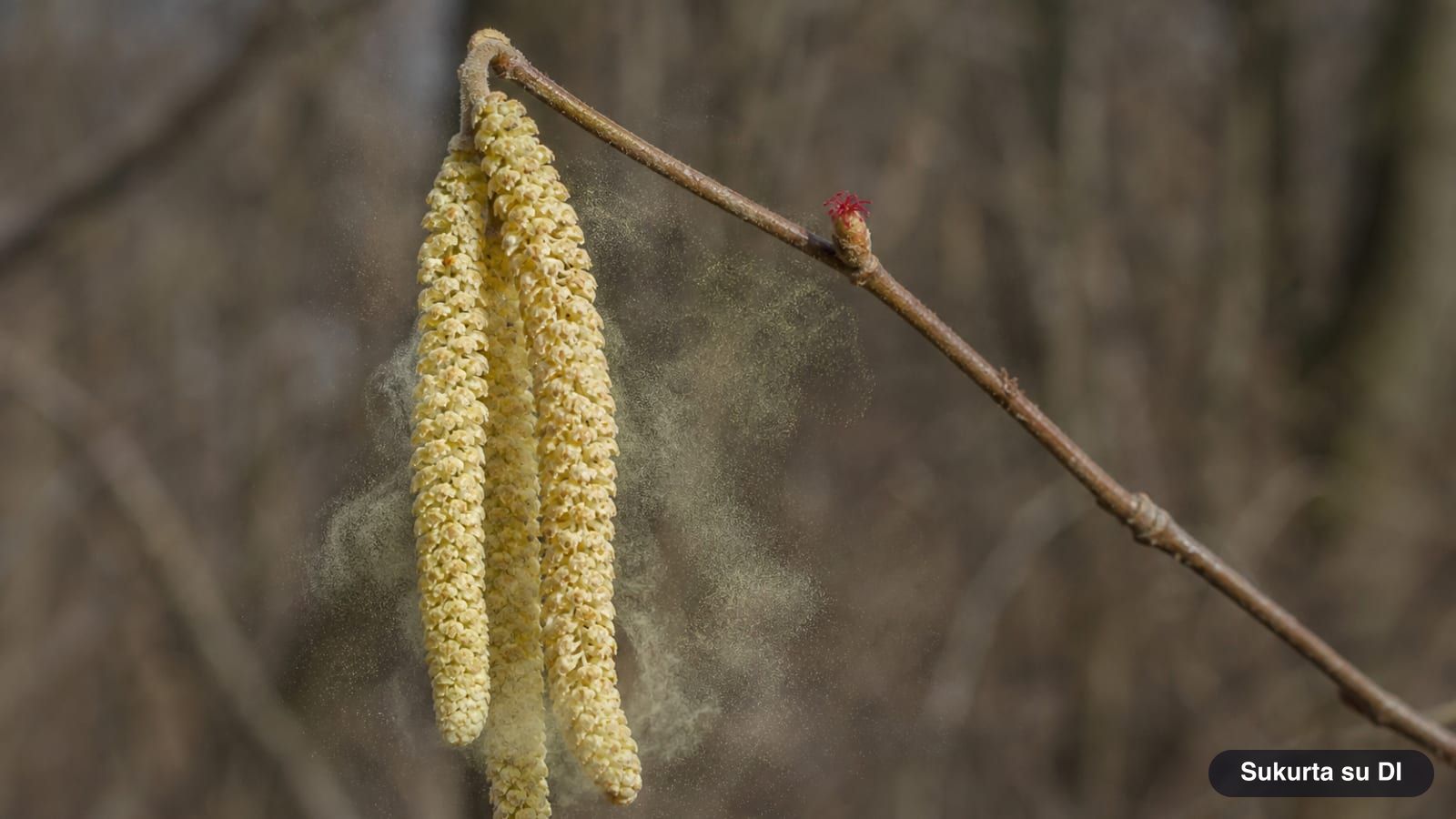
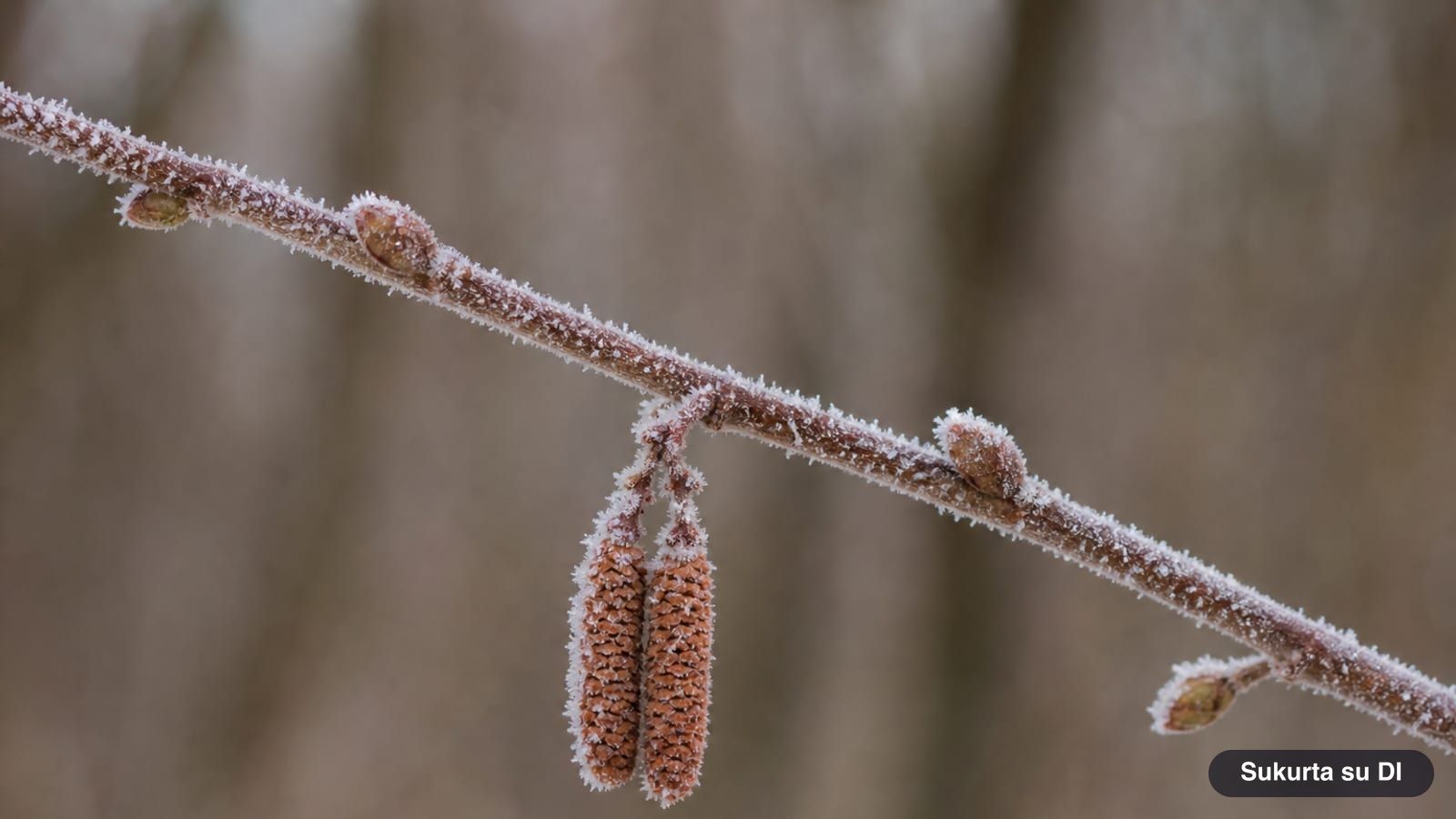
Hazel is monoecious: both male and female flowers grow on the same shrub. Male catkins form in the summer, hanging on the branches through autumn and winter as short, brownish clusters. In early spring, they elongate to 1.6–2.4 inches (4–6 cm), sometimes up to 3.1 inches (8 cm), turn yellow, and release pollen. Female flowers are tiny and almost invisible: they hide in bud-like heads, with only 0.08–0.12-inch (2–3 mm) tufts of bright red stigmas protruding. The stigmas appear before the catkins on the same shrub begin to shed pollen, ensuring the hazel is cross-pollinated primarily by wind-borne pollen from other shrubs. The blooms are occasionally damaged by late spring frosts.
Nuts
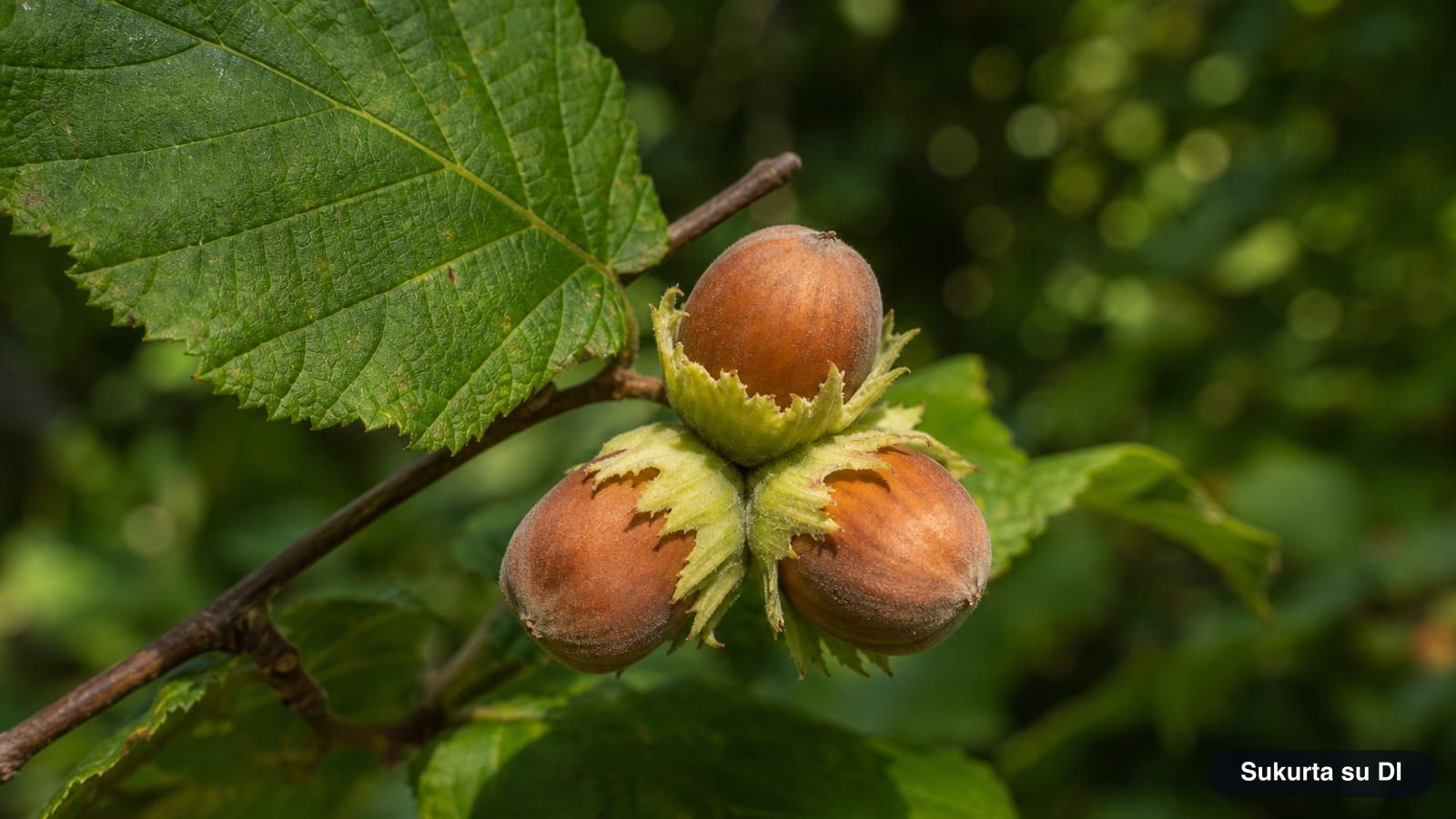
The fruit of the hazel is an oval or slightly elongated, somewhat flattened nut with a hard woody shell, 0.6–1.1 inches (1.5–2.7 cm) long. It is partially enclosed by a leafy, toothed husk (involucre) that is shorter than the nut itself. The nuts grow in clusters of 2 to 7, sometimes singly, and ripen in late summer to early fall. At this time, the shell turns brown, and the nut easily breaks free from the husk and drops. One thousand wild hazelnuts weigh about 4.4 lbs (2 kg).
Bark and Buds
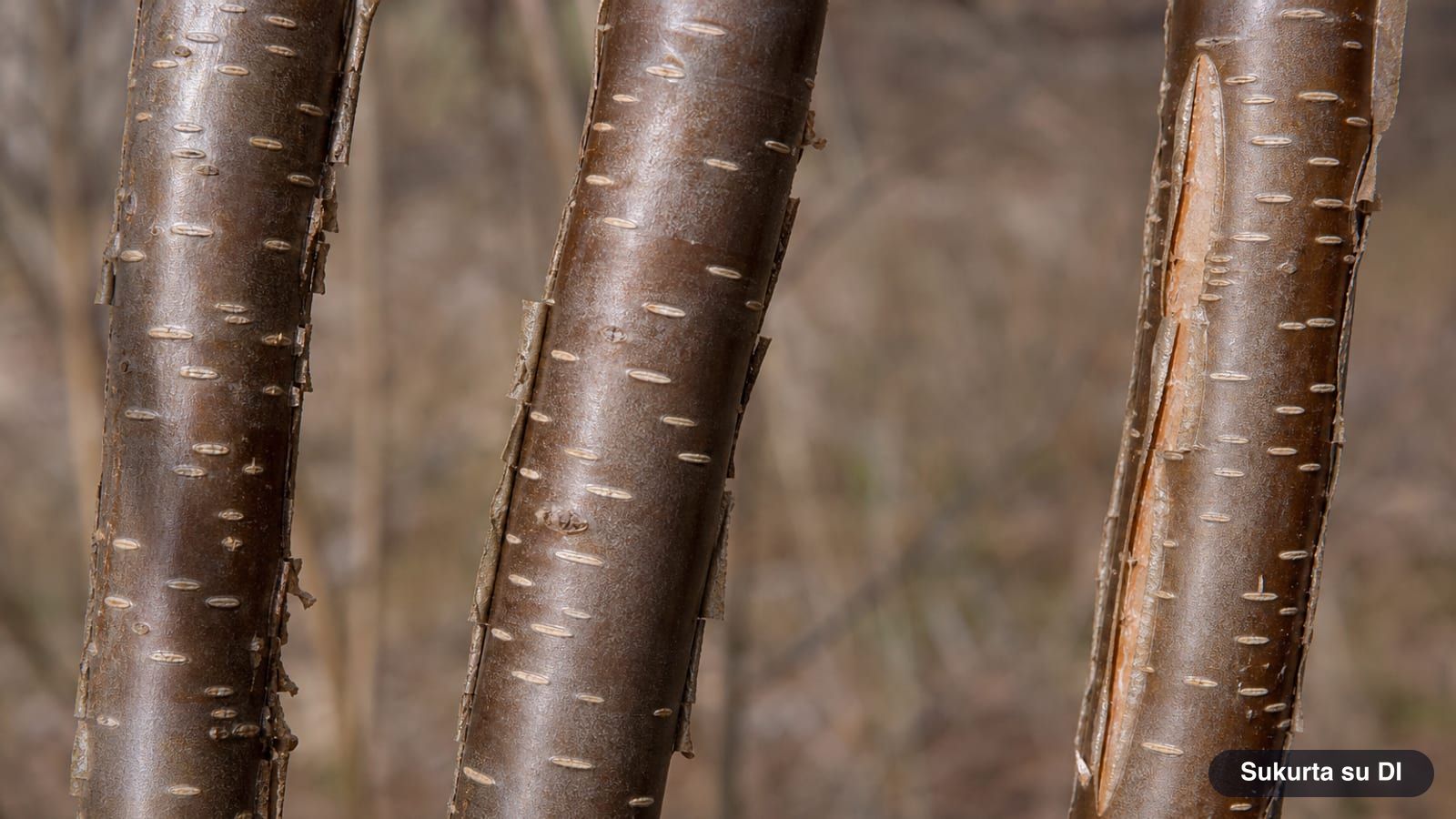
The bark of the stems is grayish or yellowish-brown, smooth, and shiny, with light lenticels and darker transverse bands; older stems develop shallow longitudinal cracks. Young shoots are covered with glandular hairs. The buds are alternate, arranged in two rows, egg-shaped, blunt, up to 0.2 inches (5 mm) long, and reddish-green or reddish-brown. In winter, hazel is easy to identify by the short male catkins hanging on its twigs.
Common Hazel, Filbert, or Alder?
| Feature | Common Hazel | Filbert | Black Alder |
|---|---|---|---|
| Form | multi-stemmed shrub, 16–23 ft (5–7 m) | shrub or small tree | tree, 65–100 ft (20–30 m) |
| Leaves | almost circular, heart-shaped base, hairy | similar, larger | round, blunt or notched tip, sticky |
| Fruits | nuts, husk shorter than nut | nuts, husk longer than nut | small woody "cones" |
| Origin | native to Europe and western Asia | native to the Balkans and southwestern Asia, cultivated | native to Europe and western Asia |
In early spring, hazel is often confused with alders—both release pollen early from similar catkins. However, alders are trees, and their branches hold the previous year's woody, cone-like fruits through the winter; read more in the alder tree guide.
Hazelnuts
Hazelnuts are highly nutritious: the kernel makes up to half the weight of the nut and contains up to 70% fat, about 16% protein, roughly 3.5% sugars, and vitamins B1 and E. They are eaten fresh or roasted, added to breads, cakes, and sweets, and pressed for oil used in confectionery and cosmetics. They are among the few wild nuts that can be eaten straight from the shrub; we discuss the fruits of other trees in our tree seeds and fruits guide.
A wide variety of animals also feed on the nuts: squirrels, dormice, and mice, while jays and nutcrackers carry freshly ripened nuts away and hide them in the forest. Animals never recover some of these hidden caches, helping the hazel spread to new areas. Even the nut shells do not go to waste: researchers are exploring ways to turn hazelnut shells into a renewable energy source.
Pests: Why Are the Nuts Empty?
The most dangerous pest for hazels is the nut weevil (Curculio nucum). In mid-to-late summer, while the nuts are still developing, the female of this 0.24–0.31-inch (6–8 mm) beetle uses her long snout to lay a single egg inside a nut—up to 20 to 30 in total. The hatched larva eats the kernel for about a month, and in late summer, it chews a round exit hole and burrows into the soil to overwinter. Damaged nuts do not store well and drop early, so it is worth collecting and destroying them in the garden. Leaves and shoots are also chewed by leaf weevils, and in wet years, the nuts can be ruined by gray mold.
Growing Hazel in the Garden
- Location. Hazel prefers fertile, moderately moist soil and full sun; it will grow in partial shade, but nut production will be poor. It tolerates drought reasonably well and is resistant to air pollution. It is generally cold-hardy to USDA zones 4–8.
- Pollination. Hazel produces the best harvest when planted near several different shrubs or varieties, as it does not self-pollinate well.
- Pruning. Old, unproductive stems should be cut down to the ground every few years to allow the shrub to rejuvenate with new shoots.
- Varieties. Ornamental gardens often feature red-leaved, yellow-leaved, cut-leaved, and weeping forms. A particularly popular variety is 'Contorta' (Harry Lauder's walking stick), which features spiraling, twisted stems and was discovered in England in 1863.
Hazel is also beneficial to the environment: its leaf litter improves the soil, its roots stabilize slopes, and it makes excellent windbreaks. For centuries, the young, straight, and flexible stems have been used for weaving, hoops, fishing rods, and walking sticks.
Hazel in Traditions
In ancient Europe, the hazel symbolized life, fertility, and immortality, and its branches were often placed in graves. The Latin genus name Corylus is derived from the Greek word for helmet, a reference to the leafy husk covering the nut. We describe other early spring-blooming trees in the willow and alder guides.
Frequently asked questions
When does the hazel tree bloom?
Hazel is one of the earliest blooming native shrubs in Europe, typically flowering in late winter or early spring before the leaves emerge. In cool temperate climates, this often happens in March, or even February during mild winters. Phenologists often use hazel blooming as an indicator of early spring.
When should you harvest hazelnuts?
Hazelnuts ripen in late summer to early fall. When ripe, the shells turn brown, and the nuts easily slip out of their husks or fall to the ground on their own. Nuts picked too early will be underdeveloped, while waiting too long means squirrels, mice, and birds might harvest them first.
Why are some hazelnuts empty?
The most common cause is the nut weevil. The female lays an egg inside a young nut, and the hatching larva eats the kernel before chewing a small exit hole in the shell. Empty nuts can also result from poor pollination, such as when late spring frosts damage the blooming shrubs.
What is the difference between common hazel and filbert?
The common hazelnut is round or slightly elongated, and its leafy husk (involucre) is shorter than the nut. The filbert (Corylus maxima) has a husk that is longer than the nut, enclosing it completely like a beak. Many garden varieties are hybrids of these two species.
At what age does a hazel tree start producing nuts?
A hazel grown from seed begins to bear fruit at 5 to 10 years of age, though sometimes as early as the fourth year. Abundant harvests usually occur every 3 to 5 years. The shrub lives for about 60 to 100 years, as it constantly rejuvenates itself with new shoots.
Does hazel cause allergies?
Hazels are wind-pollinated and release large amounts of pollen, kicking off the spring allergy season alongside alders—often as early as late winter. For allergy sufferers, this is the first sign that it is time to start monitoring pollen forecasts.
Log in to comment
No comments yet. Be the first.