European Beech: Leaves, Nuts, Bark, and Identification
- The European beech (Fagus sylvatica) is a large deciduous tree in the beech family, typically reaching 80–115 ft (25–35 m) tall, and rarely up to 150 ft (45 m).
- Native to Central and Western Europe, this magnificent tree thrives in cool, temperate climates and is widely planted in parks and large gardens worldwide.
- It prefers moist, well-drained soils and can form dense, deeply shaded forests where few other plants survive on the forest floor beneath its canopy.
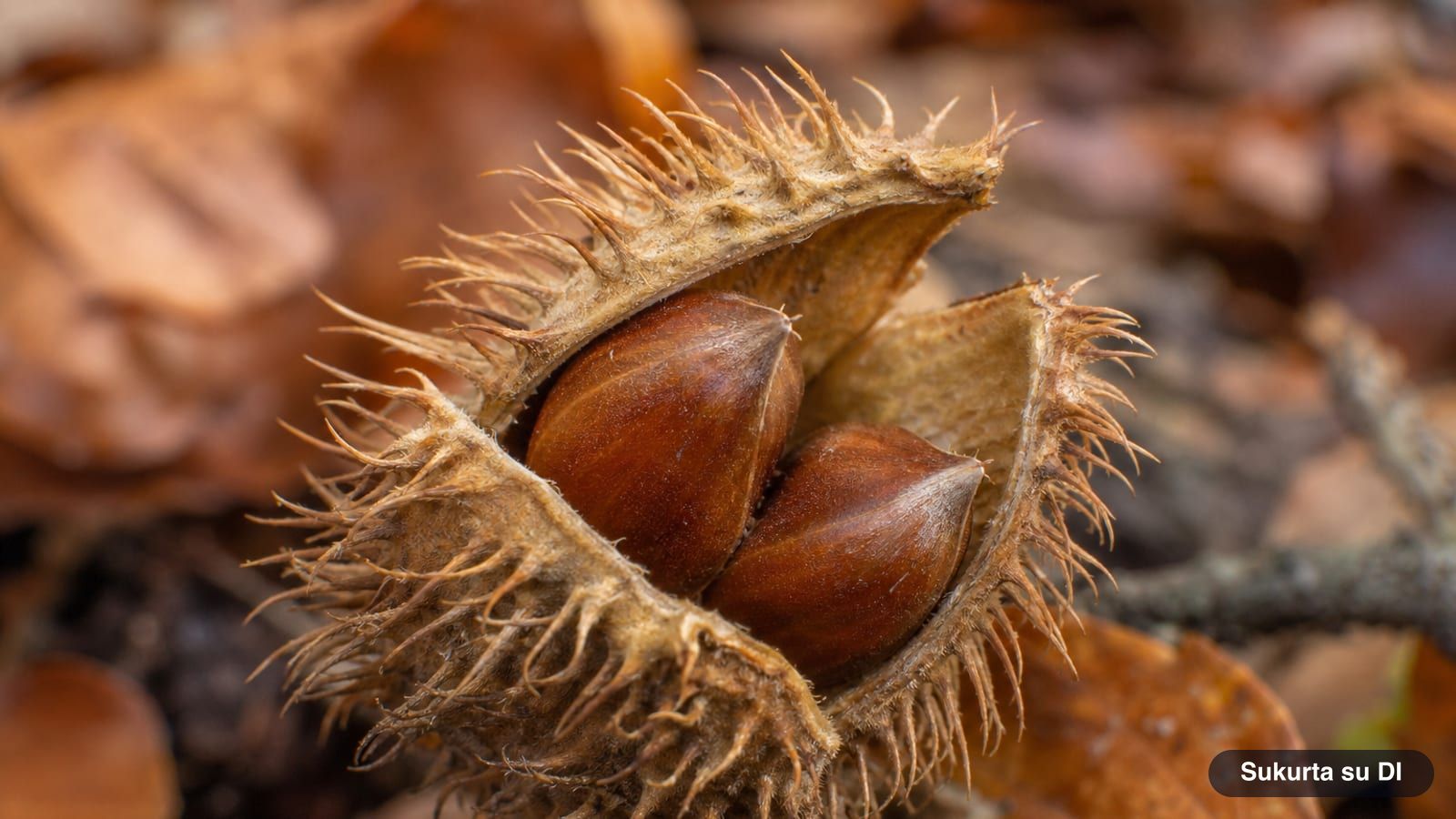
- Its triangular nuts grow in pairs inside a spiky, woody husk, ripening in early to mid-autumn; they are mildly toxic when eaten raw in large quantities.
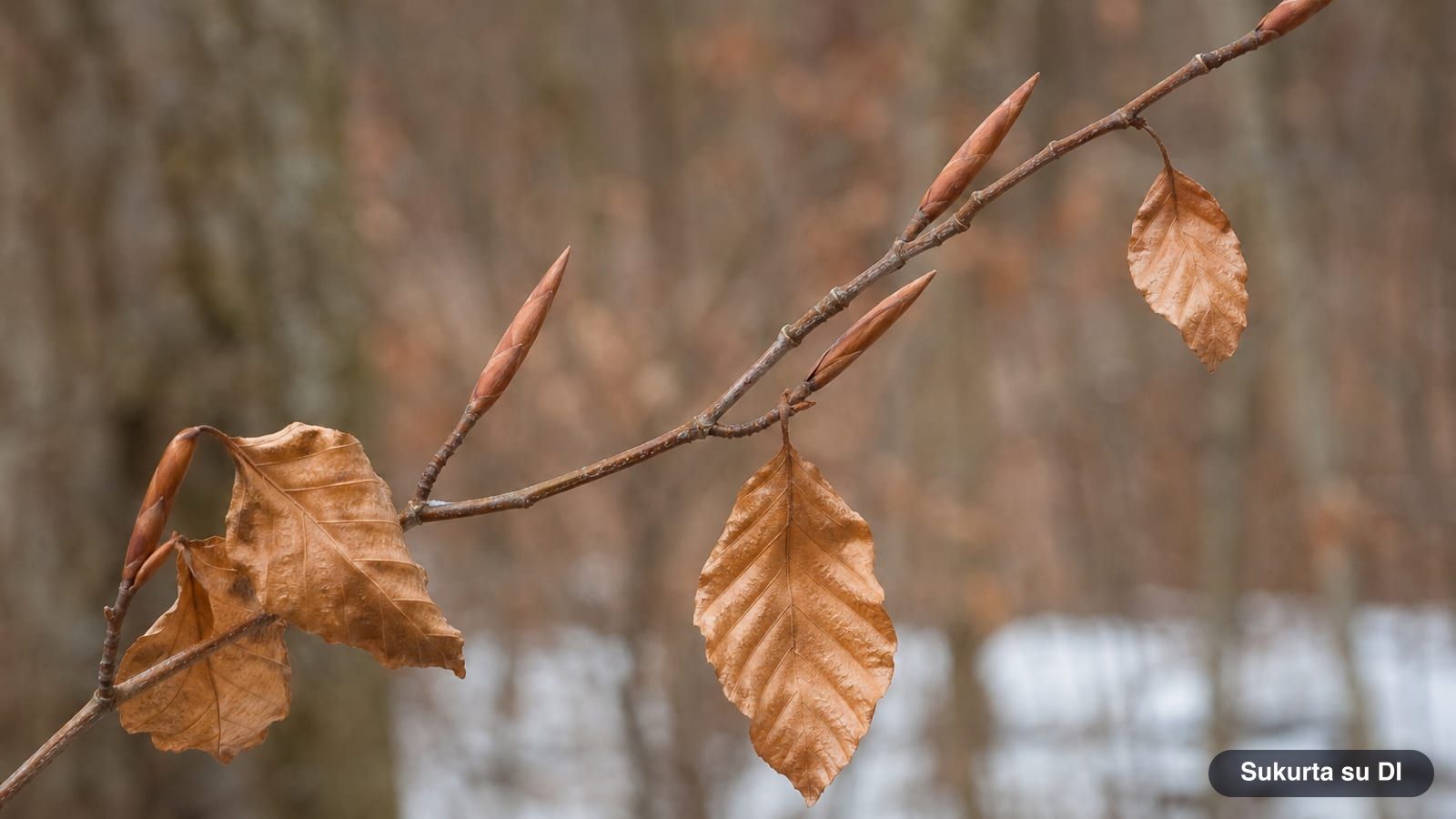
- Young trees and pruned beech hedges often retain their dry, brown leaves throughout the winter, providing excellent year-round privacy and wind protection.
This article is part of the 77.today trees guide, prepared by the 77.today editors from the sources listed at the end.
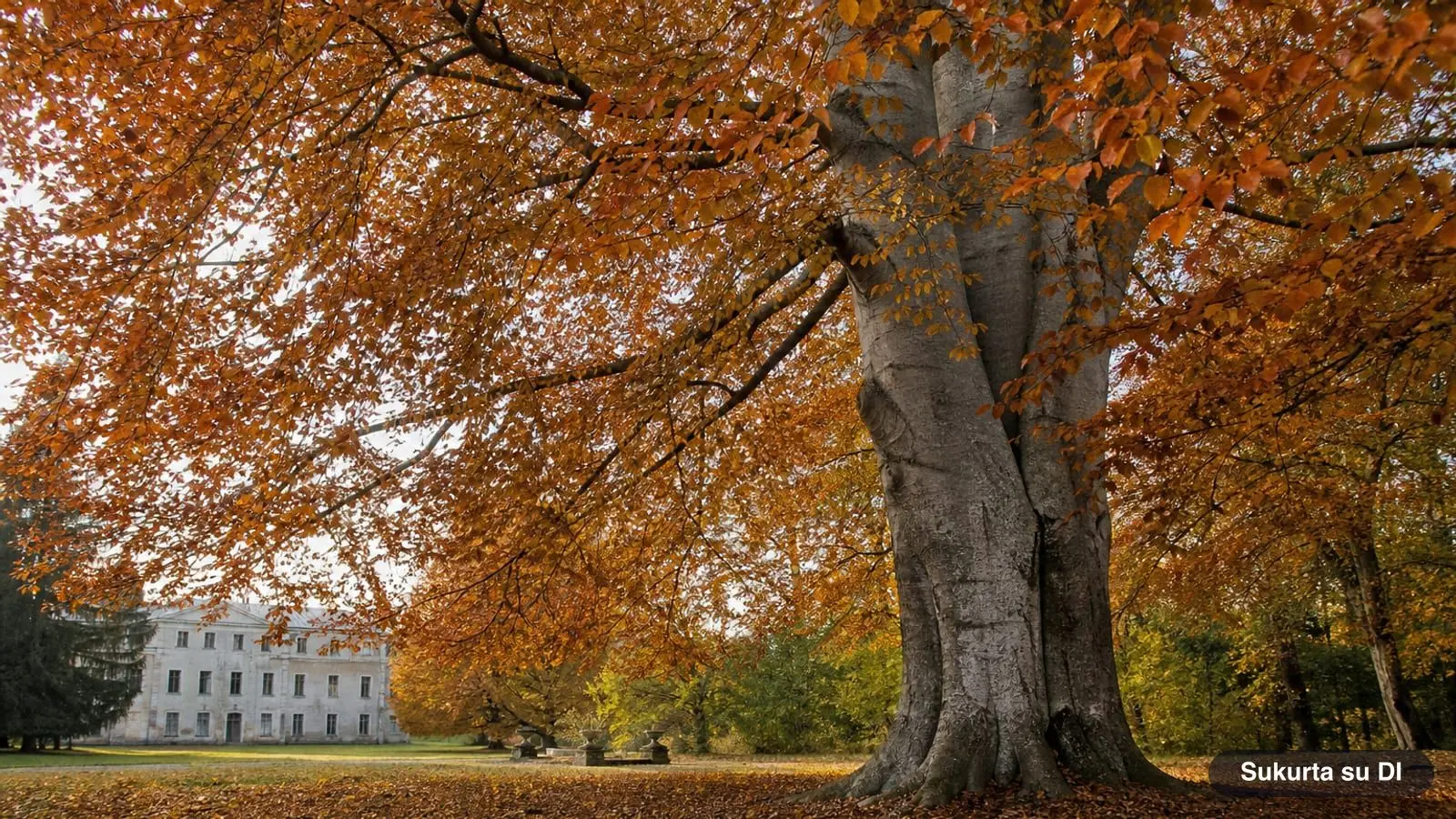
Stepping into an old beech forest, the first thing that catches the eye is the trunks: smooth, silvery-gray, and straight as columns. Beneath them lies a thick carpet of brown leaves where almost nothing else grows. While native to Central and Western Europe, these magnificent trees grace many parks, estates, and coastal woodlands in temperate regions worldwide. In this section of our tree identification guide, you will learn how to recognize the European beech in every season, discover its unique characteristics, and find out what makes the copper beech so special.
| Common name | European Beech |
|---|---|
| Scientific name | Fagus sylvatica |
| Family | Beech family (Fagaceae), like the oak |
| Group | Deciduous broadleaf, native to Europe |
| Height | Typically 80–115 ft (25–35 m), rarely up to 150 ft (45 m) |
| Lifespan | 200–300 years, sometimes more |
| Blooms | Mid-spring, as leaves unfurl |
| Nuts | Triangular, in a spiky husk, early to mid-autumn |
| Where it grows | Temperate forests, coastal woodlands, and large estate parks |
How to identify the European beech
A beech growing in a dense forest develops a narrow crown that is lifted high off the ground, whereas a tree grown in the open will have a broad, dense canopy that sweeps low to the earth. The beech is highly shade-tolerant and casts a very deep shadow itself: its dense foliage blocks most sunlight, and its fallen leaves decompose slowly, meaning very few groundcover plants can survive beneath it. It prefers loose, fertile, and slightly moist loams and sandy loams, and is cold-hardy to about −20°F (−29°C), USDA zones 4–7. It thrives in humid, maritime climates but struggles in waterlogged soils or areas with extreme winter cold and prolonged summer droughts.
Leaves
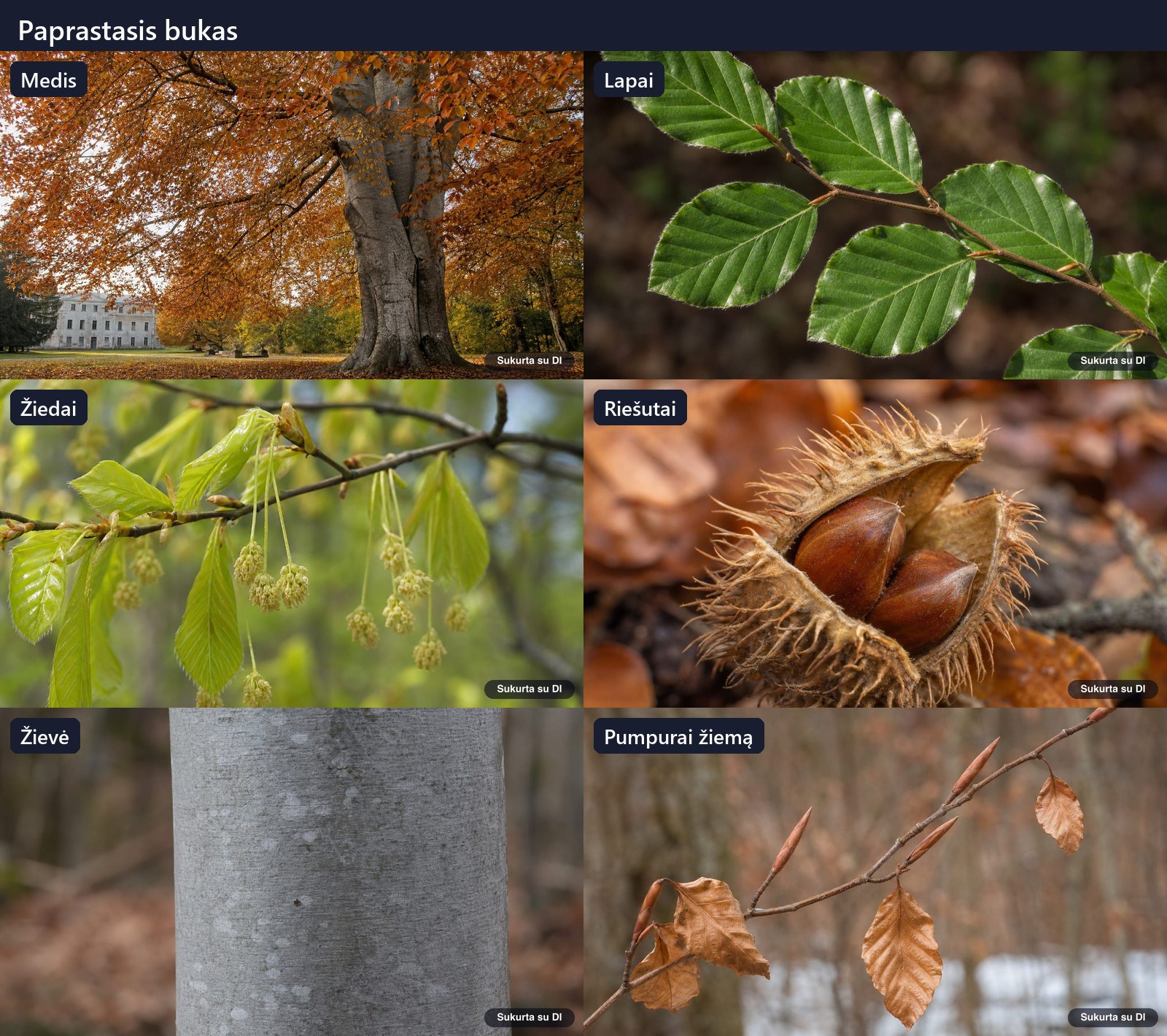
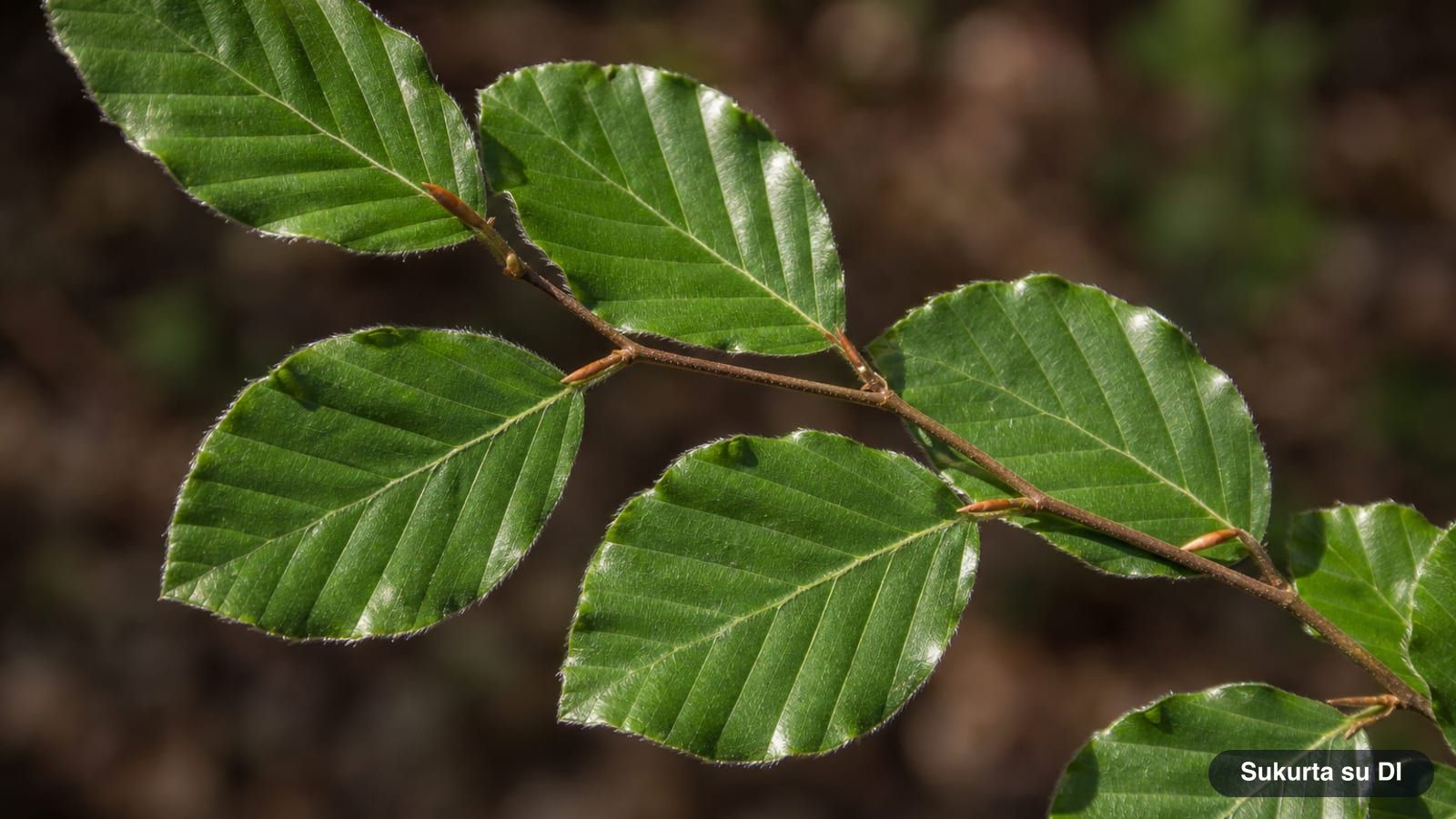
The leaves are alternate, simple, elliptical or ovate, measuring 2–4 inches (5–10 cm) long and 1.2–2.8 inches (3–7 cm) wide, with a pointed tip. The margins are smooth or gently wavy, and on young leaves, they are fringed with fine, silky hairs, resembling eyelashes (ciliate). The upper surface is dark green and glossy, while the underside is lighter; each side features 6 to 7 parallel lateral veins. In autumn, the foliage turns a stunning yellow-orange before settling into a rich copper-brown. The petiole (leaf stalk) is short, about 0.4 inches (1 cm).
Flowers
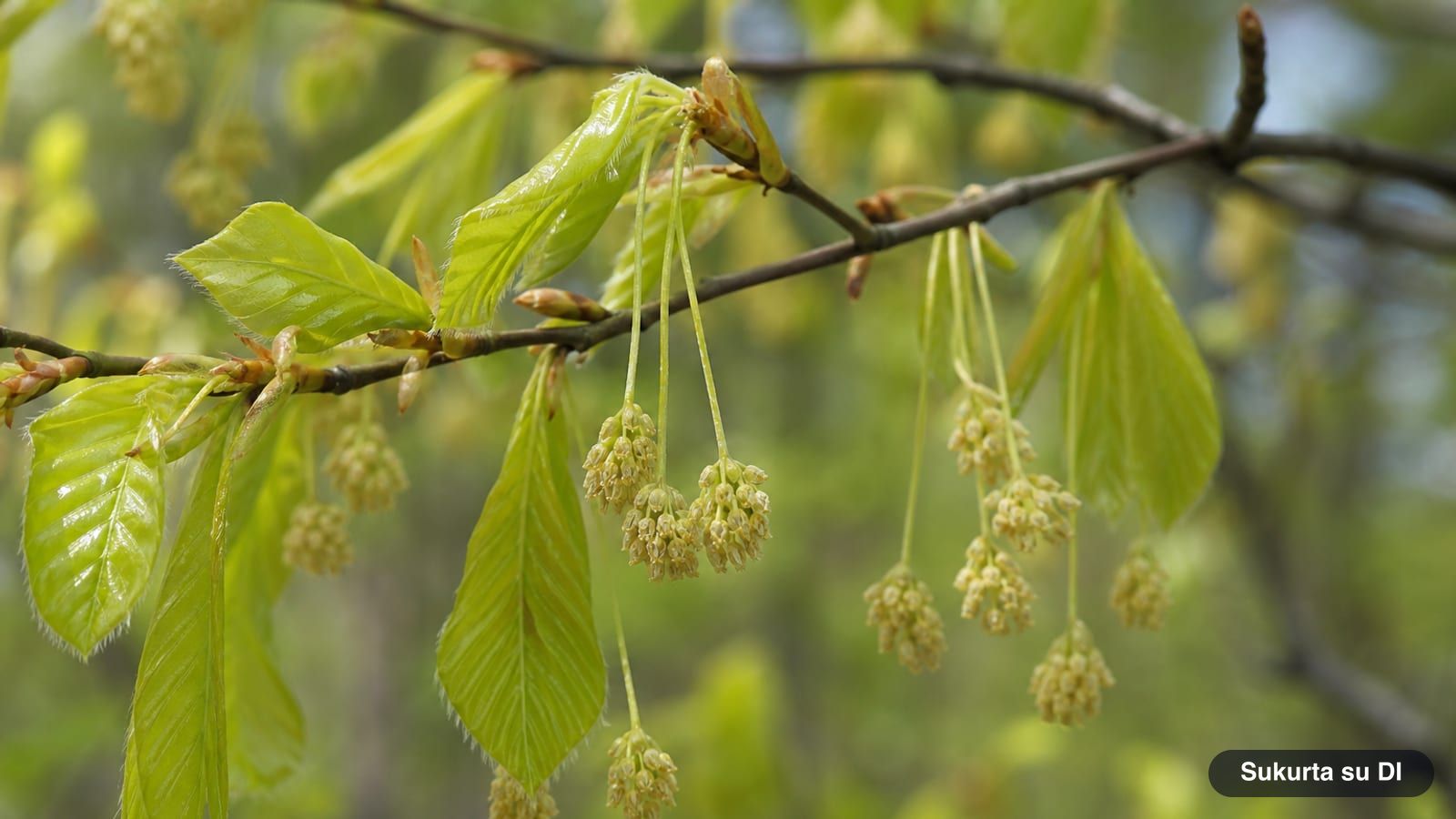
The beech is a monoecious, wind-pollinated tree. It blooms in mid-spring, just as the leaves begin to unfurl. The male flowers are clustered into round, yellowish-brown catkins about 0.4 inches (1 cm) across, dangling on long stalks. The female flowers are green, appearing in pairs or threes at the tips of young shoots on short, hairy stalks. A beech tree only begins to flower and produce seed when it reaches maturity—usually around 30 to 40 years of age, and often much later if growing in a dense forest.
Nuts
The fruits of the beech are three-sided, shiny, chestnut-brown nuts about 0.6 inches (1.5 cm) long. They sit in pairs or more inside a woody husk (cupule) that is 0.8–1 inch (2–2.5 cm) long, felt-like, and covered in soft prickles. In early to mid-autumn, the husk splits open into four lobes, releasing the nuts—especially after the first frosts. There are roughly 1,800 nuts per pound (about 4,000 per kg). Beech trees do not produce heavy crops every year; instead, they have "mast years" every 3 to 5 years, dropping an abundance of nuts that provide a vital food source for woodland wildlife.
Bark and buds
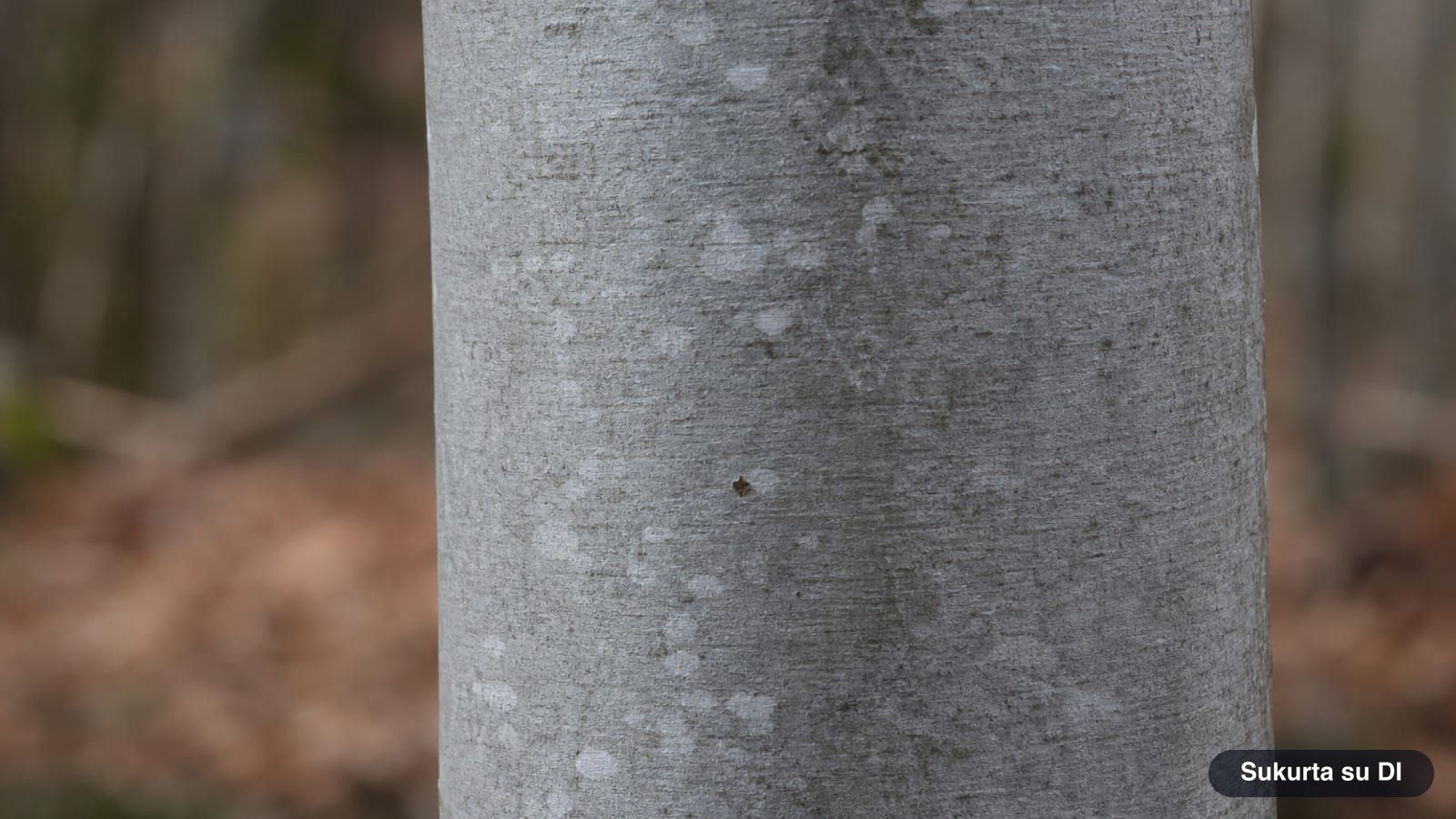
The bark of the beech is perhaps its most easily recognized feature: it is thin, remarkably smooth, and silvery-gray, remaining free of deep fissures even on ancient trees. The twigs are slender, zigzagging, and dark reddish-brown. The buds are highly distinctive: long (0.6–1.2 inches or 1.5–3 cm), slender, spindle-shaped, sharply pointed, light brown, and covered in many overlapping scales. They stick out prominently from the twig, resembling small cigars or spear tips. During winter, the lower branches of young beeches often hold onto their dry, light-brown leaves.
Beech, hornbeam, or copper beech?
| Feature | European Beech | Common Hornbeam | Copper Beech |
|---|---|---|---|
| Bark | Smooth, silvery-gray, without fissures | Gray, fluted with a "muscular" look | Same as European beech |
| Leaves | Glossy, smooth or wavy ciliate edges | Doubly serrated, deeply corrugated | Purple, may fade to dark greenish in mid-summer |
| Buds | 0.6–1.2 inches (1.5–3 cm), pointed, sticking out | Up to 0.4 inches (1 cm), pressed to twig | Same as European beech |
| Fruit | Triangular nuts in a spiky husk | Small nutlet attached to a 3-lobed leafy bract | Same as European beech |
Because of its smooth gray bark, the beech is frequently confused with the hornbeam; you can read more about the differences in our hornbeam guide. The beech family also includes oaks and sweet chestnuts, but it is entirely unrelated to the horse chestnut.
Copper beech (or purple beech) is not a separate species, but a natural mutation of the European beech. It was first recorded in 1690 in a forest near Sondershausen in Thuringia, Germany, and it is believed that about 99% of all copper beeches in the world are descended from this single tree. Various other ornamental forms are also cultivated for parks, such as the narrow, columnar 'Dawyck' beech.
Global Distribution and Cultivation
The European beech is native to a vast expanse of Central and Western Europe, with a natural range stretching from southern Sweden down to Sicily, and from France eastward to the Caucasus Mountains. Fossil records show that beech pollen was widespread during interglacial periods, and today it remains one of the dominant broadleaf trees in European temperate forests. It thrives best in regions with a mild, humid maritime climate, often forming the primary canopy layer in mixed woodlands alongside oaks and pines.
Beyond its native range, the beech has been widely planted in large estate parks, botanical gardens, and mature woodlands across North America, New Zealand, and other temperate regions. In ideal conditions, these trees can grow to massive proportions. Many historic estates boast centuries-old beeches that are protected as natural heritage trees. While they can suffer frost damage in areas with exceptionally harsh winters, trees grown from seed sourced in colder microclimates have proven to be quite cold-resilient.
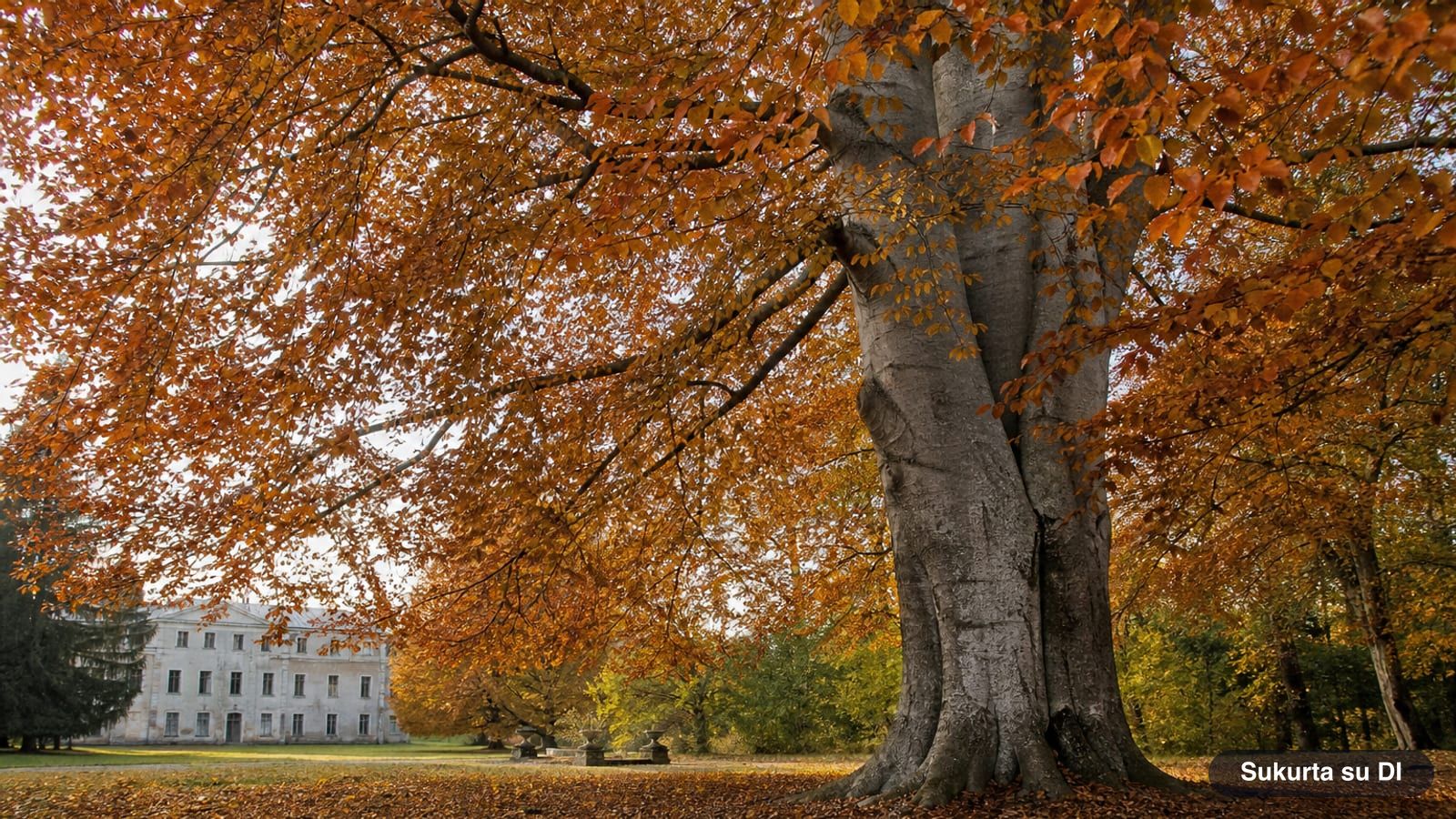
As global temperatures shift, the optimal growing zones for the European beech may gradually move further north or to higher elevations—a topic we explore further in the climate change section of our tree guide.
Beech Hedges
The beech makes an outstanding hedge plant. It responds exceptionally well to pruning and tolerates shade beautifully. Crucially, young beeches and those that are regularly clipped do not drop their leaves in autumn. Instead, the leaves dry out, turn a warm russet-brown, and remain firmly attached to the branches all winter long until new buds push them off in the spring. This phenomenon is known as marcescence. Because of this, a beech hedge, much like a hornbeam hedge, provides an excellent year-round screen against wind and prying eyes. In regions with extremely harsh winters, gardeners sometimes opt for the slightly hardier hornbeam, but beech remains the premier choice for hedges in milder temperate zones.
Wood and Uses
Beech wood is heavy, hard, straight-grained, and highly resistant to bending, making it a popular choice for furniture making, cabinetry, and various turned objects. In older trees, the center of the trunk sometimes develops dark, reddish-brown patterns (known as "red heart"); while historically considered a defect, this unique grain is now often highly prized by woodworkers. Beech wood is also used to craft drum shells, offering a tone that is distinct from maple or birch. However, the wood rots quickly if left outdoors untreated. As firewood, beech is superb—it splits easily and burns with a bright, even, and long-lasting flame. Additionally, beechwood chips are famously used in the brewing process of certain beers to impart a distinctive flavor and aid in aging.
Beech Nuts and Name Origin
Beech nuts are technically edible, but they contain tannins and mildly toxic compounds, meaning that eating large quantities of raw nuts can cause stomach upset. Historically, the nuts were gathered and pressed to extract a high-quality edible oil, which is perfectly safe and free of toxins, though gathering enough nuts for oil production is incredibly labor-intensive.
The English word beech comes from the Old English bēce, which shares an ancient Indo-European root with the word book (as well as the German Buch and Buche). It is widely believed that early runic writings were carved onto beech wood tablets or pieces of beech bark. With its distinctive cigar-shaped buds, the beech remains one of the easiest trees to identify in winter.
Frequently asked questions
How do you identify a European beech?
Look for very smooth, thin, silvery-gray bark without fissures, glossy elliptical leaves with wavy, hairy margins, and long, pointed, cigar-shaped buds (up to 0.8–1.2 inches or 2–3 cm). In autumn, you will find spiky husks containing triangular nuts beneath the tree.
Are beech nuts edible?
Beech nuts are edible but should be consumed in moderation. They contain tannins and mildly toxic compounds, so eating many raw nuts (around 50) can cause stomach upset. The oil pressed from them is safe and was historically used for cooking in Europe.
Where does the European beech grow naturally?
The European beech is native to a large part of Europe, from southern Sweden down to central Italy, and from France eastward to the Caucasus. It has also been widely introduced to other temperate regions, including parts of North America and New Zealand, where it is planted as an ornamental shade tree.
What is the difference between a beech and a hornbeam?
Both have smooth gray bark, but a beech trunk is perfectly round and smooth, while a hornbeam trunk is fluted and looks muscular. Beech leaves are smooth-edged or wavy, glossy, and ciliate, whereas hornbeam leaves are doubly serrated and corrugated. Beech buds are long (up to 1.2 inches or 3 cm) and stick out, while hornbeam buds are shorter and press against the twig.
Why is a beech hedge brown in winter?
Young beeches and those regularly pruned into hedges do not drop their leaves in autumn. Instead, the leaves dry out, turn brown, and remain attached to the branches until spring, when new buds push them off. This makes a beech hedge an excellent winter screen.
How long does a beech tree live?
European beeches typically live for 200 to 300 years, though some can live longer. In rare cases, such as certain ancient specimens in Italy, they have been known to reach around 500 years of age.
Log in to comment
No comments yet. Be the first.