Small-Leaved Linden (Lime Tree): Leaves, Flowers & Fruits
- The small-leaved linden (Tilia cordata) is a widespread broadleaf tree native to Europe and western Asia.
- Leaves are heart-shaped, 1.5–3 inches (4–8 cm) long, finely serrated, with rusty-brown hair tufts in the vein axils underneath.
- Blooms in early to midsummer: clusters of 3–10 fragrant flowers hang from a long, narrow, pale green bract.
- Typically lives 500–600 years, sometimes up to 1,000; a single mature tree produces tens of thousands of flowers per summer.
- Linden blossoms are classified in the EU herbal monograph as a traditional herbal medicine for relieving cold symptoms.
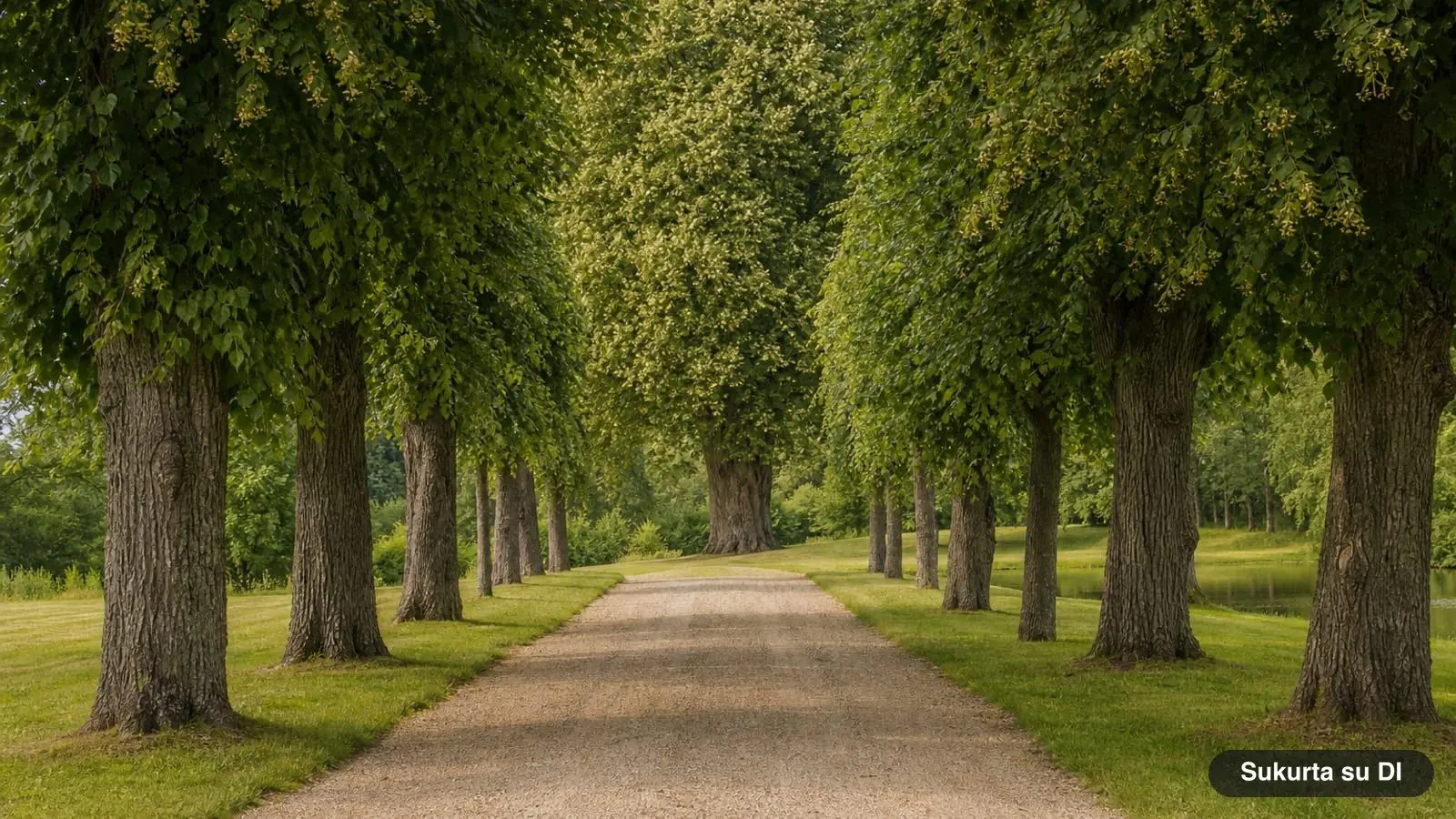
This article is part of the 77.today trees guide, prepared by the 77.today editors from the sources listed at the end.
The linden (also known as the lime tree or basswood) is a tree whose sweet fragrance is instantly recognizable. In midsummer, avenues of blooming lindens hum with bees, and linden blossom tea is a staple in many homes. In this part of our tree identification guide, we explore the small-leaved linden (Tilia cordata): how to identify its leaves, flowers, fruits, bark, and buds, how it differs from the large-leaved linden often planted in parks, where it grows, and how it is used.
| Latin name | Tilia cordata |
|---|---|
| Family | Mallow family (Malvaceae) |
| Group | Deciduous broadleaf, native to Europe and western Asia |
| Height | Usually 80–100 ft (24–30 m), sometimes up to 125 ft (38 m) |
| Lifespan | 500–600 years, sometimes up to 1,000 |
| Blooms | Early to midsummer |
| Fruits | Nutlets, maturing in late summer to early autumn, persisting into winter |
| Habitat | Mixed forests, roadsides, parks, estates |
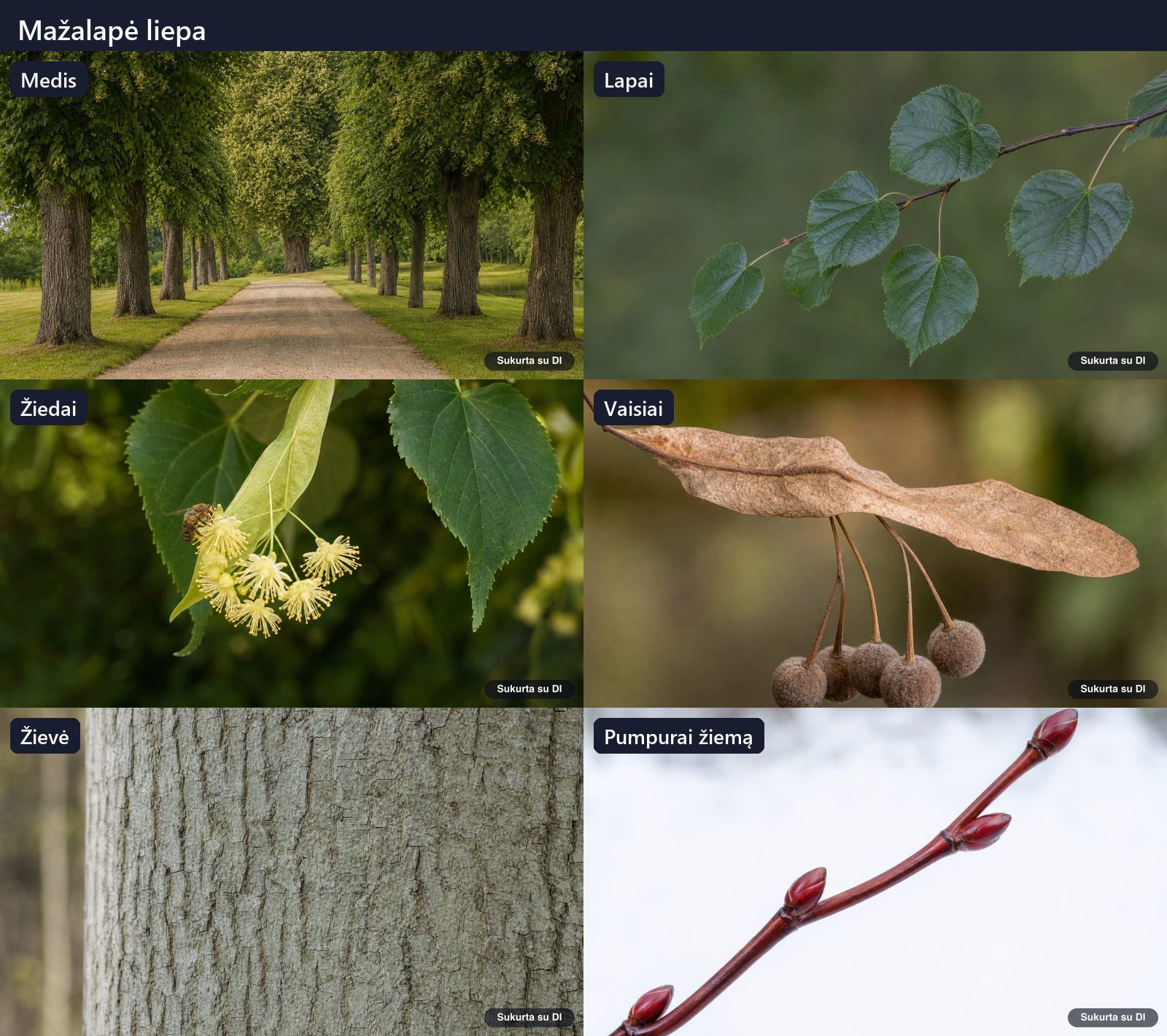
How to Identify the Small-Leaved Linden
The linden grows into a tall tree with a dense, ovate or broadly conical canopy. The trunk is usually single, but old trees often have multiple trunks because the linden regenerates very well from stumps and roots. In forests, it grows alongside oaks, maples, ashes, and spruces. It is most frequently seen along roadsides, in estate parks, and on city streets—it tolerates dust and urban pollution well. It is cold-hardy to about −30°F (−34°C), USDA zones 3–7.
Leaves
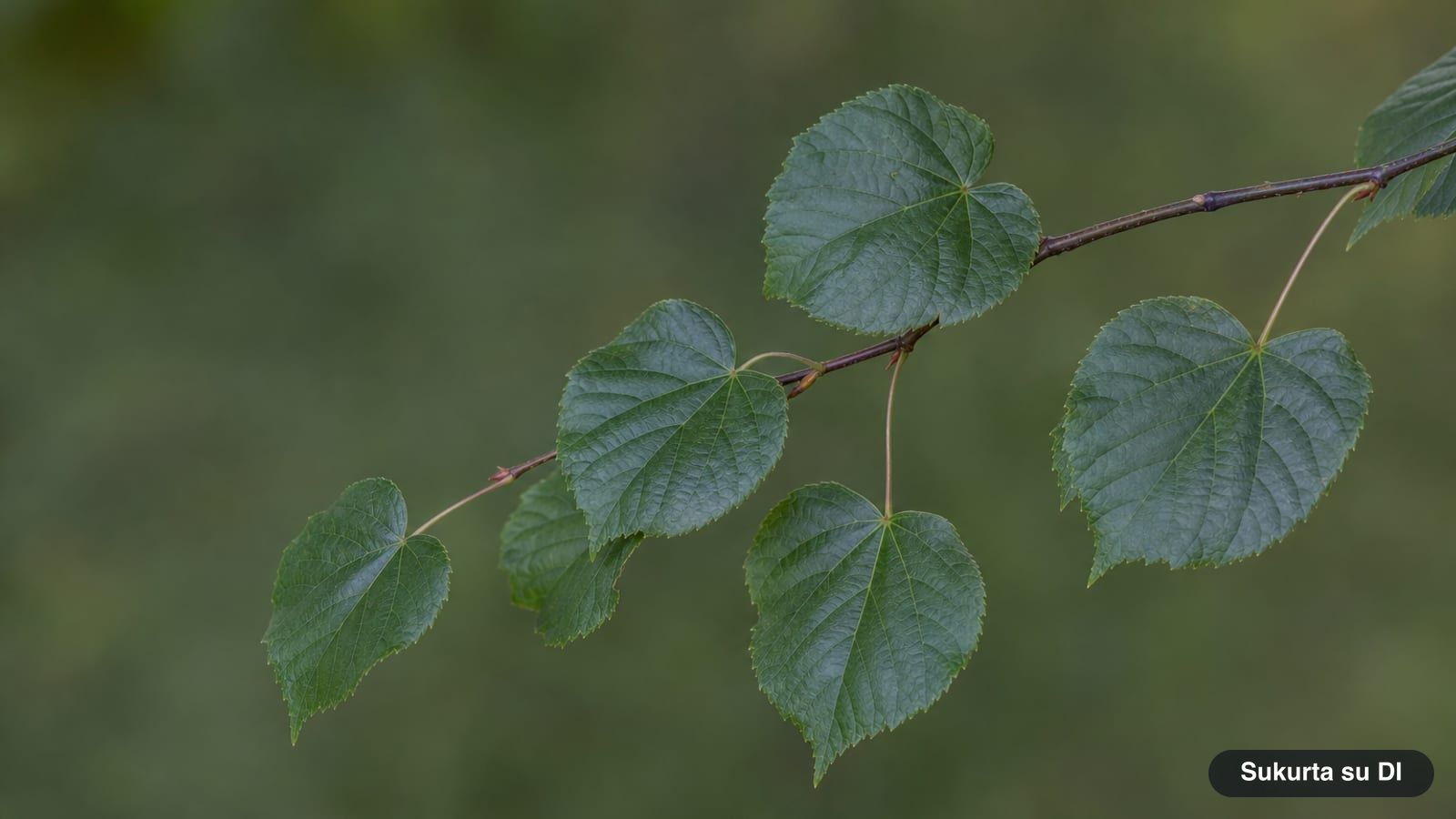
The leaves of the small-leaved linden are heart-shaped, 1.5–3 inches (4–8 cm) long, with a short pointed tip and a finely serrated edge. The base of the leaf is often asymmetrical—one side dips lower than the other. The upper side is dark green and glossy, while the underside is paler, bluish-green, with tufts of rusty-brown hairs visible in the vein axils. These hair tufts help distinguish the small-leaved linden from the large-leaved linden. The leaves are arranged alternately in two rows on slightly zigzagging twigs.
Flowers
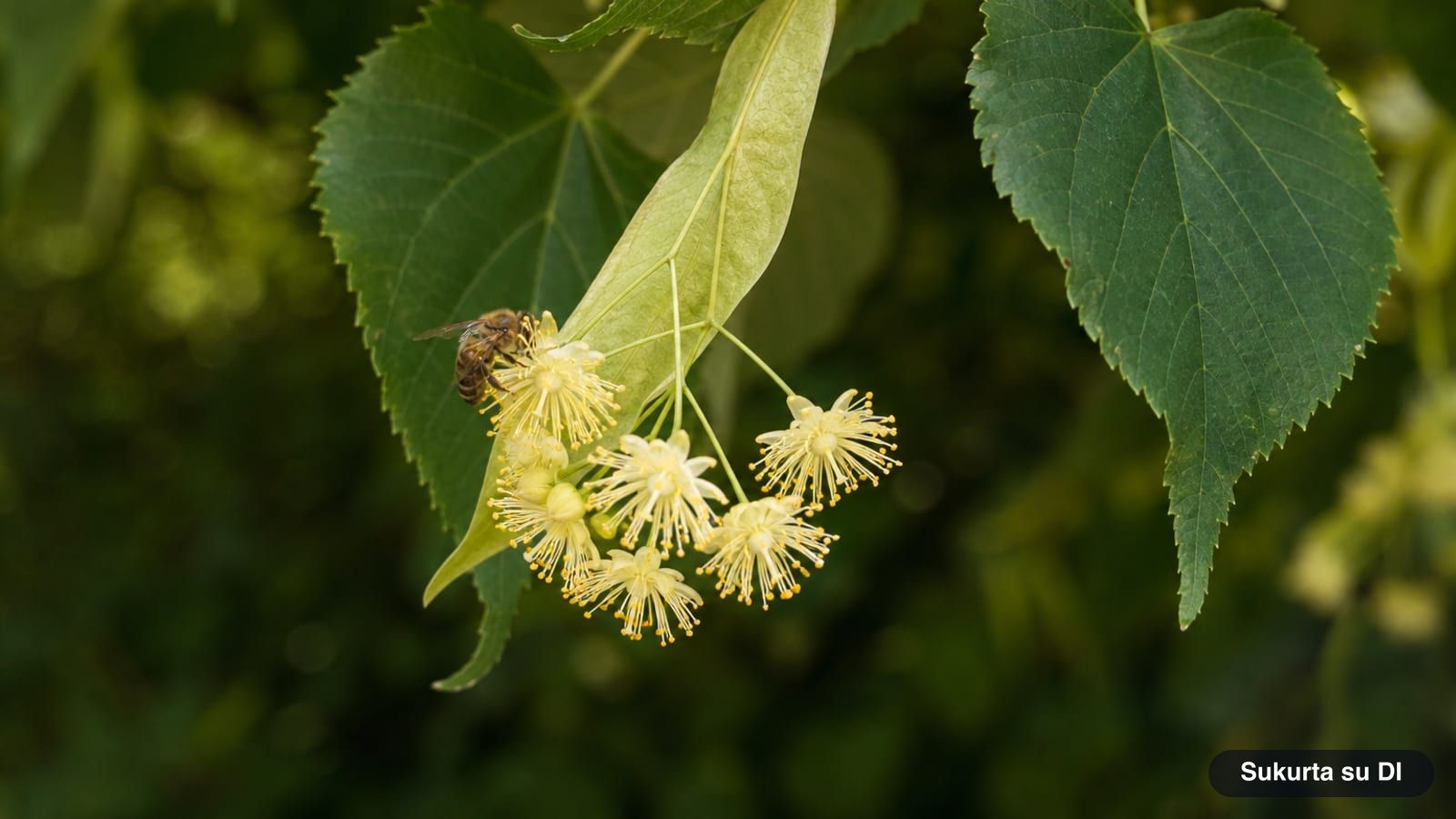
The linden begins blooming at about 20 years of age and flowers profusely every year thereafter. The flowers are small, about 0.4 inches (1 cm) across, yellowish-white, very fragrant, and packed with numerous stamens. They are clustered in drooping cymes of 3–10 flowers, and the stalk of each cluster is attached halfway along a long, narrow, yellowish-green bract. This leafy "tongue" is one of the linden's most distinctive features. A single mature tree produces tens of thousands of flowers per season, making it a crucial nectar source: linden honey is light and highly aromatic.
Fruits
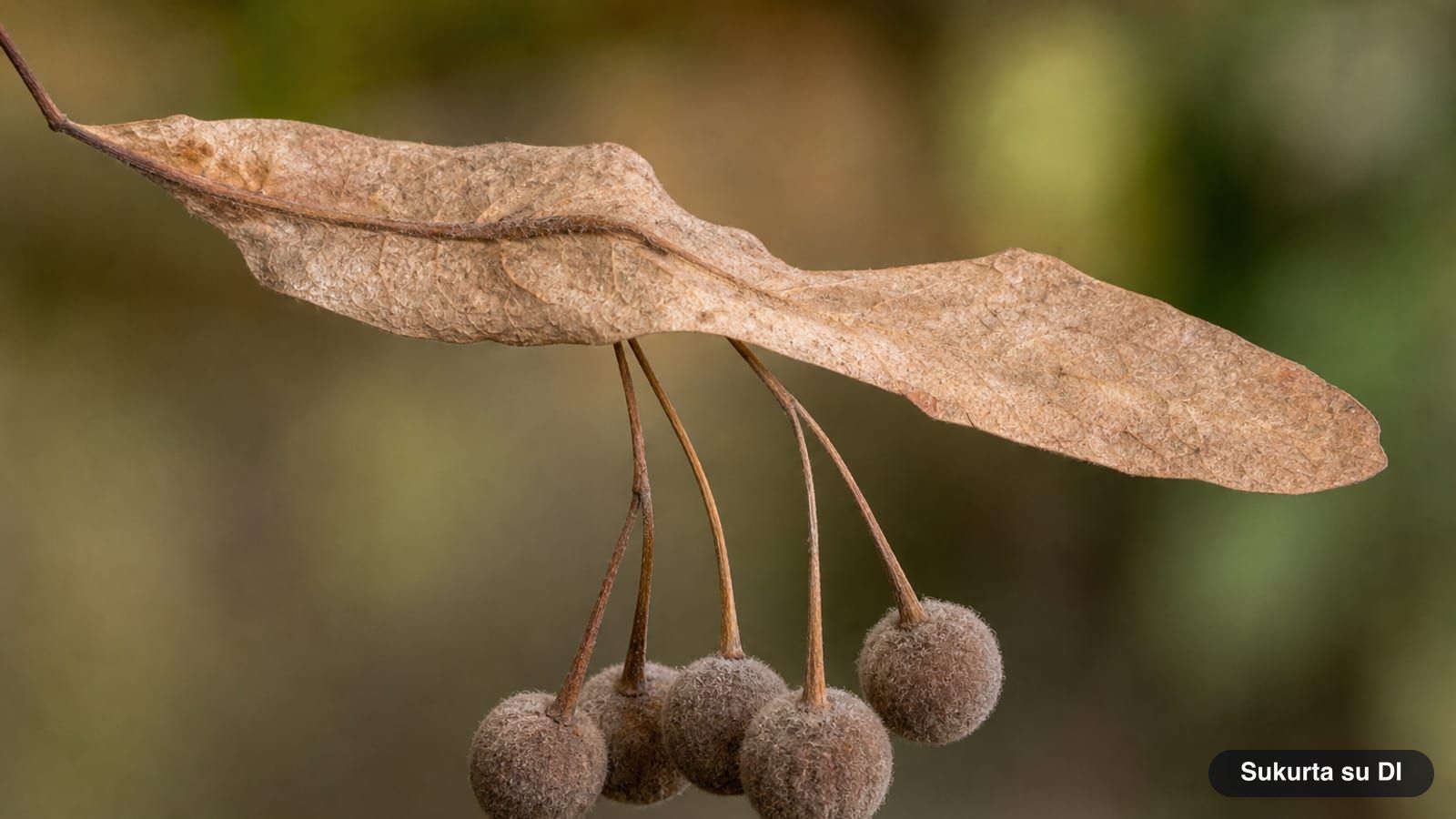
The flowers develop into round nutlets, 0.15–0.3 inches (4–8 mm) across, faintly ribbed at the top, and covered in short grayish hairs. Inside are one or two seeds. The fruits form in late summer, ripen fully in autumn, and remain on the tree for a long time. In winter, the wind tears off the entire fruit cluster along with the bract, which acts as a wing, spinning like a helicopter to carry the seeds away from the tree.
Bark and Buds
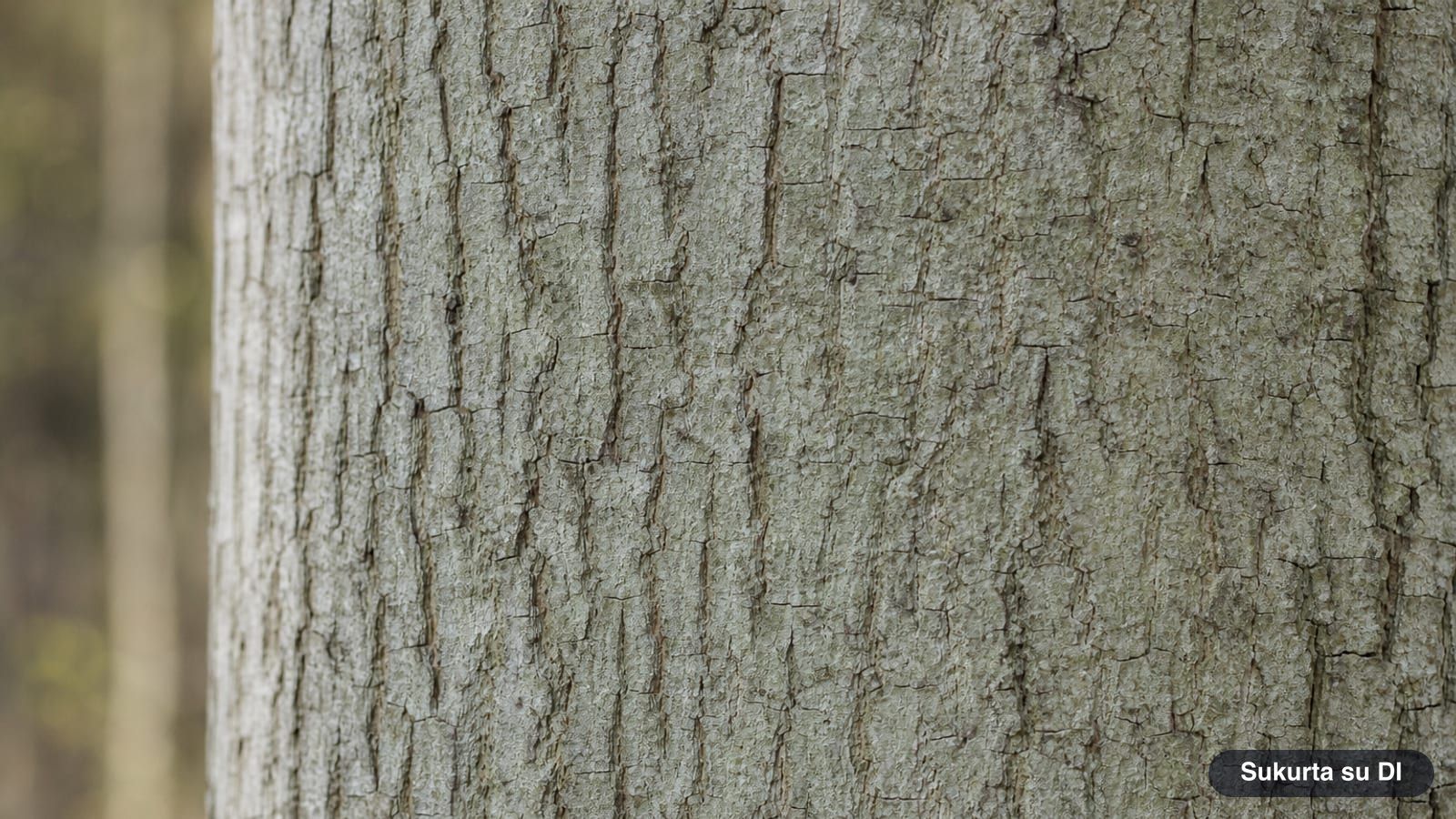
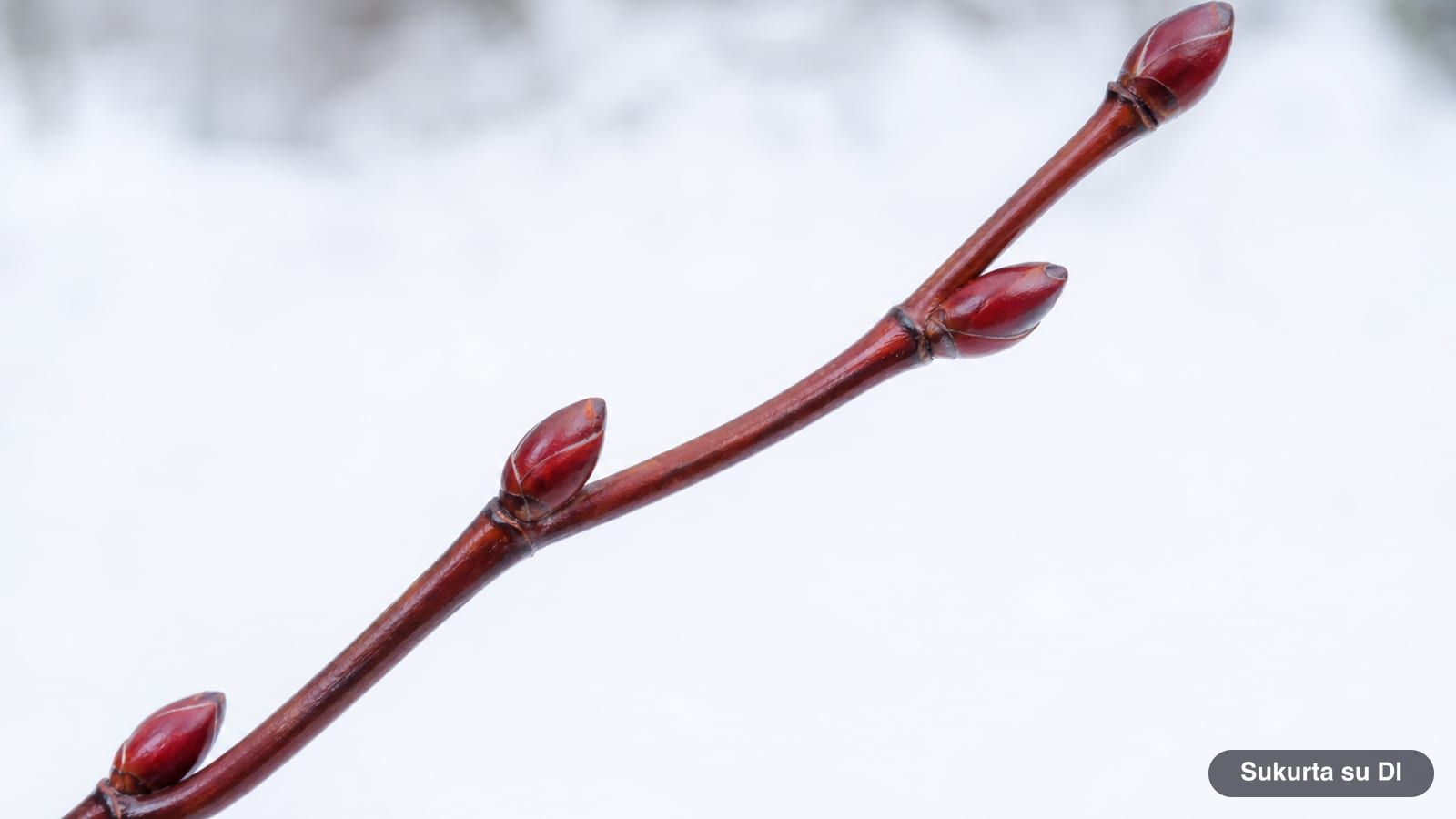
The bark of young lindens is smooth and gray; on older trees, it becomes dark gray with narrow longitudinal fissures and flat ridges that form a fine network. Beneath it lies the bast—a strong, fibrous inner bark. The buds are egg-shaped, glossy, pinkish or red, with only 2–3 scales visible. Along with the zigzagging twigs, these buds make the linden easy to identify even in winter.
Small-Leaved vs. Large-Leaved Linden
While the small-leaved linden (Tilia cordata) is native to much of Europe, the large-leaved linden (Tilia platyphyllos) is also widely planted in parks and streets, along with their natural hybrid, the common linden (Tilia x europaea), and other species like the silver linden. The first two are the most commonly confused.
| Feature | Small-Leaved Linden | Large-Leaved Linden |
|---|---|---|
| Leaf size | 1.5–3 inches (4–8 cm) | 2.5–3.5 inches (6–9 cm), sometimes up to 6 inches (15 cm) |
| Leaf underside | Bluish-green, rusty hairs only in vein axils | Whitish hairs over the entire surface |
| Flowers per cluster | 3–10 | Usually 3–4 |
| Nutlets | Faintly ribbed, thin shell | Prominently ribbed, hard shell |
| Origin | Native to most of Europe and western Asia | Native to central and southern Europe |
As the climate warms, botanists predict that species like the large-leaved and common linden may begin to spread naturally further north into cooler temperate zones.
Linden Blossoms
The flower clusters with their attached bracts are commonly known as linden blossoms. They are harvested on a dry day when about half of the flowers have opened, and dried in the shade in a well-ventilated area. It is best to collect them far from busy roads and industrial areas. In the European Medicines Agency's herbal monograph, linden blossoms (Tiliae flos) are classified as a traditional herbal medicine used to relieve cold symptoms and mild symptoms of mental stress. "Traditional" means the use is based on long-standing experience rather than clinical trials, so a doctor should be consulted for prolonged illness or high fever.
Linden Timber and Bast
Linden wood is soft, light, white, and has an even grain—making it a favorite among woodcarvers. It is used to carve religious sculptures, toys, spoons, tubs, and other household items. Historically, the bast (inner bark) was woven into shoes, ropes, and baskets, and in some regions, it was even woven into coarse fabrics. Linden charcoal was traditionally used by artists for drawing.
Famous and Historic Lindens
Lindens are known for their remarkable longevity and ability to survive for centuries. One of the most famous examples is the Najevnik linden in Slovenia, estimated to be over 700 years old and serving as a national cultural symbol. In the UK, the Westonbirt Arboretum is home to ancient coppiced lindens that date back centuries. Another historic specimen is the "Linden of Linn" in Switzerland, a massive tree under which justice was historically dispensed. Because the tree easily hollows out and regenerates from its roots, dating ancient lindens exactly is notoriously difficult, but many historic estates and village squares across Europe boast specimens that are 500 to 1,000 years old. For more on ancient trees, see our section on the oldest and largest trees.
The Linden in Culture and Folklore
In European folklore, the linden is one of the most revered trees. While the oak was often associated with male deities of thunder and war, the linden was traditionally linked to female deities of love, fertility, and peace, such as the Germanic goddess Freyja. In many Central and Eastern European cultures, the village linden tree was the center of community life, where markets were held, festivals were celebrated, and judicial courts convened. The tree's soft, workable wood also made it the primary material for carving religious altarpieces and saintly figures during the Middle Ages. The name of the month of July in several Slavic and Baltic languages is directly named after the blooming of the linden tree.
The Linden in Gardens and Streets
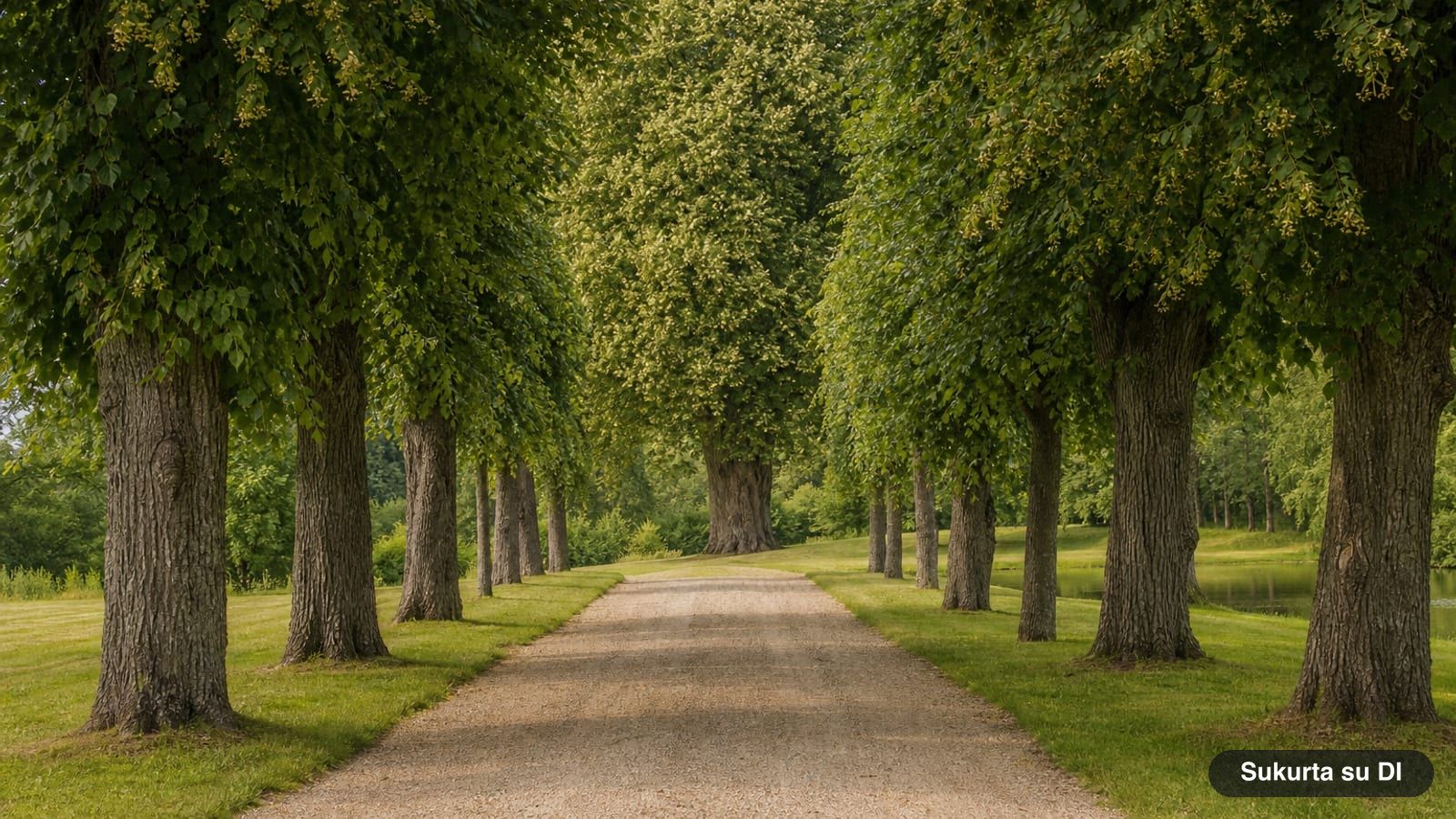
The small-leaved linden grows best in fertile, moist, well-draining loamy or sandy loam soils. It tolerates shade and responds very well to pruning, making it excellent for avenues, tall hedges, and pollarding or pleaching. Because it is long-lived and grows quite large, it requires plenty of space in a landscape. In summer, cars parked under lindens often become coated in a sticky layer—this is not tree sap, but honeydew excreted by aphids feeding on the leaves. Beekeepers often place hives near linden groves to harvest the light, highly fragrant linden honey.
Frequently asked questions
How do you identify a linden tree?
Look for heart-shaped leaves with an asymmetrical base and finely serrated edges, and fragrant yellowish-white flower clusters hanging from a long, narrow bract. It also produces round, grayish nutlets that remain attached to the bract into winter. In winter, the linden is identifiable by its slightly zigzagging twigs and glossy red buds.
When does the linden tree bloom?
In cool northern climates, the small-leaved linden typically blooms in early to midsummer. The large-leaved linden usually begins to flower a couple of weeks earlier.
When should linden blossoms be harvested?
Harvest them on a dry day when about half of the flowers in the cluster have opened. Pick the entire flower cluster along with the attached bract, and dry them in the shade in a well-ventilated area. Avoid collecting blossoms near busy roads or industrial sites.
What is the difference between the small-leaved and large-leaved linden?
The large-leaved linden has larger leaves, typically 2.5–3.5 inches (6–9 cm) and sometimes up to 6 inches (15 cm), that are covered in whitish hairs underneath, fewer flowers per cluster (usually 3–4), and prominently ribbed, hard nutlets. The small-leaved linden has smaller leaves that are bluish-green underneath with hairs only in the vein axils, and 3–10 flowers per cluster.
How long does a linden tree live?
The small-leaved linden typically lives for 500 to 600 years, and occasionally up to 1,000 years. It regenerates very well from the stump and roots, which is why ancient trees often have multiple trunks.
What is linden wood used for?
Linden wood (often called basswood) is soft, light, white, and has an even, fine grain, making it a favorite material for woodcarvers. It is used to carve sculptures, toys, spoons, and household items. Historically, the inner bark (bast) was woven into shoes, ropes, and baskets.
Log in to comment
No comments yet. Be the first.