Tree Seeds and Fruits: Acorns, Samaras, Cones and Growing Trees
- Trees spread their seeds by wind (samaras, winged seeds, fluff), animals (acorns, nuts, berries), and water.
- Most deciduous tree seeds ripen in early to mid-autumn, but birches, willows, and poplars ripen in summer.
- Pine seeds mature in the cone for a year and a half, while spruce seeds take one year.
- Many tree seeds need to overwinter in a cool, moist place before sowing—a process called cold stratification.
- Horse chestnuts and yew seeds are poisonous, acorns are inedible without processing, and hazelnuts are among the few wild nuts you can eat straight from the bush.
This article is part of the 77.today trees guide, prepared by the 77.today editors from the sources listed at the end.
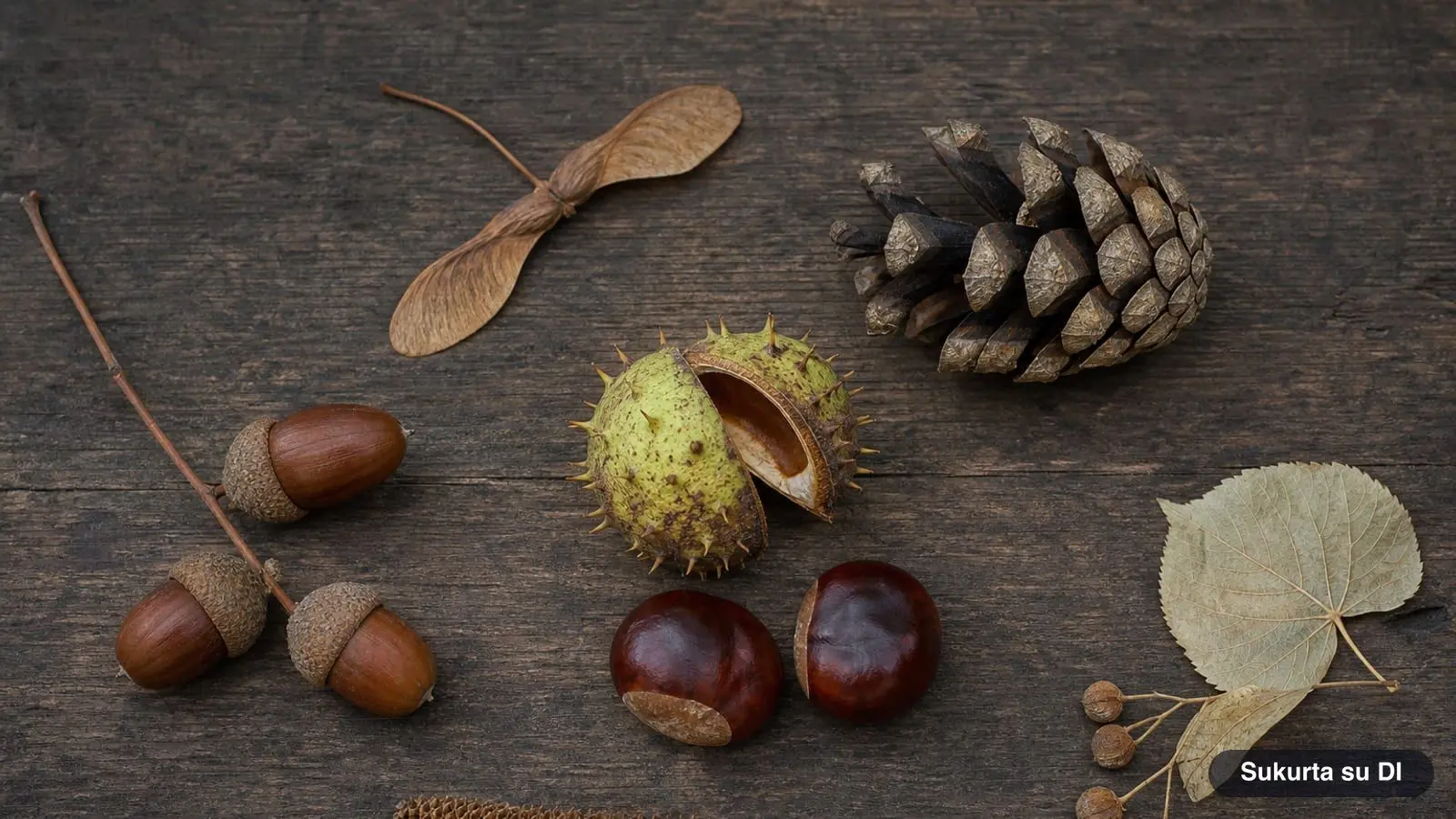
Every tree starts from a seed, and each tree species has its own way of sending that seed into the world. Some trees rely on the wind and equip their seeds with wings, while others grow tasty fruits and "hire" birds and animals. In this part of the tree guide, we explore tree seeds and fruits: how to identify them, when they ripen, which are edible, which are poisonous, and how to grow a tree from seed.
Fruit and Seed: What is the Difference?
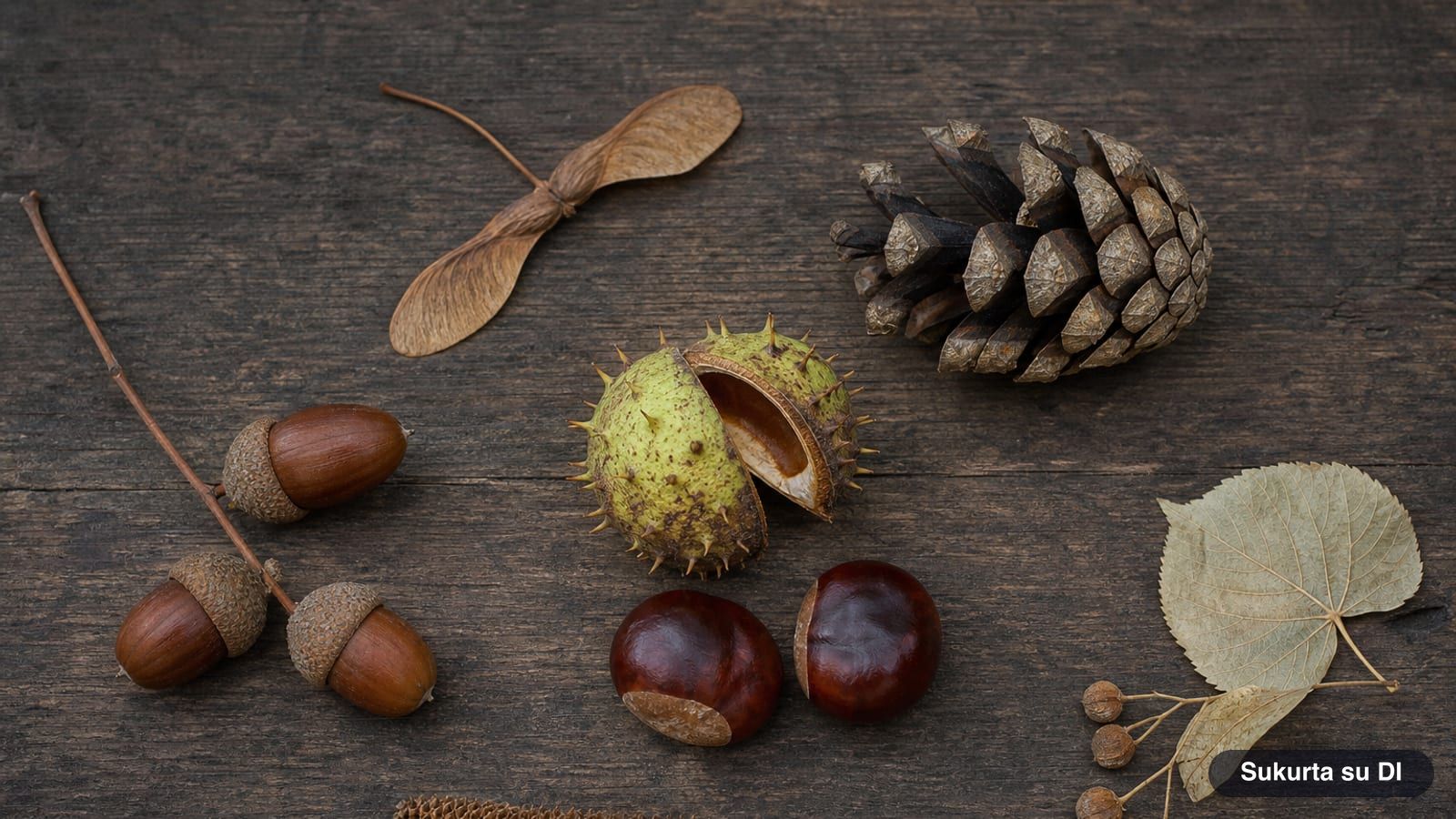
In botany, a seed is an embryo with food reserves and a protective seed coat, from which a new plant grows. A fruit develops from the ovary of a pollinated flower and encloses the seed or seeds. Deciduous trees, which are angiosperms, mature their seeds inside fruits: an acorn, a nut, a samara, or a pome. Conifers are gymnosperms: their seeds lie openly on the scales of a cone, and they do not have true fruits. In everyday language, "seed" and "fruit" are often confused, but when identifying trees, this distinction helps explain why a cone and an acorn look so different.
Wind-Dispersed Seeds
Lightweight seeds with wings or hairs can fly dozens or hundreds of feet from the parent tree. Trees produce these seeds in massive numbers because most of them land in unsuitable places.
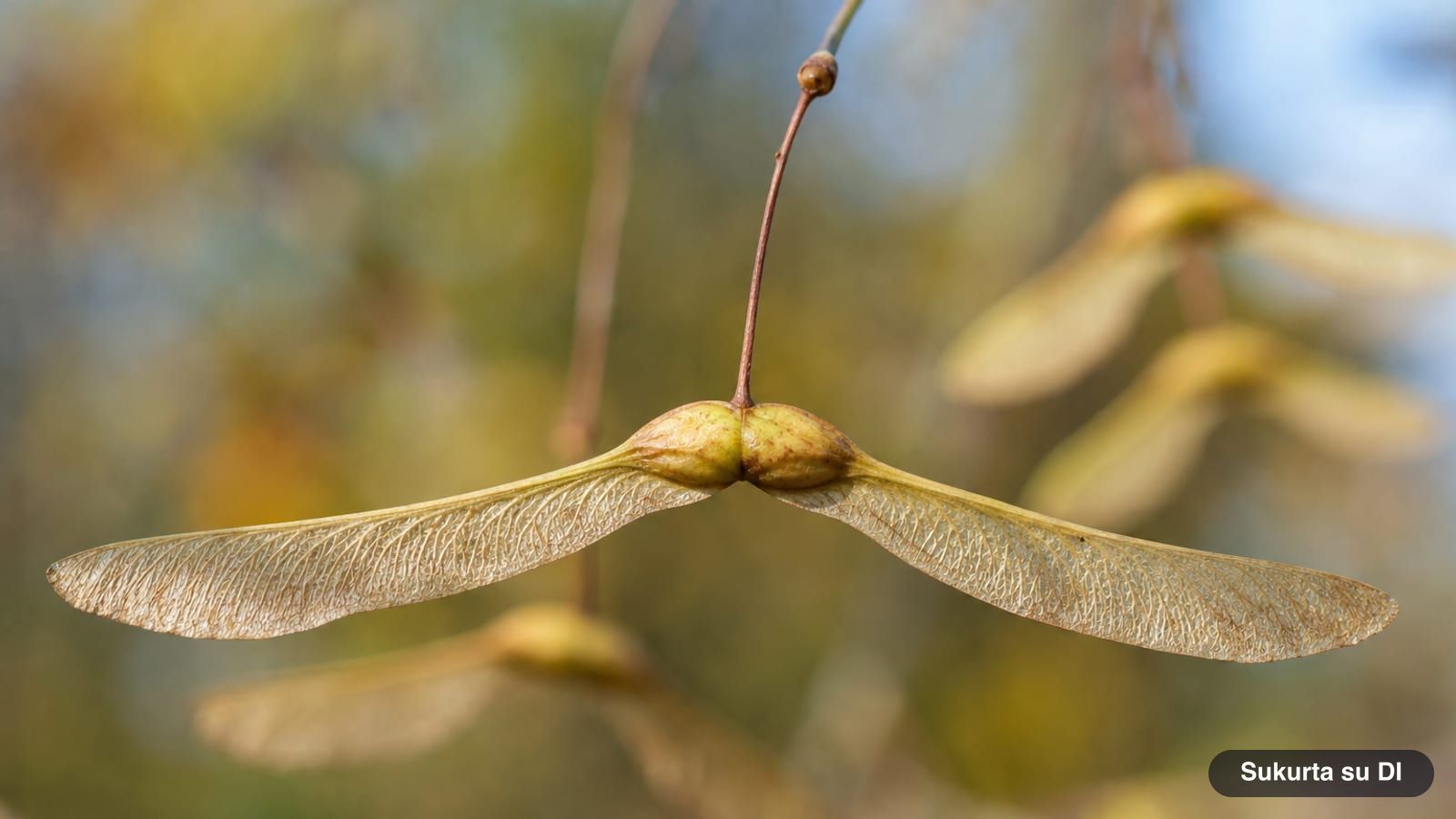
- Samaras. Maple fruits are paired—two seeds with long wings that spin like helicopter blades as they fall. Ash samaras are single, long, and narrow, hanging in clusters throughout the winter. Elm samaras are round and flat with the seed in the center—they ripen early, usually in late spring to early summer.
- Winged nutlets. A birch catkin shatters into hundreds of tiny nutlets with two transparent wings. Alder nutlets with narrow wings fall from small, woody, cone-like structures that stay on the tree all winter; they float well, so they are also dispersed by streams.
- Winged conifer seeds. Pine, spruce, and larch seeds have a membranous wing and fall from opened cones on dry days.
- Linden "helicopters". Linden (lime tree) nutlets hang from a long, narrow bract, which breaks off in winter along with the entire fruit cluster, spinning and carrying the seeds further away.
- Fluffy seeds. The tiny seeds of willows and poplars are covered in white hairs. In late spring to early summer, they take to the air like snow—this is the famous poplar fluff, which is only released by female trees.
Animal-Dispersed Seeds
Large, nutritious seeds cannot fly, so they are carried by animals. The tree "pays" with a portion of its harvest: some seeds are eaten, but others are hidden and forgotten.
- Acorns. Oak acorns are eaten by wild boars, deer, mice, and squirrels, while jays carry them for miles and hide them in the ground as reserves. Forgotten acorns sprout, which is why new oak saplings are often found far from mature oaks.
- Nuts. Hazelnuts are hidden by squirrels, mice, and nutcrackers, while the seeds of stone pines are dispersed by nutcrackers in their native ranges.
- Fleshy fruits. The pomes of rowan (mountain ash), bird cherry drupes, hawthorn fruits, juniper berry-like cones, and the red arils of yew are eaten by thrushes, waxwings, and bullfinches. The undigested seeds pass through the bird's digestive tract and are scattered with droppings—often at the base of fences, wires, and solitary trees where birds perch.
- Horse chestnuts. The seeds of the horse chestnut are dispersed by wild animals in their native range in the Balkans. In parks and gardens globally, they usually sprout where they fall, or where children carry them.
Cones
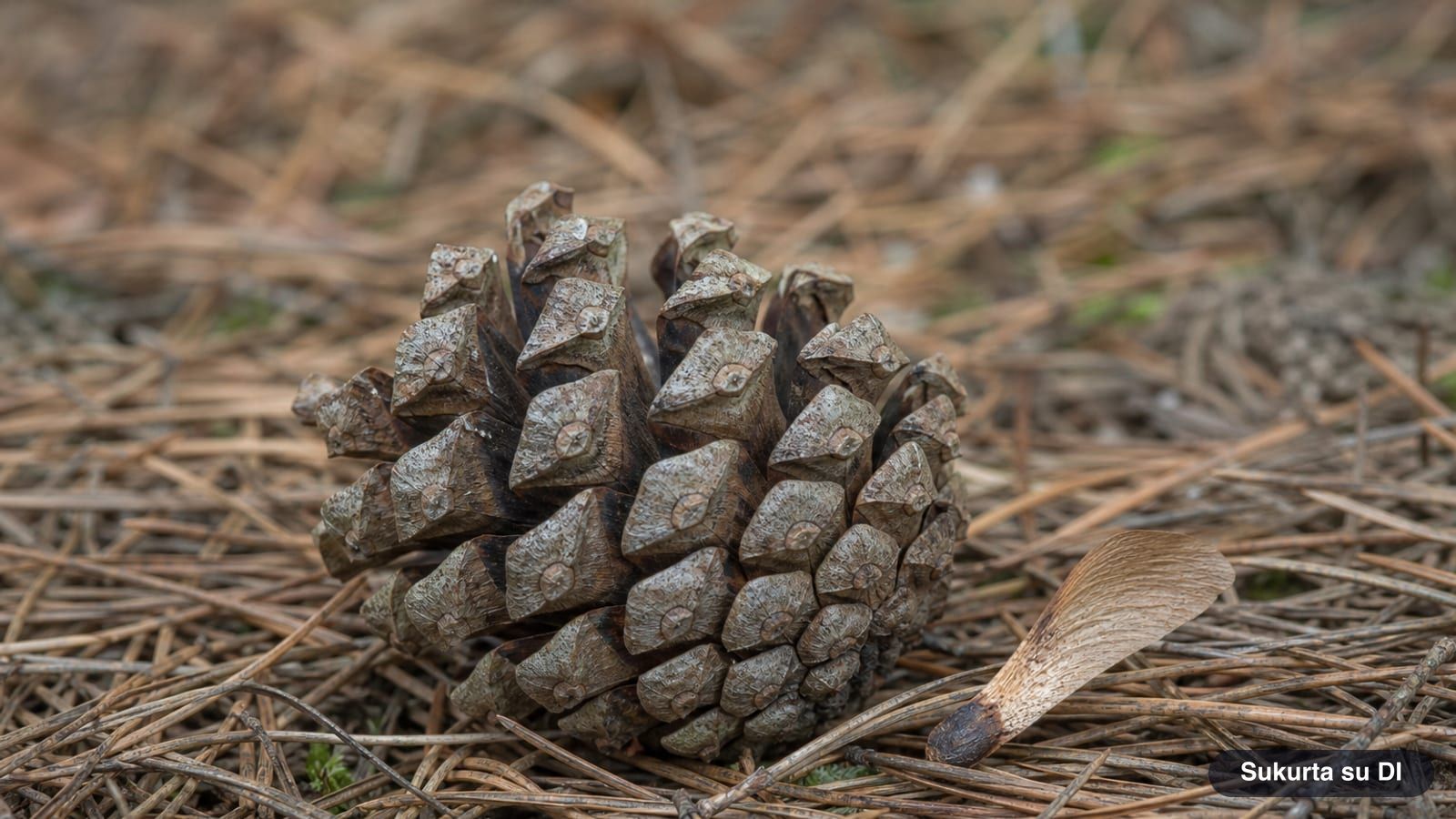
A cone is the reproductive organ of conifers. Male cones are small, produce pollen, and drop off quickly, while female cones become woody and eventually open to release seeds. Each species has its own distinct cones:
| Tree | Cone | When seeds ripen and fall |
|---|---|---|
| Scots pine | ovoid, grayish-brown, 1–2.8 inches (2.5–7 cm) | ripens in 17–18 months, falls the following spring |
| Norway spruce | long, cylindrical, 4–6 inches (10–15 cm), hanging | ripens in autumn of the same year, falls in winter–spring; the empty cone falls whole |
| European larch | small, 0.8–1.6 inches (2–4 cm), upright | ripens in autumn, empty cones remain on branches for several years |
| Common juniper | fleshy bluish-black "berry" | ripens in the second or third year |
| European yew | no cone: seed in a red fleshy aril | autumn, dispersed by birds |
Note: If you find gnawed, "stripped" cones under spruce trees in the forest, it is the work of squirrels. Pine cones wedged into the crevices of tree bark are a woodpecker's "anvil," where they extract the seeds. Cones are also damaged by the cone pyralid—a moth whose caterpillar feeds on the cone's axis and seeds.
When Tree Seeds Ripen
| Tree | Fruit / Seed | Ripens (Northern Hemisphere) |
|---|---|---|
| Willows, poplars, aspen | capsules with fluffy seeds | May–June |
| Elms | round samaras | May–June |
| Silver birch | winged nutlets | July |
| Downy birch | winged nutlets | August–September |
| Bird cherry | black drupes | July–August |
| Rowan (mountain ash) | orange-red pomes | August–September |
| Hazel | nuts in a leafy husk | August–September |
| Oak | acorns | September–October |
| Horse chestnut | spiky capsules with seeds | September–October |
| Maple | paired samaras | September–October |
| Ash | single samaras | September–October, remain in winter |
| Small-leaved linden | nutlets with a bract | September–October, remain in winter |
| Alder | nutlets in cone-like structures | October, fall throughout winter |
Why Seed Crops Are Heavy Some Years and Light in Others
Many trees bear fruit irregularly: abundant mast years are followed by several lean ones. For oaks, heavy crops repeat roughly every 4 to 5 years, and beeches and spruces behave similarly. One explanation is "predator satiation": during lean years, populations of mice and wild boars decrease, and when a massive acorn crop suddenly drops, the animals cannot eat them all, allowing some to sprout. Another reason is that a heavy harvest depletes the tree of nutrients, which it must then accumulate again. Abundant mast years are also visible in the lives of forest animals: they are often followed by population booms in mice, wild boars, and squirrels.
Which Tree Fruits Are Edible and Which Are Poisonous
- Hazelnuts – edible straight from the bush, ripening in late summer to early autumn.
- Acorns – raw acorns are bitter and inedible; historically, they were eaten only after removing the tannins and roasting them, for example, to make acorn coffee.
- Rowan (mountain ash) berries – raw berries are bitter and can irritate the digestive tract; they are only consumed after processing—boiled, frozen, or dried.
- Horse chestnut seeds – inedible and poisonous if unprocessed. The fruits of a different family—the sweet chestnut—are the ones that are edible.
- Yew seeds and needles – highly poisonous. The red, fleshy aril itself is not toxic, but the seed inside is poisonous, so children must never taste yew "berries."
- Stone pine seeds – edible, widely sold as "pine nuts."
How to Grow a Tree from Seed
- Collect healthy, ripe seeds – from the ground or the tree, free of holes and mold. It is worth checking acorns in water: those that float to the surface are usually empty or worm-eaten.
- Overwinter them. The seeds of many trees in cool climates only germinate after being exposed to cold and moisture—a process called cold stratification. The easiest method is to sow acorns, horse chestnuts, maple, and linden seeds in autumn directly outdoors or in a pot left outside. Another method is to keep the seeds in damp sand in the refrigerator for several months and sow them in spring.
- Sow shallowly – about twice the diameter of the seed, in loose, well-draining soil. For tiny birch or alder seeds, simply scatter them on the surface and press them down.
- Protect them from mice and birds—for example, with netting—and later protect the seedlings from deer and rabbits.
- Transplant to a permanent location after 1 to 3 years, while the roots are still small. Oaks and walnuts quickly grow a long taproot, so it is best to sow them directly where they will grow.
Read more about the fruits and seeds of each species in their dedicated guides: oak, pine, birch, linden (lime tree), maple, and horse chestnut.
Frequently asked questions
Which trees have samaras?
Maples, ashes, and elms produce samaras. Maple samaras are paired, ash samaras are single, long, and narrow, while elm samaras are round with the seed in the center. Birches and alders produce tiny nutlets with membranous wings.
When are tree seeds collected?
Seeds of most deciduous trees—acorns, horse chestnuts, maple and ash samaras, linden nutlets—are collected in early to mid-autumn. Birch seeds ripen in mid-to-late summer, willows and poplars in late spring to early summer, and pine and spruce cones are picked in winter before they open.
How do you grow a tree from seed?
Collect healthy, ripe seeds, overwinter most of them in a cool, moist place (outdoors, in a pot, or in damp sand in the fridge), and sow them shallowly in loose soil in spring. Acorns, horse chestnuts, and maple seeds are easiest to sow directly outdoors in autumn—winter will stratify them naturally.
Can you eat acorns?
Raw acorns are bitter and inedible due to tannins. Historically, they were eaten only after removing the tannins by soaking, boiling, and roasting, for example, to make acorn coffee. Acorns can be toxic to livestock, especially horses and cattle.
Why are there so many acorns or cones some years and almost none in others?
Many trees bear fruit irregularly: abundant seed years (mast years) are followed by leaner ones. Oaks produce heavily every 4–5 years. This masting behavior is thought to help trees survive—seed predators cannot adapt to a constant food supply, so in mast years, a portion of the seeds survives.
Which tree fruits are poisonous?
Among commonly grown trees, horse chestnut seeds and yew seeds and needles are poisonous (the red aril around the yew seed is not toxic, but the seed inside is). Raw rowan (mountain ash) berries are not recommended—they are bitter and irritate the digestive tract, so they are only consumed after processing.
Log in to comment
No comments yet. Be the first.