Elm Trees: How to Identify Leaves, Seeds, and Dutch Elm Disease
- Three common European elm species (Ulmus) include the wych elm, European white elm, and field elm.
- All elm leaves are alternate, double-toothed, and feature an asymmetrical base where one side meets the stem lower than the other.
- Elms bloom in early spring before the leaves emerge, and their round, winged seeds (samaras) ripen shortly after.
- Elms typically grow in river valleys, along lake slopes, and in mixed deciduous forests alongside oaks, lindens, and ashes.
- Dutch elm disease is a devastating fungal infection spread by bark beetles that destroyed millions of elms across Europe and North America in the 20th century.
This article is part of the 77.today trees guide, prepared by the 77.today editors from the sources listed at the end.
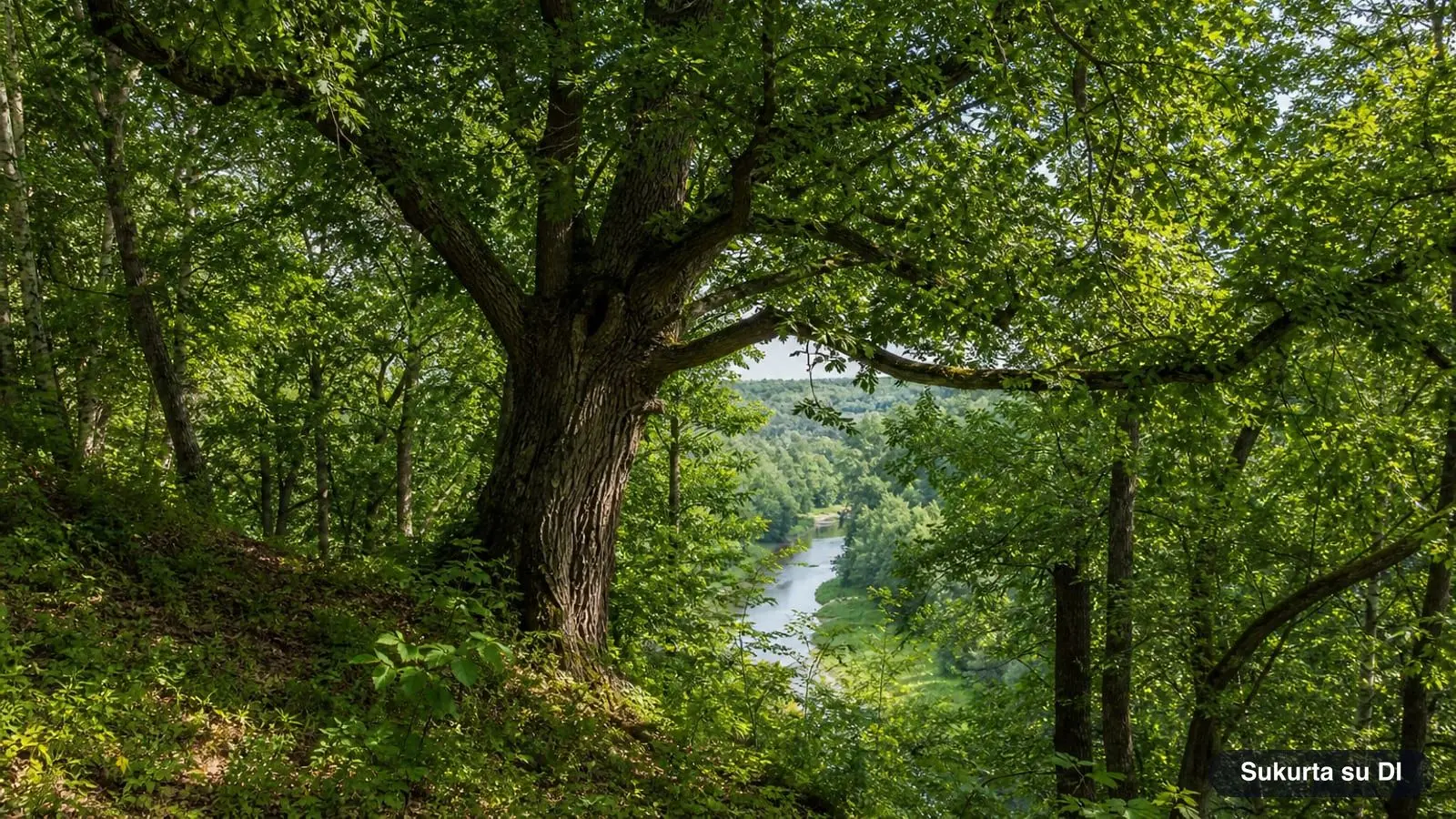
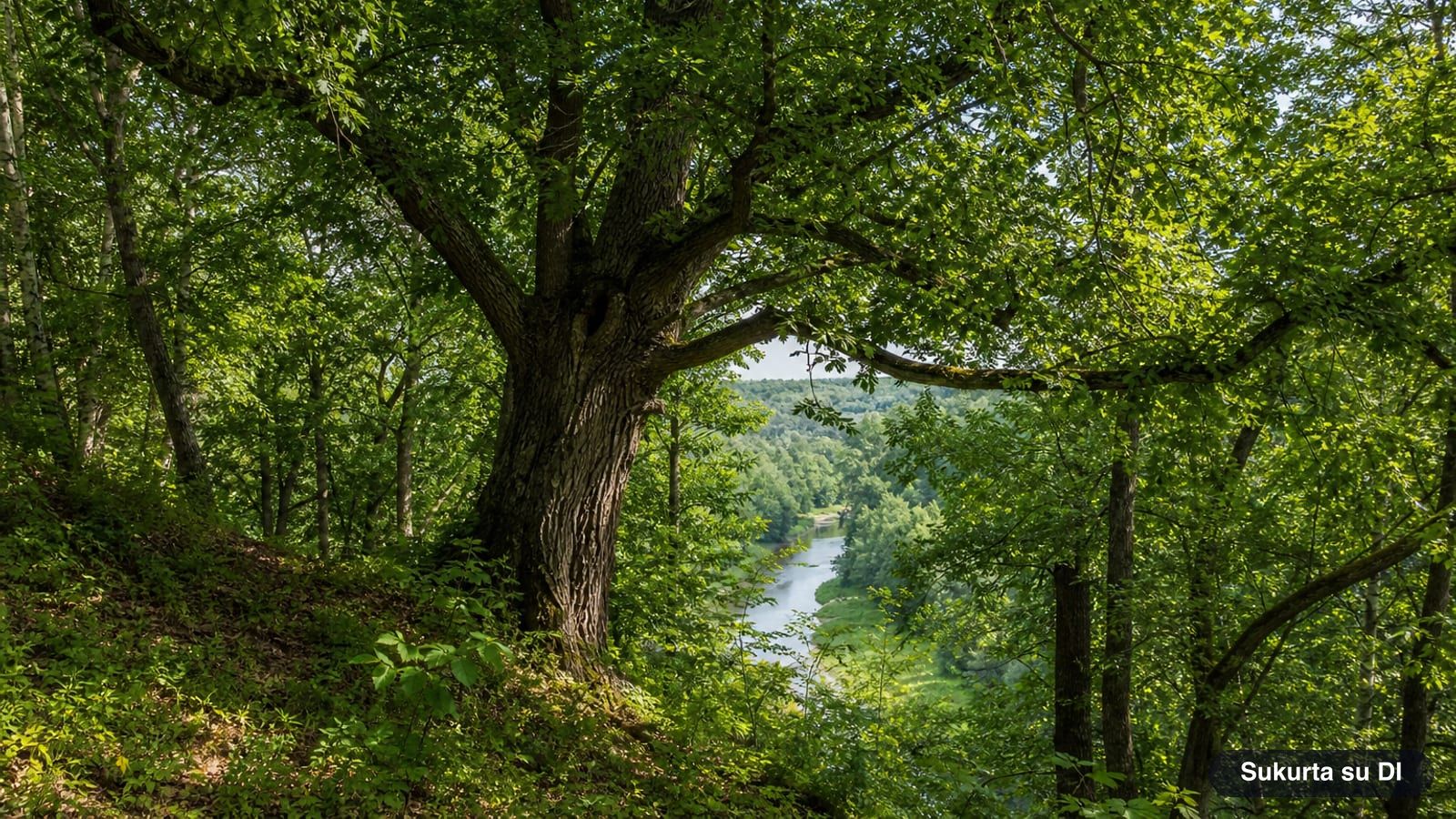
Elms are large trees that many people have seen, but few can confidently name. They grow on the slopes of river valleys, in old parks, and near historic estates, often alongside oaks and lindens, resembling them from a distance with their broad, dense canopies. Birds are usually the first to notice elms in early spring: even before the leaves unfurl, the branches are covered in tiny flowers, followed by green, round, winged seeds. In our tree guide, we describe three widespread European species—the wych elm, European white elm, and field elm—and explore the disease that destroyed countless elms worldwide in the 20th century.
| Latin name | Ulmus (genus), wych elm – Ulmus glabra |
|---|---|
| Family | Ulmaceae |
| Native species | Wych elm, European white elm, field elm |
| Height | Up to 100–130 ft (30–40 m) |
| Lifespan | Wych elm 200–300 years, European white elm up to 300–500 years |
| Blooms | Early to mid-spring, before leaves emerge |
| Seeds (Samaras) | Round, flat, with a central seed; ripens in late spring to early summer |
| Habitat | River valleys, lake slopes, deciduous forests, parks, and estates |
How to Identify an Elm
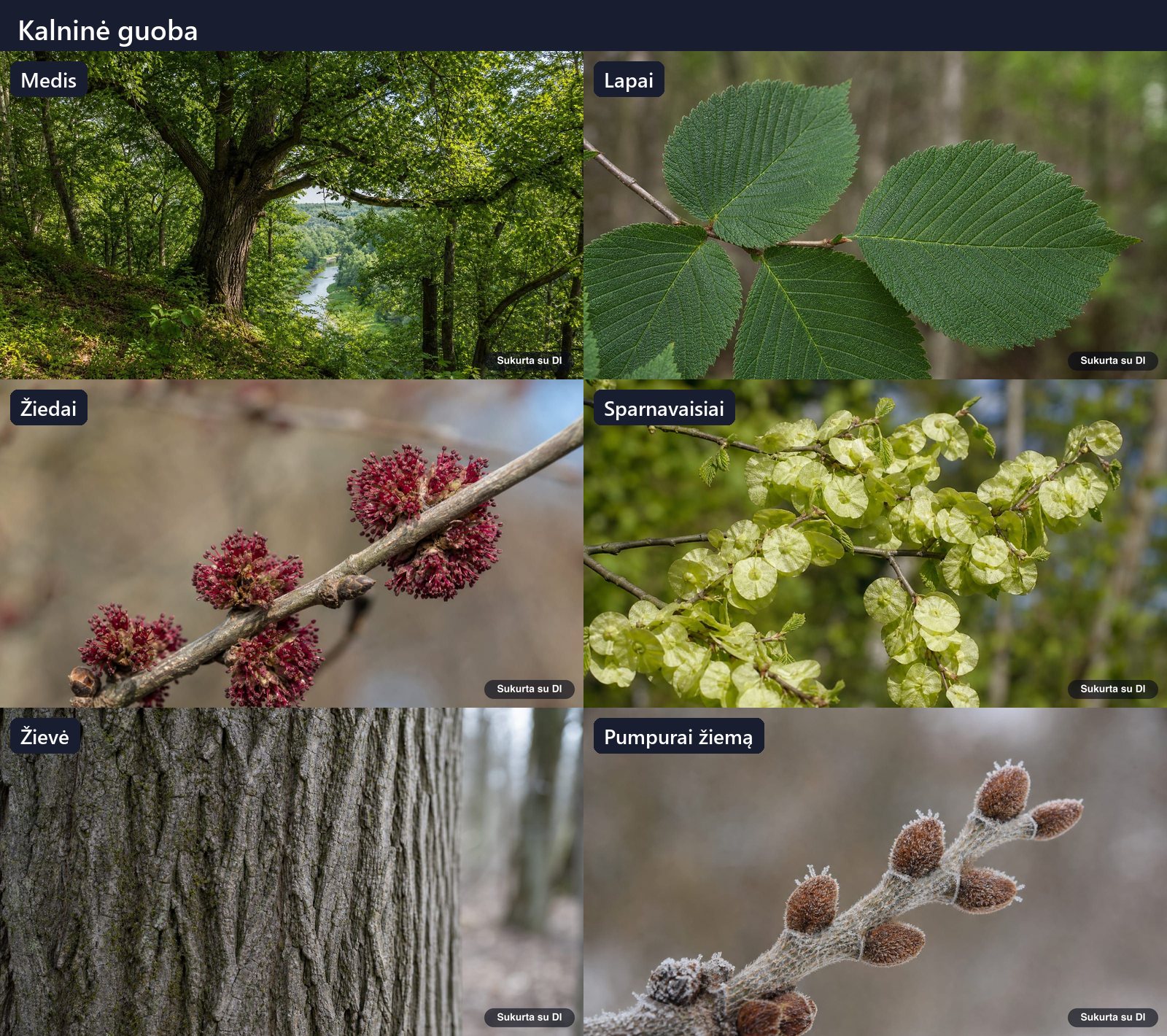
Elms are large deciduous trees with dense, broadly spherical or elliptical canopies and deeply fissured bark. In their native European range, they are most common in central plains and river valleys, growing on shaded slopes alongside oaks, lindens, and ashes. Pure elm forests are extremely rare; they are usually found as solitary trees or in small groups.
Leaves
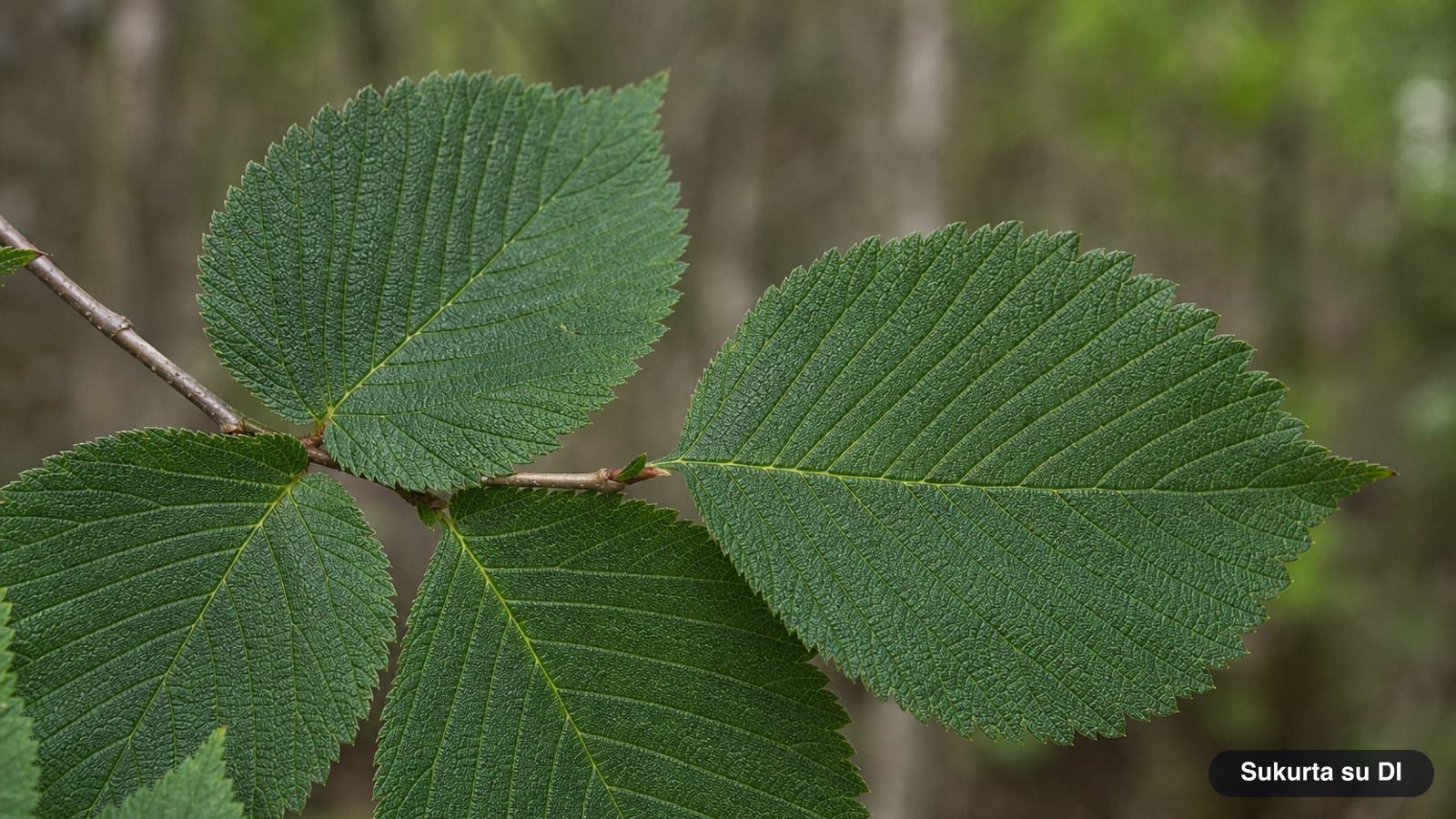
Elm leaves are alternate, elliptical or obovate, with a pointed tip and double-toothed margins. The most important identifying feature is the asymmetrical base: one side of the leaf blade meets the stem lower than the other. Wych elm leaves are large, 2.5–6.5 inches (6–17 cm) long, and very rough on top, like sandpaper. The longer lobe of the base often completely covers the short, 0.2-inch (5 mm) stalk, and the leaf tip sometimes features lateral points. European white elm leaves are smaller, up to 4 inches (10 cm) long, thinner, smooth on top, and softly hairy underneath. In autumn, elm leaves turn a vibrant yellow.
Flowers
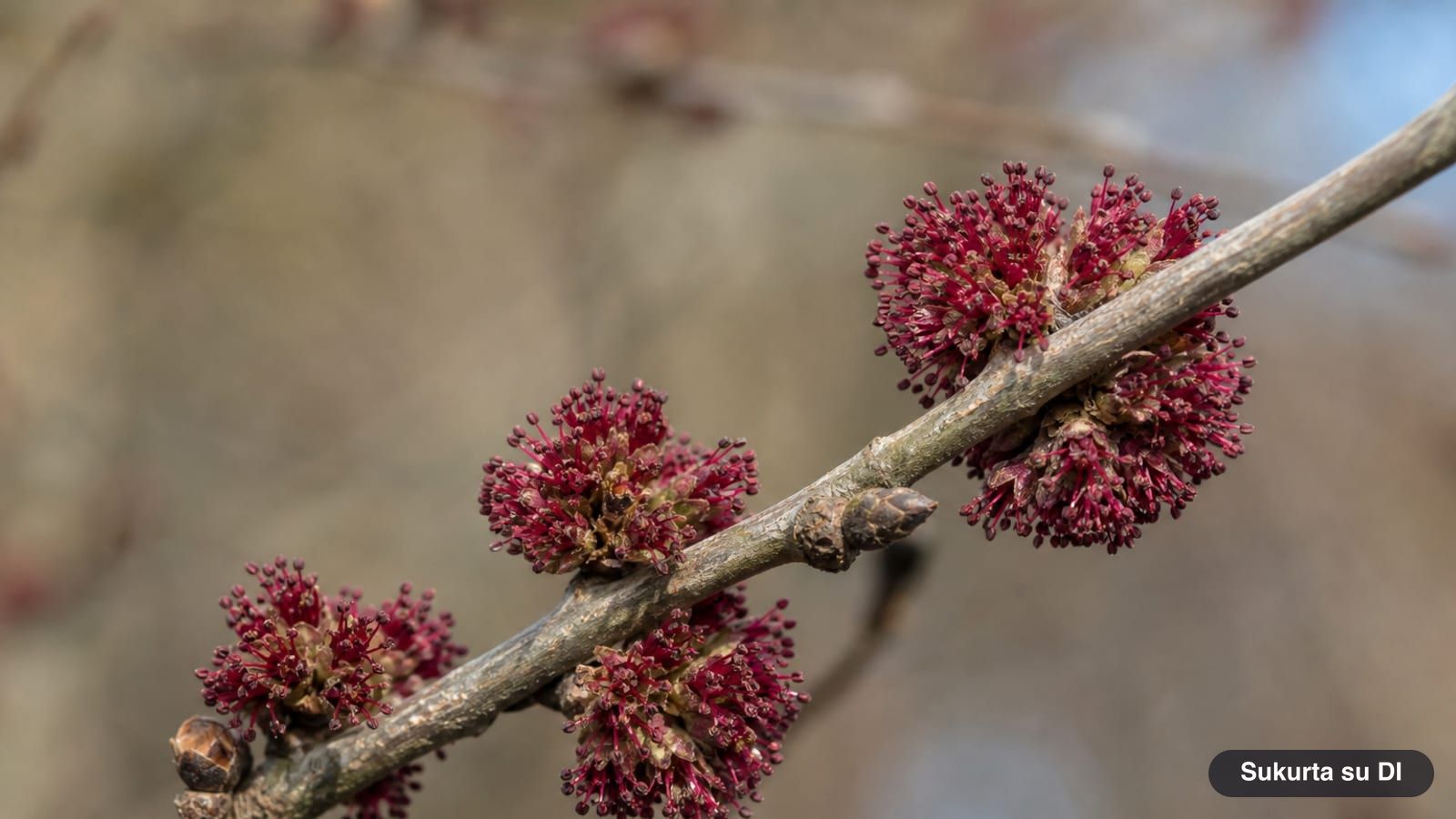
Elms bloom very early in the spring, often as soon as the weather warms, while the tree is still bare. The flowers are tiny, lack petals, are bisexual, cluster tightly together, and are wind-pollinated. Wych elm flower clusters appear reddish due to dark red anthers. Wych elm flowers are almost stalkless, whereas European white elm flowers hang on long, 0.8-inch (2 cm) stalks. An open-grown wych elm typically begins to flower at around 20 to 30 years of age.
Seeds (Samaras)
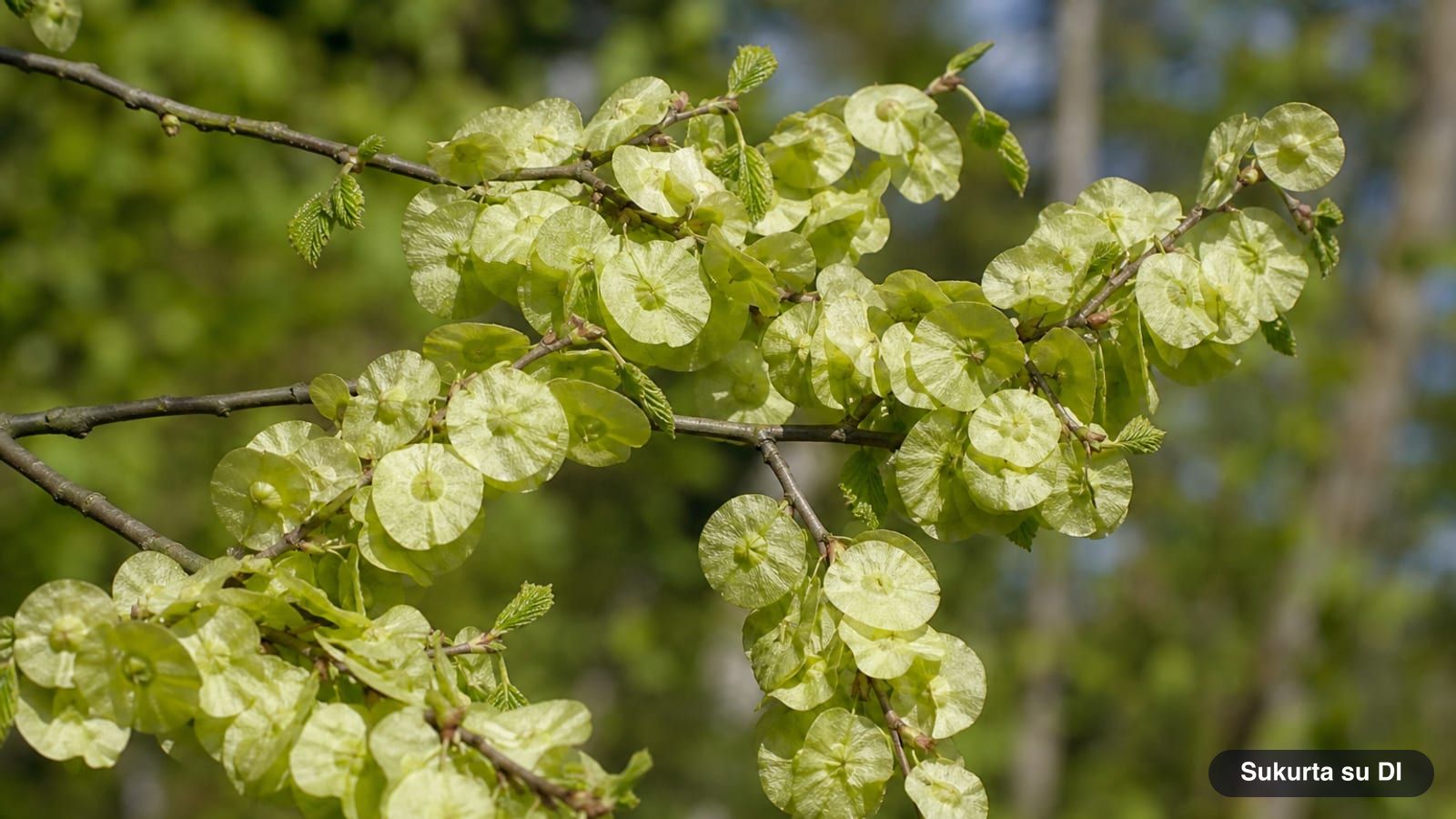
The fruit of an elm is a round, flat samara (a winged seed) with a small nutlet right in the center. Wych elm samaras are 0.8–1 inch (2–2.5 cm) long, light green turning yellowish-brown, and hairless. European white elm samaras are smaller, up to 0.6 inches (1.5 cm), with ciliated (fringed) edges and a long stalk. They ripen very early, usually in late spring or early summer just as the leaves finish expanding, and cover the branches by the thousands, making the tree look bright green as if in full bloom. The wind carries these winged seeds far from the parent tree. You can compare the winged seeds of other trees in our tree seeds and fruits guide.
Bark and Buds
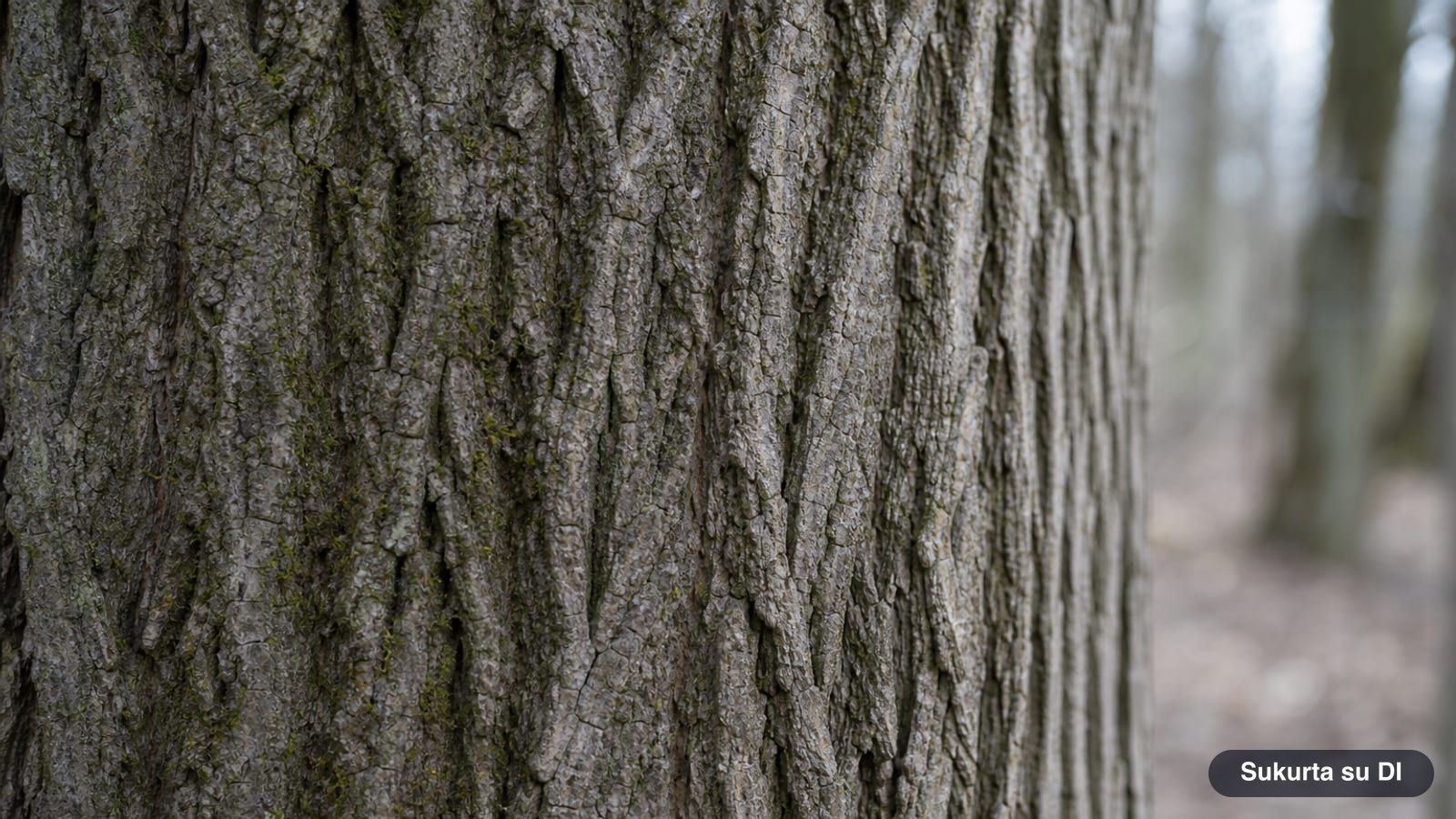
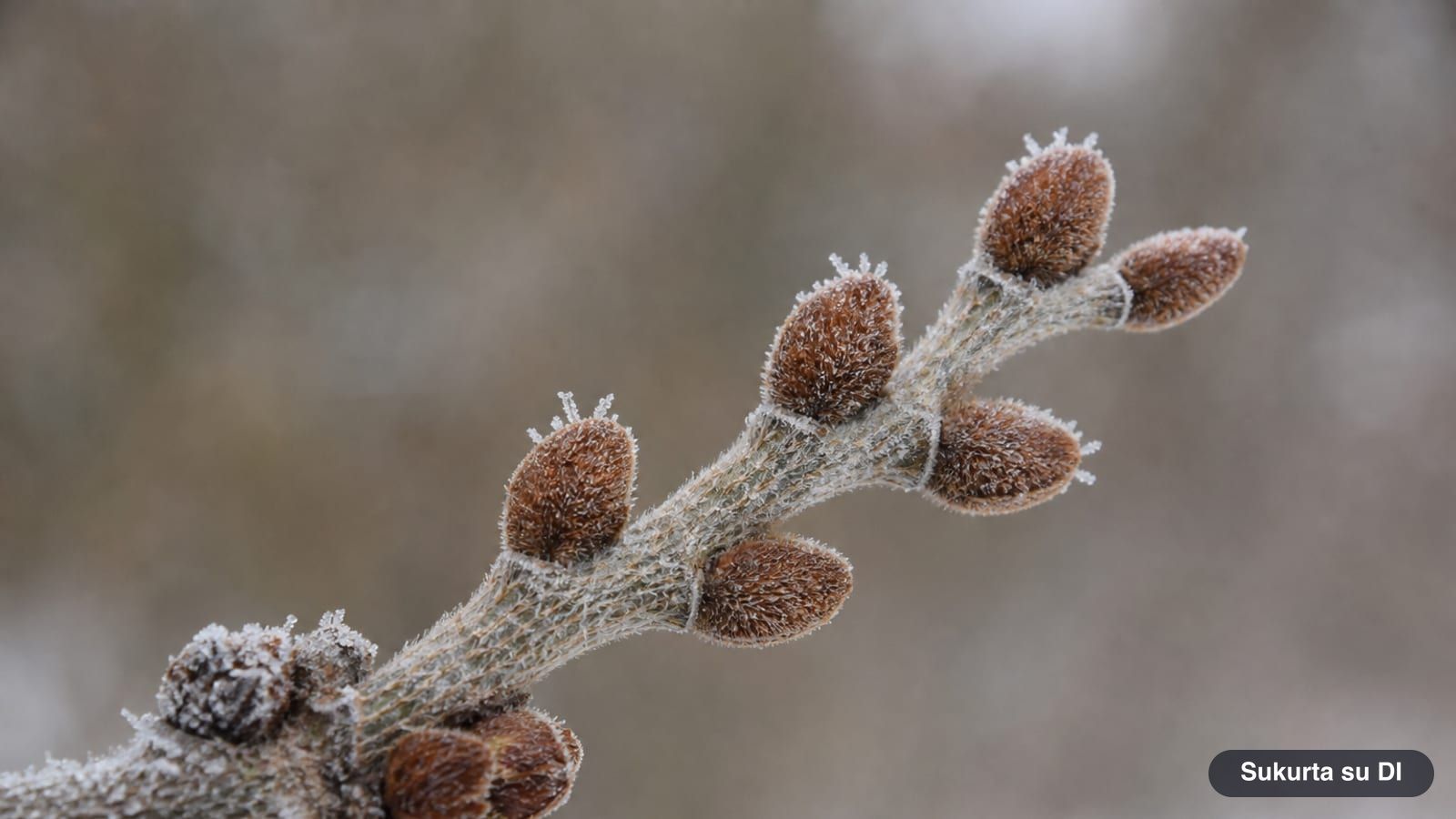
The bark of the wych elm is dark brown or grayish-brown, with deep longitudinal fissures. Young European white elms have smooth bark that later breaks into thin gray plates, while old trunks become deeply fissured. The base of old white elm trunks often develops tall buttress roots. Wych elm shoots are thick, dark brown, and densely hairy. The buds are 0.3–0.35 inches (7–9 mm) long, blackish-brown, and covered in brown hairs; flower buds are larger and rounder.
Wych Elm, European White Elm, or Field Elm?
| Feature | Wych elm | European white elm | Field elm |
|---|---|---|---|
| Leaves | Large, 2.5–6.5 in (6–17 cm), very rough, stalk up to 0.2 in (5 mm) | Up to 4 in (10 cm), thin, smooth on top | 2–3 in (5–8 cm), almost rhombic, prominent veins |
| Flowers and fruits | Short-stalked, samaras 0.8–1 in (2–2.5 cm) | On long ~0.8 in (2 cm) stalks, samara edges fringed | Short-stalked |
| Shoots | Thick, hairy, no corky ridges | Light brown, hairy | Thin, sometimes with corky outgrowths |
| Trunk | Fissured | Old trees have buttress roots | Longitudinally fissured |
| Distribution | Uncommon | Occasional, riverbanks | Occasional, central plains |
Where these species overlap, they readily hybridize, making some trees difficult to identify precisely even for botanists. Elms are also sometimes confused with hornbeam and hazel—their leaves are also double-toothed, but their bases are symmetrical.
Dutch Elm Disease: Why Elms Are Disappearing
Dutch elm disease is a fungal infection caused by fungi of the genus Ophiostoma. It is transmitted from one tree to another by elm bark beetles—insects that breed under the bark of weakening elms and then feed on the twigs of healthy trees, infecting them with fungal spores. The fungus blocks the tree's water-conducting vessels, causing leaves to wilt and branches to dry out, often killing the tree within a few years. The disease is called "Dutch" because its pathogen was first isolated by scientists in the Netherlands in 1921.
The first epidemic, caused by the fungus Ophiostoma ulmi, swept through Europe starting in 1910. A much more dangerous species, Ophiostoma novo-ulmi, devastated elm populations across both Europe and North America from the late 1960s onward. This drastically reduced the number of large, old elms in the landscape globally. Interestingly, bark beetles are less drawn to the European white elm and wych elm because their bark contains a deterrent compound (alnulin), so these species are infected less frequently, even though they lack natural resistance to the disease. Today, breeding programs around the world focus on developing resistant elm varieties, while individual valuable trees are sometimes protected by injecting fungicides directly into the trunk.
Elms in Parks and Landscapes
- Wych elm is cold-hardy (surviving temperatures down to -22 °F (-30 °C), USDA zones 4–8), tolerates shade and pruning, and is moderately resistant to urban pollution. It requires fertile, loose, and relatively moist soil.
- European white elm has long been planted for urban and rural landscaping; it grows very quickly for the first 40 to 50 years.
- Risks. Due to Dutch elm disease, widespread planting of elms is generally not recommended, especially along roadsides and in suburbs where the disease spreads most easily. Dead or dying elms must be removed promptly to prevent bark beetles from breeding in them.
Wood and Famous Elms
Wych elm wood is hard, strong, and difficult to split, which is why it was historically used to make wagon wheels, tools, and furniture. European white elm wood is of slightly lower quality but is still suitable for carpentry, finishing, and carving. Many ancient elms are protected as natural heritage sites across Europe. Elms hold a special place in international tree lore; for instance, in the 2026 European Tree of the Year competition, a historic elm from Poland took third place—you can read more about famous ancient trees in our oldest and largest trees section.
Frequently asked questions
How do you identify an elm tree?
Look at the leaves: they are alternate, rough, double-toothed, and have an asymmetrical base—one side of the leaf blade meets the stem lower than the other. In early spring, elms produce clusters of reddish flowers on bare branches, followed by round, greenish winged seeds (samaras) in late spring.
What is the difference between a wych elm and a European white elm?
Wych elm leaves are large, up to 6.5 inches (17 cm), very rough, and have almost no stalk, while its flowers and seeds are short-stalked. European white elm leaves are smaller, smoother on top, and their flowers and seeds hang on long, 0.8-inch (2 cm) stalks. Old white elms often develop large buttress roots at the base of the trunk.
What is Dutch elm disease?
It is a fungal disease caused by Ophiostoma fungi and spread by elm bark beetles. The fungus blocks the tree's water-conducting vessels, causing branches to wilt and dry out, often killing the tree. A highly aggressive strain devastated elm populations across Europe and North America starting in the late 1960s.
How long do elm trees live?
Wych elms typically live 200–300 years, with some European specimens reaching about 400 years. European white elms can live up to 300–500 years, and field elms can also exceed 300 years of age.
Are elm trees good for hedges?
While some elms tolerate pruning and shade well, their susceptibility to Dutch elm disease makes them a risky choice for extensive planting. Hornbeam or beech are generally preferred for hedges.
Log in to comment
No comments yet. Be the first.