Alder Buckthorn: Berries, Bark & Brimstone Butterfly
- Alder buckthorn (Frangula alnus) is a shrub or small tree in the buckthorn family growing 10–20 feet (3–6 m) tall; unlike common buckthorn, it is thornless.
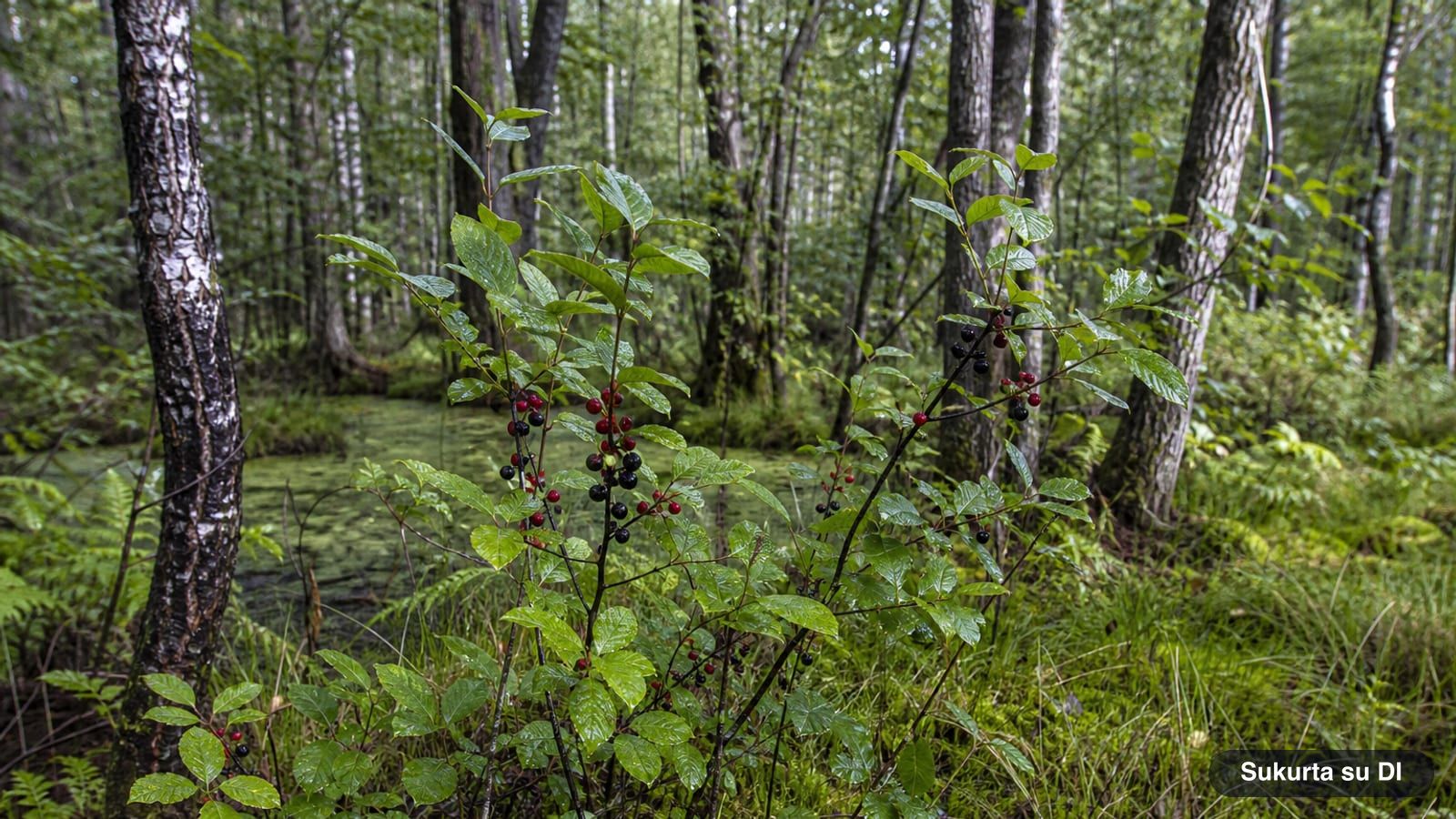
- Native to Europe, northern Africa, and parts of Asia, it thrives in moist woodlands, thickets, riverbanks, wetlands, and bogs.
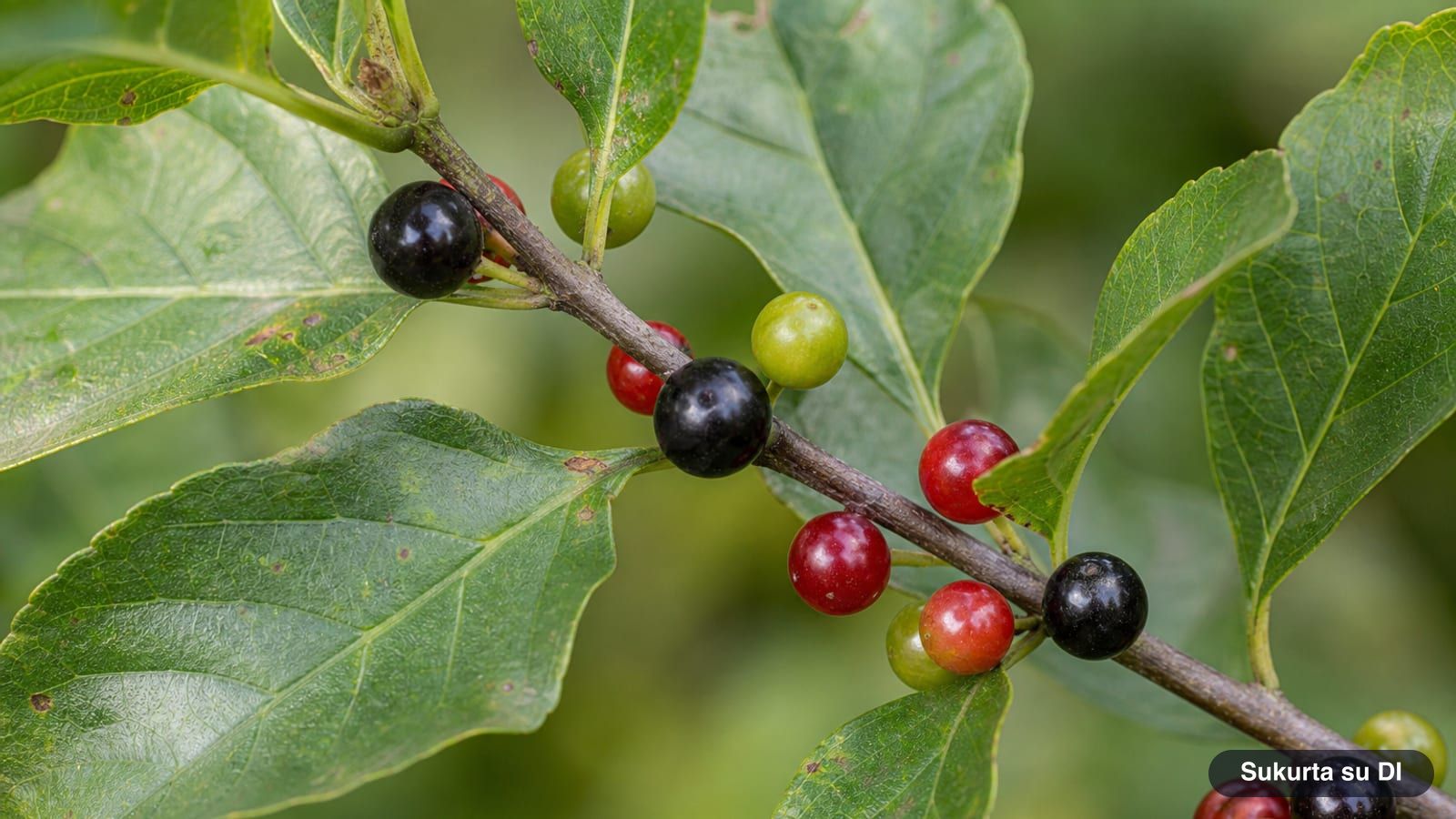
- It blooms from late spring to midsummer with tiny greenish-white flowers; berries ripen gradually, so green, red, and black fruits often appear on the same bush.
- Fresh bark contains potent compounds and is only used medicinally after aging or heat treatment; the European Medicines Agency notes its use for short-term relief of occasional constipation.
- Alder buckthorn is one of only two host plants essential for the survival of brimstone butterfly caterpillars.
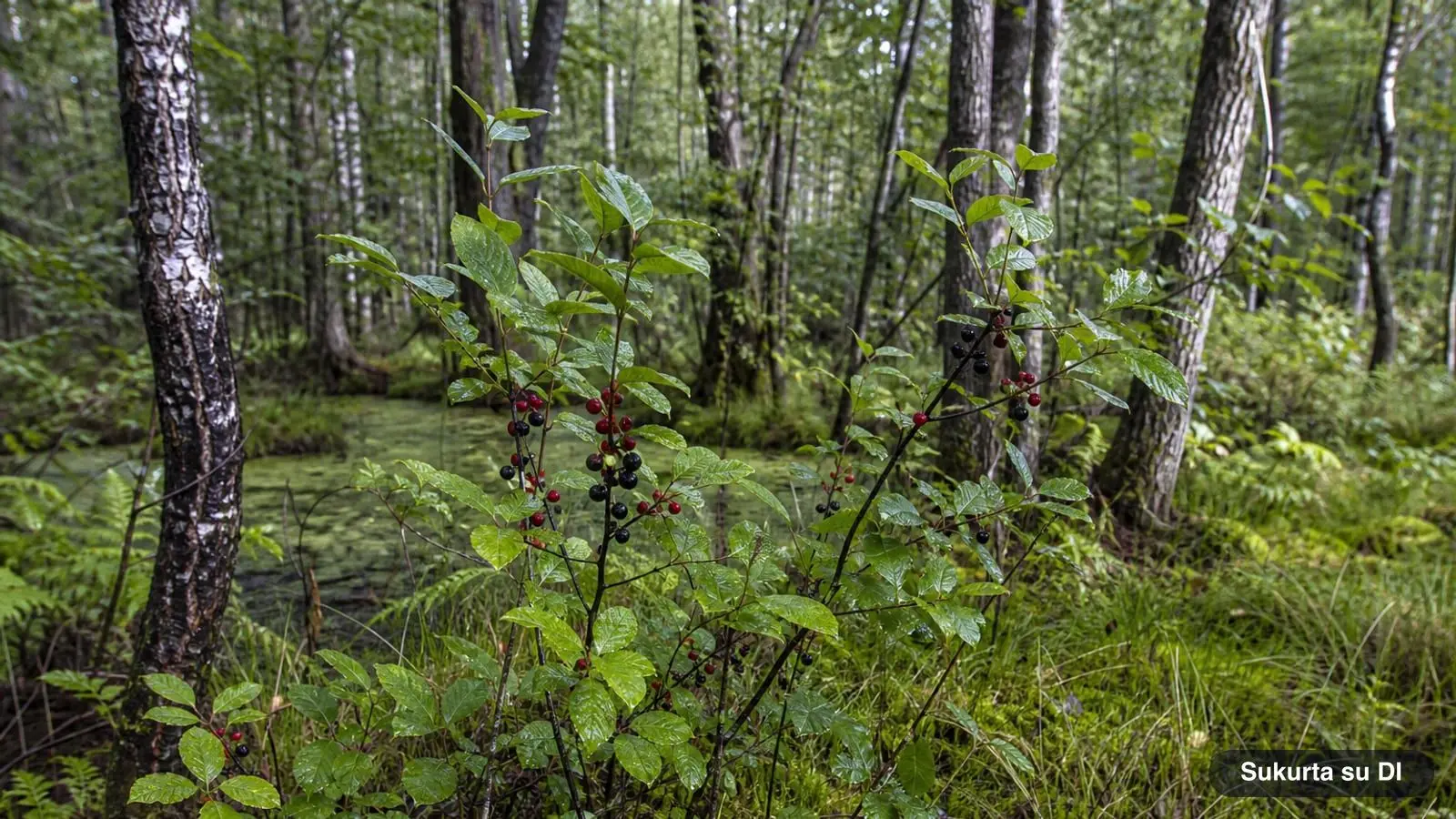
This article is part of the 77.today trees guide, prepared by the 77.today editors from the sources listed at the end.
In moist birch or alder woodlands, along the edges of bogs and wetlands, you will often find a small shrub with dark, almost black stems speckled with light dashes and glossy, smooth-edged leaves. By late summer, its branches simultaneously display green, red, and black berries. This is the alder buckthorn (also known as glossy buckthorn)—a plant with a long history of medicinal use, highly valued by bees, birds, and one of Europe's most beautiful butterflies. In this Tree Guide profile, you will learn how to identify alder buckthorn and why you should never snack on its fruit.
| Latin Name | Frangula alnus (syn. Rhamnus frangula) |
|---|---|
| Family | Buckthorn (Rhamnaceae) |
| Group | Deciduous shrub or small tree |
| Height | 10–20 ft (3–6 m), sometimes up to 23 ft (7 m); trunk up to 8 inches (20 cm) |
| Blooms | Late spring to midsummer |
| Berries | 0.2–0.4 inches (6–10 mm), green → red → black, ripening late summer to early fall |
| Habitat | Moist forests, thickets, riverbanks, wetlands, and bogs |
| Safety | Fresh bark and berries are strong laxatives and mildly toxic—do not eat |
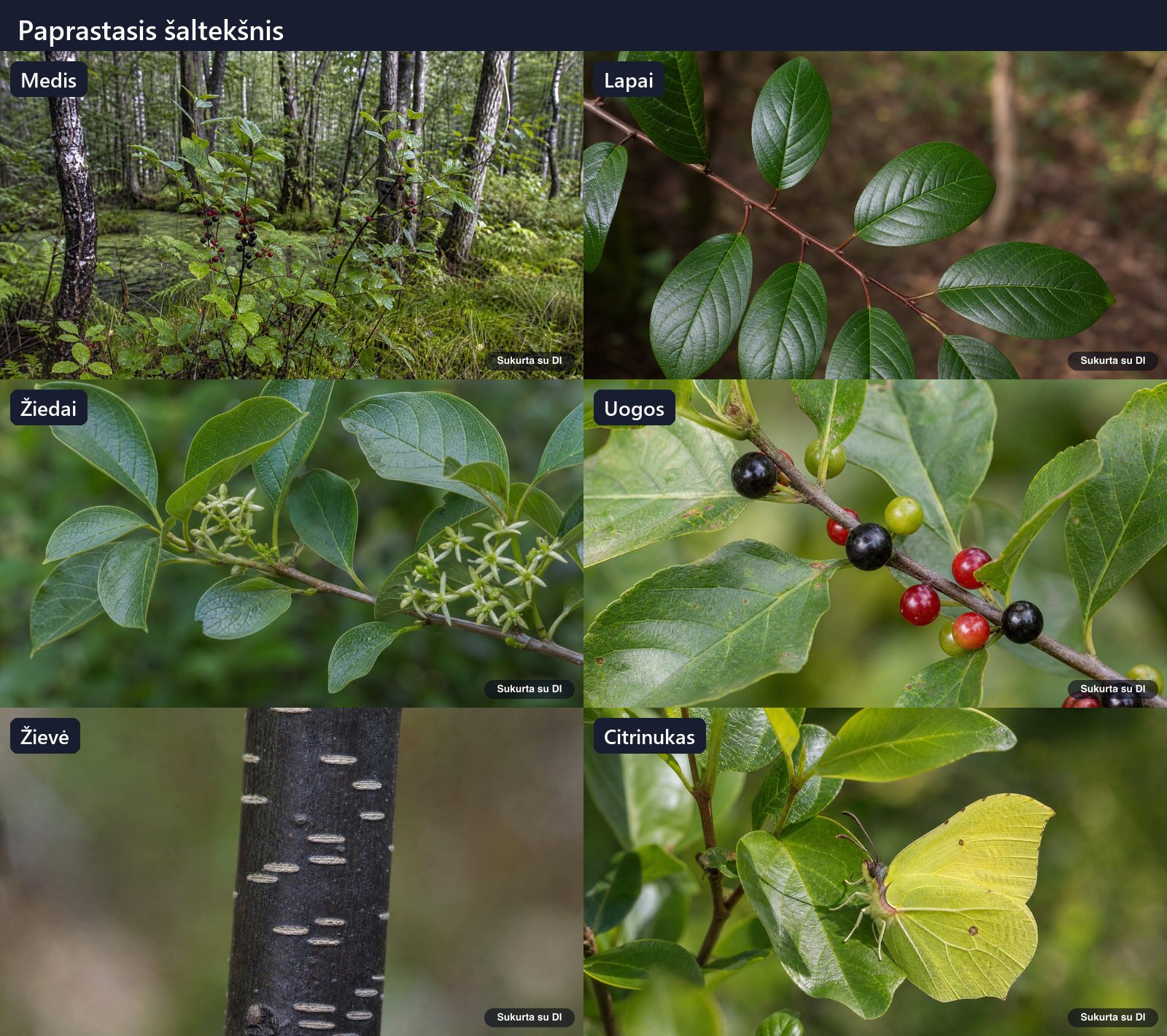
How to Identify Alder Buckthorn
Alder buckthorn typically grows as a multi-stemmed shrub, and much less frequently as a small tree with a trunk up to 8 inches (20 cm) across. In richer soils, it grows taller and more upright, while in poor soils, it remains shorter and more heavily branched. Unlike its relative, the common buckthorn, alder buckthorn has no thorns. Its reddish-brown shoots are quite brittle—in fact, its botanical genus name, Frangula, comes from the Latin word for "to break."
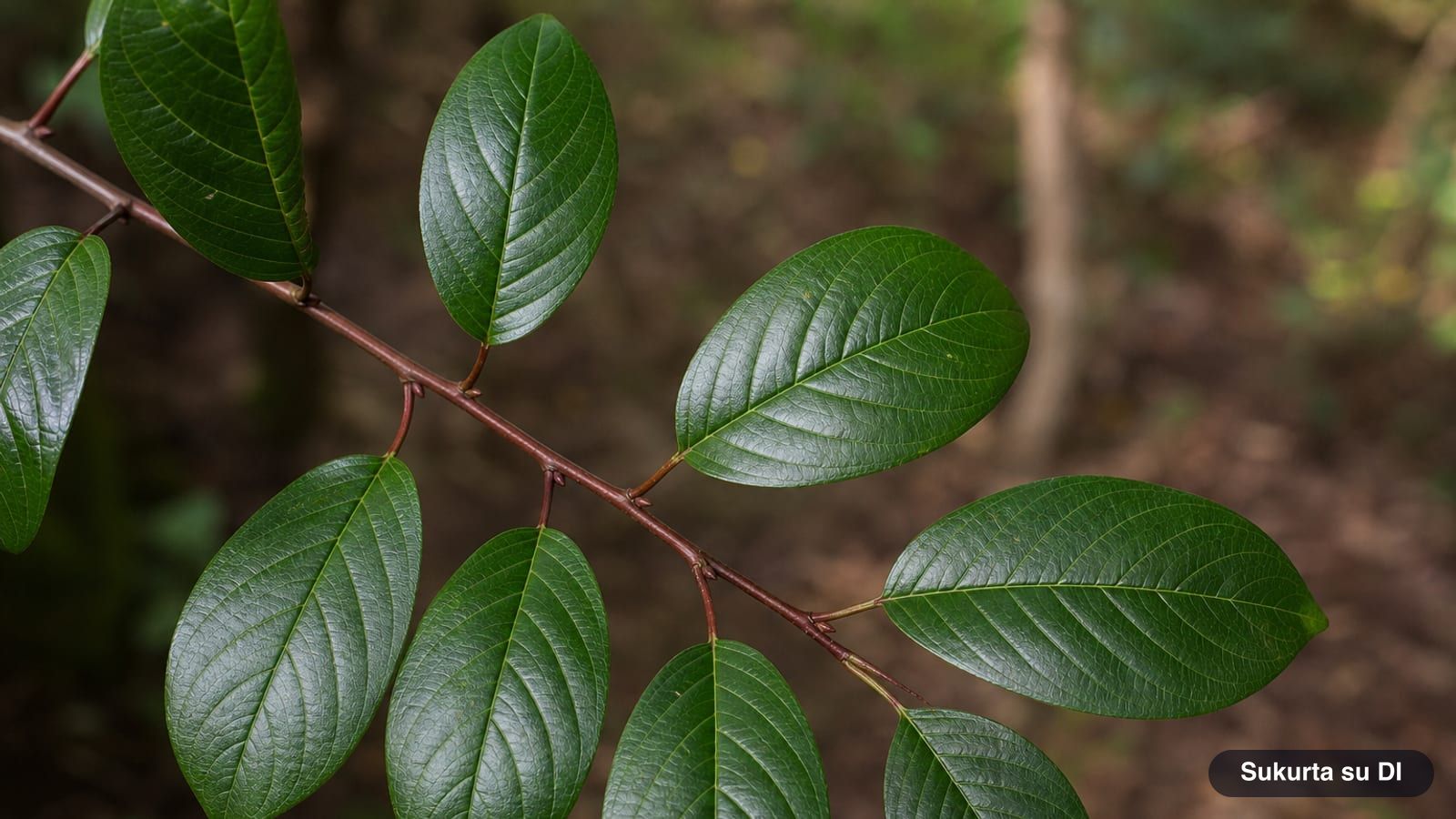
Leaves
The leaves are arranged alternately and are ovate or elliptic, measuring 1.2–2.8 inches (3–7 cm) long. They are dark green, glossy, and have smooth, untoothed edges. Their most distinctive feature is the 6 to 10 pairs of prominent, indented veins that curve gracefully toward the leaf tip. From a distance, alder buckthorn leaves somewhat resemble those of the black alder, but alder leaves have toothed edges and a blunt or notched tip. In autumn, alder buckthorn foliage turns yellow.
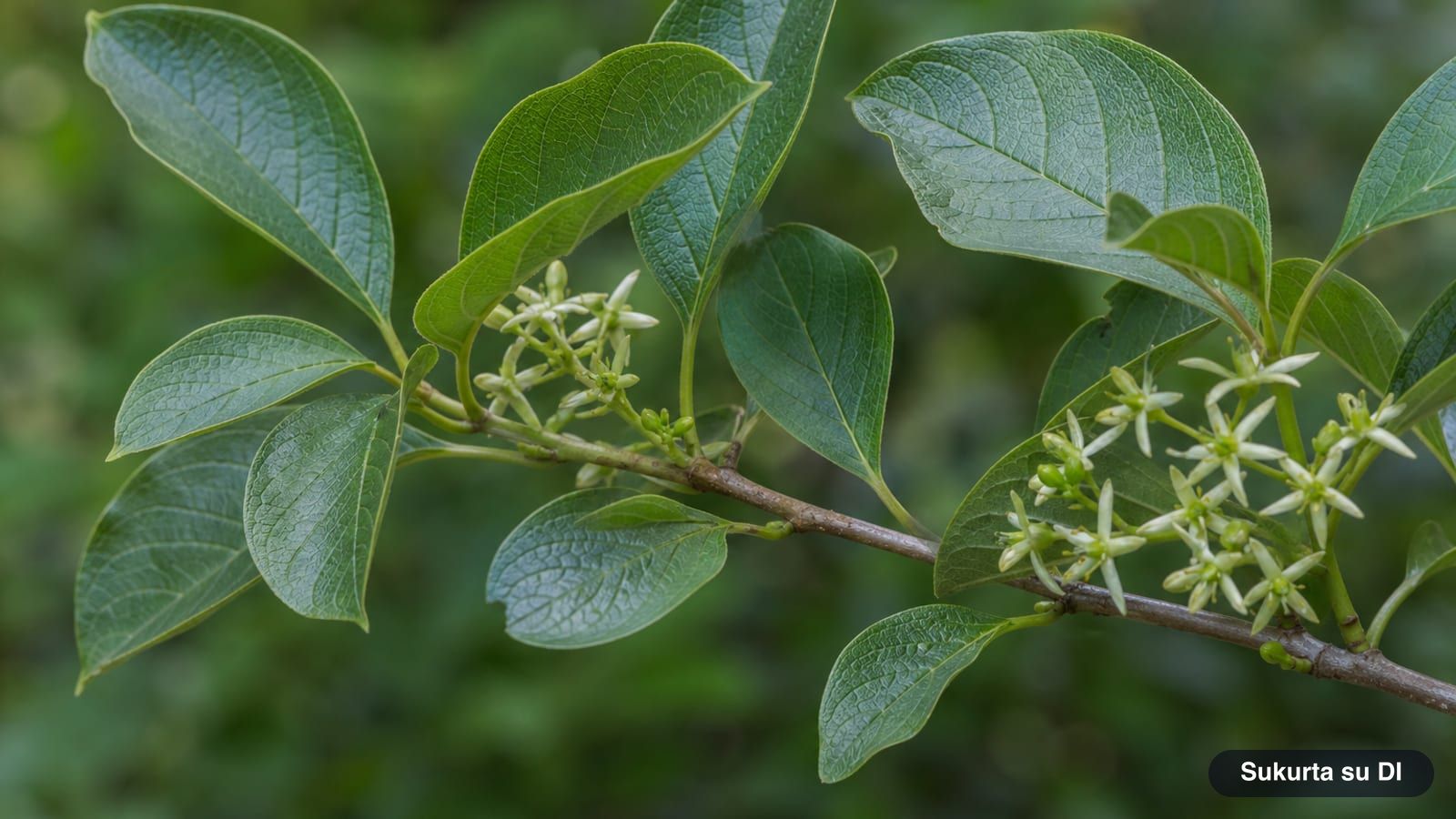
Flowers
The flowers are tiny, about 0.1–0.2 inches (3–5 mm) across, star-shaped, and feature five greenish-white pointed petals. They are bisexual and cluster in groups of two to seven in the leaf axils, making them quite inconspicuous. Alder buckthorn has a long blooming period stretching from late spring through midsummer. Because of this extended flowering time, the blossoms are heavily visited by bees, making the shrub highly valued by beekeepers.
Berries
The fruit is a round, fleshy drupe about 0.2–0.4 inches (6–10 mm) in diameter, containing two to three seeds. The berries ripen gradually: they start out green, turn a vibrant raspberry red in late summer, and finally mature to dark purple or black by early fall. As a result, it is very common to see green, red, and black berries on the exact same bush at the same time. Birds, especially thrushes, eagerly eat the fruit and help distribute the seeds.
Bark
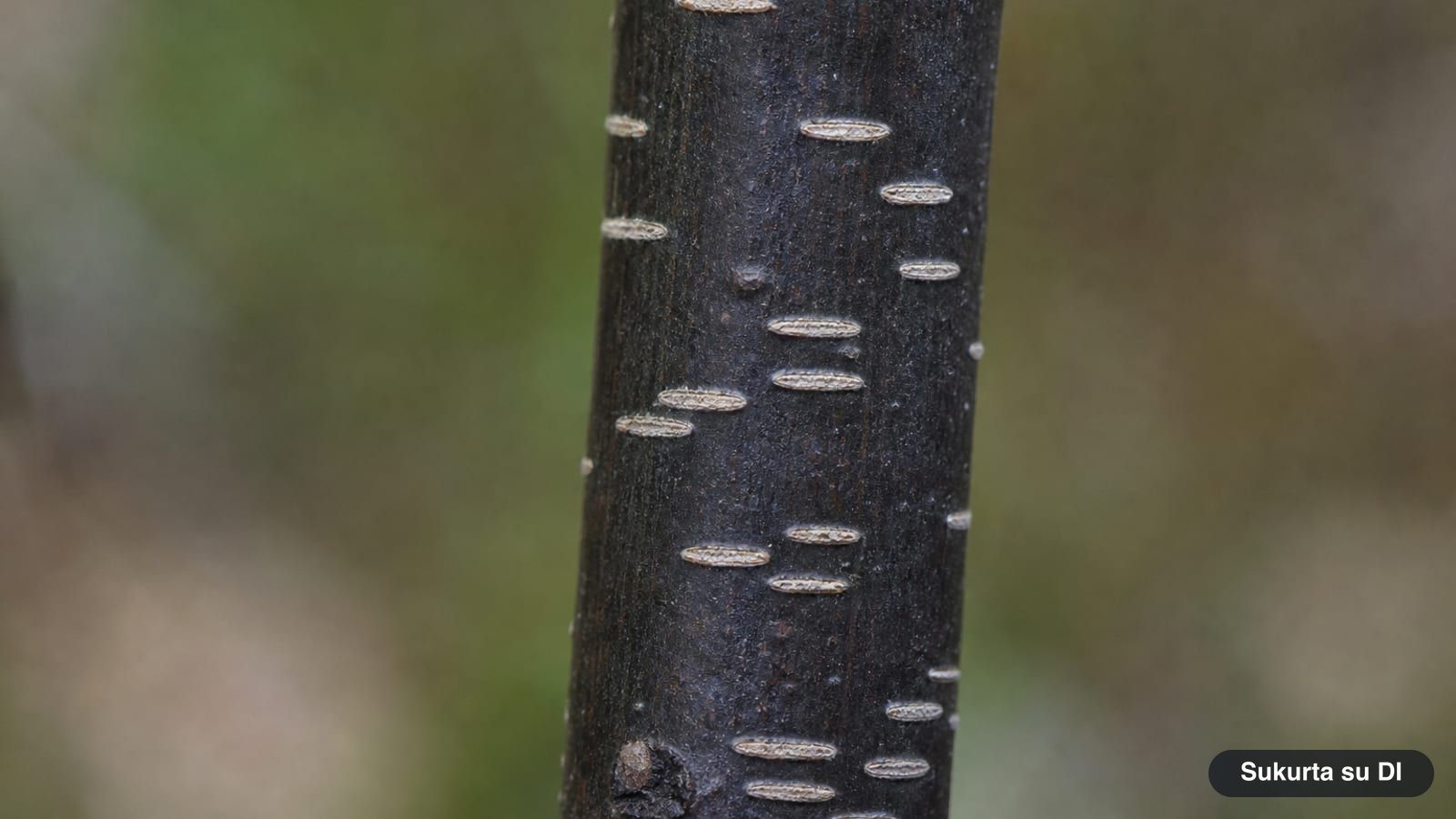
The bark is smooth and dark grayish-brown to almost black, heavily speckled with numerous light horizontal dashes called lenticels. If you cut or scrape away the top layer, you will reveal a bright lemon-yellow inner bark, while older bark develops a red corky layer underneath. This distinctive bark makes alder buckthorn easy to identify even in the dead of winter.
Alder Buckthorn, Common Buckthorn, or Alder?
| Feature | Alder Buckthorn (Frangula alnus) | Common Buckthorn (Rhamnus cathartica) | Black Alder (Alnus glutinosa) |
|---|---|---|---|
| Thorns | None | Present | None |
| Leaves | Smooth-edged, glossy, curved veins | Finely toothed | Toothed, blunt or notched tip, sticky |
| Flowers | Bisexual, 5-parted | Unisexual, 4-parted | Catkins |
| Fruits | Red, then black berries | Black berries | Woody, cone-like strobiles |
| Form | Shrub or small tree, 10–20 ft (3–6 m) | Shrub or small tree | Tree |
Alder buckthorn often grows alongside black alders and birches—read more about them in our alder and birch profiles.
The Brimstone Butterfly and Alder Buckthorn
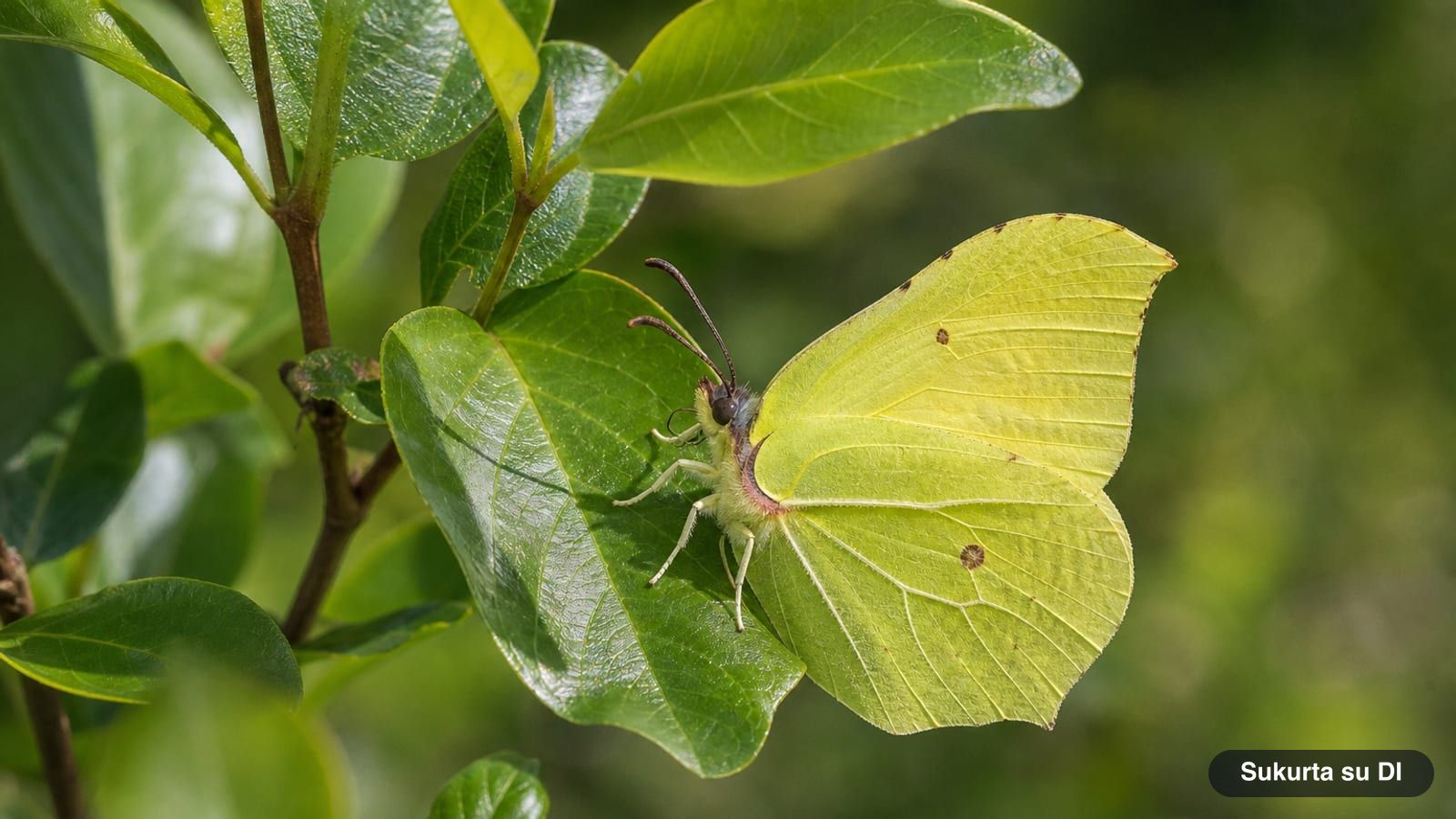
In early spring, as soon as the weather warms, one of the first butterflies to take flight in Europe is the bright yellow brimstone butterfly (Gonepteryx rhamni). Its caterpillars feed exclusively on the leaves of just two plants: the alder buckthorn and the common buckthorn. Consequently, these butterflies can only breed where these specific shrubs grow. Females lay their eggs on the undersides of young leaves, usually on isolated, sunlit bushes. Adult butterflies spend about seven months overwintering in woodlands before returning to the buckthorns in spring. In Europe, alder buckthorn is sometimes planted specifically to attract brimstones. However, in North America—where it was introduced roughly 200 years ago—it has escaped cultivation and is now widely considered an invasive species.
Alder Buckthorn Bark: Medicinal Uses
Alder buckthorn bark is a well-known traditional medicinal ingredient. It contains 3–7% anthraquinones, which are compounds with a strong laxative effect. The European Medicines Agency's Committee on Herbal Medicinal Products recognizes that alder buckthorn bark preparations can be used short-term for occasional constipation in adults and adolescents over 12 years of age, for no longer than one week. They should not be used by children under 12, pregnant or breastfeeding women, or anyone suffering from intestinal obstructions or unexplained abdominal pain. Overdosing can cause abdominal pain, cramps, and diarrhea, while prolonged use can lead to pigmentation of the intestinal lining.
It is crucial to know that fresh bark is toxic: the compounds it contains cause severe vomiting and diarrhea. Therefore, bark stripped from young stems in early spring must be dried and aged for at least one full year, or heated at 212°F (100°C) for an hour, which breaks down the toxic compounds. Preparing this raw material yourself is risky, so it is much safer to choose commercially available pharmacy preparations and consult a pharmacist or doctor before use.
Wood, Charcoal, and Dyes
Alder buckthorn wood is a brownish-orange color; it has historically been used for woodturning, decorative veneer, and in the past, for shoe lasts and wooden nails. Burning the wood produces a nearly ashless charcoal that was once considered the finest material for making gunpowder and was highly prized for fuses due to its exceptionally even burn rate. Additionally, a yellow dye can be extracted from the bark, and a green dye from the unripe berries. We cover other small woodland shrubs and trees in our hazel, rowan (mountain ash), and hawthorn profiles.
Frequently asked questions
Are alder buckthorn berries poisonous?
Yes, alder buckthorn bark and, to a lesser extent, its berries contain anthraquinones—compounds with a strong laxative effect. Humans, especially children, should never eat the berries. However, birds like thrushes eat them without harm and help distribute the seeds.
How is alder buckthorn bark used?
The European Medicines Agency evaluates alder buckthorn bark preparations as a short-term treatment for occasional constipation in adults and adolescents over 12 years old. They should not be used for more than a week, nor by children under 12, pregnant, or breastfeeding women. Fresh bark is toxic, causing severe vomiting and diarrhea, so it must be aged for at least one year or heat-treated before use.
What is the difference between alder buckthorn and common buckthorn?
Alder buckthorn (Frangula alnus) has no thorns, its leaves have smooth edges and alternate arrangement, and its flowers are bisexual with five petals. Common buckthorn (Rhamnus cathartica) has sharp thorns, finely toothed leaf edges, and unisexual flowers with four petals. Both shrubs serve as host plants for brimstone butterfly caterpillars.
Where does alder buckthorn grow?
Native to Europe, northern Africa, and western Asia, alder buckthorn thrives in moist forests, thickets, riverbanks, wetlands, and bogs. In richer soils, it grows taller and more upright, while in poor soils, it remains shorter and more heavily branched. It was introduced to North America, where it is now considered an invasive species in many regions.
Why is alder buckthorn important for the brimstone butterfly?
The caterpillars of the bright yellow brimstone butterfly feed exclusively on the leaves of just two plants: the alder buckthorn and the common buckthorn. The presence of these shrubs is absolutely essential for the butterflies to reproduce. Adult brimstones overwinter in woodlands and are among the very first butterflies to take flight in early spring.
Log in to comment
No comments yet. Be the first.