Alaskan Malamute: Temperament, Size, Husky Differences & Care
- The Malamute's name comes from the Mahlemiut, an Inuit tribe that lived in the Kotzebue Sound of northwestern Alaska.
- The Malamute is a basal breed; DNA shows a close relationship with the Siberian Husky and Chukotka sled dogs.
- Huskies are racers, while Malamutes are freighters, built to pull heavy loads over long distances at a slower pace.
- Under the AKC standard, males are about 25 inches and 85 lbs, females 23 inches and 75 lbs, though many are heavier.
- Malamutes rarely bark but howl like wolves; they are friendly to everyone, making them poor guard dogs.
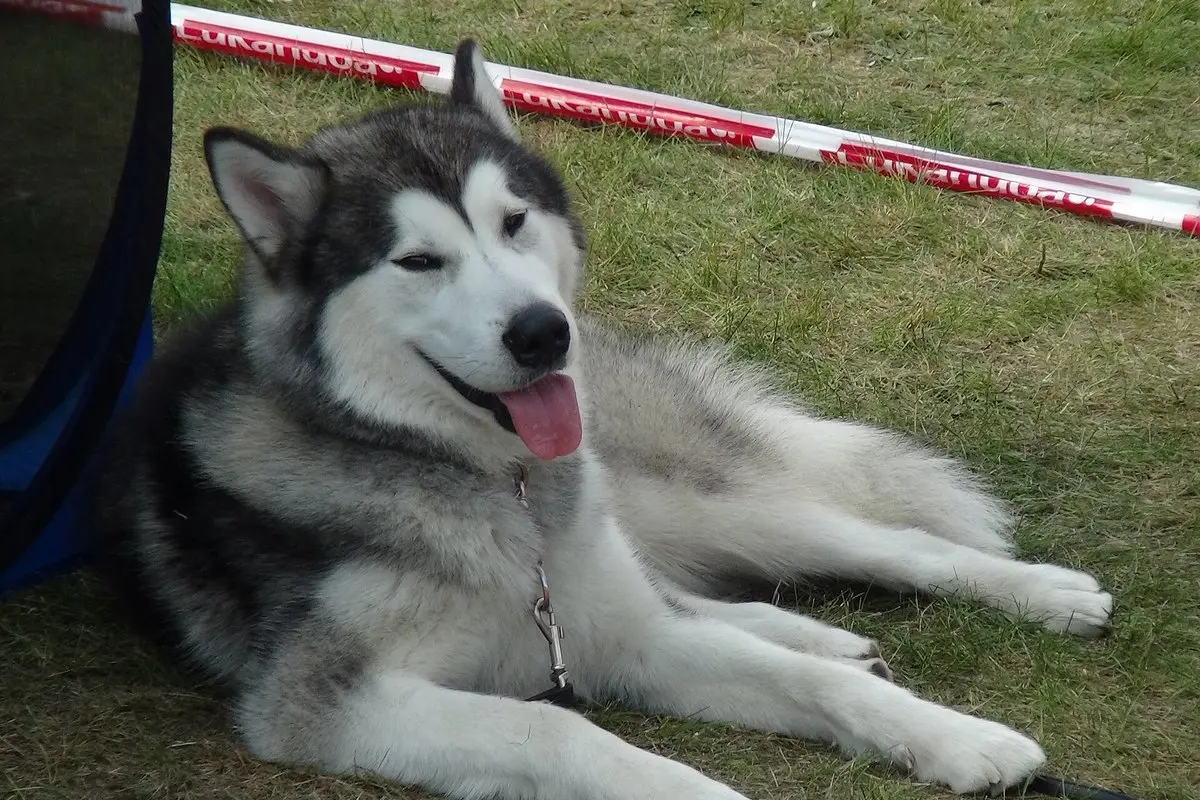
This article is part of the 77.today dog breeds guide, prepared by the 77.today editors from the sources listed at the end.
The Alaskan Malamute is an incredibly strong, heavy-duty spitz-type dog, recognizable by its plumed tail carried over the back, erect ears, and massive bone structure. The AKC describes them as affectionate, loyal, and playful but dignified dogs whose brown, almond-shaped eyes shine with love when the workday is done. However, the Malamute is a pack animal, and in the family "pack," the owner must be the leader. In this dog breed guide profile, you will find the history, appearance, temperament, and care needs of the Alaskan Malamute.
| Origin | USA (Alaska) |
|---|---|
| FCI Group | Group 5: Spitz and primitive types (No. 243) |
| Height | males about 25 inches, females about 23 inches |
| Weight | males about 85 lbs, females about 75 lbs; often heavier |
| Coat | double coat: oily undercoat up to 2 inches thick and coarse guard hairs |
| Colors | gray and white, sable, black, brown or red and white, solid white |
| Eyes | brown, almond-shaped |
| Lifespan | 10–14 years |
| Temperament | affectionate, playful, independent, stubborn |
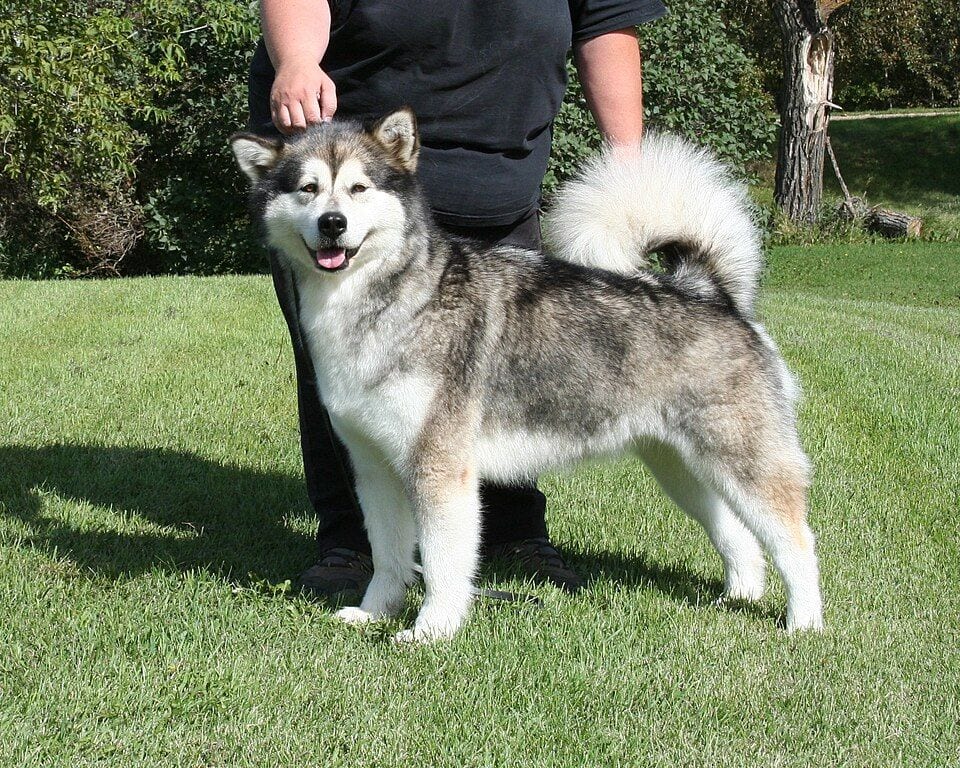
The Alaskan Malamute: The Mahlemiut Freighting Dog
The first dogs arrived in the Americas about 12,000 years ago, but people and their dogs only settled in the Arctic 4,500 years ago (Paleo-Eskimos), followed by the Thule people 1,000 years ago, both migrating from Siberia. The AKC notes that the breed's name comes from the Mahlemiut, an Inuit tribe that settled long ago in the Kotzebue Sound of northwestern Alaska. The sled dogs they developed worked in packs to pull heavy loads at low speeds over vast distances.
The Malamute is considered a basal breed, having formed long before modern breeds. A 2015 genetic study showed that the Malamute, Siberian Husky, and Alaskan Husky are close relatives and share ties with Chukotka sled dogs, while remaining distinct from Inuit dogs like the Canadian Eskimo Dog and Greenland Dog. The DNA of a 9,500-year-old dog from Zhokhov Island reveals a common ancestor with Greenland, Malamute, and Husky dogs. They are widely recognized as one of the least altered breeds in existence. The FCI officially recognized the Malamute in 1963.
Appearance: An Arctic Dog Built for Power
The AKC standard describes a natural range in size: females are ideally around 23 inches tall and 75 lbs, while males are 25 inches and 85 lbs, though heavier dogs, even weighing over 100 lbs, are frequently seen. Everything about the Malamute—the heavy bone, deep chest, powerful shoulders, and dense, weatherproof coat—speaks to its origins as an Arctic sled dog. It is significantly more massive than the Siberian Husky, which was bred for speed.
The coat is double-layered: the undercoat is oily, woolly, and can be up to 2 inches thick, while the guard hairs are coarse. The ears are small and erect. The most common colors are various shades of gray with white, sable, black, brown, or red with white, as well as solid white. Facial markings, such as a "cap" or a mask, are common. The eyes are always brown—blue eyes are considered a disqualifying fault in the breed.
Temperament: Friendly to All, But Independent
The AKC warns: if a Malamute does not respect its owner, it will end up running the show instead of the other way around. Therefore, firm but loving training must begin in puppyhood. Malamutes are highly intelligent but independent and stubborn; fairness and patience will help raise a devoted, reliable companion. However, some habits, such as digging, are nearly impossible to train out of them—which is why fences should be buried into the ground.
A well-trained Malamute is playful, gentle, friendly, and gets along wonderfully with children. However, without proper socialization, they can become overwhelming for kids and other pets. Because Malamutes are friendly with everyone, they make terrible guard dogs. They are relatively quiet and rarely bark, but they do howl like wolves, and males can sometimes be more assertive than females.
Health
- Hip and elbow dysplasia – the most common skeletal disorders.
- Alaskan Malamute Polyneuropathy (AMPN) – a DNA test is available.
- Chondrodysplasia (dwarfism), thrombopathia, and von Willebrand's disease.
- Hypothyroidism and day blindness.
Care and Activities
- Exercise. Daily activity is a must—running in a fenced yard, hiking, jogging, or swimming.
- Work. Weight pulling competitions, backpacking, sledding, and skijoring.
- Coat. Regular brushing, especially during the heavy shedding seasons when they blow their undercoat.
- Heat. In the summer, they need shade, plenty of water, and exercise restricted to the cooler parts of the day.
Malamute, Husky, and Samoyed
| Trait | Alaskan Malamute | Siberian Husky | Samoyed |
|---|---|---|---|
| Weight (males) | about 85 lbs | 45–60 lbs | 45–65 lbs |
| Purpose | heavy freighting | fast racing | herding, sledding |
| Eyes | brown only | brown, blue, or mixed | brown |
| Voice | howls, rarely barks | howls | barks |
The Alaskan Malamute is Suited for Cold Climates and a Strong Owner
The Malamute is friendly, playful, and incredibly strong, meaning it requires both plenty of activity and an experienced leader.
- Good fit for: active families, people who enjoy hiking and sled dog sports, and homes with a securely fenced yard.
- Not a good fit for: apartments, hot climates, homes with small animals, or anyone looking for a guard dog or an instantly obedient pet.
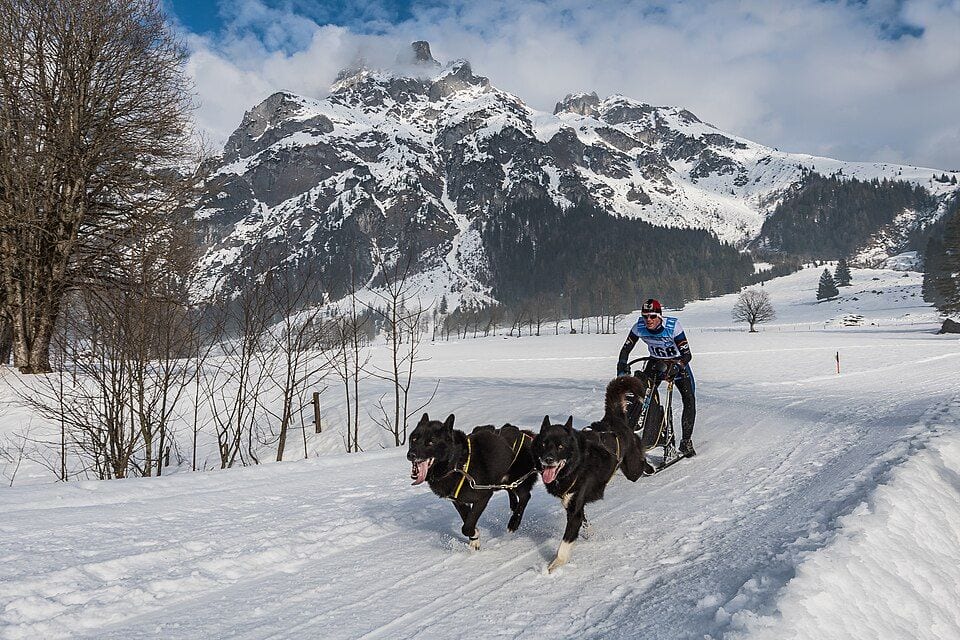
Malamutes shed heavily, especially twice a year, so a good brush is a constant necessity. During the summer, physical exertion should be moved to the cooler hours of the day. For sled dog sports, pulling a sled in the winter is ideal, while pulling a bike or scooter works well in the fall and spring.
How to Choose an Alaskan Malamute Puppy
Ask the breeder for the parents' hip, elbow, and eye evaluation results, as well as their AMPN DNA test. Consider whether you have a sturdy fence buried into the ground and the time for daily exercise and consistent training. Meet the parents to observe their temperament—they should be friendly and confident. When looking for a puppy, always seek out a reputable breeder who prioritizes health and temperament over profit, or consider adopting through a breed-specific rescue. Ensure your new puppy is microchipped, as recommended by veterinarians, and check your local ordinances, as some areas or homeowners insurance policies may have breed-specific restrictions. For more details, see our breed guide introduction.
You can find other Northern dogs in the Siberian Husky, Samoyed, and Akita profiles.
Frequently asked questions
How does the Alaskan Malamute differ from the Siberian Husky?
The AKC puts it simply: Huskies are racers, Malamutes are freighters. The Malamute is larger, heavier-boned, and more massive, bred for strength and endurance, whereas the Husky is built for speed. A Malamute's eyes are always brown, and blue eyes are a disqualifying fault; Huskies can have blue eyes.
How much does an Alaskan Malamute weigh?
The AKC standard specifies a desired weight of 85 lbs for males and 75 lbs for females, with heights of 25 and 23 inches, respectively. However, heavier dogs weighing 90 to 100 lbs or more are frequently seen.
Do Alaskan Malamutes bark?
Malamutes are relatively quiet and rarely bark, but they do howl. Their howling is often described as being almost indistinguishable from that of a wolf.
Are Alaskan Malamutes good with kids?
According to the AKC, a well-trained Malamute is playful, gentle, friendly, and gets along great with children. However, without proper socialization and training, they can become overwhelming for kids and other pets.
What DNA tests should an Alaskan Malamute's parents have?
The AKC recommends hip and eye evaluations, as well as a DNA test for Alaskan Malamute Polyneuropathy (AMPN). The breed is also often screened for elbow dysplasia, chondrodysplasia (dwarfism), thyroid issues, von Willebrand's disease, and day blindness.
Sources
- Wikipedia: Alaskan Malamute
- AKC: Alaskan Malamute breed profile
- FCI: Alaskan Malamute breed standard (No. 243)
- Cover photo: Alaskan Malamute lying on the grass (Photo: Antonio Kless, CC BY-SA 4.0)
- Wikimedia Commons photo: Alaskan Malamute standing at a dog show with a handler (Photo: Winterwindmals, Public Domain)
- Wikimedia Commons photo: A team of Malamutes pulling a sled in the mountains (Photo: Isiwal, CC BY-SA 4.0)
Log in to comment
No comments yet. Be the first.