Australian Shepherd: Temperament, Size, Care & Health
- Despite its name, the Australian Shepherd was developed in 19th-century California from Basque herding dogs and dogs brought from Australia.
- According to the AKC, California ranchers assumed the Basque dogs were Australian, giving the breed its misleading name.
- Males stand 20–23 inches and weigh 50–65 lbs, while females are 18–21 inches and 40–55 lbs; they live 12–15 years.
- Recognized colors include blue merle, red merle, solid black, and solid red, with or without white markings and tan points.
- Aussies have a strong herding instinct and high energy levels—they are too demanding for a sedentary owner.
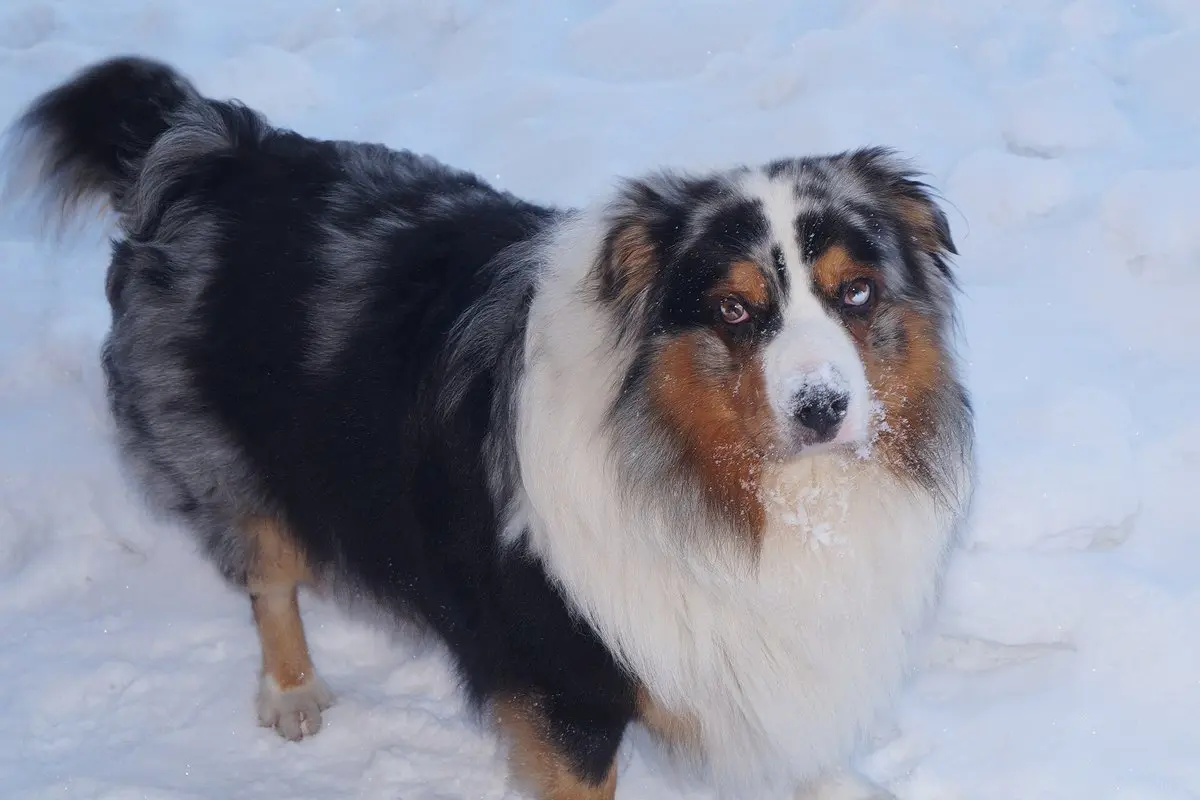
- The Australian Shepherd – the American cowboy's dog
- Appearance: merle coat and piercing eyes
- Temperament: an inexhaustible working partner
- Health
- Care: several hours of activity daily
- The Australian Shepherd and other herders
- The Australian Shepherd is for people who love to stay active
- How to choose an Australian Shepherd puppy
This article is part of the 77.today dog breeds guide, prepared by the 77.today editors from the sources listed at the end.
The Australian Shepherd is a lean, tough ranch dog with a piercing gaze, which the AKC calls a typical "only in America" story: a European breed perfected in California by way of Australia. It is the cowboy's favorite herding dog, a rodeo star, and one of the most popular companions in North America. However, the Aussie's energy and intelligence demand a lot from an owner. In the dog breed catalog, you will find the history, appearance, temperament, and care tips to see if the Australian Shepherd is right for you.
| Origin | USA (California); ancestors include Spanish, Basque, and Australian herding dogs |
|---|---|
| FCI group | Group 1 – Sheepdogs and Cattle Dogs (No. 342) |
| Height | males 20–23 inches, females 18–21 inches |
| Weight | males 50–65 lbs, females 40–55 lbs |
| Coat | medium length, wavy, double coat, weather resistant |
| Colors | blue merle, red merle, black, red—with or without white markings and tan points |
| Lifespan | 12–15 years |
| Temperament | intelligent, active, loyal, protective, playful |
| Suitable for | active people, dog sports, working |
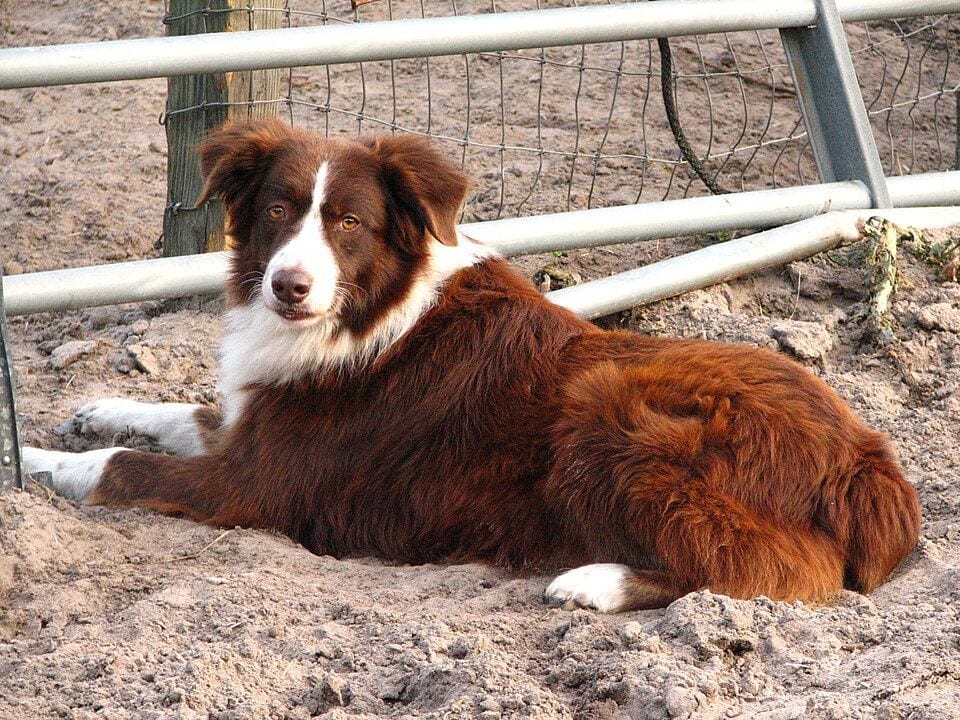
The Australian Shepherd – the American cowboy's dog
The history of the Australian Shepherd begins in Europe. According to the AKC, the Basques who lived in the Pyrenees Mountains between France and Spain were renowned for centuries as excellent shepherds, and their herding dog of choice was the Pyrenean Shepherd. In the early 19th century, some Basques sailed to Australia with their dogs, crossing them with British collies and Border Collies brought there, before eventually relocating to California. California ranchers admired the Basque dogs and assumed they were an Australian breed, which led to the misleading name. Wikipedia notes that ancestors may have also included the Spanish Carea Leonés, which shares similar eye colors and a merle coat, and the breed's name is tied to the sheep trade from Australia and New Zealand.
From California, the Aussie spread across the western US states, where ranchers valued its ability to work with sheep and cattle. For over a century, it was strictly a working dog, largely unknown outside of livestock circles, until rodeo performer Jay Sisler made them famous with tricks during rodeo shows in the mid-20th century. The breed was recognized by the United Kennel Club (UKC) in 1979, the AKC in the 1990s, and provisionally by the FCI in 1996 before full recognition in 2007. In 2024, the Aussie was the 12th most popular AKC breed.
Appearance: merle coat and piercing eyes
The Australian Shepherd is a medium-sized, athletic, sturdy, and agile dog. Its most defining feature is a piercing, alert gaze. Many Aussies have unusually colored eyes—blue or heterochromia (different colors); such eyes are also typical of the suspected ancestor, the Carea Leonés. The coat is medium length, wavy, and double-layered with a dense undercoat and coarse guard hairs. It is short on the muzzle and features feathering on the backs of the legs.
The breed is famous for its color variety—it is often said that no two Aussies look exactly alike. The standard permits blue merle, red merle, solid black, and solid red, with or without white markings and tan points. Some puppies are born with naturally bobbed tails. Historically, long tails were docked, but many countries now ban this procedure without a medical reason, and long tails are increasingly permitted in show rings worldwide.
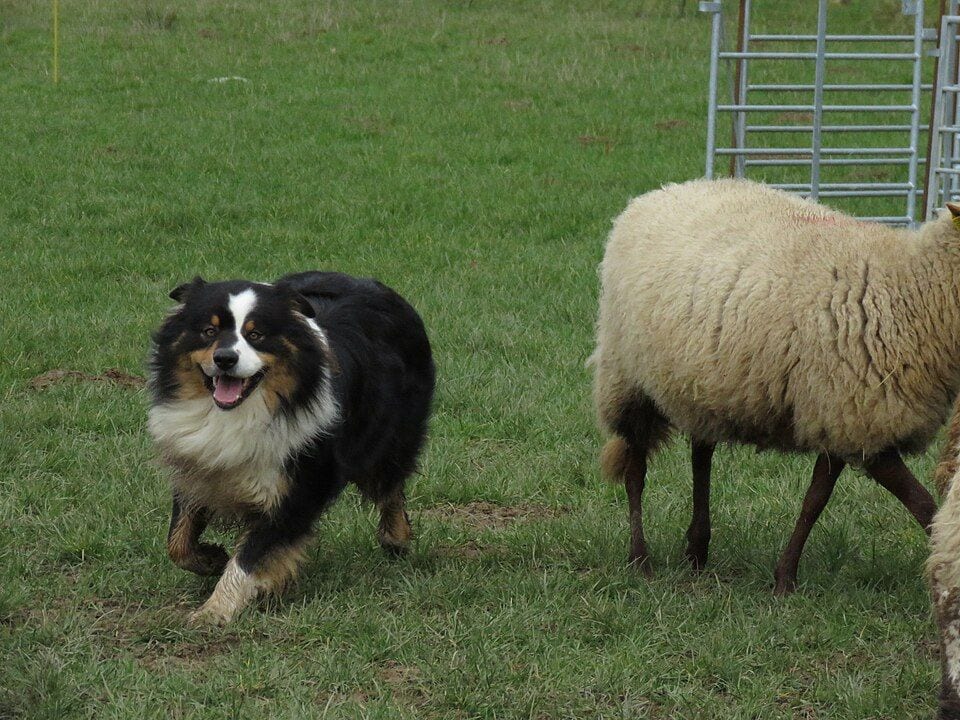
Temperament: an inexhaustible working partner
Wikipedia describes the Australian Shepherd as an intelligent, active, loyal, protective, playful, and adaptable dog. The AKC adds that the Aussie has an irresistible urge to herd—birds, dogs, kids—and is so smart that it can easily outwit an inexperienced owner. Because of this, it can be "too much dog" for a sedentary person.
Aussies form strong bonds with their families, which can make them territorial and overly protective of their owners' property. If left alone for long periods, they often become destructive. The AKC notes that one of the most common reasons Aussies end up in shelters is an owner's inability to channel this energy through training. At the same time, their loyalty, intelligence, and energy make them highly trainable—they excel in obedience, herding, agility, and dock diving competitions.
Health
- Hip and elbow dysplasia – requires X-ray evaluations of the parents.
- Eye diseases – cataracts and others; an ophthalmologist exam is essential.
- Epilepsy and certain forms of cancer.
- Merle × merle – offspring of two merle dogs are at high risk for blindness and deafness.
In a 2024 UK study, the median lifespan of the Aussie was 13.7 years—higher than the average for purebred dogs.
Care: several hours of activity daily
- Exercise. At least an hour or two of free running in a large fenced yard daily, plus long hikes; running together is fine once the skeleton is fully developed.
- Mental stimulation. Herding, obedience, agility, dog sports—an Aussie is happiest when it has a job to do.
- Coat. Brush once a week, and every 2–3 days with an undercoat rake during shedding season.
- Socialization. Early and consistent, to keep herding and guarding instincts under control.
The Australian Shepherd and other herders
| Feature | Australian Shepherd | Border Collie | German Shepherd |
|---|---|---|---|
| Weight (males) | 50–65 lbs | 30–55 lbs | 65–90 lbs |
| Origin | USA | Great Britain | Germany |
| Merle coat | yes | occurs | no |
| Energy | very high | very high | high |
The Australian Shepherd is for people who love to stay active
The Aussie is an excellent partner for sports and work, but it struggles with boredom. It is best suited for those who can dedicate several hours a day to their dog.
- Good fit for: active families, runners, people interested in agility, flyball, or herding, and farms with livestock.
- Not a good fit for: sedentary people, those who work long hours away from home, and families without the time for ongoing training.
Aussies remain puppy-like for a long time, so you will need patience not just for the first few months, but for the first two to three years. However, a well-trained Aussie can learn to do almost anything.
How to choose an Australian Shepherd puppy
First, honestly evaluate whether you can dedicate several hours a day to exercise and training. Choose a reputable breeder whose dogs have AKC or UKC registration, clear health tests for hips, elbows, and eyes, and who never breeds two merle dogs together. Ask whether the parents come from working or show lines. Before bringing your new puppy home, ensure they are microchipped and registered with your vet or a national recovery database, and check your local ordinances regarding licensing—we discussed other general rules in our guide introduction.
You can find other herding dogs in the Border Collie, Pembroke Welsh Corgi, and Belgian Malinois profiles.
Frequently asked questions
Is the Australian Shepherd from Australia?
No. The breed was developed in 19th-century California. Its ancestors include Spanish and Basque herding dogs, as well as collies brought alongside sheep from Australia and New Zealand. According to the AKC, California ranchers assumed the Basque dogs were Australian, leading to the misleading name.
How much does an Australian Shepherd weigh?
According to the AKC, males weigh 50–65 lbs and stand 20–23 inches tall, while females weigh 40–55 lbs and stand 18–21 inches tall.
What is a merle coat?
Merle is a mottled pattern where the base color is broken up by irregular darker and lighter patches. Australian Shepherds can be blue merle (black base) or red merle. Breeding two merle dogs together risks producing puppies with blindness and deafness, so responsible breeders avoid this.
Is the Australian Shepherd a good family dog?
They are great for active families who can provide plenty of daily exercise and mental stimulation. The AKC warns that their herding instinct may cause them to 'herd' birds, dogs, and children, and they can become destructive if left alone for too long.
How long do Australian Shepherds live?
The AKC lists their lifespan as 12–15 years. A 2024 UK study found a median lifespan of 13.7 years, which is higher than the average for purebred dogs.
Sources
- Wikipedia: Australian Shepherd
- AKC: Australian Shepherd breed profile
- FCI: Australian Shepherd breed standard (No. 342)
- Cover photo: Blue merle Australian Shepherd in the snow (Photo: K. Kozakiewicz, CC BY-SA 4.0)
- Wikimedia Commons photo: Red and white Australian Shepherd lying by a fence (Photo: monica king, CC BY 2.0)
- Wikimedia Commons photo: Australian Shepherd herding sheep (Photo: Aliénor Wayne, CC BY-SA 4.0)
Log in to comment
No comments yet. Be the first.