Pekingese: Temperament, Size, Care & Health
- The Pekingese is a flat-faced companion bred for the Chinese imperial court; the name comes from the city of Peking (Beijing).
- Legend says Buddha shrank a lion to the size of a dog; stealing a Pekingese was reportedly punishable by death.
- In 1860, British troops brought five Pekingese back from the Summer Palace, one of which was given to Queen Victoria.
- They stand 6–9 inches tall and weigh 7–14 lbs; the AKC disqualifies dogs weighing over 14 lbs.
- Main health risks include brachycephalic breathing issues, eye injuries and diseases, and facial fold infections.
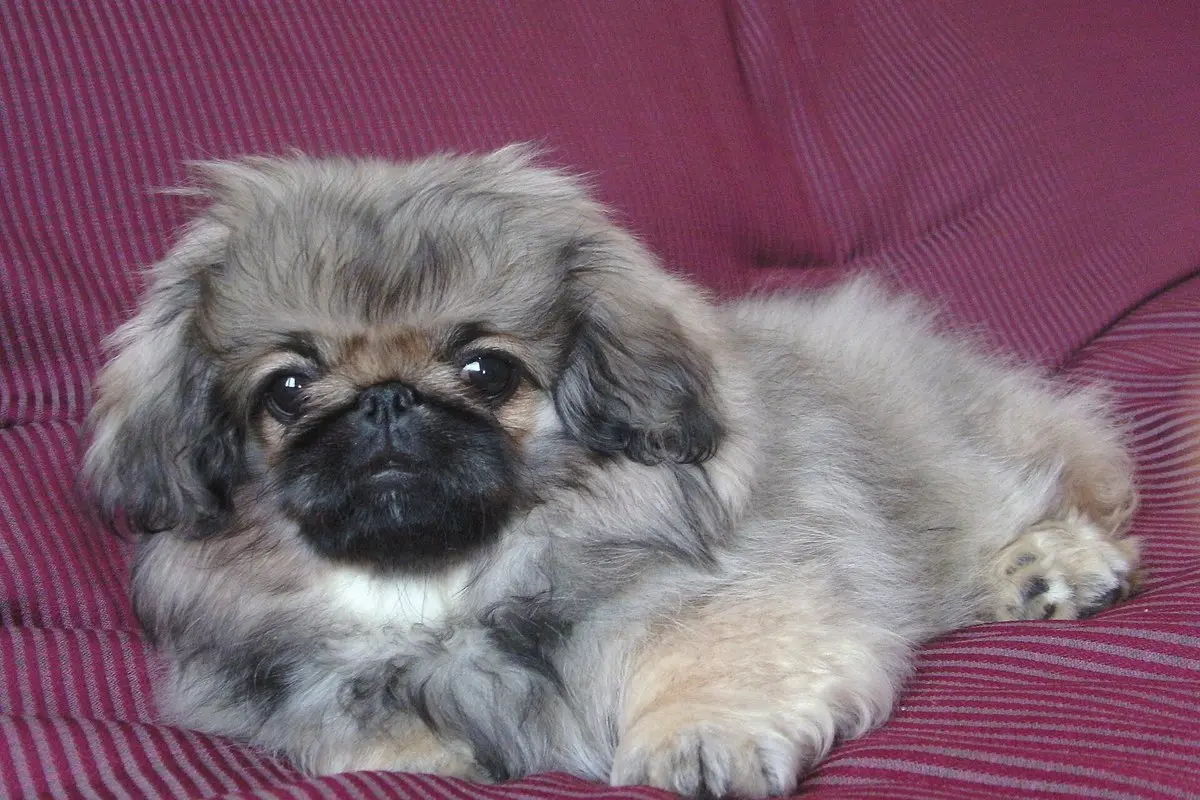
This article is part of the 77.today dog breeds guide, prepared by the 77.today editors from the sources listed at the end.
The Pekingese is a compact, stocky little companion with a regal bearing and a unique, seemingly effortless rolling gait. Its longest coat around the neck and shoulders forms the famous "lion's mane," while the large, flat, envelope-shaped head with large dark eyes is an unmistakable hallmark of the breed. The AKC describes the Pekingese as an affectionate, fiercely loyal dog. In our dog breeds guide, you will find the history, appearance, temperament, and health tips for the Pekingese.
| Origin | China; Patronage: Great Britain |
|---|---|
| FCI Group | Group 9 – Japanese Chin and Pekingese (No. 207) |
| Height | 6–9 inches |
| Weight | 7–14 lbs; "sleeve" Pekingese 6–8 lbs |
| Coat | Profuse, double-coated, longest on the neck and shoulders |
| Colors | Most commonly gold, red, or sable; also cream, black, white, etc. |
| Lifespan | 12–14 years |
| Temperament | Loyal, independent, alert, calm |
| Suitable for | Calm homes, apartments, adults |
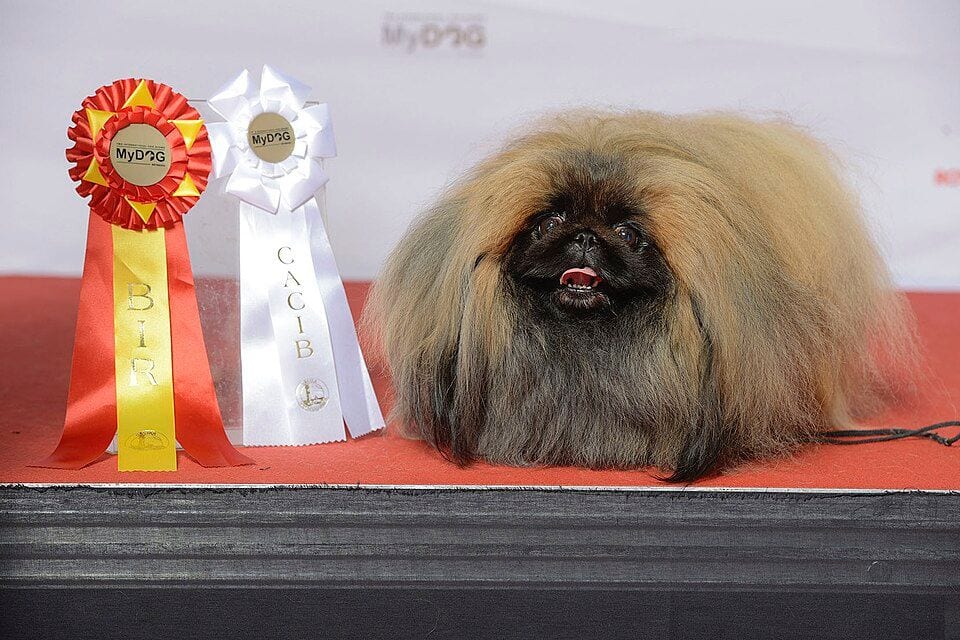
The Pekingese: A Shrunken Lion from the Forbidden City
Chinese legend tells that the Pekingese was created by Buddha, who shrank a lion down to the size of a dog. The AKC notes that there is a grain of truth to this legend: the Pekingese was likely bred down from a larger dog, just not by Buddha, but by his earthly servants—the Chinese emperors and courtiers. For centuries, Chinese nobles oversaw the breeding of flat-faced lap dogs; the Pekingese, Pug, and Shih Tzu are surviving examples of this work. It is said that stealing one of these dogs was punishable by death. The name comes from the city of Peking (now Beijing), home to the Forbidden City.
The Pekingese was unknown to the West until 1860, when British troops invaded the imperial Summer Palace in Beijing during the Opium War. According to the AKC, the imperial family killed their Pekingese so they would not fall into enemy hands, but a British captain found five live dogs hiding behind a curtain next to the emperor's aunt, who had committed suicide. The dogs were brought back to England, and one was gifted to Queen Victoria. The breed quickly gained popularity, and the FCI officially recognized it in 1966.
Appearance: The Lion's Mane and Rolling Gait
The Pekingese is a compact, low-to-the-ground, muscular, and sturdy dog, slightly longer than it is tall (a ratio of about 3:5). A flat face and large eyes are its most prominent features. The unique rolling gait is the result of bowed front legs, sturdy hind legs, and a pear-shaped body. Regardless of coat color, the skin of the muzzle, nose, lips, and eye rims must be black.
The coat is profuse and double-layered, being longest on the neck and shoulders. Most Pekingese are gold, red, or sable, but they can also be cream, black, white, fawn, black and tan, and occasionally slate gray. Both a black mask and a solid-colored face are permitted. There is also a miniature version, known as the "sleeve" Pekingese, which is judged by the exact same standard.
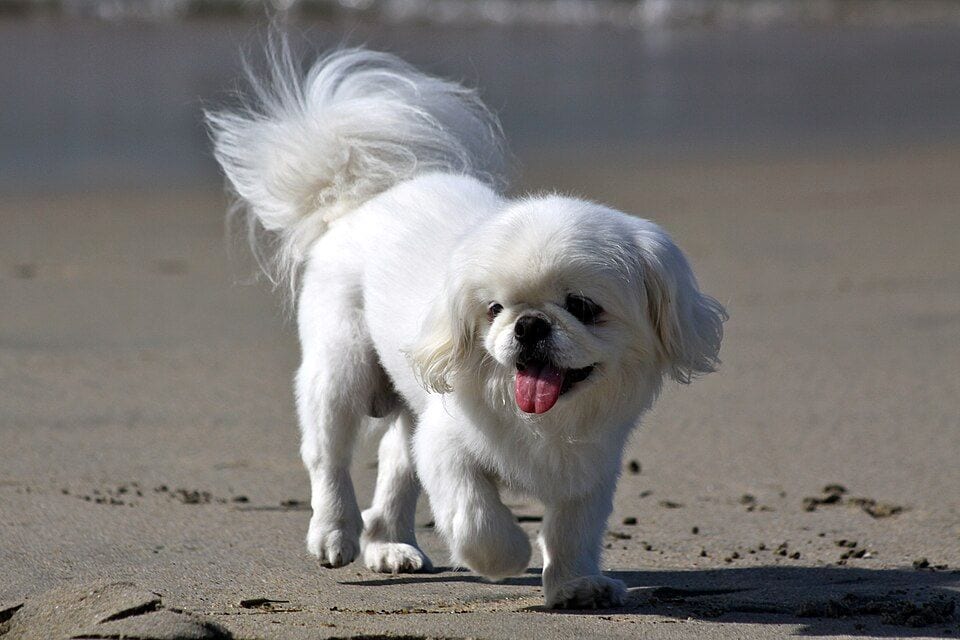
Temperament: Loyal Yet Independent
The AKC emphasizes that Pekingese are charming, confident companions who form a deep bond with their favorite person. Having lived in palaces for centuries, they can be as serenely independent as the emperors who kept them—Pekingese owners often joke that their dogs "have their own opinions." Pekingese are always alert, making them excellent little watchdogs.
For the most part, Pekingese are calm, and their exercise needs are modest, though they will happily participate in dog sports at their own pace. While they can tolerate children, rough play is not suitable for them. Their life's purpose, according to the AKC, is to entertain and comfort their people.
Health: Breathing, Eyes, and Folds
- Breathing. Like all brachycephalic (flat-faced) breeds, the Pekingese is prone to respiratory issues; the AKC advises choosing a puppy with wide nostrils.
- Eyes. Their large eyes are easily injured; they are prone to corneal inflammation, dry eye, lens luxation, ulcers, and progressive retinal atrophy.
- Facial folds. Hair in the nose folds can irritate the eyes (trichiasis).
- Heat. Pekingese prefer cool environments—some owners even use cooling pads when traveling.
- Neurological and heart diseases are also primary health concerns for the breed.
In the US, reputable breeders and veterinary organizations strongly advocate for responsible breeding practices that avoid exaggerated physical features, which can pose severe welfare risks, especially in extremely brachycephalic breeds.
Grooming Needs
- Brushing. At least an hour a week—gently detangle mats using a slicker brush or a metal comb.
- Folds and eyes. Clean and dry them regularly.
- Nails. Trim on a regular basis.
| Trait | Pekingese | Shih Tzu | Pug |
|---|---|---|---|
| Weight | 7–14 lbs | 9–16 lbs | 13–18 lbs |
| Coat | Profuse, with a mane | Long, silky | Short |
| Temperament | Independent, loyal | Affectionate, playful | Even-tempered, charming |
| Origin | China | Tibet / China | China |
The Pekingese is Ideal for a Calm Adult
The Pekingese is a dignified, independent dog that typically attaches itself to one person. It does not require a lot of exercise, making it perfect for apartment living and less active owners.
- Suitable for: Adults and seniors, apartment living, and people who appreciate a calm, independent companion.
- Not suitable for: Families with small children, hot climates, or those who expect a dog to obey every command instantly.
Due to its short muzzle and thick coat, the Pekingese struggles in the heat—during the summer, it needs a cool place indoors and should only be walked during the cooler parts of the day. Its large eyes are easily injured, so any redness or tearing is a reason to contact a veterinarian immediately.
How to Choose a Pekingese Puppy
Look for a puppy with wide nostrils and eyes that are not overly large or bulging, and observe how the parents breathe and move. Ask the breeder for proof of eye and heart health screenings. Ensure your home is a safe environment—free of sharp corners at eye level and steep stairs. When buying a Pekingese puppy, verify that the breeder is reputable, provides a clear contract, and avoids puppy mills. Vets also highly recommend microchipping your new pet; you can find more about general guidelines in our guide introduction.
You can find other dogs of the imperial courts in the Shih Tzu and Pug profiles, and another small companion in the Brussels Griffon description.
Frequently asked questions
How much does a Pekingese weigh?
Pekingese typically weigh 7–14 lbs and stand 6–9 inches tall at the shoulder. Under the AKC standard, the only disqualifying fault is a weight over 14 pounds.
What is a "sleeve" Pekingese?
This is a miniature form of the Pekingese (6–8 lbs), judged by the same standard. The name comes from the custom of carrying these tiny dogs in the wide sleeves of imperial court robes. Dogs were bred to be as small as possible, though Empress Cixi eventually banned practices meant to stunt their growth.
Is the Pekingese a good family dog?
The AKC notes that Pekingese can tolerate children but are not suited for rough play. They form strong bonds with one favorite person and are much better suited to calm, adult-only homes.
Why is eye care so important for a Pekingese?
The Pekingese lacks a long muzzle to naturally protect its eyes, making them easily injured and prone to infection. The breed is susceptible to corneal inflammation, dry eye, lens luxation, and ulcers, while hair in their facial folds can also irritate the eyes.
What is the lifespan of a Pekingese?
The AKC lists their life expectancy at 12–14 years, and a 2024 UK study found an average lifespan of 13.3 years. As with many toy breeds, trauma is a leading cause of mortality.
Sources
- Wikipedia: Pekingese
- AKC: Pekingese breed profile
- FCI: Pekingese breed standard (No. 207)
- Cover photo: A gray Pekingese dog lying on a pink cover (Photo: Joliot, CC BY-SA 3.0)
- Wikimedia Commons photo: Pekingese dog at a show with prize ribbons (Photo: Svenska Mässan from Sweden, CC BY 2.0)
- Wikimedia Commons photo: A white Pekingese walking on beach sand (Photo: Kobieboy8, CC BY-SA 3.0)
Log in to comment
No comments yet. Be the first.